German Short Hair Puppies: Complete Week-by-Week Care Guide
Raising German Short Hair puppies? This week-by-week guide covers feeding, potty training, vaccines, socialization, and costs for your GSP puppy's first year.

German Shorthaired Pointers are athletic, intelligent, and relentlessly energetic — and their puppies are no exception. If you've just brought home a German Short Hair puppy or are preparing to, you're in for an adventure. GSP puppies develop quickly, demand consistent structure, and need early exposure to the world to become the steady hunting companions and family dogs they're known to be.
This guide walks you through every critical stage of your German Short Hair puppy's first year, with breed-specific expectations, exact feeding amounts, vaccination timelines, and real cost data so you can plan ahead. All medical decisions should be made in partnership with your veterinarian — this guide prepares you for those conversations, not replaces them.
When Should You Bring Your German Short Hair Puppy Home?
The AKC recommends that puppies stay with their littermates and dam until at least 8 weeks of age. For German Short Hair puppies, many responsible breeders prefer to hold pups until 8 to 10 weeks. Here's why the extra two weeks matter for this breed:
- Bite inhibition development: GSPs are mouthy dogs by nature — they were bred to retrieve game. Weeks 6–8 with littermates teach critical bite suppression that you'd otherwise have to correct for months.
- Social hierarchy learning: Pointer puppies establish communication patterns with siblings. Removing them too early increases the risk of dog-to-dog reactivity later.
- First vaccination window: Most breeders administer the first DHPP vaccine at 6–8 weeks, meaning a puppy leaving at 8 weeks has at least partial immunity started.
German Short Hair Puppy Milestones: Weeks 4 Through 12 Months
Understanding what's developmentally normal at each stage prevents you from expecting too much too soon — or missing critical windows. Here's what to expect from your GSP puppy at each phase.
Weeks 4–8 (Still With Breeder)
- Eyes and ears fully functional; puppy begins exploring beyond the whelping box
- Deciduous (baby) teeth fully erupted — 28 teeth total
- Introduction to solid food: high-quality puppy kibble softened with warm water or puppy formula
- First socialization with humans: gentle handling, exposure to varied surfaces (grass, tile, gravel)
- First DHPP vaccine typically given at 6–8 weeks
- Starts learning recall to food bowl and basic name recognition
Weeks 8–12 (Home Transition)
- Peak fear imprint period (weeks 8–11): traumatic experiences during this window can create lasting phobias
- Sleep needs: 18–20 hours per day — enforced naps in the crate are essential
- Attention span: roughly 2–3 minutes per month of age, so ~2 minutes of focused training at a time
- Bonding intensely with primary caregiver; may show early separation distress
- House training foundation begins: take outside every 1–2 hours while awake
- Second DHPP vaccine at 10–12 weeks
Weeks 12–16 (Confidence Building)
- Fear period typically subsides; puppy becomes bolder and more exploratory
- Prey drive begins to surface — watch for intense staring at birds, squirrels, or moving objects
- Can begin short, structured leash walks (5 minutes per month of age rule: ~15 minutes max per walk)
- Third DHPP vaccine at 14–16 weeks; rabies vaccine typically given at 12–16 weeks depending on local law
- Teething discomfort begins as adult teeth start pushing through gums
- Can enroll in puppy kindergarten classes (after second vaccination + 1 week)
Weeks 16–24 (Adolescent Energy Surge)
- Energy levels increase dramatically — GSPs are not a breed that "calms down" with age alone; they need structured outlets
- Adult teeth fully in by ~6 months (42 teeth); intense chewing phase peaks
- May begin testing boundaries: ignoring recall, pulling on leash, jumping on people
- Second fear period often occurs around 6–8 months — sudden wariness of previously familiar things is normal
- Spay/neuter window: most veterinarians recommend 6–9 months for medium-to-large sporting breeds; discuss with your vet regarding joint development considerations
- Can begin introducing structured field work: scent games, bird wing on a string, introductory water exposure
Months 6–12 (Young Adult Transition)
- Reaches approximately 75–85% of adult size by 6 months; full height by 10–12 months, but fills out until 18–24 months
- Exercise capacity increases: can handle 30–45 minute structured activities (hiking, fetch sessions, swimming)
- Should have reliable recall in low-distraction environments; high-distraction recall is a work in progress for most GSPs until 18+ months
- Transition from puppy food to adult food at approximately 10–12 months (large-breed formulas recommended)
- Continued socialization is critical — adolescent GSPs that aren't regularly exposed to new environments can become reactive
Feeding Schedule for German Short Hair Puppies
GSP puppies grow rapidly and need a diet formulated for large-breed puppies to support proper bone and joint development. Look for food that meets AAFCO standards for growth and includes a statement like "formulated to support large-size dog growth." Excess calcium or overfeeding can accelerate growth and increase the risk of hip dysplasia, which GSPs are predisposed to.
| Age | Meals Per Day | Approximate Weight | Daily Food (Cups)* | Notes |
|---|---|---|---|---|
| 8–12 weeks | 3–4 | 10–18 lb (4.5–8 kg) | 1.5–2.5 cups | Moisten kibble if puppy struggles to chew; split evenly across meals |
| 3–4 months | 3 | 18–30 lb (8–14 kg) | 2.5–3.5 cups | Begin transitioning to dry kibble; monitor body condition score (BCS) |
| 4–6 months | 2–3 | 30–45 lb (14–20 kg) | 3–4.5 cups | Drop to 2 meals by 6 months; increase portion slightly per meal |
| 6–9 months | 2 | 45–55 lb (20–25 kg) | 3.5–5 cups | Active puppies may need upper range; adjust based on BCS 4–5/9 |
| 9–12 months | 2 | 50–65 lb (23–29 kg) | 3.5–5 cups | Begin transition to adult large-breed formula around 10–12 months |
*Cup measurements are approximate and based on a standard large-breed puppy kibble providing ~380–420 kcal/cup. Always check the feeding chart on your specific food brand and adjust based on your puppy's body condition score. Your veterinarian can help you determine the ideal caloric intake for your individual dog.
Recommended food brands for GSP puppies (as of 2026): Purina Pro Plan Large Breed Puppy, Royal Canin Sporting Life Trail Puppy, Hill's Science Diet Large Breed Puppy, and Fromm Gold Large Breed Puppy. All carry AAFCO growth statements and have undergone feeding trials.
Vaccination Schedule for Your German Short Hair Puppy
Your veterinarian will tailor a vaccination protocol to your puppy's risk factors and local disease prevalence. The schedule below reflects AVMA and AAHA core vaccination guidelines for a typical GSP puppy in the United States.
| Age | Vaccine | Type | Notes |
|---|---|---|---|
| 6–8 weeks | DHPP (1st dose) | Core | Distemper, Hepatitis (Adenovirus), Parainfluenza, Parvovirus; often given by breeder |
| 10–12 weeks | DHPP (2nd dose) | Core | Booster critical — maternal antibodies may have blocked the first dose |
| 10–12 weeks | Bordetella (optional) | Non-core | Recommended if attending puppy classes, boarding, or visiting dog parks |
| 12–16 weeks | Rabies | Core (legal requirement) | Timing varies by state law; typically given at 12–16 weeks |
| 14–16 weeks | DHPP (3rd dose) | Core | Final puppy booster; some vets add Leptospirosis depending on exposure risk |
| 14–16 weeks | Leptospirosis (optional) | Non-core | Recommended for hunting/field dogs or dogs in areas with wildlife exposure |
| 16+ weeks | Lyme (optional) | Non-core | Recommended in tick-endemic regions; discuss with your vet |
Important: Your GSP puppy is NOT fully protected until approximately 1 week after the final DHPP booster at 14–16 weeks. Avoid public dog parks, pet store floors, and areas where unknown dogs have eliminated until your vet confirms full immunity. Controlled socialization with known, vaccinated dogs in private yards is generally safe after the second DHPP dose.
Socialization Window: Weeks 3–14 (Don't Miss This)
The primary socialization period for puppies closes around 12–14 weeks of age. For German Short Hair puppies — a breed with strong prey drive and potential wariness of strangers without proper exposure — this window is arguably the most important developmental phase of their lives. The Merck Veterinary Manual notes that puppies deprived of diverse socialization during this period are significantly more likely to develop fear-based behavioral problems.
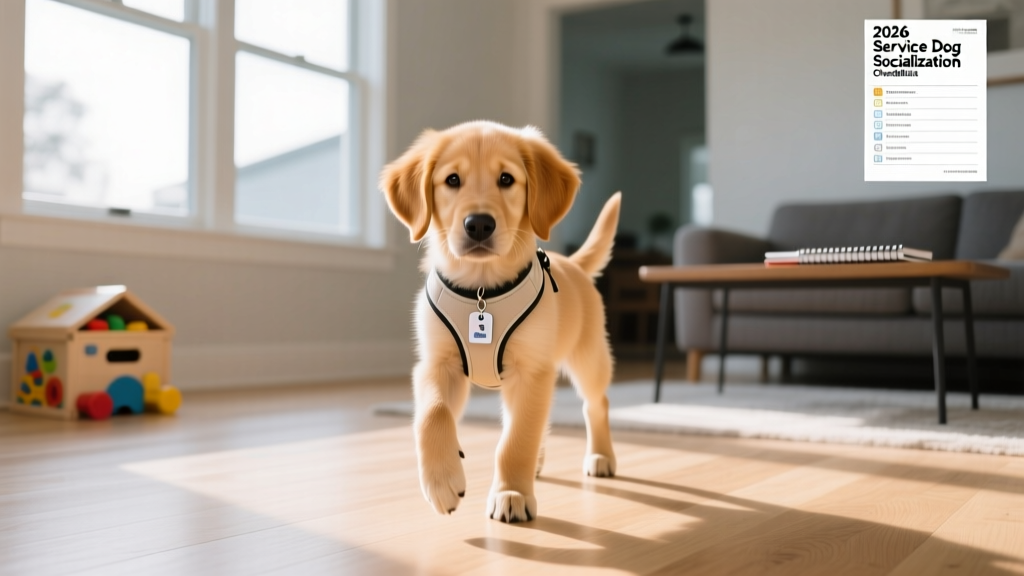
Below is a breed-specific socialization checklist. Aim for positive, low-pressure exposure to as many items as possible before 14 weeks. Every experience should be paired with treats and praise — never force a fearful puppy closer to something that scares them.
Potty Training Your German Short Hair Puppy: Realistic Timeline
German Short Hair puppies are generally quick learners when it comes to house training — their intelligence and food motivation work in your favor. However, "quick" still means 3 to 6 months for reliable potty habits, with occasional accidents possible until 8–10 months.
Potty Training Timeline Expectations:
- 8–12 weeks: Accidents every 1–3 days is normal. You're building the routine, not expecting perfection.
- 3–4 months: Puppy should begin signaling (going to door, whining, circling) if you've been consistent.
- 4–6 months: Bladder control improves significantly. Accidents should drop to 1–2 per week or fewer.
- 6–8 months: Most GSPs are reliably house trained by this age, though adolescent regression can cause temporary setbacks.
The Protocol:
- Take puppy to the same outdoor spot every time.
- Use a consistent cue word ("go potty" or "do your business") while they eliminate.
- Reward immediately with a high-value treat (small pieces of boiled chicken or freeze-dried liver work well for food-driven GSPs) the moment they finish — not after they come back inside.
- Supervise 100% when not crated. If you can't watch them, they go in the crate.
- Never punish accidents after the fact — dogs cannot connect a past action to your current frustration.
- 8–10 weeks: 1–2 hours maximum during the day
- 10–12 weeks: 2 hours maximum
- 3–4 months: 3–4 hours maximum
- 4–6 months: 4–5 hours maximum
- 6+ months: 5–6 hours maximum (no dog should be crated longer than 8 hours total)
Teething, Biting, and Chewing: Surviving Months 3–6
German Short Hair puppies are notoriously mouthy. This is a breed developed to carry birds from the field — their desire to have something in their mouth is hardwired, not a bad habit. Between 3 and 6 months, as 28 baby teeth are replaced by 42 adult teeth, that mouthiness intensifies.
Teething Timeline:
- 3–4 months: Incisors begin to loosen and fall out. You may find tiny teeth on the floor or notice slight bleeding on chew toys.
- 4–5 months: Canines and premolars erupt. This is peak discomfort — expect increased nipping and chewing on furniture, shoes, and hands.
- 5–6 months: Most baby teeth have been replaced. If any baby teeth remain alongside adult teeth (retained deciduous teeth), mention it to your vet at the next visit.
Stopping Puppy Biting and Nipping:
Because GSPs are mouth-oriented, you can't simply suppress the behavior — you need to redirect it. Here's a force-free approach:
- Redirect to an appropriate chew: When puppy mouths your hand, immediately offer a frozen Kong stuffed with puppy-safe peanut butter (xylitol-free), a Benebone puppy chew, or a frozen wet washcloth twisted into a rope.
- Withdraw attention: If teeth touch skin, say "ouch" in a calm, neutral tone, stand up, and turn away for 10–15 seconds. This mimics how littermates respond to hard bites.
- Reward soft mouth: When puppy licks you or mouths gently without pressure, praise calmly and continue interaction. They learn that gentle = attention continues.
- Provide structured chewing outlets: Two to three designated chew sessions per day with approved items (Nylabone puppy, bully sticks supervised, West Paw Zogoflex toys) reduce random destructive chewing by giving the urge a scheduled outlet.
Safe chew recommendations for GSP puppies:
- Kong Classic (puppy rubber, sized up to Medium by 4 months)
- West Paw Toppl (freezable, stuffable)
- Bully sticks (supervised only — remove when small enough to swallow)
- Frozen carrots or apple slices (no seeds) for low-calorie crunch
Common German Short Hair Puppy Problems and Solutions
Beyond the universal puppy challenges, GSPs come with a few breed-specific quirks that catch first-time pointer owners off guard.
Problem: Separation Anxiety and Crate Whining
GSPs bond intensely with their people and are prone to separation distress. Crate whining in the first 2–4 weeks is normal and usually resolves with consistent routine. If whining persists beyond 4 weeks or escalates to self-injury (bloody paws, broken teeth on crate bars), consult a certified positive-reinforcement trainer or veterinary behaviorist. Never let a panicking dog "cry it out" — this worsens the anxiety.
Problem: Prey Drive and Chasing
Your GSP puppy will likely begin showing interest in birds, squirrels, and even blowing leaves by 10–14 weeks. This is normal breed behavior, not aggression. Start building a strong "leave it" and "look at me" cue early using high-value treats. Never allow your puppy to rehearse chasing wildlife — every successful chase reinforces the behavior. Keep your puppy on a long line (15–30 ft training lead) in unfenced areas until recall is rock-solid.
Problem: Jumping on People
GSPs are enthusiastic greeters. Teach "four on the floor" from day one: reward puppy with attention and treats only when all four paws are on the ground. If they jump, turn away and withhold attention until they settle. Ask visitors to do the same — one person who encourages jumping undoes weeks of training.
Problem: Destructive Chewing Beyond Teething
If your GSP puppy is destroying furniture and belongings past 6 months, the issue is usually insufficient physical and mental exercise, not teething. A tired GSP is a well-behaved GSP. Aim for:
- 30–60 minutes of structured physical exercise daily (not just a backyard potty break)
- 15–20 minutes of mental enrichment (snuffle mats, puzzle toys, scent work, training sessions)
- At least one "job" per day: fetching a specific toy, carrying a light backpack on walks, or practicing obedience drills
First-Year Cost Breakdown for a German Short Hair Puppy
Budgeting accurately prevents surprises. Here's a realistic first-year cost estimate for a GSP puppy in the United States, based on 2025–2026 pricing data.
| Category | Low Estimate | High Estimate | Details |
|---|---|---|---|
| Puppy purchase price | $800 | $2,500 | AKC-registered from health-tested parents; rescue/adoption $200–$500 |
| Veterinary care (first year) | $600 | $1,200 | Wellness exams (3–4 visits), vaccinations, deworming, flea/tick/heartworm prevention, spay/neuter |
| Food | $400 | $800 | Large-breed puppy formula transitioning to adult; premium brands cost more |
| Supplies | $300 | $600 | Crate ($60–$120), harness, leash, bowls, bed, toys, grooming tools, long line |
| Training | $150 | $600 | Puppy kindergarten ($100–$200 for 6–8 weeks); private sessions $75–$150/hour if needed |
| Pet insurance (optional) | $360 | $720 | $30–$60/month; recommended for sporting breeds prone to orthopedic issues |
| Emergency fund buffer | $0 | $2,000 | GSPs are prone to foreign body ingestion (they eat everything); emergency vet visits run $800–$3,000+ |
| Total First Year | $2,610 | $8,420 | Excluding purchase price: $1,810–$5,920 |
Ongoing annual costs after year one typically range from $1,200 to $2,500 for food, routine veterinary care, preventives, and insurance.
When Can Your GSP Puppy Go Outside and Meet Other Dogs?
This question requires balancing disease risk against the socialization clock — and the clock is ticking.
- Private yards: Safe immediately, assuming no parvo-positive dogs have been in the yard within the past 6 months (parvovirus can survive in soil for up to a year, but risk drops significantly in maintained private yards).
- Controlled playdates: Safe after the second DHPP vaccine (10–12 weeks) with known, fully vaccinated dogs in private settings.
- Puppy classes: Most facilities require at least the second DHPP dose plus 5–7 days. Enroll as early as 11–12 weeks.
- Dog parks: Avoid until 1 week after the final DHPP booster at 14–16 weeks — and even then, assess the park carefully. Unvaccinated dogs, unknown vaccination status, and high-traffic elimination areas pose real parvo and distemper risks.
- Pet stores, grooming salons, public sidewalks: Carry your puppy or use a stroller for exposure before full vaccination. Avoid letting them walk on ground where unknown dogs have been.
The cost of waiting too long to socialize is often higher than the disease risk. The AVMA supports controlled socialization during the vaccination series, provided exposure is managed carefully. Talk to your veterinarian about the specific disease risks in your area and build a socialization plan together.
Frequently Asked Questions About German Short Hair Puppies
How often should I feed my 10-week-old German Short Hair puppy?
At 10 weeks, feed 3–4 meals per day. Divide the daily total (approximately 1.5–2.5 cups of large-breed puppy kibble) evenly across meals. Consistent meal timing also supports predictable potty schedules — puppies typically need to eliminate 15–30 minutes after eating.
When will my German Short Hair puppy be fully potty trained?
Most GSPs achieve reliable house training between 5 and 7 months with consistent management. Some individuals take up to 8–10 months. If your puppy is still having frequent accidents past 6 months despite a consistent routine, ask your vet to rule out a urinary tract infection or other medical cause.
Are German Short Hair puppies good with children?
Well-socialized GSPs are generally excellent with children — they're affectionate, playful, and sturdy. However, GSP puppies are boisterous and can knock over toddlers during play. Always supervise interactions between puppies and children under 10, and teach children not to approach a puppy that is eating, sleeping, or in their crate.
How much exercise does a GSP puppy need?
Follow the "5 minutes per month of age" guideline for structured walks: a 4-month-old puppy gets about 20 minutes of structured leash walking per day, split into two sessions. Free play in a fenced yard (fetch, exploration) can supplement this. Avoid repetitive high-impact exercise (long runs, jumping from heights) until growth plates close around 14–18 months to protect developing joints.
Should I get pet insurance for my German Short Hair puppy?
Strongly consider it. GSPs are predisposed to hip dysplasia, elbow dysplasia, and are notorious for ingesting foreign objects — all expensive conditions. Enrolling at 8–10 weeks, before any pre-existing conditions develop, gives you the broadest coverage. Expect to pay $30–$60/month for an accident-and-illness plan with a $250–$500 deductible. Companies like Trupanion, Healthy Paws, and Fetch (formerly Petplan) are popular choices among sporting breed owners.
What health tests should the breeder have done on the parents?
Responsible GSP breeders should provide OFA (Orthopedic Foundation for Animals) or PennHIP scores for hip dysplasia, OFA elbow evaluations, and cardiac exams. Some also test for cone degeneration (a breed-specific eye condition) and von Willebrand disease. Ask to see documentation — not just verbal assurances. The AKC recommends reviewing health testing documentation before committing to a puppy.
Raising a German Short Hair puppy is demanding but deeply rewarding. These dogs become extraordinary companions when given structure, enrichment, and patient guidance during their formative months. When in doubt about any health, behavioral, or nutritional concern, consult your veterinarian — they're your best partner in raising a healthy, well-adjusted GSP.
Beth Carrasco
All our authors care for dogs every day — read more of their work on the authors page.