Keeshond Dog Puppy: Complete Week-by-Week Care Guide
Raise a happy, healthy Keeshond dog puppy with our week-by-week guide covering feeding, potty training, vaccinations, socialization, and first-year costs.
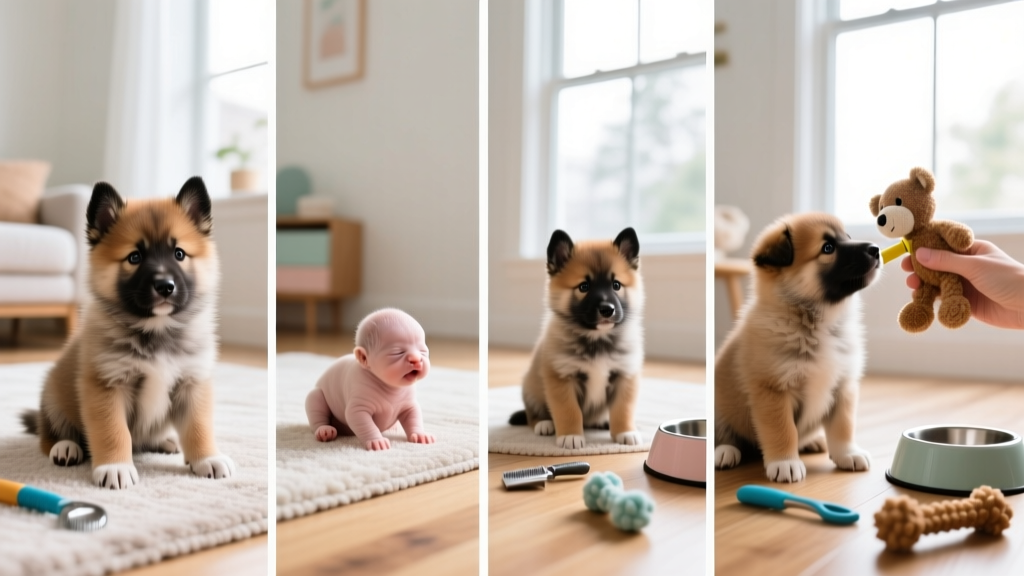
Bringing Home Your Keeshond Dog Puppy: What to Expect
The Keeshond — affectionately called the "Smiling Dutchman" — is a medium-sized spitz breed known for its plush silver-and-black coat, spectacles-like facial markings, and famously people-oriented temperament. Originally bred as watchdogs on Dutch barges, today's Keeshond is a devoted family companion who thrives on closeness and mental engagement. Raising a Keeshond dog puppy successfully means understanding the breed's specific developmental needs: their sensitivity to harsh corrections, their tendency toward separation anxiety if left alone too long, and their rapid coat growth that demands early grooming habituation.
This guide walks you through every critical stage from 4 weeks through 12 months, with breed-specific feeding amounts, vaccination timing, socialization checklists, and realistic cost projections. Where general puppy advice falls short, this guide provides the Keeshond-specific context you need to make confident decisions.
Keeshond Puppy Age Milestones: Weeks 4 Through 12 Months
Understanding what's developmentally appropriate at each stage prevents frustration and sets realistic expectations. Keeshond puppies tend to mature slightly slower than smaller breeds but faster than giant breeds, reaching physical maturity around 12–14 months and emotional maturity closer to 18–24 months.
| Age Range | Weight (Approx.) | Key Milestones | Your Focus |
|---|---|---|---|
| Weeks 4–8 | 2–6 lb (0.9–2.7 kg) | Weaning complete, deciduous teeth erupting, littermate play teaches bite inhibition, fear imprint period begins at week 8 | Breeder should be handling daily, introducing solid food, starting crate exposure |
| Weeks 8–12 | 6–12 lb (2.7–5.4 kg) | Peak socialization window open, first DHPP vaccine, bladder capacity ~1 hour per month of age, strong attachment forming | Structured socialization, potty routine, name recognition, handling exercises |
| Weeks 12–16 | 12–18 lb (5.4–8.2 kg) | Socialization window closing (ends ~week 14), second fear period may begin, vaccine series continuing, puppy coat thickening | Maximize novel experiences, begin grooming table training, short leash walks |
| Weeks 16–24 | 18–30 lb (8.2–13.6 kg) | Teething begins ~16 weeks, adolescent independence emerges, adult teeth fully in by 6 months, spay/neuter window | Chew management, continued positive training, vet discussion of spay/neuter timing |
| 6–12 Months | 30–45 lb (13.6–20.4 kg) | Sexual maturity, potential adolescent regression in training, adult coat begins replacing puppy coat (~8–10 months), energy peaks | Consistent boundaries, advanced training classes, grooming routine solidification, transition to adult food at 10–12 months |
Feeding Schedule: Exact Portions for Your Keeshond Puppy
Keeshonden are prone to weight gain as adults, so establishing measured feeding early — rather than free-feeding — prevents obesity-related joint stress on their already-vulnerable hips and patellas. Use a high-quality, AAFCO-approved puppy formula with a named animal protein as the first ingredient and minimum 22% crude protein for growth.
| Age | Meals Per Day | Approximate Daily Amount (Dry Kibble) | Notes |
|---|---|---|---|
| 8–12 weeks | 4 meals | ¾ to 1 cup total (split into 4 feedings of ~¼ cup each) | Soak kibble in warm water for first 1–2 weeks home to ease digestion |
| 12–16 weeks | 3 meals | 1 to 1¼ cups total (~⅓ to ⅜ cup per meal) | Monitor body condition score (BCS); ribs should be palpable but not visible |
| 4–6 months | 3 meals | 1¼ to 1½ cups total (~⅜ to ½ cup per meal) | Increase by ~10% during rapid growth spurts; reduce if BCS exceeds 5/9 |
| 6–12 months | 2 meals | 1½ to 2 cups total (~¾ to 1 cup per meal) | Transition to adult formula at 10–12 months over 7–10 days (25% new food every 2–3 days) |
These amounts assume a kibble with approximately 350–400 kcal per cup. Always adjust based on your individual puppy's body condition score, activity level, and your veterinarian's guidance. Treats should never exceed 10% of total daily caloric intake. Fresh water must be available at all times, but remove the water bowl 2 hours before bedtime during potty training to reduce overnight accidents.
Vaccination Schedule for Your Keeshond Puppy
The American Veterinary Medical Association recommends core vaccines for all puppies. Keeshond puppies follow the standard schedule, but your vet may adjust timing based on local disease prevalence and maternal antibody levels.
| Age | Vaccine(s) | Type | Notes |
|---|---|---|---|
| 6–8 weeks | DHPP (Distemper, Hepatitis/Adenovirus, Parainfluenza, Parvovirus) — 1st dose | Core | Often given by breeder; verify documentation. Bordetella (kennel cough) may be added if puppy will attend group classes. |
| 10–12 weeks | DHPP — 2nd dose; Leptospirosis (2-dose series, 1st dose); Lyme disease (if in endemic area) | Core + Non-core (lifestyle-dependent) | Leptospirosis is increasingly recommended for suburban dogs exposed to wildlife. Discuss with your vet. |
| 14–16 weeks | DHPP — 3rd (final puppy) dose; Rabies (required by law in all 50 states); Leptospirosis 2nd dose | Core + Legal requirement | Rabies vaccine timing varies by state — some require it at 12 weeks, others at 16. Confirm local requirements. |
| 12 months | DHPP booster; Rabies booster (1-year); Bordetella booster if needed | Core | After this, DHPP and Rabies typically move to 3-year intervals depending on vaccine type and local law. |
Socialization Window: Weeks 3–14 (Don't Miss This)
The primary socialization period for puppies closes between 12 and 14 weeks of age. For Keeshond puppies — a breed that can develop wariness of strangers and noise sensitivity without proper exposure — this window is critical. The Merck Veterinary Manual emphasizes that puppies deprived of diverse experiences during this period are significantly more likely to develop fear-based behavioral problems later in life.
Before your puppy completes the full DHPP series, practice "safe socialization": carry your puppy in public spaces, use a stroller or sling, and avoid high-traffic dog areas (dog parks, pet store floors) until 1 week after the final puppy vaccine at 16 weeks. You can still expose your puppy to novel stimuli without risking parvovirus exposure.
Keeshond-Specific Socialization Checklist
- Surfaces: Walk on grass, gravel, metal grates, wet pavement, carpet, tile, wooden stairs
- People: Men with beards, children under 5, people wearing hats/sunglasses/hoodies, delivery workers, wheelchair users, tall individuals (6'+)
- Sounds: Vacuum cleaner, doorbell, thunderstorm audio (play at low volume, gradually increase), traffic noise, clapping, dropping pots
- Handling: Paw touching, ear examination, mouth opening, nail clipping simulation, brush/comb contact on full coat
- Environments: Car rides (short trips to pleasant destinations), outdoor café patios, quiet parking lots, friend's homes, groomer's waiting area
- Other animals: Fully vaccinated, temperament-tested adult dogs (arranged playdates — not dog parks), cats (supervised, if household has cats)
- Objects: Umbrellas opening, plastic bags rustling, balloons, bicycles passing, skateboards, trash cans with lids
- Grooming-specific: Standing on grooming table, high-velocity dryer sound (low setting, distance first), being touched while on table, having coat parted and examined
Pair every new experience with high-value treats (small pieces of boiled chicken, commercial training treats like Zuke's Mini Naturals). If your Keeshond puppy shows fear — tucked tail, flattened ears, refusal to take treats — increase distance from the stimulus and reduce intensity. Never force exposure; flooding (forced confrontation with feared stimuli) worsens fear responses.
Potty Training: Realistic Timeline for Keeshond Puppies
Keeshond puppies are generally receptive to house training because they're attentive to their owners and dislike soiling their sleeping area. However, a puppy's bladder control is physiologically limited: the general rule is one hour of holding capacity per month of age, plus one hour.
| Age | Max Bladder Hold Time | Expected Accidents Per Week | Outing Frequency |
|---|---|---|---|
| 8–10 weeks | 1–2 hours | 4–7 (normal) | Every 1–2 hours during the day; 1–2 overnight outings |
| 10–14 weeks | 2–3 hours | 2–4 | Every 2–3 hours; 1 overnight outing (usually around 2–3 AM) |
| 14–20 weeks | 3–5 hours | 0–2 | Every 3–4 hours; most puppies sleep 6–7 hours overnight by 16 weeks |
| 5–6 months | 5–6 hours | 0–1 | 4–5 scheduled outings per day; overnight sleep through |
| 6–12 months | 6–8 hours | Rare (regression possible at 6–8 months) | 3–4 outings per day; reliable overnight |
When will my puppy be fully potty trained? Most Keeshond puppies achieve reliable house training between 4 and 6 months with consistent scheduling. Some individuals may have occasional accidents through 8–9 months, particularly during adolescent regression periods. If accidents persist past 6 months despite consistent management, consult your veterinarian to rule out urinary tract infection or anatomical issues.
Potty Training Troubleshooting
Submissive urination: Common in Keeshond puppies due to their sensitive temperament. Avoid direct eye contact and leaning over when greeting; crouch sideways and let the puppy approach. Never punish — this worsens the behavior. Most outgrow it by 6–8 months.
Excitement urination: Keep greetings low-key. Take puppy outside immediately when guests arrive, before allowing interaction.
Marking behavior (typically males, 6+ months): Neuter discussion with your vet; supervise closely indoors; interrupt and redirect to appropriate outdoor elimination.
Crate Training Progression and Time Limits
Keeshonden are companion dogs who bond intensely with their families. Crate training provides a safe den but must be introduced positively to avoid exacerbating separation anxiety tendencies. Never use the crate as punishment.
| Age | Max Continuous Crate Time (Day) | Overnight | Crate Size |
|---|---|---|---|
| 8–10 weeks | 30–60 minutes | 2–3 hours (set alarm for potty break) | 24-inch crate with divider panel; puppy should be able to stand, turn, and lie down |
| 10–14 weeks | 1–2 hours | 3–5 hours | Same crate; adjust divider as puppy grows |
| 14–16 weeks | 2–3 hours | 5–6 hours | Adjust divider; full 30-inch crate by ~16 weeks for most Keeshonden |
| 4–6 months | 3–4 hours | 7–8 hours | 30-inch or 36-inch crate (adult size); puppy should stand without head touching top |
| 6–12 months | 4–5 hours (max 6) | 8 hours | Adult size (36-inch for most Keeshonden); consider leaving door open when home |
Feed meals inside the crate with the door open, provide a stuffed Kong or lick mat for positive association, and practice short departures (walk out the door, return in 30 seconds, gradually extending time). If your Keeshond puppy panics — sustained screaming for more than 10–15 minutes, self-injury attempts, drooling excessively — consult a certified force-free trainer or veterinary behaviorist. Pushing through severe distress creates lasting crate aversion.
Teething Timeline and Safe Chew Strategies
Keeshond puppies begin losing deciduous (baby) teeth around 16 weeks and typically have all 42 adult teeth erupted by 6–7 months. During this period, chewing intensity increases significantly as sore gums seek relief.
- 16–20 weeks: Incisors shed first. Offer frozen carrots, chilled (not frozen solid) rubber chew toys like the Kong Classic (puppy size, pink/blue rubber), and damp washcloths twisted and frozen.
- 20–24 weeks: Canines and premolars erupt. This is peak chewing intensity. Puppy-proof your home: secure electrical cords with cable covers, remove shoes, provide 8–10 appropriate chew options rotated daily to maintain novelty.
- 24–28 weeks: Molars come in. Chewing may seem to decrease but monitoring is still critical — retained baby teeth (especially canines) are occasionally seen in Keeshonden and require veterinary extraction if the adult tooth is erupting alongside them.
Avoid: Rawhide (choking and intestinal blockage risk), antlers and weight-bearing bones from large animals (tooth fracture risk — the AVMA cautions against excessively hard chews), cooked bones of any kind (splintering hazard), and small toys that could be swallowed whole.
Common Keeshond Puppy Problems and Solutions
Puppy Biting and Nipping
Keeshond puppies use their mouths during play — this is normal canine communication, not aggression. However, their fluffy coat can mask the intensity of bites to other household members. Teach bite inhibition using the following sequence:
- When teeth contact skin, emit a high-pitched "yip" or say "ouch" in a calm voice and immediately withdraw attention (stand up, turn away, or step behind a baby gate) for 10–15 seconds.
- Return and redirect to an appropriate chew toy. Praise enthusiastically when puppy mouths the toy.
- If biting persists, end the play session entirely for 30–60 seconds. Consistency from all household members is essential.
- Ensure your puppy is getting 14–18 hours of sleep per day (typical for puppies this age). Overtired puppies bite more — an enforced nap in the crate often resolves escalating nipping.
Bite inhibition typically improves noticeably by 16–20 weeks. If biting causes injury or does not diminish by 5 months, consult a certified professional dog trainer (CPDT-KA) or veterinary behaviorist.
Whining and Vocalization
Keeshonden are a vocal breed — they were watchdogs on barges, and alerting to environmental changes was their job. Puppy whining typically stems from one of four causes: need to eliminate, need for sleep, separation distress, or demand for attention. Identify the cause before responding:
- Elimination need: Take outside immediately. Use a consistent cue phrase ("go potty") and reward with a treat immediately after elimination.
- Overtiredness: Place in crate with a chew toy. Whining usually stops within 5–10 minutes once the puppy settles.
- Separation distress: Practice graduated absences. Start with 30-second departures, return before distress escalates, gradually increase duration. A Snuggle Puppy (heartbeat toy) or Adaptil pheromone diffuser near the crate can ease the transition.
- Demand barking: Ignore completely — no eye contact, no verbal response, no touching. Reward silence with attention after 3–5 seconds of quiet.
Destructive Chewing
Beyond teething, Keeshond puppies chew from boredom and under-stimulation. Provide 15–20 minutes of mental enrichment daily (snuffle mats, frozen Kongs, training sessions) in addition to physical exercise. A tired puppy is a well-behaved puppy, but avoid high-impact exercise (running on hard surfaces, jumping from heights) until growth plates close around 12–14 months — stick to controlled leash walks (5 minutes per month of age, twice daily) and free play on soft surfaces.
First-Year Cost Breakdown for a Keeshond Puppy
Budgeting accurately prevents financial surprises. The following ranges reflect 2026 U.S. pricing based on national averages; costs vary by region and provider.
| Category | Low Estimate | Mid Estimate | High Estimate | Details |
|---|---|---|---|---|
| Puppy Purchase | $1,500 | $2,500 | $4,000 | AKC-registered from health-tested parents; rescue/adoption fees typically $200–$600 |
| Veterinary (Year 1) | $600 | $900 | $1,500 | Includes puppy vaccine series, spay/neuter ($300–$700), fecal exams, heartworm test, microchip |
| Food & Treats | $400 | $600 | $900 | Premium kibble ($50–$80 per 25-lb bag); treats for training |
| Supplies | $300 | $500 | $800 | Crate, bed, leash/harness, grooming tools (slicker brush, undercoat rake, comb), food bowls, puppy gates, enzymatic cleaner |
| Grooming | $200 | $450 | $700 | Professional grooming every 6–8 weeks ($50–$80 per session) if not done at home; Keeshond coat requires significant brushing (30 min, 3–4x/week) |
| Training | $150 | $350 | $600 | Group puppy class ($150–$250 for 6-week session); optional private sessions ($80–$150/hour) |
| Preventive Medications | $200 | $350 | $500 | Monthly heartworm/intestinal parasite preventive + flea/tick product (weight-based pricing) |
| TOTAL (Year 1) | $3,350 | $5,650 | $9,000 | Excludes emergency veterinary care; pet insurance ($40–$80/month) recommended to offset unexpected costs |
Frequently Asked Questions
When should I bring my Keeshond puppy home?
The optimal age is 8 to 10 weeks. Puppies benefit from remaining with their littermates until at least 8 weeks for bite inhibition learning and social development. The Keeshond Club of America recommends reputable breeders do not release puppies before 8 weeks. Bringing a puppy home before 8 weeks increases risk of behavioral problems including poor bite inhibition, fearfulness, and difficulty with other dogs later in life.
When can my puppy go outside and meet other dogs?
Your puppy can explore your own yard (if no unvaccinated dogs have access) immediately. For public spaces, wait until 1 week after the final DHPP vaccine at 14–16 weeks — typically around 17 weeks of age. During the 8–16 week vulnerable period, carry your puppy in a sling or stroller for socialization outings, and arrange playdates only with fully vaccinated, healthy dogs in controlled environments (private yards, homes). Avoid dog parks entirely until the full vaccine series is complete, and many veterinarians recommend waiting until 6 months for dog park exposure due to unpredictable dog behavior and disease risk.
How do I stop my Keeshond puppy from biting and nipping?
Redirect to appropriate chew toys every time teeth touch skin, withdraw attention for 10–15 seconds after a bite, and ensure your puppy gets 14–18 hours of sleep daily (overtired puppies bite more). Consistency from every household member is critical. Most Keeshond puppies show significant improvement by 16–20 weeks as adult teeth erupt and they develop better impulse control through training. Never hold the mouth shut, tap the nose, or use physical punishment — these methods increase fear and can damage your bond with this sensitive breed.
How often should I feed my puppy at each age?
Feed 4 meals per day from 8–12 weeks, 3 meals per day from 12 weeks to 6 months, then transition to 2 meals per day from 6 months onward. Consistent meal timing (same hours daily) also aids potty training, as puppies typically need to eliminate 15–30 minutes after eating.
What vaccines does my Keeshond puppy need and when?
Core vaccines include DHPP (Distemper, Hepatitis, Parainfluenza, Parvovirus) given at 6–8 weeks, 10–12 weeks, and 14–16 weeks, plus Rabies at 14–16 weeks (timing varies by state). Non-core vaccines your vet may recommend based on lifestyle include Bordetella (for group training classes or boarding), Leptospirosis (suburban/rural exposure to wildlife), and Lyme disease (tick-endemic areas). Always consult your veterinarian to build a vaccine plan tailored to your puppy's risk profile.
What grooming tools do I need for a Keeshond puppy's coat?
Start grooming sessions early (week 8–10) to build positive associations. Essential tools include a slicker brush (Chris Christensen Big G or similar quality), a stainless steel comb with both wide and fine teeth, and an undercoat rake for when the adult coat comes in around 8–10 months. Brush your puppy for 10–15 minutes, 3–4 times per week, increasing to 30+ minutes as the adult coat develops. Never shave a Keeshond — their double coat provides temperature regulation and shaving can cause permanent coat damage (post-clipping alopecia).
Jonas Cole
All our authors care for dogs every day — read more of their work on the authors page.


