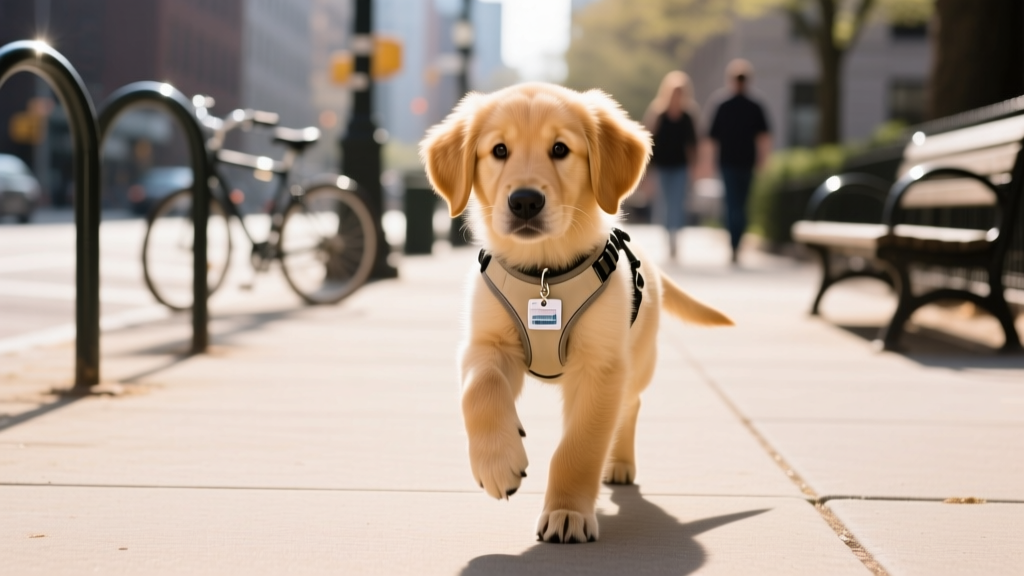
Golden Retriever Puppy Care: Essential Treatment for Puppies Guide
Complete Golden Retriever puppy care guide covering treatment for puppies from 4 weeks to 12 months: vaccines, feeding, potty training, and costs.

Golden Retriever Puppy Milestones: Week-by-Week Development Timeline
Golden Retrievers mature more slowly than many breeds, both physically and mentally. Understanding what's normal at each stage prevents unnecessary panic and helps you provide the right treatment for puppies at every developmental window. Here's what to expect from your Golden Retriever puppy's first year.
Weeks 4–8: The Litter Phase
Your Golden puppy is learning bite inhibition from littermates and beginning to explore solid food. Weight should roughly double from week 4 to week 8 (typically 7–15 lb / 3–7 kg by 8 weeks). Eyes and ears are fully functional. Puppies start displaying early retrieving instinct — chasing and mouthing objects. Do not separate from the litter before 8 weeks; the AVMA and AKC both recommend waiting until at least 8 weeks for proper socialization with the dam and siblings.
Weeks 8–12: The Homecoming Window
Expected weight: 15–30 lb (7–14 kg). This is the peak fear imprint period (8–11 weeks). Negative experiences can create lasting phobias. Your Golden will mouth and chew everything — this is breed-typical oral fixation, not aggression. Sleep needs are 18–20 hours per day. Attention span is 3–5 minutes per training session.
Weeks 12–16: Confidence Building
Weight: 30–50 lb (14–23 kg). Baby teeth begin loosening. Independent streak emerges — your previously compliant puppy may "forget" commands. Fear period #2 often hits around 14–16 weeks. House training clicks for many Goldens during this window if you've been consistent. Energy output increases significantly; expect 30–45 minutes of structured activity daily (split into short sessions to protect developing joints).
Weeks 16–24 (4–6 Months): The Teenage Phase
Weight: 50–75 lb (23–34 kg). Adult teeth fully in by 6 months. Sexual maturity begins — males may start marking, females may enter first heat cycle (typically 6–12 months for Goldens). This is when structured training becomes critical. Chewing intensity peaks due to teething discomfort. Many Goldens go through a "lanky" phase with disproportionate leg length.
Months 6–12: Adolescent Golden
Weight: 55–75 lb (25–34 kg) for males; 50–65 lb (23–29 kg) for females by 12 months. Growth plates remain open until approximately 14–18 months in large breeds like Goldens — avoid forced running, jumping from heights, or repetitive fetch on hard surfaces. Mental maturity lags behind physical size; expect puppy-like behavior until age 2–3.
Golden Retriever Puppy Feeding Schedule: Exact Portions by Age
Golden Retrievers are prone to rapid growth-related orthopedic diseases, including hip dysplasia and elbow dysplasia. Research published in the Journal of the American Veterinary Medical Association shows that keeping Golden puppies lean and on a controlled-growth diet significantly reduces joint disease risk. Never free-feed a Golden Retriever puppy.
| Age | Meals/Day | Estimated Cups/Day (Dry Kibble) | Estimated Puppy Weight | Notes |
|---|---|---|---|---|
| 8–12 weeks | 3–4 | 1.5–2 cups | 15–30 lb (7–14 kg) | Soften kibble with warm water if needed; transition to dry by 10 weeks |
| 12–16 weeks | 3 | 2–2.5 cups | 30–50 lb (14–23 kg) | Begin measuring strictly; Golden puppies will overeat if allowed |
| 4–6 months | 2–3 | 2.5–3.5 cups | 50–70 lb (23–32 kg) | Transition to 2 meals/day at 6 months |
| 6–9 months | 2 | 3–4 cups | 60–75 lb (27–34 kg) | Reduce portions if body condition score exceeds 5/9 |
| 9–12 months | 2 | 3–4 cups | 55–75 lb (25–34 kg) | Begin transition to adult large-breed formula at 12 months |
Critical: Use only AAFCO-approved large-breed puppy formulas (calcium content 1.0–1.8% on a dry matter basis). Brands like Royal Canin Golden Retriever Puppy, Purina Pro Plan Large Breed Puppy, and Hill's Science Diet Large Breed Puppy meet this standard. Standard puppy food has too much calcium and phosphorus for Golden joint development.
Body Condition Score Check: You should be able to feel (but not prominently see) your Golden puppy's ribs. A visible waist when viewed from above and a tucked abdomen from the side indicate ideal weight. If ribs are difficult to feel through fat, reduce portions by 10%.
Vaccination Schedule: Protecting Your Golden Retriever Puppy
Golden Retrievers receive the same core vaccination protocol as other breeds, but their higher cancer risk makes discussing non-core vaccine necessity with your veterinarian especially important — avoid over-vaccinating. Your vet will determine the exact schedule based on local disease prevalence and your puppy's health status.
| Age | Vaccines Administered | Notes |
|---|---|---|
| 6–8 weeks | DHPP (Distemper, Hepatitis/Adenovirus, Parainfluenza, Parvovirus) — Dose 1 | Maternal antibodies still partially active; puppy is NOT fully protected |
| 10–12 weeks | DHPP — Dose 2; Bordetella (optional, based on exposure risk); Leptospirosis — Dose 1 (recommended in many US regions) | Discuss Lyme vaccine with your vet if you live in a tick-endemic area |
| 14–16 weeks | DHPP — Dose 3 (final puppy booster); Leptospirosis — Dose 2; Rabies (required by law, timing varies by state) | This final DHPP dose is critical — earlier doses may be neutralized by maternal antibodies |
| 12–16 months | DHPP booster; Rabies booster; Leptospirosis annual; Bordetella if needed | After this, DHPP may move to 3-year intervals per AVMA guidelines |
The Critical Socialization Window: Weeks 3–14
Golden Retrievers are known for friendly temperaments, but this doesn't happen automatically. The primary socialization window closes around 14 weeks — after this, unfamiliar stimuli trigger fear responses instead of curiosity. The Merck Veterinary Manual identifies this period as the single most influential factor in adult dog temperament.
Safety note: Before your puppy completes the DHPP series, avoid dog parks, pet store floors, and areas with unknown dog traffic. Parvovirus can survive in soil for over a year. Carry your puppy in a sling or stroller for outdoor exposure during this vulnerable period.
Potty Training Your Golden Retriever: Realistic Timeline and Log
Golden Retrievers are generally easier to house-train than many breeds due to their eagerness to please and food motivation. However, "fully potty trained" means different things at different ages. Here's the realistic timeline based on bladder capacity and neurological development:
- 8–12 weeks: Accidents every 1–3 days are normal. Bladder holds 1–2 hours maximum.
- 3–4 months: Accidents drop to 1–2 per week with consistent scheduling. Holds 3–4 hours.
- 4–6 months: Most Goldens signal to go out (door-scratching, pacing). Holds 4–5 hours. Occasional accident still expected.
- 6–8 months: Reliable indoors with routine. Can hold 6–7 hours. This is when most owners consider training "complete."
- 8–12 months: Fully reliable if foundation was consistent. Holds 8 hours overnight.
| Time | Activity | Outcome | Notes |
|---|---|---|---|
| 6:30 AM | Carried outside immediately upon waking | ✓ Urinated + defecated | Treat + "go potty" cue given |
| 7:00 AM | Breakfast (¾ cup kibble) | — | Food down for 15 min, then removed |
| 7:20 AM | Outside after eating | ✓ Defecated | Post-meal bowel movement is predictable |
| 8:30 AM | Crate nap | — | Woke at 10:00 AM, carried out immediately |
| 10:00 AM | Outside after nap | ✓ Urinated | 5 min of supervised play, then back out |
| 10:15 AM | Supervised play (tethered to owner) | ✗ Small accident on tile | Missed sniffing/circling cue — set timer for next time |
Troubleshooting common Golden puppy potty issues:
- Submissive urination when greeted: Common in Goldens. Ignore puppy for first 2 minutes upon entering. Greet calmly at their level without direct eye contact. Never scold — this worsens the behavior.
- Excitement urination during play: Take potty breaks mid-play session. Reduce high-arousal games until bladder control matures.
- Regression at 6–8 months: Hormonal changes and testing boundaries. Return to strict scheduling for 2 weeks. Rule out UTI with your veterinarian if accidents suddenly increase.
Crate Training Progression: Time Limits by Age
Golden Retrievers generally accept crates well when introduced positively — their den instinct and food motivation make crate training straightforward. However, exceeding age-appropriate time limits causes distress, whining, and negative associations.
Maximum crate time guidelines (while awake during the day):
- 8–10 weeks: 30–45 minutes (puppies this young cannot hold bladders longer)
- 11–14 weeks: 1–2 hours
- 15–16 weeks: 2–3 hours
- 4–6 months: 3–4 hours
- 6+ months: 4–5 hours maximum during the day
Overnight crating: Most Golden puppies can sleep 5–6 hours in a crate by 12 weeks, and 7–8 hours by 16 weeks, because sleep suppresses bladder urgency. Set one middle-of-night alarm for puppies under 12 weeks.
Crate setup for Goldens: Use a 42-inch wire crate with a divider panel — Goldens grow into 42-inch adult crates, but too much space as a puppy invites soiling one corner and sleeping in another. Add a washable bed, a frozen Kong stuffed with puppy-safe peanut butter, and a snuggle toy. Never use the crate as punishment.
Teething Timeline and Relief Strategies (3–6 Months)
Golden Retriever puppies are notorious mouthers — the breed's retrieving heritage means they explore the world orally. Teething intensifies this from 3 to 6 months as 28 baby teeth are replaced by 42 adult teeth.
Teething phases:
- 3–4 months: Incisors loosen first. Increased chewing on fingers, clothing, furniture.
- 4–5 months: Canines and premolars erupt. Bleeding gums, drooling, and appetite fluctuations are normal.
- 5–6 months: Final molars come in. Chewing intensity peaks then gradually declines.
Safe chew recommendations for Golden puppies:
- Frozen wet washcloth: Wet, twist, freeze — provides cold compression on gums. Supervise to prevent swallowing fabric.
- Benebone Puppy Wishbone: Nylon, sized for puppies under 60 lb, chicken-flavored. Replace when worn down to nubs.
- Kong Puppy (pink/blue rubber): Softer formula for developing teeth. Stuff with plain yogurt and freeze.
- Bully sticks (6-inch, thin): High-value, fully digestible. Limit to 10–15 minutes per session to prevent calorie overload. Always supervise.
- Carrots (whole, frozen): Low-calorie, natural crunch. Most Goldens love these. Remove when small enough to swallow whole.
Common Golden Retriever Puppy Problems and Solutions
Puppy Biting and Nipping
Golden Retrievers use their mouths constantly — this is breed behavior, not aggression. However, it must be redirected.
- Redirect: When teeth touch skin, say "ouch" in a calm voice, withdraw attention for 10 seconds, then offer a chew toy. Resume interaction when puppy chews the toy.
- Time-outs: If biting persists after 3 redirects, calmly place puppy in a pen or crate for 60 seconds to reset. This is not punishment — it's removing the reward (your attention).
- Enforced naps: Overtired puppies bite more. A Golden puppy awake longer than 90 minutes often becomes mouthy — crate them for a nap.
- Never: Hold the mouth shut, alpha roll, or use bitter sprays on hands. These damage trust and can increase fear-based biting.
Whining and Crying in the Crate
- Ensure puppy has eliminated before crating.
- Cover the crate with a breathable blanket to reduce visual stimulation.
- Place a ticking clock or heartbeat toy (Snuggle Puppy brand) inside.
- Wait for 3 seconds of silence before opening the crate — even brief quiet counts. Opening during crying reinforces the behavior.
- If whining persists beyond 20 minutes, puppy likely needs to eliminate. Take out on leash, no play, then return to crate.
Destructive Chewing
Golden puppies will destroy shoes, remotes, and baseboards if unsupervised. Management is the solution:
- Puppy-proof by removing all items from floor level up to 3 feet.
- Provide 8–10 approved chew options rotated weekly to maintain novelty.
- Use bitter apple spray on furniture legs as a deterrent (test on a hidden area first).
- Never leave a Golden puppy under 6 months unsupervised in an open area — use a playpen or tether.
First-Year Cost Breakdown: Golden Retriever Puppy Budget
| Category | Low Estimate | High Estimate | Details |
|---|---|---|---|
| Puppy purchase/adoption | $500 (rescue) | $3,500 (AKC breeder) | Responsible breeders health-test parents (OFA hips/elbows, cardiac, eye); ask for documentation |
| Veterinary care (vaccines, spay/neuter, wellness) | $800 | $1,500 | Includes initial exam, 3 DHPP rounds, rabies, fecal tests, heartworm prevention start, spay/neuter |
| Food (large-breed puppy formula) | $400 | $700 | Premium large-breed formulas: $50–$80/bag; Goldens eat 3–4 cups/day as adolescents |
| Supplies (crate, bed, leash, bowls, gates) | $250 | $500 | 42" crate with divider, orthopedic bed, stainless bowls, 6-ft leash, harness, baby gates |
| Training (puppy kindergarten + basic obedience) | $200 | $600 | Group classes: $150–$300 per 6-week session; private sessions: $80–$150/hour |
| Preventive medications (heartworm, flea/tick) | $200 | $400 | Monthly preventives year-round; brands like Simparica Trio, Interceptor Plus |
| Grooming | $0 (home) | $600 (professional) | Goldens need brushing 3–4x/week; professional baths every 6–8 weeks if you don't do it yourself |
| Pet insurance | $400 | $800 | Enroll at 8 weeks before any conditions appear; Golden-specific conditions (cancer, hip dysplasia) make insurance valuable |
| Total first year | $2,750 | $8,600 | Does not include emergency veterinary care |
Budget tip: Set aside an emergency fund of $1,000–$2,000 specifically for unexpected veterinary costs. Golden Retrievers have higher-than-average rates of cancer (approximately 60% of Goldens develop cancer, per the Golden Retriever Lifetime Study by the Morris Animal Foundation) and orthopedic conditions. Pet insurance with accident-and-illness coverage, enrolled before symptoms appear, can offset major expenses.
Frequently Asked Questions: Golden Retriever Puppy Treatment
When should I bring my Golden Retriever puppy home?
Between 8 and 10 weeks of age. The AKC recommends that puppies remain with their dam and littermates until at least 8 weeks for critical bite inhibition and social skill development. Some responsible Golden Retriever breeders keep puppies until 10 weeks to complete the first fear period (8–10 weeks) in a stable environment. Bringing a puppy home before 8 weeks increases the risk of behavioral problems including resource guarding, poor bite inhibition, and separation anxiety.
How often should I feed my Golden Retriever puppy at each age?
At 8–12 weeks: 3–4 meals per day. At 12–16 weeks: 3 meals per day. At 4–6 months: 2–3 meals per day. At 6 months and beyond: 2 meals per day. Split the daily portion evenly across meals. For example, a 4-month-old eating 2.5 cups daily would get roughly ¾ cup per meal at 3 feedings. Always use a measuring cup — estimating by eye leads to overfeeding, and Golden Retrievers are genetically predisposed to obesity.
When will my Golden Retriever puppy be fully potty trained?
Most Golden Retrievers are reliably house-trained by 6–8 months with consistent scheduling, but some take until 10–12 months. "Fully trained" means zero accidents for 30+ consecutive days. Males may take slightly longer than females. Spaying/neutering before 6 months can reduce marking behavior. If your puppy is still having daily accidents past 6 months, consult your veterinarian to rule out urinary tract infections, diabetes, or other medical causes before assuming it's a training issue.
What vaccines does my Golden Retriever puppy need and when?
Core vaccines include DHPP (Distemper, Hepatitis, Parainfluenza, Parvovirus) given at 6–8 weeks, 10–12 weeks, and 14–16 weeks, plus Rabies at 14–16 weeks (timing varies by state law). Non-core vaccines your veterinarian may recommend based on risk: Bordetella (kennel cough), Leptospirosis, and Lyme disease. Goldens do not require a unique vaccine protocol, but discuss titer testing at the 1-year mark as an alternative to automatic boosters.
How do I stop my Golden Retriever puppy from biting and nipping?
Redirect every mouth-to-skin contact to an appropriate chew toy using positive reinforcement. When teeth touch skin, say "ouch" calmly, stand up, and withdraw attention for 10–15 seconds. Then return with a toy and reward chewing. Enforce naps every 60–90 minutes — overtired Golden puppies become significantly more mouthy. Provide at least 8 approved chew items. This phase typically improves by 5–6 months as adult teeth fully erupt and impulse control develops. Consistency from every household member is essential — if one person allows mouthing, the puppy will continue.
When can my Golden Retriever puppy go outside and meet other dogs?
Your puppy can explore your own yard (if no unknown dogs have access) immediately. Public areas with unknown dog traffic — parks, pet stores, sidewalks — should be avoided until 7 days after the final DHPP booster at 14–16 weeks (approximately 17 weeks of age). However, socialization with known, fully vaccinated dogs in controlled environments (your home, a friend's fenced yard) can begin after the second DHPP dose at 10–12 weeks. Puppy kindergarten classes that require proof of at least 2 DHPP doses are generally considered safe by the AVMA. Carry your puppy in public spaces before full vaccination to provide visual and auditory socialization without ground contact.
This guide provides general care information for Golden Retriever puppies. Always consult your veterinarian for personalized treatment for puppies, including specific vaccination timing, dietary adjustments, and health screening recommendations for your individual dog.
Jonas Cole
All our authors care for dogs every day — read more of their work on the authors page.