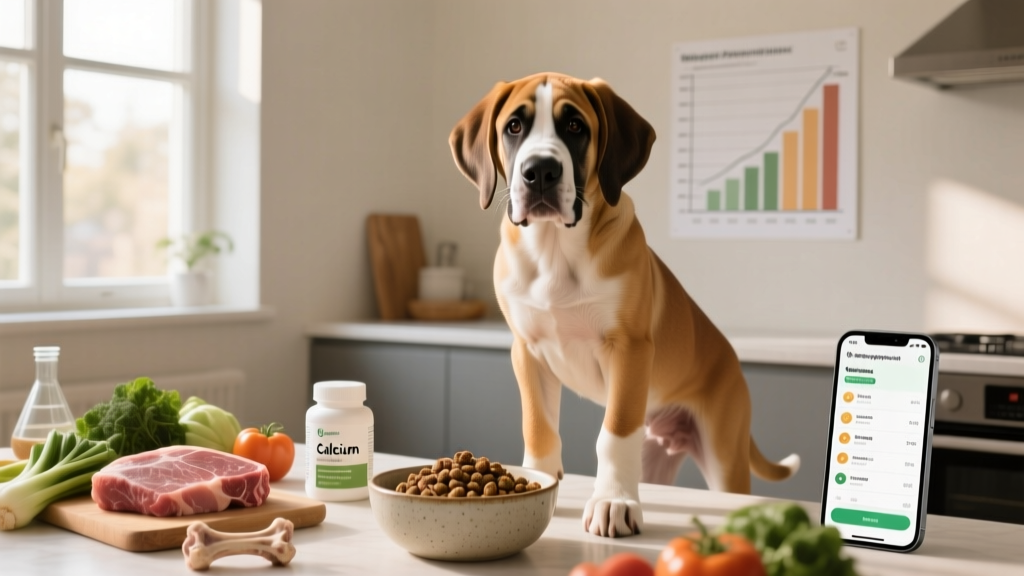
Italian Sheepdog Puppies: Complete Growth, Care & Training Guide
Everything you need to raise Italian Sheepdog puppies: age milestones, feeding portions, vaccination schedule, potty training, and first-year costs.

Bringing Home Italian Sheepdog Puppies: What Makes This Breed Unique
The Bergamasco Shepherd — commonly called the Italian Sheepdog — is one of the most visually striking herding breeds in the world, thanks to its iconic flocked coat. But beyond those remarkable dreadlocks lies an intelligent, sensitive, and deeply bonded companion dog that requires thoughtful early development. Italian Sheepdog puppies are not a breed you can put on autopilot. Their herding heritage means sharp minds that bore easily, strong flocking instincts that can turn into nipping if unredirected, and a socialization window that demands deliberate effort between weeks 3 and 14.
This guide covers every developmental stage from the moment you consider bringing a puppy home through the end of the first year, with breed-specific expectations, exact feeding portions, and real cost figures updated for 2026.
When Should You Bring Your Italian Sheepdog Puppy Home?
The optimal age to bring an Italian Sheepdog puppy home is 8 to 10 weeks. While some breeders release puppies at 8 weeks, many experienced Bergamasco breeders prefer holding puppies until 9 or 10 weeks. The reason is breed-specific: Bergamascos are slow to mature psychologically, and those extra two weeks with littermates teach critical bite inhibition and canine social signals that are nearly impossible to replicate in a human household.
Before pickup day, confirm your breeder has completed the following:
- First DHPP vaccination at 6–8 weeks
- Deworming protocol (typically pyrantel pamoate at 2, 4, 6, and 8 weeks)
- Microchip implantation with registration transferred to your name
- Introduction to crate and basic handling (nail trimming, ear inspection)
- Health certificate from a licensed veterinarian within 10 days of travel
Veterinary note: Schedule your puppy's first wellness exam within 48 hours of arriving home. Bring the breeder's health records, stool sample, and any vaccination documentation. Your veterinarian will establish a personalized care plan and run a fecal flotation test for intestinal parasites.
Italian Sheepdog Puppy Milestones: Week by Week
Bergamasco puppies develop on a timeline similar to other medium-to-large herding breeds, but their coat development and psychological maturity lag behind many peers. Here is what to expect at each critical stage.
Weeks 4–8: The Litter Phase (With Breeder)
During this period, puppies are still with the breeder. Their puppy coat is soft and wavy — nothing like the adult flocks. They begin eating gruel (kibble soaked in warm water or puppy milk replacer) around week 4 and transition to dry kibble by week 6. Eyes and ears are fully functional, and the critical socialization period with littermates is in full swing. Puppies learn hierarchy, play-bite limits, and basic canine body language.
Weeks 8–12: The Homecoming and Bonding Window
This is your puppy's most impressionable period in your home. Expect 18–20 hours of sleep per day — Bergamasco puppies tire quickly. Key developments include:
- Weight: 10–18 lb (4.5–8.2 kg) depending on sex and individual growth rate
- Coat: Still soft puppy fur; no flocking visible
- Behavior: Follows you room to room (flocking instinct), startles at loud noises, may cry at night in crate
- Learning capacity: Can learn name recognition, sit, and beginning crate entry with positive reinforcement
Weeks 12–16: Expanding the World
Your puppy's confidence grows rapidly. This is when structured socialization pays dividends. The Bergamasco's natural wariness of strangers — a breed trait documented in the AKC breed standard — can solidify into fearfulness if exposure is insufficient during this window.
- Weight: 18–28 lb (8.2–12.7 kg)
- Teething: Baby teeth begin loosening; chewing intensity increases
- Behavior: Tests boundaries, may regress on potty training, begins showing herding behaviors (circling, nudging ankles)
Weeks 16–24: The Adolescent Transition
This is the most challenging developmental phase for Italian Sheepdog puppies. The puppy coat begins its transformation — you may notice slight matting or textural changes around the back and hindquarters, the earliest sign of future flock development. Behaviorally, expect selective hearing, increased independence, and a second fear imprint period around 16–20 weeks.
- Weight: 28–45 lb (12.7–20.4 kg)
- Coat: Puppy fur begins mixing with the emerging undercoat; "goat hair" and woolly fibers start intertwining
- Behavior: May challenge household rules, prey drive becomes more apparent, leash reactivity can emerge without continued socialization
Months 6–12: Juvenile to Young Adult
By six months, your Bergamasco has reached roughly 60–70% of adult weight. Males will trend toward 55–75 lb (25–34 kg) and females toward 45–60 lb (20–27 kg) by 12 months, though the breed doesn't reach full physical maturity until 2.5 to 3 years. The flocking coat becomes more pronounced, requiring you to begin manually separating forming mats into the characteristic flat flocks (not cords — Bergamasco flocks are flat and wide, unlike the round cords of a Komondor or Puli).
Feeding Schedule for Italian Sheepdog Puppies
Bergamascos are medium-to-large dogs, and their growth rate must be managed to protect developing joints. Overfeeding is a more serious concern than underfeeding, as rapid growth increases the risk of hip dysplasia — a condition the breed has documented predisposition toward. Feed a large-breed puppy formula (AAFCO-certified for growth) that contains controlled calcium and phosphorus levels.
| Age | Meals Per Day | Daily Amount (Large-Breed Puppy Kibble) | Notes |
|---|---|---|---|
| 8–12 weeks | 4 | 1.5–2 cups total (0.375–0.5 cups per meal) | Soak kibble in warm water for first 1–2 weeks if transitioning |
| 12–16 weeks | 3 | 2–2.75 cups total | Switch to dry kibble; monitor stool consistency |
| 4–6 months | 3 | 2.75–3.5 cups total | Adjust based on body condition score (ribs palpable but not visible) |
| 6–9 months | 2 | 3–4 cups total | Reduce to twice daily; growth rate slows |
| 9–12 months | 2 | 3.5–4.5 cups total | Approaching adult portions; do not switch to adult food until 12–18 months |
Brand recommendations for 2026: Look for large-breed puppy formulas from Purina Pro Plan, Royal Canin Giant Puppy, or Hill's Science Diet Large Breed Puppy. Verify the product carries an AAFCO statement for "growth" or "all life stages." Avoid grain-free boutique diets unless your veterinarian identifies a specific allergy — the FDA has linked certain grain-free diets to dilated cardiomyopathy (DCM) in dogs, and the investigation remains ongoing per FDA guidance.
Vaccination Schedule for Italian Sheepdog Puppies
Your puppy's immune system is immature at 8 weeks, making a structured vaccination protocol essential. The following schedule follows the AVMA core vaccination guidelines and the AAHA canine vaccination task force recommendations. Your veterinarian may adjust timing based on local disease prevalence.
| Age | Vaccine | Type | Notes |
|---|---|---|---|
| 6–8 weeks | DHPP (Distemper, Hepatitis/Adenovirus, Parainfluenza, Parvovirus) | Core | Typically administered by breeder before pickup |
| 10–12 weeks | DHPP booster #1 | Core | Maternal antibodies still partially active; booster ensures coverage |
| 10–12 weeks | Bordetella (Kennel Cough) | Lifestyle | Recommended if attending puppy classes or visiting grooming facilities |
| 14–16 weeks | DHPP booster #2 | Core | Final puppy DHPP; provides protection once maternal antibodies wane |
| 14–16 weeks | Rabies | Core (legally required) | Required by law in all US states; timing varies by jurisdiction |
| 12+ weeks | Leptospirosis (2-dose series, 3–4 weeks apart) | Lifestyle | Recommended for dogs with outdoor/wildlife exposure |
Cost expectation: Plan for $200–$400 for the full puppy vaccination series, depending on your region and whether you use a private practice or low-cost clinic. The DHPP series alone typically runs $25–$45 per visit.
Socialization Window: Weeks 3–14
The primary socialization period for all puppies closes around 12–14 weeks, and for the Bergamasco — a breed naturally reserved with strangers — this window is non-negotiable. Insufficient socialization during this period is the single biggest predictor of fear-based reactivity in adult Italian Sheepdogs.
Here is a structured exposure checklist to complete before week 14. Each item should be paired with high-value treats (small pieces of boiled chicken, freeze-dried liver, or commercial training treats like Zuke's Mini Naturals) to create positive associations.
Socialization Exposure Checklist
- People: Men with facial hair, women wearing hats/sunglasses, children ages 3–12 (supervised), people in wheelchairs, delivery workers, people carrying umbrellas
- Surfaces: Gravel, metal grates, wet grass, slippery tile, carpet transitions, raised platforms
- Sounds: Vacuum cleaner (start at distance), thunderstorm recordings (low volume, gradually increasing), traffic noise, doorbells, clapping, power tools
- Animals: Vaccinated adult dogs (known health status), cats (controlled introduction), livestock if accessible (Bergamascos were bred to work with sheep and goats)
- Handling: Paw touching, ear inspection, mouth opening, nail clipping simulation, brushing, being lifted onto a grooming table
- Environments: Car rides (short trips to pleasant destinations), outdoor café patios, parking lots, hardware stores that allow dogs, friend's houses
Potty Training Timeline and Troubleshooting
Realistic expectations prevent frustration. Italian Sheepdog puppies typically achieve reliable house training between 4 and 6 months, though some individuals — particularly males — may take until 7–8 months for full reliability. The Bergamasco's intelligence works in your favor: they learn routines quickly once consistency is established.
Potty Training Schedule by Age
| Age | Maximum Time Between Outings (Daytime) | Expected Nighttime Hold | Accident Frequency |
|---|---|---|---|
| 8–10 weeks | Every 30–45 minutes | 2–3 hours (set overnight alarm) | Multiple per day — this is normal |
| 10–14 weeks | Every 1–1.5 hours | 3–4 hours | 1–3 per week if on consistent schedule |
| 14–20 weeks | Every 2 hours | 5–6 hours | Occasional; often linked to excitement or schedule disruption |
| 5–6 months | Every 3–4 hours | 7–8 hours | Rare if routine is maintained |
Troubleshooting common setbacks:
- Regression at 16–20 weeks: Common during the second fear period. Return to more frequent outings and higher-value rewards without punishment.
- Excitement urination: Keep greetings calm and low-key. Crouch to puppy's level rather than leaning over. Ignore jumping until all four paws are on the floor.
- Submissive urination: Never scold for this — it worsens the behavior. Build confidence through trick training and avoid direct eye contact during greetings.
- Marking behavior (lifting leg): Typically emerges around 6–9 months in males. Spaying/neutering reduces but does not always eliminate marking. Interrupt and redirect to appropriate outdoor elimination.
Crate Training Progression
The crate is your Italian Sheepdog puppy's safe den — never a punishment space. Bergamascos bond deeply with their families and can develop separation anxiety if crated excessively or introduced to the crate too abruptly. Follow this progression:
| Age | Maximum Crate Time (Daytime) | Nighttime | Notes |
|---|---|---|---|
| 8–10 weeks | 30–60 minutes | 2–3 hours (with overnight potty break) | Crate beside your bed; drape a blanket for den feel |
| 10–14 weeks | 1–2 hours | 3–4 hours | Begin moving crate to permanent location |
| 14–20 weeks | 2–3 hours | 5–7 hours | Practice short departures from the house |
| 5–6 months | 3–4 hours | 7–8 hours | Leave crate door open when home; puppy should choose to rest there |
| 6–12 months | 4–5 hours maximum | 8 hours | Never exceed 5 hours crated during the day without a midday break |
Crate size recommendation: A 36-inch wire crate (such as the MidWest iCrate or Frisco Double Door) with a divider panel works from puppyhood through adulthood. The adult Bergamasco stands 22–23.5 inches at the shoulder (males) or 21–22 inches (females), so a 36-inch crate provides adequate standing and turning room.
Teething Timeline and Relief Strategies
Italian Sheepdog puppies follow the standard canine teething timeline, but their strong herding-breed jaw drive makes the chewing phase more intense than in many breeds.
Teething Stages
- 3–4 weeks: Deciduous (baby) teeth erupt — handled by breeder
- 8–12 weeks: 28 baby teeth fully in; puppy explores everything with its mouth
- 12–16 weeks: Baby incisors begin loosening; you may find tiny teeth on the floor
- 4–5 months: Premolars and canines shed; peak chewing intensity
- 5–7 months: All 42 adult teeth should be in place; chewing gradually decreases
Safe chew recommendations by stage:
- 8–16 weeks: Frozen damp washcloths (knotted), Nylabone Puppy Chew (soft texture), KONG Puppy (rubber, size small) stuffed with soaked kibble and frozen
- 4–6 months: Benebone Wishbone (puppy formula), yak cheese chews (supervised), KONG Classic (size medium, red rubber) with peanut butter (xylitol-free)
- 6+ months: Bully sticks (supervised, remove when small enough to swallow), West Paw Zogoflex Hurley, antler alternatives (avoid real antlers — fracture risk for young teeth)
Common Italian Sheepdog Puppy Problems and Solutions
Every breed has its quirks during puppyhood. Here are the issues most frequently reported by Bergamasco owners, along with force-free solutions.
Mouthing and Nipping
Bergamascos were bred to herd sheep by gripping and holding — not biting hard, but persistently. This instinct surfaces as ankle-nipping, hand-mouthing, and clothing-grabbing in puppies. Solution: Redirect to an appropriate chew toy the instant mouthing begins. If nipping continues, stand still, fold your arms, and disengage for 10–15 seconds (removing attention is the consequence). Teach "leave it" and "drop it" starting at 10 weeks using high-value trade-ups. Never use physical punishment, alpha rolls, or muzzle-grabbing — these damage trust and can trigger defensive biting.
Whining and Crying in the Crate
Nighttime vocalization is nearly universal in the first 2–3 weeks. Solution: Place the crate near your bed initially so your puppy can hear and smell you. Use a Snuggle Puppy (heartbeat toy) or a warm water bottle wrapped in a towel. Only let the puppy out of the crate when quiet — even a 3-second pause — to avoid reinforcing crying. Take the puppy out for a potty break on a schedule (set an alarm) rather than waiting for crying to signal need.
Destructive Chewing
Bergamasco puppies have moderate-to-high chew drive, particularly between 4 and 7 months. Solution: Puppy-proof your home by removing shoes, cords, and small objects from floor level. Provide 5–7 approved chew items rotated every few days to maintain novelty. Use a pet-safe bitter spray (such as Grannick's Bitter Apple) on furniture legs and baseboards as a deterrent, paired with redirecting to appropriate chews. Increase physical exercise and mental enrichment (snuffle mats, frozen KONGs, 10-minute training sessions) to reduce boredom-driven chewing.
Herding Children or Other Pets
The instinct to circle, nudge, and nip at running children or cats is strong in this breed. Solution: Manage the environment by separating the puppy from children during high-energy play. Teach children to move calmly around the puppy. Train an incompatible behavior — such as "go to your mat" — and reward heavily when the puppy chooses the mat instead of chasing. Enroll in a positive-reinforcement puppy class by 10–12 weeks (after first Bordetella vaccine) for structured guidance.
First-Year Cost Breakdown for Italian Sheepdog Puppies
Budgeting accurately prevents surprises. The following estimates reflect 2026 US pricing and represent a moderate spending level. Costs will vary by region — expect 15–25% higher figures in major metropolitan areas.
| Category | Estimated Cost Range | Details |
|---|---|---|
| Puppy purchase (responsible breeder) | $2,000–$3,500 | Health-tested parents, OFA hip scores, take-back clause, AKC registration |
| Adoption (breed rescue) | $300–$600 | Bergamasco rescue organizations; may include spay/neuter and initial vetting |
| Veterinary care (first year) | $600–$1,200 | Vaccination series, spay/neuter ($300–$600), fecal tests, heartworm prevention |
| Food (large-breed puppy formula) | $450–$700 | Premium brands at ~$55–$75 per 30-lb bag; 6–8 bags per year |
| Supplies (initial setup) | $300–$500 | Crate, bed, leash/harness, bowls, grooming tools, chew toys, puppy gate |
| Training (group classes) | $150–$350 | Puppy kindergarten (6–8 week course) plus intermediate manners |
| Preventive medications | $200–$400 | Monthly heartworm/flea/tick prevention (e.g., Simparica Trio, Interceptor Plus) |
| Pet insurance (optional) | $400–$700 | Annual premium for comprehensive plan; recommended given breed's hip dysplasia risk |
| Grooming tools and supplies | $50–$150 | Bergamascos are NOT professionally groomed — you maintain flocks yourself |
Total first-year estimate: $4,150–$7,500 including puppy purchase, or $2,150–$5,000 for an adopted dog. Annual costs after the first year typically drop to $1,500–$2,500 for food, preventive care, and routine veterinary visits.
Frequently Asked Questions About Italian Sheepdog Puppies
How often should I feed my Italian Sheepdog puppy at 8 weeks old?
Feed four meals per day, totaling 1.5–2 cups of large-breed puppy kibble. Divide evenly into 0.375–0.5 cups per meal. At 12 weeks, reduce to three meals per day. At 6 months, transition to two meals per day. Always provide fresh water and remove uneaten food after 15–20 minutes to establish mealtime structure.
When will my Italian Sheepdog puppy be fully potty trained?
Most Bergamasco puppies achieve reliable house training between 4 and 6 months with a consistent schedule. Some individuals, particularly males, may need until 7–8 months. If your puppy is still having frequent accidents past 6 months despite a structured routine, consult your veterinarian to rule out urinary tract infection or anatomical issues.
What vaccines does my puppy need and when?
Core vaccines include the DHPP series (at 6–8, 10–12, and 14–16 weeks) and rabies (at 14–16 weeks, legally required). Lifestyle vaccines your veterinarian may recommend include Bordetella (10–12 weeks, for puppies attending group classes), Leptospirosis (12+ weeks, two-dose series), and Lyme disease (depending on regional tick prevalence). Consult your veterinarian for a schedule tailored to your area.
How do I stop my Italian Sheepdog puppy from biting and nipping?
Redirect mouthing to appropriate chew toys immediately. If nipping persists, disengage by standing still and withdrawing attention for 10–15 seconds. Teach "leave it" and "drop it" using positive reinforcement with high-value treats. Provide adequate physical exercise (30–45 minutes of structured play per day for puppies under 6 months) and mental stimulation to reduce frustration-driven mouthing. Never use physical punishment — it escalates biting in herding breeds.
When can my Italian Sheepdog puppy go outside and meet other dogs?
Your puppy can explore your private yard immediately. However, avoid public areas with unknown dog traffic (dog parks, pet stores, rest stop lawns) until 7 days after the final DHPP booster at 14–16 weeks — typically around 17 weeks of age. Controlled playdates with known, fully vaccinated dogs in private settings are safe and encouraged from 8 weeks onward, as socialization during the 3–14 week window is critical. Carry your puppy or use a stroller for exposure to public spaces before full vaccination.
When does the Bergamasco coat start forming flocks?
The flocking process begins subtly around 8–12 months, when the puppy's soft coat starts intertwining with the emerging goat-hair and woolly undercoat. You will need to manually separate forming mats into flat, wide flocks (roughly 1.5–2 inches wide) by hand. This is a time-intensive process during the first 2–3 years. Never brush a Bergamasco's coat with a slicker brush or comb once flocking begins — this destroys the flock structure. For detailed coat care guidance, consult your breeder or the Bergamasco Shepherd Club of America.
Marcus Aldridge
All our authors care for dogs every day — read more of their work on the authors page.