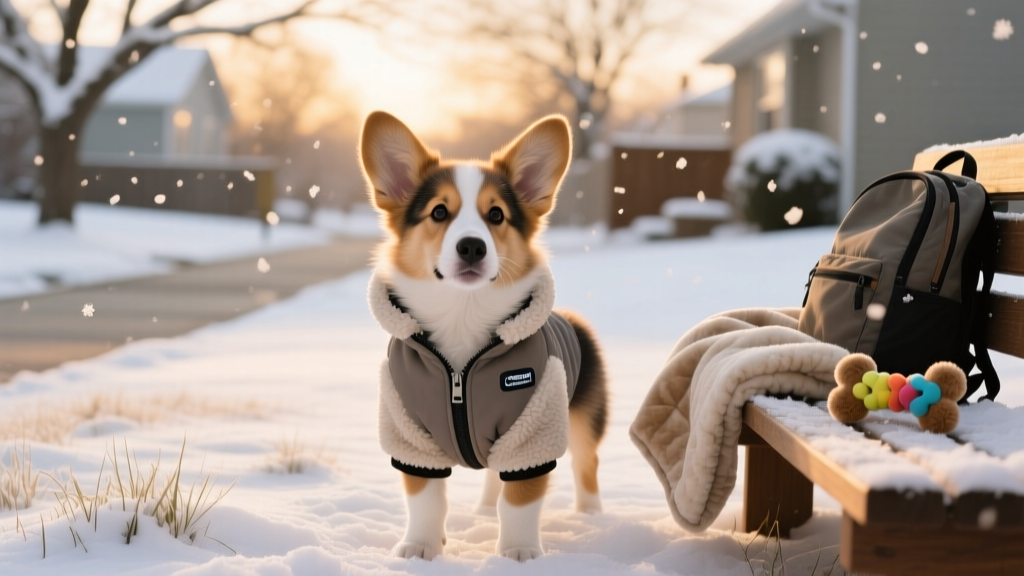
100+ Female Puppy Names That Start With B & Your New Puppy Care Guide
Browse 100+ female puppy names that start with B, plus a complete puppy care timeline covering feeding, potty training, vaccines, and milestones.

The Best Female Puppy Names That Start With B (And How to Pick One)
You've got a new girl coming home, and she needs a name that fits. Whether you're drawn to something classic, quirky, or nature-inspired, this curated list of female puppy names that start with B gives you over 100 options organized by style. But a great name is just the beginning — this guide also walks you through every critical milestone from week 4 to month 12, with exact feeding portions, vaccine timelines, and potty training expectations so nothing catches you off guard.
Tip: Dogs respond best to names with one or two syllables and hard consonant sounds (like B, K, D). Names starting with B are naturally attention-grabbing for puppies because the plosive "buh" sound cuts through background noise easily.
Classic & Timeless B Names
| Name | Meaning/Origin | Best For |
|---|---|---|
| Bella | Italian — "beautiful" | Any breed; consistently top-10 in the US |
| Bonnie | Scottish — "pretty, cheerful" | Golden Retrievers, Cocker Spaniels |
| Bessie | Hebrew diminutive of Elizabeth | Country-living dogs, Basset Hounds |
| Bianca | Italian — "white, pure" | Samoyeds, Bichon Frises, white coats |
| Beatrice | Latin — "she who brings happiness" | Cavaliers, Poodles |
| Brandy | English — from the spirit | Red-golden coated dogs |
| Bridget | Irish — "strength, exalted" | Irish Setters, Terriers |
| Barbara | Greek — "foreign, strange" | Old-school charm lovers |
| Bernice | Greek — "bringer of victory" | Bernese Mountain Dogs |
| Betty | Diminutive of Elizabeth | Small breeds with big personalities |
Nature & Adventure B Names
| Name | Inspiration | Best For |
|---|---|---|
| Brook | Stream, flowing water | Water-loving breeds (Labs, Newfies) |
| Briar | Thorny shrub, wild rose | Terriers, hunting breeds |
| Bay | Coastal inlet; also a coat color | Chesapeake Bay Retrievers, bay-colored dogs |
| Blossom | Flower bloom | Spring-born puppies, floral-coated dogs |
| Birch | White-barked tree | White or silver-coated breeds |
| Breeze | Gentle wind | Fast runners, sighthounds |
| Bluebell | Woodland flower | Blue/merle-coated dogs |
| Basil | Herb; Greek for "royal" | Foodie households, small breeds |
| Berry | Fruit; sweet and small | Toy breeds, red-coated dogs |
| Buttercup | Yellow wildflower | Cream/golden puppies |
Sassy & Unique B Names
| Name | Vibe | Best For |
|---|---|---|
| Banshee | Irish mythological spirit | Vocal Huskies, German Shepherds |
| Blaze | Fire, intensity | Red-coated dogs, high-energy breeds |
| Bossy | Taking charge | Small dogs with big attitudes |
| Bubbles | Playful, effervescent | Poodles, Bichons, bubbly personalities |
| Bambi | Disney's fawn | Deer-like grace, Dobermans, Whippets |
| Buffy | Vampire Slayer reference | Fearless little dogs |
| Biscuit | Sweet, warm, golden | Tan/cream puppies |
| Boba | Tapioca pearls in tea | Round-faced breeds, Pugs, Frenchies |
| Brunhilde | Norse warrior maiden | Large guardian breeds |
| Button | Small and cute | Toy breeds, "cute as a..." |
Food-Inspired B Names
- Bagel — round, golden, irresistible
- Banana — sweet and a little silly
- Bean — tiny and perfect (great for Chihuahuas, Yorkies)
- Biscotti — Italian crunch, sophisticated
- Blackberry — dark-coated beauties
- Brulee — creme brulee, for caramel-colored pups
- Brownie — chocolate brown coats
- Butter — smooth golden coats
- Butterscotch — warm amber tones
- Brie — soft, creamy, French elegance
Pop Culture & Literary B Names
- Balayna — unique fantasy feel
- Beatrix — Beatrix Potter, whimsical and literary
- Belle — Beauty and the Beast
- Billie — Billie Eilish, Billie Holiday
- Blair — Gossip Girl, preppy chic
- Bolt — Disney's Bolt (great for fast girls too)
- Bree — Desperate Housewives, Narnia
- Brienne — Game of Thrones warrior
- Bruna — Portuguese/Spanish, "brown"
- Bug — endearing nickname-as-name
When to Bring Your Puppy Home: The 8-Week Rule
The American Kennel Club and most veterinary behaviorists agree: 8 weeks is the minimum age to bring a puppy home. Puppies separated from their litter before 8 weeks show higher rates of fear-based aggression, separation anxiety, and bite inhibition problems later in life.
Some breeders of toy breeds (Chihuahuas, Yorkshire Terriers, Pomeranians) keep puppies until 10-12 weeks because very small puppies are fragile and benefit from additional litter socialization. Giant breeds like Great Danes and Bernese Mountain Dogs sometimes stay until 9-10 weeks as well, giving their slower-maturing bodies extra time with mom.
What to ask your breeder before pickup:
- Has the puppy been dewormed? (Typical schedule: 2, 4, 6, and 8 weeks)
- Has the puppy received its first DHPP vaccine? (Usually given at 6-8 weeks)
- What food is the puppy currently eating? (You'll need the same brand for transition)
- Has the puppy been introduced to a crate, different floor surfaces, and household sounds?
Puppy Milestone Timeline: Week 4 Through Month 12
Weeks 4-8: The Litter Period (Still With Breeder)
You likely won't have your puppy yet, but understanding this window helps you evaluate your breeder's practices:
- Week 4: Puppies begin weaning onto gruel (kibble soaked in warm water or puppy milk replacer). Baby teeth are fully erupted.
- Week 5: Social play with littermates intensifies. Puppies learn bite inhibition through yelping feedback from siblings.
- Week 6: First DHPP vaccine administered by the breeder's vet. Puppies start showing distinct personalities.
- Week 7: Fear imprinting period begins — negative experiences can have lasting impact. Good breeders expose puppies to novel sounds, surfaces, and gentle handling.
- Week 8: Ready for new homes. Second DHPP may be given depending on vet protocol.
Weeks 8-12: The Homecoming & Bonding Phase
This is when your puppy learns who her people are and what her new world looks like:
- Sleep: Expect 18-20 hours of sleep per day. Puppies this age crash hard after 30-45 minutes of activity.
- Bladder capacity: Approximately 1 hour per month of age — so a 2-month-old puppy needs potty breaks every 2 hours, including overnight.
- Crate time limit: Maximum 2 hours at a stretch during the day, one overnight stretch of 3-4 hours (set an alarm for a middle-of-night potty break).
- Weight check: Weigh your puppy weekly. Record weights in a notebook — sudden stalls or drops warrant a vet call.
Weeks 12-16: Confidence Building & First Rules
- Teething begins: Baby teeth start loosening around 12-14 weeks. Expect increased chewing and some drooling.
- Attention span: Increases to 5-10 minutes for structured training sessions.
- Socialization peak: This is prime time for positive exposure to new people, surfaces, sounds, and environments (see checklist below).
- Crate time limit: 3-4 hours max during the day. Overnight: 4-5 hours.
Weeks 16-24: The "Teenage" Transition
- Adult teeth: All 42 adult teeth should be in by 6-7 months. If baby teeth haven't fallen out by 7 months, your vet may need to extract them (common in toy breeds).
- Spay surgery window: The AVMA notes that spaying before the first heat (typically 6-9 months in small breeds, 12-18 months in large breeds) significantly reduces mammary cancer risk. Discuss timing with your vet based on breed size.
- Fear period: A second fear imprinting period often occurs around 6-10 months. Your previously confident puppy may suddenly seem spooked by familiar things. Stay calm, don't force exposure, and use treats to create positive associations.
- Crate time limit: 4-5 hours during the day. Most puppies can sleep 7-8 hours overnight by 16 weeks.
Months 6-12: Adolescent Energy & Refinement
- Exercise needs increase: A general guideline is 5 minutes of structured exercise per month of age, twice daily. So a 6-month-old puppy gets ~30 minutes, twice a day.
- Testing boundaries: Your puppy may "forget" previously learned commands. This is normal adolescent regression — stay consistent with training.
- Growth plates: Large and giant breed puppies still have open growth plates. Avoid forced running, jumping from heights, and repetitive high-impact exercise until your vet confirms growth plate closure (usually 12-18 months for large breeds, 18-24 months for giants).
Feeding Schedule: Exact Portions by Age & Weight
Puppies need more calories per pound than adult dogs because they're growing rapidly. Here's a feeding framework based on AAFCO growth-stage guidelines. Always choose a food labeled "complete and balanced for growth" or "all life stages."
| Puppy Age | Meals Per Day | Portion Guide (Estimated Daily Cups)* | Notes |
|---|---|---|---|
| 8-12 weeks | 4 meals | Small breed (5-15 lb adult): ½–1 cup Medium breed (20-50 lb adult): 1–2 cups Large breed (60-100 lb adult): 2–3½ cups | Soak kibble in warm water for first 2 weeks if puppy struggles with hard food |
| 12-16 weeks | 3 meals | Small: ½–1¼ cups Medium: 1½–2½ cups Large: 3–4½ cups | Transition to dry kibble fully; monitor body condition score (BCS) — ribs should be palpable but not visible |
| 4-6 months | 3 meals → 2 meals (transition at ~5 months) | Small: ¾–1½ cups Medium: 2–3 cups Large: 4–6 cups | Large breeds: use large-breed puppy formula to control growth rate and reduce hip dysplasia risk |
| 6-12 months | 2 meals | Small: ¾–1½ cups Medium: 2–3½ cups Large: 4–7 cups | Small breeds can transition to adult food at 9-12 months; large breeds stay on puppy food until 12-18 months |
*Portions are estimates. Check your specific food's feeding chart (every brand differs in calorie density — some puppy foods are 350 kcal/cup, others are 450+). Adjust based on body condition: if ribs are hard to feel, reduce by 10%; if ribs are visible, increase by 10%.
Vaccination Schedule: What Your Puppy Needs & When
The Merck Veterinary Manual outlines core and non-core vaccines for puppies. Your vet will customize this based on local disease prevalence and your puppy's lifestyle, but here's the standard framework:
| Age | Vaccine | Type | Estimated Cost |
|---|---|---|---|
| 6-8 weeks | DHPP (Distemper, Hepatitis/Adenovirus, Parainfluenza, Parvovirus) — Dose 1 | Core | $20–$40 |
| 10-12 weeks | DHPP — Dose 2 Bordetella (kennel cough) — optional based on lifestyle | Core Non-core | $20–$40 $20–$35 |
| 14-16 weeks | DHPP — Dose 3 Rabies (required by law in most US states) | Core | $20–$40 $15–$30 |
| 12-16 weeks | Leptospirosis — Dose 1 (if recommended in your area) | Non-core | $25–$40 |
| 14-18 weeks | Leptospirosis — Dose 2 (booster, 2-4 weeks after Dose 1) | Non-core | $25–$40 |
Why multiple DHPP doses? Maternal antibodies from the mother's colostrum can neutralize vaccines in young puppies. Giving boosters every 2-4 weeks until 16 weeks ensures at least one dose "takes" after maternal antibodies decline. A puppy is NOT considered fully protected against parvovirus until 2 weeks after the final DHPP dose at 14-16 weeks.
Socialization Window: Weeks 3-14 Checklist
The American Veterinary Society of Animal Behavior (AVSAB) identifies weeks 3-14 as the primary socialization period. During this window, puppies form lasting associations about what is safe vs. threatening. Puppies with inadequate socialization during this period are statistically more likely to develop fear-based behavioral problems — the leading cause of euthanasia in dogs under 3 years old.
Critical rule: Socialization does NOT mean letting every person and dog touch your puppy. It means exposing her to new things at a distance where she remains relaxed and offering high-value treats (boiled chicken, cheese bits) to build positive associations.
People Exposure Checklist
- ☐ Children ages 2-12 (supervised, calm interactions)
- ☐ Tall men, men with beards, men wearing hats
- ☐ People wearing sunglasses, hoodies, backpacks
- ☐ People using wheelchairs, crutches, or walkers
- ☐ People of different ethnicities and skin tones
- ☐ Delivery drivers (uniforms, clipboards)
- ☐ People who are loud, quiet, energetic, calm
Environment Exposure Checklist
- ☐ Different floor surfaces: tile, hardwood, gravel, grass, metal grates, wet pavement
- ☐ Car rides (short trips that end positively — not just vet visits)
- ☐ Elevators, automatic doors, revolving doors
- ☐ Umbrellas opening and closing
- ☐ Vacuum cleaner, hair dryer, blender, doorbell sounds
- ☐ Thunderstorm and fireworks audio (play at low volume, pair with treats, gradually increase)
- ☐ Busy parking lots (observe from car or carried in a sling)
- ☐ Outdoor seating areas at pet-friendly restaurants
Animal Exposure Checklist
- ☐ Friendly, vaccinated adult dogs (one-on-one, not dog parks)
- ☐ Dogs of different sizes and breeds
- ☐ Cats (supervised, controlled introductions)
- ☐ Livestock or farm animals (from a safe distance if applicable)
Handling & Grooming Checklist
- ☐ Paw handling (touch each paw, reward, repeat daily — critical for future nail trims)
- ☐ Ear inspection and gentle cleaning
- ☐ Mouth opening and tooth inspection
- ☐ Brush being introduced gently (3-5 seconds, build up)
- ☐ Being held in different positions (on back, on side, cradled)
- ☐ Collar and harness put on/taken off repeatedly
Potty Training Timeline & Realistic Expectations
Let's set the record straight: no puppy is reliably potty trained in 3 days. Most puppies achieve reliable house training between 4-6 months of age, with some toy breeds taking until 8-10 months due to tiny bladders. Here's what to expect and how to get there:
Potty Training Schedule by Age
| Puppy Age | Max Bladder Hold Time | Take Outside Frequency | Accident Expectation |
|---|---|---|---|
| 8-10 weeks | 1-2 hours | Every 30-60 min while awake, plus after every meal, nap, and play session | Multiple per day — completely normal |
| 10-14 weeks | 2-3 hours | Every 60-90 min while awake | 1-2 per week if you're consistent |
| 14-20 weeks | 3-4 hours | Every 2 hours while awake | Occasional — usually after routine disruption |
| 5-6 months | 4-5 hours | Every 3-4 hours | Rare if schedule is maintained |
| 7-12 months | 6-8 hours | Every 4-6 hours | Should be rare; if frequent, rule out UTI with your vet |
The Potty Training Protocol
- Take puppy to the same outdoor spot every time. The scent of previous eliminations triggers the urge to go.
- Use a consistent cue word ("go potty," "do your business") said calmly while she's eliminating — not before.
- Reward immediately (within 1-2 seconds of finishing) with a high-value treat and verbal praise. The treat must happen OUTSIDE, not after coming back in.
- Supervise or confine. When you can't watch her, she's in the crate or a small puppy-proofed area. Unsupervised roaming = accidents that set training back.
- Never punish accidents. Rubbing a puppy's nose in urine or yelling creates fear of eliminating in front of you — she'll start hiding behind furniture to go. Clean accidents with an enzymatic cleaner (Nature's Miracle, Rocco & Roxie) to eliminate scent markers.
Teething Timeline & Relief Strategies
Puppies have 28 deciduous (baby) teeth that erupt between 3-6 weeks of age. These are replaced by 42 permanent teeth in a predictable sequence:
| Age | What's Happening | What You'll Notice |
|---|---|---|
| 3-4 weeks | Baby incisors erupt | Puppy starts nibbling on littermates |
| 4-6 weeks | Baby canines and premolars erupt | Sharp "needle teeth" — this is why breeders get bitey! |
| 12-16 weeks | Baby incisors fall out, adult incisors come in | You may find tiny teeth on the floor; increased chewing; mild drooling |
| 16-20 weeks | Adult canines and premolars erupt | Peak chewing intensity; some puppies eat less due to gum soreness |
| 5-7 months | Adult molars erupt; all 42 teeth in place | Chewing gradually decreases; check for retained baby teeth (especially canines) |
Safe Teething Relief Options
- Kong Classic (puppy size) — stuff with plain yogurt or peanut butter (xylitol-free) and freeze for 2-3 hours. The cold numbs sore gums.
- Wet washcloth twist — soak a clean washcloth in water, wring it out, twist into a rope, and freeze. Supervise use; discard if pieces tear off.
- Nylabone Puppy Chew — designed for baby teeth; softer than adult versions. Choose the appropriate size for your puppy's weight.
- Carrots (whole, raw) — crunchy and cold from the fridge. Great for medium-to-large puppies; supervise small puppies to prevent choking.
Avoid: Ice cubes (can crack teeth), rawhide (choking and blockage risk for puppies), hard antlers or weight-bearing bones (too hard for developing teeth), and any chew toy small enough to swallow whole.
Crate Training Progression & Time Limits
A crate is your puppy's den — not a punishment space. Done correctly, crate training accelerates potty training (dogs instinctively avoid soiling their sleeping area), prevents destructive chewing, and gives your puppy a safe retreat when overwhelmed.
Step-by-Step Crate Introduction
- Day 1-3: Leave the crate door open. Toss treats inside. Feed meals near the crate, then inside the crate with the door open.
- Day 4-7: Close the door during meals for 1-5 minutes. Stay nearby. Open the door before puppy finishes eating.
- Week 2: Close the door for 10-15 minutes while you're in the room. Give a stuffed Kong or safe chew toy.
- Week 3: Step out of the room for 5-10 minutes. Return before puppy shows distress. Gradually extend absences.
- Week 4+: Begin crating for longer stretches, following the time limits below.
Maximum Crate Time by Age
| Puppy Age | Daytime Max (Per Session) | Overnight Max | Total Daily Crate Time |
|---|---|---|---|
| 8-10 weeks | 1-2 hours | 3-4 hours (expect one night potty break) | No more than 8-10 hours total in 24 hrs |
| 10-14 weeks | 2-3 hours | 4-5 hours | No more than 10-12 hours total |
| 14-16 weeks | 3-4 hours | 5-6 hours | No more than 12 hours total |
| 4-6 months | 4-5 hours | 7-8 hours | No more than 14 hours total |
| 6+ months | 5-6 hours | 8-9 hours | Ensure 4+ hours of out-of-crate activity daily |
Crate whining troubleshooting: If your puppy whines after being settled for 10+ minutes, she likely needs a potty break. Take her out on leash, let her eliminate, then return her to the crate with minimal interaction. If she whines immediately upon being crated, she needs more positive association work — go back to feeding meals in the crate and building up duration more slowly. Never let a puppy "cry it out" — this creates crate anxiety that worsens over time.
Common Puppy Problems & Solutions
Puppy Biting & Nipping
Every puppy bites — it's how they explore the world and play. But you need to teach her that human skin is off-limits. Here's the force-free protocol:
- Redirect: When teeth touch skin, say "oops" calmly, withdraw your hand, and immediately offer an appropriate chew toy. Praise when she chews the toy.
- Time-out: If redirecting doesn't work within 3 attempts, calmly stand up and leave the play area for 15-30 seconds. Return and resume play. This teaches that biting ends fun.
- Manage arousal: Most biting escalates when puppies are overtired. If your puppy is biting relentlessly at 7 PM, she probably needs a nap in her crate, not more play.
- Never: Hold the mouth shut, alpha roll, yell, or tap the nose. These methods increase fear and can lead to defensive aggression.
Destructive Chewing
Puppies chew to explore, relieve teething pain, and burn energy. Management is the solution:
- Puppy-proof every room: shoes in closets, cords behind furniture, remotes on high shelves.
- Provide 5-7 approved chew toys of varying textures (rubber, rope, nylon).
- Rotate toys weekly to maintain novelty.
- If you catch her chewing something inappropriate, trade up: offer something MORE valuable (a treat or stuffed Kong) in exchange for the forbidden item.
Whining & Crying (Especially at Night)
- Place the crate in your bedroom for the first 2-3 weeks. Your proximity reduces separation distress.
- Use a Snuggle Puppy (a plush toy with a heartbeat simulator and heat pack) — many owners report this dramatically reduces first-week crying.
- Ensure the last potty break is right before bed and limit water 1 hour before sleep.
- If crying persists after potty needs are met, wait for a brief pause in crying (even 3 seconds) before opening the crate — this rewards quiet, not noise.
First-Year Cost Breakdown
New puppy owners consistently underestimate first-year costs. Here's a realistic budget based on 2025-2026 pricing data:
| Category | Low Estimate | Mid Estimate | High Estimate | Notes |
|---|---|---|---|---|
| Puppy purchase/adoption | $200 (rescue) | $1,500 (responsible breeder) | $3,500+ (specialty breeds) | Responsible breeders health-test parents; avoid breeders under $800 for purebreds |
| Veterinary (vaccines, spay, wellness) | $600 | $1,200 | $2,500 | Includes initial exam, 3 DHPP doses, rabies, spay, fecal tests, heartworm prevention |
| Food (12 months) | $300 | $600 | $1,200 | Var enormously by size and food quality; large breeds eat 3-4x more than toy breeds |
| Supplies (crate, bed, leash, bowls, toys, gates) | $200 | $500 | $1,000 | Invest in a quality crate ($50-$120) and adjustable harness ($25-$45) |
| Training (group classes or private) | $150 (group) | $400 | $1,200 (private sessions) | Minimum: one 6-week puppy kindergarten class ($150-$250) |
| Preventive medications (heartworm, flea/tick) | $200 | $400 | $600 | Year-round prevention is standard in most US regions |
| Pet insurance (optional but recommended) | $360/yr | $600/yr | $1,000/yr | Enroll before 6 months to avoid pre-existing condition exclusions |
| TOTAL (excluding purchase) | $1,810 | $3,700 | $7,500 | Emergency vet visits not included — budget $500-$2,000 for unexpected illness |
Frequently Asked Questions
When should I bring my puppy home?
Eight weeks is the standard minimum. Toy breeds and giant breeds may benefit from staying with the breeder until 10-12 weeks. Never accept a puppy younger than 7 weeks — this is considered early weaning and is associated with significant behavioral deficits.
How often should I feed my puppy?
From 8-12 weeks: 4 meals per day. From 12-16 weeks: 3 meals per day. From 5 months onward: 2 meals per day. Splitting daily portions across multiple meals prevents hypoglycemia (especially critical in toy breeds under 5 lb) and supports steady growth.
When will my puppy be fully potty trained?
Most puppies achieve reliable house training between 4-6 months. Small breeds may take until 8-10 months due to smaller bladder capacity. Consistency is the single biggest factor — puppies with a regular schedule and supervised confinement train faster than those with free roam of the house.
What vaccines does my puppy need and when?
Core vaccines include DHPP (given at 6-8, 10-12, and 14-16 weeks) and rabies (at 14-16 weeks). Non-core vaccines like Bordetella and Leptospirosis depend on your puppy's lifestyle and local disease risk. Your veterinarian will determine the appropriate protocol based on your region and your dog's exposure risk.
How do I stop puppy biting and nipping?
Redirect every bite to an appropriate chew toy. If redirecting fails, use a brief 15-30 second time-out by leaving the play area. Manage arousal levels — overtired puppies bite more. Expect biting to peak around 12-16 weeks during teething and gradually decline with consistent redirection. Never use physical punishment, which damages trust and can create aggression.
When can my puppy go outside and meet other dogs?
Your puppy can explore your own yard (if no unvaccinated dogs have access) immediately. For public spaces, the AVSAB recommends beginning socialization outings even before full vaccination — carry your puppy or use a stroller/sling to expose her to the world without letting her walk on ground where unknown dogs have been. After the final DHPP booster at 14-16 weeks (plus 2 weeks for immunity), your puppy can safely walk in public areas and meet fully vaccinated dogs. Avoid dog parks until at least 6 months of age, when your puppy has the social skills and physical size to handle unpredictable interactions.
Anouk Beaumont
All our authors care for dogs every day — read more of their work on the authors page.