How Do You Trim Puppy Nails? A Complete Week-by-Week Puppy Care Guide
Learn how do you trim puppy nails safely plus a full week-by-week puppy care timeline covering feeding, potty training, vaccines, and socialization milestones.
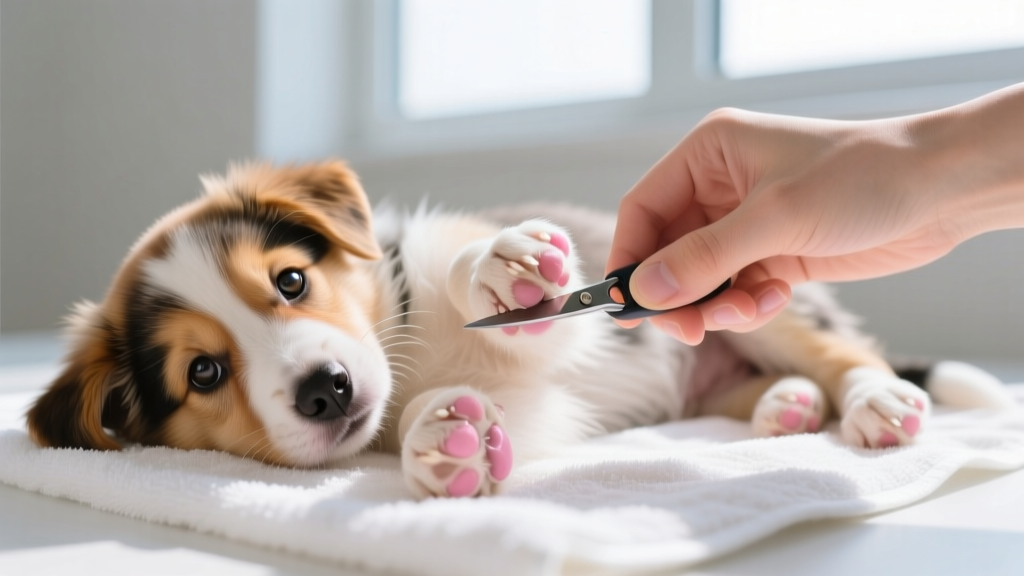
Why Nail Trimming Matters From Week One
If you've ever wondered how do you trim puppy nails without turning bath time into a wrestling match, you're not alone. Nail trimming is one of the most searched puppy care topics for good reason: overgrown nails alter a puppy's foot structure, cause splayed toes, and make walking painful. According to the American Kennel Club, puppies should have their nails trimmed every 2-3 weeks starting as early as the day you bring them home.
But nail care doesn't exist in a vacuum. It's one piece of a much larger puzzle that includes feeding schedules, vaccination timelines, potty training expectations, and the critical socialization window that closes around 14 weeks. This guide walks you through every developmental milestone from 4 weeks to 12 months, with the kind of specific numbers and real-world troubleshooting that generic puppy articles skip.
When Should I Bring My Puppy Home?
The American Veterinary Medical Association recommends puppies stay with their mother and littermates until at least 8 weeks of age. For smaller breeds (under 15 lb adult weight), many responsible breeders keep puppies until 10-12 weeks to ensure proper socialization and immune development.
Bringing a puppy home before 8 weeks increases the risk of:
- Bite inhibition problems (littermates teach each other appropriate mouth pressure)
- Separation anxiety and attachment disorders
- Delayed immune system maturation
- Poor stress coping mechanisms in novel environments
If you've adopted from a rescue where the puppy was separated early, compensate with extra structured socialization and consider working with a certified fear-free trainer for the first 12 weeks.
Week-by-Week Puppy Milestone Timeline
Weeks 4-8 (Breeder/Foster Care Stage)
- Weight gain: Puppies typically double their birth weight by week 5 and triple it by week 8
- Senses: Eyes fully open by week 3; hearing develops by week 4
- Socialization: Littermate play teaches bite inhibition and canine communication
- Nails: Nail tips may need their first trim around week 3-4 if scratching the mother during nursing
- Diet: Weaning begins at week 4 with gruel (puppy kibble soaked in warm water or puppy milk replacer); fully transitioned to solid food by week 7
Weeks 8-12 (Home Adjustment Period)
- Sleep: 18-20 hours per day is normal — puppies need enforced naps
- Bladder control: Approximately 1 hour per month of age (a 2-month-old can hold it ~2 hours max)
- Nail trimming: Begin handling paws daily; first actual trim with small guillotine-style clippers
- First vet visit: Within 48-72 hours of bringing puppy home for wellness exam
- Teething: Deciduous (baby) teeth fully erupted; expect chewing on everything
Weeks 12-16 (Confidence Building Stage)
- Bladder control: Extends to 3-4 hours between potty breaks
- Fear periods: First fear imprint period occurs around 8-11 weeks; second around 6-14 months
- Training: Can learn sit, down, touch, name recognition with 5-minute sessions, 2-3x daily
- Nails: Trim every 2 weeks; quick is still relatively short and easy to see in light-colored nails
- Exercise: 5 minutes of structured walking per month of age, twice daily (a 3-month-old = 15-minute walks)
Weeks 16-24 (Adolescent Transition)
- Teething: Adult teeth erupt between 4-6 months; expect increased chewing and possible gum bleeding
- Bladder control: 4-6 hours; approaching full reliability
- Nails: Quick may begin to recede with regular trimming; transition to scissor-style or grinder tools
- Behavior: Testing boundaries, selective hearing on recall — completely normal developmental phase
- Spay/neuter: Discuss timing with your vet; many recommend 6 months for small breeds, 12-18 months for large breeds to allow growth plate closure
Months 6-12 (Adolescence)
- Energy: Peak adolescent energy; mental stimulation becomes as important as physical exercise
- Training: Reliable recall, loose-leash walking, and impulse control require consistent reinforcement
- Nails: Establish a biweekly routine; adult nail hardness means sharper clippers or a Dremel 7300-PT grinder ($30-40) work best
- Social maturity: Breed-specific temperament traits become more pronounced; some breeds become more selective with other dogs
How Do You Trim Puppy Nails? A Step-by-Step Protocol
Here's the specific technique that certified groomers and veterinary technicians use, broken down for a first-time puppy owner:
- Desensitize first (weeks 8-10): Touch your puppy's paws 10-15 times per day while giving high-value treats (freeze-dried liver, boiled chicken). Do this for 5-7 days before attempting a trim.
- Choose your tool: For puppies under 20 lb, use small guillotine-style clippers (Resco Deluxe, ~$12). For puppies over 20 lb or dark-nailed breeds, a low-speed rotary grinder like the Dremel PawControl 7760-PGK ($35-45) reduces quick-nick risk.
- Position the paw: Hold the paw gently but firmly in your non-dominant hand. Isolate one toe at a time by pressing the pad to extend the nail.
- Cut angle: Trim at a 45-degree angle, removing only 1-2 mm from the tip. In light nails, the quick appears as a pink triangle inside the nail. Stop 2 mm before it.
- Dark nails: Make several small cuts rather than one large one. After each cut, look at the cross-section — when you see a dark circle or dot in the center, you're approaching the quick. Stop immediately.
- Treat after each nail: One nail, one treat. This builds a positive association and keeps sessions short (under 5 minutes for puppies under 16 weeks).
- Styptic powder on standby: Keep Kwik Stop styptic powder ($6-8) within arm's reach. If you nick the quick, apply firm pressure with the powder for 30-60 seconds. Bleeding stops quickly and it's not dangerous — just messy and startling for the puppy.
Feeding Schedule by Age and Weight
Exact portions depend on your puppy's projected adult weight, the calorie density of your chosen food, and activity level. The table below uses a standard puppy formula at approximately 400 kcal/cup as a baseline. Always check the feeding chart on your specific food bag and adjust based on body condition score (BCS) — you should be able to feel but not see ribs, and your puppy should have a visible waist when viewed from above.
| Age | Meals Per Day | Small Breed (10-25 lb adult) | Medium Breed (25-60 lb adult) | Large Breed (60-100+ lb adult) |
|---|---|---|---|---|
| 8-12 weeks | 4 meals | ½ - ¾ cup/day total | 1 - 1½ cups/day total | 2 - 3 cups/day total |
| 3-6 months | 3 meals | ¾ - 1 cup/day total | 1½ - 2½ cups/day total | 3 - 4½ cups/day total |
| 6-12 months | 2 meals | ¾ - 1¼ cups/day total | 2 - 3½ cups/day total | 4 - 6 cups/day total |
Critical note for large/giant breeds: Use a large-breed puppy formula that meets AAFCO guidelines for controlled calcium (1.0-1.8% on a dry matter basis) and phosphorus. Rapid growth from overfeeding increases the risk of developmental orthopedic diseases like hip dysplasia and osteochondrosis. According to the Merck Veterinary Manual, large-breed puppies should grow at a steady, moderate rate rather than as fast as possible.
Vaccination Schedule: What Your Puppy Needs and When
The AVMA and the American Animal Hospital Association (AAHA) canine vaccination guidelines recommend the following core protocol. Your veterinarian may adjust based on local disease prevalence and your puppy's risk factors.
| Age | Vaccines | What They Protect Against | Estimated Cost |
|---|---|---|---|
| 6-8 weeks | DHPP (1st dose) | Distemper, Hepatitis (Adenovirus-2), Parainfluenza, Parvovirus | $25-40 |
| 10-12 weeks | DHPP (2nd dose), Bordetella, Leptospirosis (if recommended) | Booster immunity; kennel cough; bacterial kidney/liver disease | $40-75 |
| 14-16 weeks | DHPP (3rd dose), Rabies | Final puppy DHPP series; fatal viral encephalitis (legally required) | $40-65 |
| 12 months | DHPP booster, Rabies booster (1-year or 3-year depending on local law) | Long-term immunity maintenance | $50-80 |
Lyme disease vaccine may be added at 12 weeks in tick-endemic areas (Northeast, Upper Midwest, Pacific Coast). Discuss with your vet based on your outdoor exposure risk.
Potty Training Timeline and Troubleshooting
Realistic potty training expectations save enormous frustration. Here's what actually happens, based on developmental bladder capacity:
8-10 weeks: Take puppy outside every 30-60 minutes during waking hours. Expect 2-4 accidents per day. You are not training yet — you are preventing accidents by managing the environment.
10-14 weeks: Extend to every 1-2 hours. Puppy begins to show pre-potty signals (circling, sniffing, sudden stillness). Accidents drop to 1-2 per day if schedule is consistent.
14-20 weeks: Every 2-3 hours. Puppy may begin going to the door independently. Accidents become rare (1-2 per week) if you maintain the routine.
5-6 months: Most puppies are functionally house-trained with 0-1 accidents per month. Can hold overnight for 6-8 hours.
6-12 months: Full reliability for most breeds. Note: small breeds (under 15 lb) may take until 8-10 months due to smaller bladder capacity and higher metabolism.
Common troubleshooting:
- Submissive/excitement urination: Not a potty training failure. Ignore the puppy for the first 2 minutes when arriving home, greet calmly at floor level. Typically resolves by 6-8 months.
- Regression at 6-10 months: Hormonal changes during adolescence can cause marking behavior. Spaying/neutering reduces this in approximately 60-70% of cases. Increase supervision and return to more frequent potty breaks temporarily.
- Crate soiling: If your puppy is eliminating in the crate, the crate may be too large (use a divider to limit space to standing + turning room only), or the puppy is being left too long for their bladder capacity.
The Critical Socialization Window (Weeks 3-14)
Research published in the Journal of Veterinary Behavior confirms that the primary socialization period closes between 12-14 weeks. Experiences during this window literally shape the puppy's brain architecture and future fear responses. Missing this window doesn't mean your dog is doomed — but remedial socialization in adulthood takes significantly more time and professional support.
When can my puppy go outside and meet other dogs? According to the AKC, puppies can begin controlled socialization outings after their first DHPP vaccine (typically at 6-8 weeks), but should avoid high-traffic dog areas (dog parks, pet store floors) until 7 days after the second DHPP dose (around 12-13 weeks). Carry your puppy or use a stroller for outings during this vulnerable window. Puppy classes that require proof of first vaccination are generally safe environments.
Crate Training Progression and Time Limits
A crate should be your puppy's safe den, never a punishment space. Follow this time-limit framework to avoid distress and accidents:
- 8-10 weeks: 30-60 minutes maximum during the day; overnight breaks every 2-3 hours
- 10-14 weeks: 1-2 hours maximum during the day; overnight stretches of 3-4 hours
- 14-16 weeks: 2-3 hours during the day; 4-5 hours overnight
- 4-6 months: 3-4 hours during the day; 6-8 hours overnight
- 6+ months: Up to 4-5 hours during the day; full overnight sleep
No dog of any age should be crated for more than 8 hours total in a 24-hour period without a mid-day break. For working owners, a mid-day dog walker or coming home at lunch is essential for puppies under 6 months.
Teething Timeline and Relief Strategies
Puppy teething follows a predictable pattern:
- 3-4 weeks: Deciduous (baby) incisors erupt
- 4-6 weeks: Deciduous canines and premolars emerge
- 8 weeks: Full set of 28 baby teeth present
- 12-16 weeks: Baby teeth begin to loosen and fall out; adult incisors erupt first
- 4-6 months: Adult canines and premolars push through; this is peak chewing intensity
- 6-7 months: Full set of 42 adult teeth should be present; retained baby teeth (especially canines) should be evaluated by your vet for extraction
Safe chew options during teething:
- KONG Puppy (pink or blue rubber, sized to your puppy's weight class) stuffed with plain Greek yogurt and frozen — $8-14
- Nylabone Puppy Chew (softer polymer than adult versions) — $5-8
- Frozen wet washcloth twisted into a rope shape (supervise to prevent swallowing fabric)
- Carrots, frozen whole — a cheap, low-calorie option
- Benebone Puppy Wishbone (softer rubber formula) — $12-16
Stopping Puppy Biting and Nipping
Puppy biting is normal developmental behavior, not aggression. Puppies explore the world with their mouths and haven't yet learned bite inhibition — the ability to control jaw pressure. Here's how to address it using force-free methods:
- Redirect: When teeth touch skin, immediately offer an appropriate chew toy. Praise enthusiastically when they bite the toy instead.
- Withdraw attention: If redirection fails, stand up, cross your arms, and turn away for 10-15 seconds. No talking, no eye contact. Resume play when the puppy is calm.
- Enforced naps: Biting escalates dramatically when puppies are overtired. An 8-12 week old puppy that's been awake for more than 1-2 hours is likely overstimulated. Place them in their crate with a chew toy for a nap.
- Avoid: Yelling, holding the mouth shut, alpha rolls, or any physical punishment. These increase fear and can create defensive biting in adulthood. The American Veterinary Society of Animal Behavior explicitly recommends against aversive training methods.
Most puppies show significant bite inhibition improvement by 16 weeks with consistent redirection. Complete cessation typically occurs by 5-6 months as adult teeth settle and impulse control matures.
First-Year Cost Breakdown
Budgeting realistically prevents surrender decisions. Here's a detailed first-year cost estimate for a medium-breed puppy (30-50 lb adult weight) in the US:
| Category | Low Estimate | Average | High Estimate |
|---|---|---|---|
| Puppy purchase/adoption fee | $200 (rescue) | $1,200 | $3,500+ |
| Initial vet (vaccines, exam, deworming) | $200 | $400 | $600 |
| Spay/neuter | $200 | $500 | $800 |
| Food (12 months) | $300 | $550 | $900 |
| Heartworm/flea/tick prevention (12 months) | $150 | $300 | $500 |
| Supplies (crate, bed, leash, bowls, toys, grooming tools) | $150 | $350 | $600 |
| Training classes (puppy kindergarten + basic obedience) | $100 | $300 | $600 |
| Pet insurance (annual premium) | $350 | $550 | $800 |
| TOTAL FIRST YEAR | $1,650 | $4,150 | $8,300+ |
Emergency veterinary visits (foreign body ingestion, parvovirus treatment, fracture repair) can add $1,500-$5,000+ to any year. Pet insurance purchased before any conditions develop provides the best coverage — pre-existing conditions are universally excluded.
Frequently Asked Questions
How do you trim puppy nails if the puppy won't stay still?
Start with handling practice before attempting a trim. Touch paws during calm moments (after naps, during cuddle sessions) and reward with treats. If your puppy is extremely resistant, try trimming just one nail per day rather than all at once. Some owners find success with a lick mat (spread with peanut butter — xylitol-free only) to keep the puppy occupied during the trim. For severely anxious puppies, ask your veterinarian about low-stress handling techniques or whether a mild situational anti-anxiety medication like trazodone is appropriate.
How often should I feed my puppy at 10 weeks old?
At 10 weeks, feed 4 meals per day spaced approximately 4 hours apart during waking hours (e.g., 7 AM, 11 AM, 3 PM, 7 PM). Divide the daily portion equally across all meals. Remove uneaten food after 15-20 minutes to establish meal-time habits rather than free-feeding. Always provide fresh water at all times.
When will my puppy be fully potty trained?
Most medium and large-breed puppies achieve reliable house training between 4-6 months of age. Small breeds may take until 8-10 months due to smaller bladder capacity. "Fully trained" means fewer than one accident per month with a consistent schedule. Setbacks during adolescence (6-10 months) and after environmental changes (moving, new family members) are normal and temporary with consistent management.
What vaccines does my puppy need and when?
Core vaccines include DHPP (distemper, hepatitis, parainfluenza, parvovirus) at 6-8, 10-12, and 14-16 weeks, plus rabies at 14-16 weeks. Non-core vaccines like Bordetella, Leptospirosis, and Lyme disease are added based on your puppy's lifestyle and local disease risk. Your veterinarian will create a tailored schedule during your first wellness visit.
How do I stop puppy biting and nipping?
Redirect biting to appropriate chew toys, withdraw attention for 10-15 seconds when teeth touch skin, and ensure your puppy is getting enough sleep (overtired puppies bite more). Never use physical punishment. Consistent redirection typically produces significant improvement by 16 weeks, with full resolution by 5-6 months as adult teeth erupt and impulse control develops.
When can my puppy go outside and meet other dogs?
Your puppy can begin controlled outdoor socialization after their first DHPP vaccine (around 6-8 weeks), but should avoid high-traffic dog areas until 7 days after the second DHPP dose (approximately 12-13 weeks of age). Puppy socialization classes that require proof of first vaccination and maintain sanitized environments are considered safe. Carry your puppy in public spaces during the vulnerable window to prevent exposure to parvovirus, which can survive in soil for over a year.
How do you trim puppy nails with dark-colored nails?
Dark nails hide the quick, making trimming more challenging. Make multiple small cuts rather than one large one. After each cut, examine the nail cross-section — when you see a dark or grayish circle appearing in the center (sometimes called the "bullseye"), you're approaching the quick and should stop. An alternative is using a rotary grinder, which removes small amounts gradually and lets you stop the moment the puppy reacts. If you're unsure, ask your vet or groomer to demonstrate on your puppy's first visit — most will happily teach you.
Priya Sutaria
All our authors care for dogs every day — read more of their work on the authors page.