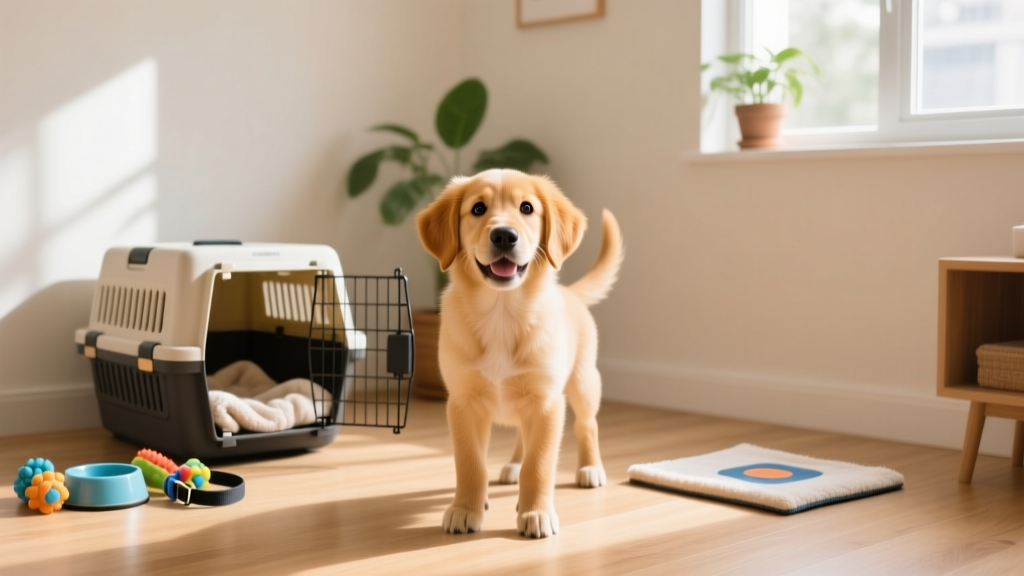
How to Get Puppies to Stop Barking: A Breed-Specific Puppy Guide
Learn how to get puppies to stop barking with age-specific milestones, training timelines, feeding schedules, and breed-aware strategies for a quieter home.

Understanding Why Puppies Bark — and When It's Normal
Every puppy barks. It's their primary way of communicating before they learn what we expect of them. But when you're searching for how to get puppies to stop barking, you're usually dealing with one of four triggers: attention-seeking, alarm barking, separation distress, or boredom. The solution depends heavily on your puppy's age, breed type, and developmental stage.
Vocal breeds like Beagles, Miniature Schnauzers, Yorkshire Terriers, and German Shepherds will naturally bark more than Basenjis or Greyhounds. According to the American Kennel Club, understanding your breed's vocal tendencies is the first step toward effective management. A Beagle puppy alert-barking at a leaf isn't misbehaving — they're doing what centuries of selective breeding wired them to do.
This guide walks you through every developmental stage from weeks 4 through 12 months, with concrete expectations for barking behavior, feeding, potty training, socialization, and health milestones. Whether you have a vocal hound or a quieter working breed, the timelines below will help you set realistic goals.
Age-Specific Milestones: What to Expect Week by Week
Weeks 4–8: The Litter Phase
Puppies learn bite inhibition and basic communication from littermates during this period. Barking is minimal and mostly play-related. If a puppy is separated from the litter too early (before week 7), they often develop excessive vocalization as a stress response. Responsible breeders keep puppies with the dam until at least 8 weeks — some breeds, particularly toy breeds and guardians, benefit from staying until 10–12 weeks.
Weeks 8–12: The Adjustment Window
This is peak whining and crying. Your puppy has left their litter, and nighttime crate barking is nearly universal. Expect 2–5 nights of significant vocalization. Barking at this stage is almost always distress-based, not behavioral. Punishing a crying 9-week-old puppy damages trust and increases anxiety-driven barking long-term.
Weeks 12–16: The Awareness Phase
Puppies begin alert-barking at doorbells, passing dogs, and unfamiliar sounds. This is the critical window to teach a "quiet" cue before the behavior becomes habitual. Start rewarding silence after a single bark at a trigger — don't wait until the barking escalates.
Weeks 16–24: The Testing Phase
Adolescent confidence grows, and demand barking emerges. Your puppy barks at you for food, play, or attention. This is the most important window for teaching that barking does not produce outcomes. Consistency here prevents lifelong attention-barking patterns.
Months 6–12: Adolescence
Hormonal changes (if intact) and increased territorial awareness can spike alarm barking. Spaying/neutering between 6–12 months (breed-dependent — consult your veterinarian for timing) can reduce hormonally-driven vocalization. Continue reinforcing quiet behavior with high-value treats like freeze-dried liver or small pieces of boiled chicken.
How to Get Puppies to Stop Barking: Proven Techniques by Age
There is no single off-switch for puppy barking, but there are evidence-based methods that work at each developmental stage. All techniques below use positive reinforcement and force-free principles — no shock collars, citronella devices, or punishment-based methods.
For Puppies 8–12 Weeks: Meeting Needs First
Before training, eliminate the cause. A barking puppy this young almost always needs something:
- Potty: Take them out immediately after crate time. A full bladder causes vocalization.
- Warmth: A Snuggle Puppy (heartbeat toy, ~$25–35) reduces nighttime crying by simulating littermate presence.
- Proximity: Place the crate in your bedroom for the first 2–3 weeks. Isolation increases distress barking.
- Covering: A breathable crate cover reduces visual stimulation that triggers alert barking.
For Puppies 12–16 Weeks: Teaching the "Quiet" Cue
- Wait for your puppy to bark at a trigger (doorbell, passerby).
- Say "quiet" in a calm, neutral tone once.
- Immediately present a high-value treat at their nose — most puppies stop barking to sniff.
- The moment they're silent for 2 seconds, mark with "yes" and give the treat.
- Gradually increase the silence duration to 5, then 10, then 30 seconds before marking.
Practice this 3–5 times per session, 2 sessions per day. Most puppies grasp the concept within 2–3 weeks of consistent practice.
For Puppies 4–6 Months: Managing Demand Barking
Demand barking — barking directly at you for food, walks, or play — requires an extinction protocol:
- Zero reinforcement: Do not look at, speak to, or touch your puppy when they demand-bark. Any response, including saying "no," reinforces the behavior.
- Reward silence: The instant they stop barking (even to take a breath), mark and reward.
- Expect an extinction burst: Barking will temporarily increase in intensity and duration before it decreases. This typically peaks around day 3–5 of consistent implementation. Push through — giving in during the burst teaches your puppy that louder, longer barking works.
For Adolescents 6–12 Months: Environmental Management
Alarm barking at windows, fences, and doors requires management alongside training:
- Apply frosted window film ($8–15 per roll) to lower panes to block visual triggers.
- Use white noise machines (~$20–40) near entryways to mask outdoor sounds.
- Teach a "place" command — send your dog to a mat or bed when the doorbell rings, and reward heavily for staying there.
- Provide 45–90 minutes of structured exercise daily (breed-dependent) to reduce pent-up energy that fuels barking.
Feeding Schedule: Exact Portions by Age and Weight
Hunger is a frequently overlooked barking trigger. Underfed puppies vocalize more, especially in the early morning. Overfed puppies have digestive discomfort that can also cause restlessness and whining. Use this schedule as a starting point and adjust based on your puppy's body condition score (BCS) — you should be able to feel but not see ribs, with a visible waist when viewed from above.
| Age | Meals/Day | Small Breed (10–25 lb / 4.5–11 kg) | Medium Breed (25–60 lb / 11–27 kg) | Large Breed (60–100+ lb / 27–45+ kg) |
|---|---|---|---|---|
| 8–12 weeks | 4 | ¼–½ cup per meal | ½–¾ cup per meal | ¾–1¼ cups per meal |
| 3–6 months | 3 | ⅓–⅔ cup per meal | ¾–1¼ cups per meal | 1–2 cups per meal |
| 6–12 months | 2 | ½–¾ cup per meal | 1–2 cups per meal | 2–3½ cups per meal |
These amounts assume a high-quality AAFCO-approved puppy food with a caloric density of approximately 350–450 kcal/cup. Large and giant breeds should be fed a large-breed puppy formula to support controlled growth and reduce the risk of developmental orthopedic diseases. Always consult your veterinarian for breed-specific nutritional guidance.
Potty Training Timeline and Troubleshooting
Potty-related barking is one of the most common reasons owners search for how to get puppies to stop barking at night. A puppy with a full bladder will vocalize — and they should. Teaching your puppy a reliable way to signal they need to go out (bell training or a door-scratch) reduces confused barking.
Realistic Potty Training Expectations
- 8–12 weeks: Accidents every 1–2 days. Take out every 1–2 hours during the day, once at midnight, and once at 4 AM. Bladder capacity is roughly 1 hour per month of age plus 1 (so a 2-month-old can hold ~3 hours max while sleeping).
- 3–4 months: Accidents 1–3 times per week. Nighttime stretches extend to 4–5 hours. Begin taking them to the same outdoor spot consistently to build scent association.
- 4–6 months: Most puppies are 80–90% reliable with consistent scheduling. Occasional accidents after excitement or schedule changes are normal.
- 6–12 months: Near-full reliability for most breeds. Small breeds may take longer due to smaller bladder capacity. Marking behavior may emerge in intact males — spaying/neutering reduces this in approximately 50–60% of cases.
Potty Training Log Template (First 4 Weeks Home)
Track these data points daily to identify patterns and prevent accidents:
| Time | Activity | Result | Notes |
|---|---|---|---|
| 7:00 AM | Out immediately after waking | ✓ Urinated + defecated | Used verbal cue "go potty" |
| 8:30 AM | Out 15 min after breakfast | ✓ Defecated | Normal consistency |
| 10:00 AM | Out after play session | ✗ Nothing | Returned to crate, out again in 30 min |
Logging for just 7–10 days reveals your puppy's natural rhythm and dramatically reduces accidents.
Socialization Window: Weeks 3–14 Exposure Checklist
The primary socialization period closes between 12–14 weeks of age, according to the American Veterinary Medical Association. Puppies not exposed to varied stimuli during this window are significantly more likely to develop fear-based barking, reactivity, and anxiety later in life.
Pre-vaccination safety: You can socialize safely before full vaccination by carrying your puppy, using a stroller or sling, visiting homes of known-vaccinated dogs, and attending structured puppy classes that require at least the first DHPP vaccine (given at 6–8 weeks). The Merck Veterinary Manual notes that the behavioral risk of under-socialization often exceeds the disease risk of controlled early exposure.
Vaccination Schedule: What Your Puppy Needs and When
| Age | Vaccine | Type | Notes |
|---|---|---|---|
| 6–8 weeks | DHPP (Distemper, Hepatitis, Parainfluenza, Parvovirus) | Core | First dose; maternal antibodies may interfere |
| 6–8 weeks | Bordetella (Kennel Cough) | Non-core | Recommended if attending puppy classes or boarding |
| 10–12 weeks | DHPP booster | Core | Second dose; continue limiting public exposure |
| 10–12 weeks | Leptospirosis | Non-core | Recommended in areas with wildlife or standing water |
| 10–12 weeks | Lyme disease | Non-core | Recommended in tick-endemic regions (Northeast, Upper Midwest, Pacific Northwest) |
| 14–16 weeks | DHPP booster | Core | Third dose; immunity typically established 1–2 weeks after |
| 14–16 weeks | Rabies | Core (legal requirement) | Required by law in most US jurisdictions; timing varies by state |
Your veterinarian will determine the exact schedule based on your puppy's breed, local disease prevalence, and risk factors. Some veterinarians recommend a 4th DHPP booster at 18–20 weeks for high-risk breeds or environments. After the full series, a titer test (antibody level check, ~$50–80) can confirm immunity and may reduce unnecessary boosters.
Teething Timeline: Months 3–6
Teething puppies chew and mouth everything, and the discomfort can increase irritability and whining. Understanding the timeline helps you prepare.
- 3–4 months: Deciduous (baby) incisors begin loosening. You may find tiny teeth in bedding or toys. Increased mouthing of hands and furniture.
- 4–5 months: Canines and premolars erupt. This is peak chewing intensity. Provide safe outlets: frozen Kong toys stuffed with puppy-safe peanut butter (xylitol-free), chilled carrot sticks, or rubber teething rings designed for puppies.
- 5–6 months: Most adult teeth are in. Schedule a veterinary dental check to ensure no retained deciduous teeth (common in small breeds like Chihuahuas, Yorkies, and Pomeranians), which may require extraction.
Safe chew recommendations: Nylabone Puppy Chew (softer formula, ~$6–10), Benebone Puppy ($10–15), or natural options like frozen washcloths (wet, twisted, and frozen). Avoid rawhide, cooked bones, antlers, and hard nylon chews marketed for adult dogs — these fracture puppy teeth.
Crate Training Progression with Time Limits
Crate training is one of the most effective tools for managing barking — when done correctly. A puppy who views the crate as a safe den will settle quietly. A puppy who associates the crate with isolation will bark, whine, and panic.
| Age | Maximum Daytime Crate Time | Overnight Expectation |
|---|---|---|
| 8–10 weeks | 30–60 minutes | 2–3 hours (wake for potty) |
| 10–12 weeks | 1–2 hours | 3–4 hours |
| 3–4 months | 2–3 hours | 4–5 hours |
| 4–6 months | 3–4 hours | 6–7 hours |
| 6–12 months | 4–5 hours | 7–8 hours |
Nighttime crate barking during the first 2–3 weeks is expected. Respond to genuine distress (sustained crying for 10+ minutes) by taking them out for a quick, boring potty trip — lights low, no play, straight back to crate. This teaches that nighttime waking is for elimination only, not social interaction.
Common Puppy Problems and Breed-Aware Solutions
Puppy Biting and Nipping
All puppies mouth, but herding breeds (Australian Shepherds, Border Collies, Corgis) and retrievers tend to be more mouthy due to breeding for bite-related work. Solutions:
- Redirect: When teeth touch skin, say "oops" calmly and immediately offer a chew toy. Reward chewing the toy enthusiastically.
- Time-outs: If biting continues after 2 redirects, calmly place the puppy in a playpen for 30–60 seconds. This teaches that biting ends play — not with punishment, but with natural consequences.
- Satisfy the drive: Provide structured bite-work outlets like tug games with clear start/stop cues, flirt pole sessions (for appropriate breeds), and food-dispensing puzzle toys.
Excessive Chewing
Between 3–8 months, puppies explore the world with their mouths. Puppy-proof by:
- Using bitter apple spray (~$8–12) on furniture legs and baseboards.
- Providing a rotation of 5–7 chew toys (novelty prevents boredom).
- Ensuring adequate physical exercise (minimum 5 minutes per month of age, twice daily) and mental stimulation (training sessions, sniffing walks, puzzle feeders).
Separation Whining and Barking
Build independence gradually:
- Start with 30-second departures — step outside, immediately return. Reward calm behavior.
- Increase to 1 minute, 2 minutes, 5 minutes over 1–2 weeks.
- Vary departure routines so your puppy doesn't predict when you're leaving for longer periods.
- Leave a Kong stuffed with frozen treats as you exit — this creates a positive association with your departure.
First-Year Cost Breakdown
Budgeting realistically prevents stress that can affect your training consistency. Here are typical first-year costs for a puppy in the US (2026 estimates):
| Category | Low Estimate | Mid Estimate | High Estimate |
|---|---|---|---|
| Veterinary care (vaccines, spay/neuter, wellness exams) | $600 | $1,200 | $2,500 |
| Food (quality puppy food, transitioning to adult) | $300 | $600 | $1,200 |
| Supplies (crate, bed, toys, leash, collar, bowls, gates) | $200 | $400 | $800 |
| Training (group classes, private sessions) | $150 | $400 | $1,500 |
| Preventive medications (flea/tick, heartworm) | $200 | $400 | $600 |
| Pet insurance (optional but recommended) | $360 | $600 | $960 |
| Grooming (breed-dependent) | $0 | $300 | $900 |
| Total estimated first year | $1,810 | $3,900 | $8,460 |
Large and giant breeds trend toward the higher end due to increased food costs, larger-sized supplies, and higher medication dosages (many preventives are weight-based). Brachycephalic breeds (French Bulldogs, Pugs, English Bulldogs) may incur additional veterinary costs for respiratory monitoring and skin fold care.
Frequently Asked Questions
When should I bring my puppy home?
Most puppies are ready to leave their litter at 8 weeks. Toy breeds (Chihuahuas, Yorkies, Maltese) often benefit from staying with the breeder until 10–12 weeks due to fragility and hypoglycemia risk. Bringing a puppy home before 7 weeks is associated with increased behavioral problems including excessive barking, biting, and anxiety, according to studies cited by the AVMA.
How often should I feed my puppy at each age?
Feed 4 meals per day from 8–12 weeks, 3 meals per day from 3–6 months, and transition to 2 meals per day from 6–12 months. Giant breeds (Great Danes, Saint Bernards) may benefit from 3 meals per day through 6 months to reduce bloat risk. Always feed measured portions rather than free-feeding to monitor appetite changes that could signal illness.
When will my puppy be fully potty trained?
Most puppies achieve 90%+ reliability between 4–6 months with consistent scheduling. Small breeds may take until 8–10 months due to smaller bladder capacity. "Fully" trained (zero accidents for 30+ consecutive days) typically occurs between 6–12 months. Setbacks during adolescence (6–10 months) are normal and don't indicate failure — maintain your schedule and they'll return to baseline.
What vaccines does my puppy need and when?
Core vaccines include DHPP at 6–8, 10–12, and 14–16 weeks, plus Rabies at 14–16 weeks (timing varies by state law). Non-core vaccines like Bordetella, Leptospirosis, and Lyme are recommended based on lifestyle and geographic risk. Your veterinarian will tailor the protocol to your puppy's specific needs.
How do I stop puppy biting and nipping?
Redirect to appropriate chew toys every time teeth contact skin. Use brief (30–60 second) play pauses when biting persists. Provide adequate physical exercise and mental enrichment to reduce frustration-based mouthing. Most puppies significantly reduce biting by 5–6 months as adult teeth come in and impulse control develops. Never use physical punishment — it increases fear-based biting.
When can my puppy go outside and meet other dogs?
Your puppy can explore your own yard (if no unvaccinated dogs have access) immediately. Public spaces like parks, pet stores, and sidewalks should wait until 1–2 weeks after the final DHPP booster (typically around 17–18 weeks of age). Controlled playdates with known, fully-vaccinated dogs are safe from 8 weeks onward and are strongly encouraged during the socialization window. Structured puppy classes that require at least one DHPP dose are also considered safe and beneficial.
When Barking Signals a Health Problem
Contact your veterinarian promptly if your puppy's barking is accompanied by any of these signs:
- Sudden onset of vocalization in a previously quiet puppy
- Barking while urinating or defecating (possible UTI or GI pain)
- Whining when touched in a specific area (possible injury)
- Restlessness and vocalization with a distended abdomen (emergency — possible bloat/GDV)
- Excessive panting combined with vocalization (possible pain or heat distress)
This guide is for informational purposes. Always consult your veterinarian for medical advice specific to your puppy's health and behavior.
Beth Carrasco
All our authors care for dogs every day — read more of their work on the authors page.