Best Chew Toys for Teething Puppies: A Complete Week-by-Week Guide
Discover the best chew toys for teething puppies with our week-by-week timeline, safety tips, and expert picks to soothe sore gums and save your furniture.

Why Teething Puppies Need the Right Chew Toys
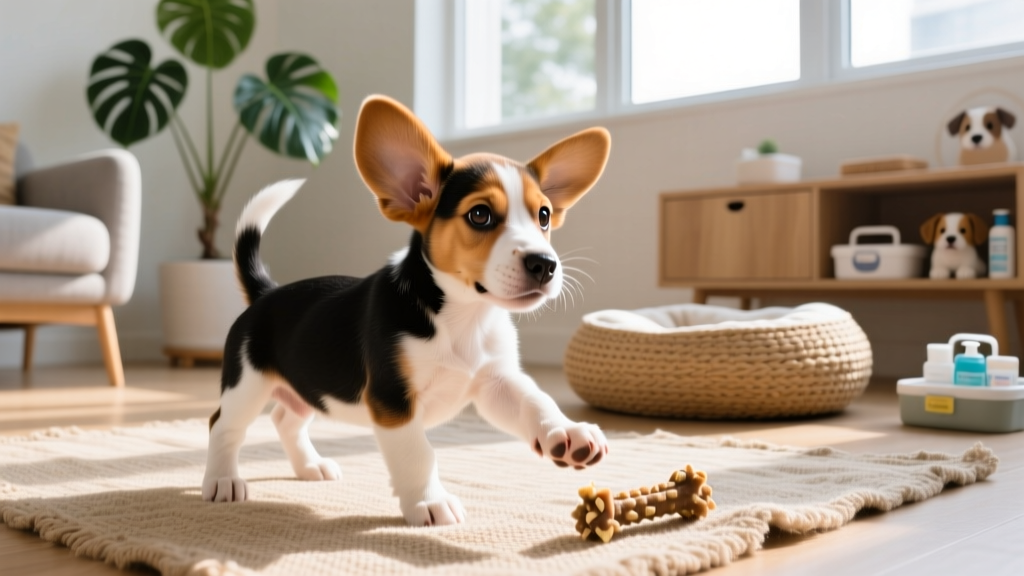
Puppies begin exploring the world with their mouths almost immediately, but the real chewing urgency kicks in when baby teeth start loosening and adult teeth push through the gums. This process, which spans roughly 3 to 6 months of age, can cause significant discomfort, leading puppies to gnaw on anything they can find — your shoes, furniture legs, baseboards, and even your hands. Providing appropriate chew toys for teething puppies isn't just about saving your belongings; it's about giving your puppy a safe outlet for a biological need and preventing accidental ingestion of dangerous objects.
According to the American Kennel Club, puppies have 28 deciduous (baby) teeth that erupt between 3 and 6 weeks, and 42 permanent teeth that replace them between 3 and 7 months. During the overlap period, gums are inflamed, tender, and sometimes bleeding — making the texture, temperature, and durability of chew toys critically important.
The Complete Teething Timeline: What to Expect Week by Week
Understanding your puppy's dental development helps you match chew toys to their specific needs at each stage. Here's what happens inside your puppy's mouth during the first year:
Weeks 4–8: Baby Teeth Eruption
- What's happening: Deciduous incisors and canines emerge. Puppies explore littermates and objects through gentle mouthing.
- Chew toy needs: Very soft, pliable toys — think thin rubber or soft fabric. Nothing hard enough to damage emerging teeth.
- Recommended: KONG Puppy (XS, pink or blue rubber formula), Nylabone Puppy Chew Keys (soft polymer).
Weeks 8–12: Mouthing and Exploration Peak
- What's happening: All 28 baby teeth are typically in. Puppies are in a new environment (your home) and mouth everything to explore.
- Chew toy needs: Variety of textures — ridged, nubby, smooth — to satisfy exploration. Toys should be lightweight and easy to carry.
- Recommended: Benebone Puppy Wishbone (small), Petstages Cool Teething Stick (freezable fabric).
Weeks 12–16: Pre-Teething Chewing Surge
- What's happening: Baby teeth are still in place but jaw strength is increasing rapidly. Puppies begin applying more bite pressure.
- Chew toy needs: Slightly more durable materials — medium-density rubber, rope toys with knotted ends. Introduce puzzle chew toys to build engagement.
- Recommended: KONG Classic Puppy (small, red rubber), Mammoth Flossy Chews Rope Toy (mini).
Months 4–6 (Weeks 16–24): Active Teething Phase
- What's happening: Baby teeth begin falling out, adult teeth push through. Gums are swollen, sometimes bloody. You may find tiny teeth on the floor. Chewing intensity peaks.
- Chew toy needs: This is where the right chew toys matter most. Freezable toys that numb gums, durable rubber that won't splinter, and edible chews designed for puppies.
- Recommended: KONG Classic (medium, red — stuff and freeze), Nylabone Puppy Power Chew Dura Chew (bacon flavor), Pet Qwerks Puppy Babble Ball (interactive distraction).
Months 6–12: Adult Teeth Settling and Habit Formation
- What's happening: All 42 adult teeth are typically in by 7 months. Chewing shifts from pain relief to habit and mental stimulation. Jaw strength is now near adult levels.
- Chew toy needs: Transition to adult-durability toys. Hard nylon, tough rubber, and long-lasting edible chews (bully sticks, yak cheese — supervised).
- Recommended: KONG Extreme (black rubber), Goughnuts MaXX 50 Ring, Earth Animal No-Hide Chews (supervised).
Top Chew Toy Picks by Teething Stage
| Stage | Age Range | Top Pick | Material | Price Range (2026) | Key Feature |
|---|---|---|---|---|---|
| Baby Teeth | 4–8 weeks | KONG Puppy XS | Soft rubber (pink/blue) | $8–$12 | Gentle on emerging teeth |
| Exploration | 8–12 weeks | Petstages Cool Teething Stick | Freezable mesh fabric | $6–$9 | Cold soothes, multiple textures |
| Pre-Teething | 12–16 weeks | Benebone Puppy Wishbone | Nylon + real bacon | $12–$16 | Ergonomic shape, flavor-infused |
| Active Teething | 4–6 months | KONG Classic (stuffed & frozen) | Red natural rubber | $11–$15 | Freezable, stuffable, vet-recommended |
| Adult Transition | 6–12 months | Goughnuts MaXX 50 Ring | Carbon-reinforced rubber | $28–$34 | Lifetime warranty, wear indicator |
Safety Rule: Any chew toy that fits entirely inside your puppy's mouth is a choking hazard. Always size up when in doubt, and supervise all chewing sessions. Replace toys immediately if pieces begin breaking off. If your puppy ingests a foreign object, call the ASPCA Animal Poison Control at (888) 426-4435 (24/7, consultation fee applies) or your emergency vet.
Feeding Schedule During the Teething Months
Teething can suppress appetite — sore gums make crunchy kibble uncomfortable. Here's a feeding framework that accounts for both developmental nutrition needs and teething discomfort:
| Age | Meals/Day | Approximate Portion* | Teething Adjustment |
|---|---|---|---|
| 8–12 weeks | 3–4 | ½ – ¾ cup per meal (small breeds: ¼ – ½ cup) | Moisten kibble with warm water or puppy-safe bone broth |
| 12–16 weeks | 3 | ¾ – 1 cup per meal (small breeds: ⅓ – ⅔ cup) | Continue softening if puppy shows reluctance to eat |
| 4–6 months | 2–3 | 1 – 1½ cups per meal (varies by breed) | Offer frozen KONG stuffed with puppy food as a meal supplement |
| 6–12 months | 2 | Breed/weight dependent — follow package + vet guidance | Transition to dry kibble fully; use dental kibble if recommended |
*Portions are approximate for a medium-breed puppy (expected adult weight 30–50 lb / 14–23 kg). Always consult your veterinarian for breed-specific caloric needs. Caloric requirements vary dramatically — a Great Dane puppy needs far more than a Chihuahua puppy.
Vaccination Schedule and When Puppies Can Socialize
One of the most common questions new owners ask is: "When can my puppy go outside and meet other dogs?" The answer requires balancing disease risk with the critical socialization window.
| Age | Vaccines Administered | What It Protects Against |
|---|---|---|
| 6–8 weeks | DHPP (1st dose), Bordetella (optional) | Distemper, Hepatitis (Adenovirus), Parainfluenza, Parvovirus; Kennel Cough |
| 10–12 weeks | DHPP (2nd dose), Leptospirosis (1st, if recommended) | Booster for core viruses; Leptospirosis (bacterial, zoonotic — transmissible to humans) |
| 14–16 weeks | DHPP (3rd dose), Rabies, Leptospirosis (2nd) | Final core booster; Rabies (legally required); Leptospirosis booster |
| 12–16 months | DHPP booster, Rabies booster (1-year or 3-year) | Long-term immunity confirmation |
The American Veterinary Medical Association emphasizes that puppies are not fully protected against parvovirus and distemper until approximately one week after their final DHPP dose at 16 weeks. However, the AKC and veterinary behaviorists stress that the critical socialization window closes around 14–16 weeks — meaning waiting until full vaccination to begin socialization creates behavioral risk.
Potty Training Timeline and Realistic Expectations
Potty training is a marathon, not a sprint. Any source promising "trained in 3 days" is setting you up for frustration. Here's what the science actually supports:
| Age | Bladder Capacity | Realistic Expectation | Outing Frequency |
|---|---|---|---|
| 8–10 weeks | ~20 minutes | Frequent accidents are normal — this is not failure | Every 30–60 minutes while awake, plus after every meal, nap, and play session |
| 10–14 weeks | ~1–1.5 hours | Beginning to show preference for outdoor elimination | Every 1–2 hours during day; 1–2 overnight outings |
| 3–4 months | ~2–3 hours | Noticeable improvement; accidents decrease if schedule is consistent | Every 2–3 hours; may sleep 5–6 hours overnight |
| 4–6 months | ~4–5 hours | Most puppies are reliably house-trained with few accidents | Every 3–4 hours during day; overnight typically dry |
| 6–12 months | ~6–8 hours | Considered fully house-trained if no accidents for 4+ consecutive weeks | 3–5 outings/day; 8-hour overnight hold is typical |
Troubleshooting common setbacks:
- Regression at 4–5 months: Often coincides with teething discomfort and increased independence. Return to more frequent outings temporarily.
- Submissive/excitement urination: Not a house-training failure — it's an involuntary response. Avoid greeting puppy with high energy; crouch sideways and let puppy approach calmly.
- Marking behavior (6+ months, especially intact males): Spaying/neutering reduces marking in approximately 60–70% of cases, per the Merck Veterinary Manual. Manage with supervision and interrupt-and-redirect.
Crate Training Progression and Safe Time Limits
A crate is your puppy's safe den — never a punishment space. Proper crate training supports potty training (dogs instinctively avoid soiling their sleeping area) and prevents destructive chewing when unsupervised.
Crate Time Limits by Age
- 8–10 weeks: Maximum 30–60 minutes during the day; overnight, expect 2–3 wake-ups for potty breaks
- 10–14 weeks: 1–2 hours max during day; overnight stretches to 3–4 hours
- 3–4 months: 2–3 hours max during day; overnight 5–6 hours possible
- 4–6 months: 3–4 hours max during day; overnight 6–8 hours
- 6+ months: 4–5 hours max during day (even adult dogs shouldn't be crated longer than 6–8 hours without a break)
General rule: A puppy can hold their bladder for roughly their age in months plus one (e.g., a 3-month-old = ~4 hours maximum, but aim for less).
Crate training steps:
- Place crate in a high-traffic area (living room, not a basement). Leave door open initially.
- Feed all meals inside the crate with door open, then closed briefly, then for progressively longer periods.
- Introduce a stuffed KONG or safe chew toy as a "crate-only" special item to build positive association.
- Begin closing the door for short absences (start with 5 minutes, same room). Gradually increase duration and distance.
- If puppy whines: wait for a 10-second pause in vocalization before opening the door. This teaches quiet, not silence-for-release.
Stopping Puppy Biting and Nipping: A Force-Free Approach
Puppy biting is one of the most common complaints from new owners — and it's completely normal. Puppies use their mouths the way human toddlers use their hands. The goal isn't to eliminate mouthing immediately but to teach bite inhibition: the ability to control jaw pressure.
Step-by-step protocol (positive reinforcement only):
- Redirect: When puppy mouths your skin, immediately offer an appropriate chew toy. Praise enthusiastically when they take the toy.
- Yelp and withdraw: If teeth make contact with skin, let out a high-pitched "yelp" (mimicking littermate feedback), then stand up and withdraw attention for 10–15 seconds. This is negative punishment (removing something the puppy wants — your attention) and is highly effective.
- Time-outs: If redirecting and yelping aren't working after 3–4 attempts in a session, calmly place puppy in their crate or a playpen with a chew toy for a 2-minute cool-down. This is not punishment — it's helping an overstimulated puppy regulate.
- Never hold the puppy's mouth shut, alpha-roll them, or use physical corrections. These methods damage trust, increase fear-based aggression, and are rejected by modern veterinary behaviorists.
Biting typically decreases significantly by 5–6 months as adult teeth come in and puppies learn social boundaries — but only if you've consistently provided alternatives and feedback.
First-Year Cost Breakdown: Budgeting for Your Puppy
Puppies are a significant financial commitment. Here's a realistic cost breakdown for the first year (medium-breed puppy, US averages, 2026 estimates):
| Category | Low Estimate | Mid-Range | High Estimate | Notes |
|---|---|---|---|---|
| Veterinary (vaccines, exams, spay/neuter) | $400 | $700 | $1,200 | Includes 3 DHPP rounds, rabies, wellness exams, fecal tests; spay/neuter varies by clinic and size |
| Food (quality AAFCO-approved puppy formula) | $300 | $500 | $800 | Varies by breed size; large-breed formulas cost more due to volume |
| Supplies (crate, bed, leash, collar, bowls, gates) | $150 | $300 | $500 | One-time purchases; invest in a quality crate and adjustable harness |
| Chew Toys and Enrichment | $80 | $150 | $250 | Teething puppies destroy toys quickly — budget for frequent replacement |
| Training (group classes or private sessions) | $100 | $300 | $800 | Group puppy class: $100–$200 for 6 weeks; private: $75–$150/session |
| Preventive Medications (flea/tick, heartworm) | $150 | $250 | $400 | Year-round prevention recommended in most US regions |
| Pet Insurance (optional but recommended) | $300 | $500 | $700 | Monthly premiums $25–$60; enroll before pre-existing conditions develop |
| Total First-Year Estimate | $1,480 | $2,700 | $4,650 | Does not include purchase/adoption price or emergency vet visits |
Frequently Asked Questions
When should I bring my puppy home?
The ideal age is 8–10 weeks. Puppies removed from their mother and littermates before 8 weeks miss critical bite-inhibition learning and social development. Some breeders of small breeds retain puppies until 10–12 weeks due to fragility and hypoglycemia risk. Avoid any breeder offering puppies younger than 8 weeks.
How often should I feed my puppy?
Ages 8–12 weeks: 3–4 meals per day. Ages 3–6 months: 3 meals per day. Ages 6–12 months: 2 meals per day. Transition gradually over 5–7 days when reducing meal frequency. Always feed an AAFCO-approved puppy formula — adult food lacks the calcium, phosphorus, and caloric density growing bodies require.
When will my puppy be fully potty trained?
Most puppies achieve reliable house training between 4 and 6 months, though some small breeds (with proportionally smaller bladders) may take until 8–10 months. "Fully trained" means no accidents for 4+ consecutive weeks. Consistency in schedule, supervision, and positive reinforcement for outdoor elimination are the three biggest predictors of speed.
What vaccines does my puppy need and when?
Core vaccines: DHPP at 6–8, 10–12, and 14–16 weeks, plus Rabies at 14–16 weeks. Non-core vaccines (based on lifestyle and geography): Bordetella, Leptospirosis, Lyme, Canine Influenza. Your veterinarian will tailor the schedule to your region's disease prevalence and your puppy's exposure risk.
How do I stop puppy biting and nipping?
Redirect to appropriate chew toys, use a high-pitched yelp followed by brief attention withdrawal, and provide structured cool-down periods for overstimulated puppies. Never use physical punishment. Biting naturally decreases as puppies mature (typically by 5–6 months) when consistent, force-free feedback is provided.
When can my puppy go outside and meet other dogs?
Controlled outdoor exposure can begin immediately — carry your puppy in public spaces, invite vaccinated dogs to your home, and attend sanitized puppy classes after the first DHPP dose (typically around 8 weeks). Avoid dog parks, pet store floors, and areas with unknown dog traffic until one week after the final DHPP dose at 16 weeks. The socialization window (3–14 weeks) is too valuable to waste in total isolation.
Are frozen washcloths safe for teething puppies?
Yes, with supervision. Wet a clean washcloth, wring it out, twist it into a rope shape, and freeze for 2–3 hours. The cold numbs sore gums and the texture provides gentle resistance. Always supervise — remove the washcloth immediately if your puppy begins tearing and ingesting fabric pieces, which can cause intestinal blockage.
How do I know if a chew toy is too hard for my puppy?
Use the thumbnail test: press the toy with your thumbnail. If you can't make a slight indentation, it's too hard for a puppy's developing teeth. Avoid antlers, hooves, cooked bones, and hard nylon bones designed for adult power chewers — these can fracture puppy teeth (specifically the carnassial teeth), requiring expensive surgical extraction.
This article is for informational purposes only and does not replace professional veterinary advice. Always consult your veterinarian regarding your puppy's specific health, nutrition, and vaccination needs.
Priya Sutaria
All our authors care for dogs every day — read more of their work on the authors page.