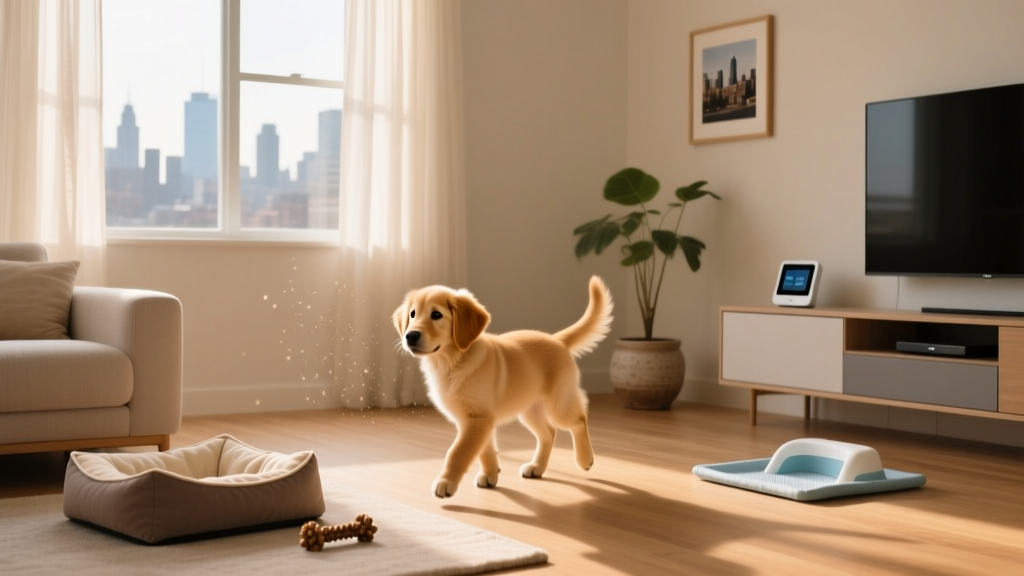
How to Crate Train a Puppy: A Complete Week-by-Week Guide
Learn how to crate train a puppy with this week-by-week milestone guide covering feeding, potty training, vaccines, socialization, and first-year costs.

Bringing a new puppy home is thrilling — and overwhelming. Among the first skills every new dog owner needs to master is crate training, a foundation for housebreaking, safety, and lifelong comfort. But crate training doesn't happen in a vacuum. It's woven into every aspect of your puppy's early development: feeding schedules, potty routines, vaccination timing, and socialization windows. This guide ties all of those threads together into one actionable, age-specific roadmap you can follow from the day your puppy arrives through their first year.
When Should I Bring My Puppy Home?
The American Kennel Club and most veterinary behaviorists agree: puppies should remain with their mother and littermates until at least 8 weeks of age. During weeks 4–8, puppies learn critical bite inhibition, canine social cues, and stress coping mechanisms from their siblings. Removing a puppy before 8 weeks increases the risk of fear-based behaviors, resource guarding, and difficulty with crate adjustment later.
Some toy and small breeds (Chihuahuas, Yorkshire Terriers, Pomeranians) benefit from staying until 10–12 weeks due to their fragility and slower physical development. Larger breeds like Labrador Retrievers, Golden Retrievers, and German Shepherds typically transition well at 8 weeks.
Plan your puppy's first week home around a quiet schedule — avoid moving houses, hosting parties, or traveling during this transition. Your puppy will need frequent potty breaks (every 1–2 hours during the day), short supervised play sessions, and 18–20 hours of sleep per day.
Crate Training Progression: Time Limits and Milestones
Crate training is a gradual process. The general rule for maximum crated time during the day is your puppy's age in months plus one hour — but this applies to overnight sleep and short daytime intervals, not all-day confinement. Here's a realistic progression:
| Puppy Age | Max Crate Time (Daytime) | Overnight Expectation | Training Focus |
|---|---|---|---|
| 8–10 weeks | 30–60 minutes | 2–3 hours before potty break | Crate = safe space; door open, meals inside |
| 10–12 weeks | 1–2 hours | 3–4 hours before potty break | Short departures; quiet settling |
| 12–16 weeks | 2–3 hours | 4–5 hours | Building duration; crate while home but in another room |
| 16–24 weeks | 3–4 hours | 6–7 hours (full night possible) | Independence building; alone-time practice |
| 6–12 months | 4–6 hours | 8 hours (full night) | Crate as den; door-open privileges earned |
Step-by-Step Crate Introduction (First 7 Days Home)
- Day 1–2: Place the crate in a common area with the door open. Drop high-value treats (small pieces of boiled chicken, freeze-dried liver) inside. Let the puppy enter and exit freely. Feed all meals inside the crate with the door open.
- Day 3–4: Close the door during meals. Open it immediately when the puppy finishes. Add a soft blanket or a Snuggle Puppy heartbeat toy (approximately $30–$40) to mimic littermate warmth.
- Day 5–6: Close the door after meals for 2–5 minutes while you sit nearby. Reward quiet behavior with a treat passed through the crate bars or door.
- Day 7: Begin leaving the room for 1–2 minutes while the puppy is crated and calm. Return before they vocalize. Gradually extend absences by 1–2 minutes per session.
Crate sizing matters. The crate should be large enough for your puppy to stand up, turn around, and lie down — but not so large that they can eliminate in one corner and sleep in another. For medium-to-large breeds, buy a crate with a divider panel (common in MidWest iCrate and Frisco models, $40–$80) and expand the space as your puppy grows.
Feeding Schedule: Exact Portions by Age and Weight
A consistent feeding schedule is the backbone of successful potty training and crate training. Puppies who eat on a predictable schedule eliminate on a predictable schedule. Here's a framework based on Merck Veterinary Manual guidelines for a typical puppy fed a complete-and-balanced AAFCO-approved kibble:
| Age | Meals Per Day | Daily Portion (Small Breed, 10–20 lb adult) | Daily Portion (Medium Breed, 30–50 lb adult) | Daily Portion (Large Breed, 60–90 lb adult) |
|---|---|---|---|---|
| 8–12 weeks | 4 meals | ½–¾ cup | 1–1½ cups | 1½–2½ cups |
| 12–16 weeks | 3 meals | ¾–1 cup | 1½–2 cups | 2–3 cups |
| 4–6 months | 3 meals | ¾–1¼ cups | 2–2¾ cups | 2½–4 cups |
| 6–12 months | 2 meals | ¾–1¼ cups | 2–3 cups | 3–5 cups |
Feeding tip for crate training: Feed meals inside the crate to build a positive association. Remove the food bowl after 15–20 minutes (even if not finished) to establish a routine. Puppies who graze all day are harder to potty train because their elimination schedule is unpredictable.
Always check your specific food's feeding guide — calorie density varies significantly between brands. A puppy food with 400 kcal/cup requires smaller portions than one with 325 kcal/cup. For large-breed puppies, choose a formula labeled for "large-breed growth" to support proper bone and joint development and reduce hip dysplasia risk.
Potty Training Timeline: Realistic Expectations
Let's address the question every new puppy owner asks: When will my puppy be fully potty trained? The honest answer is 4–6 months for most puppies, with some toy breeds taking up to 8–10 months due to smaller bladders. Any program promising full housebreaking in 3 days is setting you up for frustration.
Potty Training by Age
- 8–12 weeks: Take your puppy outside every 1–2 hours, immediately after meals, after naps, and after play sessions. Expect 8–12 potty trips per day. Accidents are normal — clean them with an enzymatic cleaner (Nature's Miracle or Rocco & Roxie, $10–$15) to eliminate scent markers.
- 12–16 weeks: Bladder control improves. You can extend outings to every 2–3 hours. Begin using a consistent cue word ("go potty" or "do your business") and reward immediately with a treat outdoors.
- 16–24 weeks: Most puppies can hold it for 3–4 hours during the day. Accidents drop significantly if you've maintained a consistent schedule. If accidents persist, rule out urinary tract infections with your vet.
- 6–12 months: Reliable housebreaking for most dogs. Intact males may begin marking — spaying/neutering reduces this behavior in approximately 60–70% of cases according to veterinary behaviorists.
- Puppy eliminates in crate: Crate may be too large, or puppy was left too long. Reduce space with a divider and shorten crated intervals.
- Puppy eliminates inside 5 minutes of coming back in: Go back outside immediately. The puppy hasn't learned the location connection yet. Stand still in one spot for 5 minutes on leash.
- Regression at 4–5 months: Common during teething and developmental fear periods. Return to more frequent outings temporarily.
Socialization Window: Weeks 3–14
The American Veterinary Medical Association identifies the primary socialization window as 3–14 weeks of age. During this period, puppies are neurologically primed to accept new experiences without fear. After 14 weeks, unfamiliar stimuli are more likely to trigger fear responses. This window is non-negotiable — missed socialization is the leading behavioral reason dogs are surrendered to shelters.
Before your puppy is fully vaccinated, you must balance socialization with disease risk. The AVMA and the American Veterinary Society of Animal Behavior (AVSAB) recommend controlled socialization beginning at 7–8 weeks — at least 7 days after the first DHPP vaccine. Avoid dog parks and high-traffic pet store floors until the full vaccine series is complete (typically 16 weeks).
Socialization Exposure Checklist
- Surfaces: Grass, gravel, tile, hardwood, carpet, metal grates, wet pavement, sand
- Sounds: Vacuum cleaner, doorbell, thunderstorms (play recordings at low volume), traffic, children laughing, clapping, umbrellas opening
- People: Men with beards, people wearing hats/sunglasses, children (supervised), people in wheelchairs, delivery workers, people of different ethnicities and heights
- Animals: Fully vaccinated adult dogs (known health status), cats (controlled introductions), livestock if accessible
- Handling: Paw touching, ear examination, mouth opening, nail trimming practice, gentle restraint, towel wrapping
- Environments: Car rides, parking lots, outdoor café patios, friend's homes, groomer visits (just for treats and handling, no full groom yet), vet clinic (happy visits with no procedures)
- Objects: Bicycles, skateboards, strollers, plastic bags, balloons, flags, garden hoses
Target: Aim for 5–10 new positive experiences per day during the socialization window. Pair every new experience with high-value treats. If your puppy shows fear (cowering, tucked tail, refusal to take treats), increase distance from the stimulus and let them observe from a comfortable range. Never force a puppy to approach something that frightens them.
Vaccination Schedule: What Your Puppy Needs and When
Vaccinations protect your puppy from life-threatening diseases and directly affect when they can safely socialize and explore outdoors. The following schedule reflects AKC-recommended core vaccine timing. Your veterinarian may adjust based on local disease prevalence and your puppy's individual risk factors.
| Age | Vaccines Administered | What They Protect Against | Estimated Cost |
|---|---|---|---|
| 6–8 weeks | DHPP (1st dose), Bordetella (optional) | Distemper, Hepatitis (Adenovirus), Parainfluenza, Parvovirus; Kennel cough | $75–$100 |
| 10–12 weeks | DHPP (2nd dose), Leptospirosis (1st dose, risk-dependent), Lyme (risk-dependent) | Booster for core diseases; bacterial infections from wildlife/ticks | $85–$120 |
| 14–16 weeks | DHPP (3rd dose), Rabies, Leptospirosis (2nd dose if started) | Final core booster; Rabies (legally required); Lepto booster | $90–$140 |
When can my puppy go outside and meet other dogs? After the first DHPP vaccine (6–8 weeks) plus a 7-day waiting period, controlled outdoor exposure in low-risk environments is safe. Full public access — dog parks, hiking trails, pet-friendly stores — should wait until 7 days after the final DHPP booster at 14–16 weeks, typically around 17 weeks of age. During the interim, carry your puppy or use a stroller for outdoor socialization in controlled settings.
Always consult your veterinarian about your puppy's specific vaccine needs. Non-core vaccines (Lyme, Leptospirosis, Canine Influenza) depend on your geographic region and lifestyle.
Teething Timeline and Relief Strategies
Puppies have 28 deciduous (baby) teeth that begin erupting at 3–4 weeks and are fully in by 6–8 weeks. Starting around 3–4 months, these teeth fall out and are replaced by 42 permanent adult teeth. The teething process typically concludes by 6–7 months, though some small breeds retain baby teeth that require veterinary extraction.
Teething Phases and What to Expect
- 3–4 months: Incisors begin loosening. You may find tiny teeth on the floor or in bedding (many puppies swallow them — this is harmless). Increased chewing on fingers, furniture, and shoes.
- 4–5 months: Canines and premolars erupt. This is peak discomfort. Gums may appear red or slightly bloody. Appetite may dip temporarily.
- 5–7 months: Molars come in. Chewing intensity peaks and then gradually declines as the adult dentition settles.
Safe Teething Relief Options
- KONG Classic (puppy rubber, pink/blue): Fill with softened kibble mixed with plain pumpkin puree and freeze for 2–4 hours. The cold soothes inflamed gums. Sizes XS–M cost $8–$14.
- Nylabone Puppy Chew: Designed for developing teeth with softer polymer than adult versions. Replace when worn down to the size of your dog's mouth. $5–$8.
- Frozen washcloth: Wet a clean washcloth, twist into a rope, freeze for 2 hours. Supervise use — remove if the puppy tears off and swallows fabric pieces.
- Benebone Puppy: Nylon chew shaped for easy gripping. The puppy version uses a softer formula. $12–$18.
Common Puppy Problems and Solutions
Puppy Biting and Nipping
Mouthing is normal puppy behavior — they explore the world with their mouths and are learning bite inhibition. However, it needs redirection, not punishment.
How to stop puppy biting:
- When teeth touch skin, say "ouch" in a calm, slightly high-pitched tone and immediately withdraw attention (stand up, cross arms, look away) for 10–15 seconds.
- Redirect to an appropriate chew toy. Praise enthusiastically when they chew the toy instead.
- If biting persists, end the play session. Place the puppy in their crate or a pen for a 2–3 minute calm-down period (this is not punishment — it's a reset).
- Ensure your puppy gets adequate physical exercise and mental enrichment. Overtired puppies bite more. A 10-minute training session or a 5-minute sniff walk can reduce nipping dramatically.
Never hold a puppy's mouth shut, alpha roll, or yell. These methods increase fear and can escalate biting into defensive aggression. If biting causes puncture wounds or doesn't improve by 16 weeks, consult a certified professional dog trainer (CPDT-KA or IAABC-certified) who uses force-free methods.
Crate Whining
Some whining during the first 1–2 weeks of crate training is normal. The key is distinguishing adjustment whining from need-based whining.
- Adjustment whining: Intermittent, decreases over successive nights, puppy settles eventually. Ignore this — rewarding it teaches that vocalization opens the crate.
- Potty whining: Occurs 2–4 hours after last outing, puppy is restless and circling. Take them out immediately, then return to crate.
- Distress whining: Continuous panting, drooling, throwing body against crate, bloody paws. This may indicate separation anxiety. Consult your veterinarian — early intervention prevents chronic anxiety.
Destructive Chewing
Puppies chew to explore, relieve teething pain, and burn energy. Manage the environment: puppy-proof rooms by removing shoes, cords, and small objects. Provide 5–7 rotating chew toys (rotate every 2–3 days to maintain novelty). Supervise or confine — an unsupervised puppy will find something expensive to destroy.
First-Year Cost Breakdown
Budgeting for a puppy's first year helps prevent financial surprises. These ranges reflect 2026 pricing for a medium-breed puppy (30–50 lb adult weight) in the United States. Costs vary by region — expect 15–25% higher prices in major metro areas.
| Category | Items | Estimated Cost Range |
|---|---|---|
| Veterinary (preventive) | 3 vaccine visits, fecal tests, deworming, heartworm start, spay/neuter | $500–$900 |
| Food | Puppy formula kibble (12 months), treats for training | $350–$600 |
| Supplies | Crate, bed, leash, collar, harness, bowls, toys, gates, enzymatic cleaner | $200–$400 |
| Training | Group puppy class (6–8 weeks), optional private sessions | $150–$400 |
| Grooming | Varies by coat type; basic nail trims and baths | $0–$400 |
| Pet Insurance (optional) | Accident + illness plan, monthly premium | $360–$600/year |
| Total Estimated First Year | $1,560–$3,300 |
This does not include the initial purchase or adoption fee ($200–$3,000+ depending on source and breed). Emergency veterinary visits can add $500–$5,000+ per incident — pet insurance or a dedicated emergency fund is strongly recommended.
Frequently Asked Questions
How often should I feed my puppy at 10 weeks old?
At 10 weeks, feed 4 meals per day, spaced approximately 4–5 hours apart during waking hours. A typical schedule: 7:00 AM, 11:30 AM, 4:00 PM, and 7:30 PM. Remove food after 15–20 minutes to establish routine. Always provide fresh water in a separate bowl (not inside the crate overnight to reduce accidents).
When will my puppy sleep through the night in the crate?
Most puppies can sleep 6–7 consecutive hours in the crate by 14–16 weeks of age, assuming they've had adequate daytime exercise, a final potty break right before bed, and no water access 1–2 hours before sleep. Set an alarm for one nighttime potty break during the first 4–6 weeks, then gradually phase it out as your puppy's bladder capacity increases.
Should I cover the crate at night?
Many puppies settle better with a partially covered crate (drape a breathable blanket over the top and two sides, leaving the front open for airflow). This mimics a den environment. However, some puppies feel trapped by covers — observe your puppy's response. If panting or whining increases after covering, remove it.
My puppy cries every time I leave the room. Is this separation anxiety?
Distress when crated alone in the first 2–3 weeks is typically isolation distress, not clinical separation anxiety. It usually resolves with consistent, gradual desensitization. True separation anxiety involves destructive behavior directed at exit points (doors, windows), excessive drooling, self-injury, and panic that doesn't improve after 4–6 weeks of training. If you suspect separation anxiety, consult your veterinarian — early behavioral intervention and, in some cases, temporary anti-anxiety medication can prevent long-term suffering.
Can I use a playpen instead of a crate?
A playpen (exercise pen, typically $35–$60) is a useful supplement but not a replacement for a crate. Playpens give puppies more room to move and a separate potty area (useful for long workdays), but they don't teach the den instinct that makes crate training valuable for travel, vet visits, and recovery from surgery. Use both: crate for sleep and short confinement, playpen for longer supervised-free periods.
Robin Maitland
All our authors care for dogs every day — read more of their work on the authors page.