How Much Should I Feed My Puppy? Week-by-Week Feeding &
Learn exactly how much to feed your puppy at every age with our week-by-week feeding schedule, plus potty training, vaccination, and socialization timelines.
Bringing Your Puppy Home: When and What to Expect
Most veterinarians and the American Kennel Club recommend bringing a puppy home between 8 and 10 weeks of age. Puppies removed from their litter before 8 weeks miss critical lessons in bite inhibition and social hierarchy that only their mother and littermates can teach. Some toy breeds (Chihuahuas, Pomeranians, Yorkshire Terriers) benefit from staying until 10–12 weeks because their tiny size makes them more fragile during the transition.
Before your puppy arrives, prepare a "landing zone" — a quiet, puppy-proofed room or pen with a crate, water bowl, chew toys, and an enzymatic cleaner like Nature's Miracle ($8–$12). Expect the first 72 hours to involve stress-related loose stools, nighttime whining, and clinginess. This is normal adjustment behavior, not illness.
- Set crate in a low-traffic area with a soft blanket and a Snuggle Puppy toy ($25–$35) that mimics littermate heartbeat
- Feed the exact same food the breeder or shelter was using — transition to a new food takes 7–10 days
- Schedule a wellness exam within 48–72 hours of pickup
- Limit visitors to immediate household members for the first week
How Much Should I Feed My Puppy? The Complete Feeding Schedule
This is the question that dominates every new puppy owner's mind, and the answer changes almost weekly during the first six months. Puppy feeding is not a single number — it's a moving target based on your dog's current weight, age, breed size category, and the caloric density of the specific food you're using.
The foundation of every feeding plan: look for an AAFCO statement on the label that reads "formulated for growth" or "formulated for all life stages." Without this, the food is not nutritionally complete for a developing puppy.
Feeding Portions by Age and Expected Adult Weight
| Puppy Age | Meals/Day | Small Breed (under 20 lb adult) | Medium Breed (20–50 lb adult) | Large Breed (50–100 lb adult) | Giant Breed (100+ lb adult) |
|---|---|---|---|---|---|
| 4–8 weeks | 4 (gruel → soft kibble) | Free-feed moistened puppy food | Free-feed moistened puppy food | Free-feed moistened large-breed puppy food | Free-feed moistened large-breed puppy food |
| 8–12 weeks | 4 | ¼–½ cup/day total | ½–¾ cup/day total | ¾–1¼ cups/day total | 1–2 cups/day total |
| 12–16 weeks | 3 | ⅓–¾ cup/day total | ¾–1¼ cups/day total | 1¼–2 cups/day total | 2–3½ cups/day total |
| 16–24 weeks | 3 | ½–1 cup/day total | 1–2 cups/day total | 2–3¼ cups/day total | 3½–5 cups/day total |
| 6–12 months | 2 | ¾–1¼ cups/day total | 1½–2½ cups/day total | 2¾–4 cups/day total | 5–7 cups/day total |
Important calibration note: These ranges assume a standard kibble with roughly 350–400 kcal per cup. If you're feeding a high-calorie formula (like Orijen Puppy at ~430 kcal/cup) or a lower-calorie option (like Purina Pro Plan Puppy at ~380 kcal/cup), adjust portions accordingly. Always use the feeding chart on your specific bag as a starting point, then adjust based on body condition score (BCS). You should be able to feel your puppy's ribs without pressing hard, and see a visible waist when viewed from above.
- 8–12 weeks: 4 meals per day (roughly every 4 hours during waking hours — e.g., 7 AM, 11 AM, 3 PM, 7 PM)
- 12–16 weeks: 3 meals per day (drop the mid-afternoon meal)
- 16–24 weeks: 3 meals per day (slightly larger portions)
- 6–12 months: 2 meals per day (morning and evening)
- Small breeds under 5 lb: Keep 3 meals/day through 6 months to prevent hypoglycemia
Large Breed Feeding Warnings
Large and giant breed puppies (Labrador Retrievers, German Shepherds, Great Danes, Mastiffs) must be fed a diet specifically labeled for large-breed growth. According to the Merck Veterinary Manual, excessive calories and calcium accelerate growth plate development, directly increasing the risk of hip dysplasia, elbow dysplasia, and osteochondritis dissecans (OCD). Large-breed puppy formulas are restricted to approximately 1.2–1.5% calcium on a dry matter basis, compared to 1.5–1.8% in standard puppy food. Never supplement a large-breed puppy with calcium tablets — this can be harmful.
Week-by-Week Puppy Milestones: From 4 Weeks to 12 Months
Weeks 4–8: The Litter Phase
During this period, your puppy is still with the breeder or in foster care, but critical development is happening. Weaning begins at week 4 with a gruel of puppy food mixed with warm water or puppy milk replacer (Esbilac, $15–$20). By week 6, puppies should be eating moistened kibble independently. Eyes and ears are fully functional. Primary socialization with littermates teaches bite inhibition — puppies that bite too hard get yelped at and excluded from play.
What you can do now: If you're visiting the litter, handle the puppy gently for 3–5 minutes daily. Introduce novel textures (grass, tile, carpet) and mild sounds (vacuum at a distance, doorbell).
Weeks 8–12: Homecoming and Foundation
This is when most puppies come home. Expect:
- Sleep: 18–20 hours per day — puppies this age tire rapidly
- Bladder control: Approximately 1 hour per month of age (an 8-week-old can hold it for about 2 hours max)
- Teething: Deciduous (baby) teeth are fully in — 28 sharp needles
- Attention span: 5–10 minutes for training sessions
- Weight gain: Roughly 5 oz per week for medium breeds; large breeds gain 2–4 lb per week
Weeks 12–16: Rapid Learning Window
Your puppy's brain is primed for learning at this stage. This is the ideal window to introduce:
- Name recognition (should be solid by week 14)
- Sit, down, and come with high-value treats (boiled chicken, small cheese pieces)
- Leash introduction — let them drag a lightweight 4-ft leash indoors first
- Crate comfort — puppy should enter voluntarily for treats and naps
Weeks 16–24: Adolescence Begins
This is where many owners hit a wall. Fear periods (weeks 16–20) can cause a previously confident puppy to suddenly react to familiar objects. Teething intensifies as adult teeth erupt. Energy levels spike. Regression in potty training is common and temporary.
Months 6–12: The Teenage Phase
Sexual maturity arrives (if not yet spayed/neutered). Males may begin marking. Females experience their first heat cycle (estrus) typically between 6–10 months in small breeds and 9–14 months in large breeds. Growth rate slows. Many puppies test boundaries with selective hearing. This is the age where training classes pay the highest dividends.
Vaccination Schedule: What Your Puppy Needs and When
The core vaccination protocol follows guidelines from the American Veterinary Medical Association and the American Animal Hospital Association (AAHA) canine vaccination guidelines. Your veterinarian will tailor this schedule to your puppy's risk profile and local disease prevalence.
| Age | Vaccines | What They Protect Against | Typical Cost |
|---|---|---|---|
| 6–8 weeks | DHPP (Distemper, Hepatitis, Parainfluenza, Parvovirus) — Dose 1 | Canine distemper, adenovirus-2, parainfluenza, parvovirus | $20–$40 |
| 10–12 weeks | DHPP — Dose 2; Bordetella (optional, recommended for social dogs) | Booster for core viruses; kennel cough | $25–$50 |
| 14–16 weeks | DHPP — Dose 3; Rabies (required by law in most states) | Final core booster; rabies virus | $35–$60 |
| 12–16 months | DHPP booster; Rabies booster | 1-year or 3-year booster depending on vaccine type | $40–$70 |
Optional/lifestyle vaccines your vet may recommend based on geography and exposure risk: Leptospirosis (outdoor/hiking dogs, areas with wildlife), Lyme disease (Northeast and Upper Midwest), and Canine Influenza (H3N2/H3N8 — boarding facilities and dog shows). Always consult your veterinarian about which vaccines are appropriate for your puppy's specific situation.
Until your puppy completes the full DHPP series (final dose at 14–16 weeks), their immune system is not fully protected. This means:
- Safe: Carrying your puppy in public, visiting friends' homes with known-vaccinated dogs, puppy classes that require proof of vaccination
- Avoid: Dog parks, pet store floors, unknown dogs, areas where stray dogs roam
- After 16-week DHPP: Most veterinarians give the green light for public spaces 1–2 weeks after the final puppy vaccine (around 17–18 weeks of age)
The Critical Socialization Window: Weeks 3–14
Canine behavioral research shows that the primary socialization period closes between 12 and 14 weeks of age. Puppies that lack diverse positive experiences during this window are statistically more likely to develop fear-based aggression, separation anxiety, and noise phobias later in life. This window is non-negotiable — once it closes, remediation requires professional behavior modification.
Balance socialization against disease risk by carrying your puppy, using a stroller, or visiting controlled environments. Here's a concrete checklist to work through before week 14:
| ☐ People wearing hats, sunglasses, uniforms, hoodies | ☐ Children (supervised, gentle interaction) |
| ☐ Men with deep voices and facial hair | ☐ People using wheelchairs, crutches, canes |
| ☐ Other vaccinated, friendly dogs (3–5 different dogs) | ☐ Cats (if available, supervised) |
| ☐ Car rides (start with 5-minute trips) | ☐ Vacuum cleaner, hair dryer, blender sounds |
| ☐ Thunderstorm/fireworks audio (low volume, paired with treats) | ☐ Different floor surfaces: tile, gravel, metal grates, wet grass |
| ☐ Being handled: ears, paws, mouth, tail | ☐ Nail clippers near paws (no clipping needed yet) |
| ☐ Elevator, automatic doors, sliding glass doors | ☐ Umbrellas opening and closing |
| ☐ Bicycles and skateboards passing at a distance | ☐ Being left alone for 5, 10, then 20 minutes |
Pair every new experience with high-value treats. If your puppy shows fear, increase distance and decrease intensity — never force exposure.
Potty Training Timeline: Realistic Expectations
Let's set the record straight: no puppy is "fully potty trained in 3 days." Bladder control is a physiological development, not just a learned behavior. Here's what to actually expect:
- 8–10 weeks: Accidents every 1–2 hours. Take puppy out after every meal, nap, play session, and crate release. Expect 10–15 trips outside per day.
- 10–14 weeks: Beginning to signal (sniffing, circling, heading to door). Accidents drop to 1–3 per week with consistent schedule.
- 14–20 weeks: Noticeable improvement. Most puppies can hold it 3–4 hours during the day. Nighttime control improves to 5–6 hours.
- 4–6 months: Mostly reliable with a consistent schedule. Occasional accidents during excitement or routine disruption.
- 6–8 months: Considered reliably house trained for most breeds. Small breeds may take longer due to tiny bladders.
| Time | Trigger | Result | Reward Given |
|---|---|---|---|
| 6:30 AM | Out of crate | Pee + poop | Chicken bit + "yes!" |
| 7:15 AM | 15 min after breakfast | Pee only | Cheese + "yes!" |
| 8:45 AM | After play session | Accident on rug | No punishment; cleaned with enzymatic cleaner |
Track accidents to identify patterns. Three accidents at the same time/location means you need a schedule adjustment, not a "stubborn puppy."
Potty Training Troubleshooting
Regression at 4–6 months: Common during fear periods and teething. Go back to basics — increase outdoor frequency, reward heavily, and avoid punishment.
Submissive/excitement urination: This is involuntary. Greet your puppy calmly, crouch to their level, and avoid direct eye contact during greetings. Most puppies outgrow this by 12 months.
Marking behavior (males): If your male puppy begins lifting his leg indoors around 5–7 months, interrupt calmly and redirect outside. Neutering before 6 months reduces but does not eliminate marking instinct.
Crate Training Progression and Time Limits
A crate is a management tool, not a storage unit. The general guideline for maximum crate time is the puppy's age in months plus one hour. Exceeding this causes distress, accidents in the crate (which undermines potty training), and potential behavioral fallout.
| Puppy Age | Max Daytime Crate Time | Max Nighttime Crate Time | Crate Size Tip |
|---|---|---|---|
| 8–10 weeks | 1–2 hours | 3–4 hours (set alarm) | Use divider in 36" or 42" crate |
| 10–14 weeks | 2–3 hours | 4–5 hours | Puppy should stand, turn, lie down comfortably |
| 14–18 weeks | 3–4 hours | 5–6 hours | Expand divider as puppy grows |
| 4–6 months | 4–5 hours | 6–8 hours | Remove divider for full crate space |
| 6–12 months | 5–6 hours | 8 hours | Consider transitioning to pen or room freedom by 12 months if reliable |
Nighttime protocol for 8–12 week puppies: Set an alarm for 3–4 hours after bedtime. Carry puppy outside (don't let them walk, or they'll play). Use a consistent potty cue word like "go potty." Reward, then straight back to crate. Keep lights low and interaction minimal — this is not playtime.
Teething Timeline and Relief Strategies
Puppy teething is a two-phase process that catches many new owners off guard with its intensity.
Phase 1 — Deciduous teeth (weeks 3–6): 28 baby teeth erupt. These are razor-sharp and designed for learning bite inhibition with littermates.
Phase 2 — Adult teeth eruption (3–6 months): 42 permanent teeth push out the baby teeth. This is the destructive chewing peak. You'll find baby teeth on the floor or in toys — this is normal. Some puppies swallow them, which is harmless.
Safe Teething Relief Options
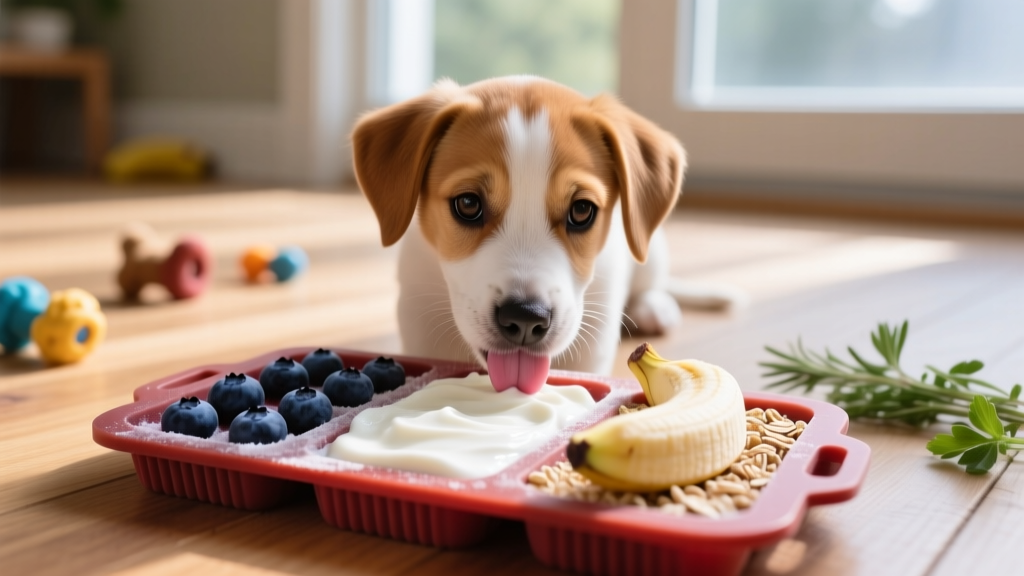
- Kong Classic (red rubber, puppy size): $12–$16 — Stuff with plain yogurt and blueberries, freeze for 2 hours. The cold numbs sore gums.
- Nylabone Puppy Chew (soft flex material): $8–$12 — Choose the puppy-specific version, not adult hardness.
- Frozen washcloth: Soak a clean washcloth in low-sodium chicken broth, twist into a rope, freeze. Supervise to prevent ingestion of fabric.
- Carrot sticks (large, whole): A cold whole carrot is a safe, edible chew. Remove when it gets small enough to be a choking hazard.
- Benebone Puppy Wishbone: $14–$18 — Nylon, flavored, ergonomic shape. Monitor for wear and replace when surface gets rough.
- Rawhide (choking and intestinal blockage risk)
- Hard antlers or weight-bearing bones (fracture developing adult teeth)
- Ice cubes for toy breeds (tooth fracture risk)
- Any rope toy left unsupervised (linear foreign body if threads are swallowed)
Common Puppy Problems and Solutions
Puppy Biting and Nipping
How do you stop puppy biting? The most effective method, backed by modern behavioral science, is redirect-and-reward:
- When puppy mouths your skin, say "ouch" in a calm, flat tone (not a dramatic yelp, which can excite some puppies more).
- Immediately withdraw attention — stand up, fold arms, look away for 10–15 seconds.
- Offer an appropriate chew toy. When puppy bites the toy, praise and engage in play.
- If biting persists after 3 redirects, puppy is overtired. Place them in their crate for a nap with a stuffed Kong.
Puppies bite most intensely at 8–14 weeks. This is how they explore the world and learn bite inhibition. Never hold a puppy's mouth shut, tap their nose, or use any physical punishment — these methods increase fear and can escalate to defensive biting. With consistent redirection, mouthing pressure decreases significantly by 16 weeks and largely stops by 5–6 months.
Nighttime Whining in the Crate
Distinguish between two types of whining:
- "I need to potty" whining: Occurs 3–5 hours after last outing. Take puppy out immediately.
- "I don't want to be alone" whining: Occurs within 30 minutes of crating. Wait for a 10-second pause in whining before approaching. Reward silence with a treat dropped through the crate bars.
Place the crate near your bed for the first 2–3 weeks so your puppy can hear and smell you. A ticking clock or heartbeat toy helps simulate littermate presence.
Destructive Chewing
Puppies chew to relieve teething pain and explore their environment. The solution is not to stop chewing (it's a natural need) but to direct it toward appropriate items. Puppy-proof by removing shoes, cords, and remotes from floor level. Provide 5–7 approved chew toys of varying textures and rotate them every 2–3 days to maintain novelty.
First-Year Cost Breakdown
Budget realistically. Here's what the first year of puppy ownership typically costs in the US, broken into categories:
| Category | Small Breed | Medium Breed | Large Breed |
|---|---|---|---|
| Veterinary (vaccines, spay/neuter, wellness exams) | $500–$900 | $600–$1,100 | $700–$1,400 |
| Food (quality puppy kibble, 12 months) | $180–$350 | $300–$550 | $450–$900 |
| Supplies (crate, bed, bowls, leash, collar, toys) | $150–$300 | $200–$400 | $250–$500 |
| Training (group classes, 2–3 sessions) | $150–$400 | $150–$400 | $150–$400 |
| Flea/tick/heartworm prevention (12 months) | $150–$250 | $180–$300 | $200–$400 |
| Pet insurance (annual premium) | $350–$600 | $400–$700 | $500–$900 |
| TOTAL FIRST YEAR (excluding purchase price) | $1,480–$2,800 | $1,830–$3,450 | $2,250–$4,500 |
Hidden costs new owners forget: Emergency vet visits ($500–$3,000 for foreign body ingestion, a common puppy emergency), doggy daycare ($25–$50/day if you work full-time), grooming for coated breeds ($50–$90 every 6–8 weeks), and boarding ($35–$75/night).
Frequently Asked Questions
How much should I feed my puppy if they seem hungry all the time?
Most puppies will eat beyond their caloric needs if food is available — this is an evolutionary survival instinct, not an indicator they're underfed. Stick to the measured portions in the feeding table above. If your puppy is begging constantly, offer a low-calorie filler like a stuffed Kong or frozen green beans as a snack between meals. Verify portions with your veterinarian at each wellness exam by checking body condition score (BCS) — a score of 4–5 on a 9-point scale is ideal for growing puppies.
When should I switch from puppy food to adult food?
The timing depends on breed size. Small breeds (under 25 lb adult weight) mature fastest and can transition to adult food at 9–12 months. Medium breeds transition at 12 months. Large breeds should remain on puppy food until 14–18 months, and giant breeds until 18–24 months. Transition gradually over 7–10 days, mixing 25% new food with 75% old food for the first 3 days, then 50/50, then 75/25.
My puppy won't eat — should I be worried?
A single skipped meal in an otherwise active, playful puppy is usually not a concern — stress from a new environment can suppress appetite for 24–48 hours. However, contact your veterinarian immediately if your puppy refuses food for more than 24 hours (12 hours for toy breeds under 5 lb, due to hypoglycemia risk), shows lethargy, vomiting, diarrhea, or appears to be in pain.
Can I free-feed my puppy instead of scheduled meals?
Free-feeding (leaving food out all day) is only recommended during the 4–8 week weaning period. After 8 weeks, scheduled meals are strongly preferred because they: (1) make potty training predictable — puppies eliminate 15–30 minutes after eating, (2) allow you to monitor appetite changes (an early illness indicator), and (3) prevent obesity, which is a growing problem even in puppies. The only exception: toy breed puppies under 4 lb may need free-access to dry kibble alongside scheduled wet meals to prevent hypoglycemia.
How do I know if I'm feeding the right amount?
The feeding chart on your food bag and the table in this guide are starting points. The real test is your puppy's body condition. Run your hands along their ribcage — you should feel ribs like running your fingers over the back of your hand (not your knuckles, which means too thin; not your palm, which means overweight). Viewed from above, there should be a visible waist tuck. Viewed from the side, the abdomen should tuck up behind the ribcage. Adjust portions by 10–15% up or down based on these visual and tactile cues, and review at each vet visit.
The information in this guide is based on general veterinary nutrition and developmental guidelines. Every puppy is an individual with unique needs based on breed, genetics, activity level, and health status. Always consult your veterinarian before making significant changes to your puppy's diet, vaccination protocol, or care routine.
Robin Maitland
All our authors care for dogs every day — read more of their work on the authors page.