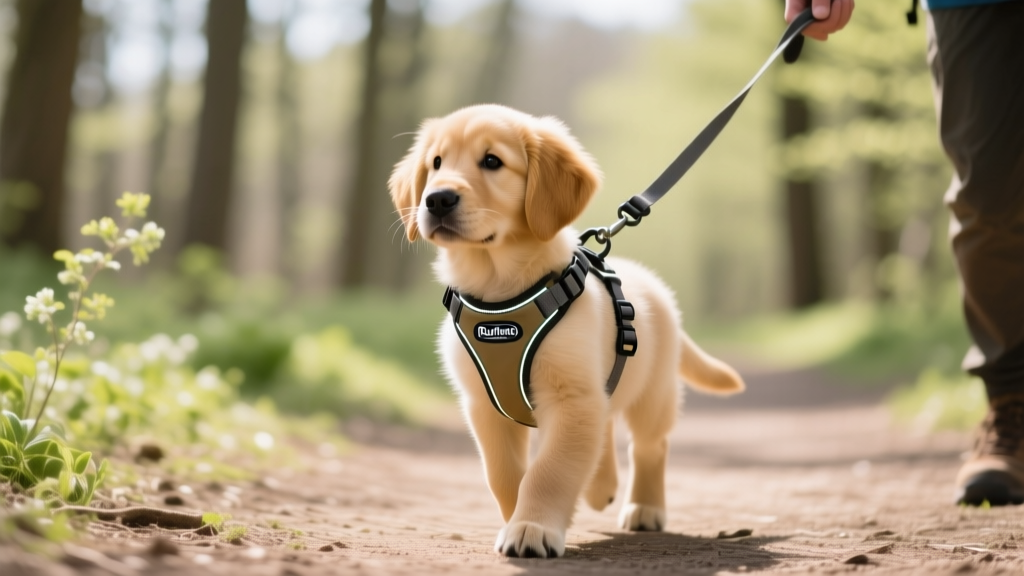
Golden Retriever Puppies: Breed-Specific Care Guide by Age & Stage
Complete breed-specific guide for Golden Retriever puppies: milestones, feeding schedules, vaccination timelines, potty training, and first-year costs.

If you've just committed to a Golden Retriever puppy—or you're researching whether this breed fits your family—you're about to get the specific, week-by-week roadmap that generic puppy articles skip over. Golden Retrievers are one of the most popular puppies breeds in the United States for good reason: they're biddable, affectionate, and versatile. But they also come with breed-specific challenges—mouthy behavior that lasts well into adolescence, a genuine risk of rapid growth-related joint damage, and a socialization window that closes faster than most new owners realize.
This guide gives you exact numbers, real timelines, and breed-informed expectations so you can raise a confident, healthy Golden from 8 weeks through their first birthday.
When Should You Bring Your Golden Retriever Puppy Home?
The American Kennel Club and responsible breeders agree: 8 weeks is the earliest acceptable age to bring a Golden Retriever puppy home. Many experienced Golden breeders prefer to hold puppies until 9 or even 10 weeks. Here's why the extra week or two matters for this specific breed:
- Bite inhibition development: Golden Retrievers are an exceptionally mouthy breed—they were literally bred to carry waterfowl. Weeks 6-8 with littermates teach critical bite inhibition that you cannot replicate in a human household.
- Fear imprint period (8-11 weeks): Puppies enter a heightened fear sensitivity period right around 8 weeks. A skilled breeder can manage environmental exposures during this window more carefully than a first-time owner navigating a chaotic household transition.
- First vaccination timing: Puppies typically receive their first DHPP vaccine at 6-8 weeks. Waiting until after this first round gives your puppy immune protection before entering your home environment.
Golden Retriever Puppy Milestones: Week by Week
Golden Retrievers mature more slowly than many breeds—they don't reach full emotional maturity until 2-3 years old. Understanding what's normal at each stage prevents unnecessary anxiety and helps you set appropriate expectations.
| Age Range | Weight Range (Approx.) | Key Milestones | What to Expect |
|---|---|---|---|
| 4-8 weeks | 4-15 lb / 2-7 kg | Weaning, littermate play, first vaccine, introduction to solid food | Puppy should be eating gruel transitioning to kibble by week 6. Eyes and ears fully open. Beginning to play-bite and learn bite inhibition from siblings. |
| 8-12 weeks | 15-30 lb / 7-14 kg | Home transition, bonding, beginning house training, second DHPP vaccine | Peak fear imprint period (8-11 weeks). Puppy will follow you everywhere. Sleeps 18-20 hours per day. Biting and mouthing are intense—this is normal for the breed. |
| 12-16 weeks | 30-45 lb / 14-20 kg | Third DHPP vaccine, rabies vaccine (14-16 wks), socialization window closing, teething begins | Noticeable increase in independence and confidence. May test boundaries. Potty training starts "clicking" if consistent. Chewing escalates as baby teeth loosen. |
| 16-24 weeks (4-6 months) | 45-65 lb / 20-29 kg | Peak teething, spay/neuter timing discussion with vet, advanced training foundations | Adolescent energy surges. Recall may deteriorate. Destructive chewing peaks. Adult teeth erupting—bloody chew toys are normal. Growth plates still open; avoid forced exercise. |
| 6-12 months | 55-75 lb / 25-34 kg | Sexual maturity, adult coat transition, advanced socialization, growth plate closure (~11-14 months) | Golden "teenage" phase: selective hearing, increased distraction, possible fear periods at 6-8 months and again at 10-12 months. Still physically immature despite looking adult-sized. |
Feeding Schedule: Exact Portions for Golden Retriever Puppies
Golden Retrievers are at elevated risk for developmental orthopedic diseases—specifically hip dysplasia and elbow dysplasia. Overfeeding accelerates growth rate and increases joint stress. This makes precise feeding non-negotiable for this breed.
Feed a large-breed puppy formula (AAFCO statement must say "growth" or "all life stages" and specifically formulated for large breeds, meaning calcium content between 1.0-1.6% on a dry matter basis). Avoid high-calorie performance puppy formulas.
| Age | Estimated Weight | Meals Per Day | Approximate Daily Amount (Large-Breed Puppy Kibble) |
|---|---|---|---|
| 8-12 weeks | 15-30 lb / 7-14 kg | 3-4 meals | 1.5-2.5 cups / day |
| 12-16 weeks | 30-45 lb / 14-20 kg | 3 meals | 2.5-3.5 cups / day |
| 4-6 months | 45-65 lb / 20-29 kg | 2-3 meals | 3-4 cups / day |
| 6-12 months | 55-75 lb / 25-34 kg | 2 meals | 3.5-5 cups / day |
How Often Should I Feed My Puppy at Each Age?
At 8-12 weeks, feed 3-4 meals spaced evenly across the day (e.g., 7 AM, 12 PM, 5 PM, 9 PM). At 12-16 weeks, consolidate to 3 meals. At 4-6 months, transition to 2-3 meals. By 6 months, most Goldens do well on 2 meals per day. Never free-feed a Golden Retriever puppy—this breed will overeat, and the rapid weight gain compounds orthopedic risk.
Vaccination Schedule for Golden Retriever Puppies
The American Veterinary Medical Association outlines core vaccination protocols that your veterinarian will customize based on regional disease risk and your puppy's health status. Golden Retrievers do not have breed-specific vaccine sensitivities (unlike some herding breeds with MDR1 mutations), so standard protocols apply.
| Age | Vaccine | Notes |
|---|---|---|
| 6-8 weeks | DHPP (Distemper, Hepatitis, Parainfluenza, Parvovirus) — Dose 1 | Often administered by breeder. Maternal antibodies may still provide partial protection. |
| 10-12 weeks | DHPP — Dose 2; Bordetella (optional, recommended if attending puppy classes) | Core booster. Avoid high-exposure areas (dog parks, pet stores) until full series complete. |
| 14-16 weeks | DHPP — Dose 3; Rabies (required by law in most US states) | Final puppy DHPP. After this dose + 1 week, your puppy is considered fully protected. |
| 12-16 months | DHPP booster; Rabies booster | First adult booster. Thereafter, DHPP typically every 3 years; rabies per local law (1 or 3 year). |
When Can My Puppy Go Outside and Meet Other Dogs?
This is where the socialization window and disease risk collide. Your Golden puppy can go outside in low-risk, controlled environments (your yard, carried on walks in low-traffic neighborhoods) immediately. However, avoid areas with unknown dog traffic—dog parks, pet store floors, rest stop grass—until one week after the final DHPP vaccine at 14-16 weeks.
That said, the primary socialization window closes around 12-14 weeks. You cannot afford to wait until 16 weeks to begin socialization. The solution: carry your puppy in a sling or backpack to experience the world. Invite known, fully-vaccinated, healthy dogs to your home for supervised play. Enroll in a puppy kindergarten class that requires proof of at least one DHPP vaccine and maintains sanitized facilities.
The Socialization Window: Weeks 3-14 Checklist
Golden Retrievers are generally confident, friendly dogs—but this temperament is not automatic. It's built during a narrow developmental window that closes around 14 weeks. After this window, unfamiliar stimuli trigger caution or fear rather than curiosity. Missed socialization in Goldens often manifests as fear-based reactivity on leash, nervousness around strangers, or anxiety during veterinary handling.
Here's your breed-specific socialization checklist for Golden Retriever puppies:
- Surfaces: Grass, gravel, metal grates, wet pavement, sand, carpet, tile, wood floors, wobbly surfaces (balance disc, cushion)
- People: Children (supervised), elderly individuals, people wearing hats/sunglasses/hoodies, people carrying umbrellas or bags, people of different heights and builds, delivery workers
- Handling: Ear touching, paw handling, mouth opening, nail clipping simulation, collar grabbing, being lifted, being restrained gently
- Environmental sounds: Vacuum cleaners, doorbells, thunder (play recordings at low volume), traffic, construction noise, fireworks recordings
- Objects: Bicycles, skateboards, strollers, wheelchairs, shopping carts, flags, balloons
- Other animals: Fully-vaccinated adult dogs (various sizes and breeds), cats (if applicable), livestock (if rural setting)
- Locations: Car rides, veterinary clinic (positive "happy visits" only), outdoor café patios, school playgrounds (perimeter), parking lots, bridges
Potty Training Timeline: Realistic Expectations for Goldens
Golden Retrievers are generally among the easier breeds to house train—they're attentive to routine and respond well to positive reinforcement. But "easier" doesn't mean fast. Here's a realistic timeline:
- 8-10 weeks: Accidents every 1-2 hours. You are essentially on full-time potty patrol. Take puppy out after every nap, meal, play session, and crate release.
- 10-14 weeks: Beginning to signal (sniffing, circling, heading to door). Accidents drop to 1-3 per week if schedule is consistent.
- 14-20 weeks: Bladder capacity increases significantly. Can hold 3-4 hours during the day. Occasional accidents still normal, especially after exciting events.
- 5-7 months: Mostly reliable with occasional "reminder" accidents. Some Goldens experience a regression during adolescence (6-8 months)—this is normal and temporary.
- 8-12 months: Fully reliable for most Goldens. A small percentage may take until 14-18 months, especially intact males beginning to mark.
When Will My Puppy Be Fully Potty Trained?
Most Golden Retrievers are reliably house trained by 6-8 months with consistent management. "Fully reliable"—meaning no accidents even during schedule disruptions or excitement—typically happens between 10-14 months. If your puppy is still having frequent accidents past 5 months despite consistent routine, consult your veterinarian to rule out urinary tract infection or other medical causes.
Potty Training Troubleshooting for Goldens
Problem: Puppy pees in crate. Golden puppies should not be crated longer than their age in months plus one hour (e.g., a 3-month-old puppy can hold approximately 4 hours maximum). If accidents happen within appropriate timeframes, the crate may be too large—use a divider to reduce space. Never use the crate as punishment.
Problem: Puppy pees when greeting people. Submissive urination is common in young Goldens and typically outgrown by 12-18 months. Management: greet puppy calmly outdoors, avoid direct eye contact and leaning over during greetings, and never scold for submissive urination—it will worsen.
Problem: Puppy won't potty on leash. Many Golden puppies become distracted outdoors. Use a consistent potty spot, give 5-10 minutes of standing in one area, and reward immediately (within 1 second) with a high-value treat after elimination.
Crate Training Progression: Time Limits by Age
Golden Retrievers typically adapt well to crate training—they're den-oriented and food-motivated, which makes positive crate associations straightforward. But crating too long creates the very problems you're trying to prevent (anxiety, accidents, destructive behavior).
| Puppy Age | Maximum Crate Time (Daytime) | Overnight Expectation |
|---|---|---|
| 8-10 weeks | 1-2 hours | 3-4 hours (expect one overnight potty break) |
| 10-14 weeks | 2-3 hours | 4-5 hours (may still need one overnight break) |
| 14-20 weeks | 3-4 hours | 6-7 hours (most Goldens sleep through the night by 16 weeks) |
| 5-6 months | 4-5 hours | 7-8 hours |
| 7-12 months | 5-6 hours | 8-9 hours |
For a full-grown Golden Retriever, you'll need a 42-inch crate (approximately 42" L × 28" W × 30" H). During puppyhood, use an adjustable divider panel to reduce the space to an appropriate size—just enough room for your puppy to stand up, turn around, and lie down comfortably. A crate that's too large invites potty accidents in one corner.
Teething Timeline and Relief Strategies
Golden Retrievers are heavy chewers even by puppy standards—their retriever genetics drive them to carry and mouth objects constantly. Teething amplifies this behavior significantly.
- 3-4 weeks: Deciduous (baby) teeth begin erupting
- 8 weeks: Full set of 28 baby teeth present
- 12-16 weeks: Baby teeth begin loosening; adult teeth start erupting
- 4-6 months: Peak teething discomfort. All 42 adult teeth should be in by 6-7 months
- 7-8 months: If baby teeth remain ("retained deciduous teeth"), your vet should extract them—common in Goldens and can cause orthodontic problems
Safe Chew Recommendations for Teething Golden Puppies
- Kong Classic (red rubber, puppy size transitioning to medium/large): Stuff with softened kibble mixed with plain pumpkin puree and freeze. Provides 20-30 minutes of relief.
- Benebone Wishbone (puppy line, nylon): The angled shape lets Goldens grip with their paws while chewing. Replace when significantly worn.
- Frozen washcloth: Wet a clean washcloth, twist into a rope, freeze. Supervise use and remove if puppy tears off and swallows fabric pieces.
- Yak cheese chews (Himalayan Dog Chew, puppy size): Long-lasting and digestible. Supervise to prevent choking on small end pieces. Microwave the final nub into a puff to eliminate choking risk.
Avoid: Rawhide (choking and blockage risk), antlers (tooth fracture risk in powerful chewers like Goldens), cooked bones (splintering), and any chew small enough to swallow whole.
Common Golden Retriever Puppy Problems and Solutions
How Do I Stop Puppy Biting and Nipping?
Golden Retriever puppies are among the mouthiest of all breeds. This is not aggression—it's breed-typical behavior driven by their retriever heritage. However, it must be managed and redirected, not punished.
The redirect method: Every time puppy teeth touch skin, say "ouch" in a calm, flat tone (not a high-pitched yelp, which can excite some Goldens further), immediately withdraw attention for 3-5 seconds, then offer an appropriate chew toy. When puppy chews the toy, reward with calm praise. This teaches that human skin = play ends, chew toys = play continues.
Management strategies:
- Keep 4-5 chew toys in rotation in every room
- Before petting your puppy, offer a toy first—this is called "stuffing the behavior"
- When biting escalates (usually late afternoon/evening "witching hour"), provide a frozen Kong in the crate for a 30-minute decompression nap
- Never hold the puppy's mouth shut, alpha roll, or use physical punishment—these methods damage trust and can create defensive biting
Most Golden Retrievers significantly reduce mouthing by 5-7 months as adult teeth fully erupt, but some continue gentle mouthing into adolescence. Consistent redirection from day one shortens this timeline.
Whining in the Crate at Night
Golden puppies are social and struggle with isolation initially. Expect 3-7 nights of protest whining when you first crate at night. Strategies: place the crate in your bedroom initially (you can gradually move it to your preferred location over 2-3 weeks), use a snuggle puppy with a heartbeat simulator, and ensure your puppy has had adequate physical and mental exercise before bedtime. If whining continues past 30 minutes and you've confirmed no potty need, wait it out—responding to protest whining reinforces it.
Destructive Chewing
Golden Retriever puppies explore the world with their mouths, and their chewing drive peaks between 4-8 months. Management is more effective than correction: puppy-proof your home by removing accessible shoes, cords, and small objects. Provide structured chewing opportunities (frozen Kongs, appropriate chew toys) and supervise or confine when you cannot watch. If you catch your puppy chewing something inappropriate, redirect to an approved chew and reward the switch.
First-Year Cost Breakdown for a Golden Retriever Puppy
Budgeting accurately prevents unpleasant surprises. These ranges reflect 2026 US pricing for a large-breed puppy in suburban and urban markets:
| Category | Low Estimate | High Estimate | Notes |
|---|---|---|---|
| Puppy purchase (responsible breeder) | $2,500 | $4,500 | Health-tested parents (OFA hips/elbows, cardiac, eye CERF). Adoption from rescue: $300-$600. |
| Initial veterinary (vaccines, exams, deworming) | $400 | $800 | 3-4 vet visits, full vaccine series, fecal tests, heartworm prevention start |
| Spay/neuter | $350 | $800 | Varies by clinic and timing. Many Golden breeders recommend waiting until 12-18 months for joint health. |
| Food (large-breed puppy formula, 12 months) | $600 | $1,100 | Quality large-breed puppy kibble at $50-$90 per 30lb bag |
| Supplies (crate, bed, leash, collar, bowls, toys, gates) | $400 | $800 | 42" crate with divider, orthopedic bed, baby gates for puppy-proofing |
| Training (puppy kindergarten + basic obedience) | $300 | $700 | Group classes: $150-$250 per 6-week session. Private sessions: $80-$150/hour. |
| Preventive medications (heartworm, flea/tick, 12 months) | $250 | $500 | Monthly heartworm + flea/tick prevention for a growing large-breed dog |
| Pet insurance (optional but recommended) | $480 | $900 | $40-$75/month. Golden Retrievers are predisposed to conditions that make insurance valuable. |
| Total first-year estimate | $5,280 | $10,100 | Excluding emergency veterinary care (budget an additional $500-$2,000 emergency fund) |
Frequently Asked Questions About Golden Retriever Puppies
Are Golden Retrievers good first-time puppy breeds?
Yes—Golden Retrievers consistently rank among the best breeds for first-time owners. They're forgiving of training mistakes, highly food-motivated (making positive reinforcement effective), and eager to please. The main challenges for first-time owners are managing the intense puppy mouthing phase and committing to the exercise and mental stimulation needs of an adult Golden (60-90 minutes daily).
Should I get a male or female Golden Retriever puppy?
Males (65-75 lb / 29-34 kg adult weight) tend to be slightly more playful and goofy into adulthood. Females (55-70 lb / 25-32 kg) are often slightly more independent. Both sexes are equally trainable and affectionate. The individual puppy's temperament matters far more than sex. If you already have a dog, opposite-sex pairings generally have fewer conflict issues.
When should I start training my Golden Retriever puppy?
Training begins the moment your puppy enters your home at 8 weeks. Start with name recognition, sit-for-food, handling exercises, and crate training. Formal puppy kindergarten classes can begin once your puppy has had at least one DHPP vaccine (typically at 10-12 weeks). Goldens are capable of learning complex behaviors early—don't wait until 6 months to start.
How much exercise does a Golden Retriever puppy need?
A common guideline is 5 minutes of structured exercise per month of age, twice daily (so a 4-month-old puppy gets approximately 20 minutes of walks, twice per day). This protects developing growth plates. Free play in a safe yard doesn't count toward this limit. Avoid forced running, jumping from heights, and repetitive fetch sessions on hard surfaces until growth plates close (typically 14-18 months for Goldens, confirmed by veterinary X-ray).
Dr. Hannah Wickes
All our authors care for dogs every day — read more of their work on the authors page.