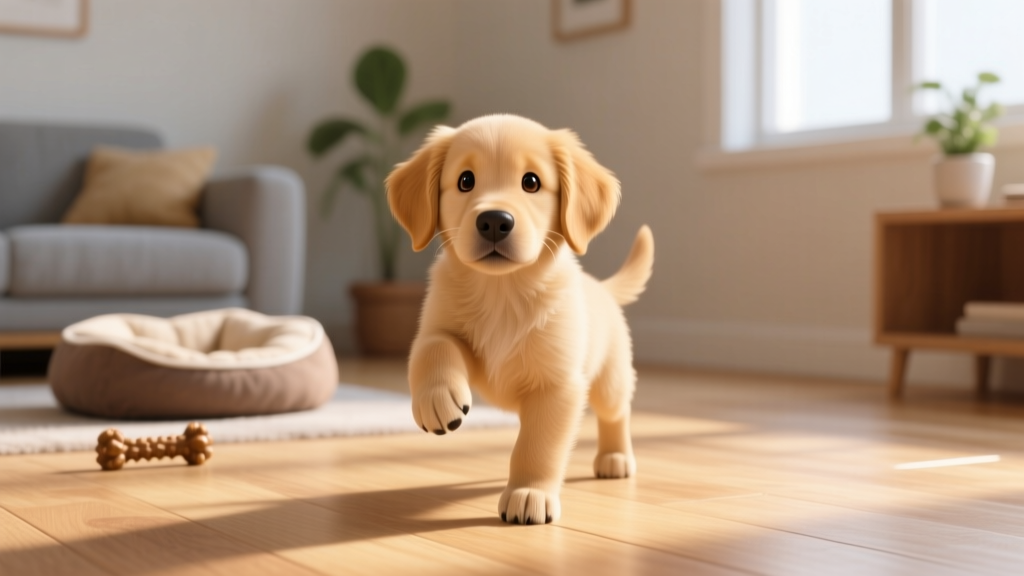
Golden Retriever Puppy Socialization: Complete Week-by-Week Guide
Master golden retriever puppy socialization with age-specific milestones, vaccination schedules, feeding portions, and training timelines from weeks 4 through 12 months.

When Should I Bring My Golden Retriever Puppy Home?
The optimal window for bringing a Golden Retriever puppy home is 8 to 10 weeks of age. The American Kennel Club and the AVMA's socialization guidelines both emphasize that puppies benefit from remaining with their littermates through at least 8 weeks. During weeks 4–8, puppies learn bite inhibition, canine social cues, and basic hierarchy from their mother and siblings — lessons you simply cannot replicate in a human household.
Some responsible Golden Retriever breeders keep puppies until 10 or even 12 weeks to complete early neurological stimulation programs and begin foundational crate training. If your breeder offers this, consider it an advantage: a 10-week-old Golden typically transitions more smoothly into a new home with fewer overnight crying episodes and better initial bladder control.
Avoid bringing a puppy home before 7 weeks under any circumstances. Puppies separated from their litter too early show significantly higher rates of fear-based aggression, separation anxiety, and resource guarding later in life — behavioral patterns that are especially counterproductive in a breed prized for its stable, outgoing temperament.
The Golden Retriever Puppy Socialization Window: Weeks 3–14
Golden Retrievers have one of the most well-documented critical socialization periods in canine behavioral science: approximately 3 to 14 weeks of age. During this window, a puppy's brain is uniquely receptive to novel stimuli, forming positive associations that will shape behavior for life. After 14 weeks, the puppy's fear response begins to dominate, and new experiences require far more deliberate counter-conditioning.
For Golden Retrievers specifically, this window is both an opportunity and a responsibility. The breed's natural sociability can mask under-socialization — a Golden who hasn't been exposed to enough variety may still appear friendly but may develop subtle fear responses (lip licking, avoidance, submissive urination) that worsen with age.
Golden Retriever Puppy Socialization Checklist
Target: expose your puppy to at least 100 unique positive experiences before 14 weeks. Track progress weekly.
| Category | Specific Exposures | Target Count |
|---|---|---|
| People | Men, women, children (supervised), elderly, people in hats/sunglasses/uniforms, people using mobility aids | 20+ individuals |
| Surfaces | Gravel, grass, wet pavement, metal grates, carpet, tile, wood floors, tarps | 10+ surfaces |
| Sounds | Vacuum, thunderstorm recordings, doorbell, traffic, children playing, clippers, fireworks (low volume) | 15+ sounds |
| Other Animals | Vaccinated adult dogs (calm temperament), cats (controlled), livestock at distance | 8+ animals |
| Environments | Car rides, vet clinic lobby, pet store, park bench, outdoor café, elevator, staircase | 12+ locations |
| Handling | Paw touching, ear inspection, mouth opening, nail clipping practice, collar/harness on/off, towel drying | Daily practice |
Pre-vaccine safety: Until your puppy completes their DHPP series, carry them in public spaces. Avoid dog parks, pet store floors, and areas with unknown dog traffic. The Merck Veterinary Manual recommends controlled exposure over isolation — the behavioral risk of under-socialization outweighs the disease risk when exposures are managed carefully.
Age-Specific Milestones: What to Expect Week by Week
Weeks 4–8: Litter Life and Early Development (Breeder's Domain)
During this period, your Golden Retriever puppy is still with their breeder. Key developmental events include:
- Week 4: Puppies begin weaning onto gruel (high-quality puppy kibble soaked in warm water or goat's milk replacer). Eyes and ears fully functional.
- Week 5: Play fighting intensifies — this is peak bite inhibition learning from littermates.
- Week 6: First deworming typically administered (pyrantel pamoate). Puppies start responding to individual names.
- Week 7: Fear period begins — negative experiences during this week can create lasting phobias. Responsible breeders avoid stressful procedures (ear cropping, long car transport) during this window.
- Week 8: First DHPP vaccine administered by the breeder's vet. Puppy ready for transition to new home.
Weeks 8–12: Home Transition and Foundation Building
This is the most intensive period for new owners. Expect:
- Sleep: 18–20 hours per day. Enforce naps in the crate — an overtired Golden puppy becomes mouthy and hyperactive, often mistaken for "bad behavior" when they simply need sleep.
- Attention span: 3–5 minutes per training session. Keep sessions short, positive, and food-motivated.
- Bonding: Golden Retrievers attach quickly. Begin handling exercises daily — touch paws, open mouth, look in ears — pairing each with a high-value treat (small pieces of boiled chicken or freeze-dried liver).
- Potty accidents: 3–6 per day is normal. This is a management phase, not a training failure.
Weeks 12–16: Expanding Horizons and Second Fear Period
- Second fear period: Often occurs around 12–14 weeks. Your previously confident puppy may suddenly spook at familiar objects. Do not force exposure — let them approach at their own pace while you remain calm and offer treats.
- Training: Begin formal positive-reinforcement classes (puppy kindergarten). Golden Retrievers excel in structured learning environments and typically rank in the top 3 breeds for obedience acquisition speed.
- Chewing escalation: Pre-teething gum discomfort drives intense mouthing. Provide frozen KONG toys stuffed with plain yogurt and banana, or Benebone Wishbone chews sized for puppies under 30 lb.
Weeks 16–24: Adolescence Begins
- Energy surge: Your Golden will need 45–60 minutes of structured exercise daily, split into 2–3 sessions. Avoid forced running on hard surfaces — growth plates remain open until 14–18 months.
- Training regression: Previously reliable cues (sit, come) may become inconsistent. This is hormonal and neurological, not defiance. Maintain consistent expectations and increase reward value.
- Size: Expect 35–50 lb by 6 months for males, 30–42 lb for females. Adjust food portions accordingly.
Months 6–12: Late Adolescence and Maturity
- Spay/neuter: Most veterinarians recommend waiting until 6–12 months for Golden Retrievers. AKC health guidelines note that delaying gonadectomy in large breeds may reduce the risk of hip dysplasia and certain cancers, though this remains an individualized decision with your vet.
- Adult weight trajectory: Males typically reach 65–75 lb; females 55–65 lb by 12 months. They will continue filling out until 18–24 months.
- Social maturity: Your Golden's adult personality solidifies between 12–18 months. Continued positive exposures and training maintain the socialization foundation you built during the critical window.
Golden Retriever Puppy Feeding Schedule and Portions
Golden Retrievers are prone to rapid growth and obesity — both of which increase the risk of hip and elbow dysplasia. Feed a large-breed puppy formula (AAFCO-certified for growth/all life stages) to slow skeletal development and protect joint health. Target brands include Royal Canin Golden Retriever Puppy, Purina Pro Plan Large Breed Puppy, or Hill's Science Diet Large Breed Puppy.
| Age | Estimated Weight | Meals/Day | Total Daily Amount | Per Meal |
|---|---|---|---|---|
| 8–12 weeks | 10–18 lb (4.5–8 kg) | 3–4 | 1.5–2 cups | ⅜–½ cup |
| 12–16 weeks | 18–30 lb (8–14 kg) | 3 | 2–2.5 cups | ⅔–¾ cup |
| 4–6 months | 30–50 lb (14–23 kg) | 2–3 | 2.5–3.5 cups | ¾–1¼ cups |
| 6–12 months | 50–70 lb (23–32 kg) | 2 | 3–4 cups | 1.5–2 cups |
Important: These are starting points. Adjust portions based on your puppy's body condition score (BCS). You should be able to feel ribs without pressing hard, and see a visible waist tuck when viewed from above. Golden Retrievers will overeat if given free access to food — never free-feed this breed.
Vaccination Schedule for Golden Retriever Puppies
Golden Retrievers follow the standard core vaccine protocol recommended by the AVMA and the American Animal Hospital Association (AAHA). Your veterinarian may adjust timing based on local disease prevalence and maternal antibody levels.
| Age | Vaccines Administered | Notes |
|---|---|---|
| 6–8 weeks | DHPP (Distemper, Hepatitis, Parainfluenza, Parvovirus) | Often given by breeder before pickup. First of 3–4 boosters. |
| 10–12 weeks | DHPP booster + Bordetella (optional, recommended if attending puppy classes) | Bordetella can be given intranasally or by injection. Intranasal may provide faster local immunity. |
| 14–16 weeks | DHPP final booster + Rabies (required by law in most US states) | This final DHPP is critical — maternal antibodies that blocked earlier vaccines should be cleared by now. |
| 12–16 months | DHPP booster + Rabies booster (1-year or 3-year depending on local law) | After this, DHPP typically moves to a 3-year interval. Discuss Leptospirosis and Lyme with your vet based on regional risk. |
Your Golden Retriever puppy can begin controlled outdoor exposure immediately after coming home — but with strict limitations. Carry them in a sling or backpack for neighborhood walks. Allow them to walk on your private yard's grass if no unknown dogs have access. Do not visit dog parks, pet stores, or areas with unknown dog traffic until 7 days after the final DHPP booster at 14–16 weeks. Puppy socialization classes that require proof of at least one DHPP vaccine and maintain sanitized floors are generally considered safe from 10 weeks onward.
Potty Training Timeline: Realistic Expectations for Golden Retrievers
Golden Retrievers are generally fast learners for house training, but "fully potty trained" — meaning zero accidents for 30+ consecutive days — typically takes 4 to 6 months. Some Golden puppies achieve reliable house training by 16 weeks with intensive management, but expecting a 10-week-old puppy to "hold it" for more than 2–3 hours is biologically unrealistic.
Potty Training Log Template
Track every outing for the first 4 weeks. Use this framework:
| Time | Location | Result | Reward Given | Notes |
|---|---|---|---|---|
| 6:30 AM | Backyard, east side | ✅ Urinated + defecated | 1 small training treat + "Yes!" | Woke from crate, carried outside immediately |
| 8:15 AM | Backyard, east side | ✅ Urinated | 1 small training treat | After breakfast + 15 min play |
| 9:40 AM | Kitchen | ❌ Accident (urine) | N/A — interrupted, carried outside | Missed signal after nap. Increase supervision. |
Use enzymatic cleaner (e.g., Nature's Miracle or Rocco & Roxie Stain & Odor Eliminator) for accidents. Ammonia-based cleaners leave residue that attracts repeat elimination.
Bladder capacity rule of thumb: A puppy can hold urine for roughly one hour per month of age, plus one. So an 8-week-old puppy (2 months) can hold it approximately 3 hours maximum — and that's during rest, not active play. After drinking water or eating, expect to go out within 15–20 minutes.
Troubleshooting common issues:
- Frequent small accidents: Rule out urinary tract infection with your vet (especially in female Goldens, who are predisposed to UTIs).
- Submissive urination when greeted: Common in Golden puppies. Ignore the puppy for the first 2 minutes when arriving home — no eye contact, no talking, no touching — until they are calm.
- Nighttime accidents: Set an alarm for 3–4 hours after bedtime for the first 2 weeks. Gradually extend the interval as bladder capacity increases.
Crate Training Progression and Time Limits
Golden Retrievers adapt well to crate training when introduced gradually using positive reinforcement. Select a 42-inch crate (with a divider panel) so the crate grows with your puppy — they need enough room to stand, turn around, and lie down, but excess space encourages elimination in one corner.
| Age | Maximum Crate Time (Daytime) | Maximum Crate Time (Overnight) | Strategy |
|---|---|---|---|
| 8–10 weeks | 1–2 hours | 3–4 hours (with alarm) | Feed meals in crate. Cover with breathable blanket. Place near your bed. |
| 10–14 weeks | 2–3 hours | 5–6 hours | Introduce stuffed KONG for crate-only use. Begin moving crate to permanent location. |
| 4–6 months | 3–4 hours | 7–8 hours | Remove divider panel as puppy grows. Door can be left open during supervised time. |
| 6–12 months | 4–5 hours | 8 hours | Crate becomes a voluntary retreat. Never use as punishment. |
Never exceed these limits. Crating a 10-week-old puppy for 6 hours during the day will result in forced soiling, which actively undermines potty training and creates negative crate associations. If your work schedule requires longer absences, arrange a midday visit from a pet sitter or dog walker.
Teething Timeline and Relief Strategies
Golden Retriever puppies begin teething around 3 to 4 months when deciduous (baby) teeth start loosening to make way for 42 permanent adult teeth. The most intense chewing period runs from 4 to 6 months, with the process largely complete by 7 months.
Signs of active teething: increased drooling, blood-tinged saliva on chew toys, reluctance to eat hard kibble, pawing at the mouth, and a dramatic increase in destructive chewing of household items.
Safe teething relief options:
- Frozen KONG Classic (puppy size, pink/blue rubber): Stuff with a blend of plain canned pumpkin, mashed banana, and a spoonful of xylitol-free peanut butter. Freeze for 4 hours.
- Chilled carrot sticks: Full-size carrots, refrigerated (not frozen — too hard for puppy teeth). Supervise to prevent choking on large pieces.
- Nylabone Puppy Chew (soft flex material): Choose the "Puppy" line, not adult-strength. Replace when worn down to the size of a large marble.
- Wet washcloth twist: Soak a clean washcloth in water, twist tightly, freeze for 2 hours. Supervise use and discard if threads begin to fray.
Common Golden Retriever Puppy Problems and Solutions
Puppy Biting and Nipping
Golden Retrievers are a "mouthy" breed — they were bred to carry game, and their instinct to use their mouths is deeply ingrained. Puppy nipping peaks between 8 and 16 weeks and typically diminishes by 5–6 months with consistent training.
How to stop puppy biting:
- Redirect, don't punish. When teeth touch skin, say "Oops!" in a neutral tone and immediately offer an appropriate chew toy. Reward enthusiastically when they bite the toy instead.
- Withdraw attention. If redirecting fails, stand up, cross your arms, and turn away for 10–15 seconds. This teaches that biting ends play — the opposite of what the puppy wants.
- Enforce naps. A biting puppy is often an overtired puppy. If nipping escalates despite redirection, place them in their crate with a chew toy for a 45-minute nap.
- Never use physical punishment. Hitting, holding the mouth shut, or alpha-rolling a puppy damages trust and can trigger defensive aggression. Positive reinforcement and management are the only force-free methods recommended by certified trainers.
Excessive Whining and Crying
Golden puppies vocalize for specific reasons: they need to eliminate, they're lonely, they're bored, or they're anxious. Identify the cause before responding:
- Crate whining at night: If you're confident they've eliminated recently and aren't in distress, wait 5–10 minutes before responding. Reward silence, not crying. Gradually extend the wait time over successive nights.
- Attention-seeking whining during the day: Ignore the whining completely (no eye contact, no verbal response). Wait for 3 seconds of silence, then reward with attention or a treat.
- Distress vocalization (high-pitched, continuous, with pacing): This indicates genuine anxiety or physical discomfort. Investigate the cause — check for injury, ensure they aren't too hot/cold, and consult your veterinarian if it persists.
Destructive Chewing
Golden Retrievers remain "puppy-like" in their chewing habits well into their second year. Management is more effective than correction:
- Provide 5–7 approved chew items of varying textures, rotated weekly to maintain novelty.
- Use bitter apple spray (Grannick's Bitter Apple) on furniture legs and baseboards during the first 6 months.
- Supervise or confine at all times — an unsupervised Golden puppy will chew shoes, remotes, and books within minutes.
First-Year Cost Breakdown for a Golden Retriever
| Category | Low Estimate | High Estimate | Details |
|---|---|---|---|
| Purchase/Adoption | $500 | $3,500 | Rescue: $300–$600. Responsible breeder: $2,000–$3,500. Avoid puppies under $1,000 from unknown sources. |
| Veterinary Care | $600 | $1,200 | Vaccines, deworming, spay/neuter, microchip, annual exam. Add $200–$500 for hip/elbow OFA screening at maturity. |
| Food | $500 | $900 | Large-breed puppy formula, transitioning to adult formula at 12 months. Premium brands: $60–$90/bag (30 lb). |
| Supplies | $300 | $600 | Crate ($80–$150), bed, leash/harness, bowls, toys, grooming tools, enzymatic cleaner, baby gates. |
| Training | $200 | $600 | Puppy kindergarten ($150–$250 for 6-week course), optional intermediate class, treat budget. |
| Pet Insurance | $400 | $700 | $35–$60/month. Golden Retrievers are predisposed to hip dysplasia, cancer, and allergies — insurance is strongly recommended. |
| TOTAL (excluding purchase) | $2,000 | $4,000 | Varies by region, veterinary clinic, and product choices. |
Frequently Asked Questions
How often should I feed my 10-week-old Golden Retriever puppy?
Feed 3 to 4 meals per day at consistent intervals. A typical schedule: 7:00 AM, 12:00 PM, 5:00 PM, and an optional 9:00 PM meal for smaller puppies. At 12 weeks, transition to 3 meals daily. At 6 months, most Golden puppies do well on 2 meals per day. Always feed measured portions — Golden Retrievers lack natural satiety regulation and will overeat if given unlimited access.
What vaccines does my Golden Retriever puppy need, and when?
Core vaccines include the DHPP combination (Distemper, Hepatitis/Adenovirus, Parainfluenza, Parvovirus) given at 6–8 weeks, 10–12 weeks, and 14–16 weeks. Rabies is given at 14–16 weeks as required by law. Bordetella is recommended if your puppy will attend group classes. Your veterinarian may also recommend Leptospirosis, Lyme disease, or Canine Influenza vaccines based on your geographic area and lifestyle risk factors. Always consult your veterinarian for a vaccination plan tailored to your puppy.
When will my Golden Retriever puppy be fully potty trained?
Most Golden Retrievers achieve reliable house training between 4 and 6 months of age with consistent management. "Fully trained" means zero accidents for 30+ consecutive days. Factors that can extend this timeline include inconsistent schedules, insufficient outdoor trips, urinary tract infections, and submissive urination tendencies. If your puppy is still having frequent accidents past 6 months, consult your veterinarian to rule out medical causes.
How do I stop my Golden Retriever puppy from biting my hands?
Redirect every bite to an appropriate chew toy and reward the switch. If biting persists, withdraw attention for 10–15 seconds by turning away or leaving the room briefly. Ensure your puppy is getting adequate sleep (18–20 hours/day for puppies under 4 months) — overtired puppies bite more. Never hit, yell at, or physically punish a puppy for biting, as this damages the human-animal bond and can escalate to fear-based aggression. This mouthy phase typically resolves by 5–6 months with consistent positive reinforcement.
When can my Golden Retriever puppy meet other dogs?
Controlled introductions with fully vaccinated, temperament-tested adult dogs can begin as early as 8–10 weeks in a private, clean environment (your yard or a trusted friend's home). Avoid dog parks, pet stores, and high-traffic dog areas until 7 days after the final DHPP booster at 14–16 weeks. Structured puppy socialization classes that verify vaccination status and sanitize floors are typically safe from 10 weeks onward. The socialization window closes around 14 weeks, so waiting until all vaccines are complete before any dog exposure creates a dangerous gap in behavioral development.
Jonas Cole
All our authors care for dogs every day — read more of their work on the authors page.