How Many Puppies in a Litter? Breed Guide & First-Year Care Plan
How many puppies in a litter? Learn average litter sizes by breed, plus a complete week-by-week puppy care guide covering feeding, vaccines, and potty training.

How Many Puppies Are in a Litter? Average Litter Sizes by Breed
If you're expecting a litter or simply curious about canine reproduction, the question of how many puppies in a litter is one of the most common searches among dog owners. The answer varies enormously — from a single puppy to over a dozen — depending on breed health, genetics, age of the dam, and breed size.
According to the American Kennel Club, the average litter size across all breeds is roughly 5 to 6 puppies, but this number masks huge variation. A Chihuahua might deliver 1 to 3 puppies, while a Great Dane or Labrador Retriever commonly produces 8 to 12. The world record, held by a Neapolitan Mastiff named Tia, stands at 24 puppies born in 2004.
Litter Size Ranges by Popular Breed
| Breed | Average Litter Size | Typical Range |
|---|---|---|
| Chihuahua | 2–3 | 1–4 |
| Yorkshire Terrier | 3–4 | 2–5 |
| French Bulldog | 3–4 | 2–5 (often via C-section) |
| Beagle | 6 | 4–8 |
| German Shepherd | 7–8 | 5–10 |
| Golden Retriever | 8 | 6–10 |
| Labrador Retriever | 8–9 | 6–12 |
| Rottweiler | 8–10 | 6–12 |
| Great Dane | 8–10 | 7–12 |
| Bernese Mountain Dog | 8 | 5–12 |
Factors that influence litter size: The dam's age (peak fertility between 2–5 years), nutritional status, whether it's a first pregnancy (primiparous dams often have smaller litters), breeding timing relative to ovulation, and overall genetic health. The Merck Veterinary Manual notes that breed size is the single strongest predictor — toy breeds average 1–4 puppies, medium breeds 5–8, and giant breeds 8–12 or more.
When to Bring Your Puppy Home: The Critical Timing Window
Regardless of whether your puppy came from a litter of 3 or a litter of 12, the timing of when they leave their mother and littermates is crucial for behavioral development.
Ideal age to bring a puppy home: 8 to 10 weeks.
The AVMA and most veterinary behaviorists agree that puppies should remain with their dam and siblings until at least 8 weeks. Here's why:
- Weeks 3–5 (Socialization onset): Puppies begin interacting with littermates, learning bite inhibition through play feedback.
- Weeks 5–7 (Canine communication): Critical period for learning dog body language, submission signals, and appropriate play intensity.
- Weeks 7–8 (Fear period begins): Puppies become more sensitive to new experiences. Removing them during this window requires careful handling.
- Weeks 8–10 (Optimal transition): Puppies are neurologically ready to bond with humans and adapt to a new environment while still being in a relatively confident developmental phase.
Puppies removed before 7 weeks show significantly higher rates of separation anxiety, resource guarding, and difficulty with bite inhibition later in life. Some breeders of toy breeds (Chihuahuas, Yorkies) keep puppies until 10–12 weeks due to their fragility and slower physical maturation.
Week-by-Week Puppy Milestones: What to Expect at Every Stage
Weeks 4–8 (Still with Breeder/Dam)
During this period, puppies transition from mother's milk to solid food. By week 4, they begin sampling gruel (puppy kibble soaked in warm water or puppy milk replacer). By week 7, most are fully weaned. Eyes and ears are fully functional, deciduous (baby) teeth are erupting, and they begin exploring their whelping area. This is also when breeders begin early neurological stimulation and introductory crate exposure.
Weeks 8–12 (Home Transition & Bonding)
This is the peak socialization receptivity window. Your puppy will:
- Sleep 18–20 hours per day
- Have a bladder capacity of roughly 1 hour per month of age (so ~2 hours max at 8 weeks)
- Begin recognizing their name within 3–5 days with consistent use
- Show initial fear responses to loud noises, unfamiliar surfaces, and new people
- Start teething discomfort as all 28 deciduous teeth come in by week 8
Weeks 12–16 (Foundation Training)
Confidence builds rapidly. Puppies at this stage can learn sit, down, come, and loose-leash walking basics. The second fear period may appear around week 12. Bladder control extends to roughly 3–4 hours. Puppy kindergarten classes (after completing initial vaccines) provide structured socialization.
Weeks 16–24 (Adolescent Beginnings)
Deciduous teeth begin falling out around 12–16 weeks, with all 42 adult teeth typically in by 6 months. This is peak chewing and mouthing behavior. Energy levels increase noticeably. Puppies may begin testing boundaries and appear to "forget" previously learned commands — this is normal developmental regression.
Months 6–12 (Full Adolescence)
Sexual maturity arrives (earlier in small breeds, later in large breeds). Spaying/neutering is commonly performed between 6–9 months for most breeds, though large/giant breeds may benefit from waiting until 12–18 months per current veterinary orthopedic research. Energy and independence peak. Consistent training is essential to prevent behavioral drift.
Feeding Schedule: Exact Portions by Age and Weight
Puppies require significantly more calories per pound of body weight than adult dogs due to rapid growth. The following table provides general guidelines based on AAFCO-formulated puppy food (look for the statement: "This food is formulated to meet the nutritional levels established by AAFCO for growth").
| Age | Meals Per Day | Expected Daily Intake (Small Breed 10–25 lb adult) | Expected Daily Intake (Medium Breed 25–50 lb adult) | Expected Daily Intake (Large Breed 50–90 lb adult) |
|---|---|---|---|---|
| 8–12 weeks | 4 | ½–¾ cup | ¾–1¼ cups | 1–2 cups |
| 3–4 months | 3 | ¾–1 cup | 1¼–2 cups | 2–3 cups |
| 4–6 months | 3 | 1–1¼ cups | 2–2¾ cups | 3–4 cups |
| 6–12 months | 2 | 1–1½ cups | 2½–3½ cups | 3½–5 cups |
Critical feeding notes:
- Large/giant breeds: Use a large-breed puppy formula (calcium restricted to 1.0–1.5% on a dry matter basis) to prevent developmental orthopedic diseases like hip dysplasia and osteochondrosis. Brands like Purina Pro Plan Large Breed Puppy, Royal Canin Giant Puppy, and Hill's Science Diet Large Breed Puppy are formulated to these specifications.
- Transition to adult food: Small breeds at 10–12 months, medium breeds at 12 months, large breeds at 15–18 months, giant breeds at 18–24 months.
- Body Condition Score (BCS): Your puppy should have a visible waist when viewed from above and you should be able to feel (but not see) ribs with light pressure. A BCS of 4–5 on a 9-point scale is ideal for growing puppies.
- Never free-feed: Scheduled meals allow you to monitor appetite changes (an early illness indicator) and support potty training predictability.
Vaccination Schedule: Core and Non-Core Vaccines by Week
Your puppy arrives with maternal antibodies from colostrum (first milk), but these wane between 6–16 weeks, creating a vulnerability gap. The vaccination series is designed to provide protection as maternal immunity declines.
| Age | Vaccines Administered | Type | Estimated Cost |
|---|---|---|---|
| 6–8 weeks | DHPP (Distemper, Hepatitis/Adenovirus, Parainfluenza, Parvovirus) — 1st dose | Core | $20–$40 |
| 10–12 weeks | DHPP — 2nd dose; Bordetella (optional based on exposure risk) | Core + Non-Core | $25–$50 |
| 14–16 weeks | DHPP — 3rd (final) dose; Rabies (required by law in most US states) | Core | $30–$60 |
| 12–16 months | DHPP booster; Rabies booster (1-year or 3-year depending on jurisdiction) | Core | $30–$60 |
Non-core vaccines your vet may recommend based on lifestyle:
- Leptospirosis: Recommended for dogs with outdoor/wildlife exposure. Given as a 2-dose series starting at 12 weeks.
- Lyme disease: For dogs in tick-endemic areas (Northeast, Upper Midwest, Pacific Coast).
- Canine Influenza (H3N2/H3N8): Recommended for dogs in boarding, daycare, or dog show environments.
The Socialization Window: Weeks 3–14 Exposure Checklist
Veterinary behaviorists identify weeks 3–14 as the critical socialization period — a finite developmental window during which puppies form lasting impressions about what is "safe" versus "threatening" in their world. Puppies inadequately socialized during this window are significantly more likely to develop fear-based aggression, anxiety disorders, and phobias.
Goal: 100+ positive novel experiences by 16 weeks. Each exposure should be paired with high-value treats (small pieces of boiled chicken, cheese, or commercial training treats like Zuke's Mini Naturals) to create positive associations.
Socialization Exposure Checklist
- People (12+ categories): Children, elderly individuals, people wearing hats, sunglasses, uniforms, hoodies, people with canes/wheelchairs/crutches, tall people, people with deep voices, people with facial hair
- Surfaces (8+): Grass, gravel, sand, metal grates, wet pavement, stairs (carpet and wood), tile, elevator floors
- Sounds (10+): Vacuum cleaner, doorbell, thunderstorm recordings (start at low volume), traffic, construction noise, children playing, fireworks recordings, clapping, dropping pots/pans
- Objects (8+): Umbrellas opening, plastic bags rustling, bicycles, skateboards, strollers, lawn mowers, garbage trucks
- Handling exercises: Paw touching, ear inspection, mouth opening, nail clipping simulation, collar grabbing, being lifted, being placed on a table, gentle restraint
- Other animals: Vaccinated adult dogs (known health status), cats (supervised), livestock if rural
- Environments: Pet-friendly stores, outdoor café patios, car rides, parking lots, parks (carried before full vaccination), veterinary clinic (happy visits with no procedures)
Pre-vaccination safety: Until your puppy completes their DHPP series (around 16 weeks), avoid high-risk areas like dog parks, pet store floors, and areas with unknown dog traffic. You can safely socialize by carrying your puppy, using a stroller, or arranging playdates with fully vaccinated, known-health-status dogs in controlled environments.
Potty Training Timeline: Realistic Expectations and Troubleshooting
Potty training is one of the most common frustrations for new puppy owners, and unrealistic timelines are the primary source of that frustration. Here are the biological realities:
- 8–10 weeks: Bladder capacity is approximately 45–75 minutes during active hours. Expect accidents — they are a normal part of the process, not failures.
- 3–4 months: Bladder control extends to 2–3 hours. Puppies begin showing pre-elimination signals (circling, sniffing, sudden stillness).
- 4–6 months: Most puppies can hold for 4–5 hours during the day. Nighttime control often develops faster than daytime control because sleep reduces metabolic activity.
- 6–9 months: Most dogs are reliably house-trained by this point, though small breeds may take longer due to smaller bladder capacity and higher metabolic rates.
The method that works: Take your puppy to the designated elimination spot (same location each time) on this schedule:
- Immediately upon waking
- Within 10–15 minutes after every meal
- After every play session
- After every nap
- Before bedtime
- Every 1–2 hours during the day (set a timer)
When they eliminate in the correct spot, reward immediately with a high-value treat and calm verbal praise. Use a consistent cue word ("go potty" or "do your business") said as they begin to eliminate, so they eventually associate the cue with the action.
Common mistakes that delay potty training:
- Punishing accidents (creates fear of eliminating in front of you, leading to hiding behavior)
- Using pee pads long-term (teaches dogs that indoor soft surfaces are acceptable elimination spots)
- Inconsistent schedule (dogs learn patterns — irregularity prevents pattern formation)
- Not supervising closely enough (accidents you don't see can't be interrupted)
Teething, Crate Training, and Common Puppy Problems
Teething Timeline (3–6 Months)
At approximately 12–16 weeks, your puppy's 28 deciduous teeth begin loosening as 42 permanent adult teeth push through the gums. This process is uncomfortable, and puppies will seek relief by chewing on anything they can find.
Safe chew options by age:
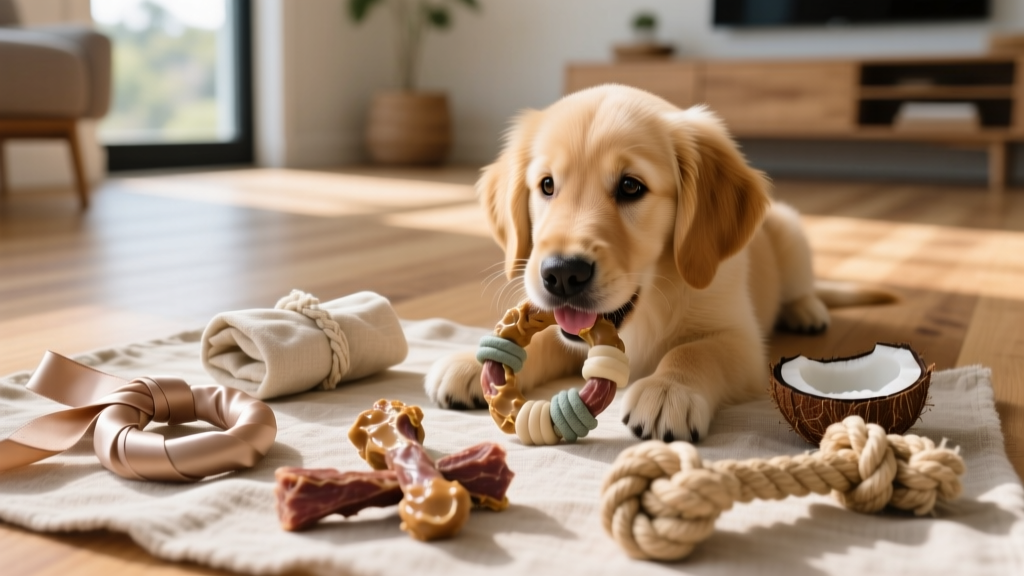
- 8–12 weeks: Soft rubber toys (Kong Puppy, Nylabone Puppy), frozen washcloth twisted into a rope, chilled carrot sticks
- 3–4 months: Kong Classic (filled with softened kibble and frozen), Benebone Puppy, Whimzees Puppy chews
- 4–6 months: Kong Classic (medium or large depending on breed), Nylabone Dura Chew, bully sticks (supervised), yak milk chews
Avoid: Rawhide (choking and blockage risk), cooked bones (splintering), tennis balls (abrasive to teeth and can be swallowed), any toy smaller than your dog's mouth, and hard antlers or weight-bearing bones from large animals (risk of tooth fractures, especially slab fractures of the carnassial teeth).
Crate Training Progression with Time Limits
A crate should be your puppy's safe den, never a punishment tool. Use positive reinforcement — feed meals in the crate, give special chews only in the crate, and gradually build duration.
| Puppy Age | Maximum Crate Time (Daytime) | Maximum Crate Time (Nighttime) |
|---|---|---|
| 8–10 weeks | 30–60 minutes | 2–3 hours (expect nighttime potty breaks) |
| 11–14 weeks | 1–2 hours | 3–4 hours |
| 15–16 weeks | 2–3 hours | 4–5 hours |
| 4–6 months | 3–4 hours | 6–7 hours |
| 6+ months | 4–5 hours max | 7–8 hours |
Exceeding these limits risks urinary tract issues, anxiety development, and crate aversion. If you work full-time, arrange for a midday dog walker or come home during lunch to let your puppy out.
Stopping Puppy Biting and Nipping
Mouthing is normal puppy behavior — they explore the world with their mouths and are learning bite inhibition. Here's the force-free approach:
- Redirect: When teeth touch skin, immediately offer an appropriate chew toy. Reward enthusiastically when they chew the toy instead.
- Withdraw attention: If redirecting doesn't work, stand up calmly and leave the interaction area for 10–15 seconds. This teaches that biting ends play.
- Time-ins, not time-outs: If your puppy is in a biting frenzy, they're often overtired. Guide them to their crate with a chew toy for a nap. Puppies need 18–20 hours of sleep; most biting spikes are sleep-deprivation signals.
- Never: Hold the mouth shut, tap the nose, use alpha rolls, or yell. These methods damage trust and can escalate fear-based biting.
Most puppies show significant improvement in bite inhibition between 4–6 months as adult teeth come in and they mature. Consistency from every household member is essential — if one person allows mouthing and another doesn't, the puppy cannot learn the rule.
First-Year Cost Breakdown: What to Budget for Your Puppy
Understanding costs upfront prevents financial surprises and ensures you can provide appropriate care. The following estimates reflect 2026 pricing in the United States and vary by region, breed size, and provider.
| Category | Items | Estimated Cost Range |
|---|---|---|
| Veterinary (Preventive) | 3 puppy vaccine visits, fecal tests, deworming, heartworm prevention (12 months), flea/tick prevention (12 months) | $400–$800 |
| Veterinary (Procedures) | Spay/neuter, microchip | $300–$800 (varies by size/clinic) |
| Food | Quality puppy food for 12 months (small breed: ~$200–$350; large breed: ~$400–$700) | $200–$700 |
| Supplies | Crate, bed, leash/harness, bowls, toys, grooming tools, enzymatic cleaner, baby gates | $200–$500 |
| Training | Puppy kindergarten class (6–8 weeks), optional private sessions | $150–$400 |
| Insurance/Wellness Plan | Monthly premiums (if enrolled from puppyhood — best rates) | $360–$720/year ($30–$60/month) |
| Emergency Fund | Set aside for unexpected illness/injury (parvo treatment, foreign body surgery, etc.) | $500–$2,000 reserve recommended |
Total estimated first-year cost: $2,100–$5,900+ depending on breed size, your region, and whether complications arise. Pet insurance purchased at 8 weeks typically costs $30–$50/month and can offset major unexpected expenses. Companies like Trupanion, Healthy Paws, and Fetch offer comprehensive puppy plans with no upper payout limits.
Frequently Asked Questions
How many puppies in a litter is normal for a first-time mother?
First-time mothers (primiparous dams) typically have smaller litters than subsequent pregnancies. A breed that averages 8 puppies may produce only 4–6 in a first litter. Litter size usually increases through the dam's third or fourth pregnancy, then may decline again in later years.
When can my puppy go outside and meet other dogs?
Your puppy can explore your own yard immediately (if no unknown dogs have access to it). For public spaces and interactions with other dogs, wait until at least 7 days after the final DHPP vaccine at 14–16 weeks. However, socialization shouldn't wait — carry your puppy or use a stroller to expose them to outdoor sights and sounds from week 8 onward.
How often should I feed my puppy at 10 weeks old?
At 10 weeks, feed 4 meals per day, spaced roughly 4 hours apart during waking hours. A typical schedule might be 7 AM, 11 AM, 3 PM, and 7 PM. Remove uneaten food after 15–20 minutes to establish a routine and monitor appetite.
When will my puppy be fully potty trained?
Most puppies are reliably house-trained between 4–6 months, though some small breeds take up to 9 months. "Fully trained" means fewer than 1–2 accidents per month. Setbacks during adolescence (6–10 months) are normal and resolve with a return to consistent scheduling.
What should I do if my puppy ate something toxic?
Call ASPCA Animal Poison Control immediately at (888) 426-4435 (available 24/7, consultation fee applies) or the Pet Poison Helpline at (855) 764-7661. Do not induce vomiting unless specifically instructed by a veterinary professional. Keep the packaging or a sample of what was ingested to share with the toxicologist.
Marcus Aldridge
All our authors care for dogs every day — read more of their work on the authors page.