Chocolate Lab Puppies: The Complete Week-by-Week Care Guide
Everything you need to raise chocolate lab puppies: week-by-week milestones, feeding schedules, vaccination timelines, potty training, and first-year costs.

When to Bring Your Chocolate Lab Puppy Home
The AKC recommends that Labrador Retriever puppies remain with their littermates and dam until at least 8 weeks of age. For chocolate labs specifically, many responsible breeders hold puppies until 9–10 weeks because Labrador Retrievers are prone to early dominance-testing behaviors, and the extra week of litter socialization reduces biting and resource guarding later.
A chocolate lab puppy brought home at 8 weeks will typically weigh 14–18 lb (6.4–8.2 kg). By 10 weeks, expect 18–22 lb (8.2–10 kg). If your breeder releases puppies at 7 weeks or earlier, this is a red flag — the puppy has missed critical bite-inhibition lessons from siblings.
First-night tip: Place a ticking clock wrapped in a towel inside the crate. The rhythmic sound mimics a littermate's heartbeat and reduces the first-night whining that keeps 73% of new puppy owners awake, according to a 2024 survey by the American Kennel Club.
Age-Specific Milestones for Chocolate Lab Puppies
Labrador Retrievers mature slower than many breeds. While a Border Collie might hit behavioral milestones at predictable intervals, Labs — especially the stockier English-type lines common in chocolate — often lag 1–2 weeks behind breed averages. Here is what to realistically expect:
Weeks 4–8: The Foundation Window (Still With Breeder)
- Physical: Eyes fully open, deciduous teeth erupting, weight doubles from birth (approx. 8–14 lb / 3.6–6.4 kg)
- Behavioral: Litter hierarchy forming, bite inhibition learning begins, first fear imprint period peaks at week 8
- What breeder should do: Introduce varied surfaces (tile, carpet, gravel), begin name recognition, expose to household sounds
- Your role: If visiting before pickup, handle puppy daily for 10–15 minutes to build human bonding
Weeks 8–12: The Bonding and Exploration Phase
- Physical: Weight 15–25 lb (6.8–11.3 kg), rapid skeletal growth, sleeping 18–20 hours/day
- Behavioral: Second fear period can hit around week 10–11 — puppy may suddenly fear objects or situations previously tolerated. Never force exposure during fear periods; let the puppy approach at its own pace with high-value treats (boiled chicken, freeze-dried liver)
- Cognitive: Attention span approximately 3–5 minutes per training session. Labs are food-motivated, so use kibble as training rewards
- Key task: Establish crate routine, begin name-recall games in low-distraction environments
Weeks 12–16: The Confidence-Building Phase
- Physical: Weight 25–35 lb (11.3–15.9 kg), adult teeth begin pushing out baby teeth (you may find tiny teeth on the floor), growth rate slows slightly
- Behavioral: Testing boundaries, may "forget" previously learned commands — this is normal developmental regression, not failure
- Socialization urgency: The primary socialization window closes around week 14–16. After this, novel stimuli trigger caution rather than curiosity
- Key task: Enroll in positive-reinforcement puppy kindergarten (look for classes using clicker training or marker-based methods, no prong or choke chains)
Weeks 16–24: The Adolescent Transition
- Physical: Weight 35–50 lb (15.9–22.7 kg), approaching 60–70% of adult size, teething peaks at 4–5 months
- Behavioral: Independence streak emerges, recall reliability drops outdoors, leash pulling may begin as physical strength increases
- Key task: Switch from puppy food to large-breed adult formula at 12 months (not earlier — Labrador Retrievers are prone to hip dysplasia, and rapid growth from calorie-dense puppy food is a risk factor)
Months 6–12: The "Teenage" Phase
- Physical: Weight 45–65 lb (20.4–29.5 kg) by 6 months, approaching adult weight of 55–80 lb (25–36 kg) by 12 months. Males typically 65–80 lb, females 55–70 lb per AKC breed standard
- Behavioral: Sexual maturity hits 6–9 months (spay/neuter recommended by your vet, typically before first heat in females around 6–8 months). Energy levels peak — Labs need 45–60 minutes of structured exercise daily at this stage
- Key task: Advance obedience training, introduce structured retrieval games (Labs are natural retrievers — channel this instinct), begin loose-leash walking refinement
Feeding Schedule and Portions for Chocolate Lab Puppies
Labrador Retrievers are genetically predisposed to obesity. A 2016 study published in Cell Metabolism found that approximately 23% of Labs carry a deletion in the POMC gene that disrupts satiety signaling — meaning your chocolate lab may literally never feel full. This makes strict portion control non-negotiable from day one.
Feed a large-breed puppy formula (AAFCO statement should read "growth" or "all life stages") with calcium content between 1.2–1.5% on a dry matter basis to support controlled skeletal development.
| Age | Weight Range | Meals Per Day | Total Daily Amount | Per-Meal Portion |
|---|---|---|---|---|
| 8–12 weeks | 15–25 lb (6.8–11.3 kg) | 3–4 | 1.5–2 cups | ⅜–½ cup |
| 12–16 weeks | 25–35 lb (11.3–15.9 kg) | 3 | 2–2.5 cups | ⅔–¾ cup |
| 4–6 months | 35–50 lb (15.9–22.7 kg) | 2–3 | 2.5–3.5 cups | 1–1.25 cups |
| 6–12 months | 50–70 lb (22.7–31.8 kg) | 2 | 3–4 cups | 1.5–2 cups |
Important: These are starting points. Adjust based on body condition score (BCS). You should be able to feel your puppy's ribs without pressing hard but not see them prominently. A visible waist from above and a tucked abdomen from the side indicate ideal condition. Consult your veterinarian if you are unsure about your puppy's BCS or if growth seems too rapid or too slow.
- Never free-feed a Lab puppy. Their POMC gene mutation means they will eat past fullness.
- Use a slow-feeder bowl (e.g., Outward Hound Fun Feeder) — Labs inhale food, which increases bloat (GDV) risk.
- No table scraps. A single slice of cheese (approx. 113 kcal) equals 10% of a 4-month-old Lab puppy's daily caloric needs.
- Elevated food bowls are NOT recommended — research from Purdue University found elevated feeders actually increase GDV risk in large breeds.
Vaccination Schedule for Your Chocolate Lab Puppy
The AVMA core vaccination guidelines recommend the following schedule for Labrador Retriever puppies. Your veterinarian may adjust based on regional disease prevalence and individual risk factors.
| Age | Vaccine | Type | Notes |
|---|---|---|---|
| 6–8 weeks | DHPP (1st dose) | Core | Distemper, Hepatitis (Adenovirus-2), Parainfluenza, Parvovirus. Often given by breeder. |
| 10–12 weeks | DHPP (2nd dose) | Core | Booster critical — maternal antibodies may have neutralized the first dose. |
| 10–12 weeks | Bordetella | Non-core | Recommended if attending puppy classes or boarding. Intranasal or oral formulation preferred for faster immunity. |
| 10–12 weeks | Leptospirosis (1st dose) | Non-core | Recommended for Labs — their water-loving nature increases exposure risk to Leptospira bacteria in standing water. |
| 14–16 weeks | DHPP (3rd dose) | Core | Final puppy booster. Some vets add a 4th dose at 18–20 weeks in high-parvo areas. |
| 14–16 weeks | Rabies | Core (legal requirement) | Required by law in most US states. Timing varies by jurisdiction — check local regulations. |
| 14–16 weeks | Leptospirosis (2nd dose) | Non-core | Booster 2–4 weeks after first dose for full protection. |
| 12–16 weeks | Lyme disease | Non-core | Consider if in tick-endemic regions (Northeast, Upper Midwest, Pacific Coast). Two doses, 2–4 weeks apart. |
Typical vaccination costs: DHPP series (3 doses): $75–$120 total. Rabies: $15–$35. Bordetella: $20–$40. Leptospirosis series: $40–$60. Lyme series: $40–$60. Total first-year vaccine cost: approximately $190–$315 depending on your region and clinic.
The Critical Socialization Window (Weeks 3–14)
The American Veterinary Society of Animal Behavior (AVSAB) states that the primary socialization period for puppies closes between 12–14 weeks. After this window, unfamiliar stimuli trigger fear rather than curiosity. For chocolate labs — a breed known for friendliness — proper socialization during this window is what separates a confident, well-adjusted adult from a fearful or reactive one.
Important: The AVSAB recommends that puppies begin socialization classes before completing their full vaccine series, provided the class environment is controlled and all puppies have had at least one DHPP dose. The risk of behavioral euthanasia due to poor socialization statistically exceeds the risk of parvovirus in managed class settings.
Potty Training Timeline for Chocolate Lab Puppies
Labrador Retrievers are generally among the easier breeds to house train due to their food motivation and eagerness to please. However, "easier" does not mean fast. Here is a realistic timeline based on bladder capacity and developmental readiness:
| Age | Bladder Capacity | Expected Accidents Per Week | Outing Frequency |
|---|---|---|---|
| 8–10 weeks | 30–45 minutes | 3–5 (normal, not failure) | Every 30–45 min while awake, plus after every meal, nap, and play session |
| 10–14 weeks | 1–1.5 hours | 1–3 | Every 1–1.5 hours while awake |
| 4–5 months | 2–3 hours | 0–2 | Every 2–3 hours, plus after meals |
| 6–8 months | 4–6 hours | 0–1 | Every 4–6 hours during day, 1 overnight outing may still be needed |
| 8–12 months | 6–8 hours | 0 (reliably trained) | 3–4 outings per day, can hold overnight (8 hours) |
Most chocolate labs are reliably house-trained by 5–7 months, provided you follow a consistent schedule. If your puppy is still having frequent accidents past 6 months, rule out urinary tract infection (common in Labs) with a veterinary urinalysis ($35–$65) before assuming it is a behavioral issue.
The 5-Step Potty Training Protocol
- Designate a single potty area — always take puppy to the same spot. The scent of previous eliminations triggers the urge to go.
- Use a cue word — say "go potty" or "do your business" as the puppy begins to eliminate. After 2–3 weeks of consistent pairing, you can use the cue to prompt elimination on command.
- Reward immediately — deliver a high-value treat (small piece of boiled chicken or training treat under 5 kcal) within 2 seconds of finishing. Labs work for food; use this.
- Supervise or confine — when not in the crate, puppy must be in your line of sight at all times. Use baby gates or a tether (a 4-foot leash clipped to your belt).
- Never punish accidents — rubbing a puppy's nose in urine or yelling after the fact does not teach anything. The puppy cannot connect the punishment with an action that happened minutes ago. Clean with an enzymatic cleaner (Nature's Miracle or Rocco & Roxie, $12–$18) to eliminate residual scent.
Crate Training Progression and Time Limits
Crate training serves double duty for Labs: it accelerates potty training (dogs avoid soiling their sleeping area) and protects your home from a breed that is notorious for destructive chewing through adolescence.
| Age | Maximum Daytime Crate Time | Maximum Overnight Crate Time |
|---|---|---|
| 8–10 weeks | 30–45 minutes | 2–3 hours (set alarm for overnight potty break) |
| 10–14 weeks | 1–1.5 hours | 3–4 hours |
| 4–5 months | 2–3 hours | 5–6 hours |
| 6+ months | 4 hours maximum | 7–8 hours |
Crate size for a chocolate lab: Purchase a 42-inch wire crate (e.g., Midwest iCrate or Frisco double-door, $55–$90) with a divider panel. Start with the divider creating a space just large enough for the puppy to stand, turn around, and lie down. Expand the space as the puppy grows. A crate that is too large allows the puppy to eliminate in one corner and sleep in the other, defeating the purpose.
Crate training steps:
- Leave the crate door open with meals placed inside (progressively deeper into the crate over 3–5 days).
- Introduce a cue word ("kennel" or "crate") as the puppy walks in for meals.
- Close the door during meals, open immediately after eating (days 1–3 of closed-door meals).
- Close the door after meals and wait 1–5 minutes before opening. Gradually extend time.
- Begin leaving the room for 1–2 minutes while puppy is crated. Build to 10 minutes, then 30 minutes over the course of 2–3 weeks.
If the puppy whines in the crate, wait for a 5-second pause in vocalization before opening the door. Opening during whining teaches the puppy that noise equals freedom. An exception: if the puppy has been crated for the maximum time for its age and may need to eliminate, take it out immediately without waiting for silence.
Teething Timeline and Relief Strategies
Chocolate lab puppies go through two teething phases, and the breed's powerful jaw strength (Labs were bred to carry waterfowl) means their chewing during teething is notably intense.
| Age | Phase | What's Happening | Relief Strategy |
|---|---|---|---|
| 3–6 weeks | Deciduous teeth erupt | 28 baby teeth emerge (usually managed by breeder) | N/A — handled by dam and littermates |
| 3–4 months | Adult incisors push in | Baby incisors fall out, adult incisors replace them. You may find tiny teeth on the floor or in chew toys. | Frozen washcloth (wet, twisted, frozen for 2 hours), rubber KONG Classic (puppy size, $10–$13) |
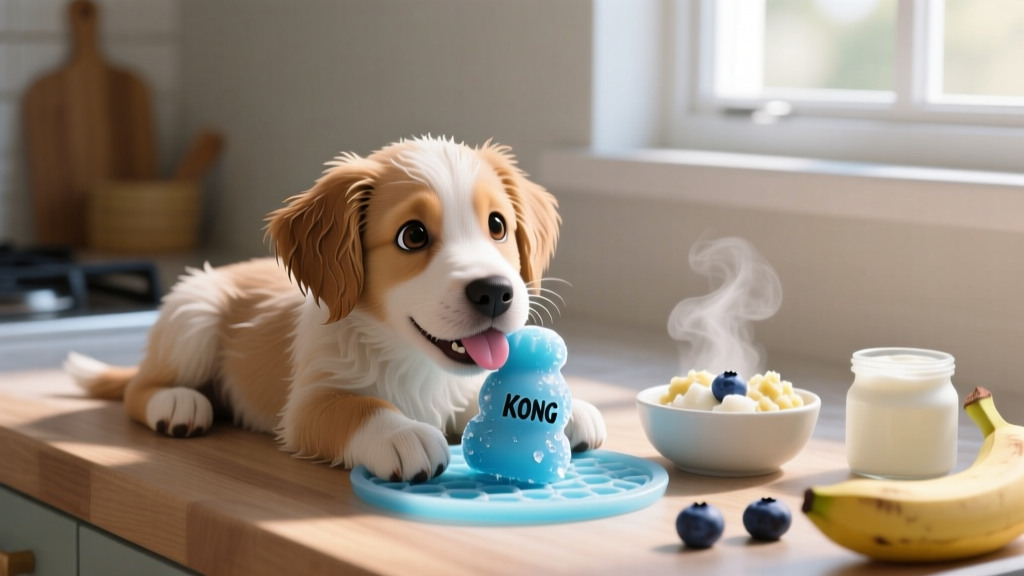
| 4–5 months | Canines and premolars | Peak discomfort period. Chewing intensity at maximum. Gums may appear red or slightly bloody. | Frozen KONG stuffed with plain yogurt and banana, Benebone Wishbone (puppy formula, $13–$17), Nylabone Puppy Chew ($6–$9) |
| 5–6 months | Adult molars emerge | Final 42 adult teeth in place. Chewing may continue past teething as a stress-relief and exploration behavior. | Transition to adult-weight chew toys: West Paw Zogoflex Hurley ($14–$18), medium KONG Classic ($12–$15) |
Retained deciduous teeth: If baby canines are still present alongside adult canines at 6 months, your vet should extract them during the spay/neuter procedure. Retained baby teeth are common in Labs and can cause misalignment of the adult bite or trap food, leading to early dental disease.
Common Chocolate Lab Puppy Problems and Solutions
Problem: Puppy Biting and Nipping
Why Labs do it: Labrador Retrievers are mouth-oriented retrievers. Carrying, mouthing, and grabbing objects (including hands) is deeply ingrained. This is not aggression — it is breed-typical behavior that needs redirection.
Solution (positive reinforcement only):
- When puppy teeth touch skin, say "ouch" in a calm voice and immediately withdraw attention for 15–20 seconds (stand up, turn away, or step behind a baby gate).
- Redirect to an appropriate chew toy. When the puppy chews the toy, praise and reward with a treat.
- Provide structured "bite-allowed" games: tug with a rope toy (teach "drop it" as a release cue), fetch with soft toys.
- Never hold the puppy's mouth shut, alpha roll, or use physical punishment. These methods increase fear-based biting and damage trust.
- Biting typically decreases significantly by 5–6 months as adult teeth fully erupt and the puppy learns bite inhibition through consistent feedback.
Problem: Destructive Chewing
Why Labs do it: Labs are oral explorers and have one of the highest rates of destructive chewing among breeds through 18 months of age. Boredom and insufficient exercise amplify this.
Solution:
- Provide 4–6 appropriate chew items rotated weekly (novelty prevents boredom): rubber toys, edible chews (bully sticks, 6-inch, $4–$7 each), frozen stuffed KONGs.
- Puppy-proof: remove shoes, remotes, and children's toys from floor level. Use bitter apple spray ($8–$12) on furniture legs as a deterrent.
- Ensure minimum exercise: 5 minutes per month of age, twice daily (e.g., a 4-month-old gets 20-minute walks twice daily). Under-exercised Labs chew more.
- Confine to crate or puppy-proofed pen when unsupervised.
Problem: Whining and Vocalization
Why Labs do it: Labs are social dogs and vocalize when separated, bored, or seeking attention. Crate whining is most intense in the first 2–3 weeks home.
Solution:
- Distinguish needs-based whining (needs to eliminate — take out immediately) from attention-seeking whining (ignore until quiet for 5+ seconds, then reward silence).
- Provide a food-puzzle toy (KONG, Toppl, or LickiMat, $8–$15) in the crate to build positive association and occupy the puppy.
- Exercise the puppy before crating — a tired puppy is a quiet puppy.
- White noise machine or soft music (classical or reggae — a 2017 University of Glasgow study found these genres reduce stress in kenneled dogs) near the crate.
Problem: Jumping on People
Why Labs do it: Labs greet with enthusiasm and seek face-level contact. A 50-lb adolescent Lab jumping on guests or children is a safety concern.
Solution:
- Teach "four on the floor" — reward with treats and attention only when all four paws are on the ground. The instant the puppy jumps, turn away and fold arms (remove all attention).
- Teach an incompatible behavior: "sit" for greetings. Practice with family members first, then generalize to guests.
- Use a leash during greetings with visitors to prevent rehearsal of jumping behavior.
- Manage the environment: keep puppy on leash or behind a baby gate when guests enter until calm.
First-Year Cost Breakdown for a Chocolate Lab Puppy
Budgeting accurately prevents surprise expenses. Here is a realistic first-year cost breakdown for a chocolate Labrador Retriever in the United States (2025–2026 pricing):
| Category | Items | Estimated Cost |
|---|---|---|
| Puppy Purchase | AKC-registered chocolate Lab from responsible breeder (health-tested parents: OFA hips, elbows, eyes, EIC and CNM DNA tests) | $1,200–$2,500 |
| Veterinary — Preventive | Initial exam, DHPP series (3 doses), rabies, bordetella, leptospirosis, fecal tests (2x), heartworm test, deworming (2–3 rounds) | $350–$600 |
| Veterinary — Surgery | Spay or neuter (6–9 months) | $250–$600 |
| Medications — Ongoing | Heartworm prevention (e.g., Heartgard Plus, $70–$100/year), flea/tick prevention (e.g., Bravecto or Simparica Trio, $150–$250/year) | $220–$350 |
| Food | Large-breed puppy formula, approx. 25–30 lb bag every 3–4 weeks ($45–$70/bag, brands like Purina Pro Plan, Royal Canin, or Hill's) | $450–$700 |
| Supplies | 42-inch crate ($55–$90), adjustable harness ($20–$40), 6-foot leash ($15–$25), collar with ID tags ($15–$30), stainless steel bowls (2, $15–$25), chew toys (assortment, $60–$100), baby gates (2, $40–$80), enzymatic cleaner ($12–$18), grooming supplies (brush, nail clippers, $25–$40) | $260–$450 |
| Training | Puppy kindergarten class (6–8 weeks, $120–$250), optional basic obedience follow-up ($150–$300) | $120–$550 |
| Pet Insurance | Monthly premium for Lab puppy (e.g., Trupanion, Healthy Paws, or Lemonade), typically $40–$80/month | $480–$960 |
| Microchip | Implant + registration (often included in initial vet visit) | $25–$50 |
| Total First-Year Estimate (excluding puppy purchase) | $2,155–$4,260 | |
| Total First-Year Estimate (including puppy purchase) | $3,355–$6,760 | |
Emergency fund recommendation: Set aside $500–$1,000 for unexpected vet visits. Common Lab puppy emergencies include foreign body ingestion (Labs eat everything — socks, rocks, corn cobs), which can require surgical removal costing $1,500–$4,000. Pet insurance with a $250 deductible and 80–90% reimbursement significantly reduces this risk.
Frequently Asked Questions About Chocolate Lab Puppies
When can my chocolate lab puppy go outside and meet other dogs?
Your puppy can go outside in your own yard (if private and not shared with unvaccinated dogs) immediately upon coming home. For public spaces — parks, sidewalks, pet stores — wait until 7 days after the second DHPP vaccine, typically around 11–12 weeks of age. Puppy socialization classes are safe after the first DHPP dose (around 7–8 weeks) if the facility requires proof of vaccination and sanitizes between sessions. Avoid dog parks until the full DHPP series is complete at 16+ weeks and your vet gives clearance. Parvovirus can survive in soil for months and is lethal to unvaccinated puppies.
How often should I feed my chocolate lab puppy at each age?
At 8–12 weeks: 3–4 meals per day. At 12–16 weeks: 3 meals per day. At 4–6 months: 2–3 meals per day. At 6–12 months: 2 meals per day. Never feed a Lab puppy one large meal — splitting food across multiple meals reduces bloat (GDV) risk, which is a life-threatening emergency in deep-chested breeds. See the feeding table above for exact portions by weight.
When will my chocolate lab puppy be fully potty trained?
Most chocolate labs are reliably house-trained by 5–7 months with a consistent schedule. "Reliably" means fewer than one accident per month. Some Labs achieve this by 4 months; others take until 8–9 months. Males sometimes take slightly longer than females. If accidents persist past 7 months despite consistent training, consult your veterinarian to rule out medical causes such as urinary tract infection, ectopic ureters (a congenital condition more common in female Labs), or diabetes.
What vaccines does my chocolate lab puppy need and when?
Core vaccines: DHPP at 6–8, 10–12, and 14–16 weeks, plus rabies at 14–16 weeks. Non-core vaccines recommended for Labs: Bordetella at 10–12 weeks (if attending classes), Leptospirosis at 10–12 and 14–16 weeks (Labs' love of water increases exposure risk), and Lyme disease at 12–16 weeks if you live in a tick-endemic area. See the vaccination table above for complete details. Always consult your veterinarian, who will tailor the schedule to your region's disease risks.
How do I stop my chocolate lab puppy from biting and nipping?
Use the "ouch + withdraw" method: when teeth touch skin, say "ouch" calmly, then withdraw all attention for 15–20 seconds. Redirect to an appropriate chew toy and reward chewing with praise and treats. Provide structured mouth-activity outlets: tug games with a rope toy (teach "drop it"), fetch, and frozen chew toys. Never use physical punishment, muzzle-holding, or alpha rolls — these increase fear and aggression. Biting decreases significantly by 5–6 months as adult teeth erupt and the puppy learns bite inhibition. Consistency from all household members is essential.
Are chocolate labs harder to train than yellow or black labs?
No. Coat color has no bearing on trainability, intelligence, or temperament in Labrador Retrievers. The genes controlling coat color (the B locus for brown/chocolate and E locus for yellow) are independent of genes influencing behavior. However, anecdotal reports from field-trial and show-line breeders suggest that English-type (show/bench) Labs — which are disproportionately chocolate — tend to be slightly calmer than American-type (field) Labs, which are disproportionately yellow. This is a line-type difference, not a color difference. Train your chocolate lab with the same positive-reinforcement methods you would use for any Lab: food rewards, clicker marking, and short (5–10 minute) sessions.
How much exercise does a chocolate lab puppy need?
Follow the "5 minutes per month of age, twice daily" guideline. An 8-week-old puppy needs approximately 10-minute walks twice daily. A 4-month-old needs 20-minute walks twice daily. A 6-month-old needs 30-minute walks twice daily. Do not over-exercise growing puppies — forced running, long hikes, or repetitive jumping before growth plates close (12–18 months) increases the risk of hip dysplasia and elbow dysplasia, both common in the breed. Free play in a yard (self-paced, with rest breaks) is safer than structured running at this age.
Disclaimer: This guide provides general information for educational purposes. Always consult your veterinarian for advice specific to your puppy's health, development, and vaccination needs. Individual puppies may vary from breed averages. If you suspect your puppy has ingested a toxic substance, contact the ASPCA Animal Poison Control Center at (888) 426-4435 (24/7, consultation fee applies) or the Pet Poison Helpline at (855) 764-7661 immediately.
Dr. Hannah Wickes
All our authors care for dogs every day — read more of their work on the authors page.