Chinese Shar-Pei Puppies: The Complete First-Year Care Guide
Everything you need to raise Chinese Shar-Pei puppies: breed-specific milestones, feeding schedules, potty training, socialization, and first-year costs.
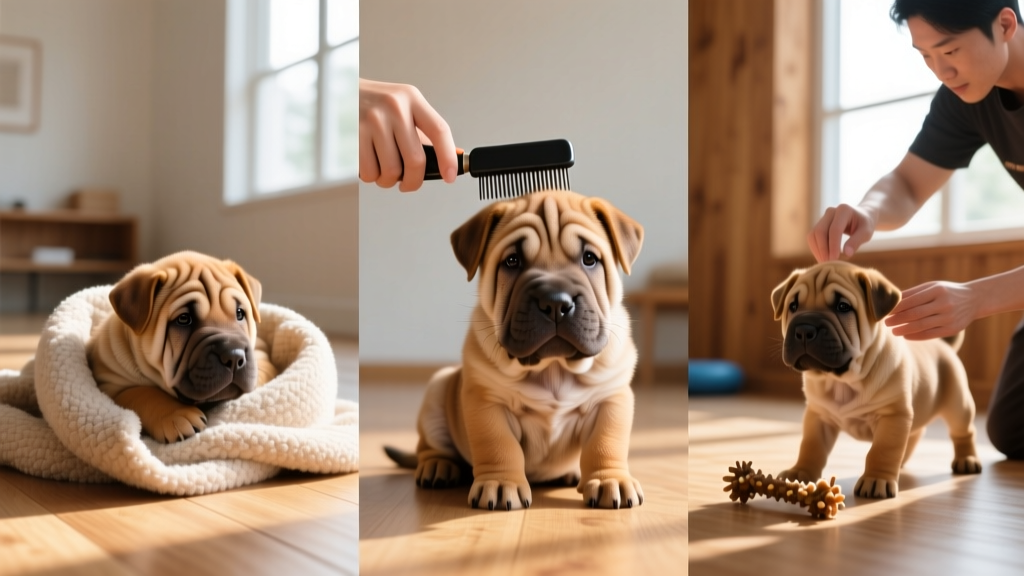
Raising Chinese Shar-Pei puppies is unlike raising almost any other breed. Their iconic wrinkles, independent temperament, and unique health profile demand a puppy-raising plan built specifically around their needs. If you've just brought home a Shar-Pei puppy — or are preparing to — this guide walks you through every critical week of the first year with breed-specific timelines, feeding portions, training strategies, and realistic cost expectations.
The Shar-Pei's aloof nature, strong guarding instinct, and predisposition to skin and immune-related conditions mean that generic puppy advice won't cut it. What works for a Labrador retriever puppy may backfire with a Shar-Pei, whose stubbornness and sensitivity require patience, positive reinforcement, and early, structured socialization.
When Should You Bring Your Shar-Pei Puppy Home?
Responsible Shar-Pei breeders typically release puppies between 8 and 10 weeks of age. While some breeds can transition at 7 weeks, Shar-Pei puppies benefit from the extra time with their littermates and dam. This additional week or two helps them develop bite inhibition and social skills — critical for a breed that can be dog-selective or dog-aggressive as adults.
Before bringing your puppy home, confirm the breeder has completed the following:
- First DHPP vaccination (typically given at 6–8 weeks)
- At least two deworming rounds (pyrantel pamoate at 2, 4, and 6 weeks)
- Microchipping with registration transferred to your name
- Ophthalmologist evaluation (CERF/CAER) for both parents, screening for entropion and glaucoma
- Documentation of parental health testing through the Orthopedic Foundation for Animals (OFA)
Expect to pay between $1,200 and $3,000 for a well-bred Shar-Pei puppy from a health-tested, AKC-registered breeder in 2026. Puppies from champion show lines or rare "bear coat" varieties may reach $3,500+. Adoption through Shar-Pei-specific rescues like Sharp Pei Rescue typically costs $300–$600 and often includes spay/neuter and initial veterinary care.
Shar-Pei Puppy Development Milestones: Week by Week
Understanding what to expect at each developmental stage helps you prepare rather than react. Here's what the first year looks like for a Chinese Shar-Pei puppy:
| Age Range | Weight (Approx.) | Key Milestones | What to Expect |
|---|---|---|---|
| 4–8 weeks | 4–10 lb / 1.8–4.5 kg | Weaning, littermate play, first vaccines | Puppy should be with breeder; learning bite inhibition from siblings |
| 8–12 weeks | 10–18 lb / 4.5–8.2 kg | Home transition, socialization window opens, crate training begins | Expect crying nights, frequent potty breaks, intense curiosity mixed with caution |
| 12–16 weeks | 18–28 lb / 8.2–12.7 kg | Second and third vaccine rounds, fear imprint period (8–11 weeks), teething begins | May show sudden wariness of new things; keep experiences positive, never force interactions |
| 16–24 weeks | 28–40 lb / 12.7–18.1 kg | Peak teething, advanced socialization, basic obedience solidifying | Chewing intensifies; puppy may test boundaries; Shar-Pei independence emerges |
| 6–12 months | 35–50 lb / 15.9–22.7 kg | Adolescence, sexual maturity, spay/neuter window | Stubbornness peaks; regression in training is normal; guarding behaviors may surface |
Adult Shar-Pei typically reach 45–60 lb (20.4–27.2 kg) and stand 18–20 inches (46–51 cm) at the shoulder, per the AKC breed standard. Growth plates close around 12–14 months, so avoid high-impact exercise (agility jumps, long-distance running on hard surfaces) until your vet confirms skeletal maturity via X-ray.
Feeding Schedule: Exact Portions by Age and Weight
Shar-Pei puppies are prone to food allergies and sensitivities — particularly to chicken, beef, and grain-heavy formulations. Many owners find success with limited-ingredient diets featuring novel proteins like salmon, lamb, or duck. Look for an AAFCO statement confirming "complete and balanced for growth" on any food you select.
| Puppy Age | Meals Per Day | Daily Portion (Dry Kibble) | Notes |
|---|---|---|---|
| 8–12 weeks | 4 | 1.0–1.5 cups (divided into 4 meals) | Soak kibble in warm water for easier chewing during early transition |
| 12–16 weeks | 3 | 1.5–2.0 cups (divided into 3 meals) | Monitor body condition score (BCS); ribs should be easily felt but not visible |
| 16–24 weeks | 3 | 2.0–2.5 cups (divided into 3 meals) | Begin transitioning to adult formula if growth rate is on track |
| 6–9 months | 2 | 2.5–3.0 cups (divided into 2 meals) | Switch to adult maintenance formula; avoid large-breed puppy food if puppy is tracking small |
| 9–12 months | 2 | 2.5–3.5 cups (divided into 2 meals) | Adjust based on activity level and BCS; ideal BCS is 4–5/9 |
Breed-specific feeding tip: Shar-Pei are prone to mucinosis — a condition where excess hyaluronic acid causes skin thickening and blistering. Some veterinary dermatologists recommend avoiding foods high in histamine-triggering ingredients (aged proteins, fermented products) if your puppy shows early signs of skin irritation. Consult your veterinarian if you notice persistent redness between skin folds or small, fluid-filled bumps along the muzzle and legs.
Recommended starter foods for Shar-Pei puppies include:
- Purina Pro Plan Sensitive Skin & Stomach Puppy (salmon & rice) — approximately $55–$65 for a 34 lb bag
- Royal Canin Medium Puppy — approximately $60–$72 for a 30 lb bag
- Nutro Ultra Puppy (chicken-free formula) — approximately $58–$68 for a 26 lb bag
Vaccination Schedule: What Your Shar-Pei Puppy Needs and When
Shar-Pei puppies follow the standard core vaccination protocol, but their unique immune system — shaped by elevated hyaluronic acid levels — means they can be more reactive to vaccines than other breeds. Shar-Pei Fever (Familial Shar-Pei Fever, or FSF) episodes can occasionally be triggered by immune stimulation, so some veterinarians recommend spacing vaccines rather than giving combination shots simultaneously.
| Age | Vaccine | Notes |
|---|---|---|
| 6–8 weeks | DHPP (Distemper, Hepatitis, Parainfluenza, Parvovirus) — Dose 1 | Usually administered by breeder; confirm documentation |
| 10–12 weeks | DHPP — Dose 2; Bordetella (optional, if attending puppy classes) | Bordetella is recommended if your puppy will socialize in group settings |
| 14–16 weeks | DHPP — Dose 3 (final puppy booster); Rabies (per local law, typically 12–16 weeks) | Final DHPP is critical — maternal antibodies may interfere with earlier doses |
| 12 months | DHPP booster; Rabies booster (1-year or 3-year per jurisdiction) | Discuss titer testing as an alternative to automatic boosters with your vet |
Important: According to the AVMA vaccination guidelines, core vaccines should be administered based on individual risk assessment. For Shar-Pei, discuss with your veterinarian whether pre-medicating with an antihistamine (diphenhydramine at 1 mg/lb, given 30 minutes before vaccination) is appropriate to reduce reaction risk.
Your Shar-Pei puppy should not visit public areas (dog parks, pet stores, shared grassy areas) until at least 7 days after the final DHPP booster at 14–16 weeks. However, controlled socialization in private, known-safe environments (a friend's fenced yard with a fully vaccinated adult dog) can begin as early as 8 weeks. The socialization window closes around 14 weeks, so balancing disease risk against behavioral development is essential. Carry your puppy in a sling or stroller for exposure to new sights and sounds before full ground access is safe.
Socialization Window: The Critical Weeks 3–14 Checklist
The Shar-Pei's natural wariness of strangers and other dogs makes early socialization non-negotiable. Research published in the Journal of Veterinary Behavior confirms that puppies not adequately socialized before 14 weeks are significantly more likely to develop fear-based aggression. For a breed already predisposed to aloofness, this window is your best tool for raising a well-adjusted adult.
Exposure checklist for weeks 8–14 (after bringing puppy home):
| Category | Specific Exposures | Target Count by Week 14 |
|---|---|---|
| People | Men with beards, children (supervised), people wearing hats/sunglasses, delivery workers, people of different ethnicities | 30+ unique individuals |
| Dogs | Fully vaccinated, known-temperament adult dogs of various sizes; structured puppy classes | 10+ positive dog interactions |
| Surfaces | Gravel, wet grass, metal grates, slippery floors, car rides, elevator/stairs | 15+ novel surfaces |
| Sounds | Vacuum, doorbell, thunderstorms (recorded at low volume), traffic, construction noise | Daily exposure at low intensity |
| Handling | Ear touching, paw handling, muzzle inspection, tooth examination, nail clipping practice, wrinkle cleaning | Daily 5-minute sessions |
| Environments | Vet clinic (happy visits only), pet-friendly stores, outdoor cafés, car rides to new locations | 10+ new locations |
Shar-Pei-specific socialization note: Never force a Shar-Pei puppy into an interaction they're resisting. Their body language — turning away, lip licking, whale eye, stiffening — signals discomfort. Instead, pair the novel stimulus with high-value treats (freeze-dried liver, small pieces of boiled chicken) at a distance where the puppy remains relaxed. This counter-conditioning approach builds positive associations without flooding.
Potty Training Timeline: Realistic Expectations for Shar-Pei Puppies
Shar-Pei puppies are generally clean dogs and tend to potty train faster than some breeds — but "faster" still means 4 to 6 months for reliable house training. Any source claiming 3-day potty training is setting you up for frustration.
Realistic potty training timeline:
- 8–12 weeks: Accidents every 1–2 days. Puppy needs outdoor trips every 30–45 minutes during active hours, immediately after meals, naps, and play sessions.
- 12–16 weeks: Accidents drop to 1–2 per week if schedule is consistent. Bladder control extends to 1.5–2 hours between trips.
- 16–24 weeks: Most Shar-Pei puppies are reliably signaling (sitting by door, whining, pacing) when they need out. Occasional accidents still occur during excitement or schedule disruptions.
- 6–12 months: Fully reliable in most cases. Adolescent males may begin marking — neutering before 6 months reduces but doesn't eliminate this behavior.
Track every outing using this format: Time | Location | Result (pee/poop/both/nothing) | Treat given (yes/no) | Accident since last outing (yes/no). Most puppies develop a predictable elimination pattern within 7–10 days of consistent logging. Apps like Potty Time or a simple notebook work equally well.
Troubleshooting common setbacks:
- Nighttime accidents: A Shar-Pei puppy under 12 weeks typically cannot hold it past 3–4 hours. Set a phone alarm for one overnight trip (around 2–3 AM). Remove water 2 hours before bedtime.
- Submissive urination: Some Shar-Pei puppies urinate when greeted enthusiastically. Ignore the puppy for the first 60 seconds upon entering; greet calmly at their level without direct eye contact.
- Crate accidents: If your puppy is soiling the crate, the crate may be too large. Use a divider to limit space to just enough for standing, turning, and lying down. Never use the crate as punishment.
Crate Training Progression and Time Limits
Shar-Pei puppies generally accept crates well because they have a natural den instinct. However, their wrinkled skin makes them susceptible to heat stress, so crate placement in a cool, ventilated area is essential — never in direct sunlight or near a heating vent.
| Puppy Age | Maximum Crate Time (Daytime) | Overnight Expectation | Crate Size Recommendation |
|---|---|---|---|
| 8–10 weeks | 1–2 hours | 3–4 hours (one overnight potty break needed) | 24-inch crate with divider |
| 10–14 weeks | 2–3 hours | 4–5 hours (may still need one break) | 24-inch crate, expand divider slightly |
| 14–18 weeks | 3–4 hours | 6–7 hours (most sleep through) | Transition to 30-inch crate if puppy is growing quickly |
| 18–24 weeks | 4–5 hours | 7–8 hours (fully overnight) | 30-inch crate; puppy should stand and turn comfortably |
| 6–12 months | 5–6 hours maximum | 8+ hours | 36-inch crate (final adult size for most Shar-Pei) |
Crate training steps for Shar-Pei puppies:
- Leave the crate open with a soft blanket and a stuffed Kong inside. Let the puppy explore freely for 3–5 days before closing the door.
- Begin feeding meals inside the crate with the door open, then closed for the duration of the meal only.
- Close the door for 5 minutes after a meal while you remain visible. Gradually extend to 15, 30, and 60 minutes over the first two weeks.
- Practice leaving the room, then the house, for short intervals. Return before the puppy shows distress.
- Never let the puppy out while whining or barking — wait for 3 seconds of silence, then open the door. This prevents reinforcement of vocal protest.
Teething Timeline and Relief Strategies (3–6 Months)
Shar-Pei puppies begin losing their 28 deciduous (baby) teeth around 12–16 weeks, with all 42 adult teeth typically in place by 6–7 months. The breed's compact muzzle means retained baby teeth are more common than in longer-muzzled breeds — check weekly for baby canines that haven't fallen out alongside emerging adult teeth. Your vet may need to extract retained teeth during spay/neuter surgery.
Safe chew recommendations by stage:
- 12–16 weeks (early teething): Frozen washcloth twisted into a rope, rubber puppy teethers (Kong Puppy, Nylabone Puppy), chilled carrot sticks. Avoid hard nylon at this stage — baby teeth fracture easily.
- 16–24 weeks (peak teething): Benebone Puppy (chicken or bacon flavor, approximately $14–$18), frozen Kong stuffed with plain pumpkin purée and kibble, bully sticks (supervised only, 6-inch maximum per session).
- 24 weeks+ (adult teeth settling): Transition to adult-strength chews — Yak cheese chews, Kong Classic (red rubber), West Paw Zogoflex Hurley. Avoid rawhide, cooked bones, and antlers, which fracture teeth.
Breed-specific dental note: Shar-Pei are predisposed to crowded teeth due to their brachycephalic-leaning skull shape. Begin toothbrushing with a veterinary enzymatic toothpaste (Virbac C.E.T., approximately $12–$15) at 8 weeks using a finger brush, transitioning to a dual-head canine brush by 16 weeks. Daily brushing prevents the periodontal disease that affects an estimated 80% of Shar-Pei by age 3.
Common Shar-Pei Puppy Problems and Solutions
Puppy Biting and Nipping
Shar-Pei puppies explore the world with their mouths, and their loose, wrinkled skin can make them less sensitive to bite feedback from littermates. To stop nipping:
- Redirect: When teeth touch skin, immediately offer a chew toy. Reward chewing the toy with calm praise.
- Withdraw attention: If biting persists, stand up and leave the room for 15–30 seconds. Return when the puppy is calm. This mimics littermate behavior.
- Never use physical punishment: Alpha rolls, muzzle grabbing, or holding the mouth shut increase fear and aggression in Shar-Pei puppies specifically. Positive reinforcement and redirection are the only methods recommended by certified trainers and the American Veterinary Society of Animal Behavior (AVSAB).
Excessive Whining and Crying
Nighttime whining in the first 1–2 weeks home is normal separation distress. During the day, whining often signals an unmet need (potty, hunger, overstimulation). Work through a checklist before responding: Has the puppy eliminated recently? Eaten? Had adequate play? If all needs are met, wait for a brief pause in vocalizing before providing attention.
Destructive Chewing
Shar-Pei puppies chew intensely during the 4–7 month window. Puppy-proof your home by removing shoes, charging cables, and toxic houseplants (lilies, sago palm, philodendron). Provide 5–7 approved chew items rotated every 2–3 days to maintain novelty. If you catch the puppy chewing something inappropriate, trade for an approved item rather than chasing or punishing.
Wrinkle Care (Breed-Specific)
Begin cleaning your Shar-Pei puppy's facial folds daily from 8 weeks using a soft, damp cloth or veterinary wrinkle wipes (Squishface Wrinkle Wipes, approximately $15–$18 for 70 count). Dry thoroughly after every cleaning. Moisture trapped in folds leads to intertrigo (skin fold dermatitis), one of the most common Shar-Pei health complaints. If you notice redness, odor, or discharge in any fold, consult your veterinarian — topical antifungal or antibacterial treatment may be needed.
First-Year Cost Breakdown for a Shar-Pei Puppy
Shar-Pei puppies tend to cost more than average in the first year due to breed-specific health screening, wrinkle care supplies, and potential dermatological visits. Here's a realistic budget based on 2026 pricing across the United States:
| Category | Estimated Cost Range | Details |
|---|---|---|
| Puppy purchase/adoption | $1,200–$3,500 | Health-tested AKC breeder; rescue adoption $300–$600 |
| Veterinary care (routine) | $600–$1,000 | 3 puppy wellness visits, vaccines, fecal tests, heartworm prevention, spay/neuter ($300–$600) |
| Veterinary care (breed-specific) | $200–$800 | Entropion screening, possible eyelid surgery ($400–$1,200 per eye if needed), skin fold dermatitis treatment |
| Food (12 months) | $400–$700 | Premium limited-ingredient diet; 30 lb bag lasts approximately 6–8 weeks |
| Supplies | $300–$500 | Crate ($50–$80), bed, leash/harness, bowls, grooming tools, wrinkle wipes, enzymatic toothpaste, baby gates |
| Training | $200–$600 | Puppy socialization class ($150–$250 for 6 weeks), basic obedience ($150–$300), private sessions if needed ($75–$125/session) |
| Pet insurance | $480–$900 | Monthly premium $40–$75; recommended for Shar-Pei due to breed-specific conditions. Providers: Trupanion, Healthy Paws, Embrace |
| Miscellaneous | $200–$400 | Toys, chews, grooming (professional bath every 6–8 weeks, $40–$65/visit), microchip registration, licensing |
Total first-year estimate: $3,580–$8,400 (including puppy purchase). Ongoing annual costs after year one typically range from $1,800–$3,200.
Shar-Pei are predisposed to conditions that can become expensive without insurance: Familial Shar-Pei Fever (FSF), which may require lifelong colchicine therapy ($15–$30/month); entropion surgery ($400–$1,200 per eye); and allergic skin disease management ($50–$200/month for medications like Apoquel or Cytopoint injections). Pet insurance purchased before any symptoms develop provides the best financial protection.
Frequently Asked Questions
How often should I feed my Shar-Pei puppy at 10 weeks old?
At 10 weeks, feed 4 meals per day totaling approximately 1.0–1.5 cups of high-quality puppy kibble. Space meals roughly 3–4 hours apart during waking hours (for example: 7 AM, 11 AM, 3 PM, 7 PM). Consistent meal timing also supports predictable potty scheduling.
When will my Shar-Pei puppy be fully potty trained?
Most Shar-Pei puppies are reliably house trained between 4 and 6 months of age with consistent scheduling. "Reliable" means fewer than one accident per month. Full reliability — including no accidents during schedule disruptions, travel, or excitement — typically solidifies by 8–10 months.
Are Shar-Pei puppies good with children?
Shar-Pei puppies raised with respectful children (ages 8+) generally bond well. However, the breed's independent nature and low tolerance for ear-pulling or tail-grabbing make them less ideal for households with toddlers. Always supervise interactions and teach children to approach the puppy calmly, avoiding the face and wrinkles.
Do Shar-Pei puppies need professional grooming?
Shar-Pei have a short, harsh coat that sheds moderately. Weekly brushing with a rubber curry brush (Kong ZoomGroom, approximately $12–$15) is sufficient for coat care. Professional grooming is optional but helpful for nail trimming, ear cleaning, and thorough wrinkle maintenance every 6–8 weeks. The coat itself requires no trimming.
What health tests should a Shar-Pei breeder provide?
Per the AKC-recommended health testing for Chinese Shar-Pei, breeders should provide OFA or PennHIP hip evaluation, ophthalmologist evaluation (CAER), and a DNA test for Familial Shar-Pei Fever (FSF). Ask for documentation — verbal assurances are not sufficient.
Marcus Aldridge
All our authors care for dogs every day — read more of their work on the authors page.


