Chihuahua Puppies for Adoption: Complete Week-by-Week Puppy Care Guide
Bringing home Chihuahua puppies for adoption? This week-by-week guide covers feeding, potty training, vaccines, socialization, and first-year costs.

Chihuahuas pack enormous personality into a 4-to-6-pound frame, but raising one from puppyhood requires precision that larger-breed guides simply don't cover. Their tiny bladders, fragile bones, and rapid metabolism mean that standard puppy advice often falls short—or even poses risks. If you're evaluating Chihuahua puppies for adoption, this breed-specific roadmap will walk you through every developmental stage from week 4 through month 12, with exact feeding amounts, crate-time limits, vaccine schedules, and realistic timelines that account for the unique challenges of raising a toy-breed puppy.
When Should You Bring Your Chihuahua Puppy Home?
Most toy-breed specialists recommend waiting until 10 to 12 weeks before bringing a Chihuahua puppy home—two to four weeks later than medium or large breeds. The reason is physiological: Chihuahua puppies are prone to hypoglycemia (dangerously low blood sugar) during the weaning transition, and an extra month with the breeder or foster allows them to stabilize their eating patterns and build immune resilience through maternal antibodies.
A responsible adoption source will have completed the following before release:
- First DHPP vaccination (typically at 6–8 weeks)
- At least two deworming treatments (pyrantel pamoate at 2, 4, and 6 weeks)
- Solid kibble consumption for a minimum of two weeks
- Weight at or above 1.5 lb (0.68 kg) to reduce hypoglycemia risk
Adopting a Chihuahua under 8 weeks or under 1 pound carries significant health risk. If a rescue places a puppy this young with you, request a veterinary exam within 48 hours and ask about supplemental feeding protocols (Karo syrup on gums every 4 hours is a common emergency measure for hypoglycemic toy puppies).
Chihuahua Puppy Development: Week-by-Week Milestones
Understanding what to expect at each stage prevents unnecessary panic and helps you provide appropriate stimulation. Here's the developmental timeline specific to Chihuahua puppies:
| Age Range | Milestones & Expectations | Your Role |
|---|---|---|
| Weeks 4–8 | Eyes and ears fully open. Deciduous (baby) teeth erupt. Littermate play begins—bite inhibition foundations form. Weight: 0.5–1.5 lb (0.23–0.68 kg). Weaning onto moistened kibble. | Typically still with breeder/foster. If you have the puppy, provide warm bedding (85°F/29°C ambient), feed 4x daily, handle gently for 5-min sessions. |
| Weeks 8–12 | Peak socialization receptivity. Bladder capacity: roughly 1 hour per month of age (2 hours max at 8 weeks). First fear period may emerge (weeks 8–10). Weight: 1.5–2.5 lb (0.68–1.13 kg). | Begin positive exposure to 5+ new people, surfaces, sounds weekly. Potty breaks every 1–2 hours. Keep sessions under 10 minutes to avoid stress. |
| Weeks 12–16 | Vaccination series continues. Bladder control extends to 3 hours. Puppy begins testing boundaries. Weight: 2–4 lb (0.9–1.8 kg). Coordination improves significantly. | Start short (3–5 minute) training sessions using treat luring. Introduce crate as safe space. Continue socialization but avoid dog parks until fully vaccinated. |
| Weeks 16–24 | Second fear period may appear (around 16–20 weeks). Teething begins (~16 weeks). Adult size becomes more predictable. Weight: 3–5 lb (1.4–2.3 kg). | Provide approved chew toys. Avoid forcing scary encounters—let puppy approach at own pace. Increase walk duration to 10–15 minutes. |
| Months 6–12 | Sexual maturity (discuss spay/neuter timing with vet). Adult teeth fully in by 7 months. Growth rate slows. Near-adult weight reached by 9–10 months. Weight: 4–6 lb (1.8–2.7 kg). | Transition to twice-daily adult feeding around 9–10 months. Reinforce training consistency. Discuss patella and cardiac screening with vet. |
Feeding Schedule: Exact Portions by Age and Weight
Chihuahua puppies have one of the highest metabolic rates per pound of any breed. Their small stomach capacity (approximately 1 tablespoon per pound of body weight) means they need frequent, calorie-dense meals. Hypoglycemia is a genuine emergency risk in Chis under 4 months, so never skip or delay a meal.
Choose a kibble specifically formulated for toy or small-breed puppies (kibble diameter under ¼ inch). Look for an AAFCO statement confirming "growth" or "all life stages" adequacy, with minimum 28% crude protein and 17% crude fat for optimal development.
| Puppy Age | Meals per Day | Daily Amount (dry kibble) | Notes |
|---|---|---|---|
| 8–12 weeks (1.5–2.5 lb) | 4 meals | ¼ to ⅓ cup total (moistened with warm water) | Keep a small dish of dry kibble available for free-choice snacking between meals to prevent blood sugar drops. |
| 12–16 weeks (2–3.5 lb) | 3–4 meals | ⅓ to ½ cup total (transition to dry) | Begin phasing out free-feeding if potty training progress stalls—scheduled meals create predictable elimination. |
| 4–6 months (3–5 lb) | 3 meals | ½ to ⅔ cup total | Monitor body condition score (BCS). Ribs should be palpable but not visible. Adjust ±10% based on condition. |
| 6–9 months (4–6 lb) | 2–3 meals | ½ to ¾ cup total | Growth rate slows. Reduce portions if puppy is gaining faster than 0.25 lb per week. |
| 9–12 months (adult weight) | 2 meals | ½ to ⅔ cup total (transition to adult formula) | Switch to small-breed adult kibble over 7–10 days, mixing increasing ratios of new food. |
Vaccination Schedule for Chihuahua Puppies
Chihuahua puppies follow the standard core vaccination protocol, but their small size means you should discuss with your veterinarian whether to space vaccines two weeks apart rather than combining multiple shots in one visit—some toy-breed owners and vets prefer this to reduce adverse reaction risk, though the AVMA vaccination guidelines do not mandate this approach.
| Age | Vaccine | Protection Against | Estimated Cost |
|---|---|---|---|
| 6–8 weeks | DHPP (1st dose) | Distemper, Hepatitis (Adenovirus-2), Parainfluenza, Parvovirus | $20–$40 |
| 10–12 weeks | DHPP (2nd dose) + Bordetella (optional) | Booster for core diseases; Bordetella for kennel cough | $30–$60 |
| 14–16 weeks | DHPP (3rd dose) + Rabies | Final core booster; Rabies (required by law in most US states) | $40–$75 |
| 12–16 months | DHPP + Rabies booster | 1-year or 3-year boosters depending on vaccine type | $50–$90 |
When can your puppy go outside or meet other dogs? Until your Chihuahua has received their final DHPP dose at 14–16 weeks and at least 5–7 days have passed, avoid public areas where unvaccinated dogs may have been (parks, pet stores, dog beaches). You can carry your puppy in a sling or stroller for socialization exposure—seeing the world without paws touching contaminated ground is safe and critical during the 3–14 week socialization window.
The Socialization Window: Weeks 3–14 Exposure Checklist
The primary socialization period closes around 14 weeks. After this window, unfamiliar stimuli are more likely to trigger fear responses rather than curiosity. For Chihuahua puppies—who are genetically predisposed to wariness of strangers and novel environments—this window is arguably more critical than for any other breed.
Aim for positive, low-pressure exposure to the following before week 14. Each encounter should be paired with high-value treats (boiled chicken, freeze-dried liver) and last no more than 2–3 minutes to prevent overwhelm:
- ☐ 10+ different people (varying ages, heights, ethnicities, wearing hats/glasses)
- ☐ Children ages 5–12 (supervised, calm interactions only)
- ☐ Vacuum cleaner (off, then on low, at a distance)
- ☐ Car rides (5-minute trips, no destination pressure)
- ☐ Different floor surfaces (tile, carpet, gravel, grass, metal grates)
- ☐ Umbrella opening/closing
- ☐ Doorbell and knocking sounds
- ☐ Other vaccinated, calm adult dogs (one-on-one, not groups)
- ☐ Nail trimming simulation (handling paws, touching toes)
- ☐ Toothbrush introduction (finger brush, no toothpaste yet)
- ☐ Carrier/crate as positive space (meals inside, door open)
- ☐ Gentle restraint (towel wrapping for grooming simulation)
Key principle: If your puppy shows fear (tucked tail, flattened ears, freezing, hiding), do not force the interaction. Move to a distance where the puppy is comfortable, offer treats, and gradually decrease distance over multiple sessions. This is called desensitization and counter-conditioning—the gold standard in force-free behavioral science.
Potty Training Timeline: Realistic Expectations for Tiny Bladders
Here is the reality most generic guides won't tell you: Chihuahua puppies typically take 4 to 8 months to become reliably house-trained, compared to 3–4 months for larger breeds. The reason is purely physiological—a 3-pound puppy has a bladder capacity of roughly 1–2 tablespoons of urine. They simply cannot "hold it" for long, no matter how motivated they are.
When will your puppy be fully potty trained? Most Chihuahua owners see consistent outdoor elimination by 6 months if they follow a strict schedule, but expect occasional accidents through 8–10 months, especially during excitement or environmental changes.
Potty Training Schedule by Age
- 8–12 weeks: Carry puppy outside every 1–2 hours, immediately after meals, after naps, and after play. Use a consistent cue word ("go potty"). Reward with a treat within 2 seconds of elimination.
- 12–16 weeks: Extend to every 2–3 hours. Puppy should begin going to the door or whining to signal need. If not, maintain the schedule.
- 4–6 months: Every 3–4 hours. Begin extending overnight intervals (most Chis can sleep 5–6 hours by this age).
- 6+ months: Every 4–6 hours during the day. Full overnight hold (7–8 hours) typically achievable.
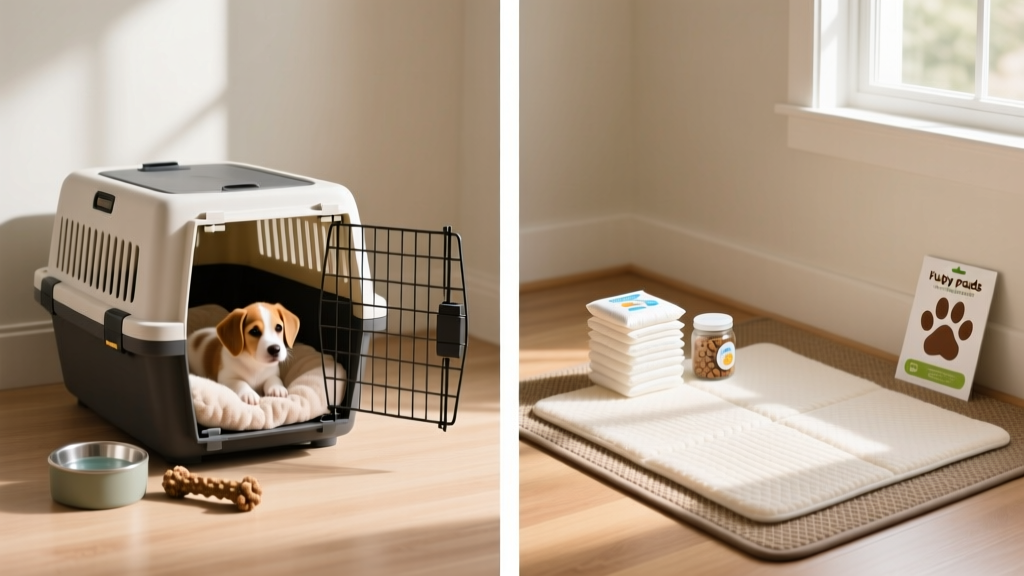
- Rain/cold refusal: Chis notoriously dislike wet grass and cold. Consider a covered potty area, puppy pee pads in a designated indoor spot, or a small grass patch on a balcony. Dog boots (e.g., Ruffwear Polar Trex in XXS) can help in winter.
- Submissive urination: Common in young Chis when greeted enthusiastically. Ignore the puppy for the first 2 minutes upon entering, crouch to their level, and avoid direct eye contact until they're calm.
- Marking behavior: Intact males may begin lifting a leg as early as 5 months. Discuss spay/neuter timing with your vet—early alteration often reduces marking by 70–80%.
Crate Training Progression and Time Limits
Crate training a Chihuahua puppy requires special attention to sizing. Choose a crate that allows the puppy to stand, turn around, and lie down—but no larger. A 22-inch crate (such as the MidWest iCrate 1522) with a divider panel works well, as you can expand space as the puppy grows. Oversized crates undermine potty training because the puppy will eliminate in one corner and sleep in another.
| Puppy Age | Max Daytime Crate Duration | Max Overnight Duration | Tips |
|---|---|---|---|
| 8–10 weeks | 1 hour | 2–3 hours (set alarm) | Place crate beside your bed. Cover with a light blanket for den feel. Feed meals inside with door open. |
| 10–14 weeks | 1.5–2 hours | 3–4 hours | Introduce a stuffed Kong or snuffle mat for in-crate enrichment. Never use crate as punishment. |
| 3–5 months | 2–3 hours | 5–6 hours | Begin moving crate to a quieter area if puppy is sleeping through the night consistently. |
| 6+ months | 3–4 hours | 7–8 hours | Consider transitioning to a puppy-proofed pen or room if the dog is reliably house-trained and non-destructive. |
Teething Timeline and Safe Relief Strategies
Chihuahua puppies begin losing their 28 deciduous teeth around 14–16 weeks, with the process typically completing by 6–7 months. Because their jaws are small, retained baby teeth (where the adult tooth erupts beside rather than pushing out the baby tooth) is extremely common in the breed—affecting an estimated 30–40% of Chihuahuas according to veterinary dental literature.
Safe teething relief options:
- Kong Puppy Teething Stick (size XS): Soft rubber with ridges. Freeze after stuffing with plain pumpkin puree or soaked kibble for added soothing.
- Wet washcloth twist: Dampen a clean washcloth, twist into a rope, and freeze. Supervise use—remove if puppy begins tearing off fabric pieces.
- Benebone Puppy Wishbone (size small): Nylon chew with bacon-infused option. Hard enough for teething pressure but not so hard it risks tooth fracture.
- Avoid: Raw bones (splinter risk), antlers (too hard for puppy teeth—risk of slab fracture), ice cubes (can crack delicate puppy teeth), and any toy small enough to be swallowed whole.
Have your veterinarian check for retained deciduous teeth at the 6-month wellness visit. If baby canines haven't fallen out by 7 months while adult teeth are visible, extraction under anesthesia is typically recommended to prevent crowding and periodontal disease—a condition Chihuahuas are already highly prone to.
Common Chihuahua Puppy Problems and Solutions
Puppy Biting and Nipping
How do you stop puppy biting? Chihuahua puppies bite for the same reasons all puppies do—teething discomfort, play drive, and exploration—but their tiny needle teeth can still break skin. Use this protocol:
- When teeth touch skin, say "ouch" in a calm, medium-volume voice and immediately withdraw attention for 10–15 seconds (stand up, turn away).
- Redirect to an appropriate chew toy the moment puppy engages with it—mark with "yes!" and reward.
- If nipping escalates during play, the puppy is likely overstimulated. End the session with a 15-minute crate nap.
- Never hold the mouth shut, yell, or use physical punishment—these methods increase fear-based biting in toy breeds.
Most Chihuahua puppies show significant bite inhibition improvement by 16–20 weeks with consistent redirection.
Excessive Whining and Crying
Chihuahuas are vocal dogs, and puppies often whine when crated, left alone, or seeking attention. Differentiate the cause:
- Needs-based whining: Puppy needs to eliminate, is hungry, or is in physical discomfort. Always check these first.
- Attention-seeking whining: Wait for a 3-second pause in whining before opening the crate or giving attention. Rewarding silence teaches that quiet earns interaction.
- Anxiety-based whining: If puppy is trembling, panting, or attempting to escape destructively, this may indicate separation distress. Consult a certified force-free trainer or veterinary behaviorist.
Destructive Chewing
A bored Chihuahua puppy will destroy shoes, cords, and furniture legs. Puppy-proof by using cord covers (JOTO Cable Management sleeves), bitter apple spray on furniture legs, and providing a rotation of 4–5 approved chew toys changed every 2–3 days to maintain novelty.
First-Year Cost Breakdown for a Chihuahua Puppy
Budgeting realistically prevents surrender—the Chihuahua is consistently among the top 10 breeds surrendered to shelters, often due to unanticipated veterinary costs. Here's what to expect in the first 12 months:
| Category | Items | Estimated Cost Range |
|---|---|---|
| Veterinary Care | Wellness exams (3–4 visits), DHPP + Rabies series, fecal tests, heartworm prevention (12 months), flea/tick prevention, spay/neuter | $600–$1,200 |
| Food & Treats | High-quality small-breed puppy kibble (~$50–$70/bag, 4–5 lb bag lasts 6–8 weeks), training treats | $250–$400 |
| Supplies | 22" crate, harness (not collar—tracheal collapse risk), leash, bowls, bedding, chew toys, puppy pads, enzymatic cleaner | $200–$400 |
| Training | Group puppy class (6–8 weeks) or private sessions | $150–$400 |
| Pet Insurance (optional) | Monthly premium for accident/illness coverage (e.g., Trupanion, Healthy Paws) | $300–$600/year |
| Total First Year | $1,500–$3,000 (excluding adoption/purchase fee) |
Adoption fees from rescues typically range from $150–$500 and often include spay/neuter, initial vaccines, and microchip—significantly reducing your first-year vet spend. Purchasing from a responsible breeder typically costs $800–$2,500 depending on lineage and health testing.
Frequently Asked Questions
When should I bring my Chihuahua puppy home?
Ideally between 10 and 12 weeks of age. This allows the puppy to stabilize eating habits, receive the first vaccine, and build sufficient weight (at least 1.5 lb) to reduce hypoglycemia risk. Avoid adopting any Chihuahua puppy under 8 weeks or under 1 pound unless you are prepared for intensive round-the-clock care.
How often should I feed my Chihuahua puppy?
At 8–12 weeks, feed 4 meals per day totaling ¼ to ⅓ cup of small-breed puppy kibble (moistened). At 3–4 months, reduce to 3–4 meals totaling ⅓ to ½ cup. By 6 months, transition to 2–3 meals of ½ to ⅔ cup daily. Always consult your veterinarian for portions tailored to your individual puppy's body condition score.
When will my Chihuahua puppy be fully potty trained?
Expect reliable house training between 6 and 8 months with a consistent schedule, though some Chihuahuas take up to 10 months. Their tiny bladder capacity (1–2 tablespoons at 3 lb) is the limiting factor, not intelligence or stubbornness. Indoor potty options (pee pads, grass patches) are practical supplements for apartment dwellers and cold climates.
What vaccines does my Chihuahua puppy need and when?
Core vaccines include DHPP at 6–8 weeks, 10–12 weeks, and 14–16 weeks, plus Rabies at 14–16 weeks. Bordetella (kennel cough) is recommended if your puppy will attend group classes or boarding. Discuss with your veterinarian whether spacing vaccines is appropriate for your puppy's size.
How do I stop my Chihuahua puppy from biting and nipping?
Use the "ouch and withdraw" method: when teeth touch skin, say "ouch" calmly and withdraw attention for 10–15 seconds, then redirect to an appropriate chew toy. End overstimulated play with a nap. Avoid physical punishment, which increases fear-based aggression in toy breeds. Consistent redirection typically reduces nipping significantly by 16–20 weeks.
When can my Chihuahua puppy go outside and meet other dogs?
You can carry your puppy in public spaces (for socialization exposure) immediately after adoption. However, avoid letting paws touch ground where unvaccinated dogs may have been until 5–7 days after the final DHPP vaccine (around 15–17 weeks of age). One-on-one playdates with fully vaccinated, calm adult dogs in private yards are safe earlier.
This guide provides general educational information. Always consult your veterinarian for personalized health, nutrition, and vaccination advice for your Chihuahua puppy. Individual puppies may have unique needs based on health status, weight, and breed line.
Jonas Cole
All our authors care for dogs every day — read more of their work on the authors page.