Beagle Puppy Care Guide
Complete beagle puppy guide covering age milestones, feeding portions, potty training timelines, vaccination schedules, and first-year cost breakdowns for 2026.
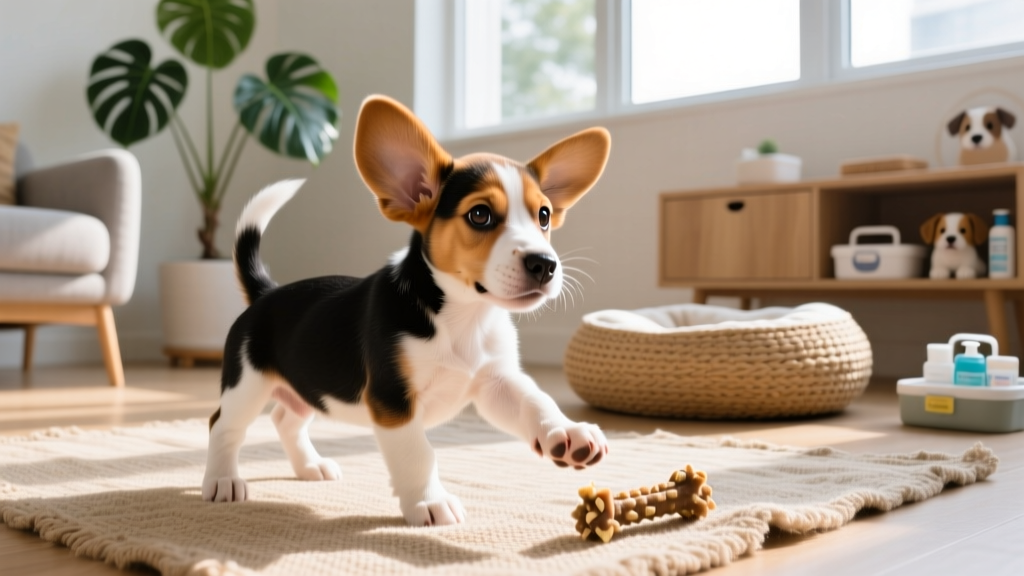
Bringing a beagle puppy home is equal parts thrilling and overwhelming. Those floppy ears and soulful brown eyes come attached to a scent hound with an independent streak, a nose that overrides most commands, and a vocal range that includes baying, howling, and the infamous beagle "aroo." This guide walks you through every developmental stage from weeks 4 through 12 months with breed-specific expectations, exact feeding portions, vaccination timelines, and real-world cost data so you can plan confidently.
When Should You Bring Your Beagle Puppy Home?
The AKC recommends that puppies remain with their littermates and dam until at least 8 weeks of age. For beagles specifically, many experienced breeders prefer holding puppies until 9–10 weeks. The reason is behavioral: beagles are pack-oriented scent hounds, and the extra week or two with siblings teaches bite inhibition, social hierarchy, and resilience to frustration — lessons that are difficult to replicate in a single-dog household.
If a breeder offers a beagle puppy at 6 weeks, treat this as a red flag. Early separation correlates with higher rates of resource guarding, separation anxiety, and poor bite inhibition in hound breeds. A responsible breeder will have started early neurological stimulation (ENS) and initial socialization protocols before release.
- Have the puppy's parents been OFA-tested for hip dysplasia and screened for MLS (Musladin-Leuke Syndrome)?
- What deworming protocol has been followed (typically pyrantel pamoate at 2, 4, 6, and 8 weeks)?
- Has the puppy received its first DHPP vaccine (usually given at 6–8 weeks)?
- What is the puppy's current daily food brand, formula, and portion size?
Beagle Puppy Development Milestones: Weeks 4 Through 12 Months
Beagles mature at a moderate pace compared to giant breeds, but they hit key developmental windows on a predictable timeline. Here is what to expect at each stage.
Weeks 4–8: The Litter Phase
During this period, your beagle puppy is still with the breeder. Eyes and ears are fully functional, deciduous (baby) teeth are erupting, and the puppy is learning social boundaries through littermate play. The critical socialization window opens around week 3 and extends to approximately week 14. By week 6, puppies should be eating gruel-to-solid transitions and showing curiosity about novel sounds, surfaces, and people.
Weeks 8–12: The Homecoming Window
This is when most beagle puppies join their new families. Expect 2–3 sleep cycles per day (puppies sleep 18–20 hours daily at this age). Your puppy should recognize their name within 5–7 days of consistent use. Fear periods commonly occur around 8–10 weeks — loud noises, unfamiliar dogs, or rough handling can create lasting negative associations. Keep introductions calm and positive. Use high-value treats (small bits of boiled chicken or freeze-dried liver) to build positive associations with novel experiences.
Weeks 12–16: Growing Confidence
Energy levels increase noticeably. Your beagle puppy will start testing boundaries — ignoring recalls they previously followed, mouthing more intensely, and showing early scent-tracking behavior (nose to the ground, ignoring verbal cues). This is developmentally normal. Keep training sessions short (3–5 minutes, 3–4 times daily) and always end on a success. Bladder control improves, and you should see potty intervals stretch to approximately 2–3 hours during the day.
Weeks 16–24: The Adolescent Transition
Adult teeth begin replacing baby teeth around 12–16 weeks, with the full set typically in place by 6 months. This is peak chewing season — beagles are notoriously destructive chewers during this phase. Expect to lose some hearing: your beagle may "suddenly" not respond to commands they know well. This is adolescence, not amnesia. Maintain consistent rules and increase mental enrichment (snuffle mats, frozen Kongs, scent-work games) to channel their hound instincts productively.
Months 6–12: Approaching Maturity
Physical growth slows but continues — most beagles reach their full height by 8–10 months and fill out in chest and muscle through 12–15 months. Sexual maturity arrives between 6–9 months (earlier in females). If you have not scheduled a spay/neuter procedure, discuss timing with your veterinarian; current veterinary consensus, per the AVMA, supports individualized timing based on breed and health factors. Beagles are prone to roaming when intact — a male who catches a scent trail will attempt to follow it regardless of fencing.
Feeding Schedule: Exact Portions by Age and Weight
Beagles are food-motivated to a degree that borders on obsession. This breed will eat past the point of fullness if food is available, making portion control essential from day one. The Merck Veterinary Manual recommends feeding a complete-and-balanced puppy formula that meets AAFCO standards for growth.
Target caloric intake for a growing beagle puppy is approximately 55–65 kcal per kilogram of expected adult body weight per day, divided across meals. An adult beagle typically weighs 20–30 lb (9–14 kg) depending on whether they are the 13-inch or 15-inch variety.
| Age Range | Meals Per Day | Portion Per Meal (approx.) | Total Daily Food |
|---|---|---|---|
| 8–12 weeks | 4 meals | ¼ – ⅓ cup | 1 – 1.25 cups |
| 3–4 months | 3 meals | ⅓ – ½ cup | 1 – 1.5 cups |
| 4–6 months | 3 meals | ½ – ⅔ cup | 1.5 – 2 cups |
| 6–12 months | 2 meals | ¾ – 1 cup | 1.5 – 2 cups |
Important notes on beagle feeding:
- These portions assume a high-quality kibble with approximately 350–400 kcal per cup. Adjust based on your specific food's caloric density — check the guaranteed analysis on the bag.
- Beagles are prone to obesity. You should be able to feel (but not prominently see) your puppy's ribs. If the puppy looks round from above, reduce portions by 10% and reassess in two weeks.
- Never free-feed a beagle. This breed will eat until food is gone, regardless of hunger signals.
- Use a slow-feeder bowl from day one. Beagles inhale food, which increases bloat risk and reduces satiety signaling.
- Transition to adult food between 10–12 months. Look for a formula with 22–26% protein and 12–15% fat (guaranteed analysis) for adult maintenance.
Vaccination Schedule: What Your Beagle Puppy Needs and When
Beagle puppies follow the standard core vaccination protocol recommended by the AVMA and the AAHA Canine Vaccination Guidelines. Your breeder should have administered the first dose before release.
| Age | Vaccine(s) | Notes |
|---|---|---|
| 6–8 weeks | DHPP (Distemper, Hepatitis, Parainfluenza, Parvovirus) — Dose 1 | Usually given by breeder. Deworming (pyrantel pamoate) typically concurrent. |
| 10–12 weeks | DHPP — Dose 2; Bordetella (optional based on lifestyle) | Bordetella recommended if attending puppy classes or visiting dog-friendly areas. |
| 14–16 weeks | DHPP — Dose 3; Rabies (required by law in most US states) | Final puppy DHPP booster. Rabies is a single dose, then boostered at 1 year. |
| 12–16 months | DHPP booster; Rabies booster | After this, DHPP is typically given every 3 years. Rabies interval varies by jurisdiction (1 or 3 years). |
Non-core vaccines to discuss with your veterinarian: Leptospirosis (increasingly common in suburban areas with wildlife), Lyme disease (if you live in or travel to tick-endemic regions like the Northeast or Upper Midwest), and Canine Influenza (H3N2/H3N8 — recommended for dogs in boarding or daycare settings).
Socialization Window: Weeks 3–14 Exposure Checklist
The primary socialization period for all puppies closes around 12–14 weeks of age. After this window, unfamiliar stimuli are more likely to trigger fear responses rather than curiosity. For beagles — a breed prone to timidity and noise sensitivity if under-socialized — this window is critical.
Aim for 5–10 positive novel exposures per day during weeks 8–14. Keep sessions brief and pair every new experience with high-value treats.
- Surfaces: Grass, gravel, sand, metal grates, wet pavement, carpet, tile, wood flooring, wobbly surfaces (cushions, balance disc)
- People: Children (supervised), tall adults, people wearing hats/sunglasses/hoodies, people using canes or wheelchairs, delivery workers, people of different skin tones and ages
- Sounds: Vacuum cleaner, doorbell, thunderstorm recordings (start at low volume), traffic, sirens, power tools, clapping, pots and pans dropping
- Animals: Fully vaccinated adult dogs (calm, known temperament), cats (if household has one), livestock (if rural setting) — always supervised
- Handling: Paw touching, ear inspection, mouth opening, nail clipping simulation, being lifted, being placed on a table, gentle restraint
- Environments: Car rides (short trips ending in fun destinations), pet-friendly store parking lots, outdoor café patios, friend's houses, grooming table introduction
- Objects: Umbrellas opening, plastic bags rustling, bicycles, skateboards, strollers, balloons (at a distance — pop risk)
A well-run puppy kindergarten class (force-free, positive reinforcement only) is one of the best investments during this window. Look for classes that require proof of at least one DHPP dose and maintain clean, sanitized facilities. Classes typically cost $150–$250 for a 6–8 week session in 2026.
Potty Training Timeline: Realistic Expectations for Beagle Puppies
Beagles are moderately challenging to house train compared to breeds like Labrador Retrievers or Poodles. Their scent-driven nature means they are easily distracted mid-elimination, and their independent streak can make consistency feel like an uphill battle. Here is a realistic timeline:
- 8–10 weeks: Accidents every 1–2 hours. Take puppy out every 30–60 minutes during active periods. Expect 3–5 accidents per week as baseline.
- 10–14 weeks: Bladder control improves to approximately 2 hours. Puppy begins to show pre-elimination signals (circling, sniffing intensely, heading toward door). Accidents should drop to 1–2 per week.
- 14–20 weeks: Most beagle puppies can hold for 3–4 hours during the day. Nighttime control (6–8 hours) typically develops around 16–20 weeks if you maintain a consistent last-outing schedule (10–11 PM) and first-outing schedule (6–7 AM).
- 5–7 months: Reliable house training for most beagles, meaning fewer than 1 accident per month. Some males may begin marking behavior around 6 months — neutering and consistent management reduce this.
- Puppy eliminates outside, then immediately goes inside: Beagles sometimes don't fully empty their bladder on the first outing. Wait outside for 5–10 minutes, use a consistent cue word ("go potty"), and reward only after a full elimination. Consider a second outing 10 minutes after coming inside.
- Puppy only eliminates in crate: The crate may be too large. Beagles should have just enough room to stand, turn, and lie down. Use a divider panel in a wire crate sized for their adult dimensions (approximately 24" L × 18" W × 19" H for a 13-inch beagle).
- Regression at 4–5 months: Common in beagles. This coincides with increased independence and environmental awareness. Return to higher-frequency outings and higher-value outdoor rewards temporarily.
Crate Training, Teething, and Common Beagle Puppy Problems
Crate Training Progression
Beagles adapt to crates reasonably well when introduced positively — they are den animals by nature. However, they are vocal about displeasure, so expect some protest baying in the first week.
| Puppy Age | Max Crate Time (Daytime) | Max Crate Time (Nighttime) |
|---|---|---|
| 8–10 weeks | 30–60 minutes | 2–3 hours (then potty break) |
| 10–14 weeks | 1–2 hours | 3–4 hours |
| 14–18 weeks | 2–3 hours | 5–6 hours |
| 4–6 months | 3–4 hours | 7–8 hours |
Never use the crate as punishment. Feed meals inside the crate during the first month to build positive associations. Provide a safe chew (bully stick or frozen Kong stuffed with puppy-safe peanut butter) when crating to prevent boredom-induced vocalization.
Teething Timeline and Relief Strategies
Beagle puppies begin losing deciduous teeth around 12–16 weeks, and the process continues through approximately 6 months. During this period, expect increased chewing, occasional bleeding gums (normal in small amounts), and reluctance to eat hard kibble.
Safe chew recommendations:
- Frozen Kong Classic (puppy size): Stuff with plain yogurt mixed with mashed banana and freeze overnight. The cold soothes gums and the beagle's food drive keeps them engaged for 20–30 minutes.
- Nylabone Puppy Chew (flexible texture): Choose the bacon or chicken flavor in the "puppy" line — these are softer than adult versions and gentler on developing teeth.
- Wet washcloth twist: Soak a clean washcloth in water (or low-sodium chicken broth), twist into a rope, freeze, and supervise chewing. Replace once it begins to shred.
- Benebone Puppy (small size): The wishbone shape is easier for beagle puppies to grip than stick-shaped chews.
Avoid: Rawhide (choking and intestinal blockage risk), antlers and weight-bearing bones from large animals (tooth fracture risk), and any chew small enough to be swallowed whole.
Stopping Beagle Puppy Biting and Nipping
Beagle puppies are mouthy — this is normal hound behavior, not aggression. Their play style involves mouthing, and littermates teach bite inhibition through yelping and withdrawing. You need to replicate this feedback.
Step-by-step approach:
- When teeth contact skin, say "ouch" in a calm, sharp tone (not yelling) and immediately withdraw attention — stand up, turn away, or step behind a baby gate for 10–15 seconds.
- Return and offer an appropriate chew toy. Reward with praise when the puppy mouths the toy instead of you.
- If biting escalates (harder pressure, persistent lunging), the puppy is likely overtired. Beagle puppies get "the zoomies" and increased mouthing when sleep-deprived. Enforce a nap in the crate — most will fall asleep within 2–3 minutes.
- Ensure the puppy is getting 16–18 hours of total sleep per day at 8–12 weeks. Under-sleeping is the number one cause of excessive puppy biting across all breeds.
Never hold a puppy's mouth shut, alpha-roll, or use physical punishment. These methods increase fear and can trigger defensive biting that persists into adulthood. Positive reinforcement and management (redirecting, enforcing naps, providing appropriate chews) are the evidence-based standard.
First-Year Cost Breakdown for a Beagle Puppy
Budgeting accurately prevents surprises. The following ranges reflect typical US costs in 2026 based on national averages. Costs vary by region — expect 15–25% higher prices in major metro areas.
| Category | Low Estimate | Mid Estimate | High Estimate |
|---|---|---|---|
| Puppy purchase (responsible breeder) | $800 | $1,200 | $2,000 |
| Adoption fee (rescue/shelter alternative) | $200 | $350 | $500 |
| Veterinary care (vaccines, wellness exams, spay/neuter, fecal tests, heartworm prevention) | $600 | $900 | $1,400 |
| Food (puppy formula, 10 months) | $250 | $400 | $600 |
| Supplies (crate, bed, leash, harness, bowls, toys, baby gates, slow feeder) | $200 | $350 | $550 |
| Training (puppy kindergarten + basic manners class) | $200 | $400 | $700 |
| Pet insurance (annual premium, accident + illness) | $360 | $540 | $720 |
| Grooming (beagles are low-maintenance; occasional baths, nail trims) | $50 | $120 | $250 |
| Estimated First-Year Total (breeder route) | $2,460 | $3,910 | $6,220 |
Money-saving tips specific to beagles:
- Beagles are prone to ear infections due to their long, floppy ears. Clean ears weekly with a veterinarian-recommended ear cleanser ($8–$15 per bottle) to avoid $150–$300 vet visits for otitis externa.
- Invest in a quality harness ($25–$45) rather than a collar for walks. Beagles are notorious pullers, and collar pressure on the trachea can cause damage over time. A front-clip harness redirects pulling without force.
- Enroll in pet insurance while the puppy is young and before any conditions are documented. Beagle-specific concerns to ensure are covered: intervertebral disc disease (IVDD), cherry eye, epilepsy, and hypothyroidism.
Frequently Asked Questions About Beagle Puppies
How often should I feed my beagle puppy at 10 weeks old?
At 10 weeks, feed four meals per day spaced approximately 4 hours apart during waking hours (e.g., 7 AM, 11 AM, 3 PM, 7 PM). Each meal should be approximately ¼ to ⅓ cup of high-quality puppy kibble. Adjust based on your puppy's body condition score — you should be able to feel ribs without pressing hard, and the puppy should have a visible waist when viewed from above.
When will my beagle puppy be fully potty trained?
Most beagles achieve reliable house training between 5–7 months of age, meaning fewer than one accident per month with a consistent schedule. Some beagles take up to 9 months, particularly males who may begin marking behavior around 6 months. Consistency in outing schedule, high-value outdoor rewards, and crate management are the three biggest factors in speed of training.
What vaccines does my beagle puppy need and when?
Core vaccines follow this schedule: DHPP at 6–8 weeks (Dose 1), 10–12 weeks (Dose 2), and 14–16 weeks (Dose 3). Rabies is given at 14–16 weeks. Non-core vaccines like Bordetella, Leptospirosis, and Lyme are added based on your geographic location and lifestyle. Your veterinarian will customize the protocol — the schedule above is a standard framework.
How do I stop my beagle puppy from biting my hands and ankles?
Use the "ouch + withdraw" method: when teeth touch skin, say "ouch" calmly, stand up, and remove attention for 10–15 seconds. Then redirect to an appropriate chew toy. Most critically, ensure your puppy is sleeping 16–18 hours per day — overtired puppies bite more frequently and more intensely. If biting occurs primarily in the evening, your puppy likely needs an earlier enforced nap.
When can my beagle puppy go to the dog park?
Wait until 1–2 weeks after the final DHPP vaccine, which is given at 14–16 weeks. This means approximately 16–18 weeks of age at the earliest. Even then, dog parks carry risks for young puppies — rough play from larger dogs, exposure to parasites, and overwhelming stimulation. A better alternative for early socialization is structured puppy playgroups with dogs of similar size and vaccination status, or arranged playdates with known, calm adult dogs.
My beagle puppy howls when left alone — is this normal?
Yes. Beagles are vocal hounds bred to alert hunters, and they are prone to separation-related vocalization. Start with very short absences (30 seconds to 2 minutes) and gradually increase duration. Provide a frozen Kong or long-lasting chew when you leave. If howling escalates to destructive behavior or self-injury, consult a certified professional dog trainer (CPDT-KA) or veterinary behaviorist — separation anxiety is treatable but benefits from early professional intervention.
Robin Maitland
All our authors care for dogs every day — read more of their work on the authors page.


