Best Chew Toys for Puppies
Find the best chew toys for puppies by age and breed stage, plus feeding, potty training, vaccination schedules, and first-year cost breakdowns.
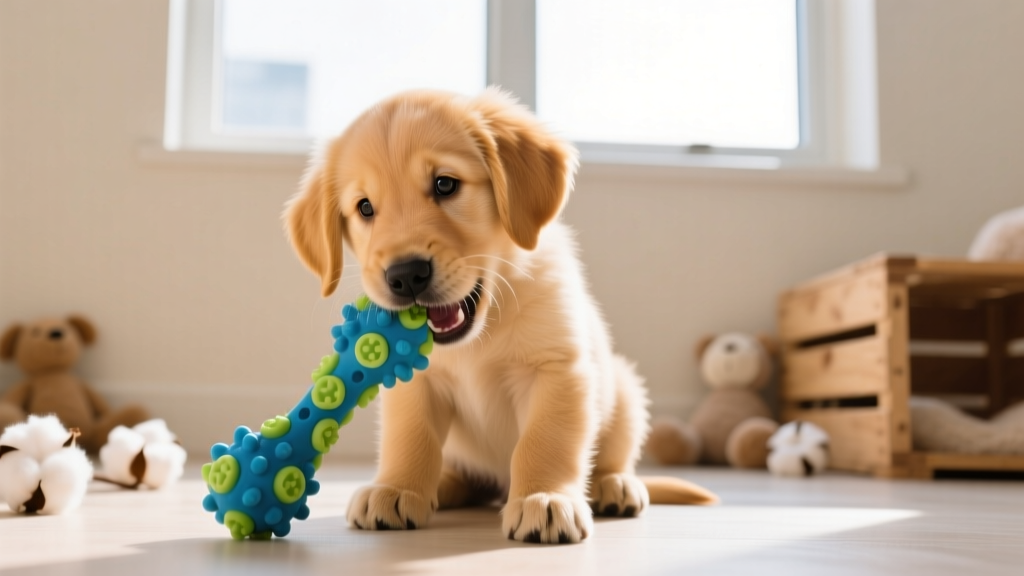
Bringing a new puppy home is one of life's great joys — right up until your baseboards start disappearing and your hands look like they lost a fight with a cheese grater. Puppies chew for three overlapping reasons: exploration, teething discomfort, and excess energy. Getting the chew toys for puppies right is only one piece of the larger first-year puzzle. This guide pairs chew-toy recommendations with the full developmental roadmap every new owner needs — feeding portions, vaccine timing, potty training expectations, and the critical socialization window you cannot get back once it closes.
Disclaimer: This article is for educational purposes. Always consult your veterinarian for personalized medical advice and before starting any new diet, supplement, or medication.
When Should I Bring My Puppy Home?
The AKC recommends puppies stay with their litter until at least 8 weeks of age. For small and toy breeds (Chihuahuas, Yorkshire Terriers, Pomeranians), many responsible breeders keep puppies until 10–12 weeks because these dogs are more prone to hypoglycemia and need additional immune maturity before transitioning.
- Toy breeds (under 12 lb adult): 10–12 weeks
- Small breeds (12–25 lb adult): 8–10 weeks
- Medium breeds (25–60 lb adult): 8–9 weeks
- Large breeds (60–100 lb adult): 8–9 weeks
- Giant breeds (100+ lb adult): 8–10 weeks
Puppies removed before 7 weeks show higher rates of fear-based reactivity and bite inhibition problems later in life. If you're adopting from a rescue with unknown history, expect an adjustment period of 3–5 days (the "decompression window") before training expectations kick in.
Puppy Development Milestones: Week by Week
Age-Specific Milestone Timeline
| Age Range | Developmental Stage | What to Expect | Chew Toy Needs |
|---|---|---|---|
| Weeks 4–8 | Socialization onset; deciduous (baby) teeth erupting | Littermate play, bite inhibition learning, first solid foods | Soft rubber teethers, damp washcloth frozen for 15 min |
| Weeks 8–12 | Fear imprint period; peak socialization window | Exploratory chewing, short attention spans (3–5 min), frequent naps | Kong Classic Puppy (pink/blue), Nylabone Puppy Chew |
| Weeks 12–16 | Confidence building; second fear period possible around 12 weeks | Increased jaw strength, beginning leash walks, longer play sessions (10–15 min) | Benebone Puppy, West Paw Zogoflex Hurley (small) |
| Weeks 16–24 | Teething peak; adult teeth erupting | Intense chewing, possible gum bleeding, decreased appetite | Frozen Kong stuffed with pumpkin, Petstages Cool Teething Stick |
| 6–12 months | Adolescence; chewing transitions to boredom/energy management | Testing boundaries, possible regression in training, sexual maturity | Kong Classic (red/black), Goughnuts Maxx 50, bully sticks (supervised) |
Feeding Schedule: Exact Portions by Age and Weight
Puppies need 2–3× the caloric density of adult dogs per pound of body weight. The Merck Veterinary Manual recommends feeding schedules based on growth stage rather than calendar age alone. Below are baseline portions for a puppy expected to reach 40–50 lb as an adult (e.g., Labrador Retriever, Border Collie). Adjust proportionally for your breed.
| Puppy Age | Meals Per Day | Portion Per Meal (40–50 lb expected adult) | Daily Total |
|---|---|---|---|
| 8–12 weeks | 4 | ½ – ¾ cup puppy kibble | 2 – 3 cups |
| 12–16 weeks | 3 | ¾ – 1 cup | 2¼ – 3 cups |
| 4–6 months | 3 | 1 – 1½ cups | 3 – 4½ cups |
| 6–12 months | 2 | 1½ – 2 cups | 3 – 4 cups |
| 12+ months (adult transition) | 2 | 1¼ – 1¾ cups adult food | 2½ – 3½ cups |
How to tell if portions are right: Use the body condition score (BCS) system. You should feel ribs without pressing hard, and see a visible waist from above. If ribs are visible, increase by 10%. If you can't feel ribs easily, decrease by 10%. Giant breeds (Great Danes, Mastiffs) should be fed large-breed puppy formulas to slow growth and reduce hip dysplasia risk.
Vaccination Schedule: What Your Puppy Needs and When
The AVMA and AAHA (American Animal Hospital Association) recommend core vaccines for all puppies, with non-core vaccines based on lifestyle and regional disease prevalence. Your veterinarian will tailor this to your area.
| Age (Weeks) | Vaccine | Type | Typical Cost (US) |
|---|---|---|---|
| 6–8 | DHPP (Distemper, Hepatitis/Adenovirus, Parainfluenza, Parvovirus) — 1st dose | Core | $25 – $50 |
| 8–10 | Bordetella (kennel cough) | Non-core (recommended for socialization/puppy classes) | $20 – $45 |
| 10–12 | DHPP — 2nd dose; Leptospirosis (1st, if recommended) | Core + Non-core | $40 – $75 |
| 14–16 | DHPP — 3rd dose; Rabies (required by law in most US states) | Core | $35 – $70 |
| 16–20 | Leptospirosis (2nd dose, if started); Lyme (if tick-endemic area) | Non-core | $30 – $60 |
When can my puppy go outside and meet other dogs? After the final DHPP dose at 14–16 weeks, your puppy is considered fully vaccinated against parvo and distemper — the two most dangerous puppy diseases. Before that, carry your puppy in public spaces (parks, outdoor cafés) for socialization but avoid dog parks, pet store floors, and areas with unknown dog traffic. Puppy socialization classes that require proof of at least one DHPP dose and Bordetella are generally safe starting at 8–10 weeks, per AVMA guidance.
The Socialization Window: Weeks 3–14
Canine behaviorists consider weeks 3–14 the primary socialization period. After approximately 14 weeks, a puppy's natural fear response increases and novel experiences become harder to introduce without triggering anxiety. Missing this window is the single biggest predictor of adult fear-based aggression and reactivity.
Socialization Exposure Checklist (Aim for 5–10 new experiences per week)
- Surfaces: Grass, gravel, sand, tile, wet pavement, metal grates, plastic tarps
- Sounds: Vacuum cleaner (start at distance), thunderstorms (play recordings at low volume), traffic, doorbells, children screaming, fireworks (low volume, high-value treats paired)
- People: Men with beards, people wearing hats/sunglasses, people in wheelchairs, children under 5 (supervised), tall people, delivery workers
- Handling: Paw touching, ear inspection, mouth opening, nail clipping (file one nail per session), being held on back briefly
- Objects: Umbrellas opening, balloons, bicycles, skateboards, plastic bags blowing in wind
- Other animals: Calm adult dogs (vaccinated), cats (if household has them), livestock if rural
- Environments: Car rides (short, positive), vet clinic (happy visits, no procedures), friend's house, outdoor seating area, elevator
Rule of thumb: If your puppy tucks tail, freezes, or tries to flee, you've moved too fast. Increase distance from the stimulus and pair with high-value treats (boiled chicken, cheese). Never force exposure.
Teething Timeline and the Best Chew Toys for Puppies at Each Stage
Puppies have 28 deciduous (baby) teeth that begin erupting at 3–4 weeks. By 6–8 weeks, all baby teeth should be in. The teething process — when adult teeth push out baby teeth — runs from approximately 3 to 6 months. By 7 months, a dog should have all 42 permanent teeth.
Teething Relief Strategies by Month
| Month | What's Happening | Recommended Chew Toys | Price Range |
|---|---|---|---|
| 3 months | Incisors loosening, mild gum irritation | Kong Puppy (pink/blue rubber, softer formula), Nylabone Puppy Power Chew | $8 – $15 |
| 4 months | Canines and premolars erupting, peak discomfort | Petstages Cool Teething Stick (freeze before use), frozen carrot sticks | $6 – $12 |
| 5 months | Molars coming in, strongest chewing drive | Benebone Wishbone (puppy formula), West Paw Zogoflex Toppl (stuffed & frozen) | $13 – $22 |
| 6 months | Most adult teeth in, jaw strength approaching adult level | Kong Classic (red, medium firmness), Goughnuts Ring (for aggressive chewers) | $12 – $30 |
- No toy should be harder than your puppy's teeth. The "thumbnail test": if you can't indent the toy with your thumbnail, it's too hard for a puppy under 6 months and risks tooth fractures.
- Supervise all edible chews (bully sticks, yak cheese, raw bones). Remove when they become small enough to swallow whole.
- Never give cooked bones — they splinter and cause intestinal perforation.
- Rotate 3–4 toys every 48 hours to maintain novelty. A puppy bored of one toy will seek out your shoes.
- If a toy shows cracks, chunks missing, or fraying, discard immediately.
Potty Training Timeline: Realistic Expectations
The question every new owner asks: "When will my puppy be fully potty trained?" The honest answer is 4–6 months for reliable house training, with some small breeds taking up to 8–12 months due to smaller bladder capacity and higher metabolism. Any claim of "potty trained in 3 days" is misleading — puppies physically cannot hold their bladder longer than approximately one hour per month of age until about 6 months.
Bladder Capacity by Age
| Age | Max Hold Time (awake) | Max Hold Time (sleeping/crated) | Outings Per Day Needed |
|---|---|---|---|
| 8–10 weeks | 1–2 hours | 2–3 hours | 12–15 |
| 12–16 weeks | 2–3 hours | 3–4 hours | 8–10 |
| 4–6 months | 4–5 hours | 5–6 hours | 6–8 |
| 6–12 months | 6–8 hours | 8 hours | 4–6 |
Potty Training Troubleshooting
Accident in the crate: The crate is too large. Use a divider so the puppy has just enough room to stand, turn, and lie down. Dogs avoid soiling their sleeping area — but only if the space is appropriately sized.
Submissive/excitement urination: Common in puppies under 6 months. Don't greet with high energy. Crouch sideways, avoid direct eye contact, and take puppy outside immediately upon your arrival.
Regression at 6–10 months: Adolescent hormonal changes can cause marking behavior. Spaying/neutering reduces but doesn't always eliminate marking. Return to frequent outdoor trips and reward heavily for outdoor elimination.
Crate Training Progression and Time Limits
A crate is a management tool, not a storage unit. The maximum time a puppy should spend in a crate follows the "month + 1" rule in hours:
- 2 months old: Max 3 hours at a time (excluding overnight)
- 3 months old: Max 4 hours
- 4 months old: Max 5 hours
- 6+ months: Max 8 hours (overnight only — daytime crating should not exceed 4–5 hours without a break)
Progression plan:
- Week 1 (8 weeks): Crate door open, feed meals inside, nap in crate with you nearby. Expect crying — this is normal.
- Week 2–3: Close door for 5–10 minute intervals while you're in the room. Toss treats through bars for quiet behavior.
- Week 4: Leave room for 1–5 minutes. Return before puppy cries. Gradually extend absences.
- Month 2–3: Crate for naps (puppies sleep 18–20 hours/day at this age) and overnight. Place crate near your bed initially, then gradually move to desired location.
Common Puppy Problems and Solutions
How Do I Stop Puppy Biting and Nipping?
Puppy biting is normal — they explore the world with their mouths and haven't yet learned bite inhibition. The goal isn't to stop all mouthing (that's unrealistic before 5–6 months) but to teach that human skin is completely off-limits.
Step-by-step protocol:
- When teeth touch skin, say "Oops!" in a calm, neutral tone (not a yell).
- Immediately withdraw attention: stand up, cross arms, look away for 10–15 seconds.
- Redirect to an appropriate chew toy. When puppy chews toy, praise calmly.
- If biting continues after redirect, implement a 30-second "time-out" — step over a baby gate or leave the room briefly.
- Ensure puppy is getting adequate sleep. Overtired puppies bite more. A puppy awake for more than 2 hours at 8–12 weeks needs a forced nap in the crate.
Never hold the puppy's mouth shut, push fingers into the throat, or use alpha rolls. These methods increase fear and aggression. The American Veterinary Society of Animal Behavior (AVSAB) explicitly recommends against dominance-based training methods.
Destructive Chewing Beyond Teething
If your 6+ month puppy is still destroying furniture, the issue is usually insufficient mental stimulation rather than teething. Solutions:
- 15–20 minutes of sniffing/foraging per day (scatter feeding, snuffle mats)
- Two 20–30 minute walks with sniffing time (not just leash marching)
- Food puzzle toys for at least one meal per day (Kong Wobbler, Outward Hound Nina Ottosson puzzles)
- Rotate chew toys every 48 hours to maintain novelty
Whining and Crying (Crate, Nighttime, Attention-Seeking)
Distinguish between distress whining (high-pitched, frantic, paired with pacing) and demand whining (intermittent, paired with looking at you). For distress: address the root cause (too-long crating, separation anxiety, medical issue). For demand: do not reward with attention. Wait for 3 seconds of silence, then reward.
First-Year Cost Breakdown
Budget realistically. The first year of puppy ownership costs significantly more than subsequent years due to initial veterinary visits, spay/neuter, supplies, and training. Below is a breakdown for a medium-sized dog (40–60 lb adult) in a mid-cost US metro area:
| Category | Low Estimate | Medium Estimate | High Estimate |
|---|---|---|---|
| Puppy purchase/adoption fee | $200 (rescue) | $1,200 (responsible breeder) | $3,500 (specialty breed) |
| Vaccinations (full puppy series) | $150 | $300 | $500 |
| Spay/neuter | $200 (low-cost clinic) | $500 | $800 |
| Monthly heartworm/flea/tick prevention (12 months) | $180 (Simparica Trio, NexGard) | $280 | $400 |
| Food (puppy formula, 12 months) | $360 ($30/mo) | $600 ($50/mo) | $960 ($80/mo, premium/fresh) |
| Supplies (crate, bed, leash, bowls, chew toys, gates) | $200 | $400 | $700 |
| Training (group classes, 6–8 week course) | $150 | $300 | $800 (private sessions) |
| Pet insurance (annual premium) | $360 ($30/mo) | $540 ($45/mo) | $720 ($60/mo) |
| Emergency fund (recommended reserve) | $500 | $1,000 | $2,000 |
| TOTAL FIRST YEAR | $2,300 | $5,120 | $10,380 |
Years 2+ typically cost $1,200–$2,500 annually for a medium-sized dog (food, preventives, annual vet exam, supplies replacement).
Frequently Asked Questions
Can I give my puppy ice cubes to chew on?
Ice cubes are generally safe for puppies over 4 months and can soothe teething gums. However, very hard ice can crack developing teeth in puppies under 3 months. Opt for crushed ice or freeze low-sodium chicken broth in ice cube trays for a safer alternative.
My puppy swallowed a piece of a chew toy — what should I do?
If the piece is small (under 1 inch) and your puppy is acting normally (eating, drinking, no vomiting), monitor closely for 48 hours. Watch for vomiting, lethargy, loss of appetite, or straining to defecate — these indicate a possible intestinal blockage and require immediate veterinary attention. For large pieces or any signs of distress, call your vet or the ASPCA Animal Poison Control at (888) 426-4435 (consultation fee applies).
Are rawhide chews safe for puppies?
Rawhide carries two risks: choking/blockage (especially for aggressive chewers who gulp large pieces) and chemical contamination from processing. The FDA has issued warnings about rawhide products from certain manufacturers. Safer alternatives include bully sticks (fully digestible, supervise use), yak cheese chews, and vegetable-based dental chews approved by the Veterinary Oral Health Council (VOHC).
How many chew toys should my puppy have?
Keep 5–7 chew toys in rotation but only offer 3 at a time. Swap them every 48 hours. Categorize by function: one for teething relief (soft rubber), one for mental stimulation (stuffable puzzle toy), and one for high-energy chewing (durable nylon or hard rubber). This prevents toy fatigue and extends each toy's useful life.
My puppy won't chew toys — only shoes and furniture. How do I redirect?
Management first: puppy-proof the environment. Use baby gates to restrict access to tempting rooms, keep shoes in closed closets, and apply bitter apple spray to furniture legs as a deterrent. Then make toys more appealing: stuff Kongs with peanut butter and freeze them, play tug with rope toys to build toy-drive, and always reward chewing on appropriate items with calm verbal praise. If the behavior persists past 6 months, consult a certified force-free trainer — persistent destructive chewing often signals under-stimulation.
When should I switch from puppy chew toys to adult dog toys?
Transition around 6–7 months, once all adult teeth have erupted. Puppy-formula rubber (like Kong's pink/blue line) is softer and won't withstand adult jaw strength. Upgrade to medium-firmness toys. If your dog is a power chewer (destroys toys within days), look for toys with manufacturer replacement guarantees — brands like Goughnuts and West Paw offer these.
Key Takeaways
- Match chew toy hardness to your puppy's age — softer rubber before 6 months, firmer after.
- The socialization window closes around 14 weeks — prioritize positive novel experiences during this period.
- Potty training takes 4–6 months realistically, not days.
- Budget $2,300–$5,000+ for the first year depending on breed source and care choices.
- All vaccinations should be completed by 16–20 weeks before unrestricted outdoor access.
- Force-free, positive reinforcement methods are the only training approach supported by veterinary behaviorists.
Marcus Aldridge
All our authors care for dogs every day — read more of their work on the authors page.


