Caucasian Ovcharka Puppy: Complete Growth, Training & Care Guide
Everything you need to raise a Caucasian Ovcharka puppy: age-specific milestones, feeding schedules, vaccination timelines, socialization, and first-year costs.
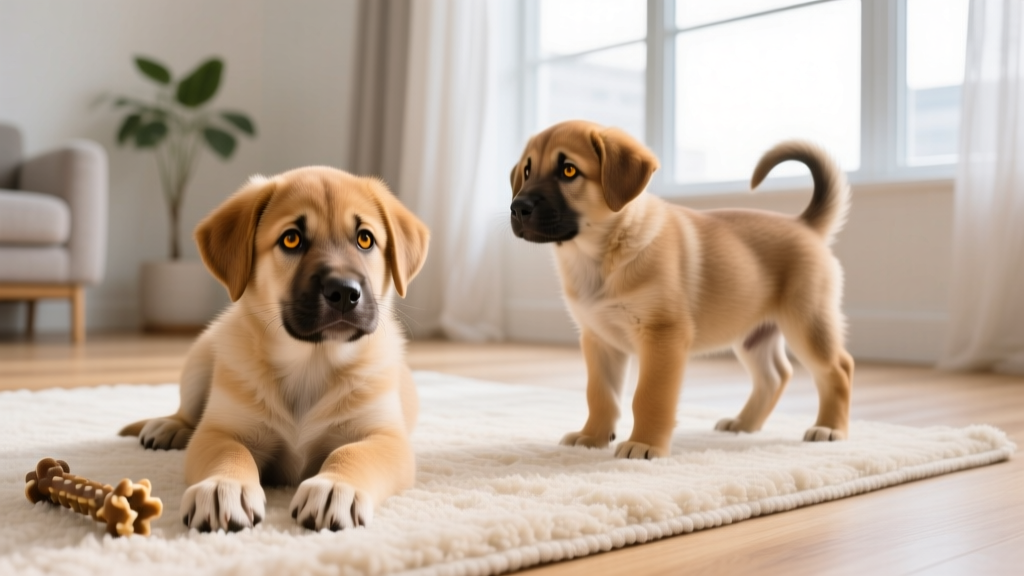
Raising a Caucasian Ovcharka puppy is unlike raising almost any other breed. These massive livestock guardian dogs — originating from the Caucasus Mountains between the Black and Caspian Seas — are independent thinkers, fiercely protective, and physically enormous even in adolescence. An Ovcharka puppy will go from a 15-pound fuzzball to a 100-plus-pound adolescent in under a year, and every week of that journey demands deliberate planning.
This guide covers the breed-specific realities of raising a Caucasian Shepherd (also called Caucasian Ovcharka or Caucasian Mountain Dog) from the day you bring them home through their first year. We'll skip generic puppy advice and focus on what actually matters for a giant-breed guardian dog.
When Should You Bring Your Ovcharka Puppy Home?
The ideal window for bringing a Caucasian Ovcharka puppy home is 8 to 10 weeks of age. While some breeders of large guardian breeds hold puppies until 10-12 weeks to allow additional littermate socialization, most responsible Caucasian Shepherd breeders release puppies at 8 weeks after their first DHPP vaccine and initial deworming.
Do not take a puppy earlier than 8 weeks. The weeks between 6 and 8 are critical for bite inhibition learning from the mother and littermates. Removing an Ovcharka puppy too early often results in harder mouth play and increased difficulty teaching appropriate bite pressure — a significant concern with a breed that will eventually have a bite force exceeding 500 PSI.
- Your puppy will likely sleep 18-20 hours the first day (stress exhaustion is normal)
- Expect loose stools for 2-3 days due to environment change — feed the same food the breeder provided
- Night crying for 1-3 nights is typical; place the crate near your bedroom initially
- Do not introduce visitors, other pets, or new environments during this adjustment period
Caucasian Ovcharka Puppy Milestones: Week by Week
Understanding what's developmentally appropriate at each stage prevents both under-stimulation and dangerous over-exercise — a real concern for giant breeds whose growth plates don't close until 18-24 months.
| Age Range | Expected Weight (lb/kg) | Key Milestones | What to Focus On |
|---|---|---|---|
| Weeks 4-8 (at breeder) | 8-18 lb / 3.5-8 kg | Weaning complete, first DHPP vaccine, littermate play teaches bite inhibition, fear imprint period begins at week 8 | Breeder should expose to varied surfaces, sounds, and gentle handling by multiple people |
| Weeks 8-12 | 18-35 lb / 8-16 kg | Second DHPP, critical socialization window peaks, crate training begins, name recognition established | Maximum positive exposures (100+ new experiences), handling exercises, leash introduction |
| Weeks 12-16 | 35-55 lb / 16-25 kg | Third DHPP, rabies vaccine, socialization window closing, teething begins, first fear period may occur | Continue socialization urgency, begin basic obedience (sit, down, recall), introduce grooming tools |
| Weeks 16-24 | 55-85 lb / 25-38 kg | Rabies booster window, peak teething discomfort, guarding instincts may begin emerging, adolescent independence increases | Structured puppy kindergarten class, impulse control exercises, handling of paws/ears/mouth daily |
| 6-12 months | 85-130+ lb / 38-59+ kg | Sexual maturity (spay/neuter discussion with vet), second fear period (6-8 months), territorial behavior emerges, growth rate slows | Advanced obedience, livestock exposure if working dog, controlled exercise only (no forced running), boundary training |
According to the AKC breed profile, adult male Caucasian Shepherds typically reach 110-170 lb (50-77 kg) and females 80-140 lb (36-64 kg), with shoulder heights of 25-30 inches. Your puppy will reach roughly 60-70% of adult weight by 6 months.
Feeding Schedule: Exact Portions by Age and Weight
Giant-breed puppies have specific nutritional requirements that differ critically from smaller breeds. Overfeeding an Ovcharka puppy accelerates growth rate and significantly increases the risk of developmental orthopedic diseases including hip dysplasia, elbow dysplasia, and osteochondrosis. The goal is slow, steady growth — your puppy should look lean, not chunky.
Feed a food specifically formulated for large/giant breed puppies with controlled calcium (1.0-1.5% on a dry matter basis) and phosphorus (0.8-1.2% DMB), and a calorie density of approximately 3,200-3,500 kcal/kg. Look for the AAFCO statement confirming the food meets growth requirements for large-breed puppies.
| Age | Meals Per Day | Total Daily Amount (Giant Breed Puppy Kibble) | Notes |
|---|---|---|---|
| 8-12 weeks | 4 meals | 2.5-3.5 cups / day | Soak kibble in warm water for first week if transitioning |
| 12-16 weeks | 3 meals | 3.5-5 cups / day | Body condition score (BCS) should be 4-5 out of 9 |
| 16-24 weeks | 3 meals | 5-7 cups / day | Reduce to 3 meals at 16 weeks; monitor for rapid growth spurts |
| 6-9 months | 2 meals | 6-8 cups / day | Split evenly between AM and PM; never free-feed giant breeds |
| 9-12 months | 2 meals | 7-10 cups / day | Begin transitioning to adult giant-breed formula around 12 months |
Vaccination Schedule for Your Caucasian Ovcharka Puppy
Core vaccines follow a standard giant-breed puppy protocol. Your veterinarian will adjust timing based on local disease prevalence and maternal antibody levels. The AVMA vaccination guidelines recommend the following core schedule:
| Age | Vaccine | What It Protects Against | Notes |
|---|---|---|---|
| 6-8 weeks | DHPP (1st dose) | Distemper, Hepatitis (Adenovirus-2), Parainfluenza, Parvovirus | Usually given by breeder before pickup |
| 10-12 weeks | DHPP (2nd dose) + Bordetella (optional) | Same as above; Bordetella for kennel cough if attending puppy classes | Maternal antibodies may still partially interfere; this booster is essential |
| 14-16 weeks | DHPP (3rd dose) + Rabies | Final puppy DHPP booster; Rabies (required by law in most states) | This DHPP dose is critical — given after maternal antibodies wane |
| 12 months | DHPP booster + Rabies booster | Establishes longer-duration immunity | After this, DHPP typically every 3 years; Rabies per local law (1 or 3 year) |
Non-core vaccines your veterinarian may recommend based on lifestyle and region: Leptospirosis (increasingly common in suburban areas), Lyme disease (if in tick-endemic regions), and Canine Influenza (H3N2/H3N8, if boarding or attending group classes). Always consult your veterinarian about which vaccines are appropriate for your puppy's specific risk profile.
When can your puppy go outside and meet other dogs? Until your puppy has received their final DHPP at 14-16 weeks (plus 5-7 days for immunity to build), avoid high-traffic dog areas like dog parks, pet store floors, and unvaccinated dog environments. Controlled exposure to known, fully vaccinated adult dogs in clean home environments is safe and beneficial for socialization during this period.
The Socialization Window: Your Ovcharka's Most Critical Period
For Caucasian Ovcharkas, the socialization window (approximately weeks 3-14) is arguably the most important developmental period in your dog's entire life. This breed's natural suspicion of strangers and strong protective instincts mean that insufficient early socialization produces dangerously reactive adults. A well-socialized Ovcharka is confident and discerning; an under-socialized one is fearful and unpredictable.
According to the Merck Veterinary Manual, the primary socialization period for puppies peaks between 6-8 weeks and gradually closes by 12-14 weeks. After this window, novel experiences trigger caution rather than curiosity.
People (aim for 50+ different individuals):
- Men with beards, hats, sunglasses, hoodies
- Children of various ages (supervised, gentle interactions only)
- People in uniforms (mail carriers, delivery drivers, construction workers)
- People using mobility aids (wheelchairs, canes, walkers)
- People of different ethnicities, heights, and body types
- People carrying large objects (ladders, boxes, umbrellas)
Environments:
- Various floor surfaces (tile, gravel, metal grates, wet grass, tarps)
- Car rides (short, positive trips ending with treats, not just vet visits)
- Elevator/stairs encounters
- Noisy environments at a distance (construction sites, traffic)
- Dark and dimly lit spaces
- Open fields and confined spaces
Animals:
- Fully vaccinated, calm adult dogs of various sizes
- Cats (if household includes them)
- Livestock (if intended as working guardian — supervised exposure only)
- Observing animals from a distance (birds, squirrels) without chasing
Handling & Grooming:
- Touching paws, ears, mouth, tail, and belly daily
- Brushing with multiple tool types (slicker brush, undercoat rake, comb)
- Nail clipping or Dremel introduction (positive association only)
- Bathing and blow-dryer sounds at low setting
- Being examined on a table (simulating vet visits)
Pair every new experience with high-value treats (boiled chicken, freeze-dried liver, cheese). If your puppy shows fear, increase distance from the stimulus and let them observe. Never force an Ovcharka puppy into a frightening situation — forced exposure during fear imprint periods (weeks 8-10 and 6-8 months) can create permanent phobias.
Potty Training Timeline and Realistic Expectations
Caucasian Ovcharka puppies are notoriously slower to house-train than many breeds. Their independent nature and thick double coat (which reduces their discomfort with wet/cold conditions) mean they lack the natural aversion to soiling that motivates some breeds. Expect a realistic timeline of 4-6 months for reliable house training, with occasional accidents up to 8-10 months.
Potty training by age:
- 8-10 weeks: Take outside every 45-60 minutes during the day. Expect 1-3 accidents daily. Praise lavishly for outdoor elimination.
- 10-14 weeks: Bladder capacity increases. Take out every 90-120 minutes. Accidents should decrease to 1 per day or fewer.
- 14-20 weeks: Begin extending intervals to 2-3 hours. Puppy should signal (go to door, sniff, circle) when needing to go.
- 20-28 weeks: Most Ovcharkas achieve reliable daytime control. Nighttime control (8 hours) typically comes slightly later.
- 6-10 months: Fully reliable if consistent schedule maintained. Regression may occur during sexual maturity — spay/neuter discussion with your vet is relevant here.
| Time | Taken Out? | Result | Accident? | Notes |
| 6:30 AM | Yes | Pee + poop | No | First trip — always longest hold |
| 7:15 AM | Yes | Pee | No | After breakfast |
| 8:00 AM | No | — | Yes (small) | Missed window during play |
Track patterns to predict your puppy's schedule. Most puppies need to go out 5-15 minutes after eating and 10-20 minutes after vigorous play.
Troubleshooting common issues: If your Ovcharka puppy repeatedly soils the crate, the crate may be too large (they'll designate one corner as a bathroom). Use a divider to size it appropriately — just enough room to stand, turn, and lie down. If accidents increase suddenly, rule out urinary tract infection with a vet visit before assuming it's a training issue.
Crate Training Progression and Time Limits
A crate is essential for an Ovcharka puppy — not just for house training, but for safety. A bored, unsupervised 50-pound puppy with powerful jaws can destroy furniture, ingest dangerous objects, and injure themselves. Start crate training on day one.
Maximum crate time by age (during the day):
- 8-10 weeks: 1-2 hours maximum between potty breaks
- 10-14 weeks: 2-3 hours
- 14-18 weeks: 3-4 hours
- 4-6 months: 4-5 hours
- 6+ months: 5-6 hours maximum (with exercise before and after)
At night, puppies can typically hold it 1 hour longer than daytime limits. A 10-week-old puppy will need one overnight potty break; by 14-16 weeks, most can sleep 6-8 hours through the night.
Crate training steps: Feed all meals in the crate with the door open for the first week. Introduce a chew toy (stuffed Kong, frozen with peanut butter) only when crated so the crate predicts good things. Close the door for progressively longer periods while you're home before leaving. Never use the crate as punishment — your Ovcharka must view it as their safe den.
Teething Timeline and Relief Strategies
Ovcharka puppies begin losing baby teeth around 12-16 weeks and typically have all 42 adult teeth erupted by 6-7 months. The peak discomfort period is 3-5 months, when puppy teeth loosen and adult teeth push through the gums.
Teething milestones:
- 12-16 weeks: Incisors begin loosening; increased mouthing and chewing
- 16-20 weeks: Canine teeth (fangs) shed; you may find small bloody teeth on the floor (normal)
- 20-24 weeks: Premolars and molars erupting; peak chewing intensity
- 5-7 months: All adult teeth in; chewing urgency decreases but continues for jaw exercise
Safe chew recommendations for giant-breed puppies:
- Frozen Kong Classic (size XL or XXL): Stuffed with wet puppy food, plain yogurt, or mashed banana and frozen solid. Provides 20-40 minutes of soothing relief.
- Benebone Wishbone (Large): Nylon chew flavored with real bacon — durable enough for Ovcharka jaws but gentle on erupting teeth.
- Frozen carrots (whole, large): Cheap, safe, and the cold numbs sore gums. Supervise to prevent choking on large pieces.
- Wet washcloth (frozen): Twist a clean washcloth into a rope, soak in water, freeze. Excellent for puppies who prefer soft textures.
Common Ovcharka Puppy Problems and Solutions
Caucasian Ovcharka puppies present specific behavioral challenges that differ from typical puppy issues. Their guardian heritage means certain behaviors emerge earlier and require breed-specific management.
Puppy Biting and Nipping
Ovcharka puppies use their mouths heavily during play — this is normal breed behavior, not aggression. However, with a puppy that will develop a powerful bite, teaching bite inhibition is non-negotiable.
How to stop puppy biting: When teeth contact skin, say "ouch" in a calm voice and immediately withdraw attention (stand up, turn away, or step behind a baby gate) for 15-30 seconds. Return and offer a chew toy as an appropriate alternative. Consistency from every family member is essential. This is redirection and negative punishment (removing something the puppy wants — your attention), which aligns with force-free, positive reinforcement methods.
Never hold the puppy's mouth shut, alpha roll, or use physical punishment. These methods increase fear and can trigger defensive biting — counterproductive with a guardian breed.
Whining and Vocalization
Ovcharkas are vocal dogs. Puppies whine when crated, when bored, when they hear outdoor noises, and when they want attention. Distinguish distress whining (needs potty, genuinely frightened) from demand whining (wants something).
For demand whining in the crate: wait for 3-5 seconds of silence, then reward with a treat delivered quietly through the crate. Gradually extend the silence requirement. For nighttime whining, ensure the last potty break is immediately before lights out and the crate is covered with a light blanket to reduce visual stimulation.
Destructive Chewing
An Ovcharka puppy's chewing phase is intense and prolonged — expect heavy chewing from 3-8 months. This breed's jaw strength means they can destroy furniture, baseboards, and shoes rapidly. Management is key: puppy-proof every room, provide 5-7 appropriate chew options at all times, rotate chews to maintain novelty, and never leave the puppy unsupervised in an un-proofed area until at least 12-18 months.
Guarding Instincts Emerging Early
Some Ovcharka puppies begin showing resource guarding or territorial behaviors as early as 4-6 months — barking at visitors, stiffening over food bowls, or blocking doorways. Address these immediately with counter-conditioning: teach that approaching people predict good things (treats tossed near the food bowl while eating, visitors who bring high-value treats). If guarding behavior escalates, consult a certified professional dog trainer (CPDT-KA or IAABC certified) experienced with livestock guardian breeds.
First-Year Cost Breakdown: Budgeting for Your Ovcharka Puppy
Caucasian Ovcharka puppies are expensive to raise properly. Giant-breed puppies eat more, need larger supplies, and face higher veterinary costs for orthopedic screening. Here's a realistic first-year budget based on 2025-2026 pricing:
| Category | Low Estimate | High Estimate | Details |
|---|---|---|---|
| Puppy Purchase | $1,500 | $3,500+ | From responsible breeder with OFA/PennHIP health testing; rescue/adoption $200-$600 |
| Veterinary (Year 1) | $800 | $1,500 | Vaccines, deworming, spay/neuter ($400-$800 for giant breed), microchip, wellness exams |
| Food (12 months) | $1,200 | $2,400 | Giant-breed puppy formula, $50-$80/bag (30 lb), 1-2 bags/month as puppy grows |
| Supplies | $500 | $1,200 | XL crate ($120-$200), heavy-duty leash/harness, grooming tools, beds (will outgrow 2-3 sizes), bowls, baby gates |
| Training | $300 | $1,500 | Puppy kindergarten ($150-$300), private sessions for guardian breed management ($80-$150/session) |
| Pet Insurance | $600 | $1,200 | $50-$100/month; strongly recommended for giant breeds (hip dysplasia surgery: $3,000-$7,000 per hip) |
| TOTAL (Year 1) | $4,900 | $11,300+ | Excluding emergency veterinary care |
These numbers reflect the reality of giant-breed ownership. An emergency vet visit for bloat surgery alone can cost $3,000-$7,000. Pet insurance purchased before any conditions develop is the single best financial decision for an Ovcharka owner.
Frequently Asked Questions
How often should I feed my Ovcharka puppy at 10 weeks?
At 10 weeks, feed 4 meals per day, spaced roughly 4-5 hours apart during waking hours (e.g., 7 AM, 11 AM, 3 PM, 7 PM). Total daily amount should be approximately 2.5-3.5 cups of giant-breed puppy kibble, adjusted based on body condition score. You should be able to feel ribs easily without pressing hard, but not see them prominently.
When will my Ovcharka puppy be fully potty trained?
Most Caucasian Ovcharkas achieve reliable house training between 4-6 months of age with consistent scheduling. Some individuals take up to 8-10 months. Males may take slightly longer than females. Consistency is far more important than speed — maintaining a rigid schedule prevents setbacks.
Can my Ovcharka puppy go to the dog park?
Not until at least one week after their final DHPP vaccine (typically around 16-17 weeks of age). Even then, dog parks carry risks for young Ovcharkas: overwhelming encounters with poorly socialized dogs can trigger defensive behavior patterns that are difficult to reverse. Structured puppy classes and controlled playdates with known, calm dogs are better socialization choices for this breed.
My Ovcharka puppy barks at strangers — is this normal?
Alert barking at unfamiliar people is breed-typical behavior that may emerge as early as 3-4 months. It becomes a concern if the barking escalates to lunging, growling, or if the puppy cannot settle after the stranger is no longer a threat. Address this through counter-conditioning: pair the sight of strangers with high-value treats so the puppy learns "strangers predict good things." Professional guidance from a force-free trainer experienced with guardian breeds is recommended if the behavior intensifies.
Should I spay or neuter my Ovcharka puppy?
For giant breeds, current veterinary research suggests waiting until growth plates close — typically 18-24 months for Caucasian Ovcharkas — before spaying or neutering. Early sterilization in giant breeds has been associated with increased risk of orthopedic conditions (cranial cruciate ligament tears, hip dysplasia) and certain cancers. Discuss optimal timing with your veterinarian based on your individual dog's development and your management capabilities for an intact dog.
Anouk Beaumont
All our authors care for dogs every day — read more of their work on the authors page.


