Cane Corso Puppies Price Guide: First-Year Costs, Care & Milestones
Cane corso puppies price breakdown for 2026: purchase costs, first-year expenses, feeding schedules, vaccination timelines, and milestone-by-milestone puppy care.

If you're researching the cane corso puppies price and what it actually costs to raise one of these powerful Italian mastiffs through their first year, you need more than a purchase number. A cane corso puppy from a responsible breeder typically costs between $1,800 and $4,000 — but that's just the starting line. First-year care for a giant-breed puppy that will reach 88–110 lb (40–50 kg) as an adult runs an additional $4,500 to $7,200 when you factor in veterinary care, large-breed nutrition, training, and supplies built for a dog this size.
This guide walks you through every developmental milestone from week 4 through month 12, with breed-specific feeding portions, vaccination timelines, socialization checklists, and realistic training expectations for a breed that demands confident, consistent handling from day one.
Understanding Cane Corso Puppies Price: What You're Actually Paying For
The cane corso puppies price varies significantly based on breeder reputation, bloodline quality, health testing, and geographic location. Here's what the market looks like in 2026:
| Source Type | Price Range | What's Included | Risk Level |
|---|---|---|---|
| AKC-registered responsible breeder (pet quality) | $1,800 – $2,800 | Health testing (OFA hips, cardiac), early neurological stimulation, first vaccines, deworming, contract with return clause | Low |
| AKC-registered show/working lines | $2,800 – $4,000 | All of the above plus imported Italian bloodlines, temperament testing, extended health guarantees | Low |
| Backyard breeder / online listing | $800 – $1,500 | Often no health testing, minimal veterinary care, no contract | High — hip dysplasia, cardiac issues, temperament instability |
| Breed-specific rescue | $300 – $600 | Spay/neuter, vaccines, basic vetting; older puppies or young adults more common | Low — but limited puppy availability |
The American Kennel Club breed standard describes the cane corso as a large, athletic mastiff — males standing 25–27.5 inches (64–70 cm) and females 23.5–26 inches (60–66 cm) at the withers. Adult males weigh 99–110 lb (45–50 kg) and females 88–99 lb (40–45 kg). These are not small dogs, and raising one properly requires financial commitment that matches their physical scale.
When Should I Bring My Cane Corso Puppy Home?
The optimal window for bringing a cane corso puppy home is 8 to 9 weeks of age. While some breeders hold puppies until 10–12 weeks for additional socialization in a structured program, the 8-week mark aligns with the beginning of the critical socialization window and allows you to establish bonds and routines in your home environment.
Never bring a cane corso puppy home before 8 weeks. The AVMA recommends that puppies remain with their littermates through at least 7 weeks for proper bite inhibition learning and canine communication development. For a guardian breed like the cane corso, these early littermate interactions are essential — puppies that leave too early are more likely to develop problematic reactivity and poor impulse control as adults.
Cane Corso Puppy Milestones: Week-by-Week Development
Understanding what to expect at each stage helps you respond appropriately to your puppy's changing needs. Giant breeds like the cane corso mature more slowly than smaller breeds — expect full physical maturity around 18–24 months and mental maturity closer to 3 years.
Weeks 4–8: Litter Socialization (Breeder's Domain)
During this period, your puppy is still with the breeder. They're learning bite inhibition from siblings, beginning solid food transition, and receiving early neurological stimulation (ENS) if the breeder follows the Bio Sensor/ENS protocol. Eyes and ears are fully open. Deciduous (baby) teeth are erupting. By week 7–8, puppies should be eating puppy kibble softened with water or puppy formula, three times daily.
Weeks 8–12: Home Transition & Bonding
Weight: 15–30 lb (7–14 kg) by end of this period
What to expect: Your puppy will sleep 18–20 hours per day. Expect crying the first 2–3 nights in the crate. House training begins immediately — take puppy outside every 1–2 hours during the day and once overnight. Bite inhibition work is critical: cane corso puppies have powerful jaws even at this age, and nipping must be redirected consistently.
Training focus: Name recognition, sit, crate entry, collar/harness desensitization. Keep sessions to 3–5 minutes maximum.
Weeks 12–16: Confidence Building & Rules
Weight: 30–50 lb (14–23 kg)
What to expect: Increased independence and testing of boundaries. Fear periods may occur around 12–14 weeks — your puppy may suddenly seem startled by previously familiar objects or sounds. Never force exposure; let the puppy investigate at their own pace while you offer calm encouragement and treats.
Training focus: Leash walking fundamentals, settle/mat training, begin "drop it" and "leave it" — essential for a breed with strong prey drive and guarding instincts.
Weeks 16–24: Adolescent Foundations
Weight: 50–75 lb (23–34 kg)
What to expect: Rapid growth continues. Your puppy will appear lanky and disproportionate — this is normal for giant breeds. Teething peaks (see dedicated section below). Energy levels increase significantly. This is the ideal time to enroll in structured puppy socialization classes and begin introductory obedience with a trainer experienced with guardian breeds.
Training focus: Reliable recall foundation, polite greetings (jumping prevention — a 70 lb adolescent jumping is dangerous), impulse control exercises.
Months 6–12: Juvenile Period
Weight: 75–100 lb (34–45 kg) by month 12
What to expect: Sexual maturity arrives (spay/neuter is typically recommended around 12–18 months for giant breeds — discuss timing with your veterinarian to allow proper growth plate closure). A second fear period often occurs around 8–10 months. Your cane corso may become more wary of strangers and novel situations — continued positive exposure is essential to prevent over-protective behavior.
Training focus: Advanced obedience, structured socialization with unfamiliar people and environments, introduction to canine sports (nosework, tracking) for mental stimulation.
Feeding Schedule: Exact Portions for a Giant-Breed Puppy
Cane corso puppies require large-breed puppy food specifically formulated to support slower, controlled growth. Rapid growth in giant breeds increases the risk of developmental orthopedic diseases including hip dysplasia, elbow dysplasia, and hypertrophic osteodystrophy (HOD). The Merck Veterinary Manual notes that overfeeding and excess calcium are primary nutritional risk factors.
Choose a food that meets AAFCO nutrient profiles for growth/all life stages and specifically states it is appropriate for large-breed puppies (expected adult weight over 70 lb). Target a diet with 22–28% protein, 12–18% fat, and calcium content between 1.0–1.5% on a dry matter basis.
| Age | Weight Range | Meals Per Day | Approximate Daily Amount | Notes |
|---|---|---|---|---|
| 8–12 weeks | 15–30 lb (7–14 kg) | 3–4 | 2.5–4 cups/day | Soften kibble with warm water if needed; feed ¾–1 cup per meal |
| 3–4 months | 30–50 lb (14–23 kg) | 3 | 4–5.5 cups/day | Transition to dry kibble; monitor body condition score (BCS) — ribs should be palpable but not visible |
| 5–6 months | 50–70 lb (23–32 kg) | 2–3 | 5.5–7 cups/day | Can transition to 2 meals/day at 6 months; split evenly between AM and PM |
| 7–9 months | 70–85 lb (32–39 kg) | 2 | 6–8 cups/day | Growth rate begins to slow; adjust portions based on BCS, not just age |
| 10–12 months | 85–100 lb (39–45 kg) | 2 | 7–9 cups/day | Approaching adult portions; transition to adult large-breed food at 18–24 months |
Vaccination Schedule: Core and Non-Core Protection
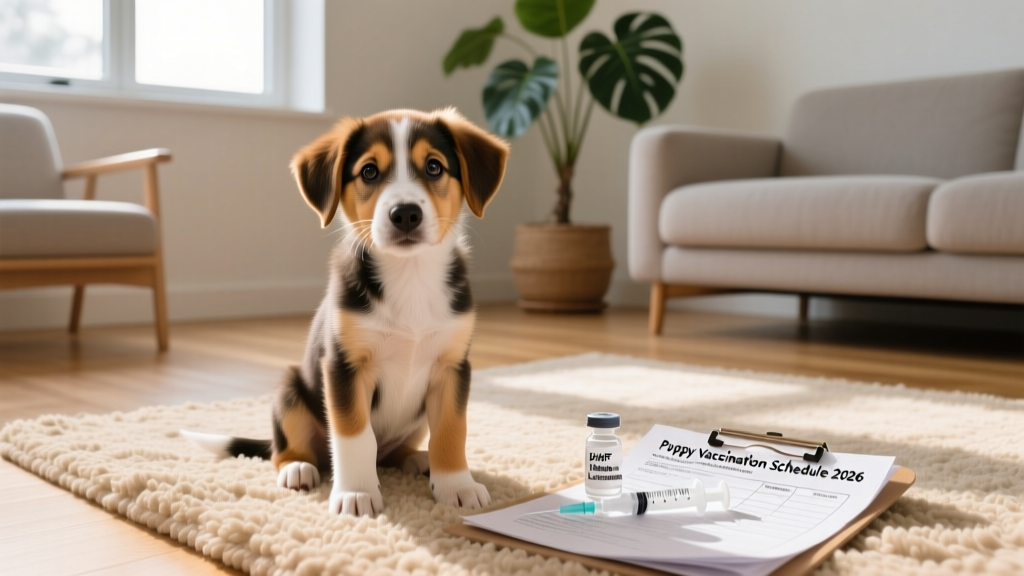
Your cane corso puppy's immune system is developing rapidly, and maternal antibodies from the dam's colostrum gradually wane between 6 and 16 weeks. The vaccination series is timed to provide protection as those maternal antibodies decline. Always consult your veterinarian to customize this schedule based on your local disease prevalence and your puppy's individual health status.
| Age | Vaccines Administered | Details |
|---|---|---|
| 6–8 weeks | DHPP (1st dose) | Distemper, Hepatitis (Adenovirus-2), Parainfluenza, Parvovirus — often given by breeder before pickup |
| 10–12 weeks | DHPP (2nd dose), Bordetella, Leptospirosis (1st, if recommended) | Bordetella (kennel cough) essential if attending puppy classes; Leptospirosis based on regional risk — discuss with your vet |
| 14–16 weeks | DHPP (3rd dose), Rabies, Leptospirosis (2nd booster) | Rabies required by law in most US jurisdictions; DHPP final puppy dose ensures protection after maternal antibodies decline |
| 12–16 months | DHPP booster, Rabies booster (1-year or 3-year per local law), Leptospirosis annual | First adult boosters; discuss titer testing as alternative for DHPP at subsequent intervals |
When can your puppy go outside and meet other dogs? Until your puppy has received their final DHPP dose at 14–16 weeks (plus 5–7 days for immune response), avoid high-risk areas like dog parks, pet store floors, and unknown dog environments. However, controlled socialization in low-risk settings — carrying your puppy to watch traffic, visiting friends' homes with fully vaccinated adult dogs, sitting on your porch watching the world — should begin immediately at 8 weeks. The socialization window closes around 14–16 weeks, and the behavioral risk of under-socialization in a guardian breed far outweighs the disease risk when managed carefully.
Socialization Window: The Critical Weeks 3–14 Checklist
For a cane corso — a breed with strong protective instincts and natural wariness of strangers — the socialization window between weeks 3 and 14 is arguably the most important developmental period in their life. Under-socialized cane corsos are at high risk for fear-based aggression, territorial reactivity, and difficulty navigating everyday situations as 100 lb adults.
Aim for 100 positive exposures before 16 weeks. Each exposure should be paired with high-value treats (boiled chicken, cheese, freeze-dried liver) and should be entirely voluntary — never force your puppy to interact with something that frightens them.
Socialization Exposure Checklist
- People (minimum 20 different individuals): Men with beards, women in hats, children of various ages, people in uniforms (mail carrier, delivery driver), people using wheelchairs or crutches, people wearing sunglasses, tall people, people of different ethnicities and body types
- Surfaces (minimum 10): Gravel, wet grass, metal grates, wooden bridges, slippery tile, carpet, sand, mulch, concrete, tarps
- Sounds (minimum 15): Thunderstorm recordings (play at low volume with treats), vacuum cleaner, doorbell, garbage truck, fireworks recordings, hair dryer, clapping, children yelling, car horns, door slamming
- Objects (minimum 15): Umbrellas opening/closing, shopping carts, bicycles, skateboards, balloons, flags, plastic bags blowing, trash cans, lawn equipment
- Animals: Calm, vaccinated adult dogs of various sizes; cats (if available); livestock if you live rurally
- Handling exercises: Paw handling, ear inspection, mouth opening, nail clipping simulation, collar grabbing, being rolled onto side, being lifted (while puppy is small enough)
- Environments: Car rides, veterinary clinic (happy visits with treats only), outdoor café patios, parking lots, wooded trails, urban sidewalks
Potty Training Timeline: Realistic Expectations for Giant Breeds
When will your cane corso puppy be fully potty trained? Most cane corso puppies achieve reliable house training between 5 and 7 months of age. Giant breeds develop bladder control more slowly than small breeds, and a cane corso puppy under 4 months simply cannot physically hold it for extended periods. Claims of "potty trained in 3 days" are unrealistic for any breed and especially misleading for giant-breed puppies.
The general rule: a puppy can hold their bladder for approximately one hour per month of age (so a 3-month-old puppy can hold for roughly 3 hours maximum during the day).
| Puppy Age | Max Daytime Hold | Overnight Hold | Outing Frequency |
|---|---|---|---|
| 8–10 weeks | 1–1.5 hours | 3–4 hours | Every 60–90 minutes + after every meal, nap, and play session |
| 3 months | 2–3 hours | 5–6 hours | Every 90–120 minutes during active hours |
| 4 months | 3–4 hours | 6–7 hours | Every 2–3 hours |
| 5 months | 4–5 hours | 7–8 hours | Every 3–4 hours |
| 6+ months | 5–6 hours | 8–10 hours | Every 4–6 hours; approaching adult schedule |
Troubleshooting common issues:
- Accidents after being outside: Your puppy may not have fully emptied their bladder. Wait outside for 5–10 minutes, walk in circles or figure-eights to stimulate elimination, and reward generously (5–6 small treats) immediately upon success.
- Regression at 4–5 months: Common and normal. Often coincides with increased independence and exploration. Return to more frequent outings and tighter supervision.
- Submissive/excitement urination: Common in young cane corsos greeting their owners. Ignore the puppy for the first 60 seconds after entering, avoid direct eye contact, and crouch sideways rather than leaning over them.
Crate Training Progression & Time Limits
A crate is essential for a cane corso — not just for house training but for safety. An unsupervised adolescent cane corso can destroy drywall, ingest dangerous objects, and injure themselves. Introduce the crate as a positive retreat, never as punishment.
| Age | Maximum Crate Time (Day) | Overnight | Crate Size |
|---|---|---|---|
| 8–10 weeks | 1–2 hours | 3–4 hours (set alarm) | 36-inch crate with divider panel; puppy should be able to stand, turn, and lie down |
| 11–14 weeks | 2–3 hours | 5–6 hours | Expand divider as puppy grows |
| 4–5 months | 3–4 hours | 7–8 hours | Continue expanding divider |
| 6+ months | 4–5 hours max | 8–10 hours | Transition to 48-inch or 54-inch crate (adult size); dog should stand without head touching top |
Progression steps:
- Days 1–3: Feed all meals in the open crate. Toss treats inside. Leave door open. Puppy enters and exits freely.
- Days 4–7: Close door during meals, open immediately after. Begin 30-second closed-door sits outside the crate while puppy is inside with a stuffed Kong.
- Week 2: Extend closed-door time to 5–10 minutes while you remain visible. Provide long-lasting chews (bully sticks, yak cheese chews).
- Week 3–4: Leave the room briefly (30 seconds to 2 minutes). Return before puppy becomes distressed. Gradually extend absence.
- Ongoing: Build duration in increments of 15–30 minutes. If puppy cries, wait for a brief pause in vocalization before releasing — releasing during crying reinforces the behavior.
Teething Timeline & Relief Strategies (Months 3–6)
Cane corso puppies begin losing their 28 deciduous teeth around 12–16 weeks, with all 42 adult teeth typically in place by 6–7 months. During this period, your puppy's urge to chew will be intense — and their jaw strength is already substantial.
Safe chew recommendations by age:
- 3–4 months: Frozen wet washcloths (twist, wet, freeze), rubber Kong toys stuffed with puppy-safe peanut butter (xylitol-free) and frozen, Nylabone puppy-specific chews (softer formula)
- 4–5 months: Bully sticks (supervised — remove when small enough to swallow), frozen carrots, Benebone puppy line, Whimzees (puppy size)
- 5–7 months: Yak cheese chews, antler alternatives (pressed rawhide-free alternatives, not actual antlers which can fracture teeth), Goughnuts ring (medium size — designed to show wear indicator)
Common Cane Corso Puppy Problems & Solutions
Biting and Nipping
How do I stop puppy biting/nipping? Cane corso puppies explore the world with their mouths, and their jaw strength develops early. When teeth touch skin, immediately say "ouch" in a calm, flat tone (not a high-pitched yelp, which can excite some dogs), withdraw attention for 10–15 seconds by standing still and folding your arms. Redirect to an appropriate chew toy. If biting persists, end the play session by stepping over a baby gate for 30 seconds. Consistency from every family member is essential — if one person allows mouthing and another scolds, the puppy cannot learn the rule.
Whining in the Crate
Some protest whining is normal for the first 1–2 weeks. Ensure your puppy has been exercised, has eliminated, and isn't hungry or thirsty before crating. A Snuggle Puppy (heartbeat toy) or a warm water bottle wrapped in a towel can ease the transition. If whining persists beyond 2 weeks of consistent practice, evaluate whether the crate location is too isolated (move it to your bedroom initially) or if the puppy is being crated for too long.
Destructive Chewing
An under-stimulated cane corso puppy will find their own entertainment — and you won't like it. Provide minimum 20–30 minutes of structured mental exercise daily (training sessions, food puzzles, snuffle mats, frozen Kongs) in addition to physical exercise appropriate for their age (5 minutes of leash walking per month of age, twice daily, is a safe guideline for growing joints).
Jumping on People
A cane corso that jumps as an adolescent becomes a 100 lb dog knocking over children and elderly visitors. Teach "four on the floor" from day one: reward all four paws on the ground with treats and attention. Turn your back and cross your arms when the puppy jumps. Ask visitors to ignore the puppy until calm. Practice with a leash in controlled greeting scenarios.
First-Year Cost Breakdown: Budgeting Beyond the Purchase Price
Here's a realistic first-year budget for a cane corspuppy, based on 2026 pricing across US metropolitan and suburban areas:
| Category | Low Estimate | High Estimate | Details |
|---|---|---|---|
| Puppy purchase (responsible breeder) | $1,800 | $4,000 | AKC-registered, health-tested parents |
| Veterinary care (first year) | $800 | $1,500 | Wellness exams (3–4 visits), vaccination series, fecal tests, heartworm prevention, spay/neuter deposit |
| Food (large-breed puppy formula) | $700 | $1,200 | Premium large-breed kibble ($55–$90/bag, 25–30 lb bags); giant breeds eat 7–9 cups/day by month 10 |
| Supplies | $500 | $900 | 48–54" crate ($80–$150), heavy-duty leash and harness ($40–$80), stainless steel bowls ($20–$40), slow feeder ($15–$25), bed ($50–$100), grooming tools ($30–$50), chew toys rotation ($80–$150) |
| Training | $400 | $1,200 | Puppy socialization class ($150–$250), basic obedience ($200–$400), private sessions for breed-specific concerns ($100–$200/session) |
| Pet insurance (optional but recommended) | $600 | $1,000 | $50–$85/month for giant breed puppy; covers accidents, illnesses; consider adding wellness rider |
| Emergency fund (recommended) | $500 | $1,500 | Set aside for unexpected issues: foreign body ingestion, ear infections, GI upset |
| Total First-Year (excluding purchase) | $3,500 | $7,300 | Varies by location, insurance choice, and individual puppy health |
| Grand Total with Puppy Purchase | $5,300 | $11,300 |
Ongoing annual costs after year one typically run $2,500–$4,500 for food, routine veterinary care, preventives, and supplies. Giant breeds are expensive dogs — budget honestly before committing.
Frequently Asked Questions
How often should I feed my cane corso puppy at 10 weeks old?
Feed three to four meals per day, totaling approximately 2.5–4 cups of large-breed puppy food daily. Divide the total evenly across meals. Feed at consistent times (e.g., 7 AM, 12 PM, 5 PM, and optionally 9 PM for the youngest puppies). Remove uneaten food after 15–20 minutes to establish a routine and monitor appetite.
When will my cane corso puppy be fully potty trained?
Expect reliable house training between 5 and 7 months of age with consistent scheduling. Some individual puppies may take until 8–9 months, particularly males. Accidents after 8 months of consistent training warrant a veterinary check to rule out urinary tract infections or anatomical issues.
What vaccines does my cane corso puppy need and when?
Core vaccines include DHPP (distemper, hepatitis, parainfluenza, parvovirus) at 6–8 weeks, 10–12 weeks, and 14–16 weeks, plus rabies at 14–16 weeks. Non-core vaccines your veterinarian may recommend based on lifestyle and location include Bordetella (for puppy classes and boarding) and Leptospirosis (for dogs with outdoor exposure in areas with wildlife). Consult your veterinarian to develop a schedule tailored to your puppy.
How do I stop my cane corso puppy from biting my hands and ankles?
Use the "ouch + withdraw + redirect" method consistently: when teeth contact skin, say "ouch" calmly, withdraw attention for 10–15 seconds, then redirect to an appropriate chew toy. For ankle-biting specifically (common herding/guardian puppy behavior), stop walking immediately when it happens — movement reinforces the behavior. Carry a tug toy on walks to redirect the impulse onto an acceptable target.
When can my cane corso puppy go to the dog park?
Wait until at least 7 days after the final DHPP vaccine at 14–16 weeks (so approximately 15–17 weeks minimum). However, dog parks carry behavioral risks for guardian breeds — unstructured, overwhelming interactions can create negative associations. Structured puppy play groups supervised by a trainer are a better option through at least 6 months. When you do visit dog parks, choose low-traffic times and leave immediately if your puppy shows fear or is being bullied.
Is pet insurance worth it for a cane corso?
Given the breed's predisposition to hip dysplasia (surgical repair: $3,000–$7,000 per hip), dilated cardiomyopathy (lifelong medication: $50–$150/month), and bloat (emergency surgery: $3,000–$7,000), pet insurance purchased during puppyhood (before any pre-existing conditions develop) provides meaningful financial protection. Enroll before your puppy's first birthday for the broadest coverage and lowest premiums.
Aaron Whyte
All our authors care for dogs every day — read more of their work on the authors page.