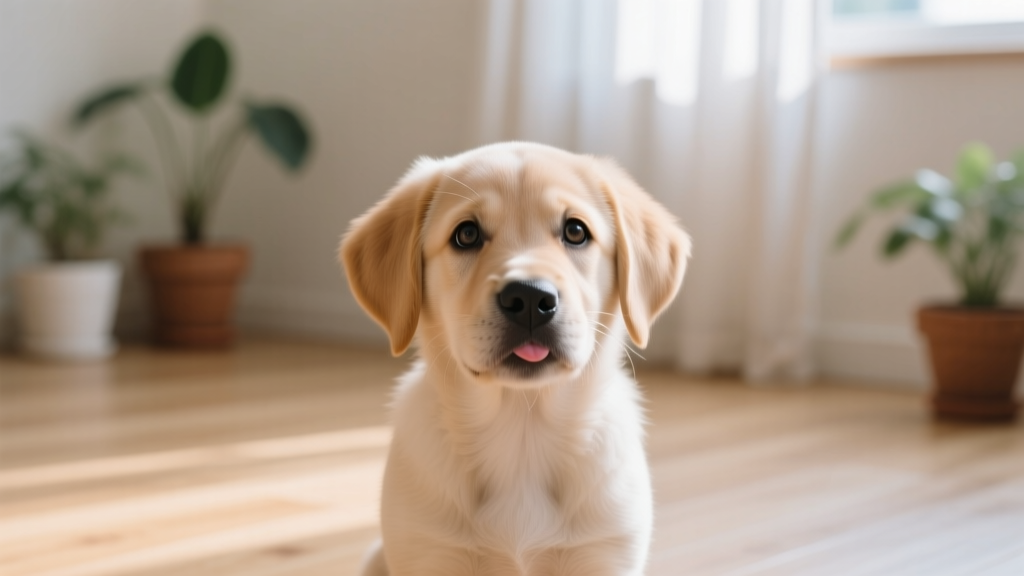
Can Puppy Eat Pork? Safe Feeding Guide by Age & Breed Stage
Can puppy eat pork safely? Learn age-specific pork feeding guidelines, portion sizes by weight, and a complete puppy care timeline from 4 weeks to 12 months.
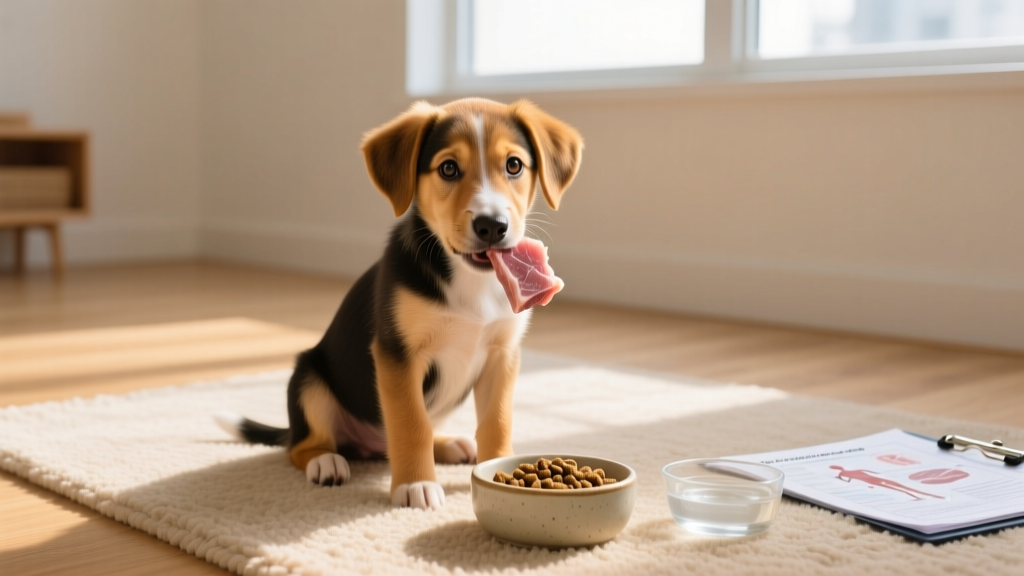
Can Puppy Eat Pork? The Short Answer
Cooked, plain, unseasoned pork is safe for puppies in small amounts once they are eating solid food (typically after 8 weeks). However, raw pork, seasoned pork, pork bones, and high-fat pork products like bacon pose serious risks including Trichinella parasite exposure, pancreatitis, and gastrointestinal obstruction. Pork should never exceed 10% of your puppy's daily caloric intake and must always be introduced gradually.
Understanding can puppy eat pork requires more than a yes-or-no answer. Puppies have developing digestive systems, specific nutritional requirements for growth, and age-dependent tolerances that adult dogs simply don't have. This guide walks you through exactly when, how, and how much pork is safe at every developmental stage — plus the complete puppy care timeline every new owner needs.
Age-Specific Milestones: What to Expect From 4 Weeks to 12 Months
Weeks 4–8: Weaning and Transition
At 4 weeks, puppies begin transitioning from mother's milk to a gruel of high-quality puppy kibble soaked in warm water or puppy milk replacer. By 6 weeks, most puppies are eating 3–4 small meals of softened food daily. Pork is not appropriate during this stage — the digestive system is too immature to process novel proteins outside a balanced puppy formula. Weight gain should be steady: puppies typically double their birth weight by week 5.
Weeks 8–12: New Home Adjustment
This is when most puppies come home (see "When Should I Bring My Puppy Home?" below). Expect 3–4 meals per day of a complete-and-balanced AAFCO-approved puppy food. You can introduce tiny amounts of plain cooked pork as a training treat — no more than ½ teaspoon for a 10 lb puppy — but only after your puppy has been eating their regular diet consistently for at least one week without GI upset.
Weeks 12–16: Rapid Growth Phase
Caloric needs peak relative to body size. Puppies are eating 3 meals daily and can handle small amounts of cooked pork (1 teaspoon per 10 lb body weight) as an occasional treat. Socialization is critical during this window. Teething begins around week 12 with incisor eruption.
Weeks 16–24: Adolescence Begins
Transition to 2 meals per day around 16–20 weeks depending on breed size. Pork can be used more regularly as a high-value training reward (up to 1 tablespoon per 20 lb body weight, 2–3 times per week). Baby teeth are actively being replaced — expect chewing behaviors to intensify.
Months 6–12: Maturing Toward Adult Diet
Small breeds may transition to adult food around 9–10 months; large breeds continue on puppy formulas until 12–18 months. Pork portions can increase to adult treat guidelines (10% rule) but should remain plain and cooked. Growth rate slows, and calorie monitoring becomes essential to prevent obesity.
Feeding Schedule: Portions by Age and Weight
The following table assumes a complete-and-balanced commercial puppy food (dry kibble) meeting AAFCO nutrient profiles for growth. Pork treats are listed separately. Always consult your veterinarian for breed-specific adjustments — a Great Dane puppy's caloric needs differ dramatically from a Chihuahua's.
| Age | Meals/Day | Kibble (cups/day, 10 lb puppy) | Kibble (cups/day, 30 lb puppy) | Max Pork Treat |
|---|---|---|---|---|
| 8–12 weeks | 3–4 | ¾ – 1 cup | 1¾ – 2¼ cups | ½ tsp, 1x/week |
| 12–16 weeks | 3 | 1 – 1¼ cups | 2¼ – 3 cups | 1 tsp, 2x/week |
| 16–24 weeks | 2–3 | 1¼ – 1½ cups | 3 – 4 cups | 1 tbsp, 2–3x/week |
| 6–12 months | 2 | 1¼ – 1¾ cups | 3½ – 5 cups | 1–2 tbsp, 2–3x/week |
How to prepare pork safely for puppies: Use lean pork loin or tenderloin. Cook to an internal temperature of 145°F (63°C) minimum — the FDA and USDA recommend this threshold to destroy Trichinella spiralis larvae. Do not add salt, garlic, onion, pepper, or any seasoning. Cut into pea-sized pieces for puppies under 16 weeks, and small bite-sized pieces for older puppies. Store cooked pork in the refrigerator for up to 3 days or freeze in portion-sized batches.
⚠ Pork products to NEVER feed your puppy: Bacon (excessive fat and sodium), ham (high salt content), pork sausage (seasonings including toxic garlic/onion), pork rinds (choking hazard, high fat), raw pork (parasite and bacterial risk), pork bones (splintering, GI perforation), and any processed pork product containing xylitol or artificial sweeteners.
Potty Training Timeline: Realistic Expectations
One of the most common frustrations new puppy owners face is unrealistic potty training timelines. Here's what developmental science actually tells us:
Potty Training Log Template
| Age | Bladder Capacity | Outing Frequency | Accident Expectation |
|---|---|---|---|
| 8–10 weeks | 20–30 minutes | Every 30–45 min + after meals/naps | Multiple daily — completely normal |
| 10–14 weeks | 45–60 minutes | Every 1–1.5 hours | 1–2 per day if schedule is consistent |
| 14–20 weeks | 1.5–2 hours | Every 2 hours + key trigger times | 0–1 per day with consistent routine |
| 5–6 months | 3–4 hours | Every 3–4 hours during day | Rare — mostly under stress or illness |
| 6–12 months | 4–6 hours | Every 4–6 hours (3–4 outings/day) | Fully reliable for most puppies |
Troubleshooting common potty training setbacks: If accidents suddenly increase, rule out urinary tract infections (common in puppies — your vet will run a urinalysis, typically $45–$85). Submissive urination during greetings is normal until 6–8 months and is not a housetraining failure — avoid scolding and keep greetings calm. Marking behavior typically emerges around 6–9 months in intact males; neutering reduces but doesn't always eliminate it.
The Critical Socialization Window (Weeks 3–14)
According to the AVMA, the primary socialization period for puppies occurs between 3 and 14 weeks of age. Experiences during this window — positive or negative — disproportionately shape lifelong behavioral responses. Missing this window doesn't mean a dog can't be socialized later, but it becomes significantly harder and may require professional behaviorist intervention.
Socialization Exposure Checklist
- Children of various ages (supervised)
- People wearing hats, sunglasses, uniforms
- People using wheelchairs, walkers, canes
- People of different heights, builds, ethnicities
- People with beards, facial piercings
- Veterinary staff (positive visits, no procedures)
- Grass, gravel, sand, wet pavement
- Elevator rides, stair climbing
- Car rides (short, positive trips)
- Open umbrellas, flapping flags
- Grooming tables, examination tables
- Different rooms in your home
- Vacuum cleaners (start at distance)
- Thunderstorms (play recordings at low volume)
- Doorbell, knocking, alarms
- Nail trimming (handle paws daily from day 1)
- Tooth brushing introduction
- Being gently restrained (simulates vet handling)
Important vaccination caveat: The Merck Veterinary Manual notes that puppies are not fully protected against parvovirus and distemper until their final vaccine series at 14–16 weeks. However, the American Veterinary Society of Animal Behavior (AVSAB) recommends socialization begin before full vaccination — the behavioral risk of under-socialization outweighs disease risk when exposure is controlled. Carry your puppy in public spaces, use a stroller or sling, and arrange playdates with known-vaccinated dogs. Avoid dog parks, pet store floors, and unknown dog feces until the vaccine series is complete.
Vaccination Schedule: Week-by-Week Breakdown
| Age | Vaccines Administered | Protection Against | Est. Cost |
|---|---|---|---|
| 6–8 weeks | DHPP (1st dose) | Distemper, Hepatitis (Adenovirus-2), Parainfluenza, Parvovirus | $25–$50 |
| 10–12 weeks | DHPP (2nd dose), Bordetella (optional, lifestyle-dependent), Leptospirosis (1st dose, risk-area dependent) | Same as above + Kennel Cough, Leptospirosis | $40–$75 |
| 14–16 weeks | DHPP (3rd dose), Rabies (required by law), Leptospirosis (2nd dose if started) | Full core protection + Rabies | $50–$95 |
| 12–16 months | DHPP booster, Rabies booster, Bordetella (annual if boarding/grooming) | Extended immunity | $55–$100 |
Your veterinarian will determine the exact protocol based on your puppy's breed, size, geographic location, and lifestyle risk factors. Some vets offer titer testing (typically $50–$150 per antigen) after the initial series to confirm adequate antibody levels, though this is not yet widely accepted as a legal substitute for rabies vaccination in most US jurisdictions.
Teething Timeline and Safe Relief Strategies
Puppy teething follows a predictable sequence, and understanding it helps you protect your belongings and your puppy's comfort:
- 3–4 weeks: Deciduous (baby) incisors erupt — 28 total baby teeth by week 6
- 12–16 weeks: Baby incisors begin falling out; permanent incisors replace them
- 16–20 weeks: Permanent canines erupt — expect the most intense chewing during this phase
- 20–24 weeks: Premolars and molars erupt; all 42 adult teeth typically in place by 6 months
Safe chew recommendations for teething puppies:
- KONG Classic Puppy (softer rubber formula) stuffed with plain canned pumpkin or frozen plain yogurt — $8–$12
- Nylabone Puppy Chew (specifically the puppy line, softer than adult versions) — $5–$8
- Frozen wet washcloth twisted into a rope — free, but supervise to prevent ingestion of fabric
- Benebone Puppy (softer material designed for developing teeth) — $12–$16
Avoid: Ice cubes (can crack teeth), hard antlers or hooves (too dense for puppy teeth), cooked bones of any kind (splintering risk — this includes pork bones), and rawhide chews for puppies under 6 months (choking and digestive blockage risk).
Crate Training Progression and Common Puppy Problems
Crate training leverages a dog's natural den instinct, but time limits are critical for puppies who cannot hold their bladder or tolerate prolonged confinement.
Crate Time Limits by Age
- 8–10 weeks: 30–45 minutes max during day
- 10–14 weeks: 1–1.5 hours max
- 14–16 weeks: 2 hours max
- 4–5 months: 3 hours max
- 6 months+: 4 hours max during day (overnight is longer — most puppies can sleep 6–8 hours by 16 weeks)
General rule: maximum daytime crate hours = puppy's age in months + 1 (up to a maximum of 4–5 hours).
Common Puppy Problems & Solutions
Puppy biting/nipping: Redirect to an appropriate chew toy immediately. If biting continues, stand up and withdraw attention for 10–15 seconds (negative punishment — removing something the puppy wants). Never hold the mouth shut, tap the nose, or use physical punishment. Most puppies significantly reduce mouthing by 5–6 months as adult teeth settle.
Whining in the crate: Ensure the puppy has been exercised, has eliminated, and isn't crated beyond the time limit above. Cover the crate with a breathable blanket to reduce visual stimulation. Place a worn t-shirt with your scent inside. If whining persists beyond 15–20 minutes of settling, take puppy out to eliminate (in case it's a potty signal), then return to crate without fuss.
Destructive chewing: Puppy-proof your home by removing shoes, cords, and small objects. Provide 4–5 approved chew toys rotated weekly to maintain novelty. Supervise or confine — never give a puppy unsupervised access to rooms with chewable hazards.
First-Year Cost Breakdown
Budgeting realistically prevents surprises. These ranges reflect 2026 US pricing and vary by region, breed size, and provider:
| Category | Low Estimate | Mid Estimate | High Estimate |
|---|---|---|---|
| Veterinary (vaccines, wellness, spay/neuter) | $400 | $700 | $1,200 |
| Food (quality puppy kibble + treats like pork) | $250 | $500 | $900 |
| Supplies (crate, bed, leash, bowls, toys, gates) | $150 | $350 | $600 |
| Training (group classes or private sessions) | $100 | $300 | $800 |
| Preventive medications (flea/tick, heartworm) | $150 | $300 | $500 |
| Pet insurance (annual premium, optional) | $350 | $550 | $800 |
| TOTAL (excluding purchase/adoption fee) | $1,400 | $2,700 | $4,800 |
Emergency veterinary visits are not included above. A single ER visit for foreign body ingestion (a common puppy emergency) can cost $2,000–$7,000. Pet insurance or a dedicated emergency fund of at least $1,500 is strongly recommended.
When Can My Puppy Go Outside and Meet Other Dogs?
This is where vaccination timing and socialization needs intersect:
- Immediately (8+ weeks): Carry your puppy in a sling or carrier to experience outdoor sights, sounds, and smells. Avoid setting them on public ground where unknown dogs have eliminated.
- After 10–12 week vaccine: Supervised playdates with known, fully vaccinated dogs in private yards are generally safe. Puppy kindergarten classes that require proof of vaccination are excellent options.
- After 14–16 week final vaccine: Wait 1–2 weeks post-final DHPP for full immunity. After this, your puppy can walk on public sidewalks, visit dog-friendly stores, and begin controlled introductions at dog parks (though many trainers recommend waiting until 6+ months for dog parks due to unpredictable dog interactions).
Frequently Asked Questions
When should I bring my puppy home?
The optimal age is 8–10 weeks. Puppies separated before 8 weeks miss critical littermate socialization (bite inhibition learning, canine communication signals). Puppies older than 12 weeks from a breeder or shelter may have missed portions of the socialization window and require more intensive exposure work. Some states legally prohibit sale or transfer of puppies under 8 weeks.
How often should I feed my puppy at 10 weeks old?
At 10 weeks, feed 3–4 meals per day, spaced roughly 4–5 hours apart during waking hours. For example: 7 AM, 11 AM, 3 PM, and 7 PM. Consistent meal timing also makes potty training easier since puppies typically need to eliminate 15–30 minutes after eating. Free-feeding (leaving food out all day) is not recommended for puppies — it makes monitoring appetite changes (an early illness indicator) difficult and can lead to overeating.
When will my puppy be fully potty trained?
Most puppies achieve reliable daytime housetraining between 4–6 months of age with consistent scheduling. Full reliability including overnight control typically develops by 6–8 months. Small breeds may take longer (up to 9–12 months) due to smaller bladder capacity and higher metabolism. If your puppy is not showing consistent improvement by 5 months, consult your veterinarian to rule out medical causes and consider working with a certified professional dog trainer (CPDT-KA or IAABC certified).
What vaccines does my puppy need and when?
Core vaccines for all puppies: DHPP (Distemper, Hepatitis/Adenovirus-2, Parainfluenza, Parvovirus) at 6–8, 10–12, and 14–16 weeks, plus Rabies at 14–16 weeks (timing varies by state law). Lifestyle-dependent vaccines your vet may recommend: Bordetella (kennel cough) for dogs that will board, groom, or attend group classes; Leptospirosis for dogs in areas with wildlife exposure; Lyme disease for dogs in tick-endemic regions. See the vaccination table above for full details and cost ranges.
How do I stop puppy biting and nipping?
Puppy mouthing is normal developmental behavior, not aggression. Effective strategies include: (1) Redirect to an appropriate chew toy every time teeth touch skin. (2) Use a marker word like "oops" and immediately withdraw attention for 10–15 seconds if biting continues — this teaches that biting ends play. (3) Provide adequate physical exercise and mental enrichment (snuffle mats, training sessions, frozen KONGs) to reduce frustration-based mouthing. (4) Ensure all household members respond consistently. Most puppies significantly reduce mouthing by 5–6 months. Never use physical punishment, which can create fear-based aggression.
Can puppy eat pork bones or pork fat?
No. Cooked pork bones are brittle and splinter easily, causing esophageal perforation, intestinal obstruction, or peritonitis — all life-threatening emergencies requiring surgical intervention ($2,000–$7,000). Raw pork bones carry bacterial contamination risk (Salmonella, E. coli) and parasite exposure. Pork fat trimmings and bacon grease can trigger acute pancreatitis, especially in puppies whose digestive systems are immature. Pancreatitis symptoms include vomiting, abdominal pain, lethargy, and loss of appetite — seek veterinary care immediately if these occur after fatty food ingestion.
What should I do if my puppy eats something toxic?
Call the ASPCA Animal Poison Control Center at (888) 426-4435 (available 24/7, consultation fee applies) or the Pet Poison Helpline at (855) 764-7661. Do not induce vomiting unless specifically instructed by a veterinary professional — some substances cause more damage coming back up. Keep the packaging or a sample of the ingested substance to show your vet.
Disclaimer: This guide provides general educational information and does not replace professional veterinary advice. Always consult your veterinarian before making dietary changes, introducing new foods, or if you have concerns about your puppy's health or development. Individual puppies may have allergies, sensitivities, or medical conditions that affect dietary recommendations.
Tom Renshaw
All our authors care for dogs every day — read more of their work on the authors page.