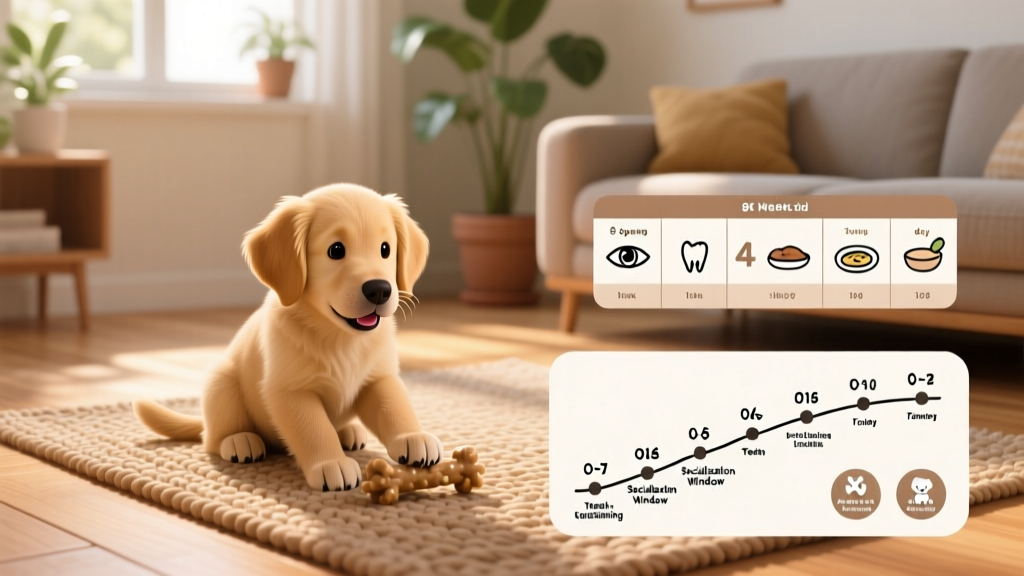
Border Collie Puppy: Week-by-Week Growth, Training & Care Guide
Complete border collie puppy guide covering milestones, feeding schedules, potty training, socialization windows, vaccinations, and first-year costs.

When Should You Bring Your Border Collie Puppy Home?
The ideal age to bring a border collie puppy home is 8 to 10 weeks. The American Kennel Club recommends that puppies remain with their littermates and dam until at least 8 weeks of age. For border collies — a breed known for sensitivity and high social intelligence — staying through week 8 is especially important because this is when they learn bite inhibition and canine communication from their siblings.
Some responsible breeders keep border collie puppies until 10 weeks, particularly if the puppy will be heading to a busy household with children or other pets. Those extra two weeks give the breeder time to begin early crate exposure, introduce novel surfaces, and assess each puppy's individual temperament for proper placement.
Border Collie Puppy Milestones: What to Expect at Every Stage
Weeks 4–8: The Litter Period (At the Breeder)
During this window, your puppy's eyes and ears are fully functional, deciduous (baby) teeth are erupting, and critical social learning is happening. Puppies begin weaning onto solid food around week 4, start engaging in social play by week 5, and develop a startle response to loud noises by week 6. A good breeder is introducing varied textures (grass, gravel, tarps), novel sounds (vacuum recordings, thunderstorms at low volume), and gentle handling of paws, ears, and mouth.
Weeks 8–12: Home Transition and Bonding
Expect your border collie puppy to sleep 18–20 hours per day. They'll have bursts of intense energy lasting 10–15 minutes followed by sudden crashes. This is the prime attachment period — your puppy is forming their primary bond with you. Attention span is roughly 3–5 minutes per training session. House soiling accidents will happen every 1–2 hours if you're not proactively managing potty breaks. Weight at 8 weeks: typically 4–7 lb (1.8–3.2 kg).
Weeks 12–16: Confidence Building and Early Rules
Your border collie puppy's coordination improves dramatically. They can navigate stairs (supervised), begin short leash walks (5 minutes per month of age, so 15 minutes max at 3 months), and start understanding basic cues like "sit" and "come." The fear imprint period (weeks 8–11) may be winding down, but a second fear period can begin around week 12. Avoid forcing scary experiences — let them observe from a distance and reward curiosity. Weight at 16 weeks: roughly 10–18 lb (4.5–8.2 kg) depending on lineage.
Weeks 16–24: The Adolescent Shift Begins
This is where border collie owners often feel blindsided. Your previously biddable puppy may start testing boundaries, ignoring recalls, and showing early herding behaviors — nipping at heels, circling children, staring intently at moving objects. Mental stimulation becomes as critical as physical exercise. Introduce puzzle feeders (Outward Hound Nina Ottosson Dog Brick, ~$15), flirt pole sessions (2–3 minutes max), and scent work games. Weight at 6 months: approximately 20–30 lb (9–13.6 kg).
Months 6–12: Full Adolescence
Border collies are slow to mature — many don't reach full emotional adulthood until 2.5 to 3 years. During months 6–12, expect continued boundary testing, possible regression in training, and a strong desire to work. This is the ideal window to start structured activities: intro agility classes (flatwork only, no jumps over 12 inches until growth plates close around 12–14 months), herding instinct tests, or advanced obedience. Weight at 12 months: approaching adult weight of 30–45 lb (13.6–20.4 kg) for females, 40–55 lb (18.1–24.9 kg) for males.
| Age | Weight Range | Key Developmental Marker | Owner Priority |
|---|---|---|---|
| 8 weeks | 4–7 lb / 1.8–3.2 kg | Primary socialization window opens | Bonding, potty routine |
| 12 weeks | 8–14 lb / 3.6–6.4 kg | Improved coordination, fear periods | Positive exposures, basic cues |
| 16 weeks | 10–18 lb / 4.5–8.2 kg | Baby teeth start loosening | Leash walking, crate comfort |
| 6 months | 20–30 lb / 9–13.6 kg | Adolescent independence | Mental enrichment, impulse control |
| 12 months | 30–55 lb / 13.6–24.9 kg | Nearing adult size, growth plates closing | Structured sport/activity intro |
Feeding Your Border Collie Puppy: Schedule and Portions
Border collie puppies need a diet formulated for medium-breed puppies — not large-breed formulas (which restrict calcium/phosphorus for giant breeds) and not all-life-stages kibble that may lack the higher caloric density a growing puppy requires. Look for an AAFCO statement confirming "complete and balanced for growth" on the label.
How Often Should I Feed My Border Collie Puppy?
- 8–12 weeks: 4 meals per day (every 4 hours during waking hours)
- 12–16 weeks: 3 meals per day (morning, midday, early evening)
- 16 weeks–6 months: 3 meals per day (transition to 2 meals around 5–6 months)
- 6–12 months: 2 meals per day (morning and evening)
Portion Guide by Age and Expected Adult Weight
The following portions assume a high-quality kibble with approximately 380–420 kcal per cup (such as Purina Pro Plan Puppy, Royal Canin Medium Puppy, or Hill's Science Diet Puppy). Adjust based on your individual puppy's body condition score (BCS) — you should be able to feel ribs easily without pressing hard, and see a visible waist from above.
| Age | Meals/Day | Total Daily Amount (approx.) | Per Meal |
|---|---|---|---|
| 8–12 weeks (4–7 lb) | 4 | 1 to 1.5 cups | ¼ to ⅜ cup |
| 12–16 weeks (8–14 lb) | 3 | 1.5 to 2 cups | ½ to ⅔ cup |
| 16 weeks–6 months (14–30 lb) | 3 → 2 | 2 to 2.75 cups | ⅔ to 1 cup |
| 6–12 months (30–50 lb) | 2 | 2.5 to 3.5 cups | 1.25 to 1.75 cups |
Potty Training Your Border Collie Puppy: Timeline and Troubleshooting
When Will My Border Collie Puppy Be Fully Potty Trained?
Most border collie puppies achieve reliable house training between 4 and 6 months of age, though occasional accidents through 8–10 months are normal, especially during excitement or routine disruptions. Border collies tend to learn faster than many breeds due to their intelligence and attentiveness to patterns, but their high energy means they may need more frequent outings than a lower-drive breed.
The Potty Training Protocol
Take your puppy outside:
- Immediately upon waking (morning and after every nap)
- Within 5–15 minutes after every meal
- After every play session or training session
- Before crating and immediately after release from crate
- Before bedtime (last trip out around 10–11 PM)
A general rule for bladder capacity: a puppy can hold it for approximately their age in months plus one hour. So a 3-month-old puppy can hold for roughly 4 hours maximum — but for active border collies who drink more water, plan for every 2–3 hours during the day.
Potty Training Log Template
Track your puppy's patterns for the first two weeks. You'll quickly identify their natural schedule:
| Time | Activity | Potty Result | Location | Notes |
|---|---|---|---|---|
| 7:00 AM | Wake up, carry outside | ✅ Urinate + defecate | Designated spot | Fast — under 2 min |
| 7:30 AM | Breakfast (½ cup kibble) | — | — | Ate in 4 minutes |
| 7:45 AM | Outside after eating | ✅ Defecate | Designated spot | Consistent post-meal timing |
| 9:00 AM | Wake from nap | ✅ Urinate | Designated spot | — |
| 11:00 AM | Post-play session | ❌ Accident in kitchen | Indoor | Need to go out sooner after play |
Common Potty Training Troubles with Border Collies
Submissive/excitement urination: Border collies are sensitive dogs. If your puppy leaks small amounts when greeting you or when scolded, this is not a house training failure — it's an emotional response. Avoid punishment entirely. Greet calmly, ignore the puppy for the first 30 seconds after entering, and crouch sideways rather than looming over them.
Marking behavior (usually males, sometimes females): Can emerge as early as 4–5 months. Interrupt with a neutral "let's go" and redirect outside. Neuter timing may influence this — discuss with your vet.
The Socialization Window: Weeks 3–14
The American Veterinary Medical Association identifies the primary socialization period as weeks 3 through approximately 14. After this window closes, unfamiliar stimuli are more likely to trigger fear responses rather than curiosity. For border collies — a breed that can develop noise sensitivity, shadow-chasing, and reactivity if under-socialized — this window is critical.
Border Collie Puppy Socialization Checklist
Aim for positive exposure to the following before 14 weeks. "Positive" means your puppy is relaxed or curious, not fearful. If they show fear, increase distance and use high-value treats (boiled chicken, freeze-dried liver).
Surfaces and Environments
- Grass, gravel, sand, wet pavement, metal grates
- Elevator rides, automatic doors, revolving doors
- Car rides (short trips to pleasant destinations, not just the vet)
- Dark rooms, bright fluorescent lighting, flashing lights
People
- Children of various ages (supervised, calm interactions)
- People wearing hats, sunglasses, hoodies, backpacks
- People using canes, crutches, wheelchairs, umbrellas
- People of different skin tones, heights, and vocal tones
Sounds
- Vacuum cleaners (start at distance, pair with treats)
- Thunderstorm recordings (play at low volume during meals)
- Doorbells, knocking, alarms, car horns
- Fireworks recordings (very low volume, gradually increase over weeks)
Other Animals
- Fully vaccinated, friendly adult dogs (avoid dog parks until vaccination series is complete)
- Puppies of different breeds and sizes in structured puppy classes
- Cats (through a baby gate, reward calm observation)
- Livestock at a distance (important for herding breeds — teach "look and disengage")
Vaccination Schedule for Your Border Collie Puppy
What Vaccines Does My Puppy Need and When?
Your border collie puppy's vaccination schedule follows the standard protocol recommended by the AVMA and the American Animal Hospital Association (AAHA). Maternal antibodies from the dam's colostrum protect puppies early on but also interfere with vaccine efficacy, which is why boosters are given every 2–4 weeks until 16 weeks of age.
| Age | Vaccine | What It Protects Against |
|---|---|---|
| 6–8 weeks | DHPP (1st dose) | Distemper, Hepatitis (Adenovirus), Parainfluenza, Parvovirus |
| 10–12 weeks | DHPP (2nd dose) | Same as above — booster for full immune response |
| 10–12 weeks | Bordetella (optional) | Kennel cough — recommended if attending puppy classes |
| 14–16 weeks | DHPP (3rd dose) | Final puppy booster — considered protective after this dose |
| 14–16 weeks | Rabies (1st dose) | Rabies — legally required in most US jurisdictions |
| 12–16 months | DHPP + Rabies booster | First adult boosters |
Estimated vaccination costs (first year): $75–$150 per visit, with 3–4 puppy visits totaling $225–$600 depending on your region and clinic. Many clinics offer puppy wellness packages for $300–$500 that bundle all initial vaccines, deworming, and a fecal exam.
When Can My Border Collie Puppy Go Outside and Meet Other Dogs?
Your puppy can explore your own yard (if no unvaccinated dogs have access) immediately. Public areas — parks, sidewalks, pet stores — should be avoided until one week after the final DHPP booster at 14–16 weeks (so roughly 15–17 weeks of age). Structured puppy classes that require proof of at least one DHPP dose and a Bordetella vaccine are generally considered safe from 10–12 weeks onward, per the AVMA's position on early socialization. Avoid dog parks entirely until the full series is complete and ideally until your puppy is 6+ months and has solid recall skills.
Crate Training Progression and Teething Relief
Crate Training: Time Limits by Age
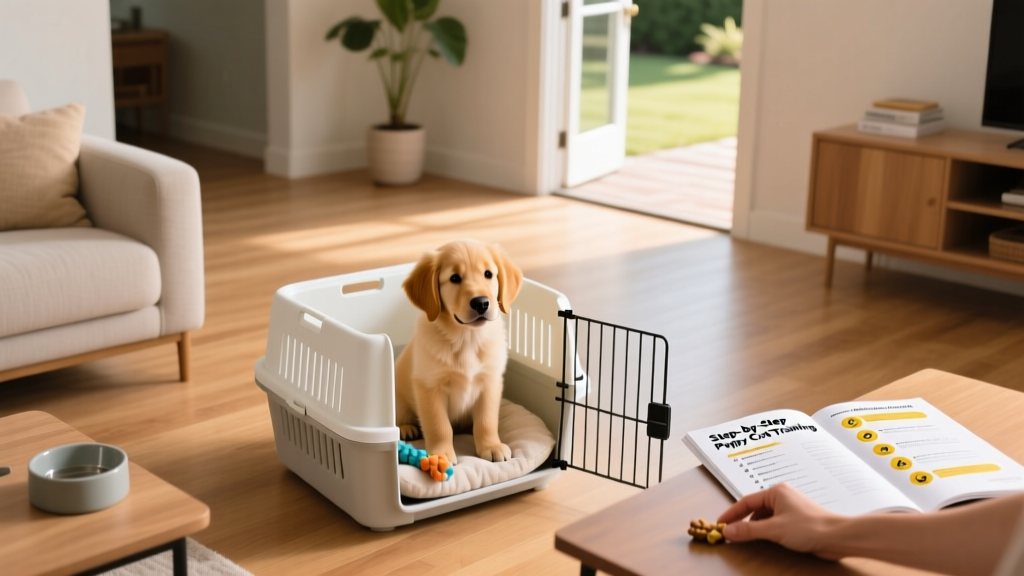
Border collies are den-oriented dogs and typically take to crates well — if introduced properly. Never use the crate as punishment. Feed meals inside it, toss high-value chews in, and leave the door open during the day so it becomes a voluntary retreat.
| Puppy Age | Maximum Continuous Crate Time | Notes |
|---|---|---|
| 8–10 weeks | 1–2 hours (daytime) | Overnight: expect 2–3 wake-ups for potty |
| 10–14 weeks | 2–3 hours (daytime) | Overnight: 1–2 wake-ups typical |
| 14–16 weeks | 3–4 hours (daytime) | Overnight: many sleep 5–6 hours straight |
| 4–6 months | 4–5 hours (daytime) | Overnight: 7–8 hours achievable |
| 6–12 months | 5–6 hours (daytime) | Never exceed 6–8 hours total without a break |
Border collies are prone to developing frustration-based behaviors if over-crated. If your puppy is crated for your full workday (8+ hours), arrange a midday dog walker or use a puppy-proofed pen area as an alternative.
Teething Timeline: 3–6 Months
Your border collie puppy has 28 deciduous teeth that begin falling out around 12–16 weeks, with all 42 adult teeth typically erupted by 6–7 months. During this period, expect increased chewing, mild gum bleeding (normal), and temporary reluctance to eat hard kibble.
Safe Chew Recommendations for Teething Border Collies
- Kong Classic (puppy rubber, pink/blue): Fill with soaked kibble mixed with plain yogurt and freeze. $8–$12.
- Nylabone Puppy Chew (soft flex material): Designed for developing teeth — harder adult Nylabones can fracture puppy teeth. $6–$9.
- Frozen washcloth: Wet a clean washcloth, twist into a rope, freeze. Supervise to prevent swallowing fabric. $0.
- Earth Animal No-Hide Chews: Digestible alternative to rawhide, which can cause intestinal blockages. $8–$14 per pack.
Common Border Collie Puppy Problems and Solutions
How Do I Stop My Border Collie Puppy From Biting and Nipping?
Nipping is the number one complaint from new border collie puppy owners. This breed was developed to control sheep using their mouths, so mouthing is deeply ingrained. It peaks between 8–16 weeks and again during teething (3–6 months).
What works:
- Redirect to a toy: When teeth touch skin, say "oops" in a neutral tone, withdraw attention for 5 seconds, then offer a chew toy. Reward enthusiastically when they bite the toy.
- Reverse time-outs: If redirecting fails, YOU leave. Step over a baby gate for 15–20 seconds. Return calmly. This teaches that teeth on skin = fun stops.
- Provide adequate chewing outlets: A border collie puppy who has access to frozen Kongs, bully sticks (supervised), and tug toys will mouth humans less.
- Manage arousal levels: Nipping escalates when puppies are overtired. If your puppy is biting hard and frantically, they likely need a nap — put them in their crate with a chew for a forced rest.
What doesn't work (and can make it worse): Yelling, holding the mouth shut, alpha rolls, or any physical punishment. Border collies are extremely sensitive to handler emotion and physical corrections often increase anxiety-driven biting or create hand-shyness.
Herding Behaviors: Nipping Heels and Chasing Children
Border collie puppies may try to herd running children, bicycles, or cars by nipping at heels or darting in front of movement. This is not aggression — it's instinct. Manage it by:
- Teaching a solid "leave it" cue (start with food on the floor, progress to moving objects)
- Providing an appropriate outlet: herding balls (Jolly Ball, ~$20–$30) allow them to push and chase in a controlled way
- Never allowing unsupervised access between the puppy and small children who run and squeal
Whining and Vocalization
Border collies are vocal dogs. Puppy whining is usually driven by one of four things: need to potty, boredom, anxiety, or a bid for attention. Before assuming it's "just whining," rule out physical needs. If the puppy is crated, has recently pottied, and has a chew toy — ignore the whining. Rewarding it (even by saying "quiet") reinforces the behavior. Teach an incompatible behavior like "go to your mat" for calmer alternatives.
First-Year Cost Breakdown for a Border Collie Puppy
Budgeting accurately helps prevent the financial stress that leads to surrendered dogs. Here's a realistic first-year cost breakdown based on 2026 US pricing:
| Category | Items Included | Estimated Cost Range |
|---|---|---|
| Puppy Purchase | Responsible breeder (health-tested parents, AKC registration) | $1,200–$2,500 |
| Adoption Alternative | Breed rescue or shelter (often includes spay/neuter, initial vaccines) | $200–$600 |
| Veterinary (Medical) | 3–4 puppy vaccine visits, fecal exams, deworming, spay/neuter, microchip | $600–$1,200 |
| Food | High-quality puppy kibble (12 months), treats for training | $400–$700 |
| Supplies | Crate, bed, leash/harness, bowls, baby gates, chew toys, puzzle feeders, grooming tools | $250–$500 |
| Training | Puppy socialization class, basic obedience (6–8 weeks each) | $200–$500 |
| Preventive Medications | Heartworm, flea/tick prevention (12 months) | $150–$350 |
| Pet Insurance | Monthly premium for puppy enrollment (accident + illness) | $360–$600/year |
| Emergency Fund | Unexpected vet visits (GI upset, foreign body ingestion, injury) | $200–$1,500+ |
Total estimated first-year cost (purchased from breeder): $3,560–$7,850
Total estimated first-year cost (adopted from rescue): $2,560–$5,950
Pet insurance is particularly worth considering for border collies. The breed is predisposed to conditions like hip dysplasia, epilepsy, and collie eye anomaly (CEA), and enrolling during puppyhood ensures no pre-existing condition exclusions. Companies like Trupanion, Healthy Paws, and Nationwide offer puppy plans starting around $30–$50 per month.
Frequently Asked Questions
Are border collie puppies good for first-time dog owners?
Border collies can work for dedicated first-time owners who have researched the breed thoroughly and are prepared for the mental and physical stimulation requirements. However, they are not a "low-maintenance" starter dog. If you work long hours away from home, live in a small apartment without access to outdoor space, or want a primarily couch-companion dog, a lower-drive breed may be a better fit. First-time owners who succeed with border collies typically commit to daily training sessions, structured exercise, and at least one organized dog sport.
How much exercise does a border collie puppy need daily?
Use the "5 minutes per month of age" guideline for structured walks: a 4-month-old gets roughly 20 minutes of leash walking per day, split into two sessions. Free play in a fenced yard can be longer but should be monitored — border collie puppies will run themselves to exhaustion if not stopped. Avoid repetitive high-impact activities (fetching a ball for 45 minutes straight, jogging on pavement) until growth plates close around 12–14 months. Mental exercise (training sessions, puzzle toys, scent games) tires a border collie puppy as effectively as physical exercise and is safer for developing joints.
When should I start training my border collie puppy?
Start the day you bring them home. At 8 weeks, your puppy can learn "sit," "come," name recognition, and "drop it" using positive reinforcement with small food rewards (pea-sized pieces of boiled chicken or commercial training treats like Zuke's Mini Naturals). Keep sessions to 3–5 minutes, 2–3 times per day. Enroll in a structured puppy class by 10–12 weeks (after at least one DHPP vaccine). Border collies are fast learners but also fast at learning the wrong things — consistency from day one prevents having to undo bad habits later.
Should I get pet insurance for my border collie puppy?
Yes, enrolling during puppyhood is strongly recommended. Border collies are predisposed to several conditions that are expensive to treat: hip dysplasia (surgical correction: $3,000–$7,000 per hip), epilepsy (ongoing medication: $50–$150/month), and immune-mediated diseases. Enrolling at 8–10 weeks ensures no pre-existing condition exclusions. Look for policies that cover hereditary and congenital conditions without per-incident caps.
My border collie puppy stares at everything — is this normal?
Yes, this is classic herding breed behavior. Border collies use an intense stare (called "the eye") to control sheep. In a home environment, they may stare at children playing, cars passing, shadows moving, or other pets. While normal in moderation, obsessive staring can develop into problematic compulsive behaviors. Redirect with a "look at me" cue and reward engagement with you. If staring becomes fixated to the point where your puppy cannot be interrupted, consult a certified veterinary behaviorist.
This guide provides general educational information about border collie puppy care. Always consult your veterinarian for personalized health, nutrition, and vaccination advice tailored to your individual puppy.
Robin Maitland
All our authors care for dogs every day — read more of their work on the authors page.