Best Puppy Teething Toys & Golden Retriever Puppy Care Guide
Find the best puppy teething toys for Golden Retrievers plus a complete week-by-week puppy care guide covering feeding, vaccines, potty training, and costs.

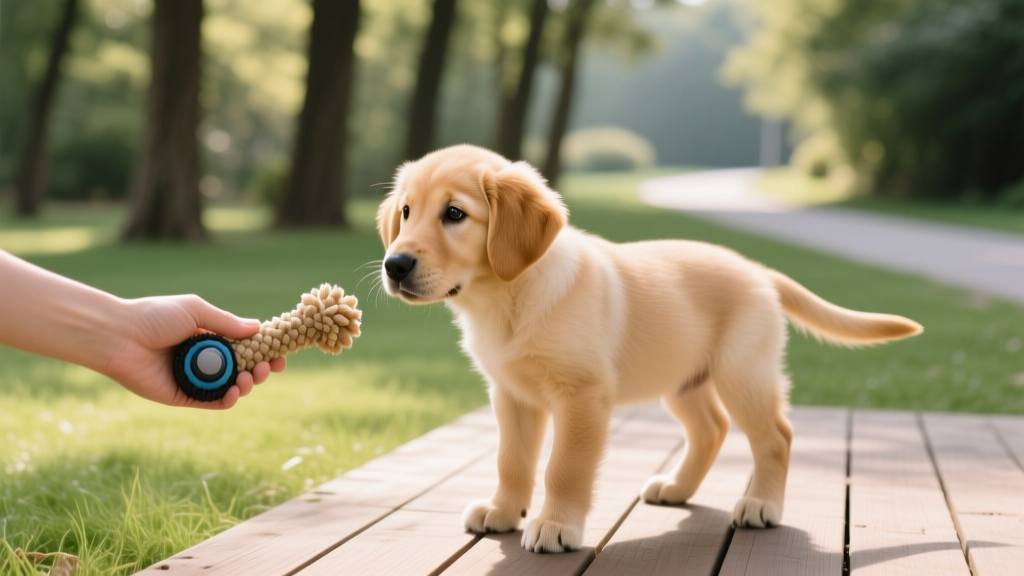
Golden Retriever puppies are mouthy by nature. Bred to carry waterfowl gently in their jaws, these dogs explore the world with their teeth — and when those 28 baby teeth start loosening and 42 adult teeth push through between 3 and 6 months of age, the chewing becomes relentless. Choosing the best puppy teething toys for your Golden isn't just about saving your furniture; it's about managing pain, preventing destructive habits, and channeling a hardwired retrieving instinct into appropriate outlets.
This guide pairs a breed-specific puppy care timeline with concrete teething-toy recommendations, feeding schedules, vaccination milestones, and cost projections so you know exactly what to expect from week 4 through month 12.
When Should I Bring My Golden Retriever Puppy Home?
The American Kennel Club and most veterinary behaviorists recommend waiting until 8 weeks of age minimum. For Golden Retrievers specifically, many responsible breeders keep puppies until 8.5 to 9 weeks because the breed tends to mature slightly slower socially than smaller breeds.
During weeks 4–8 (still with the breeder), your puppy learns bite inhibition from littermates, begins eating gruel-to-kibble transitions, and enters the critical socialization window. Removing a Golden puppy before 7 weeks is associated with higher rates of fear-based reactivity and resource guarding later in life, according to Merck Veterinary Manual.
Golden Retriever Puppy Age Milestones: Week by Week
| Age Range | Weight (approx.) | Key Milestones | What to Expect |
|---|---|---|---|
| Weeks 4–8 | 5–10 lb / 2.3–4.5 kg | Weaning, littermate play, first deworming | Puppy still with breeder; learning bite inhibition from siblings |
| Weeks 8–12 | 10–20 lb / 4.5–9 kg | Home transition, first DHPP vaccine, crate introduction | Peak fear period (8–10 weeks); bonding and gentle socialization critical |
| Weeks 12–16 | 20–30 lb / 9–14 kg | Second and third DHPP boosters, rabies vaccine, potty training solidifies | Confidence grows; leash walking improves; chewing intensifies as baby teeth loosen |
| Weeks 16–24 | 30–50 lb / 14–23 kg | Adult teeth erupt, spay/neuter window opens, advanced socialization | Peak teething discomfort; destructive chewing if not managed; adolescent energy surge |
| 6–12 months | 50–65 lb / 23–29 kg | Adult coat replaces puppy coat, growth plates still open, training refinement | Second fear period (~8–11 months); mouthing decreases but retrieves remain high-drive |
Feeding Schedule: Exact Portions by Age and Weight
Golden Retrievers are large-breed dogs, which means you need a large-breed puppy formula (AAFCO-certified) to control growth rate and reduce hip dysplasia risk. Overfeeding is a bigger danger than underfeeding for this breed.
| Age | Meals Per Day | Approximate Daily Amount | Notes |
|---|---|---|---|
| 8–12 weeks | 3–4 | 1.5–2 cups (150–200 g) | Soften kibble with warm water if puppy struggles; split across 4 meals initially, drop to 3 by week 11 |
| 12–16 weeks | 3 | 2–2.5 cups (200–250 g) | Transition to dry kibble fully; monitor body condition score (BCS) — ribs should be palpable but not visible |
| 4–6 months | 2–3 | 2.5–3.5 cups (250–350 g) | Drop to 2 meals by month 5; increase calories only if puppy is gaining below breed growth curve |
| 6–12 months | 2 | 3–4 cups (300–400 g) | Gradually transition to adult large-breed food at 10–12 months; Goldens are prone to obesity so measure precisely |
Caloric needs vary by individual metabolism and activity. A 15-week-old Golden puppy attending puppy kindergarten twice a week burns more than a sedentary littermate. Use the feeding chart on your food bag as a starting point, then adjust weekly based on BCS. Aim for a score of 4–5 out of 9.
Vaccination Schedule for Golden Retriever Puppies
| Age | Vaccine | Details |
|---|---|---|
| 6–8 weeks | DHPP (1st dose) | Distemper, Hepatitis (Adenovirus), Parainfluenza, Parvovirus — often given by breeder |
| 10–12 weeks | DHPP (2nd dose) + Bordetella | Bordetella (kennel cough) recommended if attending group puppy classes |
| 14–16 weeks | DHPP (3rd dose) + Rabies | Rabies is legally required in all US states; final DHPP booster ensures maternal antibodies no longer interfere |
| 12–16 weeks | Leptospirosis (2-dose series) | Recommended for Goldens who hike, swim in lakes, or live in areas with wildlife exposure |
| 16+ weeks | Lyme disease (optional) | 2-dose series; discuss with your vet based on tick prevalence in your area |
Your veterinarian will determine the exact protocol based on local disease risk. Never skip the final DHPP booster at 14–16 weeks — maternal antibodies can neutralize earlier doses, leaving your puppy unprotected against parvovirus, which has a fatality rate of up to 80% in untreated puppies.
The Socialization Window (Weeks 3–14): Your Golden's Exposure Checklist
Golden Retrievers are famously friendly, but that temperament is only fully realized if the puppy receives structured socialization during the critical window that closes around 14 weeks. After this window, novel stimuli are more likely to trigger fear than curiosity.
- Surfaces: Grass, gravel, tile, hardwood, wet pavement, metal grates, sand
- People: Children (supervised), men with hats/beards, people in wheelchairs, delivery workers, people of diverse appearances
- Sounds: Vacuum cleaner, thunderstorms (play recordings at low volume), doorbell, traffic, fireworks clips
- Objects: Umbrellas opening, plastic bags rustling, bicycles, strollers, skateboards
- Animals: Fully vaccinated adult dogs (1-on-1 playdates), cats (controlled introductions), livestock if rural
- Handling: Paw touching, ear inspection, mouth opening, nail clipping simulation, gentle restraint
- Environments: Car rides, pet store (carry puppy until fully vaccinated), outdoor café patio, friend's house
- Grooming: Brush introduced gently, bath with lukewarm water, blow dryer on low/cool setting
Aim for 3–5 novel positive experiences per day. Pair every new stimulus with high-value treats (small bits of boiled chicken or freeze-dried liver). If your puppy shows fear, increase distance and let them observe before approaching — never force interaction.
Potty Training Timeline: Realistic Expectations for Goldens
Golden Retrievers are generally easier to house-train than many breeds because they're eager to please and respond well to routine. However, "easier" does not mean instant.
| Age | Bladder Capacity | Expected Accidents/Week | Outing Frequency |
|---|---|---|---|
| 8–10 weeks | ~30 minutes | 3–5 | Every 30–45 minutes during the day, plus immediately after meals, naps, and play |
| 10–14 weeks | ~1 hour | 1–3 | Every 60 minutes during active periods |
| 14–20 weeks | ~2 hours | 0–2 | Every 90–120 minutes; overnight stretch of 4–5 hours becomes possible |
| 5–6 months | ~3–4 hours | 0–1 | 4–5 scheduled outings per day; most Goldens are reliably house-trained by this age |
| 6–12 months | ~6–8 hours | 0 | 3–4 outings per day; occasional marking behavior may appear in intact males around 8 months |
Key rule of thumb: A puppy can hold their bladder for roughly one hour per month of age, plus one. A 3-month-old Golden can manage about 4 hours overnight but only 1–2 hours during active daytime hours.
Use enzymatic cleaner (Nature's Miracle or Rocco & Roxie) on every accident — ammonia-based cleaners leave residue that attracts the puppy back to the same spot. If accidents persist past 5 months, consult your vet to rule out a urinary tract infection, which Golden puppies are mildly predisposed to.
Teething Timeline and the Best Puppy Teething Toys for Golden Retrievers
Golden Retriever puppies follow a predictable teething progression, and understanding each phase helps you match the right toy to the right moment.
| Age | What's Happening | Best Puppy Teething Toy Type | Specific Recommendations |
|---|---|---|---|
| 3–4 months | Baby incisors loosen; gums itch and swell | Soft, chilled rubber toys | KONG Puppy (size Small or Medium, chilled in fridge — not freezer); Nylabone Puppy Chew (chicken flavor, XS) |
| 4–5 months | Premolars and canines shed; peak discomfort | Textured rubber with grooves; frozen treat toys | KONG Classic (Medium, red rubber) stuffed with plain yogurt and frozen; Benebone Puppy (Medium, bacon flavor) |
| 5–6 months | Adult molars erupt; jaw strength increases rapidly | Durable nylon and rubber combinations | West Paw Zogoflex Hurley (Medium); Nylabone Dura Chew Power Ring (Medium); Goughnuts Ring (Green/medium — has safety indicator layer) |
| 6–8 months | All 42 adult teeth in; chewing becomes behavioral rather than pain-driven | Retrieving toys that satisfy breed drive | Chuckit! Ultra Ball (Medium); KONG Squeezz Stick; West Paw Jive (Medium) |
- Any toy that fits entirely inside your puppy's mouth is a choking hazard — size up when in doubt.
- Inspect toys daily for chunks breaking off. Golden Retrievers have powerful jaws even as puppies and can destroy "indestructible" claims.
- Avoid rawhide chews for puppies under 6 months — they pose intestinal blockage risk and are difficult to digest.
- Freeze toys in the refrigerator (35–38 °F / 2–3 °C), not the deep freezer, to avoid gum tissue damage.
- Rotate 4–5 toys in a cycle so your puppy doesn't habituate. Store out-of-rotation toys in a sealed bag with a dab of peanut butter (xylitol-free) to maintain novelty appeal.
The reason Golden Retrievers need more teething toy variety than average breeds is their retrieving drive. A teething Golden won't just chew — they'll carry, shake, and dissect. Toys that combine texture (for gum relief) with a fetch-worthy shape (balls, sticks, rings) satisfy both needs simultaneously and reduce the likelihood your puppy redirects that energy toward shoes or baseboards.
Crate Training Progression: Time Limits by Age
Crate training protects your Golden puppy from household hazards and accelerates potty training because dogs instinctively avoid soiling their sleeping area. However, exceeding age-appropriate time limits creates distress and undermines the process.
| Age | Maximum Crate Time (Day) | Maximum Crate Time (Night) | Crate Size Recommendation |
|---|---|---|---|
| 8–10 weeks | 1–1.5 hours | 2–3 hours (expect 1–2 overnight potty breaks) | 36-inch wire crate with divider panel blocking off rear half |
| 10–14 weeks | 1.5–2 hours | 3–4 hours | Same crate, move divider to allow more space as puppy grows |
| 14–20 weeks | 2–3 hours | 5–6 hours | Gradually open divider fully; puppy should be able to stand, turn, and lie stretched out |
| 5–8 months | 3–4 hours | 7–8 hours | Full 42-inch crate (adult Golden size); add a raised cot-style bed if puppy chews fabric beds |
Make the crate a positive space: feed meals inside with the door open, hide treats in the bedding, and use a stuffed KONG as a "crate only" toy. Never use the crate as punishment. If your Golden puppy whines after being settled and having eliminated, they likely need more daytime exercise and mental enrichment before crating, not less crate time.
Common Golden Retriever Puppy Problems and Solutions
Puppy Biting and Nipping
Golden Retrievers are among the most mouthy breeds as puppies — it's genetic, not a behavioral flaw. Their soft-mouthed retrieve instinct means they carry things constantly, and when no toy is available, hands and ankles become substitutes.
Protocol:
- When teeth touch skin, emit a brief, calm "ouch" and immediately withdraw attention (stand up, cross arms, look away) for 10–15 seconds.
- Redirect to an appropriate chew toy the moment puppy re-engages. Praise calmly when teeth contact toy.
- If nipping persists in a session, end play and offer a frozen KONG — overstimulated puppies bite harder.
- Provide at least 15 minutes of structured retrieve games daily using a soft puppy bumper or rolled sock to satisfy the oral fixation.
Never hold the puppy's mouth shut, tap their nose, or use physical punishment. These methods increase fear-based biting and damage the trust foundation. Bite inhibition typically improves significantly by 16–20 weeks with consistent redirection.
Whining in the Crate at Night
Expect 2–4 nights of protest whining when you first bring your Golden home. Place the crate in your bedroom so the puppy can smell and hear you. A Snuggle Puppy (with heartbeat simulator) or a t-shirt you've slept in draped over the crate reduces separation anxiety. Only respond to whining after 3–5 minutes of silence — otherwise you teach that crying opens the door.
Destructive Chewing Beyond Teething
If your 7-month-old Golden is still shredding furniture after adult teeth have erupted, the problem is usually insufficient exercise, not teething pain. Adolescent Goldens need 45–60 minutes of structured activity daily — walks, fetch sessions, swimming, and puzzle feeders. A tired Golden is a well-behaved Golden.
First-Year Cost Breakdown for a Golden Retriever Puppy
| Category | Low Estimate | Mid Estimate | High Estimate |
|---|---|---|---|
| Puppy purchase (responsible breeder) | $2,000 | $3,000 | $4,500 |
| Veterinary (vaccines, spay/neuter, wellness exams, fecal tests, heartworm prevention) | $800 | $1,200 | $1,800 |
| Food (large-breed puppy formula, 12 months) | $400 | $600 | $900 |
| Supplies (crate, bed, leash, collar, bowls, gates, grooming tools, teething toys) | $300 | $500 | $800 |
| Training (group puppy class + 1 follow-up session) | $200 | $400 | $700 |
| Pet insurance (annual premium) | $400 | $600 | $900 |
| Emergency fund buffer (recommended savings) | $500 | $1,000 | $2,000 |
| Total first year | $4,600 | $7,300 | $11,600 |
Golden Retrievers carry elevated risk for hip dysplasia (estimated 20% prevalence per the Orthopedic Foundation for Animals), elbow dysplasia, and certain cardiac conditions. Pet insurance purchased at 8–10 weeks (before any pre-existing conditions are documented) typically costs $40–$75/month and can save thousands if orthopedic surgery becomes necessary later in life.
Frequently Asked Questions
When can my Golden Retriever puppy go outside and meet other dogs?
You can carry your puppy in public (parks, outdoor cafés, friends' homes) immediately after bringing them home at 8 weeks — socialization shouldn't wait for full vaccination. However, avoid setting them on ground where unknown dogs have eliminated until 7 days after their final DHPP booster (usually around 16–17 weeks). One-on-one playdates with known, fully vaccinated dogs in private yards are safe from 8 weeks onward. Group puppy classes are generally safe if all attendees are age-appropriately vaccinated and the facility disinfects between sessions.
How often should I feed my 10-week-old Golden Retriever puppy?
At 10 weeks, feed 3 to 4 meals per day, totaling approximately 1.5–2 cups of large-breed puppy kibble. Split the daily portion evenly across meals. Transition from 4 meals to 3 around week 11 as your puppy's stomach capacity increases.
How do I stop my Golden puppy from biting my children?
Supervise every interaction. Teach children to freeze ("be a tree") when the puppy mouths them rather than squealing and running, which triggers chase instinct. Provide the puppy with a frozen teething toy before play sessions. Enforce mandatory nap times — puppies that are awake for more than 90 minutes straight become overstimulated and bite harder. Most Golden Retrievers naturally soften their mouths by 5–6 months with consistent redirection.
Are raw bones safe for teething Golden Retriever puppies?
Raw meaty bones (raw chicken necks, raw turkey wings) are used by some raw-feeding owners, but they carry risks for puppies under 6 months: fractured deciduous teeth, choking, and bacterial contamination (Salmonella, Campylobacter). Cooked bones are never safe — they splinter. The FDA warns about bone treats causing intestinal obstruction. For teething relief, frozen rubber toys like the KONG Puppy are significantly safer and equally effective at soothing inflamed gums.
When will my Golden Retriever puppy be fully potty trained?
Most Golden Retrievers are reliably house-trained by 5–6 months with a consistent schedule. "Reliably" means fewer than one accident per month. Full reliability (zero accidents for 3+ consecutive months) typically occurs by 7–8 months. Males may begin lifting a leg and scent-marking around 8–10 months if intact — this is hormonal, not a house-training failure, and responds to increased outing frequency and neutering discussion with your vet.
What vaccines does my Golden Retriever puppy need and when?
Core vaccines: DHPP at 6–8 weeks, 10–12 weeks, and 14–16 weeks; Rabies at 14–16 weeks. Lifestyle vaccines based on exposure risk: Bordetella (10–12 weeks, for group classes), Leptospirosis (12–16 weeks, 2-dose series, for outdoor/swimming dogs), and Lyme disease (16+ weeks, for tick-endemic areas). Your veterinarian will tailor the protocol to your region and your puppy's lifestyle.
- Vomiting or diarrhea lasting more than 12 hours (dehydration risk is extreme in puppies)
- Refusal to eat for more than one meal
- Lethargy lasting more than a few hours
- Bloody stool or dark tarry stool
- Difficulty breathing or persistent coughing
- Swelling, redness, or discharge at a vaccine injection site lasting more than 48 hours
- Ingestion of a foreign object (toy piece, sock, rock) — contact ASPCA Animal Poison Control at (888) 426-4435 (24/7, consultation fee applies) or your emergency vet immediately
Raising a Golden Retriever puppy is a significant investment of time, money, and patience — but the payoff is a gentle, trainable companion for the next 10–12 years. Stock up on the right teething toys before those baby teeth start falling, stick to a consistent feeding and potty schedule, and prioritize socialization during that narrow but transformative 8–14 week window. When in doubt about any health concern, consult your veterinarian rather than relying on internet advice alone.
Beth Carrasco
All our authors care for dogs every day — read more of their work on the authors page.