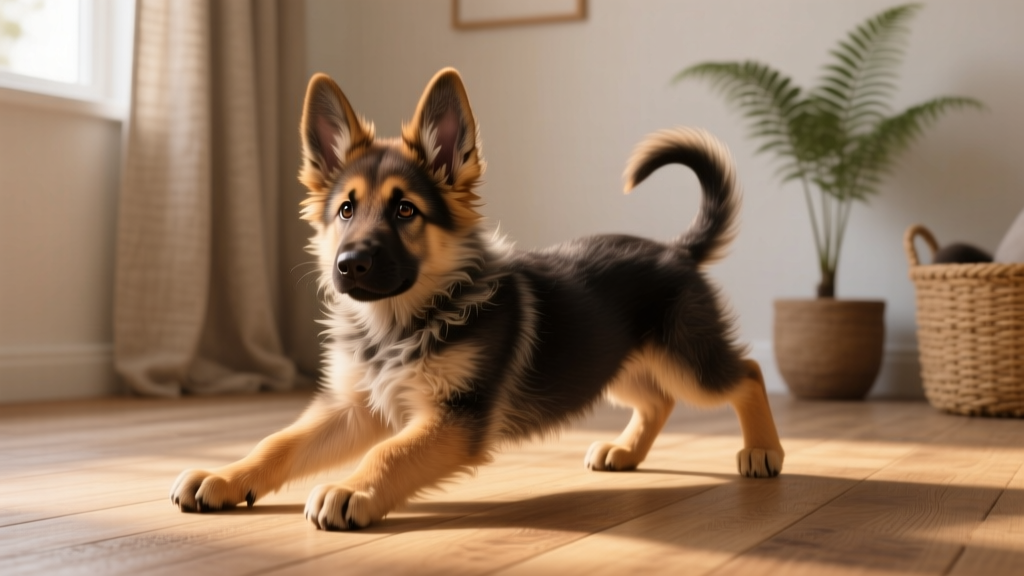
50 Best Female Puppy Names for 2026: Popular, Unique & Meaningful Picks
Discover the top female puppy names for 2026, including popular, unique, and meaningful picks.

Top Female Puppy Names for 2026: What's Trending
Naming your new puppy is one of the first and most exciting decisions you'll make as a dog owner. Based on registration data from the American Kennel Club and trends from pet insurance databases like Rover and Trupanion, the most popular female puppy names in 2026 continue to blend human-style favorites with nature-inspired and pop-culture picks. Whether you've just brought home a Golden Retriever, a French Bulldog, or a mixed-breed rescue, this guide gives you curated name lists plus the puppy care framework you need for those critical first months.
Top 10 Most Popular Female Puppy Names
| Rank | Name | Origin / Meaning |
|---|---|---|
| 1 | Luna | Latin — "Moon" |
| 2 | Bella | Italian — "Beautiful" |
| 3 | Daisy | English — Day's eye (flower) |
| 4 | Lucy | Latin — "Light" |
| 5 | Stella | Latin — "Star" |
| 6 | Willow | English — Graceful tree |
| 7 | Coco | French — Chocolate / chic |
| 8 | Ruby | Latin — Red gemstone |
| 9 | Roxy | Persian — "Dawn, little star" |
| 10 | Sadie | Hebrew — "Princess" |
Unique & Uncommon Female Puppy Names
If you want a name that stands out at the dog park, consider these less-common but highly usable options:
- Zuri — Swahili for "beautiful"
- Mabel — Latin for "lovable"
- Indie — Short for independent or India
- Pepper — Perfect for a black, white, or speckled coat
- Nola — Short for New Orleans or Irish "white shoulder"
- Tansy — A golden wildflower
- Juniper — Nature-inspired, nickname "June"
- Bridie — Scottish diminutive of Brigid
- Callie — Greek for "beautiful"
- Ember — Warm and glowing, great for red-coated breeds
Breed-Inspired Female Puppy Names
Matching the name to breed heritage adds a meaningful layer:
| Breed | Suggested Female Names | Rationale |
|---|---|---|
| German Shepherd | Freya, Athena, Kira | Strong, noble Germanic/Greek origins |
| French Bulldog | Céleste, Margot, Bijou | French elegance suits the breed |
| Golden Retriever | Sunny, Honey, Marigold | Warm tones match golden coats |
| Siberian Husky | Yuki, Aurora, Nova | Northern/winter-themed names |
| Australian Shepherd | Sydney, Matilda, Wattle | Aussie cultural references |
| Labrador Retriever | River, Scout, Maple | Outdoorsy, adventurous feel |
Choosing the Right Name: A Practical Framework
Beyond aesthetics, the name you pick affects training efficiency and daily communication. Here's a decision framework used by certified dog trainers:
- Say it out loud 10 times. Can you call it across a park without feeling self-conscious?
- Test the "back door" test. Imagine calling this name from your back door at 7 AM. Does it roll off the tongue?
- Check for command confusion. Names like "Ray" (sounds like "stay"), "Bo" (sounds like "no"), or "Kit" (sounds like "sit") create training friction.
- Consider the nickname potential. Penelope becomes "Penny." Is the short version also a name you love?
- Live with it for 48 hours. Before finalizing, use the name for two days with your puppy to see if it fits.
Puppy Milestone Timeline: What to Expect Month by Month
Once you've picked the perfect name, you need a roadmap for your puppy's development. Here's a breed-general milestone guide covering the critical first year. Always consult your veterinarian for breed-specific adjustments — a Great Dane puppy develops very differently from a Chihuahua.
Age-Specific Milestones
Weeks 4–8 (Still with Breeder/Foster):
- Baby teeth fully erupted; weaning from mother's milk to softened kibble
- First socialization with littermates — learning bite inhibition
- Eyes and ears fully functional; responding to sounds and movement
- Beginning to form attachments to humans
Weeks 8–12 (Coming Home):
- Primary fear period (8–11 weeks) — avoid traumatic experiences
- Can learn name recognition within 3–5 days of consistent use
- Bladder capacity: approximately 1 hour per month of age (so ~2 hours max)
- Sleeping 18–20 hours per day is completely normal
Weeks 12–16:
- Second fear period may emerge around 12 weeks
- Can hold bladder for ~3 hours during the day
- Basic commands (sit, come, name recognition) can be reliably taught
- Chewing intensifies as adult teeth begin to loosen baby teeth
Weeks 16–24 (4–6 months):
- Active teething phase — expect increased chewing and drooling
- May begin testing boundaries; consistency in training is critical
- Can hold bladder 4–5 hours during the day
- Spay/neuter surgery typically scheduled around 6 months (consult your vet)
Months 6–12:
- "Teenage" phase — regression in training is normal and temporary
- Most adult teeth in by 7 months; chewing should decrease
- Approaching full height (small breeds mature faster; giant breeds continue growing to 18–24 months)
- First estrus cycle possible in intact females as early as 6 months
Feeding Schedule: Portions by Age and Weight
Proper nutrition during puppyhood sets the foundation for lifelong health. The following schedule assumes an AAFCO-approved, complete-and-balanced puppy food. Exact portions vary by brand — always check the feeding guide on your specific kibble and adjust based on your puppy's body condition score (BCS).
| Puppy Age | Meals Per Day | Approximate Daily Portion (Medium Breed, 30–50 lb Adult) | Notes |
|---|---|---|---|
| 8–12 weeks | 4 meals | 1.0–1.5 cups total | Soften kibble with warm water if needed |
| 12–16 weeks | 3 meals | 1.25–1.75 cups total | Transition to dry kibble |
| 4–6 months | 3 meals | 1.5–2.25 cups total | Monitor BCS; adjust for activity level |
| 6–9 months | 2 meals | 1.75–2.5 cups total | Transition to 2x/day feeding |
| 9–12 months | 2 meals | 2.0–2.75 cups total | Small breeds may transition to adult food; large breeds stay on puppy formula to 12–18 months |
Vaccination Schedule: Core and Non-Core Protection
Your puppy's immune system is still developing, making timely vaccinations essential. The American Veterinary Medical Association (AVMA) and the AAHA canine vaccine guidelines recommend the following core schedule:
| Age | Vaccine(s) | Type | Notes |
|---|---|---|---|
| 6–8 weeks | DHPP (Distemper, Hepatitis, Parainfluenza, Parvovirus) — 1st dose | Core | Often given by breeder/rescue |
| 10–12 weeks | DHPP — 2nd dose; Bordetella (optional) | Core + Non-core | Bordetella recommended if attending puppy classes or boarding |
| 14–16 weeks | DHPP — 3rd dose; Rabies | Core | Rabies required by law in most US states |
| 12–16 months | DHPP booster; Rabies booster | Core | Then every 1–3 years per vet recommendation |
Non-core vaccines your vet may recommend based on lifestyle: Leptospirosis, Lyme disease, and Canine Influenza (H3N2/H3N8). Discuss your puppy's specific risk factors — hiking in tick-endemic areas, boarding frequency, and regional disease prevalence all factor in.
Socialization Window: The Critical Weeks 3–14
The AKC emphasizes that the primary socialization window closes around 14 weeks. What your puppy experiences (positively) during this period shapes their lifelong temperament. Here's a structured exposure checklist:
Socialization Checklist (Weeks 3–14)
People (aim for 10+ diverse encounters):
- ☐ Children of various ages (supervised)
- ☐ Men with facial hair, hats, deep voices
- ☐ People wearing sunglasses, uniforms, hoodies
- ☐ People using mobility aids (wheelchairs, crutches, canes)
- ☐ People of different ethnicities and body types
Surfaces & Environments:
- ☐ Gravel, grass, sand, wet pavement, metal grates
- ☐ Car rides (short trips, positive association with treats)
- ☐ Elevators, automatic doors, revolving doors
- ☐ Stairs (carried up/down if joints still developing)
Sounds (pair with treats for positive association):
- ☐ Thunder, fireworks (use recorded audio at low volume)
- ☐ Vacuum cleaner, blender, doorbell
- ☐ Traffic noise, sirens, construction sounds
Other Animals:
- ☐ Fully vaccinated, friendly adult dogs (controlled introductions)
- ☐ Cats (if household has them; supervised)
- ☐ Observe livestock from a distance if rural
Handling Exercises:
- ☐ Paw handling (prep for nail trims)
- ☐ Ear inspection, mouth opening
- ☐ Gentle restraint (prep for vet exams)
- ☐ Brushing with soft brush
Potty Training Timeline and Troubleshooting
Realistic expectations prevent frustration. Here's what the timeline actually looks like:
| Age | Expected Bladder Hold Time | Accident Frequency | Milestone |
|---|---|---|---|
| 8–10 weeks | 1–2 hours | Multiple per day | Learning the concept of "outside = potty" |
| 10–14 weeks | 2–3 hours | 1–3 per day | Beginning to signal (sniffing, circling, whining) |
| 3–4 months | 3–4 hours | 0–2 per day | More reliable signaling; overnight holds of 5–6 hours |
| 4–6 months | 4–6 hours | 0–1 per week | Mostly reliable with consistent schedule |
| 6–12 months | 6–8 hours | Rare (regression possible during stress) | Fully reliable for most breeds |
Potty Training Troubleshooting
Problem: Puppy pees inside right after coming back in from outside.
Solution: Your puppy didn't actually empty their bladder outside. Stay out longer (5–10 minutes), use a consistent verbal cue ("go potty"), and reward immediately after elimination — not after they come inside.
Problem: Puppy only pees in the crate.
Solution: The crate may be too large (dogs avoid soiling their sleeping area, but excess space creates a "bathroom corner"). Use a divider to size it correctly — just enough room to stand, turn, and lie down. Also rule out a urinary tract infection with your vet.
Problem: Puppy has sudden regression after weeks of success.
Solution: Rule out medical causes first (UTI, parasites). Then assess environmental changes — new schedule, new household member, stress, or simply a developmental leap. Return to basics: increase potty break frequency and reward heavily.
Teething Timeline and Safe Relief Strategies
Puppies have 28 deciduous (baby) teeth that begin erupting at 3–4 weeks and are typically all in by 6–8 weeks. The teething replacement process follows this timeline:
- 3–4 months: Incisors begin to loosen and fall out
- 4–5 months: Canines and premolars shed
- 5–7 months: All 42 adult teeth should be fully erupted
Safe Chew Recommendations by Stage
| Stage | Recommended Chews | Avoid |
|---|---|---|
| 8–12 weeks | Soft rubber toys (Kong Puppy), frozen wet washcloth, soft rope toys | Hard nylon, antlers, raw bones |
| 3–5 months | Kong Classic (frozen with peanut butter), Benebone Puppy, carrot sticks | Cooked bones (splinter risk), ice cubes (tooth fracture risk) |
| 5–7 months | Bully sticks (supervised), medium-hard rubber toys, dental chews sized for breed | Rawhide (choking/digestive risk), hooves, hard plastic |
Crate Training Progression
Crate training, done correctly, gives your puppy a safe den and accelerates potty training. Follow this age-appropriate progression:
| Age | Max Daytime Crate Duration | Overnight Duration | Training Focus |
|---|---|---|---|
| 8–10 weeks | 30–60 minutes | 2–3 hours (set alarm for potty break) | Positive association: meals in crate, treats for entering |
| 10–14 weeks | 1–2 hours | 3–4 hours | Building duration; practice leaving the room briefly |
| 3–4 months | 2–3 hours | 5–6 hours | Adding distance — leave the house for short errands |
| 4–6 months | 3–4 hours | 6–8 hours | Most puppies can hold overnight; phase out alarm |
| 6+ months | 4–5 hours max | 7–8 hours | Crate becomes optional safe space; door left open during day |
Never use the crate as punishment. The crate should always be associated with safety, rest, and positive experiences. If your puppy cries, wait for a brief pause in vocalization before releasing — releasing mid-cry teaches that crying opens the door.
Common Puppy Problems and Solutions
Puppy Biting and Nipping
All puppies mouth and bite — it's how they explore the world and relieve teething discomfort. Here's how to manage it using positive reinforcement:
- Redirect: When teeth touch skin, immediately offer an appropriate chew toy. Praise enthusiastically when they bite the toy instead.
- "Ouch" method: Let out a high-pitched "Ow!" and withdraw attention (stand up, turn away) for 10–15 seconds. This mimics littermate behavior.
- Time-ins, not time-outs: If biting escalates, your puppy is likely overtired. Guide them to their crate for a nap — most puppies need 16–20 hours of sleep per day at 8–12 weeks.
- Never use physical punishment. Alpha rolls, muzzle grabbing, or hitting damage trust and can increase fear-based aggression. The ASPCA and veterinary behaviorists universally recommend force-free methods.
Whining and Crying
Context determines the response:
- Crate whining at night: If potty needs are met, wait for a pause before responding. Comforting mid-whine reinforces the behavior.
- Attention whining during the day: Ignore completely (no eye contact, no talking). Reward the moment they're quiet for 5+ seconds.
- Whining with physical signs (hunched posture, straining): Could indicate pain, GI distress, or urinary issues. Contact your vet.
Destructive Chewing
Puppies chew to explore and relieve teething pain. Management is key:
- Puppy-proof your home: shoes in closets, cords behind furniture, toxic plants removed (check the ASPCA toxic plant list)
- Rotate toys every 2–3 days to maintain novelty
- Provide 3–5 appropriate chew options at all times
- Supervise or confine — unsupervised puppies will find something to destroy
First-Year Cost Breakdown
Budgeting for a puppy's first year helps avoid surprises. Here's a realistic 2026 cost estimate for a medium-breed puppy:
| Category | Low Estimate | Mid Estimate | High Estimate | Details |
|---|---|---|---|---|
| Veterinary (vaccines, exams, spay/neuter) | $600 | $1,000 | $1,800 | Includes initial series, rabies, heartworm test, fecal exams |
| Food (puppy formula) | $300 | $500 | $900 | Varies by brand quality and breed size |
| Supplies (crate, bed, leash, bowls, toys) | $200 | $400 | $700 | One-time purchases; quality gear lasts years |
| Training (group classes, private sessions) | $100 | $300 | $800 | Puppy kindergarten ($100–$200) + follow-up classes |
| Preventive medications (heartworm, flea/tick) | $200 | $350 | $500 | Monthly preventives year-round |
| Pet insurance (optional but recommended) | $300 | $500 | $750 | $25–$65/month depending on breed and coverage |
| Grooming (breed-dependent) | $0 | $300 | $900 | Short-coated breeds: $0; Poodles/Doodles: $50–$75/session |
| TOTAL FIRST YEAR | $1,700 | $3,350 | $6,350 | Excludes purchase/adoption fee |
Frequently Asked Questions About Female Puppies
When should I bring my puppy home?
The ideal age to bring a puppy home is 8–10 weeks. Puppies need to stay with their mother and littermates until at least 8 weeks for critical social development. Some breeders of toy breeds (Chihuahuas, Yorkshire Terriers) prefer to keep puppies until 10–12 weeks due to their fragility and risk of hypoglycemia.
How often should I feed my puppy?
At 8–12 weeks: 4 meals per day. At 12–16 weeks: 3 meals per day. At 6 months and beyond: 2 meals per day. Never free-feed (leave food out all day) — scheduled meals help with potty training predictability and allow you to monitor appetite changes, which are early indicators of illness.
When will my puppy be fully potty trained?
Most puppies are reliably house-trained by 4–6 months, though small breeds (with proportionally smaller bladders) may take 6–8 months. "Fully reliable" — meaning zero accidents even under stress or schedule changes — typically takes until 9–12 months. Consistency is the single biggest factor in speed of training.
What vaccines does my puppy need and when?
Core vaccines: DHPP at 6–8, 10–12, and 14–16 weeks, plus Rabies at 14–16 weeks. Non-core vaccines (Bordetella, Leptospirosis, Lyme, Canine Influenza) depend on your puppy's lifestyle and regional risk. Your veterinarian will create a customized protocol based on your location and your dog's expected activities.
How do I stop puppy biting and nipping?
Redirect to appropriate chews, use the "Ouch!" withdrawal method, and ensure your puppy is getting enough sleep (16–20 hours/day for young puppies). Biting typically peaks around 12–16 weeks during teething and gradually decreases with consistent redirection. If biting is intense, frequent, or accompanied by growling and stiff body posture, consult a certified professional dog trainer or veterinary behaviorist.
When can my puppy go outside and meet other dogs?
Your puppy can explore your own yard (if no unknown dogs have access) immediately. For public spaces and meeting unfamiliar dogs, wait until at least 7 days after their second DHPP vaccine (around 12 weeks). Full protection comes after the 16-week DHPP. Controlled playdates with known, fully-vaccinated dogs are safe earlier and critical for socialization.
Does my female puppy's name affect her training?
Indirectly, yes. Short, clear names with a hard consonant start (like "Kira," "Bella," or "Daisy") are easier for dogs to distinguish from background noise. Names that rhyme with commands create confusion. The name itself doesn't determine trainability, but how consistently and positively you use it builds your puppy's recall response.
Jonas Cole
All our authors care for dogs every day — read more of their work on the authors page.