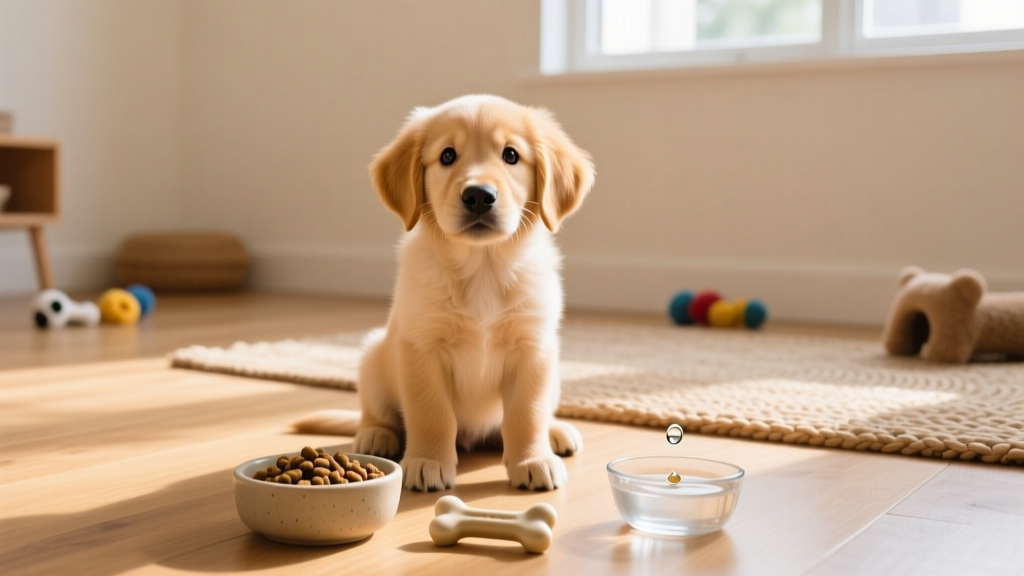
Bernese Mountain Puppy Price & First-Year Cost Guide: What to Budget
Discover the true Bernese Mountain puppy price in 2026 plus first-year costs, feeding schedules, milestones, and expert puppy care tips.

If you're researching the Bernese Mountain puppy price, you've probably noticed a wide range of numbers online. The initial purchase is just the beginning — large-breed puppies like the Bernese Mountain Dog come with substantial first-year expenses that many new owners underestimate. This guide breaks down exactly what you'll spend, when, and how to prepare for every developmental milestone from 8 weeks through the first year.
The Real Bernese Mountain Puppy Price: What You'll Pay in 2026
Bernese Mountain Dog puppies from AKC-registered responsible breeders typically cost between $2,500 and $5,000 in 2026. Puppies from champion show lines or breeders who complete full OFA health testing panels (hips, elbows, cardiac, eyes, and DNA for degenerative myelopathy) often command $4,000–$7,500. Adoption through breed-specific rescues like the Bernese Mountain Dog Club of America's rescue network generally runs $500–$1,200.
First-Year Total Cost Breakdown
| Category | Estimated Cost | Notes |
|---|---|---|
| Puppy purchase | $2,500–$7,500 | Varies by breeder reputation, lineage, region |
| Veterinary (wellness + vaccines) | $600–$1,100 | Includes spay/neuter ($400–$700 for giant breeds) |
| Food (large-breed puppy formula) | $700–$1,200 | Berners eat 4–8 cups/day as adolescents |
| Supplies (crate, bed, leash, bowls) | $350–$600 | XL crate required — 48" minimum |
| Training (puppy class + private) | $300–$800 | Group classes + 2–4 private sessions recommended |
| Preventive medications | $350–$600 | Heartworm, flea/tick — weight-based dosing increases cost |
| Pet insurance (optional) | $600–$1,000 | $50–$85/month; strongly recommended for this breed |
| Total first year | $5,400–$12,800+ | Excludes emergency vet visits |
Bernese Mountain Dogs are predisposed to several expensive conditions — including histiocytic sarcoma, hip and elbow dysplasia, and gastric dilatation-volvulus (bloat). Emergency surgery for bloat alone can cost $3,000–$7,000. This is why pet insurance from puppyhood is strongly recommended for the breed.
Bringing Your Bernese Puppy Home: Timing and the First 48 Hours
When should you bring your puppy home? No earlier than 8 weeks of age, and many reputable Bernese breeders prefer to keep puppies until 9–10 weeks. This breed matures slowly, and the extra time with littermates teaches crucial bite inhibition and canine social skills. The AVMA recommends puppies remain with their mother until at least 8 weeks.
Prepare a 48" wire crate (the MidWest Homes iCrate or Frisco double-door are reliable options for growing giant breeds) with a washable bed, and set up a confined puppy zone using exercise pens. Bernese puppies are prone to separation anxiety — place the crate near your bedroom for the first two weeks so your puppy can hear and smell you at night.
Crate Training Progression by Age
| Age | Max Crate Time (daytime) | Overnight | Tips |
|---|---|---|---|
| 8–10 weeks | 30–60 minutes | 2–3 hours (expect potty breaks) | Feed meals in crate; cover with light blanket |
| 10–12 weeks | 1–2 hours | 3–4 hours | Add a stuffed Kong for quiet time |
| 3–4 months | 2–3 hours | 5–6 hours | Begin closing crate during short absences |
| 5–6 months | 3–4 hours | 6–8 hours | Transition to larger crate section if using divider |
| 7–12 months | 4–6 hours | 8 hours | Many Berners earn free-roam privileges by 12–18 months |
Age-Specific Milestones: What to Expect Month by Month
Weeks 4–8 (Still with Breeder)
Your puppy is learning from littermates and their dam during this period. Responsible breeders begin early neurological stimulation (ENS), introduce varied surfaces, start basic house-training routines, and expose puppies to household sounds. You should receive documentation of the first deworming and possibly the first DHPP vaccine at 6–8 weeks.
Weeks 8–12: The Adjustment Period
Expect clinginess, nighttime whining, and frequent potty accidents. Your Bernese puppy will sleep 18–20 hours per day. Keep play sessions to 10–15 minutes to prevent overtiredness, which triggers the notorious Bernese "puppy zoomies" and nipping fits. Begin hand-feeding portions of meals to build focus and discourage resource guarding.
Weeks 12–16: Confidence Building
Your puppy's personality emerges. Bernese puppies are typically soft-tempered and sensitive — harsh corrections will damage trust. Use positive reinforcement exclusively. This is prime time for puppy kindergarten classes (force-free, reward-based). Expect a brief fear period around 12–14 weeks where previously confident puppies may suddenly seem startled by familiar objects.
Weeks 16–24: Rapid Growth Phase
Your Berner will gain 3–5 pounds per week during peak growth. Joint-friendly exercise is critical: the general guideline is 5 minutes of structured walking per month of age, twice daily (so a 4-month-old gets 20-minute walks). Avoid forced running, jumping from heights, or repetitive stair climbing — Bernese Mountain Dogs are predisposed to elbow and hip dysplasia, and excessive impact on growing growth plates worsens risk.
Months 6–12: Adolescence
Expect selective hearing, renewed chewing, and testing of boundaries. Males may begin marking; females typically experience their first heat cycle between 8–14 months (discuss spay timing with your veterinarian — many orthopedic specialists now recommend delaying spay/neuter until 12–18 months in giant breeds to allow growth plate closure). Your Berner will reach 70–80% of adult weight by 8 months but won't fill out fully until 2.5–3 years.
Feeding Your Bernese Mountain Puppy: Schedule and Portions
How often should you feed your puppy at each age? Giant-breed puppies need a controlled-growth diet to prevent orthopedic disease. Choose a food that meets AAFCO guidelines for large-breed growth (calcium restricted to 1.2% or less on a dry matter basis). Recommended options include Royal Canin Giant Puppy, Purina Pro Plan Large Breed Puppy, or Hill's Science Diet Large Breed Puppy.
| Age | Meals Per Day | Approximate Daily Amount | Expected Weight Range |
|---|---|---|---|
| 8–12 weeks | 3–4 meals | 2–3 cups total | 15–25 lb / 7–11 kg |
| 3–4 months | 3 meals | 3–4.5 cups total | 25–45 lb / 11–20 kg |
| 5–6 months | 2–3 meals | 4–6 cups total | 45–65 lb / 20–29 kg |
| 7–9 months | 2 meals | 5–7 cups total | 65–85 lb / 29–39 kg |
| 10–12 months | 2 meals | 5–8 cups total | 75–100 lb / 34–45 kg |
These amounts are starting estimates. Monitor your puppy's body condition score (BCS) — you should be able to feel ribs without pressing hard, and see a slight waist tuck from above. Adjust portions up or down by 10–15% based on condition. Always use a slow-feeder bowl or puzzle feeder; Bernese Mountain Dogs are at elevated risk for bloat, and rapid eating is a known risk factor.
Vaccination Schedule for Your Bernese Mountain Puppy
What vaccines does your puppy need and when? The Merck Veterinary Manual outlines core and non-core vaccines based on lifestyle and regional disease prevalence. Your veterinarian will tailor this schedule, but expect the following framework:
| Age | Vaccines Administered | Type |
|---|---|---|
| 6–8 weeks | DHPP (Distemper, Hepatitis, Parainfluenza, Parvovirus) — 1st dose | Core |
| 10–12 weeks | DHPP — 2nd dose; Bordetella (optional, based on socialization needs) | Core + Non-core |
| 14–16 weeks | DHPP — 3rd dose; Rabies (required by law in most states) | Core |
| 12–16 weeks (varies) | Leptospirosis — 2-dose series, 2–4 weeks apart | Non-core (recommended for outdoor dogs) |
| 12+ weeks | Lyme disease — 2-dose series (tick-endemic areas) | Non-core |
When can your puppy go outside and meet other dogs? Until your puppy completes the DHPP series (typically around 16 weeks), avoid high-traffic dog areas like dog parks, pet store floors, and unvaccinated dog environments. However, socialization is time-sensitive — carry your puppy to outdoor cafes, visit friends with fully vaccinated dogs, and attend structured puppy classes where vaccination proof is required. The American Veterinary Society of Animal Behavior recommends socialization begin before full vaccination due to the critical developmental window closing at 14–16 weeks.
Socialization Window: Weeks 3–14 (Critical Period)
The primary socialization window for puppies closes between 12–14 weeks. Bernese Mountain Dogs are naturally gentle but can develop shyness or fear-based reactivity without deliberate exposure. Aim for 100 positive new experiences before 14 weeks — not forced interactions, but calm, treat-paired exposures.
Bernese Puppy Socialization Checklist
- ✓ Men wearing hats, helmets, sunglasses
- ✓ Children of various ages (supervised)
- ✓ Wheelchairs, walkers, strollers
- ✓ Vacuum cleaner, blender, doorbell sounds
- ✓ Car rides (short, positive — end at park or treat stop)
- ✓ Wet grass, gravel, metal grates, sand
- ✓ Umbrellas opening/closing
- ✓ Other vaccinated, calm adult dogs
- ✓ Nail trims (handle paws daily from week 8)
- ✓ Grooming table, brush, dryer (low setting)
- ✓ Veterinary clinic visits (happy visits — no shots, just treats)
- ✓ Being gently restrained (preps for vet exams)
- ✓ Different floor surfaces: tile, hardwood, carpet
- ✓ People of various ethnicities, heights, body types
- ✓ Bicycles, skateboards at a distance (pair with treats)
Keep a socialization log: note the date, stimulus, your puppy's reaction (confident/cautious/fearful), and what you did. This helps you identify gaps and track progress. Any fearful response should be addressed with counter-conditioning — pair the scary thing with high-value treats at a distance where your puppy remains comfortable, then gradually decrease distance over multiple sessions.
Potty Training Timeline: Realistic Expectations
When will your puppy be fully potty trained? Most Bernese Mountain Dogs achieve reliable house training between 5–7 months of age, though some take up to 9 months. Giant breeds mature more slowly than small breeds, and bladder control develops gradually. "Trained in 3 days" claims are unrealistic for any breed, especially giant-breed puppies.
Potty Training Schedule by Age
| Age | Outdoor Trips Per Day | Expected Bladder Hold Time | Accident Frequency |
|---|---|---|---|
| 8–10 weeks | Every 30–60 minutes | 30–60 minutes | Multiple daily — normal |
| 10–14 weeks | Every 60–90 minutes | 1–2 hours | 1–3 per week if on schedule |
| 3–5 months | Every 2 hours + after meals/naps | 2–4 hours | Occasional — regressions normal |
| 5–7 months | Every 3–4 hours | 4–6 hours | Rare if consistent |
Troubleshooting common issues: If your Berner puppy has frequent accidents despite a consistent schedule, rule out urinary tract infection with your veterinarian. For submissive urination (common in soft-tempered breeds like the Bernese), avoid direct eye contact and greetings that are too enthusiastic — greet calmly, crouch sideways, and take the puppy outside immediately upon arrival. Never punish accidents; clean with enzymatic cleaner (Nature's Miracle or Rocco & Roxia) to remove scent markers.
Teething Timeline and Relief Strategies
Bernese Mountain puppies begin losing baby teeth around 3.5–4 months, with adult teeth fully in by 6–7 months. Expect increased chewing, drooling, and occasional blood on toys during this period. This breed's powerful jaws mean you need durable, safe options:
- Kong Classic (red or black, size L/XL): Stuff with soaked kibble, plain yogurt, and banana; freeze for longer-lasting relief
- Benebone Wishbone (large): Nylon chew with ridges for gum massage — replace when significantly worn
- Frozen washcloth: Soak in water, twist, freeze — supervised use only, remove when pieces tear off
- Yak cheese chews: Long-lasting and digestible; microwave small end pieces into puffs to prevent choking
- West Paw Toppl: Puzzle toy that soothes gums while providing mental enrichment
Avoid rawhide (choking and blockage risk), cooked bones (splintering), and any chew smaller than your puppy's muzzle width. If a baby tooth remains alongside an emerging adult tooth beyond 7 months, consult your veterinarian — retained deciduous teeth are occasionally seen in the breed and require extraction.
Common Bernese Puppy Problems and Solutions
How Do I Stop Puppy Biting and Nipping?
Bernese puppies are mouthy — it's how they explore and play. Biting peaks between 10–16 weeks and again during teething. Use the redirect-and-reward method: when teeth touch skin, say "ouch" in a calm, flat tone, immediately offer an appropriate chew toy, and praise enthusiastically when they bite the toy instead. If nipping continues, end the interaction by stepping over a baby gate for 30 seconds (a timeout, not punishment). Consistency from every family member is essential — mixed signals prolong the behavior. Never hold the puppy's mouth shut, tap their nose, or use any aversive technique; these damage trust with this sensitive breed.
Nighttime Whining in the Crate
Expect 1–3 weeks of adjustment. Ensure your puppy has emptied their bladder right before crating. Place a worn t-shirt with your scent in the crate. If whining continues beyond 15 minutes and you're confident they don't need to eliminate, wait it out — responding teaches that whining opens the crate. A white noise machine or Snuggle Puppy (with heartbeat simulator) can ease the transition. If whining escalates to panic (frantic scratching, self-injury), consult a certified force-free trainer — separation anxiety is prevalent in Bernese Mountain Dogs and early intervention prevents chronic issues.
Destructive Chewing Beyond Teething
Adolescent Berners (6–12 months) may destroy furniture, shoes, and baseboards. This is typically boredom combined with lingering teething discomfort. Provide 2–3 approved chew options rotated daily to maintain novelty. Ensure your puppy receives adequate mental stimulation: 10 minutes of sniffing on a sniffari walk tires a dog as much as 30 minutes of physical exercise. Use food puzzles (Outward Hound Nina Ottosson toys, Kong Wobbler) for meals rather than bowl feeding.
Frequently Asked Questions
Why are Bernese Mountain puppies so expensive?
Responsible breeders invest $3,000–$6,000 per litter in health testing (OFA hips, elbows, cardiac, CERF eyes, DM DNA panel), prenatal care, puppy socialization protocols, and early veterinary care. Combined with small litter sizes (typically 5–8 puppies for the breed), this drives the $2,500–$7,500 Bernese Mountain puppy price range. Cheap puppies almost always cost more in the long run through undisclosed health issues.
Should I get pet insurance for my Bernese puppy?
Strongly recommended. Bernese Mountain Dogs have one of the shortest lifespans of any breed (6–8 years average) and are predisposed to cancers (particularly histiocytic sarcoma), orthopedic conditions, and bloat. Insurance premiums for giant breeds are higher ($50–$85/month), but a single cancer treatment or orthopedic surgery can exceed $8,000–$15,000. Enroll at 8 weeks before any conditions are documented as pre-existing.
How much exercise does a Bernese Mountain puppy need?
Follow the 5-minutes-per-month-of-age rule for structured walks: a 4-month-old gets two 20-minute walks daily. Free play in a fenced yard is unlimited. Avoid forced running, jogging alongside you, or repetitive high-impact activities until growth plates close (typically 18–24 months for giant breeds). Mental exercise — training sessions, puzzle toys, scent work — is equally important and safer for developing joints.
When should I start training classes?
Enroll in a force-free puppy kindergarten class as soon as your puppy has received their second DHPP vaccine (around 10–12 weeks). Early classes focus on socialization, basic cues, and owner education. Continue with intermediate obedience and consider canine good citizen (CGC) prep classes through adolescence. Bernese Mountain Dogs are eager to please but mature slowly — patience and consistency yield a well-mannered adult.
Priya Sutaria
All our authors care for dogs every day — read more of their work on the authors page.