Unique Girl Puppy Names With Meaning
Discover 50+ unique girl puppy names with meaning plus a complete puppy care timeline covering feeding, vaccines, potty training, and first-year costs.

Choosing a Name That Grows With Her
Naming a new puppy is one of the most personal decisions you will make as a dog owner. The right name becomes part of your daily vocabulary for the next 10 to 15 years, so it deserves more thought than a quick scroll through a generic list. Unique girl puppy names with meaning go beyond aesthetics — they reflect your dog's personality, your values, or a story worth telling every time you call her in from the yard.
Research in canine cognition shows that dogs learn to recognize their names within the first few weeks of consistent use, responding most reliably to one- or two-syllable names ending in a vowel sound (AKC). This guide pairs a curated name list organized by meaning category with a complete, week-by-week puppy care timeline so you can move from naming her to raising her with confidence.
50+ Unique Girl Puppy Names With Meaning by Category
Nature-Inspired Names
| Name | Origin | Meaning | Best For |
|---|---|---|---|
| Acacia | Greek | Thorny, resilient tree | Tough but graceful breeds like Vizslas |
| Briony | English | Wild climbing vine | Agile, energetic dogs |
| Clover | Irish | Lucky meadow plant | Happy-go-lucky retrievers or spaniels |
| Dahlia | Scandinavian | Valley flower, elegance | Refined breeds like Afghan Hounds |
| Ember | English | Glowing coal, warmth | Red-coated dogs — Irish Setters, Shibas |
| Fern | English | Shade-loving ancient plant | Calm, gentle companions |
| Indigo | Latin | Deep blue-purple dye | Dogs with blue or slate coats |
| Juniper | Latin | Evergreen berry shrub | Spirited, year-round adventurers |
| Lark | English | Morning songbird | Vocal, cheerful dogs |
| Wren | English | Small, bold songbird | Tiny but fierce breeds — Jack Russells, Chihuahuas |
Mythology & History Names
| Name | Origin | Meaning | Best For |
|---|---|---|---|
| Astrid | Norse | Divinely beautiful strength | Nordic breeds — Elkhounds, Samoyeds |
| Calliope | Greek | Beautiful voice, muse of epic poetry | Expressive, vocal dogs |
| Cleopatra (Cleo) | Greek/Egyptian | Glory of the father | Regal, confident breeds |
| Freya | Norse | Goddess of love, beauty, war | Strong-willed but affectionate dogs |
| Hera | Greek | Queen of the gods, protector | Loyal guardian breeds |
| Isolde | Welsh | Ice ruler, legendary lover | White-coated or cool-tempered dogs |
| Minerva | Latin | Roman goddess of wisdom | Intelligent breeds — Border Collies, Poodles |
| Persephone | Greek | Bringer of destruction/spring queen | Dogs with dual personalities |
| Selene | Greek | Moon goddess | Nocturnal-energy dogs, white or silver coats |
| Thalia | Greek | To blossom, muse of comedy | Joyful, playful puppies |
Names Meaning Strength, Courage & Loyalty
| Name | Origin | Meaning | Best For |
|---|---|---|---|
| Audrey | English | Noble strength | Dignified large breeds |
| Briar | English | Thorny patch, resilience | Tenacious terriers |
| Matilda | Germanic | Mighty in battle | Small dogs with big attitudes |
| Philomena | Greek | Lover of strength | Devoted companion breeds |
| Roswitha | Germanic | Famous strength | German breeds — GSDs, Dobermans |
| Valentina | Latin | Brave, strong, healthy | Athletic sporting breeds |
| Zelda | Yiddish/Germanic | Fortune, warrior maiden | Bold, independent dogs |
Names Meaning Joy, Light & Love
| Name | Origin | Meaning | Best For |
|---|---|---|---|
| Aiko | Japanese | Child of love | Japanese breeds, beloved only dogs |
| Alina | Slavic | Bright, beautiful | Golden-coated dogs |
| Elara | Greek | Shining one, moon of Jupiter | Star-of-the-show puppies |
| Felicity | Latin | Happiness, good fortune | Perpetually cheerful breeds |
| Kiran | Sanskrit | Ray of light | Dogs that brighten your day |
| Mabel | Latin | Lovable | Sweet-natured lap dogs |
| Nadia | Slavic/Arabic | Hope, tender | Rescue dogs that represent new beginnings |
| Solene | French/Breton | Sunlight, solemn dignity | Warm, radiant personalities |
Literary & Artistic Names
| Name | Origin | Meaning / Reference | Best For |
|---|---|---|---|
| Anais | French (Anaïs Nin) | Grace, literary diarist | Elegant, thoughtful dogs |
| Brontë | English literary | After the novelist sisters | Quiet, soulful companions |
| Colette | French | People's victory, French novelist | Sophisticated city dogs |
| Frida | Germanic (Frida Kahlo) | Peace, iconic artist | Creative households, colorful dogs |
| Sappho | Greek | Ancient lyric poet | Expressive, vocal breeds |
| Scout | Literary (To Kill a Mockingbird) | Curious explorer, brave child | Adventurous, inquisitive puppies |
| Virginia | English (Virginia Woolf) | Maiden, literary modernist | Thoughtful, sensitive dogs |
Week-by-Week Puppy Milestone Timeline
A puppy's first six months involve rapid developmental changes. Here is what to expect at each stage, from the breeder's whelping box through adolescence.
Weeks 4–8: The Breeder's Window (Before You Bring Her Home)
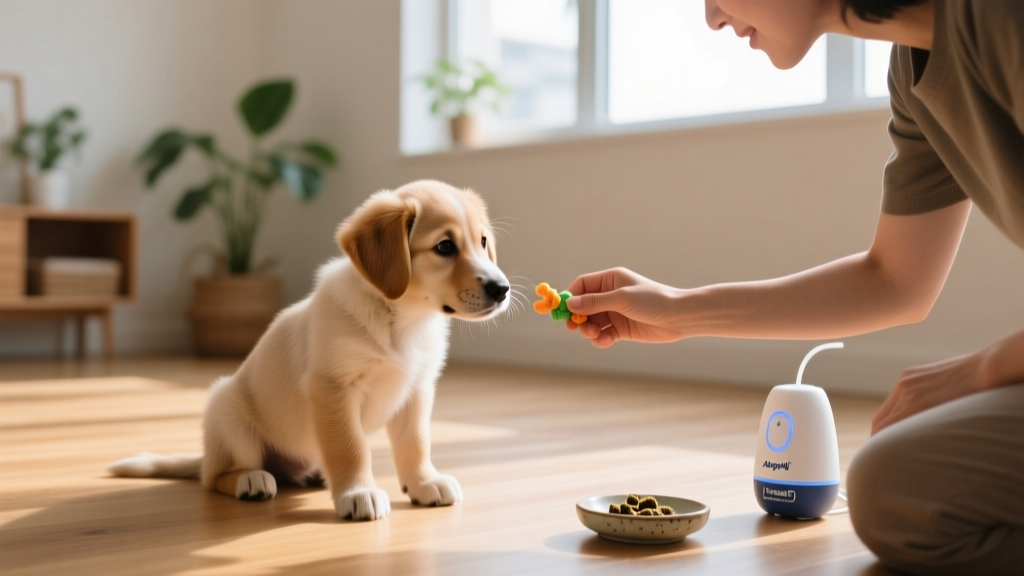
During this period your puppy is still with her breeder or foster. Critical developments include:
- Sensory maturation: Eyes fully open by week 4; hearing sharpens through week 6.
- Social play: Littermate wrestling teaches bite inhibition — puppies learn that biting too hard ends play.
- Weaning: Transition from mother's milk to gruel (kibble soaked in warm water or puppy-safe goat milk) begins at week 4, with full weaning by week 7-8.
- First deworming: Typically at weeks 2, 4, 6, and 8 per Merck Veterinary Manual protocols.
Weeks 8–12: The Homecoming Phase
This is when most puppies go to their new homes. Expect:
- Sleep: 18-20 hours per day. Puppies this age tire quickly and need enforced naps in a crate.
- House soiling: Bladder control is minimal. Expect accidents every 1-2 hours.
- Bite exploration: Everything goes in her mouth. Redirect to appropriate chews consistently.
- Attachment: She may cry at night for the first 3-5 nights. This is normal separation from littermates.
- First vet visit: Schedule within 48-72 hours of bringing her home for a full physical exam and fecal test.
Weeks 12–16: Foundation Training Window
- Attention span: Increases to 5-10 minutes per training session.
- Basic cues: Sit, down, come, and name recognition should be introduced now.
- Fear imprint period (8-11 weeks and again around 6-14 months): Negative experiences during this window can create lasting phobias. Keep all new exposures positive.
- Teething begins: Deciduous (baby) teeth start loosening around 12-16 weeks.
Weeks 16–24: Building Confidence
- Adult teeth emerging: Permanent incisors appear around 16 weeks; canines by 20 weeks; all 42 adult teeth typically in by 24-28 weeks.
- Increased independence: She may start ignoring recalls she previously knew. This is developmental, not defiance.
- Exercise capacity: Follow the 5-minutes-per-month-of-age rule for structured walks (e.g., a 4-month-old puppy gets 20 minutes of leash walking per day, split into two sessions).
6–12 Months: Adolescence
- Sexual maturity: Intact females may experience their first heat cycle (estrus) between 6-12 months depending on breed size. Small breeds cycle earlier; giant breeds may not cycle until 18-24 months.
- Spay timing: Discuss with your veterinarian. Current evidence suggests waiting until skeletal maturity for large/giant breeds (12-18 months) may reduce orthopedic risks, while small breeds can be safely spayed at 6 months.
- Regression: Training may appear to "fall apart" temporarily. Maintain consistency and revisit foundation work.
Feeding Schedule: Exact Portions by Age and Weight
Proper nutrition during puppyhood sets the foundation for musculoskeletal development, immune function, and lifelong eating habits. The table below provides portion guidelines based on an AAFCO-compliant puppy kibble with approximately 380-420 kcal/cup.
| Age | Meals/Day | Estimated Puppy Weight | Daily Portion (cups) | Notes |
|---|---|---|---|---|
| 8–12 weeks | 4 | 5–15 lb (2–7 kg) | ¾ – 1½ cups | Soak kibble in warm water if transitioning from gruel |
| 3–4 months | 3 | 10–30 lb (5–14 kg) | 1 – 2½ cups | Reduce to 3 meals at 12 weeks |
| 4–6 months | 3 | 15–50 lb (7–23 kg) | 1½ – 3½ cups | Adjust based on body condition score (BCS 4-5/9 ideal) |
| 6–9 months | 2 | 20–70 lb (9–32 kg) | 2 – 4½ cups | Transition to 2 meals at 6 months |
| 9–12 months | 2 | 30–90 lb (14–41 kg) | 2½ – 5 cups | Small breeds may transition to adult food at 10-12 months |
Important: These are starting estimates. Every kibble brand differs in caloric density, and individual metabolism varies widely. Monitor your puppy's body condition score weekly — you should be able to feel ribs without pressing hard, and see a visible waist when viewed from above. Adjust portions up or down by 10-15% based on condition. Large and giant breeds (expected adult weight over 70 lb / 32 kg) should be fed a food specifically formulated for large-breed puppies to control growth rate and reduce hip dysplasia risk.
Vaccination Schedule: What, When, and Why
Vaccines protect your puppy from potentially fatal diseases. The core vaccine protocol follows guidelines from the American Veterinary Medical Association (AVMA) and the AAHA Canine Vaccination Guidelines.
| Age | Vaccine | What It Protects Against | Typical Cost |
|---|---|---|---|
| 6–8 weeks | DHPP (1st) | Distemper, Hepatitis (Adenovirus), Parainfluenza, Parvovirus | $25–$45 |
| 10–12 weeks | DHPP (2nd) | Booster — same as above | $25–$45 |
| 10–12 weeks | Bordetella | Kennel cough (Bordetella bronchiseptica) | $20–$35 |
| 10–12 weeks | Leptospirosis (1st) | Bacterial infection from contaminated water/wildlife urine | $25–$40 |
| 14–16 weeks | DHPP (3rd) | Final puppy booster for core diseases | $25–$45 |
| 14–16 weeks | Leptospirosis (2nd) | Booster — required for full immunity | $25–$40 |
| 14–16 weeks | Rabies | Rabies virus (legally required in all US states) | $20–$35 |
| 12–16 months | DHPP + Rabies booster | 1-year booster for all core vaccines | $50–$90 combined |
Lifestyle vaccines to discuss with your vet: Lyme disease (if in tick-endemic areas like the Northeast or Upper Midwest), Canine Influenza (H3N2/H3N8 — recommended if boarding or attending group classes), and Leptospirosis (recommended for dogs with outdoor or wildlife exposure).
Socialization Window: Weeks 3–14 Exposure Checklist
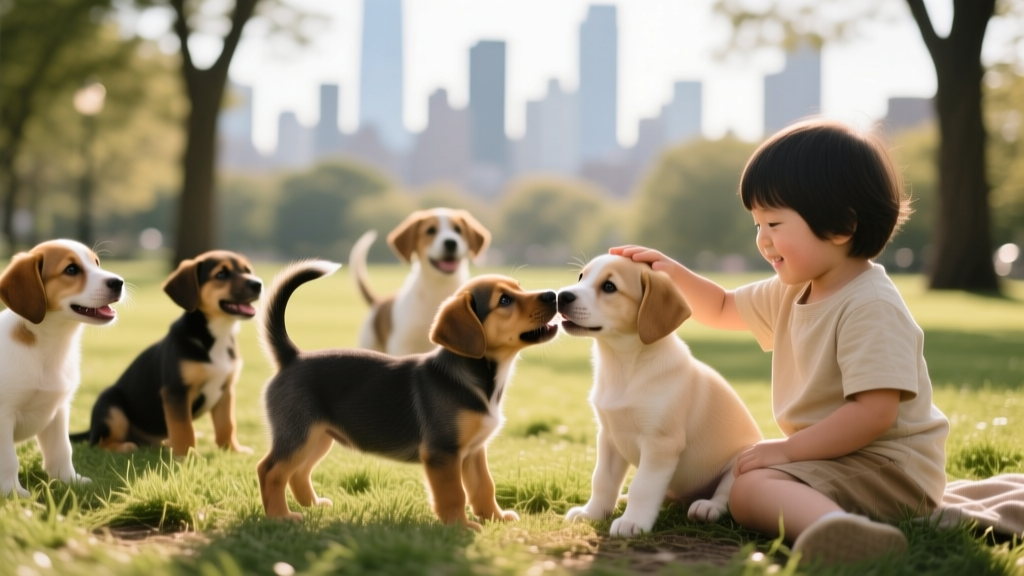
The primary socialization window closes between 12-14 weeks of age. This is a biologically defined period during which a puppy's brain is primed to accept new experiences without fear. After this window closes, unfamiliar stimuli are more likely to trigger fear responses. The goal is positive exposure — not just exposure. Every new experience should be paired with treats and calm encouragement.
Socialization Checklist (Aim for 10+ items per week during the window)
- Surfaces: Walk on grass, gravel, tile, wet pavement, metal grates, wooden planks, carpet, sand, and a wobble board or unstable surface.
- People: Meet at least 30 different people — children, elderly individuals, people wearing hats/sunglasses/hoodies, people using wheelchairs or crutches, delivery workers, tall men with deep voices.
- Sounds: Vacuum cleaner, doorbell, thunderstorm audio (start at low volume), traffic, construction noise, fireworks audio, hair dryer, blender, clapping.
- Handling: Gentle paw handling, ear inspection, mouth opening, nail trimming practice (no cutting needed — just touch and treat), being held in different positions, wearing a harness.
- Objects: Umbrellas opening, shopping carts, bicycles, skateboards, balloons, plastic bags blowing in wind, flags, hoses spraying water.
- Animals: Calm, vaccinated adult dogs (one-on-one playdates only until fully vaccinated), cats if household has them, livestock if rural.
- Environments: Car rides (short, ending in fun destinations), outdoor café patios (carry her if unvaccinated), friend's houses, groomer visits (happy visits only — no procedures first time).
Pre-vaccine socialization strategy: Carry your puppy in a sling or backpack to expose her to the world without letting her paws touch contaminated ground. Invite vaccinated, friendly dogs to your home for controlled playdates. Enroll in a puppy kindergarten class that requires proof of at least one DHPP vaccine and maintains sanitized floors — many veterinary clinics and positive-reinforcement training facilities offer these.
Potty Training Timeline: Realistic Expectations
Potty training is one of the most common sources of puppy-owner frustration, largely because expectations are unrealistic. Here is what the timeline actually looks like:
| Age | Bladder Capacity | Expected Accidents/Week | What to Expect |
|---|---|---|---|
| 8–10 weeks | 30–60 minutes | 3–5+ | Take outside every 30-45 min while awake. Crate between outings. |
| 10–14 weeks | 1–2 hours | 1–3 | She may start going to the door or whining before accidents. Reward heavily for outdoor success. |
| 14–20 weeks | 2–4 hours | 0–2 | Reliable with a schedule. Occasional accidents if routine is disrupted. |
| 5–7 months | 4–6 hours | 0–1 | Most puppies are functionally house-trained by 5-6 months with consistent management. |
| 8–12 months | 6–8 hours | 0 | Full reliability for most dogs. Small breeds may take longer due to smaller bladders. |
Potty Training Protocol
- Take her outside immediately after: waking from a nap, finishing a meal (within 15-30 minutes), finishing a play session, and being released from the crate.
- Use a consistent verbal cue like "go potty" while she is eliminating. Over time, she will associate the cue with the action, allowing you to prompt elimination on command — invaluable for bad weather or travel.
- Reward within 3 seconds of finishing outdoors with a high-value treat and enthusiastic praise. Deliver the treat outside, not after coming back inside.
- Interrupt indoor accidents calmly — a neutral "oops" and immediately carry or lead her outside. If she finishes outside, reward. Never punish, rub her nose in it, or yell. Punishment teaches her to hide when she needs to eliminate, making training harder.
- Enzymatic cleaner is non-negotiable. Standard household cleaners do not break down uric acid crystals. Use a product like Nature's Miracle or Rocco & Roxie to fully eliminate the scent marker, preventing repeat accidents in the same spot.
Crate Training Progression & Time Limits
The crate is your potty training headquarters. Dogs have a natural instinct not to soil their sleeping area, but this only works if the crate is appropriately sized — large enough to stand, turn around, and lie down, but not so large that she can eliminate in one corner and sleep in another. Use a divider panel in a wire crate to adjust size as she grows.
| Age | Max Crate Time (Day) | Max Crate Time (Night) |
|---|---|---|
| 8–10 weeks | 1–2 hours | 3–4 hours (set alarm for one potty break) |
| 11–14 weeks | 2–3 hours | 4–5 hours |
| 15–16 weeks | 3–4 hours | 5–6 hours |
| 4–6 months | 4–5 hours | 7–8 hours |
| 6+ months | 5–6 hours | 8 hours |
Never use the crate as punishment. The crate must remain a positive, safe space. Feed meals inside with the door open, provide a stuffed Kong or lick mat for extended crate sessions, and practice short departures to prevent separation anxiety.
Teething Timeline: Relief Strategies and Safe Chews
Puppies have 28 deciduous teeth that begin erupting at 3-6 weeks and are fully in by 8 weeks. These are replaced by 42 permanent teeth in a predictable sequence:
- 12–16 weeks: Incisors shed first. You may find tiny teeth on the floor or notice her swallowing them (harmless).
- 16–20 weeks: Canine teeth (fangs) are replaced. Chewing intensity peaks during this phase.
- 20–28 weeks: Premolars and molars erupt. By 7 months, all adult teeth should be present. If any baby teeth remain (retained deciduous teeth — common in small breeds), your vet should extract them to prevent crowding and dental disease.
Safe Teething Relief Options
- Frozen Kong Classic stuffed with plain yogurt and mashed banana — the cold numbs sore gums and the rubber texture satisfies chewing.
- Benebone Wishbone or Nylabone Power Chew (puppy formula) — durable nylon chews designed for developing teeth. Choose the puppy-specific version, which is softer than adult formulations.
- Frozen washcloth: Wet a clean washcloth, twist into a rope, freeze for 2 hours. Supervise use and discard if she tears off and swallows fabric pieces.
- Whimzees Teenies — VOHC-accepted dental chews appropriate for puppies over 12 weeks and 5 lb (2.3 kg).
Avoid: Rawhide (choking and intestinal blockage risk), antlers and weight-bearing bones from large animals (too hard — can fracture developing teeth), and any chew small enough to swallow whole. If you can dent a chew with your thumbnail, it is generally soft enough for a puppy.
Common Puppy Problems and Solutions
Puppy Biting and Nipping
Every puppy bites. It is how they explore their environment and relieve teething discomfort. The goal is not to eliminate mouthing entirely (this is unrealistic and developmentally inappropriate) but to teach her that human skin is completely off-limits.
The redirect method: When her teeth touch your skin, say "oops" in a neutral tone, immediately withdraw your hand, and offer an appropriate chew toy. When she takes the toy, praise enthusiastically. Consistency is critical — every family member must follow the same protocol. Mixed signals (letting her nip sometimes but scolding other times) will prolong the behavior by months.
Timeout protocol for persistent biters: If redirecting fails after 2-3 attempts, calmly stand up and leave the play area for 15-30 seconds. Return and resume play. She learns that biting ends the fun. This is a form of negative punishment (removing something she wants) and is highly effective without causing fear.
Whining and Crying in the Crate
Nighttime whining is nearly universal in the first week home. Strategies that work:
- Place the crate in your bedroom for the first 2-3 weeks so she can hear and smell you.
- Use a Snuggle Puppy (a plush toy with a heat pack and simulated heartbeat) — many owners report this reduces crying significantly.
- Take her out for a potty break if she whines after 2+ hours, but keep it boring — no play, low lights, straight back to the crate.
- If she has been out recently and is whining for attention, wait for 5-10 seconds of silence before opening the crate. Releasing her while she is actively crying reinforces the behavior.
Destructive Chewing
Puppies chew to explore, relieve teething pain, and burn energy. Management is the solution:
- Puppy-proof: Use bitter apple spray on baseboards, cord protectors on electrical cables, and baby gates to restrict access to unsupervised rooms.
- Rotate toys: Keep only 3-4 toys available at a time. Rotate weekly to maintain novelty.
- Exercise before alone time: A tired puppy chews less. Provide 15-20 minutes of active play or training before crating or leaving.
First-Year Cost Breakdown
Budgeting realistically prevents financial stress and ensures your puppy receives proper care. These ranges reflect 2026 US pricing based on national averages.
| Category | Low Estimate | High Estimate | Details |
|---|---|---|---|
| Purchase/Adoption | $150 (rescue) | $4,000+ (breeder) | Responsible breeders typically charge $1,500-$4,000+ depending on breed |
| Veterinary (wellness + vaccines) | $400 | $800 | Includes 3-4 vet visits, full vaccine series, fecal test, heartworm test |
| Spay/Neuter | $200 | $800 | Varies by size, location, and clinic type. Low-cost clinics available in many areas. |
| Food (12 months) | $300 | $900 | Small breeds ~$25-40/month; large breeds ~$50-80/month on quality kibble |
| Supplies (initial) | $200 | $500 | Crate, bed, leash/harness, bowls, gates, enzymatic cleaner, toys, grooming tools |
| Training | $0 (DIY) | $600 | Group puppy class: $150-$300 for 6-8 weeks. Private sessions: $80-$150/hour. |
| Preventive medications | $200 | $500 | Monthly heartworm + flea/tick prevention year-round |
| Microchip | $0 | $50 | Often included with adoption or breeder; vet offices charge $25-$50 |
| Pet insurance (optional) | $360 | $720 | $30-$60/month. Recommended to enroll before any pre-existing conditions develop. |
| Total (excluding purchase) | $1,660 | $4,870 | Varies significantly by breed size, location, and choices |
Emergency fund recommendation: Set aside $1,000-$2,000 for unexpected veterinary costs. Puppies are prone to intestinal blockages from swallowing foreign objects, which can cost $2,000-$7,000 for surgical removal. Pet insurance with an accident-and-illness plan can offset this significantly.
Frequently Asked Questions
When should I bring my puppy home?
The ideal age to bring a puppy home is 8-10 weeks. Reputable breeders will not release puppies before 8 weeks, and many toy breeds are kept until 10-12 weeks due to their fragility. Puppies removed from their litter before 8 weeks miss critical bite-inhibition learning and social development. Some states have laws prohibiting the sale of puppies under 8 weeks.
How often should I feed my puppy?
Feed 4 meals per day from 8-12 weeks, 3 meals per day from 12 weeks to 6 months, and 2 meals per day from 6 months onward. Split the daily portion evenly across meals. Avoid free-feeding (leaving food out all day) — it makes potty training unpredictable and can lead to overeating, especially in food-motivated breeds like Labrador Retrievers and Beagles.
When will my puppy be fully potty trained?
Most puppies achieve reliable house training between 5-7 months of age with consistent management. Small breeds (under 15 lb / 7 kg) may take until 8-10 months due to smaller bladder capacity and faster metabolisms. "Fully trained" means fewer than one accident per month when following a reasonable schedule. If your puppy is still having frequent accidents past 7 months, consult your veterinarian to rule out urinary tract infections or anatomical issues.
What vaccines does my puppy need and when?
The core vaccine series is DHPP at 6-8, 10-12, and 14-16 weeks, with rabies at 14-16 weeks. Lifestyle vaccines like Bordetella, Leptospirosis, and Lyme are added based on your dog's risk profile. Your veterinarian will customize the protocol based on your geographic location and your puppy's expected lifestyle. Never purchase vaccines online and administer them yourself — improper storage and handling can render them ineffective, and your vet needs to document them for legal rabies compliance.
How do I stop puppy biting and nipping?
Redirect every bite to an appropriate chew toy, use brief timeouts (15-30 seconds of social withdrawal) when redirecting fails, and ensure your puppy is getting adequate sleep — overtired puppies bite more, not less. Most puppies need 18-20 hours of sleep per day through 4 months. If your puppy is bitey and wild, she likely needs a nap, not more exercise. Puppy biting typically decreases significantly by 5-6 months as adult teeth come in and impulse control develops.
When can my puppy go outside and meet other dogs?
Your puppy can explore your own private yard immediately (assuming no parvo-positive dogs have been there in the past year). For public spaces, wait until 7 days after the final DHPP booster at 14-16 weeks before visiting dog parks or high-traffic dog areas. Controlled playdates with known, vaccinated dogs in private settings are safe from 8 weeks onward. Puppy kindergarten classes that require proof of at least one DHPP vaccine and maintain sanitized environments are generally safe starting at 10-12 weeks and are strongly recommended for socialization.
Priya Sutaria
All our authors care for dogs every day — read more of their work on the authors page.