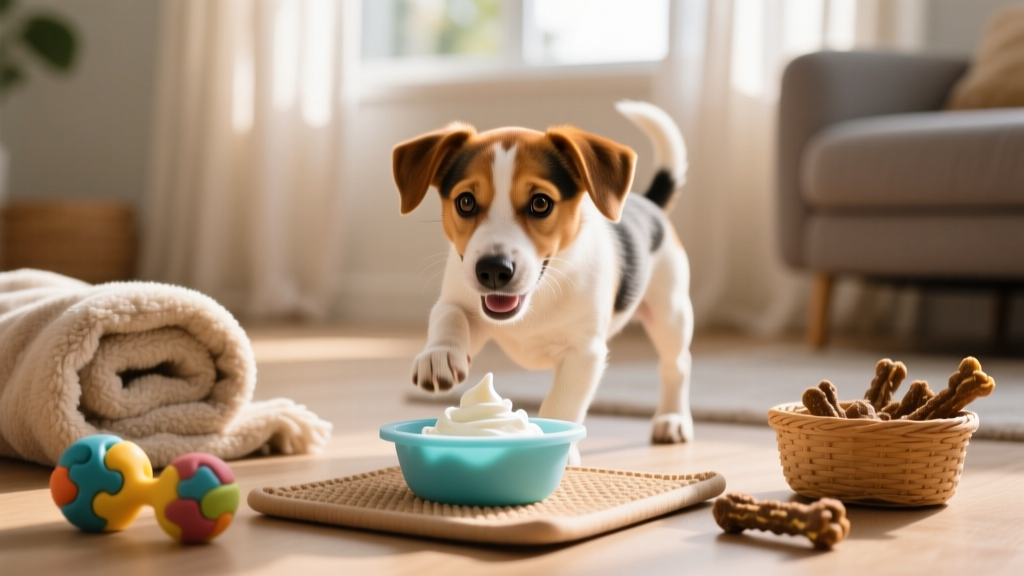
Can I Feed Banana to My Puppy? A Complete Age-Based Guide
Is banana safe for your puppy? Learn age-specific feeding portions, milestones, vaccination schedules, and potty training tips in this complete puppy guide.

Is Banana Safe for Puppies? The Quick Answer
Yes, banana is safe for puppies in small, age-appropriate portions. Rich in potassium, vitamin B6, and fiber, banana can be a gentle, easily digestible treat for growing dogs. However, puppies have sensitive digestive systems, and introducing any new food — even a fruit as benign as banana — requires careful timing and portion control.
Banana is non-toxic and safe for puppies over 8 weeks old. Serve in small, mashed or sliced pieces as an occasional treat — never exceeding 10% of daily caloric intake. Remove the peel entirely. If your puppy experiences loose stool, discontinue for 48 hours and reintroduce at half the portion.
This guide covers everything you need to know about feeding banana to your puppy within the broader context of age-specific nutrition, developmental milestones, vaccination timelines, and training foundations.
Age-Specific Puppy Milestones: What to Expect Week by Week
Puppies develop rapidly in their first year. Understanding these milestones helps you know when to introduce treats like banana, when socialization is critical, and what behaviors are normal at each stage.
Weeks 4–8: Transitional Period
- Physical: Baby teeth fully erupted; weaning from mother's milk to puppy-formulated gruel
- Sensory: Eyes and ears fully functional; startle reflexes still prominent
- Social: Littermate play teaches bite inhibition basics; critical for breed-specific temperament development
- Nutrition: 3–4 meals daily of high-quality puppy kibble softened with warm water or puppy milk replacer. No banana or other treats at this age — the digestive system is still adapting to solid food.
Weeks 8–12: Primary Socialization Window Opens
- Physical: Rapid growth phase; weight may double from week 8 to week 16
- Behavioral: Fear periods begin around 8–10 weeks; positive experiences are critical
- Training: Can learn name recognition, basic "sit," and crate association
- Nutrition: 3 meals daily. You may introduce 1–2 small pieces of mashed banana (approximately 1 teaspoon total) as a training reward. Monitor stool for 24 hours after first introduction.
Weeks 12–16: Confidence Building
- Physical: Adult coat begins replacing puppy coat; energy levels increase noticeably
- Behavioral: Testing boundaries; may exhibit selective hearing during recall practice
- Training: Leash walking foundations, "leave it," and door manners
- Nutrition: 3 meals daily. Banana portion can increase to 2–3 thin slices or 1 tablespoon mashed per day, split across training sessions.
Weeks 16–24: Adolescent Exploration
- Physical: Teething begins around 16 weeks; baby teeth fall out as adult teeth erupt
- Behavioral: Second fear period may occur around 6–8 months; increased independence
- Training: Longer duration commands, place training, impulse control exercises
- Nutrition: Transition to 2 meals daily around 16–20 weeks depending on breed size. Banana can be offered as frozen slices for teething relief — up to 2–3 slices per session.
Months 6–12: Adolescent Maturation
- Physical: Approaching adult size (small breeds reach ~90% adult weight by 9 months; large breeds continue growing to 18–24 months)
- Behavioral: Sexual maturity; spay/neuter timing discussion with your veterinarian
- Training: Advanced obedience, off-leash reliability in controlled environments, sport introductions
- Nutrition: 2 meals daily. Small to medium breeds may transition to adult food around 10–12 months; large breeds remain on puppy formula until 12–18 months. Banana treat allowance: up to ¼ of a medium banana per day for a 30 lb dog, scaled proportionally.
Feeding Schedule: Exact Portions by Age and Weight
When incorporating banana into your puppy's diet, it must fit within the 10% treat calorie rule. Here's a structured feeding schedule that accounts for both complete meals and banana treat allowances.
| Puppy Age | Meals Per Day | Kibble Portion (per meal)* | Max Banana Per Day | Preparation Method |
|---|---|---|---|---|
| 4–8 weeks | 3–4 | ¼–½ cup softened | None | Not recommended |
| 8–12 weeks (5–15 lb) | 3 | ¼–¾ cup | 1 tsp mashed (~5g) | Fork-mashed, mixed into kibble |
| 12–16 weeks (10–25 lb) | 3 | ½–1 cup | 1 tbsp sliced (~15g) | Thin rounds or small chunks |
| 16–24 weeks (15–40 lb) | 2–3 | ¾–1½ cups | 2–3 slices (~25g) | Slices, frozen pieces, or stuffed in Kong |
| 6–12 months (20–60 lb) | 2 | 1–2½ cups | ¼ medium banana (~30g) | Slices, frozen, or blended into food topper |
*Kibble portions are estimates for a standard AAFCO-approved puppy formula (approximately 400 kcal/cup). Always check your specific food's feeding chart and adjust based on body condition score (BCS). Your veterinarian can help you determine ideal portions based on breed, growth trajectory, and activity level.
Nutritional note: One medium banana (118g) contains approximately 105 calories, 27g carbohydrates, 1.3g protein, and 422mg potassium. For a 20 lb puppy requiring roughly 600 calories daily, even ¼ of a banana represents about 4% of daily caloric needs — well within safe treat limits.
The Socialization Window: Weeks 3–14 Exposure Checklist
The primary socialization period (approximately 3 to 14 weeks of age) is the single most influential developmental window in your puppy's life. Research published in the Journal of the American Veterinary Medical Association confirms that puppies with inadequate socialization during this period are significantly more likely to develop fear-based behavioral problems later in life.
Use banana as a high-value, easily digestible reward during socialization outings. Its sweet taste and soft texture make it ideal for quick reinforcement without overloading a young digestive system.
Safety rule: Until your puppy has completed their full vaccination series (typically around 16 weeks), limit exposure to public dog areas such as dog parks, pet store floors, and high-traffic walking paths. Carry your puppy or use a stroller for environmental exposure without ground contact in contaminated areas. The American Kennel Club recommends structured, controlled socialization over uncontrolled public exposure during this vulnerable period.
Vaccination Schedule: Protecting Your Puppy's Health
Your puppy's immune system is immature during the first months of life. A structured vaccination protocol, developed in consultation with your veterinarian, is essential. Here is the standard core vaccination timeline recommended by the Merck Veterinary Manual:
| Age | Vaccine | Protection Against | Follow-Up |
|---|---|---|---|
| 6–8 weeks | DHPP (1st dose) | Distemper, Hepatitis (Adenovirus), Parainfluenza, Parvovirus | Booster in 2–4 weeks |
| 6–8 weeks | Bordetella (optional, risk-based) | Kennel cough | Booster at 10–12 weeks if boarding/grooming |
| 10–12 weeks | DHPP (2nd dose) | Continued immunity build for distemper complex | Booster in 2–4 weeks |
| 10–12 weeks | Leptospirosis (1st dose, risk-based) | Bacterial infection from contaminated water/soil | Booster in 2–4 weeks |
| 14–16 weeks | DHPP (3rd dose) | Final puppy series dose for distemper complex | Booster at 12 months, then every 3 years |
| 14–16 weeks | Rabies (1st dose) | Rabies virus (legally required in most US states) | Booster at 12 months, then per state law (1 or 3 years) |
Potty Training Timeline: Realistic Expectations
Most puppies develop reliable bladder control between 4 and 6 months of age, though full reliability (including overnight holds) may take until 8–12 months. Small breeds typically take longer due to smaller bladder capacity.
A general rule: puppies can hold their bladder for approximately one hour per month of age (a 3-month-old puppy can hold for roughly 3 hours during the day).
Daily Potty Log Structure
Track these data points for the first 8 weeks to identify patterns:
- Time of outing: Record each trip outside
- Result: Urination (U), defecation (D), both (B), or none (N)
- Trigger: After meal, after nap, after play, or scheduled
- Accidents: Location, time since last outing, what preceded it
- Reward used: Note if banana or other treat was given immediately upon outdoor elimination
Age-Based Potty Outing Frequency
- 8–12 weeks: Every 1–2 hours during the day; 1–2 overnight outings
- 12–16 weeks: Every 2–3 hours; 1 overnight outing
- 16–24 weeks: Every 3–4 hours; overnight holds of 5–6 hours becoming possible
- 6–12 months: Every 4–6 hours; overnight holds of 7–8 hours typical
Common troubleshooting: If your puppy has frequent accidents despite consistent outings, rule out urinary tract infection (UTI) with a veterinary urinalysis. Submissive urination during greetings is behavioral, not a housetraining failure — avoid punishment, which worsens the behavior. Instead, greet calmly outdoors or ignore for the first 60 seconds after arriving home.
Teething, Crate Training, and Common Puppy Problems
Teething Timeline (3–6 Months)
Puppies have 28 deciduous (baby) teeth that begin erupting around 3–4 weeks and are typically fully in place by 6–8 weeks. The transition to 42 adult teeth follows this pattern:
- 12–16 weeks: Incisors begin loosening and falling out
- 16–20 weeks: Canine teeth (fangs) replaced; most noticeable discomfort phase
- 20–24 weeks: Premolars and molars erupt; chewing intensity peaks
- By 6–7 months: All 42 adult teeth should be fully erupted. Retained baby teeth (especially canines) require veterinary extraction to prevent malocclusion.
Banana as a teething aid: Freeze banana slices on a baking sheet for 2–3 hours. The cold temperature numbs sore gums while the soft texture is gentle on erupting teeth. Supervise all frozen treat sessions. Alternate with veterinary-recommended teething toys such as the Kong Puppy (rubber, sized to breed) or Nylabone Puppy Chew (flexible formula).
Crate Training Progression
Crate training leverages a dog's natural den instinct and is one of the most effective tools for potty training and safe confinement. Follow this progression:
- 8–10 weeks: Introduce crate with door open; feed meals inside; 10–15 minute sessions with door closed while you remain in the room
- 10–12 weeks: 30-minute maximum crated periods during the day; crate in bedroom overnight
- 12–16 weeks: 1–2 hour daytime maximum; begin moving crate to permanent location
- 16–24 weeks: 3–4 hour daytime maximum (never exceed 4 hours for puppies under 6 months)
- 6–12 months: 4–6 hour daytime maximum; overnight holds of 7–8 hours
Important: The crate should never be used as punishment. A frozen banana slice stuffed inside a Kong toy placed in the crate creates a positive association and keeps your puppy occupied during settling periods.
Common Puppy Problems and Solutions
Puppy biting and nipping: Mouthing is normal exploratory behavior, not aggression. When teeth contact skin, immediately withdraw attention (stand up, turn away, or step behind a baby gate for 10–15 seconds). Redirect to an appropriate chew toy. Never use physical punishment, alpha rolls, or muzzle-holding — these methods increase fear and can escalate biting. Consistent positive reinforcement and redirection typically resolve mouthing by 5–6 months as adult teeth settle and impulse control develops.
Nighttime whining: Ensure your puppy has been recently eliminated, is not hungry (last meal 2–3 hours before bedtime), and has had adequate daytime stimulation. A soft ticking clock or heartbeat toy (such as the Snuggle Puppy) can ease the transition. Responding to whining by releasing from the crate teaches that vocalization opens the door — wait for a 5-second pause in whining before opening.
Destructive chewing: Puppies chew to explore and to relieve teething discomfort. Provide 4–5 approved chew options of varying textures (rubber, nylon, natural wood alternatives). Rotate chews every 3 days to maintain novelty. Puppy-proof your home by removing accessible shoes, cords, and small objects. If you catch your puppy chewing an inappropriate item, redirect with a trade-up — offer a frozen banana slice or approved chew, then remove the forbidden object once released.
First-Year Cost Breakdown
Budgeting for a puppy's first year helps prevent financial surprises. Here are realistic cost ranges based on 2026 US averages:
| Category | Low Estimate | Mid Estimate | High Estimate |
|---|---|---|---|
| Veterinary (vaccines, wellness exams, spay/neuter) | $600 | $1,200 | $2,500 |
| Food (puppy formula, 12 months) | $300 | $600 | $1,200 |
| Treats (including banana, training treats) | $50 | $120 | $250 |
| Supplies (crate, bed, leash, harness, bowls, gates) | $200 | $450 | $800 |
| Training (group classes, 6–8 week course) | $150 | $300 | $600 |
| Preventive medications (flea/tick, heartworm, 12 months) | $200 | $400 | $700 |
| Pet insurance (optional, annual premium) | $350 | $600 | $1,000 |
| Emergency fund (recommended reserve) | $500 | $1,000 | $3,000 |
| Total First Year | $2,350 | $4,670 | $10,050 |
These ranges vary significantly by geographic region, breed size (large breeds consume more food and have higher medication dosages), and whether you pursue specialty training or boarding services. Pet insurance premiums are lowest when purchased during puppyhood before any pre-existing conditions develop.
Frequently Asked Questions
When should I bring my puppy home?
The optimal age to bring a puppy home is between 8 and 10 weeks. Puppies benefit from remaining with their mother and littermates through at least 8 weeks for critical social development. Some breeders of smaller breeds prefer to keep puppies until 10–12 weeks for additional maturation. Bringing a puppy home before 7 weeks is not recommended unless medically necessary, as premature separation is associated with increased behavioral problems including separation anxiety and poor bite inhibition.
How often should I feed my puppy at each age?
Feed 3–4 meals daily from 4–8 weeks, 3 meals daily from 8–16 weeks, and transition to 2 meals daily between 16–24 weeks depending on breed size. Giant breeds (Great Danes, Mastiffs) may benefit from remaining on 3 meals longer to reduce bloat risk. Always divide daily portions evenly across meals rather than free-feeding, which makes potty training significantly harder and increases obesity risk.
When will my puppy be fully potty trained?
Most puppies achieve reliable daytime housetraining between 4 and 6 months of age with consistent scheduling. Overnight reliability typically follows by 6–8 months. Small breeds (under 15 lb adult weight) may take 2–4 months longer due to smaller bladder capacity. If your puppy is not showing improvement by 6 months despite consistent effort, consult your veterinarian to rule out medical causes such as ectopic ureters or urinary tract infections.
What vaccines does my puppy need and when?
Core vaccines include DHPP (distemper, hepatitis, parainfluenza, parvovirus) at 6–8, 10–12, and 14–16 weeks, and rabies at 14–16 weeks. Non-core vaccines such as Bordetella, Leptospirosis, and Lyme disease are recommended based on your geographic region and lifestyle risk factors. Your veterinarian will tailor the protocol to your puppy's specific needs. Never vaccinate a sick puppy — postpone if your puppy has fever, diarrhea, or is under treatment for illness.
How do I stop puppy biting and nipping?
Puppy mouthing is developmentally normal and typically resolves by 5–7 months with consistent management. Use the "withdraw attention" method: the instant teeth touch skin, stand up and turn away for 10–15 seconds. Redirect to an approved chew toy when your puppy re-engages calmly. Provide ample appropriate chewing outlets including frozen banana slices, rubber teething toys, and food-dispensing puzzles. Avoid any physical punishment — research consistently shows that aversive methods increase aggression risk in puppies.
When can my puppy go outside and meet other dogs?
Your puppy can begin controlled outdoor exposure immediately after coming home — carry them or use a stroller to explore new environments before vaccinations are complete. For ground-level exploration in public areas and interaction with unfamiliar dogs, wait until 7–10 days after the final DHPP dose (typically around 16–17 weeks of age). Controlled playdates with fully vaccinated, healthy adult dogs in private yards are acceptable after the second DHPP at 10–12 weeks. Avoid dog parks entirely until the full series is complete, as parvovirus can survive in soil for over a year.
Can banana cause digestive upset in puppies?
Yes, if introduced too quickly or in excessive amounts. Banana's fiber content can cause loose stool or gas in puppies with sensitive digestion. Start with ½ teaspoon of mashed banana, wait 24 hours, and monitor stool consistency before increasing. If diarrhea occurs, discontinue banana for 48 hours, then reintroduce at half the original amount. Persistent diarrhea lasting more than 24 hours in a puppy under 16 weeks warrants a veterinary visit, as young puppies dehydrate rapidly.
Disclaimer: This guide provides general puppy care information and should not replace professional veterinary advice. Always consult your veterinarian before making significant changes to your puppy's diet, vaccination protocol, or health management plan. Individual puppies may have unique needs based on breed, health status, and developmental trajectory.
Tom Renshaw
All our authors care for dogs every day — read more of their work on the authors page.