Best Crate Beds for Puppies: A Complete Puppy Setup & Care Guide
Find the best crate beds for puppies plus a full care timeline: feeding, potty training, vaccines, socialization, and first-year costs for new puppy owners.

Why the Right Crate Bed Matters for Your Puppy's Development
Setting up your puppy's crate correctly from day one sets the tone for months of training, sleep quality, and emotional security. The crate bed you choose isn't just a cushion — it's the foundation of your puppy's safe space. Puppies between 8 and 16 weeks sleep 18 to 20 hours per day, and the surface they sleep on directly impacts joint development, temperature regulation, and crate-training success.
Many new owners make the mistake of dropping a fluffy, oversized pillow into a wire crate and wondering why their puppy chews it apart within a week. The reality is that puppies need specific bedding that matches their developmental stage. A teething 4-month-old Lab puppy will destroy a plush bed in hours, while a 10-week-old Chihuahua needs a low-profile, warm surface that prevents heat loss. This guide walks you through the best crate beds for puppies at every stage, integrated with the full care timeline you need — feeding, vaccination, potty training, socialization, and realistic first-year costs.
Age-Specific Puppy Milestones: What to Expect Week by Week
Understanding your puppy's developmental windows helps you choose the right crate bed, set realistic training expectations, and avoid common mistakes. Here's a concrete milestone breakdown:
Weeks 4–8: Neonatal to Transitional (Still with Breeder)
Your puppy is learning bite inhibition from littermates, beginning to eat solid food (gruel or softened kibble), and developing coordination. This is when responsible breeders begin early neurological stimulation (ENS) and introduce novel textures — which directly influences how your puppy responds to new crate bedding later. You should not bring a puppy home before 8 weeks; most reputable breeders and the AVMA recommend waiting until at least 8 weeks, with some toy breeds staying until 10–12 weeks.
Weeks 8–12: Primary Socialization Window Opens
This is the most critical learning period. Your puppy's brain is primed to form positive associations. Expect 18–20 hours of sleep, frequent potty breaks (every 1–2 hours during the day), and mouthing everything. Crate sessions should start at 30–60 minutes maximum while you're home. A flat, chew-resistant bed like the KONG Crate Pad (roughly $20–$30) works best here — avoid plush beds that invite shredding.
Weeks 12–16: Fear Impact Period Begins
Between 8 and 11 weeks, and again around 6–14 months, puppies go through fear imprint periods where negative experiences can create lasting phobias. Keep crate experiences positive. Increase crate time gradually to 1–2 hours. Your puppy should be reliably using a potty spot by now with consistent scheduling. Teething discomfort begins around 12–16 weeks as adult teeth start pushing through gums.
Weeks 16–24: Teething Peak and Independence Building
Adult teeth erupt aggressively between 3 and 6 months. Your puppy will chew relentlessly — this is when you need a durable crate bed or switch to a raised cot-style bed like the Coolaroo Elevated Pet Bed ($30–$45) that resists chewing and provides airflow. Crate time can extend to 3–4 hours during the day (never longer for puppies under 6 months). House training should be nearly reliable with 1–2 accidents per week at most.
Months 6–12: Adolescence and Testing Boundaries
Expect regression in training, increased energy, and sexual maturity. Spaying/neutering typically occurs between 6 and 12 months depending on breed size (large breeds often wait until 12–18 months per current veterinary recommendations). Crate time can reach 4–6 hours for well-adjusted puppies, and you can upgrade to a more comfortable orthopedic bed like the Big Barker Puppy Crate Pad ($60–$90) if your puppy has stopped chewing bedding.
Feeding Schedule: Exact Portions by Age and Weight
Feeding frequency and portions change rapidly in the first year. Overfeeding is a leading cause of developmental orthopedic disease in large breeds, so precision matters. Always use a standard 8 oz measuring cup and follow the feeding chart on your specific food — but here are reliable baselines for a complete-and-balanced AAFCO-approved puppy diet.
| Age | Meals Per Day | Small Breed (5–20 lb adult) | Medium Breed (20–50 lb adult) | Large Breed (50–100+ lb adult) |
|---|---|---|---|---|
| 8–12 weeks | 4 meals/day | ¼–½ cup per meal | ½–¾ cup per meal | ¾–1¼ cups per meal |
| 12–16 weeks | 3 meals/day | ⅓–⅔ cup per meal | ¾–1 cup per meal | 1–1¾ cups per meal |
| 4–6 months | 3 meals/day | ½–¾ cup per meal | 1–1½ cups per meal | 1½–2½ cups per meal |
| 6–12 months | 2 meals/day | ½–1 cup per meal | 1½–2 cups per meal | 2–3½ cups per meal |
Key feeding rules: Remove uneaten food after 15–20 minutes. Never free-feed puppies — scheduled meals are essential for potty training predictability. Large-breed puppies must eat food labeled for "large breed growth" to control calcium and phosphorus ratios, reducing hip dysplasia risk. Consult your veterinarian for breed-specific caloric needs, especially for giant breeds like Great Danes or Mastiffs.
Potty Training Timeline: Realistic Expectations and Troubleshooting
Potty training is a marathon, not a sprint. The general rule is that a puppy can hold their bladder for approximately one hour per month of age (so a 3-month-old puppy holds for about 3 hours maximum). But this only applies during calm, crated rest — active puppies need far more frequent breaks.
Sample Potty Schedule for a 10-Week-Old Puppy
- 7:00 AM — Out immediately upon waking (carry to spot)
- 7:30 AM — After breakfast, out within 15–20 minutes
- 9:00 AM — After play session
- 10:30 AM — After nap in crate
- 12:00 PM — After lunch
- 1:30 PM — After nap
- 3:00 PM — After play
- 5:00 PM — After dinner
- 6:30 PM — After play/nap
- 8:00 PM — Before evening wind-down
- 10:00 PM — Last call before bedtime
- 2:00–3:00 AM — One overnight break (set alarm)
Track accidents in a log noting time, location, and what happened 30 minutes prior. Patterns reveal scheduling gaps.
When is your puppy fully potty trained? Most puppies achieve reliable house training between 4 and 6 months with consistent scheduling. Small breeds often take longer (6–8 months) due to smaller bladder capacity. If your puppy is having more than 2–3 accidents per week after 4 months of consistent effort, consult your veterinarian to rule out urinary tract infections or anatomical issues.
Troubleshooting common problems:
- Crate soiling: The crate may be too large. Use a divider panel so your puppy only has enough room to stand, turn, and lie down. Dogs naturally avoid soiling their sleeping area.
- Submissive urination: This is involuntary. Avoid greeting your puppy with high energy. Crouch sideways, speak softly, and let them approach you.
- Regression at 6+ months: Often linked to adolescence or a UTI. Rule out medical causes first before assuming behavioral regression.
Socialization Window: Weeks 3–14 Exposure Checklist
The American Kennel Club and veterinary behaviorists agree: the primary socialization window closes between 12 and 14 weeks. What your puppy doesn't experience positively during this window may trigger fear responses for life. This doesn't mean overwhelming your puppy — it means structured, positive exposure to novel stimuli.
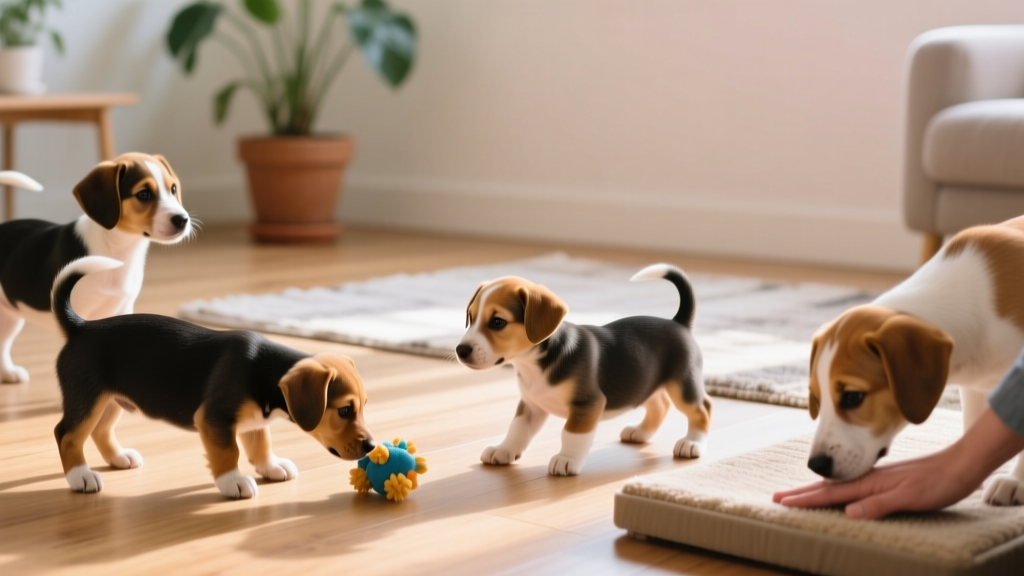
When can your puppy go outside and meet other dogs? Your puppy can explore your own yard immediately if it's secure and not frequented by unknown dogs. Public areas (parks, sidewalks, pet stores) should wait until at least 7 days after the second DHPP vaccine (typically around 12–13 weeks). Structured playdates with fully vaccinated, healthy dogs in private yards are safe from 8 weeks onward. Dog parks should be avoided until the full vaccination series is complete at 16 weeks, and even then, many behaviorists recommend waiting until 6 months for better disease resistance and social maturity.
Vaccination Schedule: Core and Non-Core Vaccines by Week
Vaccination timing follows maternal antibody decay curves. Your puppy receives antibodies from colostrum that gradually wane, creating windows where vaccines become effective. The schedule below reflects current AVMA guidelines and the AAHA Canine Vaccination Guidelines.
| Age | Vaccine | Type | Notes |
|---|---|---|---|
| 6–8 weeks | DHPP (Distemper, Hepatitis, Parainfluenza, Parvovirus) | Core | First dose; maternal antibodies may interfere |
| 6–8 weeks | Bordetella (optional) | Non-core | Recommended if attending puppy classes or boarding |
| 10–12 weeks | DHPP booster | Core | Second dose; immunity building |
| 10–12 weeks | Leptospirosis (optional) | Non-core | Recommended in areas with wildlife exposure or standing water |
| 14–16 weeks | DHPP final booster | Core | Third dose; considered protective for most puppies |
| 14–16 weeks | Rabies | Core (legal requirement) | Required by law; timing varies by state (some require 12 weeks minimum) |
| 12–16 months | DHPP booster + Rabies booster | Core | First adult boosters; then every 3 years for DHPP and Rabies per AAHA |
Typical vaccination costs (2026 estimates): DHPP runs $25–$45 per dose. Rabies is $15–$30. Bordetella is $20–$35. A full puppy vaccine series (3 DHPP doses + Rabies) typically costs $120–$250 depending on your region and whether you use a general practice or low-cost clinic. Never skip parvovirus coverage — parvo has a 80–95% mortality rate in untreated puppies and treatment costs $2,000–$8,000 in hospitalization.
Teething Timeline and Choosing the Right Crate Bed During This Phase
Puppy teething follows a predictable pattern, and your crate bed choice must adapt to each phase:
3–4 months: Deciduous (baby) incisors begin loosening. You may find tiny teeth in bedding. Puppies chew more but are still relatively gentle. A medium-durability flat pad like the MidWest QuietTime Crate Bed ($15–$25) works well.
4–5 months: Peak teething discomfort. Canines and premolars erupt. This is when puppies destroy beds most aggressively. Switch to a chew-resistant option: the K9 Ballistics Tough Crate Pad ($60–$90) uses ripstop ballistic nylon and comes with a 120-day chew-proof guarantee. Alternatively, a raised cot eliminates bedding as a chew target entirely.
5–6 months: Most adult teeth are in. Chewing intensity decreases but doesn't stop — adolescent dogs chew to explore and relieve boredom. You can reintroduce softer beds if your puppy has proven trustworthy. Orthopedic memory foam beds like the Furhaven Orthopedic Crate Bed ($25–$45) provide joint support for growing large-breed puppies.
Safe chew recommendations for the crate:
- Benebone Wishbone ($15–$22) — nylon, flavored, angled for gripping
- KONG Classic (puppy rubber) ($12–$18) — fill with frozen peanut butter for 30+ minutes of engagement
- Bully sticks ($3–$8 each) — fully digestible, but supervise to prevent choking on small ends
- Frozen carrot — free, soothing on gums, but short-lived
Avoid: Rawhide (choking and blockage risk), cooked bones (splintering), and any chew smaller than your puppy's muzzle. If a chew fits entirely inside your puppy's mouth, it's a choking hazard.
Crate Training Progression: Time Limits and Bed Pairing Strategy
Crate training should never be rushed. Here's a progression timeline matched with appropriate crate bed recommendations:
| Puppy Age | Max Crate Time (Day) | Max Crate Time (Night) | Recommended Crate Bed Type |
|---|---|---|---|
| 8–10 weeks | 30–60 min | 3–4 hours (with 1 break) | Flat fleece pad or folded towel (easy to wash, low chew appeal) |
| 10–12 weeks | 1–2 hours | 4–5 hours (with 1 break) | Thin crate pad, waterproof liner underneath |
| 3–4 months | 2–3 hours | 5–6 hours | Chew-resistant pad or elevated cot |
| 4–6 months | 3–4 hours | 6–8 hours | Durable crate pad; upgrade to orthopedic if puppy is large breed |
| 6–12 months | 4–6 hours | 8 hours | Comfortable orthopedic or bolster bed if chewing has stopped |
Crate training steps (positive reinforcement only):
- Leave crate door open with high-value treats inside. Let puppy enter and exit freely for 3–5 days.
- Feed all meals inside the crate with the door open.
- Close door during meals for 1–2 minutes, then open. Gradually increase to 10 minutes post-meal.
- Give a long-lasting chew (stuffed KONG) in the crate. Close door for 15 minutes while you sit nearby.
- Leave the room for 5 minutes while puppy is in crate with chew. Return calmly — no excited greetings.
- Extend absences by 10–15 minutes per session over 1–2 weeks.
Never use the crate as punishment. The crate must remain a positive sanctuary. If your puppy whines after being settled with a chew and having recently eliminated, wait for a 10-second pause in vocalization before releasing — this teaches quiet, not that whining opens the door.
Common Puppy Problems: Breed-Stage Solutions
Puppy Biting and Nipping
Mouthing is normal canine behavior — puppies explore the world with their mouths and are learning bite inhibition. To stop painful nipping:
- When teeth touch skin, say "ouch" in a calm, medium-volume tone and withdraw attention for 10–15 seconds (stand up, turn away).
- Redirect to an appropriate chew toy immediately after the pause.
- Ensure your puppy gets 2–3 structured play sessions per day with tug toys to satisfy oral fixation.
- If biting intensifies (common at 4–5 months during teething), provide a frozen washcloth to chew as an alternative.
- Never hold the puppy's mouth shut, yelp loudly (can increase arousal), or use physical punishment — these methods increase fear and aggression.
Crate Whining at Night
Nighttime whining in the first 2–3 weeks is normal — your puppy has just left their littermates. Strategies that work:
- Place the crate in your bedroom initially so your scent and presence provide comfort.
- Use a Snuggle Puppy ($25–$35) — a plush toy with a heartbeat simulator and heat pack that mimics littermate warmth.
- Set a quiet alarm for one overnight potty break. Take puppy out on leash, no play, return to crate immediately.
- Cover the crate with a breathable blanket to reduce visual stimulation (but ensure ventilation).
Destructive Chewing in the Crate
If your puppy is destroying their crate bed, the solution isn't to remove bedding entirely (hard crate floors cause calluses and joint stress in growing puppies). Instead:
- Remove the destroyed bed and replace with a chew-resistant option (K9 Ballistics, Coolaroo cot).
- Ensure your puppy is getting adequate physical exercise and mental stimulation before crating — a tired puppy chews less.
- Provide a single, high-value chew in the crate to redirect chewing energy.
- If chewing is compulsive (continues for hours, causes self-injury), consult a veterinary behaviorist — this may indicate separation anxiety rather than normal puppy behavior.
First-Year Cost Breakdown: Budgeting for Your Puppy
New puppy owners consistently underestimate first-year costs. Here's a realistic breakdown based on 2026 pricing across US markets:
| Category | Budget Range | Mid-Range | Premium Range |
|---|---|---|---|
| Puppy purchase/adoption | $50–$500 (rescue) | $1,500–$3,000 (breeder) | $3,500–$8,000+ (show/specialty) |
| Vaccinations (full series) | $120–$180 | $200–$300 | $350–$500 |
| Spay/neuter | $150–$300 | $350–$600 | $600–$1,200 |
| Crate + bed setup | $50–$80 | $80–$150 | $150–$300 |
| Food (12 months) | $300–$500 | $500–$900 | $900–$1,800 |
| Preventive medications (flea/tick/heartworm) | $150–$250 | $250–$400 | $400–$600 |
| Training (puppy class + basic obedience) | $0 (DIY) | $200–$400 | $600–$1,500 |
| Supplies (leash, collar, bowls, toys, grooming) | $100–$200 | $200–$400 | $400–$800 |
| Emergency fund (recommended reserve) | $500 | $1,000 | $2,000+ |
| Total first year | $1,920–$2,510 | $4,180–$6,150 | $7,300–$14,700 |
Pet insurance consideration: Enrolling your puppy in pet insurance before any pre-existing conditions develop is strongly recommended. Plans from providers like Trupanion, Healthy Paws, or Lemonade typically run $30–$70/month for puppies and can reimburse 70–90% of emergency costs. A single parvo hospitalization or swallowed-object surgery ($3,000–$7,000) justifies the premium.
Frequently Asked Questions
When should I bring my puppy home?
Between 8 and 10 weeks for most breeds. Toy breeds (Chihuahuas, Yorkies, Pomeranians) often benefit from staying with the breeder until 10–12 weeks due to fragility and hypoglycemia risk. Never take a puppy before 7 weeks — they miss critical littermate socialization that teaches bite inhibition and canine communication.
How often should I feed my 12-week-old puppy?
Three to four meals per day at 12 weeks. Transition to three meals at 12–16 weeks, then two meals at 6 months. Always feed measured portions at consistent times — this directly supports predictable potty schedules. Remove food after 15–20 minutes to prevent grazing habits that complicate house training.
When will my puppy be fully potty trained?
Most puppies achieve reliable house training between 4 and 6 months with consistent scheduling. Small breeds may take 6–8 months. "Reliable" means fewer than one accident per month. If accidents persist beyond 6 months despite consistent effort, consult your veterinarian — underlying medical conditions like ectopic ureters, UTIs, or diabetes can cause persistent house-soiling.
What vaccines does my puppy need and when?
Core vaccines include DHPP (Distemper, Hepatitis, Parainfluenza, Parvovirus) at 6–8, 10–12, and 14–16 weeks, plus Rabies at 14–16 weeks. Non-core vaccines like Bordetella, Leptospirosis, and Lyme depend on your geographic area and lifestyle. Consult your veterinarian for a personalized schedule based on local disease prevalence.
How do I stop puppy biting and nipping?
Use the "ouch + withdraw" method: when teeth touch skin, calmly say "ouch," stand up, and turn away for 10–15 seconds. Redirect to an appropriate chew toy. Ensure adequate exercise and mental enrichment. Puppy biting peaks around 4–5 months during teething and typically resolves by 6–7 months with consistent redirection. Never use physical punishment — it damages trust and can escalate to fear-based aggression.
When can my puppy go outside and meet other dogs?
Your puppy can explore your private yard immediately. Structured playdates with fully vaccinated dogs in private settings are safe from 8 weeks. Public areas (parks, sidewalks, pet stores) should wait until 7 days after the second DHPP vaccine (around 12–13 weeks). Dog parks should be avoided until the full vaccine series is complete at 16 weeks minimum. Puppy socialization classes that require proof of first vaccination are an excellent safe option from 8–10 weeks.
What size crate bed should I buy?
Measure your crate's interior floor dimensions and buy a bed that fits snugly with no more than 1 inch of gap on each side. A bed that's too small leaves hard floor exposed; one that's too large bunches up and creates a chewing temptation. For growing puppies, buy an inexpensive flat pad in the correct size for your current crate, then upgrade to a premium orthopedic bed once your puppy reaches adult size and outgrows the chewing phase.
Should I use a blanket or a bed in the crate?
For puppies under 4 months, a flat fleece blanket or towel is often better than a padded bed — it's cheaper to replace, easier to wash, and less tempting to chew. Once your puppy passes the destructive chewing phase (typically 5–7 months), you can upgrade to a supportive padded or orthopedic crate bed. Always ensure bedding doesn't cover more than two-thirds of the crate floor so your puppy can move to a cool surface if they get warm.
Disclaimer: This guide provides general puppy care information. Always consult your veterinarian for advice specific to your puppy's breed, health status, and individual needs. If your puppy ingests a potentially toxic substance, contact the ASPCA Animal Poison Control Center at (888) 426-4435 (24/7, consultation fee applies).
Aaron Whyte
All our authors care for dogs every day — read more of their work on the authors page.