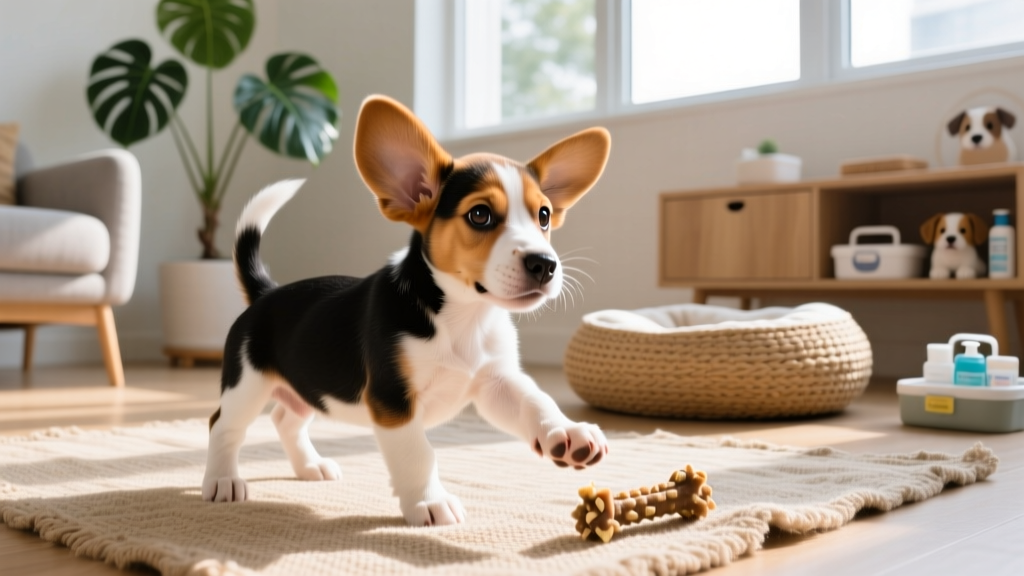
American Terrier Puppies: Complete Week-by-Week Care Guide
Everything you need to raise American terrier puppies: feeding schedules, potty training timelines, vaccination charts, and socialization checklists by age.

Bringing Home American Terrier Puppies: What Makes This Breed Unique
American terrier puppies — whether you're talking about the American Staffordshire Terrier, Rat Terrier, American Hairless Terrier, or the Jack Russell-type lines — share a common thread: high intelligence, relentless energy, and a stubborn streak that demands consistent, positive training from day one. These are not "set it and forget it" puppies. Their combination of prey drive, athleticism, and strong-willed temperament means the first six months shape the dog you'll live with for the next 12-16 years.
This guide covers the full developmental arc from weeks 4 through 12 months with breed-specific expectations, exact feeding portions, vaccination timing, and real-world troubleshooting for the problems terrier owners actually face. Before we get into the week-by-week breakdown, one critical note: always consult your veterinarian before making decisions about vaccines, diet changes, or health concerns — this guide supplements, not replaces, professional veterinary care.
The ideal window is 8-10 weeks of age. The American Kennel Club and most veterinary behaviorists recommend that puppies remain with their littermates through at least 8 weeks to learn bite inhibition and basic canine social skills. For terrier breeds specifically, the extra week (week 9-10) can be beneficial because these puppies tend to be mouthy and benefit from sibling play before transitioning to a human household. Never bring home a terrier puppy before 7 weeks — early separation correlates with increased fear-based aggression and resource guarding in terrier-type breeds.
Age-Specific Milestones for American Terrier Puppies
Weeks 4-8: The Litter Phase (Breeder's Domain)
During this period, your future puppy is learning critical social skills from their mother and littermates. Here's what's happening developmentally:
- Week 4: Eyes and ears fully functional, first wobbly steps, beginning to explore beyond the whelping box
- Week 5: Play-biting emerges — this is how terriers learn bite inhibition from siblings
- Week 6: Fear period begins (peaks around week 8); negative experiences now can create lifelong phobias
- Week 7: Human bonding capacity peaks; ideal time for breeder to begin short handling sessions
- Week 8: First DHPP vaccine typically administered by the breeder's vet; ready for transition to new home
What you should ask your breeder: Request documentation of early neurological stimulation (ENS) protocols, deworming records (pyrantel pamoate at weeks 2, 4, 6, and 8), and the first veterinary exam results.
Weeks 8-12: The Adjustment Window
This is when your American terrier puppy arrives home and everything is new. Expect:
- Sleep: 18-20 hours per day, in bursts of 1-2 hours between active periods
- Bite inhibition regression: Without littermates to correct them, terrier puppies will test boundaries with human hands — expect nipping to increase for 1-2 weeks
- House training baseline: Bladder capacity is roughly 1 hour per month of age, so a 2-month-old puppy needs outdoor trips every 2 hours maximum
- Weight gain: American Staffordshire Terrier puppies should gain approximately 1-2 lb per week; Rat Terrier puppies gain 0.25-0.5 lb per week
Weeks 12-16: The Confidence Surge
Your terrier puppy is now more coordinated, more curious, and more likely to test rules. Key developments:
- Prey drive emergence: You'll notice stalking behavior toward small animals, moving shadows, or even children's feet — this is normal terrier instinct, not aggression
- Second fear period: Typically occurs between weeks 12-14; your previously bold puppy may suddenly seem fearful of familiar objects or sounds
- Teething begins: Deciduous (baby) teeth start loosening around week 14-16; expect increased chewing and mild gum bleeding
- Attention span: Still short — 3-5 minutes per training session maximum at this age
Weeks 16-24: The Adolescent Shift
This is where many terrier owners feel overwhelmed. Your puppy is physically larger, more energetic, and beginning to test independence:
- Energy spikes: Expect 2-3 "zoomie" sessions per day lasting 5-15 minutes each
- Selective hearing: Previously reliable recall may deteriorate temporarily — maintain consistency with high-value treats
- Adult teeth: All 42 permanent teeth should be in by 6-7 months; retained baby teeth are common in smaller terrier breeds and may require veterinary extraction
- Social maturity: Same-sex dog intolerance may begin appearing, particularly in American Staffordshire Terrier lines
Months 6-12: Young Adulthood
Your American terrier is approaching physical maturity but still mentally adolescent:
- Growth plates: For medium-to-large terriers (AmStaffs, Bull Terriers), growth plates don't close until 12-18 months — avoid forced running on hard surfaces and high-impact jumping
- Spay/neuter timing: Current veterinary consensus (per the AVMA) suggests waiting until 6-12 months depending on breed size; discuss individual timing with your vet
- Settling begins: Most terriers start showing longer rest periods between 9-12 months, though full mental maturity isn't reached until 18-24 months
Feeding Schedule: Exact Portions by Age and Weight
American terrier puppies need a diet formulated for growth — look for an AAFCO statement on the bag that reads "formulated for growth" or "all life stages." For larger terrier breeds (American Staffordshire Terriers over 50 lb expected adult weight), choose a large-breed puppy formula to support controlled bone development and reduce hip dysplasia risk.
| Age | Meals/Day | Small Terrier (10-25 lb adult) | Medium/Large Terrier (40-70 lb adult) |
|---|---|---|---|
| 8-12 weeks | 4 meals | ¼ to ½ cup per meal (1-2 cups/day) | ½ to ¾ cup per meal (2-3 cups/day) |
| 12-16 weeks | 3 meals | ⅓ to ½ cup per meal (1-1.5 cups/day) | ¾ to 1 cup per meal (2.25-3 cups/day) |
| 4-6 months | 3 meals | ½ cup per meal (1.5 cups/day) | 1 to 1.5 cups per meal (3-4.5 cups/day) |
| 6-12 months | 2 meals | ¾ cup per meal (1.5 cups/day) | 1.5 to 2 cups per meal (3-4 cups/day) |
Important feeding notes for terriers: These dogs are prone to food-motivated counter-surfing and resource guarding. Feed measured meals at consistent times rather than free-feeding. If your puppy finishes their bowl in under 60 seconds, use a slow-feeder bowl (the Outward Hound Fun Feeder is a reliable option at $12-18) to prevent bloat and improve digestion. Always provide fresh water — puppies need approximately ½ to 1 ounce of water per pound of body weight daily.
Vaccination Schedule for American Terrier Puppies
Terrier puppies follow the same core vaccination protocol as other breeds, but their high activity levels and outdoor exposure mean staying on schedule is critical. The Merck Veterinary Manual outlines the following standard protocol:
| Age | Vaccine | Notes |
|---|---|---|
| 6-8 weeks | DHPP (Distemper, Hepatitis, Parainfluenza, Parvovirus) — 1st dose | Often given by breeder before pickup |
| 10-12 weeks | DHPP — 2nd dose; Bordetella (optional, recommended for group training classes) | Maternal antibodies declining; immune response building |
| 14-16 weeks | DHPP — 3rd dose; Rabies (required by law in most US states) | Final puppy series; full immunity ~2 weeks after last DHPP |
| 12-16 months | DHPP booster; Rabies booster | Then every 1-3 years depending on local regulations |
Cost expectation: The full puppy vaccination series typically runs $150-$300 at a private veterinary clinic, or $75-$150 at low-cost vaccine clinics. Some veterinarians offer puppy wellness packages that bundle exams, vaccines, deworming, and fecal tests for $300-$500 total.
Your American terrier puppy can explore your own private yard immediately after coming home. However, avoid public areas where unvaccinated dogs may have been (dog parks, pet stores, public sidewalks with heavy dog traffic) until 2 weeks after the final DHPP booster at 14-16 weeks — meaning approximately 16-18 weeks of age for full public access. That said, the critical socialization window closes around 14 weeks, so you should carry your puppy or use a stroller to expose them to new environments, sounds, and vaccinated, healthy adult dogs during weeks 8-14. Puppy kindergarten classes that require proof of at least one DHPP dose (given 7+ days prior) are considered safe by most veterinary behaviorists.
Socialization Window: The Critical Weeks 3-14 Checklist
For American terrier puppies, socialization is arguably more important than for many other breed types. Their natural wariness of unfamiliar dogs and strong prey drive mean that under-socialized terriers are at significantly higher risk for leash reactivity, dog-on-dog aggression, and chasing behaviors. The primary socialization window runs from approximately 3 weeks to 14 weeks, with peak sensitivity between weeks 6-8.
Terrier-Specific Socialization Checklist
- Surfaces: Walk on grass, gravel, concrete, wet pavement, metal grates, wooden decks, and slippery floors
- People: Meet at least 30 different people by 12 weeks — include children (supervised), people wearing hats/sunglasses, people using mobility aids, tall people, people with deep voices
- Other animals: Positive, controlled exposure to calm adult dogs (fully vaccinated), cats (if household has cats), and livestock if accessible — critical for managing terrier prey drive
- Sounds: Vacuum cleaner, doorbell, thunderstorm recordings (start at low volume), traffic noise, children shouting, fireworks recordings at low volume
- Handling: Daily paw handling, ear inspection, mouth opening, nail clipping practice (even if no nails need trimming), gentle restraint practice for vet visits
- Environments: Car rides (short trips ending in fun destinations), outdoor café patios, empty parking lots, friend's houses, grooming salon visits (just for treats and handling, no full groom yet)
- Novel objects: Umbrellas opening, plastic bags rustling, bicycles, skateboards, balloons — pair each new object with high-value treats
The golden rule: Every new experience should be paired with something positive — treats, praise, or play. If your terrier puppy shows fear, do not force the interaction. Increase distance from the trigger, let the puppy observe, and reward calm behavior. Forcing a fearful terrier puppy into a situation will create a lasting negative association.
Potty Training Timeline and Realistic Expectations
American terrier puppies are physically capable of learning potty routines quickly, but "fully trained" is a relative term. Here's what to expect realistically:
- Weeks 8-12: Frequent accidents are normal. You're teaching the routine, not expecting perfection. Take puppy out every 1-2 hours, plus immediately after eating, drinking, playing, or waking from a nap.
- Weeks 12-16: Accidents should decrease to 1-3 per week if you're consistent. Puppy begins to signal (sniffing, circling, heading to the door).
- Months 4-6: Most terrier puppies are reliably house-trained during the day with 0-1 accidents per month. Nighttime control improves as bladder capacity increases.
- Months 6-8: Considered fully house-trained for most terriers. Occasional marking behavior may emerge in intact males around 6-9 months.
When will my puppy be fully potty trained? Realistically, expect 4-6 months for reliable daytime control and 6-8 months for full overnight reliability. Terrier breeds tend to learn faster than giant breeds but slower than some herding breeds due to their independent nature. If your puppy is still having daily accidents past 5 months, consult your veterinarian to rule out urinary tract infections, which are not uncommon in terrier puppies.
Troubleshooting Common Potty Training Problems
Submissive/excitement urination: Common in terrier puppies under 6 months. Don't punish — it makes it worse. Greet your puppy calmly, take them outside immediately upon arrival, and avoid direct eye contact during greetings until the behavior resolves.
Crate accidents: If your puppy is soiling their crate, the crate may be too large (they're eliminating in one corner and sleeping in another). Use a divider to size the crate so the puppy can stand, turn around, and lie down — but not much more. Also rule out scheduling issues: a 10-week-old puppy cannot hold it for 4 hours overnight.
Regression: Very common around 4-5 months and again at 8-10 months. This is developmental, not defiance. Return to more frequent outdoor trips and higher-value treats for outdoor elimination.
Crate Training Progression and Time Limits
Crate training is essential for terrier puppies — these are dogs who will dismantle your baseboards, eat your shoes, and potentially ingest dangerous objects if left unsupervised. The crate is a management tool, not a punishment.
| Puppy Age | Maximum Crate Time (Day) | Maximum Crate Time (Night) | Training Focus |
|---|---|---|---|
| 8-10 weeks | 30-60 minutes | 2-3 hours (then potty break) | Building positive association; feeding meals in crate |
| 10-12 weeks | 1-2 hours | 3-4 hours (then potty break) | Short departures; quiet settling |
| 3-4 months | 2-3 hours | 4-5 hours (may sleep through) | Longer absences; reducing whining |
| 4-6 months | 3-4 hours | 6-8 hours | Independence building; preventing separation anxiety |
| 6+ months | 4-6 hours max | 8 hours | Transitioning to dog-proofed room freedom (when ready) |
Terrier-specific crate tip: Wire crates work best for most terriers because they tend to chew through fabric and plastic. For strong chewers (American Staffordshire Terrier puppies in particular), invest in a heavy-duty crate like the ProSelect Empire ($200-$250) rather than replacing multiple standard crates. Always provide a safe chew toy in the crate — a frozen Kong stuffed with peanut butter (xylitol-free) works well for the first 10-15 minutes to ease the transition.
Teething Timeline and Relief Strategies
American terrier puppies are aggressive chewers even before teething begins — it's a breed trait driven by their working-dog heritage. Teething simply amplifies an already strong instinct.
- 3-4 months: Baby teeth begin loosening. You may find tiny teeth around the house. Gums may appear red or slightly bloody — this is normal.
- 4-5 months: Peak teething discomfort. Chewing intensity increases dramatically. Incisors and canine teeth are replaced first.
- 5-6 months: Premolars and molars come in. Most puppies have their full set of 42 adult teeth by 6-7 months.
- 7+ months: If baby canine teeth are still present alongside adult teeth (retained deciduous teeth), your vet should evaluate for extraction — this is common in smaller terrier breeds and can cause misalignment and periodontal disease.
Safe Chew Recommendations by Age
- 8-12 weeks: Soft rubber toys (Kong Classic Puppy, $8-12), frozen wet washcloths (knot the cloth, soak in water, freeze), Nylabone Puppy Chew ($6-9)
- 3-5 months: Frozen Kong stuffed with plain yogurt, Benebone Puppy ($13-17), bully sticks (supervised only — remove when small enough to swallow), carrot sticks (frozen for extra soothing)
- 5-7 months: Transition to adult-strength chews — Kong Classic (red or black), yak cheese chews (Himalayan Dog Chew, $10-15 for a multi-pack), antler alternatives like EcoKind Elk Antler ($15-22)
Common American Terrier Puppy Problems and Solutions
Puppy Biting and Nipping
How do I stop puppy biting/nipping? Terrier puppies are among the most mouthy breeds you'll encounter. Biting is normal — it's how they explore, play, and relieve teething pain. Your goal is not to eliminate biting entirely (unrealistic for a puppy) but to redirect it to appropriate objects.
The redirect method: When puppy teeth touch skin, say "ouch" in a calm, medium-pitched voice (not a high-pitched yelp, which can excite terriers further). Immediately offer a chew toy. When the puppy bites the toy, praise enthusiastically. Repeat consistently. Most terrier puppies show significant improvement within 2-3 weeks of consistent redirection.
What doesn't work: Holding the puppy's mouth shut, alpha rolling, or any physical punishment. These methods increase fear and can trigger defensive biting — particularly counterproductive with a breed that already has a strong bite response. The American Veterinary Society of Animal Behavior explicitly recommends against dominance-based training methods.
Excessive Whining
Terrier puppies whine for specific reasons: they need to eliminate, they're uncomfortable, they're bored, or they're anxious. Before addressing whining behaviorally, always rule out physical needs. If the puppy has been recently fed, watered, exercised, and given a potty break, whining in the crate is typically attention-seeking or anxiety-based. Wait for 3-5 seconds of silence before opening the crate — even brief silence counts. Reward quiet with a treat delivered through the crate bars.
Destructive Chewing
American terrier puppies have powerful jaws and a low boredom threshold. Management is more effective than training at this age: puppy-proof your home (shoes in closets, cords behind furniture, toxic plants removed), provide 5-8 appropriate chew toys rotated weekly to maintain novelty, and never leave a terrier puppy unsupervised in an un-proofed room. A tired puppy is a well-behaved puppy — ensure your terrier gets adequate physical exercise AND mental stimulation (sniffing games, puzzle feeders, short training sessions) daily.
Leash Reactivity (Early Signs)
Some terrier puppies begin showing leash frustration as early as 4-5 months — barking, lunging, or pulling toward other dogs on walks. This is often frustration-based (they want to play) rather than fear-based, but it should be addressed early with counter-conditioning: reward your puppy for looking at you when another dog is at a distance, gradually decreasing the distance over weeks. Consider enrolling in a positive-reinforcement puppy class or working with a certified professional dog trainer (CPDT-KA or IAABC credentialed) if reactivity escalates.
First-Year Cost Breakdown for American Terrier Puppies
Budgeting realistically prevents stressful surprises. Here's what American terrier puppy owners typically spend in the first 12 months:
| Category | Low Estimate | Mid Estimate | High Estimate |
|---|---|---|---|
| Puppy purchase/adoption fee | $200 (rescue) | $1,200 (responsible breeder) | $2,500 (show-line breeder) |
| Veterinary (vaccines, exams, spay/neuter, heartworm prevention) | $500 | $900 | $1,500 |
| Food (quality puppy kibble, treats) | $350 | $600 | $1,000 |
| Supplies (crate, bed, leash, harness, bowls, toys, grooming tools) | $250 | $500 | $900 |
| Training (puppy class, group classes, or private sessions) | $150 (group class) | $400 (multiple group classes) | $1,500 (private trainer) |
| Pet insurance (annual premium) | $300 | $600 | $900 |
| Emergency fund recommendation | $500 | $1,000 | $2,000 |
| Total First Year | $2,250 | $5,200 | $10,300 |
Where to save: Low-cost vaccine clinics (often hosted by local shelters or Tractor Supply stores) can reduce vaccination costs by 40-60%. Buying gently used crates and beds from Facebook Marketplace is safe if you sanitize thoroughly. Where not to save: food quality, veterinary preventive care, and training — cutting corners here costs more in the long run through health problems and behavioral issues.
Frequently Asked Questions
How often should I feed my American terrier puppy at 10 weeks old?
At 10 weeks, feed 4 meals per day spaced roughly 4 hours apart during waking hours. For example: 7 AM, 11 AM, 3 PM, and 7 PM. Each meal should be approximately ¼ to ½ cup of puppy-formula kibble depending on your terrier's expected adult size. Remove uneaten food after 15-20 minutes to establish a routine and prevent grazing.
Are American terrier puppies good with children?
Well-socialized American terrier puppies can be excellent family dogs, but they require supervision with children under 10. Terrier puppies are mouthy and energetic — they may accidentally knock over toddlers or nip during play. Teach children to respect the puppy's crate as a safe space, never to disturb a sleeping or eating puppy, and to engage in calm interaction. Always supervise interactions between any puppy and young children.
When should I start formal training classes?
Puppy kindergarten classes can begin as early as 8-10 weeks, provided your puppy has received at least one DHPP vaccination at least 7 days before the first class. Look for classes that use positive reinforcement methods and require proof of vaccination for all attendees. Early training is especially important for terrier breeds — establishing basic obedience before the adolescent independence phase (around 5-6 months) gives you a foundation to build on when your puppy starts testing boundaries.
My terrier puppy won't stop digging in the yard — is this normal?
Yes, digging is an innate terrier behavior. These dogs were bred to pursue burrowing prey. Rather than trying to eliminate the behavior entirely, provide a designated digging area (a sandbox or a specific corner of the yard) and redirect your puppy there when they dig elsewhere. Bury toys or treats in the approved area to make it more attractive than your flower beds.
Should I get pet insurance for my American terrier puppy?
Yes, strongly recommended. Enrolling while your puppy is young and healthy means no pre-existing condition exclusions. Terrier breeds are predisposed to conditions like patellar luxation, allergies, and dental disease — all of which can require expensive treatment. Policies from providers like Trupanion, Healthy Paws, or Lemonade typically range from $30-$75/month for puppy enrollment, and can reimburse 70-90% of unexpected veterinary bills.
Priya Sutaria
All our authors care for dogs every day — read more of their work on the authors page.