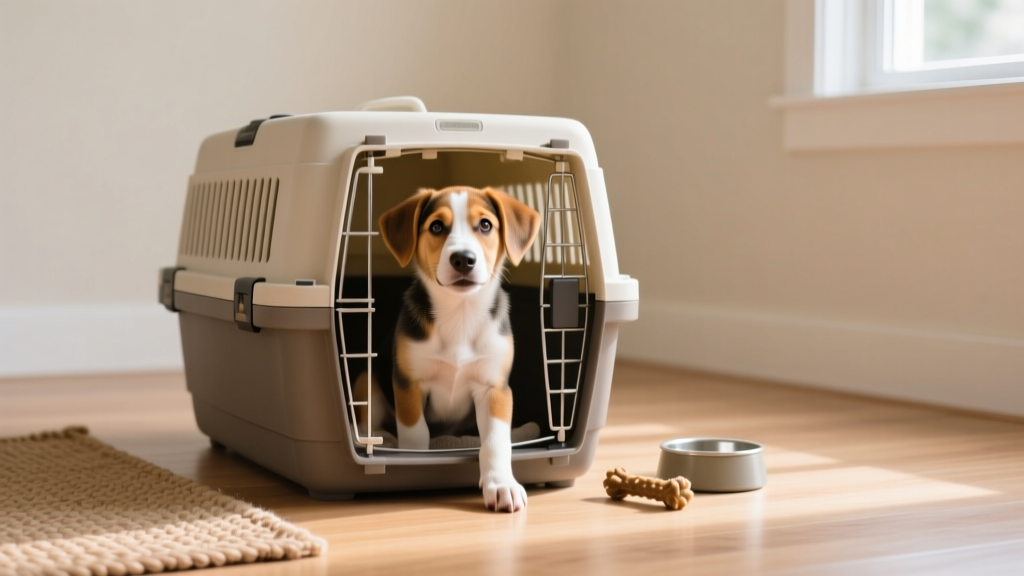
American Pitbull Terrier Puppy Guide: Milestones, Feeding & Training
Complete American Pitbull Terrier puppy guide covering milestones, feeding schedules, vaccination timelines, potty training, and first-year costs for 2026.

The American Pitbull Terrier (APBT) is one of the most loyal, athletic, and people-oriented breeds you'll ever raise — but bringing home an American Pitbull Terrier puppy comes with unique responsibilities. These dogs mature into powerful, confident adults weighing 30–65 lb (14–29 kg), and the foundation you lay between 8 weeks and 12 months shapes everything that follows. This guide gives you breed-specific, week-by-week clarity so you can raise a well-adjusted, healthy APBT.
When Should You Bring Your American Pitbull Terrier Puppy Home?
The ideal window to bring your APBT puppy home is between 8 and 10 weeks of age. While some breeders may offer puppies at 6 weeks, the American Veterinary Medical Association (AVMA) strongly recommends puppies remain with their litter until at least 8 weeks. During weeks 6–8, littermates teach critical bite inhibition — something an APBT puppy absolutely needs, given the breed's powerful jaw structure (average bite force of approximately 235 PSI).
If you're adopting from a rescue, puppies may arrive at varying ages. Puppies separated before 8 weeks often show heightened nipping, resource guarding, and separation anxiety later in life. Budget an extra 4–6 weeks of dedicated socialization if your puppy was separated early.
Age-Specific Milestones: What to Expect Week by Week
APBT puppies develop rapidly, both physically and behaviorally. Here's your milestone roadmap:
Weeks 4–8 (Breeder/Foster Phase)
- Weight: 2–5 lb (0.9–2.3 kg)
- Teeth: Deciduous (baby) teeth fully erupted — 28 sharp needle teeth
- Senses: Full hearing and vision; startle reflexes still developing
- Behavior: Litter play-fighting peaks; first signs of individual temperament emerge
- What you can do: If visiting the litter, handle the puppy daily for 3–5 minutes to begin human imprinting
Weeks 8–12 (Home Transition)
- Weight: 5–10 lb (2.3–4.5 kg)
- Primary fear period: Weeks 8–10 are a sensitive window — negative experiences can create lasting phobias
- Bladder capacity: Approximately 1 hour per month of age (a 2-month-old holds ~2 hours max)
- Sleep: 18–20 hours per day; overtired puppies bite more
- What you do: Establish routine, begin crate training, start name recognition games
Weeks 12–16 (Confidence Building)
- Weight: 10–20 lb (4.5–9 kg)
- Teething onset: Gums may swell; chewing intensity increases sharply
- Testing phase: Puppy begins testing boundaries — consistency is critical now
- Second fear period: May occur around 12–14 weeks; don't force scary encounters
- What you do: Enroll in puppy kindergarten (force-free methods only), practice handling exercises daily
Weeks 16–24 (The Athletic Adolescent)
- Weight: 20–40 lb (9–18 kg)
- Adult teeth: All 42 permanent teeth should be in by 6 months
- Energy surge: APBT puppies at this stage need structured physical and mental outlets — without them, destructive chewing and hyperactivity spike
- Social maturity: Dog-to-dog interactions become more complex; monitor play styles closely
- What you do: Introduce puzzle feeders, flirt pole sessions (max 10 min), and basic obedience reliability
Months 6–12 (Approaching Maturity)
- Weight: 30–55 lb (14–25 kg), approaching adult size
- Sexual maturity: Intact males may begin marking; females may enter first estrus cycle (6–9 months typical)
- Growth plates: Still open — avoid high-impact jumping or forced running on hard surfaces until 12–14 months
- Behavior: May "forget" training temporarily; this is normal adolescent regression, not defiance
- What you do: Discuss spay/neuter timing with your vet (many APBT-specific recommendations suggest 9–12 months to allow musculoskeletal maturation)
Feeding Schedule: Exact Portions by Age and Weight
APBT puppies are muscular and active, requiring a diet formulated for medium-to-large breed puppies. Look for an AAFCO statement reading "complete and balanced for growth" or "for all life stages." Aim for a food with 22–28% protein and 12–18% fat on a dry matter basis. Avoid high-calcium supplements — APBTs are prone to joint issues, and excess calcium can accelerate growth plate problems.
| Age | Meals Per Day | Estimated Weight | Daily Kibble (cups/day)* | Notes |
|---|---|---|---|---|
| 8–12 weeks | 4 | 5–10 lb (2.3–4.5 kg) | 1–1.5 cups | Soften kibble with warm water if needed |
| 12–16 weeks | 3 | 10–20 lb (4.5–9 kg) | 1.5–2.5 cups | Transition to dry kibble fully |
| 4–6 months | 3 | 20–35 lb (9–16 kg) | 2.5–3.5 cups | Monitor body condition score (BCS) — ribs should be palpable but not visible |
| 6–9 months | 2 | 35–50 lb (16–23 kg) | 3–4 cups | Drop to 2 meals; adjust for activity level |
| 9–12 months | 2 | 45–60 lb (20–27 kg) | 3–4.5 cups | Begin transitioning to adult formula at 12 months |
*Cup measurements vary by brand and caloric density. Always check the feeding chart on your specific food and adjust based on your puppy's body condition score (BCS). A healthy APBT puppy should have a visible waist when viewed from above and a tucked abdomen from the side.
Vaccination Schedule: What Your APBT Puppy Needs and When
Your veterinarian will tailor a protocol based on local disease prevalence, but the American Animal Hospital Association (AAHA) Canine Vaccination Guidelines recommend the following core schedule for APBT puppies:
| Age | Vaccine | Protection Against |
|---|---|---|
| 6–8 weeks | DHPP (1st dose) | Distemper, Hepatitis (Adenovirus), Parainfluenza, Parvovirus |
| 10–12 weeks | DHPP (2nd dose) + Bordetella | Booster for core diseases + kennel cough (important if attending puppy classes) |
| 14–16 weeks | DHPP (3rd dose) + Rabies | Final core booster; Rabies required by law in all 50 states |
| 12 months | DHPP booster + Rabies booster | 1-year boosters; subsequent intervals per vet recommendation (typically 3-year thereafter) |
Leptospirosis and Lyme vaccines are non-core and depend on your geographic area and lifestyle. Discuss with your vet if you live in the Northeast, Upper Midwest, or Pacific Northwest where tick-borne diseases and leptospirosis are more prevalent.
Socialization Window: The Critical 3–14 Week Period
For APBT puppies, socialization isn't optional — it's the single most important investment you make. The primary socialization window closes around 14 weeks, and APBTs that miss structured exposure during this period are significantly more likely to develop dog-directed reactivity, leash aggression, or fear-based behaviors as adults.
According to the American Kennel Club (AKC), puppies need positive exposure to at least 100 novel stimuli during this window. Here's your breed-specific checklist:
When can your puppy go outside and meet other dogs? Controlled outdoor exposure can begin immediately in low-risk areas (your yard, a friend's fenced yard with known-vaccinated dogs). Public dog parks should wait until at least one week after the 14–16 week DHPP booster — roughly 17 weeks of age. Puppy kindergarten classes are safe if all attendees provide proof of age-appropriate vaccinations; the AVMA endorses this approach.
Potty Training Timeline and Realistic Expectations
APBT puppies are intelligent and generally eager to please, which works in your favor for house training. However, their high energy and short puppy attention spans mean accidents will happen. Here's a realistic timeline:
- 8–12 weeks: Expect 2–5 accidents per day. Bladder control is minimal. Take puppy out every 30–60 minutes while awake, plus immediately after eating, drinking, playing, and waking from naps.
- 12–16 weeks: Accidents drop to 1–2 per day if you're consistent. Puppy begins to signal (sniffing, circling, whining at door).
- 16–24 weeks: Most APBT puppies are reliably house-trained with rare accidents. Overnight bladder control typically reaches 6–8 hours.
- 6+ months: Fully potty trained for most puppies. If accidents persist past 6 months, consult your vet to rule out urinary tract infection, ectopic ureters, or behavioral causes.
Sample Potty Log (First 2 Weeks Home)
Track these data points to identify patterns:
| Time | Activity | Location | Result | Reward Given |
|---|---|---|---|---|
| 7:00 AM | Wake up → outside | Designated potty spot | ✅ Urinated | Treat + verbal praise |
| 7:20 AM | After breakfast | Designated potty spot | ✅ Both | Treat + 5 min play |
| 8:15 AM | Post-play session | Designated potty spot | ✅ Urinated | Treat + praise |
| 9:30 AM | Missed cue | Kitchen rug | ❌ Accident | Interrupted, carried outside, praised for finishing |
Use a simple notebook or phone app. After 2 weeks, you'll see clear timing patterns that let you prevent most accidents.
Crate training progression for potty training:
- 8–10 weeks: Max 1–2 hours in crate while you're home; overnight 3–4 hours (set an alarm)
- 10–14 weeks: Up to 3 hours during day; overnight 5–6 hours
- 14–16 weeks: Up to 4 hours during day; overnight 6–7 hours
- 4–6 months: Up to 5 hours during day; overnight 7–8 hours
Never exceed these limits. APBT puppies left in crates too long develop anxiety-driven destruction and may soil the crate, which undermines all potty training progress. Use a crate sized for your puppy's current body — a 36-inch wire crate with a divider panel works well; adjust the divider as your puppy grows.
Teething Timeline and Safe Relief Strategies
APBT puppies are powerful chewers even during teething. The breed's jaw strength means you need durable, safe options — flimsy toys will be destroyed in minutes and may cause intestinal blockages.
- 3–4 months: Baby teeth begin loosening. You may find small teeth in bedding or toys (many puppies swallow them — this is normal and harmless).
- 4–5 months: Peak discomfort. Chewing intensity peaks. Gums may bleed slightly — this is expected.
- 5–6 months: Adult teeth fully erupt. If any baby teeth remain past 7 months (retained deciduous teeth), your vet should extract them to prevent crowding and dental disease.
Safe chew recommendations for APBT puppies:
- Kong Classic (Puppy rubber, pink/blue): Fill with a mix of plain Greek yogurt, mashed banana, and kibble; freeze overnight. The puppy formula rubber is softer on developing teeth.
- Benebone Wishbone (Puppy line): Nylon chew infused with real bacon; the wishbone shape lets puppy grip with front paws. Replace when wear grooves exceed 1/8 inch deep.
- Frozen carrots: Large whole carrots, frozen — inexpensive, low-calorie, and the cold soothes inflamed gums. Supervise to prevent choking on broken pieces.
- Wet washcloth: Dampen a clean washcloth, twist into a rope, freeze. Let puppy chew under supervision; discard if fabric tears.
Avoid: Rawhide (choking and blockage risk), cooked bones (splinter into sharp fragments), antlers and hooves (too hard — can fracture puppy teeth), and any toy small enough to swallow whole.
Common APBT Puppy Problems and Solutions
Puppy Biting and Nipping
APBT puppies are mouthy — this is normal breed behavior, not aggression. Their play style involves grabbing and tugging, and without littermates to teach bite inhibition after 8 weeks, the behavior transfers to your hands, ankles, and clothing.
Solution framework:
- Redirect: When teeth touch skin, say "oops" in a neutral tone, withdraw attention for 5 seconds, then offer an appropriate chew toy.
- Time-outs: If nipping persists after 2 redirects, calmly place puppy in a playpen or crate for 30–60 seconds. This teaches that biting ends fun — not that biting gets a reaction.
- Satisfy the urge: Schedule 3–4 structured tug sessions daily with a designated tug toy. APBTs thrive on tug play; it channels their drive appropriately.
- Manage arousal: Overtired puppies bite more. Enforce naps every 60–90 minutes in the crate. Most APBT puppies need 18–20 hours of sleep per day at 8–12 weeks.
Destructive Chewing
Between 4–8 months, APBT puppies can destroy baseboards, shoes, and furniture legs with alarming speed. This is a combination of teething, boredom, and the breed's natural tenacity.
Solutions: Puppy-proof every room before giving free access. Provide at least 5 approved chew items rotated weekly to maintain novelty. Use bitter apple spray on furniture legs as a deterrent (test on a hidden area first). Ensure 30–45 minutes of structured exercise and 15–20 minutes of mental enrichment (snuffle mats, frozen Kongs, training sessions) daily.
Whining in the Crate
Nighttime whining is nearly universal in the first 1–2 weeks. APBTs are social dogs and isolation feels unnatural initially.
Solutions: Place the crate in your bedroom for the first 2–3 weeks so puppy can hear and smell you. Use a heartbeat toy (Snuggle Puppy brand) or a ticking clock wrapped in a towel. Take puppy out to potty at your bedtime, then set one alarm for 3–4 hours later. If puppy whines outside of scheduled potty times, wait 2–3 minutes before responding — often they self-soothe.
First-Year Cost Breakdown for an APBT Puppy
Budgeting accurately prevents surprises. Here's a realistic 2026 cost estimate based on national averages for a medium-large breed puppy:
| Category | Low End | Mid Range | High End | Notes |
|---|---|---|---|---|
| Puppy purchase/adoption | $200 (rescue) | $1,500 (responsible breeder) | $3,000+ (show-line breeder) | Avoid puppies under $500 from unknown sources — high puppy mill risk |
| Veterinary (vaccines, wellness, spay/neuter) | $800 | $1,200 | $1,800 | Includes initial series, fecal tests, heartworm prevention, and alter surgery |
| Food (12 months) | $400 | $600 | $900 | Quality puppy formula kibble; raw/fresh diets cost 2–3x more |
| Supplies (crate, bed, leash, bowls, toys) | $250 | $400 | $700 | APBT puppies destroy cheap beds — invest in chew-resistant options |
| Training (puppy class + basic obedience) | $200 | $400 | $800 | Group classes $150–$300 per 6-week session; private sessions $75–$150/hr |
| Preventive medications (flea/tick, heartworm) | $200 | $350 | $500 | Year-round prevention recommended in most US regions |
| Pet insurance (optional but recommended) | $400 | $600 | $900 | APBTs are prone to hip dysplasia and skin allergies — insurance pays for itself with one major claim |
| Total First Year | $2,450 | $5,050 | $8,600 |
Ongoing annual costs after year one typically range from $1,500–$3,000 for routine care, food, and preventives — not including emergency veterinary expenses.
Frequently Asked Questions
How often should I feed my APBT puppy at each age?
At 8–12 weeks, feed 4 meals per day. At 12–16 weeks, drop to 3 meals. At 6 months, transition to 2 meals per day, which you'll maintain into adulthood. Never free-feed an APBT puppy — this breed will overeat, and excess weight stresses developing joints, increasing hip dysplasia risk.
When will my APBT puppy be fully potty trained?
Most APBT puppies are reliably house-trained by 4–6 months with consistent scheduling. Some males may take slightly longer. If your puppy is still having frequent accidents past 6 months, consult your veterinarian to rule out medical causes before assuming it's a behavioral issue.
How do I stop my APBT puppy from biting and nipping?
Use a redirect-and-withdraw approach: when teeth touch skin, calmly withdraw attention for 5 seconds, then offer an approved chew toy. Enforce mandatory naps every 60–90 minutes (overtired puppies bite more). Schedule 3–4 daily tug sessions with a designated toy. Never hit, hold the mouth shut, or use alpha rolls — these methods increase fear and can trigger defensive aggression, which is especially dangerous with a powerful breed.
When can my APBT puppy go to the dog park?
Wait until at least one week after the final DHPP booster at 14–16 weeks — so approximately 17 weeks of age. Before that, socialize in controlled settings: your yard, friends' yards with known-vaccinated dogs, and puppy kindergarten classes that require vaccination proof. Dog parks carry parvo risk and can also expose your puppy to overwhelming or aggressive dogs, which can create lasting negative associations during the socialization window.
Should I get pet insurance for my APBT puppy?
Strongly recommended. APBTs have elevated rates of hip dysplasia (estimated 12–15% prevalence per OFA data), skin allergies (atopic dermatitis), and cruciate ligament injuries. A single surgical repair for a torn CCL costs $3,000–$5,000. Enroll at 8–10 weeks before any pre-existing conditions are documented; premiums are lowest for young puppies.
What is the best age to spay or neuter my APBT?
Current veterinary research, including studies cited by the AKC, suggests that for medium-to-large breeds like the APBT, waiting until 9–12 months (after skeletal growth plates begin closing) may reduce the risk of certain orthopedic conditions and certain cancers. Discuss timing with your veterinarian based on your individual puppy's development, sex, and lifestyle.
Raising an American Pitbull Terrier puppy is a commitment that rewards you with one of the most devoted companions in the canine world. Stay consistent with training, prioritize early socialization, and consult your veterinarian at every milestone. The work you put in during these first 12 months builds a confident, stable, and joyful adult dog.
Marcus Aldridge
All our authors care for dogs every day — read more of their work on the authors page.