Boykin Spaniel Puppies: Complete Puppy Care & Milestone Guide
Everything you need to raise Boykin Spaniel puppies: age milestones, feeding schedules, potty training, vaccinations, socialization, and first-year costs.

Boykin Spaniel puppies are compact, energetic, and famously eager to please — a combination that makes them outstanding companions for active families and hunters alike. But their high intelligence and sensitivity also mean that early care decisions have an outsized impact on the dog they become. This guide walks you through every critical stage of your Boykin Spaniel puppy's first year, with breed-specific expectations, exact numbers, and real-world troubleshooting drawn from the experiences of Boykin breeders, trainers, and veterinary professionals.
When Should You Bring Your Boykin Spaniel Puppy Home?
The American Kennel Club and most responsible Boykin Spaniel breeders agree: 8 weeks of age is the earliest acceptable time to bring a puppy home. Many experienced Boykin breeders prefer to hold puppies until 9 or even 10 weeks, particularly for puppies destined for hunting homes where extra littermate socialization builds confidence.
Here's why timing matters specifically for this breed:
- Weeks 5–7 (litter socialization): Boykin Spaniel puppies learn bite inhibition, canine body language, and hierarchy through play with littermates. Removing them before week 8 often results in harder-mouthed puppies — a significant concern for a breed you may want to train for retrieving.
- Week 7 (fear imprint period): The first major fear period peaks around weeks 7–8. Puppies separated from their mother and littermates during this window can develop heightened separation anxiety — a known tendency in Boykins, who bond intensely with their people.
- Weeks 8–9 (transition readiness): By 8 weeks, puppies have received at least their first DHPP vaccine and are neurologically prepared to form strong attachments to new caregivers.
Red flag: Any breeder offering Boykin Spaniel puppies at 5 or 6 weeks is cutting corners on critical socialization. Walk away.
Boykin Spaniel Puppy Milestones: Week by Week
Boykin Spaniels mature at a moderate pace. Most reach physical adulthood around 12–14 months but retain puppy-like enthusiasm well into their second year. Here's what to expect at each stage.
| Age Range | Weight Range (lb / kg) | Key Milestones & Expectations |
|---|---|---|
| Weeks 4–8 | 3–7 lb / 1.4–3.2 kg | Eyes fully open, deciduous teeth erupting, beginning to eat gruel/solid food, first socialization with humans, first DHPP vaccine at 6–8 weeks, start of house-training awareness (breeder should begin). |
| Weeks 8–12 | 7–12 lb / 3.2–5.4 kg | Primary bonding period, intense curiosity, short attention span (5–10 min training sessions), peak of first fear period (8–10 weeks), rapid bladder control improvement, crate training begins, second DHPP vaccine at 10–12 weeks. |
| Weeks 12–16 | 12–18 lb / 5.4–8.2 kg | Noticeable confidence increase, can hold bladder 2–3 hours, basic cues (sit, come, name recognition) become reliable, third DHPP vaccine at 14–16 weeks, rabies vaccine, socialization window closing — urgency to expose to novel stimuli. |
| Weeks 16–24 | 18–30 lb / 8.2–13.6 kg | Teething begins (~16 weeks), increased independence, second fear period may appear around 6 months, testing boundaries, longer exercise tolerance (20–30 min walks), spay/neuter discussion with vet. |
| 6–12 Months | 25–40 lb / 11.3–18.1 kg (approaching adult weight) | Sexual maturity (if intact), adult teeth fully in by ~7 months, can handle 45–60 min of structured exercise, adolescent stubbornness peaks around 8–10 months, transition to adult food around 10–12 months. |
Breed-specific note: Boykin Spaniels are smaller than most other spaniels used for hunting (adult males typically 30–40 lb / 13.6–18.1 kg, females 25–35 lb / 11.3–15.9 kg per the AKC breed standard). Their compact size means growth spurts can seem dramatic — your puppy may gain 2–3 lb in a single week during peak growth around months 3–5.
Feeding Your Boykin Spaniel Puppy: Schedule & Portions
Boykin Spaniel puppies are enthusiastic eaters with a tendency toward rapid weight gain if overfed. Excess weight during puppyhood stresses developing joints and increases the risk of hip dysplasia, a condition the Orthopedic Foundation for Animals has documented in approximately 12–15% of Boykin Spaniels screened.
Choose a puppy food labeled as AAFCO-compliant for growth (or "all life stages"). For this breed, look for a formula with:
- Minimum 22% crude protein (26–28% is ideal for active Boykins)
- Minimum 8% crude fat
- DHA/EPA from fish oil for brain and retinal development
- Calcium-to-phosphorus ratio between 1.1:1 and 1.4:1
- No "large breed" formula needed — Boykins are medium-sized and do not require the restricted-calorie large-breed puppy diets
| Age | Meals Per Day | Total Daily Amount (approx.) | Notes |
|---|---|---|---|
| 8–12 weeks | 3–4 meals | ¾ – 1 cup/day (split across meals) | Moisten kibble with warm water for first 1–2 weeks home if puppy struggles with hard food. |
| 3–6 months | 3 meals | 1 – 1½ cups/day | Monitor body condition score weekly — you should feel ribs easily without pressing. |
| 6–12 months | 2 meals | 1½ – 2 cups/day | Reduce to 1¾ – 2 cups at transition to adult food (~10–12 months). |
Portion guidance: These amounts assume a mid-range kibble with approximately 350–400 kcal per cup. Always check the feeding chart on your specific food brand and adjust based on your puppy's body condition score (BCS). A BCS of 4–5 out of 9 is ideal — your Boykin puppy should have a visible waist when viewed from above and a slight abdominal tuck from the side.
Treats should not exceed 10% of daily caloric intake. For training sessions, use pea-sized soft treats (brands like Zuke's Mini Naturals or Blue Buffalo Bits work well for small-mouthed spaniels).
Vaccination Schedule for Boykin Spaniel Puppies
Your Boykin Spaniel puppy's immune system is not fully mature until approximately 16 weeks of age. Until then, maternal antibodies (received from colostrum) gradually wane, creating a window of vulnerability. The standard core vaccination protocol follows a series designed to close that gap.
| Age | Vaccine(s) | What It Protects Against |
|---|---|---|
| 6–8 weeks | DHPP (1st dose) | Distemper, Hepatitis (Adenovirus-2), Parainfluenza, Parvovirus |
| 10–12 weeks | DHPP (2nd dose), Bordetella (optional) | Same core diseases + Kennel Cough (if Bordetella given) |
| 14–16 weeks | DHPP (3rd dose), Rabies | Final core booster + Rabies (legally required in most US states) |
| 12–16 months | DHPP booster, Rabies booster | 1-year boosters, then typically 3-year intervals |
Lifestyle vaccines your vet may recommend for Boykin Spaniels:
- Leptospirosis: Highly recommended if your Boykin will swim in ponds, lakes, or slow-moving water — a common activity for this water-loving breed. Given as a 2-dose series starting at 12+ weeks.
- Lyme disease: Recommended in tick-endemic areas (Northeast, Upper Midwest, Pacific Coast). Pair with daily tick checks and a veterinary-approved tick preventive.
- Canine Influenza (H3N2/H3N8): Consider if your puppy will attend group training classes, dog shows, or boarding facilities.
Important: Do not take your puppy to dog parks, pet stores, or areas with unknown dog traffic until at least 7 days after the final DHPP dose at 14–16 weeks. Parvovirus can survive in soil for months and is devastating to puppies. Controlled socialization with known, fully vaccinated dogs in private yards is acceptable and encouraged.
The Critical Socialization Window (Weeks 3–14)
The American Veterinary Medical Association emphasizes that the primary socialization period for puppies closes between 12 and 14 weeks of age. For Boykin Spaniels — a breed that can develop shyness or noise sensitivity without proper early exposure — this window is non-negotiable.
Boykins are generally bold and outgoing, but their sensitivity means that negative experiences during this period can leave lasting impressions. The goal is positive, low-pressure exposure — never flooding (forcing a frightened puppy to "get over it").
Boykin Spaniel Puppy Socialization Checklist
Aim to check off at least 3–5 new experiences per week during the socialization window. Always pair novel experiences with high-value treats (boiled chicken, cheese, commercial soft treats).
- ☐ Grass, gravel, sand, wet pavement, wooden dock
- ☐ Car rides (start with 5-minute trips to pleasant destinations)
- ☐ Boat or canoe (critical for hunting-line Boykins — introduce on dry land first)
- ☐ Stairs (up and down, carpeted and bare)
- ☐ Elevator or automatic doors
- ☐ Children of various ages (supervised, gentle interactions only)
- ☐ People wearing hats, sunglasses, hoodies, uniforms
- ☐ People using wheelchairs, crutches, or walkers
- ☐ Delivery drivers, mail carriers
- ☐ At least 10–15 different strangers offering treats
- ☐ Gunshots (at extreme distance, paired with food — essential for hunting prospects)
- ☐ Thunderstorms (play recordings at low volume, gradually increase)
- ☐ Vacuum cleaner, hair dryer, blender
- ☐ Fireworks (recordings), doorbell, car horns
- ☐ Clapping, shouting, loud music
- ☐ Fully vaccinated adult dogs (calm, dog-social dogs only)
- ☐ Cats (if household has cats, supervised introductions)
- ☐ Livestock or wildlife at a distance (Boykins have strong prey drive)
- ☐ Nail trimming (start with one nail per session, high-value treats)
- ☐ Ear cleaning and inspection (Boykins are prone to ear infections)
- ☐ Tooth brushing with enzymatic dog toothpaste
- ☐ Being held, restrained gently, examined on a table
- ☐ Wearing a harness, life jacket, or field vest
Sound sensitivity protocol for Boykins: This breed's hunting heritage means they need to be comfortable with loud noises, but their sensitivity means you must proceed gradually. Start gunshot or thunder recordings at a volume so low your puppy shows no reaction, feed meals during playback, and increase volume by no more than 5–10% per week over 6–8 weeks. If your puppy shows fear (tucked tail, flattened ears, hiding), drop back to the previous comfortable volume.
Potty Training: Realistic Timeline & Troubleshooting
Boykin Spaniel puppies are generally quick to house-train thanks to their intelligence and eagerness to please. However, "quick" in puppy terms still means 4–6 months for reliable outdoor elimination, with occasional accidents possible up to 8–10 months.
Potty Training Timeline
- 8–10 weeks: Puppy can hold bladder approximately 1 hour per month of age (so ~2 hours max). Take outside every 1–2 hours during the day, immediately after meals, naps, and play sessions.
- 10–14 weeks: Bladder control improves to 2–3 hours. Puppy begins to signal (sniffing, circling, moving toward door). Accidents decrease if schedule is consistent.
- 14–20 weeks: Most Boykin puppies are reliably asking to go out by this stage. Can hold 3–4 hours during the day. Nighttime control often comes first (6–8 hours overnight by 14–16 weeks).
- 5–6 months: Near-full reliability with consistent routine. Remaining accidents usually caused by schedule disruption, excitement, or medical issues (rule out UTI with your vet).
Troubleshooting Common Potty Problems
| Problem | Likely Cause | Solution |
|---|---|---|
| Submissive urination when greeted | Excitement/anxiety (common in sensitive Boykins) | Ignore puppy for first 2–3 minutes when arriving home. Greet calmly at floor level outdoors. Never scold — it worsens the problem. |
| Frequent small accidents indoors | Incomplete bladder emptying or UTI | Visit vet for urinalysis. If medical causes ruled out, increase outdoor trip frequency and reward heavily for full voids outside. |
| Accidents in crate | Crate too large, puppy held too long, or anxiety | Use divider to make crate just large enough for puppy to stand, turn, and lie down. Reduce confinement time. Rule out separation anxiety. |
| Won't eliminate on leash | Leash pressure anxiety or surface preference | Use a 10–15 ft long line for more freedom. Take puppy to same spot each time. Wait up to 10 minutes; reward immediately upon elimination. |
Enzymatic cleaner is essential: Use a product like Nature's Miracle or Rocco & Roxie to fully break down urine proteins. Standard household cleaners leave residual scent that draws puppies back to the same spot.
Crate Training Progression & Time Limits
Boykin Spaniels generally accept crate training well when introduced positively. Their den-seeking instinct (valuable for field work) works in your favor. Use a wire or plastic crate sized for a 30–40 lb adult dog with a divider panel.
| Puppy Age | Max Daytime Crate Time | Max Overnight Crate Time | Training Focus |
|---|---|---|---|
| 8–10 weeks | 1–2 hours | 3–4 hours (set alarm) | Meals in crate, door open naps, treat tosses, stuffed Kong for 5–10 min alone time |
| 10–14 weeks | 2–3 hours | 5–6 hours | Graduated departures (leave room for 5–30 min), quiet settling rewarded |
| 14–16 weeks | 3–4 hours | 6–7 hours | Puppy should enter crate voluntarily; begin using cue word ("kennel" or "crate") |
| 4–6 months | 4–5 hours | 7–8 hours | Crate becomes safe space; door can be left open during supervised time |
Never crate a Boykin Spaniel puppy longer than the maximums above. Extended confinement leads to anxiety, whining escalation, and can create a negative association that undermines the crate as a lifelong safe space. If you work full-time, arrange a midday visit from a dog walker, neighbor, or pet sitter.
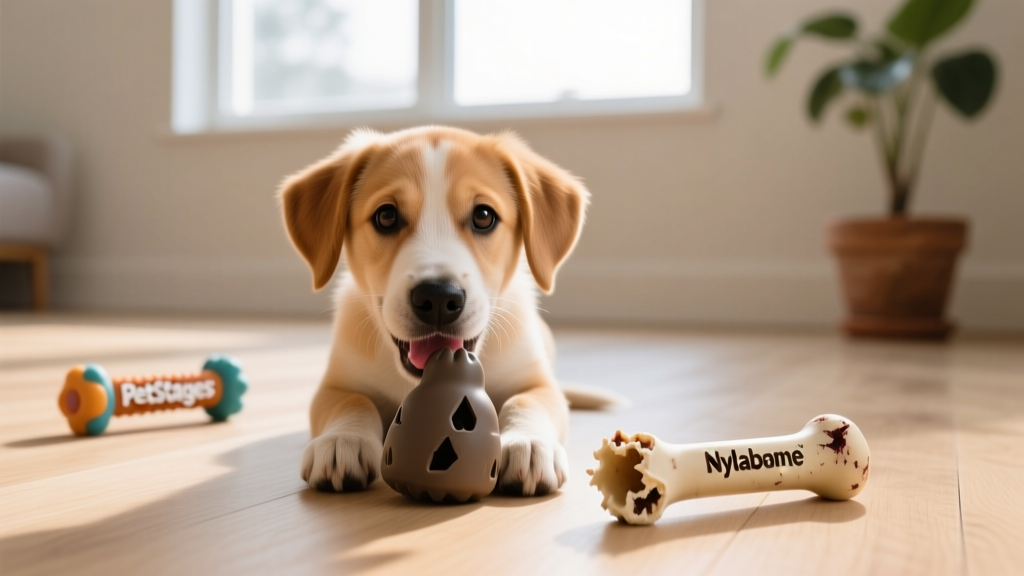
Teething Timeline & Relief Strategies
Boykin Spaniel puppies begin teething around 12–16 weeks, when deciduous (baby) teeth start loosening to make room for 42 permanent adult teeth. The process is typically complete by 6–7 months.
During this period, your puppy will chew everything. This is not misbehavior — it's a physiological need. Chewing relieves gum pressure and helps loosen baby teeth.
Safe Chew Recommendations by Stage
- 12–16 weeks (early teething): Frozen washcloths (wet, twisted, frozen), rubber Kong toys stuffed with puppy-safe peanut butter (xylitol-free) and frozen, Nylabone Puppy Chew (soft variety).
- 16–24 weeks (peak chewing): Bully sticks (supervised — remove when small enough to swallow), Benebone Wishbone (size small for Boykins), frozen carrot sticks, West Paw Zogoflex Toppl.
- 24–28 weeks (final tooth eruption): Introduce dental chews appropriate for your puppy's weight (e.g., Greenies Teenie size for puppies under 25 lb). Continue rotating textures.
Avoid: Rawhide (choking and blockage risk), cooked bones (splintering), ice cubes (can fracture teeth), and any chew toy harder than your puppy's teeth — the "kneecap test" applies: if you wouldn't want to be hit with it on your kneecap, it's too hard for puppy teeth.
Common Boykin Spaniel Puppy Problems & Solutions
Every puppy has challenges, but Boykin Spaniels come with a few predictable quirks rooted in their breeding as versatile hunting companions with high social drive.
Puppy Biting & Nipping
Boykin puppies are mouthy — their retrieving heritage means they explore the world through their mouths. Nipping is normal but must be managed early to prevent it from becoming a habit.
Solution protocol (positive reinforcement only):
- When puppy bites skin, say "ouch" in a calm, flat tone (not a high-pitched yelp, which can excite some spaniels more).
- Immediately redirect to an appropriate chew toy.
- When puppy chews the toy, praise calmly and offer a treat.
- If biting persists after 2–3 redirects, end the interaction: stand up, fold arms, ignore for 20–30 seconds (negative punishment — removing attention).
- Resume play and repeat. Consistency across all family members is essential.
Most Boykin puppies significantly reduce mouthing by 5–6 months with consistent redirection. Never hold the mouth shut, alpha roll, or use physical punishment — these methods damage trust and can escalate fear-based biting in this sensitive breed.
Whining & Separation Distress
Boykins form deep bonds and are prone to vocalizing when left alone. Distinguish between normal adjustment whining (first 1–2 weeks home) and separation anxiety (destructive behavior, non-stop vocalization, inappropriate elimination when alone).
Prevention strategy:
- Practice departures from day one: pick up keys, walk to door, return. Build up to leaving for 30 seconds, 1 minute, 5 minutes, gradually increasing.
- Leave a long-lasting food puzzle (frozen Kong) when departing — this creates a positive association with your absence.
- Keep arrivals and departures low-key. Ignore puppy for 2–3 minutes upon returning.
- Never use the crate as punishment.
Destructive Chewing
Beyond teething, adolescent Boykins (6–10 months) often go through a second chewing surge linked to boredom and excess energy. This breed needs both physical exercise and mental stimulation.
Daily enrichment targets for adolescent Boykins:
- 30–45 minutes of structured exercise (leash walks, fetch, swimming)
- 15–20 minutes of training (new tricks, scent work, recall practice)
- 1–2 food puzzle meals per day instead of bowl feeding
- Rotating chew toys (3–4 available, swapped every 2–3 days to maintain novelty)
First-Year Cost Breakdown for a Boykin Spaniel Puppy
Budgeting realistically prevents surprises. The following estimates reflect 2026 US pricing and assume a single puppy with no major health complications.
| Category | Low Estimate | Mid Estimate | High Estimate |
|---|---|---|---|
| Puppy Purchase (responsible breeder) | $1,200 | $1,800 | $2,500 |
| Veterinary (vaccines, wellness exams, spay/neuter, heartworm test, fecal) | $600 | $900 | $1,400 |
| Food & Treats (puppy formula, 12 months) | $350 | $550 | $800 |
| Preventive Medications (heartworm, flea/tick — 12 months) | $200 | $350 | $500 |
| Supplies (crate, bed, leash, harness, bowls, grooming tools, toys) | $200 | $400 | $700 |
| Training (puppy class, basic obedience) | $150 | $350 | $800 |
| Pet Insurance (optional, annual premium) | $0 | $500 | $900 |
| TOTAL (excluding purchase) | $1,500 | $3,050 | $5,100 |
Breed-specific cost note: Boykin Spaniels are predisposed to exercise-induced collapse (EIC) and certain eye conditions. Responsible breeders screen for these, but you should budget $200–$400 for an initial ophthalmologic exam and genetic test verification. The Orthopedic Foundation for Animals maintains a database of health-tested Boykin Spaniels — ask your breeder for OFA clearance numbers for both parents.
Frequently Asked Questions
How often should I feed my Boykin Spaniel puppy at 10 weeks old?
At 10 weeks, feed 3–4 meals per day, totaling approximately ¾ to 1 cup of high-quality puppy food daily. Split the total evenly across meals. Consistent meal timing helps regulate digestion and supports potty training predictability — most puppies need to eliminate 15–30 minutes after eating.
When will my Boykin Spaniel puppy be fully potty trained?
Most Boykin Spaniel puppies achieve reliable house training between 4 and 6 months of age with a consistent schedule. Some individuals may have occasional accidents up to 8–10 months, especially during schedule disruptions or excitement. If accidents increase suddenly at any age, rule out a urinary tract infection with your veterinarian.
When can my Boykin Spaniel puppy go outside and meet other dogs?
Your puppy can explore your own yard (if no unknown dogs have access) immediately. For public spaces — parks, sidewalks, pet stores — wait until 7 days after the final DHPP vaccine at 14–16 weeks. However, controlled socialization with known, fully vaccinated dogs in private settings should begin as early as 8–9 weeks to take advantage of the critical socialization window.
How do I stop my Boykin Spaniel puppy from biting my hands?
Use a consistent redirect protocol: say "ouch" calmly when teeth touch skin, immediately offer an appropriate chew toy, and praise when the puppy chews the toy. If biting continues after 2–3 redirects, withdraw attention for 20–30 seconds by standing up and turning away. All family members must follow the same protocol. Most Boykin puppies significantly reduce mouthing by 5–6 months with consistent practice.
What vaccines does my Boykin Spaniel puppy need and when?
The core schedule includes DHPP (Distemper, Hepatitis, Parainfluenza, Parvovirus) at 6–8 weeks, 10–12 weeks, and 14–16 weeks, plus a Rabies vaccine at 14–16 weeks. Lifestyle vaccines such as Leptospirosis, Lyme, and Bordetella may be recommended based on your puppy's activities and geographic location. Always consult your veterinarian for a protocol tailored to your puppy.
Should I get pet insurance for my Boykin Spaniel puppy?
Enrolling in pet insurance during puppyhood (before any conditions are documented) is strongly recommended. Boykin Spaniels have breed predispositions to hip dysplasia, juvenile cataracts, exercise-induced collapse, and degenerative myelopathy. Policies typically cost $35–$75/month for puppies and cover 70–90% of unexpected veterinary bills after deductible. Compare providers such as Trupanion, Healthy Paws, and Nationwide before committing.
Raising a Boykin Spaniel puppy is a significant commitment, but the payoff is extraordinary. These dogs mature into versatile, deeply bonded companions equally at home on a duck blind, a hiking trail, or curled up at your feet. Invest the time in structured socialization, consistent training, and preventive healthcare during this first year, and your Boykin will reward you for a lifetime.
Aaron Whyte
All our authors care for dogs every day — read more of their work on the authors page.