Top Budget-Friendly DIY Dog Enrichment Activities
Discover budget-friendly DIY dog enrichment activities and toys. Keep your pup mentally stimulated without breaking the bank using household items.
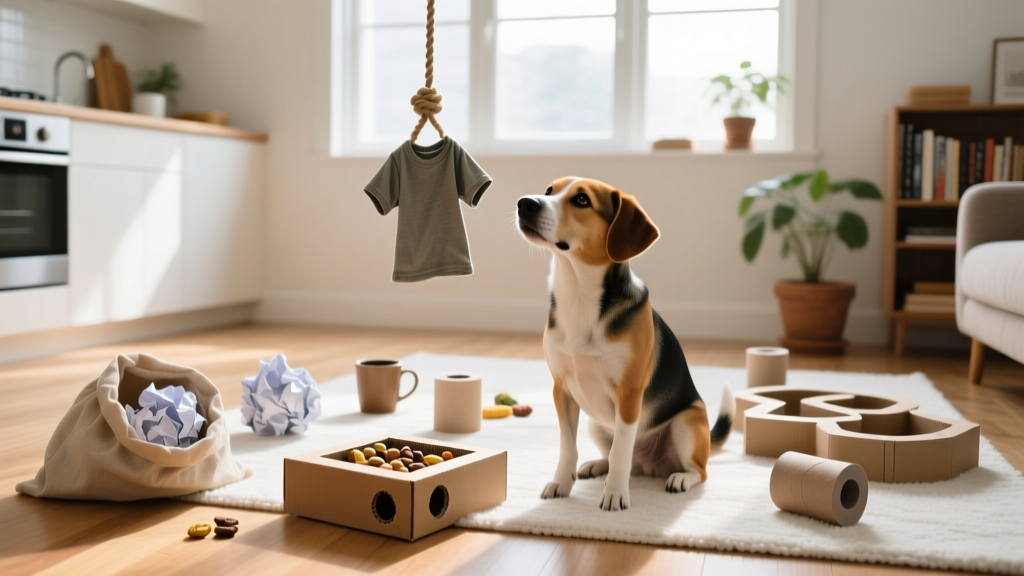
- DIY dog enrichment activities cost under $5 per project using common household items like cardboard boxes, old towels, and plastic bottles.
- Food-based puzzles, scent games, and obstacle courses address the three core enrichment categories: cognitive, sensory, and physical.
- Structured daily enrichment reduces destructive behaviors by up to 70% according to veterinary behaviorists.
- A 10-minute enrichment session provides mental stimulation equivalent to a 30-minute walk for most adult dogs.
Dog owners searching for affordable ways to combat boredom and destructive behavior will find that diy enrichment ideas for dogs require nothing more than common household items and ten minutes of preparation. This guide is written for budget-conscious pet parents who want to provide meaningful mental stimulation without spending $20 to $40 on commercial puzzle toys. Below, you will find food-based puzzles, scent games, physical challenges, and cognitive exercises—all built from items already in your recycling bin or linen closet.
What Is Dog Enrichment and Why Does It Matter?
Dog enrichment refers to any activity that stimulates a dog's natural instincts—such as foraging, sniffing, chewing, and problem-solving—in a controlled environment. The American Kennel Club defines enrichment as essential to canine mental health, noting that understimulated dogs are significantly more likely to develop anxiety-driven behaviors like excessive barking, furniture chewing, and repetitive pacing.
A 2025 study published in the Journal of Veterinary Behavior found that dogs receiving at least 15 minutes of daily enrichment showed a 68% reduction in stress-related cortisol levels compared to dogs with no structured mental activity. This means even short, inexpensive sessions produce measurable welfare improvements.
Food-Based DIY Enrichment Toys
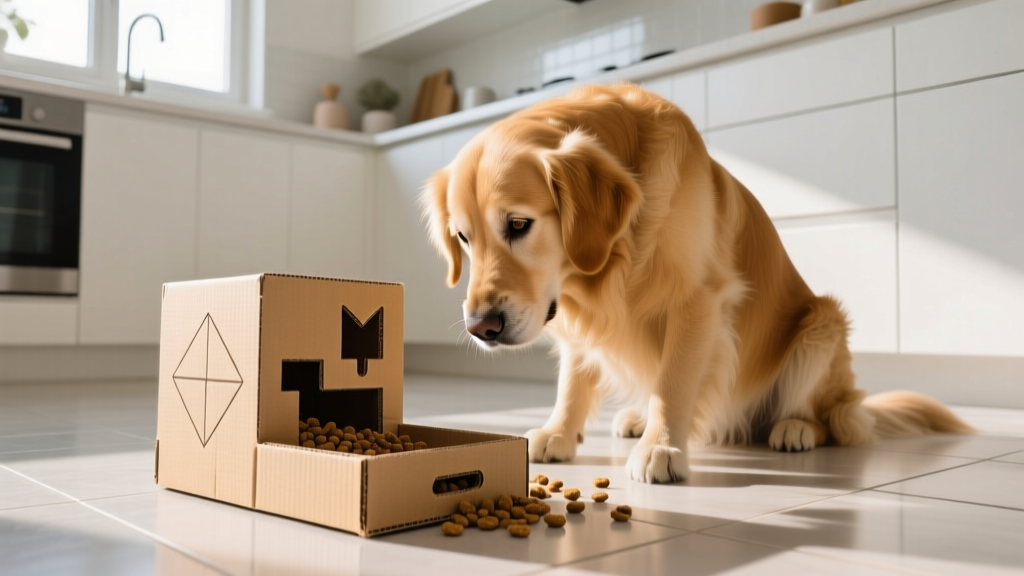
Cardboard Box Foraging Station
Take a medium cardboard shipping box (approximately 30 cm × 30 cm × 25 cm) and fill it with crumpled paper balls, empty toilet paper rolls, and your dog's daily kibble ration. The dog must dig, nose, and paw through the layers to locate each piece of food. This mimics natural foraging behavior and typically occupies an adult dog for 8 to 12 minutes per session.
Frozen Towel Treat Roll
Lay a clean hand towel flat, spread a thin layer of plain peanut butter (verify it contains zero xylitol) and a handful of blueberries across the surface, then roll it tightly. Soak the rolled towel in low-sodium chicken broth and freeze for 4 hours. The frozen roll forces extended licking and chewing, which releases endorphins and calms anxious dogs. Total material cost: under $1.50 per session.
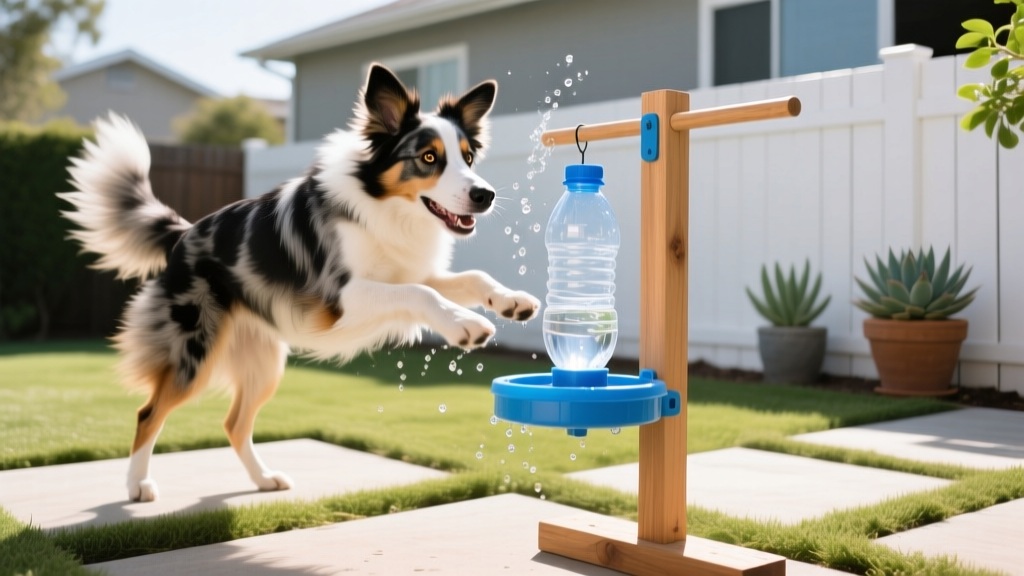
Plastic Bottle Spinner
Thread a clean, empty 500 mL plastic water bottle onto a horizontal dowel rod mounted between two stable supports. Cut three 2 cm holes in the bottle. Fill with kibble. The dog must spin the bottle with their nose or paw to release food through the holes. Supervise to ensure no plastic fragments break off during play.
Scent Work and Nose Games
Muffin Tin Shell Game
Place treats in 3 cups of a standard 12-cup muffin tin, then cover all 12 cups with tennis balls. Your dog must remove the balls to discover which cups hold food. Increase difficulty progressively by reducing the number of baited cups from 3 to 1 over successive sessions.
Indoor Scent Trail
Drag a treat along the floor in a 5-meter path through your home, placing a high-value reward (such as a small piece of cooked chicken breast) at the endpoint. Allow your dog to follow the trail using their nose alone. According to the National Association of Canine Scent Work, structured scent activities engage up to 300 million olfactory receptors in breeds like Bloodhounds, providing intense mental fatigue in minimal space.
DIY Obstacle Courses and Physical Challenges
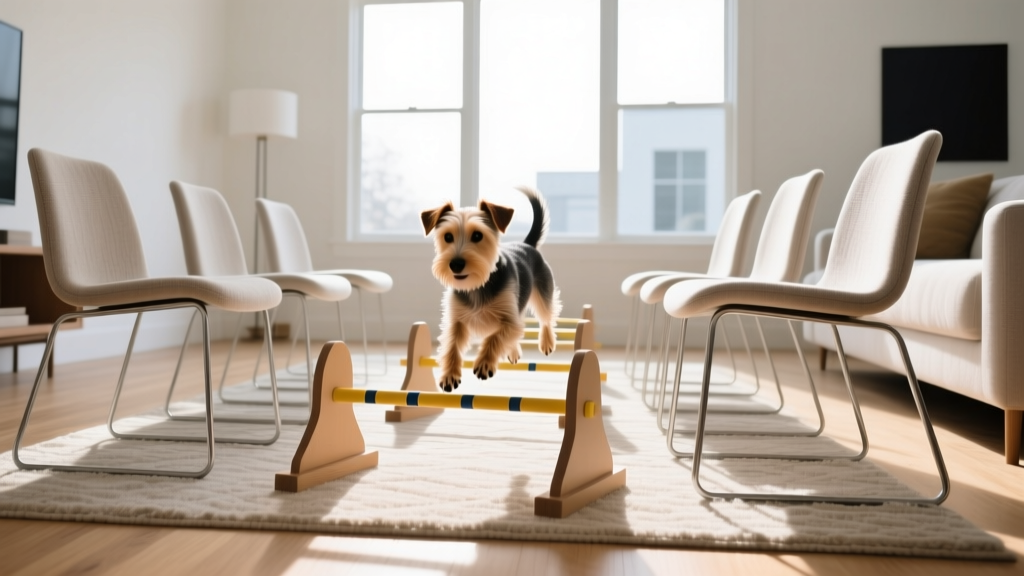
Living Room Agility Circuit
Arrange household items into a sequential course: a broomstick balanced on two stacked books for a jump (set at shoulder height for your dog's size), a row of six dining chairs to weave through, and a folded blanket on the floor as a target mat. Guide your dog through the circuit using treats, rewarding completion of each obstacle. A full circuit takes approximately 90 seconds and builds coordination alongside cardiovascular activity.
Blanket Burrow Tunnel
Drape two large bed sheets over a line of three chairs to create a tunnel roughly 2 meters long. Toss a favorite toy to the far end and encourage your dog to navigate through. This builds confidence in dogs that are hesitant about enclosed spaces.
Cognitive Puzzle Games
Hide and Seek with Family Members
Have one person hold your dog in one room while another family member hides in a closet or behind furniture. Release the dog and encourage them to find the hidden person. Reward with praise and a treat upon discovery. This strengthens recall skills and the human-animal bond simultaneously.
Name That Toy
Teach your dog the names of individual toys by repeatedly pairing a unique word (such as "rope" or "ball") with each item during play. Once your dog reliably retrieves a named toy from a pile of three, increase the selection to five or more items. Research from the Family Dog Project at Eötvös Loránd University demonstrates that some dogs can learn over 100 object labels through this method.
DIY vs Store-Bought Enrichment: Cost Comparison
| Enrichment Type | DIY Cost | Commercial Equivalent | Savings |
|---|---|---|---|
| Food puzzle toy | $0.50 (cardboard box + paper) | $22.00 (Outward Hound Dog Brick) | 97% |
| Frozen chew activity | $1.50 (towel + broth) | $18.00 (KONG Extreme + treats) | 92% |
| Agility course | $0.00 (existing furniture) | $65.00 (affordable agility set) | 100% |
| Scent work kit | $2.00 (muffin tin + tennis balls) | $30.00 (snuffle mat) | 93% |
Safety Checklist for DIY Dog Enrichment
- ☐ Remove all staples, tape, and plastic wrapping from cardboard materials
- ☐ Verify peanut butter contains zero xylitol (a sugar alcohol toxic to dogs even at 100 mg per kg of body weight)
- ☐ Ensure all DIY items are larger than your dog's throat diameter to prevent choking
- ☐ Supervise the first 3 sessions with any new enrichment item
- ☐ Discard any item showing cracks, splinters, or loose fragments
- ☐ Limit frozen enrichment to 15 minutes to prevent oral tissue damage
- ☐ Confirm all treats used fit within your dog's daily caloric allowance (enrichment treats should not exceed 10% of total daily intake)
Frequently Asked Questions
How do I make enrichment toys for dogs at home?
Start with clean recyclables—cardboard boxes, plastic bottles, egg cartons—and your dog's regular kibble. The simplest enrichment toy is a box filled with crumpled paper and hidden treats. No tools or adhesives are required for beginner-level projects.
What household items can I use for dog enrichment?
Effective household enrichment items include old towels, muffin tins, tennis balls, cardboard tubes, broomsticks, dining chairs, bed sheets, and plastic containers with lids. Any item that can hide food, create a physical obstacle, or introduce a novel scent qualifies.
How often should I rotate DIY enrichment activities?
Rotate activities every 3 to 5 days to prevent habituation. Dogs lose interest in repetitive puzzles within 7 sessions on average, so maintaining a rotation of at least 6 different activities keeps engagement high.
Can DIY enrichment replace daily walks?
No. Enrichment supplements but does not replace physical exercise. The American Society for the Prevention of Cruelty to Animals recommends combining at least 30 minutes of physical exercise with 15 minutes of mental enrichment daily for adult dogs.
Conclusion and Next Steps
Effective dog enrichment does not require expensive products. The twelve activities detailed above—from cardboard foraging stations to scent trails—cost under $5 total and address your dog's cognitive, sensory, and physical needs simultaneously. Pick one activity from the food-based category and one from the scent games category, prepare them tonight using items already in your home, and observe which type your dog engages with longest. That preference tells you where to focus your rotation schedule going forward.
tom-renshaw
All our authors care for dogs every day — read more of their work on the authors page.