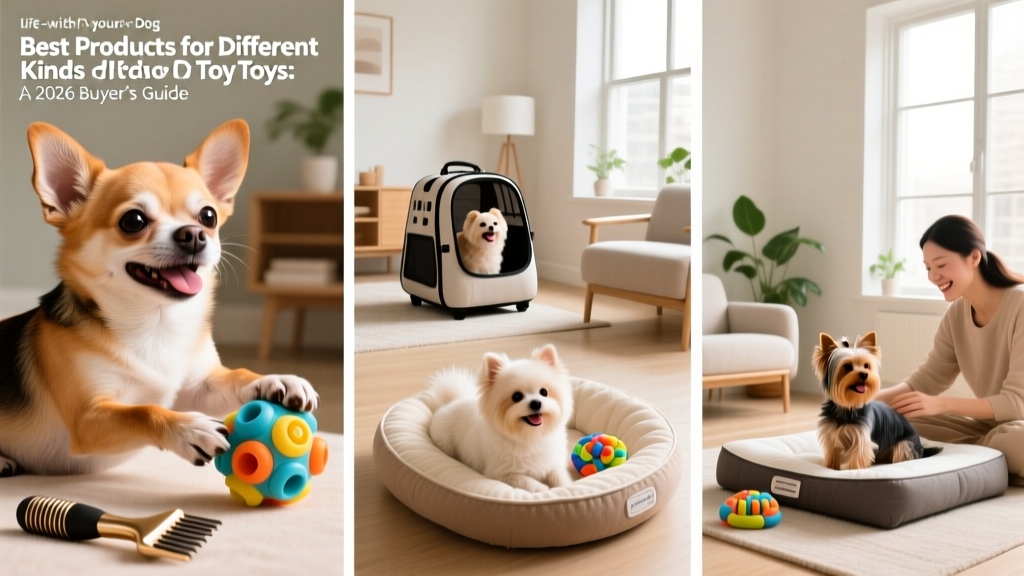
Best Products for Different Kinds of Toy Dogs: A 2026 Buyer's Guide
Discover the best health & care products for different kinds of toy dogs. Expert picks, safety tips, & comparison tables for Chihuahuas, Pomeranians...
Why Toy Dogs Need Specially Sized Products
Toy breeds — dogs typically weighing under 15 lb (6.8 kg) — have unique physiological needs that make generic dog products inadequate or even dangerous. Their small tracheas are prone to collapse, their teeth crowd easily leading to rapid periodontal disease, and their fast metabolisms mean hypoglycemia can set in within hours of missed meals. According to the American Kennel Club, toy breeds like Chihuahuas, Pomeranians, Yorkshire Terriers, and Toy Poodles face breed-specific health challenges that demand appropriately scaled gear and supplements.
If you've ever watched your 5-pound Maltese struggle with a standard-sized kibble piece or seen your Pekingese gasp on a flat collar walk, you already know the frustration. This guide breaks down the essential product categories for toy dog owners, with specific recommendations, pricing, and safety guidance you won't find in generic roundups.
Product Category 1: Harnesses for Trachea Protection
Why Toy Dogs Need Harnesses Over Collars
Tracheal collapse affects an estimated 20-30% of toy breed dogs, particularly Yorkshire Terriers, Pomeranians, and Toy Poodles, according to the Merck Veterinary Manual. A flat collar concentrates leash pressure on the cervical trachea, accelerating cartilage weakening. A properly fitted harness redirects force to the sternum and ribcage.
The best harness for toy dogs distributes pressure across the chest plate rather than the neck, features adjustable straps at 4+ points, and weighs under 4 oz to avoid burdening a small frame.
Puppia Soft Dog Harness (Authentic)
Price: $18-$25 | Weight range: Fits dogs 2-15 lb
Key features: Air-mesh polyester, step-in design, padded chest plate, 4 adjustment points
Pros:
- Lightweight at 2.1 oz — barely noticeable on a 4 lb Chihuahua
- Machine washable
- Step-in design avoids going over the head (reduces stress for fearful dogs)
Cons:
- Runs small — most toy dogs need to size up from chart recommendations
- No front-clip option for pullers
RC Pet Products Puppia Soft Harness (Original)
Price: $22-$30 | Weight range: XXS fits 2-5 lb, XS fits 5-9 lb
Key features: 100% polyester mesh, Velcro + D-ring closure, 12 color options
Pros:
- Precise XXS sizing for teacup breeds under 4 lb
- Veterinarian-recommended by multiple small-animal clinics
- Breathable mesh prevents overheating in brachycephalic toy breeds
Cons:
- Velcro wears out after 12-18 months of daily use
- Not escape-proof for determined Houdini-type dogs
Kurgo Tru-Fit Smart Harness (Enhanced)
Price: $35-$45 | Weight range: XS fits 5-15 lb
Key features: Dual-clip (front + back), crash-tested to 75 lb, steel nesting buckles, 5 adjustment points
Pros:
- Front-clip option redirects pulling without neck strain
- Doubles as a car safety harness with included seatbelt loop
- Lifetime warranty against manufacturing defects
Cons:
- At 5.8 oz, heavier than mesh alternatives — may overwhelm dogs under 6 lb
- XS minimum chest girth is 12 inches — too large for very small Chihuahuas
Voyager Step-In Air Mesh Harness
Price: $12-$18 | Weight range: XS fits 3-8 lb
Key features: Air-mesh construction, Velcro closure + D-ring, reflective trim, budget-friendly
Pros:
- Most affordable quality option for toy breeds
- Extremely lightweight at 1.5 oz
- Good starter harness for puppies who outgrow sizes quickly
Cons:
- Less durable stitching — expect 6-10 months of regular use
- No padding on chest plate
| Attribute | Puppia Authentic | RC Pet Puppia | Kurgo Tru-Fit | Voyager Step-In |
|---|---|---|---|---|
| Price | $18-$25 | $22-$30 | $35-$45 | $12-$18 |
| Min Dog Weight | 2 lb | 2 lb | 5 lb | 3 lb |
| Weight (product) | 2.1 oz | 2.4 oz | 5.8 oz | 1.5 oz |
| Front-Clip | No | No | Yes | No |
| Durability | 12-18 months | 12-18 months | 3+ years | 6-10 months |
| Best For | All-around daily use | Teacup breeds under 5 lb | Pullers + car travel | Puppies on a budget |
Product Category 2: Dental Care Kits for Small Mouths
The Toy Dog Dental Crisis
Periodontal disease affects over 80% of dogs by age 3, but toy breeds develop it earlier and more severely. A Chihuahua's mouth holds 42 teeth in a jaw roughly 2 inches long — that crowding creates plaque traps that standard toothbrushes can't reach. The AVMA recommends daily brushing, but only with tools scaled to your dog's mouth.
Top Dental Products for Toy Breeds
1. Petosan Silent Power Toothbrush (Small) — $28-$35
- Dual-head design cleans inner and outer tooth surfaces simultaneously
- Brush head width: 12mm — fits Yorkie and Chihuahua mouths
- Electric vibration at 8,000 RPM (quiet enough not to startle noise-sensitive toy dogs)
- Pro: Reduces brushing time to 30-45 seconds, improving compliance
- Con: Replacement heads cost $12 each and must be swapped every 3 months
2. Virbac C.E.T. Enzymatic Toothpaste + Dual-Head Brush Kit — $12-$16
- Enzymatic formula (glucose oxidase + lactoperoxidase) continues working between brushings
- Poultry or malt flavor — palatable for picky toy breeds
- Manual brush with angled head for back molar access
- Pro: Veterinary-formulated, widely recommended by small-animal dentists
- Con: Manual brushing requires more patience and training
3. Dental chews sized for toy breeds: Greenies Teenie — $18-$24 (pack of 43)
- VOHC (Veterinary Oral Health Council) accepted for reducing tartar by 60%
- Sized for dogs 5-15 lb at 27 calories per chew
- Pro: Convenient supplement to brushing for resistant dogs
- Con: NOT a replacement for brushing — only reduces tartar on chewing surfaces
⚠️ Dental Product Safety Warnings
- Never use human toothpaste — fluoride and xylitol are toxic to dogs. If ingested, call ASPCA Animal Poison Control at (888) 426-4435 (24/7, consultation fee applies).
- Avoid hard dental chews (antlers, nylon bones, cow hooves) for toy breeds — their teeth fracture easily. The fracture rate for toy breeds on hard chews is estimated at 15-20% in veterinary dental surveys.
- Monitor dental chews: Toy dogs may gulp pieces whole, creating choking or intestinal blockage risk. Always supervise and select the correct size.
- If you notice: red/swollen gums, bleeding during chewing, loose teeth, or foul breath that persists after brushing — schedule a veterinary dental exam. These indicate active periodontal disease requiring professional cleaning under anesthesia.
Product Category 3: Joint Supplements for Toy Breed Knees
Why Knees Matter for Small Dogs
Patellar luxation (kneecap dislocation) affects approximately 7% of toy breed dogs, with Pomeranians, Chihuahuas, and Toy Poodles showing the highest prevalence. While surgery is the definitive treatment for Grade III-IV luxation, Grade I-II cases often benefit from joint supplements that support cartilage integrity and reduce inflammation.
Consult your veterinarian before starting any supplement — they'll grade the luxation and determine if conservative management is appropriate.
Top Joint Supplements for Toy Dogs
1. Dasuquin with MSM (Small/Medium Dogs) — $42-$58 (60 chewable tablets)
- Active ingredients: Glucosamine HCl (450mg), Chondroitin Sulfate (400mg), MSM (400mg), ASU (avocado/soybean unsaponifiables, 45mg)
- Chewable tablet sized for easy splitting — half-tablet dosing for dogs under 8 lb
- Nutramax Laboratories — manufactured in FDA-registered facility
- Pro: Most clinically studied joint supplement in veterinary medicine, with published efficacy data
- Con: Premium pricing; daily cost is $0.70-$1.00 for a toy dog
2. GlycoFlex Plus (Small Dog Formula) — $32-$40 (90 chews)
- Active ingredients: Glucosamine HCl (300mg), Green Lipped Mussel (300mg), MSM (250mg)
- Soft chew format — palatable for finicky eaters
- NASC Quality Seal certified
- Pro: Green Lipped Mussel provides natural omega-3s alongside joint support
- Con: Lower glucosamine dose than Dasuquin — may require longer to see effects (6-8 weeks vs 4-6 weeks)
3. Zesty Paws Mobility Bites (Small Breed) — $22-$28 (90 soft chews)
- Active ingredients: Glucosamine (200mg), Chondroitin (200mg), MSM (150mg), Turmeric (50mg), OptiMSM
- Budget-friendly option with NASC seal
- Pro: Lowest cost per day ($0.24-$0.31) while maintaining quality certification
- Con: Lower active ingredient concentrations — may be less effective for moderate-to-severe cases
How to Use Joint Supplements Correctly
- Get a veterinary diagnosis first. Patellar luxation grades range from I (intermittent, self-correcting) to IV (permanent dislocation). Supplements only help Grades I-II. Your vet will perform a physical exam and may recommend radiographs ($150-$350).
- Follow the loading dose. Most glucosamine products require double the maintenance dose for the first 4-6 weeks. For Dasuquin Small/Medium: 1 full tablet daily for dogs under 10 lb during loading, then ½ tablet daily for maintenance.
- Administer with food. Glucosamine can cause mild GI upset on an empty stomach. Hide the chew in a small amount of wet food or peanut butter (xylitol-free).
- Track response over 8-12 weeks. Improvement is gradual — note changes in willingness to jump, climb stairs, or play. If no improvement after 12 weeks, consult your vet about adjusting the protocol or exploring surgical options.
- Never exceed recommended dosing. Excess glucosamine does not accelerate healing and may cause diarrhea or vomiting in small dogs.
Product Category 4: Calming Aids for Anxiety-Prone Toy Breeds
Toy breeds disproportionately suffer from separation anxiety and noise phobias. Their small size means environmental stimuli feel proportionally larger, and breeds like Italian Greyhounds and Chihuahuas have documented anxiety predispositions. Before reaching for prescription medications, several OTC options show clinical promise.
Calming Product Comparison
| Product | Type | Active Ingredients | Onset Time | Price | Evidence Level |
|---|---|---|---|---|---|
| ThunderEase Calming Diffuser | Pheromone | Dog-appeasing pheromone (DAP) analog | 24-48 hours (continuous) | $30-$40 (kit + 30-day refill) | Published peer-reviewed studies show 50-70% reduction in anxiety behaviors |
| Solliquin Soft Chews | Oral supplement | L-theanine (50mg), L-tryptophan (25mg), Magnolia officinalis extract | 30-60 minutes | $28-$35 (30 chews) | L-theanine efficacy supported by multiple veterinary studies |
| ThunderShirt (XXS) | Compression wrap | Gentle constant pressure (swaddling effect) | Immediate | $40-$50 | Mixed evidence — works well for noise phobia, less consistent for separation anxiety |
| Zesty Paws Calming Bites | Oral treat | L-theanine, chamomile, valerian root, hemp seed | 30-45 minutes | $18-$24 (80 chews) | Limited breed-specific data; individual response varies significantly |
When to Skip OTC and See a Vet for Anxiety
OTC calming aids work best for mild-to-moderate anxiety. Consult your veterinarian if your toy dog exhibits:
- Destructive behavior causing self-injury (broken teeth, torn nails from crate escape attempts)
- Refusal to eat for more than 12 hours when left alone (hypoglycemia risk in toy breeds is acute)
- Continuous vocalization lasting more than 30 minutes after departure
- Inappropriate elimination despite being house-trained
- No improvement after 4-6 weeks of consistent OTC product use
Your vet may recommend prescription options such as fluoxetine (Reconcile) or trazodone, which have stronger evidence bases for severe anxiety. These require veterinary monitoring and cannot be obtained OTC.
Product Category 5: Elevated Feeders and Slow-Feed Bowls
Why Bowl Height and Design Matter for Toy Dogs
Toy dogs eating from floor-level bowls must crane their necks at an extreme angle, putting pressure on already-vulnerable cervical vertebrae and trachea. An elevated feeder that positions the bowl at chest height (measured from floor to the top of the shoulder) reduces neck strain and improves swallowing mechanics.
Additionally, toy breeds are prone to gulping air while eating (aerophagia), which contributes to gas and, in rare cases, gastric dilatation. Slow-feed bowls with internal ridges extend mealtime from 2 minutes to 8-12 minutes.
Recommended Feeding Products
1. PetFusion Elevated Bow Stand (Small) — $30-$42
- Adjustable height: 3 inches or 5 inches (measure your dog's withers and subtract 2 inches)
- Stainless steel bowls included (2 × 12 oz capacity)
- Non-slip silicone feet prevent sliding on hardwood
- Pro: Grows with your puppy through adult sizing
- Con: Takes up more floor space than flat bowls
2. Outward Hound Fun Feeder Slo-Bowl (Mini) — $10-$15
- Multiple maze patterns (Drop, Floral, Coral) — rotate to prevent learned shortcuts
- Holds up to 1 cup kibble (appropriate for toy breed meal sizes)
- Dishwasher safe, BPA-free plastic
- Pro: Extends eating time by 5-10x, reducing bloat risk and improving satiety signaling
- Con: Some very flat-faced breeds (Pekingese, Shih Tzu) struggle with deep maze patterns — choose the shallow "Coral" pattern for brachycephalic toy dogs
Natural Alternatives to Commercial Toy Dog Products
Not every product needs to be store-bought. Here are veterinarian-acknowledged alternatives that work for budget-conscious owners:
DIY Dental Care
- Coconut oil brushing: Lauric acid in virgin coconut oil has documented antibacterial properties against oral pathogens. Apply a pea-sized amount to a child-sized soft toothbrush (head width under 15mm). Note: This supplements but does not replace enzymatic toothpaste for dogs with active gingivitis.
- Raw carrot sticks (supervised): Crunching on a cold, whole baby carrot can mechanically reduce surface plaque. Only appropriate for dogs over 6 months with fully erupted adult teeth. Always supervise — broken pieces are a choking risk for dogs under 8 lb.
DIY Calming Solutions
- Lavender aromatherapy: A 2006 study published in the Journal of Veterinary Behavior found that lavender scent reduced activity and vocalization in kenneled dogs. Place 2-3 drops of lavender essential oil on a bandana tied loosely around your dog's sleeping area (never applied directly to skin or ingested).
- Counter-conditioning training: Working with a certified force-free trainer (CPDT-KA or IAABC certified) on desensitization protocols can outperform any product for separation anxiety. Expect 8-12 weekly sessions at $60-$120 per session.
Homemade Joint Support Food Toppers
- Bone broth (low-sodium, no onion/garlic): Contains natural glucosamine and chondroitin from simmered cartilage. Simmer beef knuckle bones for 24 hours, strain, and add 1-2 tablespoons to meals. Store refrigerated up to 5 days or frozen up to 3 months.
- Sardines in water (no salt added): Rich in omega-3 fatty acids (EPA/DHA) that reduce joint inflammation. Half a sardine daily for dogs under 10 lb provides approximately 150mg EPA+DHA.
⚠️ When Homemade Isn't Enough
Natural alternatives work for prevention and mild cases. If your toy dog has diagnosed periodontal disease (Grade 2+), Grade III-IV patellar luxation, or clinical anxiety, professional veterinary treatment is necessary. Delaying treatment for dental disease can lead to tooth root abscesses and systemic infection — particularly dangerous in toy breeds where bacteria can seed heart valves (endocarditis).
Cost Breakdown: Annual Product Budget for Toy Dogs
| Product Category | Budget Option | Mid-Range | Premium | Replacement Frequency |
|---|---|---|---|---|
| Harness | $12-$18 | $22-$30 | $35-$45 | Every 12-24 months |
| Dental Kit | $8-$12 | $12-$16 | $28-$35 (electric) | Brush: 3 months; Paste: 2-3 months |
| Joint Supplement | $22-$28 | $32-$40 | $42-$58 | Monthly (ongoing) |
| Calming Aid | $18-$24 | $28-$40 | $40-$50 | Monthly (chews) or annual (shirt) |
| Feeding Equipment | $10-$15 | $25-$35 | $30-$42 | One-time purchase (2-5 years) |
| Annual Total | $120-$180 | $200-$300 | $310-$460 | — |
These costs cover products only. Factor in annual veterinary wellness exams ($80-$200), professional dental cleanings under anesthesia ($300-$800 every 1-3 years for toy breeds), and pet insurance premiums ($25-$60/month for comprehensive coverage) to build a complete budget.
Frequently Asked Questions
What is the best harness for toy dogs?
There is no single "best" harness — it depends on your dog's exact weight, chest girth, and behavior. For dogs under 5 lb, the RC Pet Products Puppia in XXS offers the most precise fit. For dogs 5-15 lb that pull on leash, the Kurgo Tru-Fit with its front-clip option provides better control. Always measure your dog's chest girth (around the widest part of the ribcage) and compare to the manufacturer's sizing chart rather than going by weight alone.
How do I choose the right dental product for my toy dog?
Start with your dog's tolerance level. Dogs that accept a toothbrush in their mouth benefit most from enzymatic toothpaste (Virbac C.E.T.) paired with a small-head brush. Dogs that resist brushing may accept an electric brush's vibration better (Petosan) or can use dental chews (Greenies Teenie) as a partial alternative. Regardless of product choice, schedule a professional dental exam annually — the AVMA recommends professional cleanings when tartar buildup is visible.
How much do joint supplements cost per month for a toy dog?
For a dog under 10 lb on maintenance dosing, expect $15-$30/month depending on brand. Dasuquin Small/Medium runs approximately $21-$29/month (½ tablet daily), GlycoFlex Plus runs $16-$20/month, and Zesty Paws runs $7-$10/month. The cost difference reflects active ingredient concentration and clinical evidence backing — discuss with your vet whether the premium formula is warranted for your dog's specific condition grade.
How do I use calming products safely for my toy dog?
Introduce one calming product at a time so you can assess its individual effect. Start with the lowest recommended dose and observe for 48 hours before increasing. Watch for excessive sedation (difficulty waking, uncoordinated movement) — if this occurs, discontinue and consult your vet. Never combine multiple calming supplements without veterinary guidance, as L-theanine, valerian, and tryptophan can compound sedative effects. ThunderShirts should be fitted snugly but allow two fingers to slide underneath — check for skin irritation after 2 hours of continuous wear.
Are there natural alternatives to commercial calming products?
Yes, with caveats. Lavender aromatherapy, classical music (specifically "Through a Dog's Ear" recordings, which are psychoacoustically designed for canine hearing), and structured counter-conditioning training all show evidence of anxiety reduction. However, "natural" does not mean risk-free — essential oils must never be applied directly to a dog's skin or ingested, and valerian root in high doses can cause paradoxical agitation in some dogs. For mild situational anxiety (thunderstorms, vet visits), natural approaches often suffice. For chronic separation anxiety, combine natural methods with professional behavioral training.
When should I skip OTC products and see a vet?
Schedule a veterinary appointment instead of self-treating when you observe:
- Dental: Visible tooth mobility, facial swelling, pus at the gumline, or bleeding that doesn't stop within 2 minutes
- Joints: Limping that persists more than 48 hours, audible clicking in the knee, or refusal to bear weight on a limb
- Anxiety: Self-injury during episodes, complete food refusal when alone (hypoglycemia risk), or aggression triggered by fear
- General: Any symptom accompanied by lethargy, vomiting, diarrhea, or collapse — these are emergency indicators requiring immediate veterinary attention
OTC products are preventive and supportive. They do not diagnose or treat disease. When in doubt, a $60-$100 wellness exam is always cheaper than an emergency visit for a condition that worsened while you tried products first.
Anouk Beaumont
All our authors care for dogs every day — read more of their work on the authors page.