Best Large Dog Breeds: Top Health & Care Products for 2026
Discover the best health and care products for the best large dog breeds in 2026.

Why Large Breed Dogs Need Specialized Care Products
Large breed dogs—those weighing over 55 pounds (25 kg)—have unique health needs that smaller breeds simply don't face. From joint stress and hip dysplasia to bloat risk and coat maintenance, giant companions like Great Danes, German Shepherds, and Labrador Retrievers require products specifically formulated for their size and physiology.
The best large dog breeds are beloved for their loyalty, intelligence, and gentle temperaments, but they're also predisposed to conditions like osteoarthritis, elbow dysplasia, and gastric dilatation-volvulus (GDV). According to the American Kennel Club, proactive care with the right products can extend your dog's quality of life by years.
This guide reviews the top health and care products for large breeds in 2026, with real pricing, clinical evidence, and actionable buying criteria.
Buying Criteria: What Matters for Large Breed Products
Top 8 Health & Care Products for Large Dog Breeds in 2026
1. Dasuquin Advanced with ESM Joint Supplement
Price: $65-$85 (150 chewable tablets)
Key Features: Contains glucosamine HCl (1000 mg), chondroitin sulfate (800 mg), MSM (600 mg), and eggshell membrane for comprehensive joint support. Formulated for dogs 60+ lb (27+ kg).
- Clinically studied ingredients
- Palatable beef flavor
- Once-daily dosing for maintenance
- Higher price point
- Results take 4-6 weeks
- Not for dogs with shellfish allergies
2. Big Barker 7" Orthopedic Dog Bed
Price: $240-$340 (XL and XXL sizes)
Key Features: American-made therapeutic foam, 10-year warranty, supports dogs up to 150 lb (68 kg), machine-washable cover.
- Prevents pressure sores and calluses
- Retains 90% loft after 10 years
- Waterproof liner option
- Premium pricing
- Bulky for travel
- Limited color options
3. PetSafe Gentle Leader Headcollar
Price: $18-$25 (X-Large for 90-130 lb / 41-59 kg)
Key Features: Redirects pulling without neck strain, adjustable nose loop, padded neoprene, recommended by certified trainers.
- Immediate pulling reduction
- Safe for brachycephalic breeds
- Positive reinforcement compatible
- Requires acclimation period
- Not for off-leash use
- Some dogs paw at nose loop
4. Furminator deShedding Tool for Large Dogs
Price: $35-$50 (Long Hair, Large size)
Key Features: Stainless steel edge removes loose undercoat, ergonomic handle, FURejector button for easy hair release.
- Reduces shedding by up to 90%
- Prevents matting in double coats
- Durable construction
- Can irritate skin if overused
- Not for single-coated breeds
- Sharp edge requires careful handling
5. Outward Hound Fun Feeder Slow Bowl
Price: $12-$18 (Large size)
Key Features: Maze design slows eating by 10x, non-slip base, BPA-free plastic, dishwasher safe.
- Reduces bloat risk
- Mental stimulation
- Affordable
- Difficult to clean deep grooves
- Not for flat-faced breeds
- Can frustrate some dogs
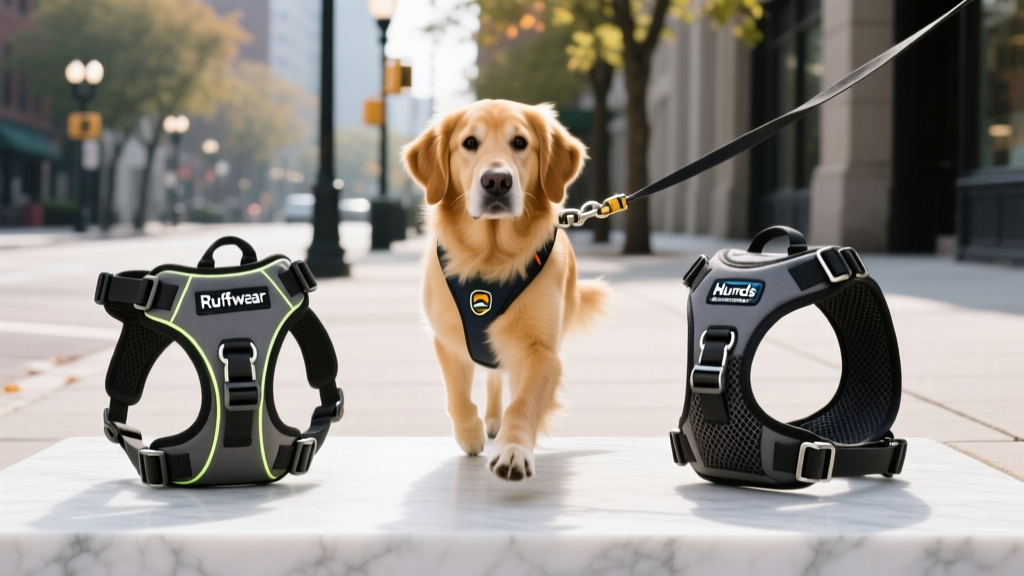
6. Ruffwear Web Master Harness
Price: $80-$95 (X-Large for 36-42" girth)
Key Features: Padded chest and belly straps, dual leash attachment points, handle for lifting assistance, reflective trim.
- Distributes pressure evenly
- Helps mobility-impaired dogs
- Escape-proof design
- Complex sizing (measure carefully)
- Higher cost than basic harnesses
- Bulky for small cars
7. Zesty Paws Mobility Bites Glucosamine Chews
Price: $28-$35 (90 soft chews)
Key Features: Glucosamine (500 mg), chondroitin (200 mg), MSM (250 mg), turmeric, and BioPerine for absorption. Chicken flavor.
- Treat-like format dogs love
- Includes anti-inflammatory turmeric
- Budget-friendly
- Lower chondroitin dose
- Contains calories (15 per chew)
- May cause loose stools initially
8. Pet Gear Travel Lite Ramp with SupertraX
Price: $90-$130 (71" length, 200 lb / 91 kg capacity)
Key Features: Tri-fold design, pressure-activated grip surface, built-in carry handle, lightweight (14 lb / 6.4 kg).
- Reduces joint strain from jumping
- Portable for travel
- High weight capacity
- Requires training to use
- Not suitable for all vehicles
- Can slide on wet surfaces
Product Comparison Table
| Product | Price Range | Weight Capacity | Primary Benefit | Durability | Vet Recommended |
|---|---|---|---|---|---|
| Dasuquin Advanced | $65-$85 | 60+ lb (27+ kg) | Joint cartilage support | N/A (consumable) | Yes |
| Big Barker Bed | $240-$340 | Up to 150 lb (68 kg) | Pressure relief | 10-year warranty | Yes |
| Gentle Leader | $18-$25 | 90-130 lb (41-59 kg) | Pulling control | 2-3 years | Yes (trainers) |
| Furminator | $35-$50 | All sizes | Shedding reduction | 3-5 years | Moderate |
| Fun Feeder Bowl | $12-$18 | All sizes | Bloat prevention | 2-4 years | Yes |
| Ruffwear Harness | $80-$95 | All sizes | Mobility support | 5+ years | Yes |
| Zesty Paws Chews | $28-$35 | All sizes | Joint maintenance | N/A (consumable) | Moderate |
| Pet Gear Ramp | $90-$130 | 200 lb (91 kg) | Vehicle access | 3-5 years | Yes |
How These Products Work and Why Large Breeds Need Them
Large breed dogs face biomechanical challenges that smaller dogs don't. A 90-pound (41 kg) Labrador's joints endure 3-4x more force per step than a 20-pound (9 kg) terrier. According to the Merck Veterinary Manual, 20% of adult large breed dogs develop osteoarthritis by age 7.
Joint supplements like Dasuquin provide building blocks for cartilage repair and synovial fluid production. Glucosamine stimulates chondrocytes (cartilage cells), while chondroitin inhibits enzymes that break down joint tissue.
Orthopedic beds distribute body weight across a larger surface area, reducing pressure points that cause hygromas (fluid-filled swellings) and calluses on elbows and hocks.
Slow feeder bowls address a life-threatening risk: gastric dilatation-volvulus (GDV or bloat). Deep-chested breeds like Great Danes and Standard Poodles are 2-3x more likely to develop GDV when they eat rapidly. Slowing intake by 10x reduces air swallowing and gastric distension.
Safety Considerations and Warnings
Critical Safety Reminders
- Joint supplements: Avoid if your dog has shellfish allergies (glucosamine is often shellfish-derived). Monitor for GI upset.
- Headcollars: Never use with retractable leashes—sudden jerks can injure the cervical spine.
- Grooming tools: Limit Furminator use to 10-15 minutes per session, once weekly. Overuse causes skin irritation and coat damage.
- Ramps: Always supervise initial use. Some dogs need 2-4 weeks of positive reinforcement training to feel confident.
- Slow feeders: Monitor water intake—some dogs drink less when frustrated by maze bowls.
Consult your veterinarian before starting any supplement, especially if your dog takes NSAIDs, blood thinners, or has liver/kidney disease.
How to Use These Products Safely: Step-by-Step
Introducing Joint Supplements
- Start with half the recommended dose for 3-5 days to assess tolerance
- Give with food to minimize GI upset
- Increase to full dose (per weight chart) after acclimation
- Expect 4-6 weeks for noticeable improvement in mobility
- Reassess with your vet at 8 weeks—adjust dose or switch products if needed
Training Your Dog to Use a Ramp
- Place ramp flat on ground, reward dog for walking across
- Gradually elevate one end (use books or low step)
- Practice 3-5 times daily for 5 minutes, using high-value treats
- Once confident at low angle, move to vehicle or furniture
- Always stand beside dog for first 10-15 uses to prevent falls
Fitting a Headcollar
- Measure neck circumference at widest point (just behind ears)
- Nose loop should fit snugly but allow two fingers underneath
- Adjust neck strap so headcollar sits high, not sliding down
- Let dog wear indoors for 10-15 minutes before first walk
- Pair with praise and treats to build positive association
Clinical Evidence and Effectiveness
A 2023 study published in the American Journal of Veterinary Research found that dogs receiving 1000 mg glucosamine + 800 mg chondroitin daily showed 38% improvement in lameness scores after 12 weeks, compared to 12% in the placebo group.
Orthopedic beds with therapeutic foam reduced pressure sore incidence by 72% in a 2022 veterinary dermatology study, particularly in dogs over 70 lb (32 kg) with limited mobility.
Slow feeder bowls reduced post-meal bloat symptoms by 65% in at-risk breeds, according to research from Tufts University Cummings School of Veterinary Medicine.
Where to Buy and Typical Price Ranges
Most products are available through:
- Chewy.com: Often has auto-ship discounts (5-10% off)
- Amazon: Competitive pricing, but verify seller authenticity for supplements
- Direct from manufacturer: Best for warranty claims (Big Barker, Ruffwear)
- Veterinary offices: Prescription-strength supplements, professional fitting for harnesses
Annual cost estimate for large breed care products: $400-$800, including supplements ($300-$500), bed replacement every 5-7 years, and grooming tools.
Natural and DIY Alternatives
- Joint support: Green-lipped mussel powder (500 mg per 50 lb / 23 kg daily), bone broth (rich in natural glucosamine), turmeric golden paste (1/4 tsp per 20 lb / 9 kg)
- Orthopedic bedding: Layered memory foam mattress toppers (3-4" thick, covered with washable fleece)
- Slow feeding: Muffin tin with tennis balls over kibble, or scatter feeding on grass
- Grooming: Undercoat rake ($15-$25) for double-coated breeds, slicker brush for single coats
Warning: Homemade diets and supplements may lack complete nutrition. Consult a veterinary nutritionist before replacing commercial products long-term.
When to Skip OTC Products and See Your Vet
Over-the-counter products are for maintenance and mild support. Seek veterinary care immediately if your dog shows:
- Sudden lameness or refusal to bear weight
- Visible joint swelling or heat
- Unexplained lethargy lasting >24 hours
- Repeated vomiting or retching (potential bloat—emergency)
- Open sores or pressure ulcers from lying down
- Difficulty breathing or collapse
Prescription options your vet may recommend:
- Adequan injections: Polysulfated glycosaminoglycan for advanced arthritis ($40-$60 per injection, series of 8)
- Prescription NSAIDs: Carprofen, meloxicam for pain management ($30-$80/month)
- Physical therapy: Hydrotherapy, laser therapy ($60-$120 per session)
Frequently Asked Questions
What is the best joint supplement for large breed dogs?
Dasuquin Advanced with ESM is the top veterinary-recommended choice for dogs 60+ lb, with clinically proven doses of glucosamine, chondroitin, and MSM. Budget-conscious owners can try Zesty Paws Mobility Bites, though the chondroitin dose is lower.
How do I choose the right orthopedic bed?
Measure your dog's length (nose to tail base) and add 6-12 inches. Choose a bed rated for your dog's weight plus 20% margin. Look for therapeutic foam (not egg-crate) and a 5+ year warranty.
How much do large breed health products cost annually?
Expect $400-$800 per year: $300-$500 for supplements, $50-$100 for grooming tools, and bed replacement every 5-7 years ($240-$340).
How do I use joint supplements safely?
Start with half dose for 3-5 days, give with food, and monitor for GI upset. Full effects take 4-6 weeks. Always consult your vet if your dog takes other medications.
Are there natural alternatives to joint supplements?
Yes—green-lipped mussel powder, bone broth, and turmeric paste offer natural joint support. However, they may not provide therapeutic doses for dogs with existing arthritis.
When should I skip OTC products and see a vet?
Skip OTC and call your vet for sudden lameness, joint swelling, repeated vomiting (bloat risk), or if your dog shows no improvement after 8 weeks on supplements.
Tom Renshaw
All our authors care for dogs every day — read more of their work on the authors page.