GPS Pet Trackers vs AirTags: Best Tech for Dog Safety
Compare GPS pet trackers and Bluetooth tags like AirTags for dogs. Discover costs, battery life, and the best tech to keep your escape artist safe.
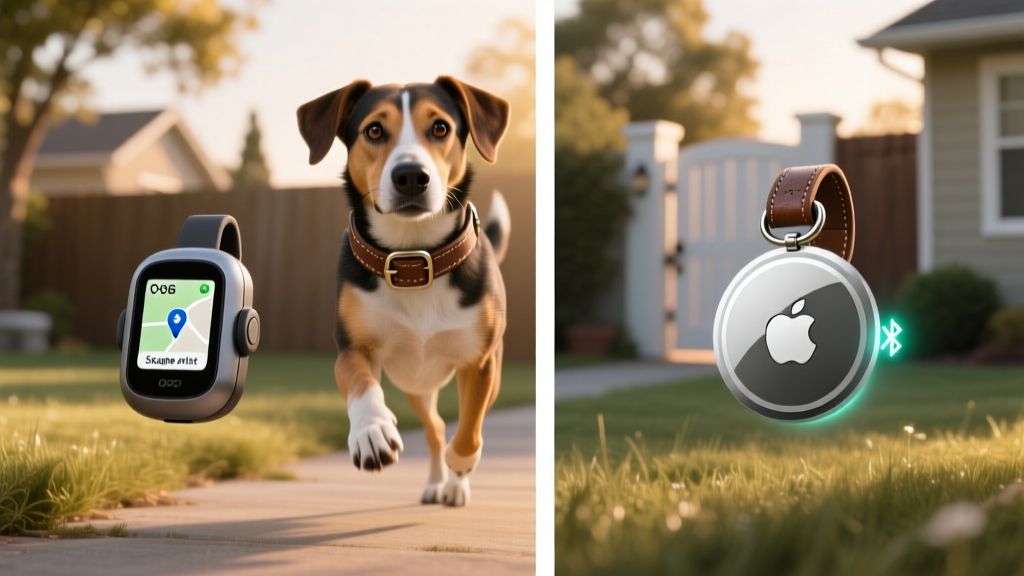
If you are a dog owner trying to prevent a heartbreaking escape, you need reliable tracking. To answer the core question: a dedicated Global Positioning System (GPS) cellular tracker is better than an Apple AirTag for dogs. GPS trackers provide real-time, unlimited-range location updates via cellular networks, making them essential for recovering lost pets in rural or heavily wooded areas. Apple AirTags rely on nearby Apple devices to ping their location, making them suitable only for urban environments with dense foot traffic. This guide is written specifically for pet parents weighing the reliability of real-time GPS against the low upfront cost of Bluetooth-enabled Apple AirTags.
- GPS Trackers use cellular networks for real-time, unlimited-range tracking but require a $6 to $10 per month subscription.
- Apple AirTags use Bluetooth and the Find My network, costing $29 upfront with no monthly fees, but fail in remote areas.
- Verdict: Choose GPS for rural areas and escape artists; choose AirTags only for city-dwelling dogs as a backup.
How Apple AirTag and GPS Pet Trackers Actually Work
Apple AirTag and the Find My Network
The Apple AirTag does not contain a GPS chip. Instead, it relies entirely on a crowdsourced Bluetooth mesh network to report its location.
Find My Network Definition: The Find My network is a crowdsourced Bluetooth mesh network created by hundreds of millions of Apple devices. When an Apple AirTag is separated from its owner, it broadcasts a secure Bluetooth signal that nearby Apple devices detect and anonymously relay to the cloud, updating the item's location.
Because it requires other Apple devices to be within 30 feet to update its location, an AirTag is practically useless in remote forests or empty rural fields. If a dog runs into the woods where no hikers with iPhones are present, the AirTag cannot transmit its location. According to Apple AirTag specifications, the device is designed for finding lost keys or luggage in populated areas, not for tracking moving animals in real-time.
Global Positioning System (GPS) Cellular Trackers
Dedicated pet trackers use a combination of GPS satellites and Long-Term Evolution (LTE) cellular networks. The device calculates its exact coordinates via satellites and transmits that data to your smartphone using the same cellular towers your phone uses.
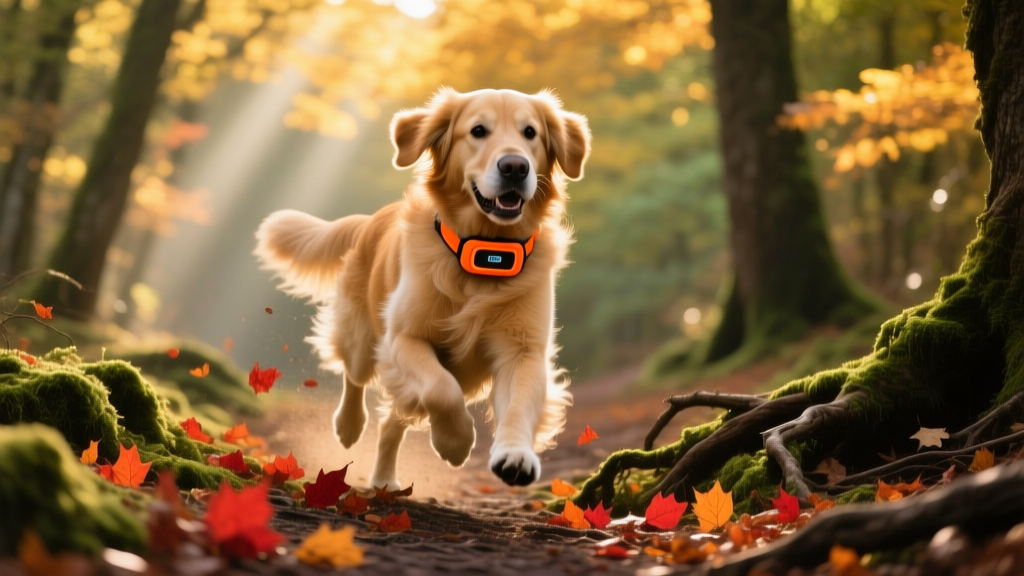
This technology provides continuous, real-time location updates regardless of human foot traffic. The American Society for the Prevention of Cruelty to Animals notes that millions of pets go missing annually, and real-time tracking drastically reduces recovery time. GPS collars allow you to watch your dog's movements live on a digital map.
Head-to-Head Comparison: AirTag vs. GPS
| Feature | Apple AirTag | Dedicated GPS Pet Tracker |
|---|---|---|
| Upfront Cost | $29 | $50 to $150 |
| Subscription Fee | None | $6 to $10 per month |
| Battery Life | 1 year (CR2032 coin cell) | 2 to 7 days (rechargeable) |
| Tracking Range | Unlimited (requires nearby Apple devices) | Unlimited (requires cellular coverage) |
| Real-Time Live Tracking | No (updates only when pinged) | Yes (updates every 2 to 10 seconds) |
Range and Accuracy Limitations
GPS trackers provide pinpoint accuracy within 15 feet, provided the device has a clear view of the sky. Dense tree canopies can slightly delay satellite acquisition, but cellular triangulation fills the gaps. AirTags offer no inherent range; their accuracy is entirely dependent on the density of the local Apple user base.
Battery Life and Power Management
The Apple AirTag battery lasts up to 1 year because it only wakes up to broadcast a low-energy Bluetooth signal. GPS trackers consume significantly more power to maintain a constant cellular connection and query satellites, requiring charging every 2 to 7 days. Brands like Tractive GPS for Dogs optimize battery life by reducing ping frequency when the dog is stationary in a safe zone.
Decision Framework: Which Tracker Fits Your Dog?
Use this checklist to determine which hardware matches your specific environment and dog behavior.
- Choose a GPS Tracker if: You live in a rural area, hike in the woods, own an escape artist, or need immediate alerts when your dog leaves your yard.
- Choose an Apple AirTag if: You live in a dense urban center, your dog is elderly and rarely leaves your sight, or you want a cheap backup tracker hidden inside a collar.
Geofencing Definition: Geofencing is a location-based virtual boundary created using Global Positioning System or cellular signals. Pet owners configure a safe zone on a mobile application, and the tracking hardware automatically triggers a push notification alert to the owner's smartphone the exact moment the dog crosses the predefined perimeter.
Geofencing is exclusively available on GPS trackers. This feature is the primary reason GPS is superior for escape-prone dogs, as it alerts you before the dog is even out of sight.
Frequently Asked Questions
Can I track my dog with an AirTag in the woods?
No, an Apple AirTag is highly unreliable in the woods. It requires another Apple device to pass within 30 feet to update its location on your map. In remote wilderness areas, the AirTag will simply display the last known location where it was pinged, which could be miles away from your dog's actual position.
Do GPS pet trackers require a monthly subscription?
Yes, almost all true GPS pet trackers require a monthly subscription ranging from $6 to $10 per month. This fee covers the cost of the LTE-M cellular data plan required to transmit your dog's location from the collar to your smartphone application.
What is the best tracker for dogs that escape?
The best tracker for escape artists is a dedicated GPS collar with geofencing capabilities. GPS trackers provide real-time, live-map updates every few seconds, allowing you to track your dog's exact speed and direction while you pursue them in a vehicle or on foot.
Final Verdict and Next Steps
A dedicated GPS cellular tracker is definitively better than an Apple AirTag for dogs. While the AirTag is a cost-effective backup for urban environments, it lacks the real-time tracking, geofencing alerts, and remote-range reliability required to save a lost dog in an emergency. GPS technology provides the proactive security that pet parents actually need when a gate is left open.
Your next step is to measure your dog's neck circumference and select a lightweight GPS tracker that fits their collar size. Ensure you choose a model with a battery life that aligns with your charging routine, and activate the geofence around your home immediately upon setup.
priya-sutaria
All our authors care for dogs every day — read more of their work on the authors page.