Taurine Supplement for Dogs: When, Why, and How to Dose Safely
Learn when your dog needs a taurine supplement, safe dosages by weight, best food sources, and the DCM connection. Evidence-based nutrition guidance.
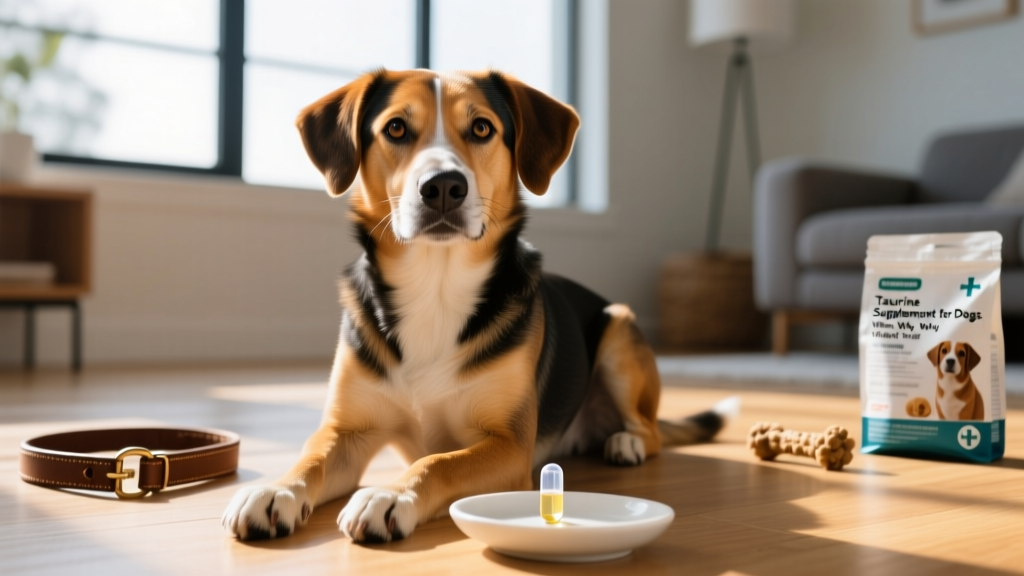
Why Taurine Matters for Your Dog's Heart and Health
Taurine is a sulfur-containing amino acid that plays a critical role in cardiac function, bile salt production, retinal health, and immune response. Unlike most mammals, dogs can synthesize taurine from the amino acids methionine and cysteine — but that synthesis isn't always sufficient. Certain breeds, diets, and health conditions can push a dog into taurine deficiency, leading to serious consequences like dilated cardiomyopathy (DCM), a life-threatening heart disease.
The FDA began investigating a potential link between grain-free, legume-rich diets and DCM in dogs in 2018, and by 2025, veterinary cardiologists had documented thousands of cases where taurine deficiency played a role. This investigation has made taurine supplement for dogs one of the most searched nutrition topics among concerned pet owners.
But not every dog needs supplemental taurine. The decision depends on your dog's breed, diet, age, and health status. This guide breaks down the evidence so you can make an informed choice with your veterinarian.
Veterinary Disclaimer: This article provides educational guidance only. Always consult your veterinarian or a board-certified veterinary cardiologist before starting any supplement, especially if your dog shows signs of heart disease (coughing, exercise intolerance, fainting, or rapid breathing).
Which Dogs Are at Risk for Taurine Deficiency?
Taurine deficiency doesn't affect all dogs equally. Research published in the Journal of Veterinary Internal Medicine and data compiled by the FDA's DCM investigation have identified several risk factors that cluster in specific populations.
- Golden Retrievers — the most frequently reported breed in FDA DCM cases
- Cocker Spaniels — historically the first breed linked to taurine-deficient cardiomyopathy
- Newfoundlands — documented lower taurine synthesis rates
- English Bulldogs — brachycephalic breeds with higher cardiac stress
- Irish Wolfhounds — predisposed to DCM regardless of diet
- Doberman Pinschers — breed predisposition to DCM (often taurine-independent but worth monitoring)
- Labrador Retrievers — increasingly represented in diet-associated DCM reports
Beyond breed, these factors increase risk:
| Risk Factor | Why It Matters | Action Needed |
|---|---|---|
| Grain-free diet with peas, lentils, or potatoes as top ingredients | Legumes may interfere with taurine absorption or synthesis; exact mechanism still under investigation | Blood taurine testing + consider diet change |
| Large or giant breed (over 50 lb / 23 kg) | Lower taurine synthesis rate relative to body mass | Monitor levels; supplement if on at-risk diet |
| Senior dog (over 8 years) | Decreased hepatic synthesis capacity with age | Annual cardiac screening + taurine level check |
| Chronic GI disease (IBD, EPI) | Impaired nutrient absorption reduces taurine uptake | Veterinary nutritionist consultation |
| Home-cooked or raw diet without supplementation | Cooking degrades taurine; raw diets may lack adequate methionine/cysteine precursors | Formulated recipe with veterinary nutritionist |
| High-fiber diet | Fiber binds bile acids, increasing taurine loss through feces | Dose adjustment if fiber exceeds 5% crude fiber |
Taurine Supplement for Dogs: Dosage by Weight
Taurine has a wide safety margin in dogs — excess is excreted in urine rather than stored to toxic levels. However, correct dosing ensures you're providing therapeutic benefit without waste. Veterinary cardiologists and nutritionists typically recommend the following ranges based on body weight and clinical need.
| Dog Weight | Preventive Dose (mg/day) | Therapeutic Dose — DCM Support (mg/day) | Frequency |
|---|---|---|---|
| Under 15 lb (7 kg) | 250 mg | 500 mg | Once or split BID |
| 15–30 lb (7–14 kg) | 500 mg | 500–1,000 mg | Once or split BID |
| 30–60 lb (14–27 kg) | 500–1,000 mg | 1,000 mg | Split BID |
| 60–100 lb (27–45 kg) | 1,000 mg | 1,000–2,000 mg | Split BID |
| Over 100 lb (45+ kg) | 1,000–1,500 mg | 2,000 mg | Split BID |
Key dosing notes:
- BID means twice daily — split the total dose into morning and evening meals for better absorption.
- Therapeutic doses are used when a dog has confirmed low blood taurine levels or diagnosed DCM. Your veterinarian or cardiologist will set the exact dose.
- Give taurine with food to improve absorption and reduce potential GI upset.
- Most supplements come in 500 mg or 1,000 mg capsules. Powder forms allow more precise dosing for small dogs.
Choosing a Taurine Supplement: What to Look For
Not all supplements are created equal. The supplement industry for pets is not as tightly regulated as pharmaceuticals, so you need to evaluate products critically.
- NASC seal (National Animal Supplement Council) — indicates the manufacturer meets quality, labeling, and adverse event reporting standards
- Pure taurine (L-taurine form) — avoid blends with unnecessary fillers, artificial flavors, or proprietary mixes where you can't verify the actual taurine content
- Third-party tested — look for brands that publish Certificates of Analysis (COA) or use independent testing labs
- Appropriate form — capsules for easy dosing in medium/large dogs; powder or liquid for small breeds or picky eaters
- Made in FDA-registered facilities — check for GMP (Good Manufacturing Practice) compliance
Recommended Taurine Supplements (2026 Market)
Based on veterinary recommendations, NASC membership status, and transparent labeling, these are widely trusted options:
Price: $22–$28 (60 capsules)
Form: Capsule (taurine + CoQ10 + L-carnitine blend)
Best for: Dogs with existing cardiac concerns needing multi-nutrient support
NASC member: Yes
Price: $18–$24 (90 capsules)
Form: Capsule (500 mg taurine + hawthorn + carnitine)
Best for: Medium to large breeds on grain-free diets
NASC member: Yes
Price: $10–$14 (8 oz / 227 g)
Form: Pure L-taurine powder
Best for: Budget-conscious owners; precise dosing for any size dog
Note: Human supplement; widely used off-label by veterinary nutritionists
Price: $25–$30 (90 chews)
Form: Soft chew (taurine + L-carnitine + CoQ10)
Best for: Pill-resistant dogs; easy daily treat format
NASC member: Yes
Price: $30–$38 (120 chews)
Form: Chew with taurine among broad nutrient profile
Best for: Dogs needing overall nutritional gap-filling alongside taurine
NASC member: Yes
Getting Taurine From Food: Diet Selection Criteria
Before adding a supplement, evaluate whether your dog's current diet provides adequate taurine. Commercial dog foods that meet AAFCO nutrient profiles for adult maintenance or all life stages should contain sufficient taurine precursors — but the ingredient composition matters significantly.
What to Look For on the Label
- AAFCO statement: Look for "formulated to meet the nutritional levels established by the AAFCO Dog Food Nutrient Profiles" — this is the minimum standard for complete and balanced nutrition.
- Named animal protein as the first ingredient: chicken, beef, lamb, salmon — not "meat meal" or "animal by-products" generically. Taurine is found exclusively in animal tissue.
- Low legume content: If peas, lentils, chickpeas, or pea protein appear in the first 5 ingredients, the diet may be associated with higher DCM risk according to FDA data.
- Adequate protein levels: Minimum 22% crude protein for adult maintenance (AAFCO minimum); 25–30% is ideal for most active adult dogs.
- Added taurine in the ingredient list: Some premium brands now add supplemental taurine directly to the formula, which is a positive signal.
Recommended Commercial Diets (Taurine-Conscious Options)
These diets are frequently recommended by veterinary nutritionists for owners concerned about taurine adequacy and DCM risk. Prices reflect 2026 retail ranges for a 25–30 lb bag.
| Brand & Product | Key Features | Price Range | Best For |
|---|---|---|---|
| Royal Canin Golden Retriever Adult | Breed-specific; added taurine, L-carnitine, EPA/DHA; 26% protein | $65–$78 | Golden Retrievers and similar large breeds |
| Hill's Science Diet Adult Chicken & Barley | Grain-inclusive; chicken first ingredient; 23.5% protein; added taurine | $52–$62 | General adult maintenance; vet-recommended baseline |
| Purina Pro Plan Savor Adult Chicken & Rice | Chicken first; rice-based (no legume-heavy formula); 26% protein | $48–$58 | Budget-conscious owners wanting grain-inclusive |
| Orijen Original Dry | 85% animal ingredients; 38% protein; diverse named meats; added taurine | $85–$100 | Active dogs; high-protein needs |
| Farmina N&D Ancestral Grain Chicken & Pomegranate | Low-glycemic grains (spelt, oats); 30% protein; added taurine | $72–$88 | Dogs needing moderate grain with premium protein |
| Open Farm Wild-Caught Salmon Recipe | Single animal protein; limited legumes; 28% protein; added taurine | $78–$92 | Dogs with chicken sensitivities |
Foods and Ingredients to Avoid
If taurine adequacy is your concern, steer clear of these dietary patterns:
- Legume-heavy grain-free diets: Foods listing peas, lentils, chickpeas, or pea protein in the first 5 ingredients have been disproportionately represented in FDA DCM reports.
- "Boutique" brands without veterinary nutritionist oversight: Small-batch or trendy brands that lack AAFCO feeding trials or board-certified nutritionist formulation carry higher risk of nutrient gaps.
- Lamb-based diets as sole protein: Lamb has lower taurine content than chicken, beef, or fish. Some studies noted higher DCM rates in dogs fed lamb and rice formulas exclusively.
- High-fiber "weight management" formulas with excessive legumes: Fiber increases fecal taurine loss; combined with low taurine precursors, this creates a deficit.
- Unsupplemented home-cooked or raw diets: Cooking destroys approximately 50–70% of taurine in meat. Raw diets may lack sufficient methionine if organ meat ratios are incorrect.
Homemade and Raw Diets: Taurine Considerations
Can you feed your dog a homemade or raw diet while maintaining adequate taurine? Yes — but only with deliberate formulation and professional oversight.
A 2023 study in the Journal of the American Veterinary Medical Association found that over 95% of homemade dog food recipes found online were nutritionally deficient in at least one essential nutrient. Taurine was among the most commonly deficient.
Never feed a homemade diet long-term without:
- A recipe formulated by a board-certified veterinary nutritionist (DACVN or equivalent)
- Specific taurine supplementation added at the time of feeding (not during cooking)
- Quarterly blood work monitoring including whole blood taurine levels
Sample Taurine-Rich Homemade Framework (Requires Vet Nutritionist Approval)
This framework illustrates the components a veterinary nutritionist would include. Do not use this as a standalone recipe — individual dogs have varying caloric, mineral, and vitamin needs that require professional calculation.
- Protein base (60–70% of calories): Dark meat chicken (thighs), beef heart, or salmon — all high in taurine. Beef heart contains approximately 63 mg taurine per 100 g raw.
- Organ meat (10% of total): Liver for vitamin A, iron; kidney for B vitamins
- Carbohydrate (15–25% of calories): Cooked white rice, sweet potato, or oatmeal
- Vegetables (5–10%): Steamed carrots, green beans, spinach
- Supplement blend: Calcium carbonate, fish oil (EPA/DHA), vitamin E, zinc, and 500–1,000 mg added taurine per day depending on dog size
For raw feeders: Taurine survives in raw meat but degrades with grinding and oxidation. Feed freshly ground or whole-cut meats and add supplemental taurine as a safeguard. Salmonella and E. coli contamination remain significant risks with raw diets — the AVMA discourages raw feeding due to public health concerns, especially in households with children, elderly, or immunocompromised individuals.
How to Transition Your Dog to a New Food Safely
If you're switching your dog to a taurine-conscious diet, a gradual transition prevents GI upset (diarrhea, vomiting, gas). Follow this 10-day protocol:
| Days | Old Food | New Food | What to Watch |
|---|---|---|---|
| Days 1–3 | 75% | 25% | Stool consistency, appetite, energy level |
| Days 4–6 | 50% | 50% | Any vomiting, loose stools, or food refusal |
| Days 7–9 | 25% | 75% | Coat quality changes, itching, stool frequency |
| Day 10+ | 0% | 100% | Full adaptation; monitor for 2–4 weeks |
Transition tips:
- If your dog has a sensitive stomach, extend each phase to 4 days (making a 16-day transition).
- Add a probiotic (such as Purina FortiFlora or Proviable) during the transition to support gut flora adaptation.
- Do not switch foods AND start a new supplement simultaneously — stagger changes by at least 2 weeks so you can identify what caused any adverse reaction.
- For dogs with known food allergies or IBD, consult your veterinarian before transitioning; a prescription elimination diet may be more appropriate.
Feeding Amounts and Nutritional Requirements by Weight
Correct caloric intake ensures your dog maintains an ideal body condition score (BCS), which directly impacts cardiac health. Overweight dogs place additional strain on the heart, compounding any taurine-related risk.
Daily Calorie Requirements (Adult Maintenance)
| Dog Weight | Resting Energy Requirement (RER) | Daily Calories (Neutered Adult) | Daily Calories (Intact/Active) |
|---|---|---|---|
| 10 lb (4.5 kg) | 218 kcal | 349 kcal | 392 kcal |
| 25 lb (11 kg) | 427 kcal | 683 kcal | 769 kcal |
| 50 lb (23 kg) | 725 kcal | 1,160 kcal | 1,305 kcal |
| 75 lb (34 kg) | 988 kcal | 1,581 kcal | 1,778 kcal |
| 100 lb (45 kg) | 1,225 kcal | 1,960 kcal | 2,205 kcal |
Calculation method: RER = 70 × (body weight in kg)^0.75. Multiply RER by 1.6 for neutered adults or 1.8 for intact/active adults. Senior dogs typically need RER × 1.2–1.4. Adjust based on body condition score — reduce by 10–15% if your dog is overweight (BCS 7–9/9).
Nutritional Minimums for Adult Dogs
- Protein: Minimum 22% dry matter (DM) for adult maintenance; 25–30% recommended for active and large-breed dogs
- Fat: Minimum 8.5% DM; 12–18% for most adult dogs; higher for working/sporting dogs
- Fiber: 2–5% crude fiber; higher fiber may increase taurine loss
- Calcium:Phosphorus ratio: 1.1:1 to 1.4:1
- Omega-3 fatty acids (EPA+DHA): Beneficial for cardiac support; aim for 25–50 mg combined EPA/DHA per kg body weight daily for dogs with cardiac concerns
Monitoring Your Dog's Taurine Status and Overall Health
Whether you've added a supplement, changed diets, or both, ongoing monitoring tells you whether your approach is working.
Blood Testing
Whole blood taurine levels are the gold standard for assessing status. Your veterinarian can draw a sample and send it to a specialized lab (Texas A&M University's Gastrointestinal Laboratory or the University of California, Davis are common reference labs).
- Normal: >250 nmol/mL whole blood
- Low/Borderline: 150–250 nmol/mL — supplementation recommended
- Deficient: <150 nmol/mL — immediate supplementation + cardiac evaluation (echocardiogram)
Cost: Blood taurine testing typically runs $80–$150 plus the office visit fee. An echocardiogram, if needed, costs $400–$800 depending on your region.
Body Condition Score (BCS) Guide
Maintaining a healthy weight is one of the best things you can do for your dog's heart. Use the 9-point BCS scale:
- BCS 4–5/9 (Ideal): Ribs easily felt without heavy fat covering; visible waist from above; abdominal tuck from the side.
- BCS 6–7/9 (Overweight): Ribs difficult to feel; waist barely visible; slight abdominal sag. Reduce calories by 10–15%.
- BCS 8–9/9 (Obese): Ribs not palpable; no waist; pendulous abdomen. Veterinary weight loss program recommended.
Day-to-Day Health Indicators
- Energy and exercise tolerance: A dog with adequate taurine and normal cardiac function should maintain consistent energy and recover from exercise within minutes.
- Coat quality: Shiny, non-flaky coat with minimal shedding beyond seasonal norms indicates good overall nutrition.
- Stool quality: Firm, well-formed stools (score 2–3 on a 7-point fecal scale) suggest proper nutrient absorption.
- Respiratory signs: Coughing (especially at night or after excitement), labored breathing, or exercise intolerance are red flags for cardiac disease — see your vet immediately.
Frequently Asked Questions
Can I give my dog too much taurine?
Taurine has a very wide safety margin. Studies in dogs have administered doses up to 3,000 mg/day in large breeds without adverse effects. Excess taurine is water-soluble and excreted in urine. However, there's no benefit to exceeding the recommended therapeutic dose, and unnecessary supplementation adds cost without health gain.
Does my dog need supplements if they eat a commercial diet?
If your dog eats a grain-inclusive, named-meat-first commercial diet that meets AAFCO standards and shows no cardiac symptoms, supplementation is likely unnecessary. However, if your dog is a high-risk breed, eats a grain-free legume-heavy diet, or has a diagnosed deficiency, supplementation is a prudent safeguard. Consult your veterinarian to assess your individual dog's needs.
How long does it take to see improvement after starting taurine?
Blood taurine levels typically normalize within 2–4 weeks of supplementation. If your dog has diet-associated DCM, cardiac improvement (measured by echocardiogram) may take 3–6 months. Some dogs with early-stage DCM show significant or even complete recovery with taurine supplementation and diet change, which is why early detection matters so much.
Is grain-free food always bad for dogs?
No. Grain-free diets are appropriate for dogs with diagnosed grain allergies (which affect fewer than 1% of dogs with food allergies — most allergies are to proteins like chicken or beef). The concern is specifically with grain-free diets that replace grains with high proportions of peas, lentils, or potatoes. Some grain-free diets using sweet potato or tapioca as the carbohydrate source, with adequate named animal protein, have not been linked to DCM at the same rates.
Can I test my dog's taurine levels at home?
No reliable at-home taurine test currently exists for dogs. Whole blood taurine testing requires proper sample handling (frozen and shipped to a reference lab) that only a veterinary clinic can provide. Don't rely on at-home "nutrient test" kits that claim to measure amino acid levels from fur or saliva — these lack scientific validation.
What about L-carnitine? Does my dog need that too?
L-carnitine works synergistically with taurine in cardiac muscle function. Some dogs with DCM are deficient in both. Many cardiac-support supplements combine taurine with L-carnitine (typically 500–1,000 mg L-carnitine per day for a 50 lb dog). Your veterinary cardiologist will determine if dual supplementation is needed based on blood work and echocardiogram results.
Should I switch my dog's food or just add a supplement?
If your dog is on a legume-heavy grain-free diet and is a high-risk breed, the most evidence-based approach is both: transition to a grain-inclusive diet with named animal protein as the first ingredient AND supplement taurine during the transition period. After 3–6 months, recheck blood taurine levels — your vet may discontinue the supplement if levels are normal on the new diet.
Aaron Whyte
All our authors care for dogs every day — read more of their work on the authors page.


