Side Effects of Prednisone in Dogs: What Every Owner Should Know
Learn about the side effects of prednisone in dogs.

Prednisone is one of the most commonly prescribed medications in veterinary medicine — and for good reason. This synthetic corticosteroid can be genuinely life-saving for dogs dealing with severe allergies, autoimmune disease, spinal cord inflammation, and certain cancers. But its wide-ranging effects on nearly every body system also mean that understanding the side effects of prednisone in dogs is essential for any owner whose pet receives a prescription.
This guide breaks down exactly how prednisone works, what dosages your vet may prescribe, which side effects are expected versus dangerous, and how to monitor your dog throughout treatment. All information here supplements — never replaces — the guidance of your prescribing veterinarian.
What Is Prednisone and How Does It Work in Dogs?
Prednisone is a synthetic glucocorticoid — a type of corticosteroid hormone that mimics cortisol, the natural stress hormone produced by your dog's adrenal glands. Once ingested, prednisone is converted by the liver into prednisolone, its active form. (In dogs with significant liver disease, veterinarians may prescribe prednisolone directly to bypass this conversion step.)
Prednisone works by binding to glucocorticoid receptors inside your dog's cells, which then alters gene expression to:
- Suppress inflammatory pathways — blocks production of prostaglandins and leukotrienes (the chemicals that cause swelling, redness, and itching)
- Dampen immune system overactivity — reduces T-cell and B-cell proliferation in autoimmune conditions
- Influence metabolism — increases blood glucose, alters protein breakdown, and redistributes fat stores
FDA-Approved and Common Off-Label Uses
Prednisone carries FDA approval for use in dogs as an anti-inflammatory and immunosuppressive agent. According to the Merck Veterinary Manual, its labeled veterinary indications include:
- Management of inflammatory conditions (dermatitis, colitis, arthritis)
- Allergic reactions and anaphylaxis adjunct therapy
- Autoimmune diseases (immune-mediated hemolytic anemia, immune-mediated thrombocytopenia)
- Central nervous system inflammation (intervertebral disc disease, meningitis)
- Certain cancers as part of chemotherapy protocols (lymphoma)
Common off-label uses your veterinarian may discuss include:
- Chronic hepatitis management (anti-inflammatory component)
- Granulomatous meningoencephalomyelitis (GME)
- Asthma or chronic bronchitis flare-ups
- Adjunct treatment for shock or acute spinal cord injury
- Appetite stimulation in debilitated patients (short-term, low-dose)
Typical Prednisone Dosage by Condition and Dog Weight
Dosage is where prednisone gets complicated — because the dose determines not just efficacy but the entire side-effect profile. Your veterinarian calculates dosage in milligrams per kilogram of body weight (mg/kg) and adjusts based on your dog's response.
| Condition Category | Dose Range (mg/kg) | Frequency | Typical Duration |
|---|---|---|---|
| Anti-inflammatory (allergies, mild dermatitis) | 0.5 mg/kg | Once to twice daily | 5-14 days, then taper |
| Moderate inflammation (arthritis, colitis) | 0.5-1.0 mg/kg | Once to twice daily | 7-21 days, then taper |
| Immunosuppressive (IMHA, ITP, lupus) | 2.0-4.0 mg/kg | Divided twice daily | Weeks to months; slow taper over 4-6 months |
| Shock / acute CNS injury (short-term) | 15-30 mg/kg (IV/one-time) | Single dose or 24-48 hr protocol | Emergency use only |
| Chemotherapy adjunct (lymphoma CHOP protocol) | 1.0-2.0 mg/kg | Once daily, per protocol schedule | Per oncologist protocol (weeks) |
Practical example: A 25 lb (11.3 kg) Labrador on an anti-inflammatory dose of 0.5 mg/kg would receive approximately 5.65 mg per dose — typically rounded to a 5 mg tablet. That same dog on an immunosuppressive protocol at 2 mg/kg would receive approximately 22.6 mg — typically compounded or achieved with a combination of 20 mg + 5 mg tablets.
Never adjust your dog's prednisone dose without consulting your veterinarian. Tapering schedules are critical to prevent adrenal crisis.
How to Administer Prednisone to Your Dog
Prednisone is available as scored tablets (1 mg, 2.5 mg, 5 mg, 10 mg, 20 mg, 50 mg), oral liquid suspension, and injectable formulations (clinic-administered). For home use:
- Give with food — prednisone can cause stomach irritation and ulceration on an empty stomach. A small meal or treat before dosing reduces GI upset significantly.
- Time doses consistently — if prescribed once daily, give at the same time each morning. If twice daily, space doses approximately 12 hours apart.
- Use pill pockets or compounding — if your dog refuses tablets, ask your vet about flavored liquid compounding (chicken or beef flavors are common, typically $15-$30 for a compounded prescription at specialty pharmacies).
- Follow taper instructions exactly — most protocols reduce the dose by 25-50% every 1-3 weeks depending on condition response. Skipping taper steps risks adrenal insufficiency.
Common Side Effects of Prednisone in Dogs
Nearly every dog on prednisone will experience at least some side effects. The frequency and severity depend on dose, duration, and individual sensitivity. According to Veterinary Partner (VIN), the following are expected and manageable:
| Side Effect | Estimated Frequency | Onset | Management Tips |
|---|---|---|---|
| Increased thirst (polydipsia) | 80-90% | Within 1-3 days | Ensure constant fresh water access; expect 2-4× normal intake |
| Increased urination (polyuria) | 75-85% | Within 1-3 days | More frequent potty breaks; puppy pads for senior dogs overnight |
| Increased appetite (polyphagia) | 70-80% | Within 1-5 days | Measured feeding schedule; low-calorie treats (carrots, green beans) |
| Panting / elevated respiratory rate | 40-60% | Within first week | Usually benign; monitor for labored breathing (see serious effects) |
| Mild GI upset / soft stools | 20-30% | First 3-7 days | Always give with food; probiotics may help |
| Behavioral changes (restlessness, clinginess) | 15-25% | First 1-2 weeks | Maintain routine; typically resolves with dose reduction |
The "Big Three" — thirst, urination, and appetite — are so predictable that veterinarians warn owners about them at the time of prescribing. These effects are dose-dependent: at 0.5 mg/kg they may be mild, while at 2.0 mg/kg they become pronounced in most dogs.
Serious Side Effects: When to Call Your Veterinarian Immediately
- Vomiting blood or material resembling coffee grounds
- Black, tarry stools (melena) — indicates GI bleeding
- Severe lethargy, collapse, or inability to stand
- Distended or hard, painful abdomen (possible GI perforation or pancreatitis)
- Labored breathing, persistent cough, or blue-tinged gums
- Seizures or severe disorientation
- Yellowing of eyes or gums (icterus — possible liver damage)
ASPCA Animal Poison Control: (888) 426-4435 (24/7, consultation fee applies) if accidental overdose is suspected.
Beyond the common manageable effects, prednisone carries risks of serious complications — particularly with long-term use (over 3-4 months), high doses, or in predisposed dogs:
- Gastrointestinal ulceration and perforation — occurs in an estimated 5-10% of dogs on high-dose, long-term therapy. Risk increases dramatically if combined with NSAIDs (carprofen, meloxicam, deracoxib).
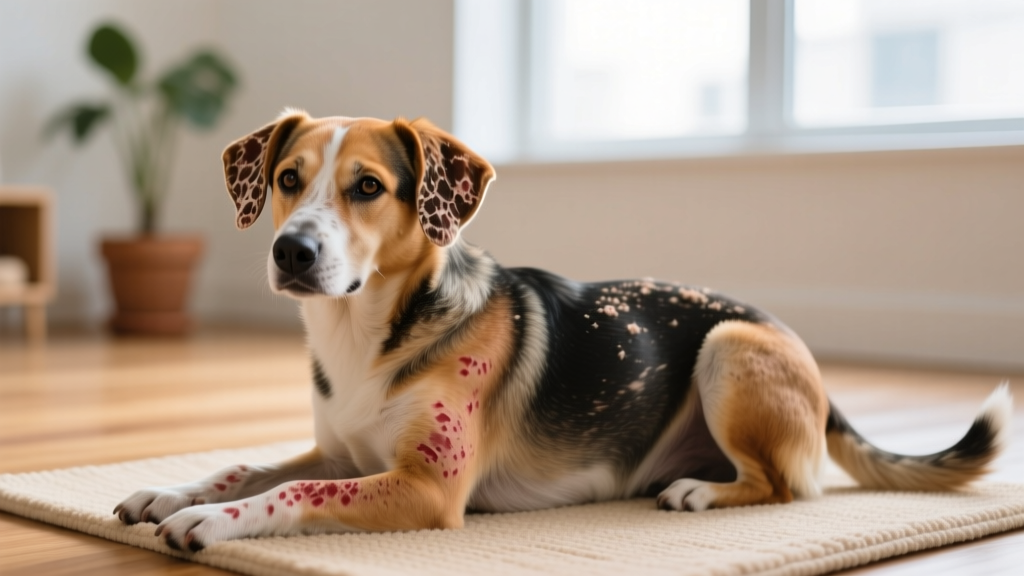
- Iatrogenic Cushing's disease (hyperadrenocorticism) — prolonged prednisone use causes the classic "pot-bellied" appearance, hair loss (alopecia), thin skin, and muscle wasting. Prevalence increases significantly beyond 6 months of continuous therapy.
- Diabetes mellitus — prednisone raises blood glucose and can unmask or trigger diabetes in predisposed dogs. Estimated 2-5% of dogs on long-term therapy develop steroid-induced diabetes.
- Secondary infections — immunosuppression increases susceptibility to urinary tract infections (UTIs), skin pyoderma, and demodectic mange. Studies suggest 30-40% of dogs on immunosuppressive prednisone develop at least one secondary infection.
- Muscle wasting and weakness — particularly in hind limbs after prolonged use; known as steroid myopathy.
- Adrenal suppression — the adrenal glands stop producing natural cortisol. Abrupt discontinuation causes an Addisonian crisis (vomiting, diarrhea, collapse, shock). This is why tapering is non-negotiable.
- Calcification of soft tissues (calcinosis cutis) — hard, gritty skin plaques seen in some dogs on extended high-dose therapy.
Contraindications and Drug Interactions
Not every dog is a safe candidate for prednisone. Your veterinarian will evaluate these contraindications before prescribing:
- Dogs with active systemic fungal infections (blastomycosis, histoplasmosis) — steroids suppress the immune response needed to fight fungus
- Dogs with known GI ulceration or recent GI surgery
- Dogs with diabetes mellitus (unless steroid use is unavoidable and insulin is adjusted)
- Dogs with congestive heart failure — prednisone causes sodium and water retention
- Dogs with Cushing's disease (hyperadrenocorticism)
- Pregnant dogs — prednisone can cause premature labor and fetal abnormalities
- Puppies under 6 months — prolonged use can stunt growth plate development
- Dogs with active, untreated bacterial or parasitic infections
Critical Drug Interactions
| Drug / Supplement | Interaction Type | Risk Level | Clinical Significance |
|---|---|---|---|
| NSAIDs (carprofen, meloxicam, deracoxib, aspirin) | Additive GI toxicity | HIGH | Dramatically increases GI ulceration and perforation risk; combination generally avoided |
| Diuretics (furosemide) | Potassium depletion | MODERATE-HIGH | Both drugs lower potassium; combined hypokalemia can cause cardiac arrhythmias |
| Insulin | Antagonistic | MODERATE | Prednisone raises blood glucose; insulin doses often need upward adjustment |
| Phenobarbital / primidone | Increased hepatic metabolism | MODERATE | Liver enzyme induction reduces prednisone effectiveness; dose may need increase |
| Amphotericin B | Additive immunosuppression + electrolyte imbalance | HIGH | Concurrent use generally contraindicated |
| Live vaccines | Reduced vaccine efficacy | MODERATE | Immunosuppressive doses may prevent adequate immune response; defer vaccination if possible |
| Cyclosporine / mycophenolate | Additive immunosuppression | MODERATE | Often intentionally combined for refractory IMHA; requires close monitoring |
Always provide your veterinarian with a complete list of every medication, supplement, and over-the-counter product your dog is receiving — including flea/tick preventives, joint supplements, and herbal remedies — before starting prednisone.
Monitoring Requirements During Prednisone Therapy
Responsible prednisone use extends well beyond filling the prescription. Your veterinarian will establish a monitoring protocol based on dose, expected duration, and your dog's baseline health. Here is a typical monitoring schedule for dogs on long-term prednisone (beyond 30 days):
| Timepoint | Tests / Evaluations | Estimated Cost | Purpose |
|---|---|---|---|
| Before starting (baseline) | CBC, chemistry panel, urinalysis, blood pressure | $150-$300 | Establish baseline organ function; screen for diabetes, liver/kidney disease |
| 2 weeks | Physical exam, owner symptom report | $50-$90 | Assess response, adjust dose, check for early side effects |
| 4-6 weeks | CBC, chemistry panel, urinalysis, urine culture | $180-$350 | Monitor liver enzymes (ALT, ALP), blood glucose, screen for subclinical UTI |
| Every 2-3 months (ongoing) | CBC, chemistry, urinalysis, blood pressure, ACTH stimulation test (if Cushing's suspected) | $200-$450 | Long-term organ monitoring; screen for iatrogenic Cushing's, diabetes |
| At each taper step | Physical exam, condition-specific assessment | $50-$90 | Confirm disease remains controlled at lower dose |
At-home monitoring you should do daily:
- Track water consumption — measure how many cups your dog drinks per day and log changes
- Note appetite level and any vomiting or stool changes
- Watch for new lumps, skin changes, or hair loss patches
- Monitor energy level and mobility (especially hind limb strength)
- For diabetic dogs on prednisone: check blood glucose curves more frequently per your vet's instructions
How Long Does My Dog Need to Be on Prednisone?
This depends entirely on the condition being treated, and it is one of the most important questions to discuss with your veterinarian:
- Short-term burst (5-14 days): Allergic reactions, acute inflammation, minor dermatitis flares. Minimal long-term risk; side effects resolve within days of discontinuation.
- Intermediate course (3-8 weeks): Moderate autoimmune flares, severe allergies, post-surgical inflammation. Requires a taper schedule over the final 1-3 weeks.
- Long-term therapy (3-12+ months): Chronic autoimmune diseases (IMHA, ITP, pemphigus), certain cancers, chronic CNS conditions. Carries the highest side-effect burden and requires the most intensive monitoring. Many veterinarians aim to find the lowest effective alternate-day dose.
- Lifelong (rare): Some autoimmune conditions or Addison's disease management (though Addison's typically uses physiologic replacement doses of prednisone or fludrocortisone, which carry far fewer side effects than pharmacologic doses).
A key principle in veterinary internal medicine is the alternate-day protocol for long-term maintenance: once the condition is controlled, your vet may shift dosing to every other day. This allows the adrenal glands partial recovery on off-days and significantly reduces Cushingoid side effects while maintaining disease control.
Cost, Generic Availability, and Alternatives to Prednisone
Prednisone is available as a generic medication and is one of the most affordable prescriptions in veterinary medicine. Typical costs:
- Generic prednisone tablets: $8-$25 for a 30-day supply at standard anti-inflammatory doses (varies by tablet size and pharmacy)
- Compounded liquid prednisone: $20-$40 per prescription
- Brand-name veterinary formulations (e.g., PredniTab): $15-$40 for a 30-day supply
When combined with the monitoring costs outlined above, the total first-year expense for a dog on long-term prednisone typically ranges from $600-$2,500 depending on the condition, monitoring frequency, and whether secondary complications develop.
Alternatives Your Veterinarian May Discuss
Depending on the condition, your vet may recommend alternatives or steroid-sparing agents to reduce prednisone dependency:
- For allergies and atopic dermatitis: Oclacitinib (Apoquel, $60-$120/month), lokivetmab (Cytopoint injections, $65-$150 per injection every 4-8 weeks), or allergen-specific immunotherapy
- For autoimmune disease: Mycophenolate mofetil ($30-$80/month), cyclosporine (Atopica, $80-$200/month), azathioprine ($15-$40/month), or leflunomide — often used as steroid-sparing agents so prednisone can be tapered faster
- For joint inflammation: Adequan injections, omega-3 fatty acid supplementation, physical therapy, or weight management — though these do not replace prednisone in acute inflammatory crises
- For inflammatory bowel disease: Budesonide (a locally-acting steroid with less systemic absorption, $30-$70/month), dietary trials with hydrolyzed protein diets, or metronidazole
The American Veterinary Medical Association recommends discussing all treatment options — including potential alternatives — with your veterinarian to find the best balance of efficacy, side-effect profile, and cost for your individual dog.
Missed Doses, Overdoses, and Emergency Guidance
If you miss a dose:
- Give it as soon as you remember if it's within a few hours of the scheduled time.
- If it's nearly time for the next dose, skip the missed dose entirely and resume the normal schedule.
- Never double-dose to make up for a missed one — this increases side-effect risk without improving efficacy.
- One missed dose is unlikely to trigger adrenal crisis, but multiple consecutive missed doses in a dog on long-term therapy can. Contact your vet if you miss more than 24 hours of scheduled doses.
If an overdose occurs:
- A single accidental extra dose is unlikely to be life-threatening in most dogs but may cause pronounced thirst, hunger, vomiting, or panting within hours.
- Massive overdoses (10× or more the prescribed dose) can cause acute GI hemorrhage, pancreatitis, or neurological signs.
- Contact your veterinarian or an emergency clinic immediately.
- Call ASPCA Animal Poison Control at (888) 426-4435 (24/7, consultation fee applies) for guidance on toxic dose thresholds.
- Bring the medication bottle with you to the clinic so the veterinary team can calculate the ingested dose precisely.
Frequently Asked Questions
Will my dog's prednisone side effects go away after stopping the medication?
Most common side effects — increased thirst, urination, appetite, and panting — resolve within 1-4 weeks after the taper is complete and prednisone is fully discontinued. However, some long-term changes (hair coat thinning, muscle loss, pot-bellied appearance from iatrogenic Cushing's) may take 3-6 months to reverse. In rare cases of prolonged high-dose use, some changes like calcinosis cutis may be permanent.
Can I give my dog prednisone and an NSAID at the same time?
This combination is generally avoided due to the significantly elevated risk of gastrointestinal ulceration and perforation. If your dog is currently on an NSAID (carprofen, meloxicam, etc.) and needs prednisone, your veterinarian will typically recommend a washout period of 3-7 days between medications. Always disclose all current medications before starting prednisone.
Why does my dog need a taper instead of just stopping prednisone?
When your dog receives prednisone for more than 1-2 weeks, the adrenal glands reduce their natural cortisol production. Abruptly stopping prednisone leaves the body without adequate cortisol — causing an addisonian crisis characterized by vomiting, diarrhea, severe lethargy, low blood pressure, and potentially fatal shock. Tapering allows the adrenal glands time to gradually resume normal function.
Is prednisone the same as prednisolone?
They are closely related. Prednisone is the inactive prodrug that the liver converts to prednisolone (the active form). In dogs with normal liver function, both work effectively. In dogs with liver disease or certain breed predispositions, veterinarians may prescribe prednisolone directly to ensure adequate conversion. For cats, prednisolone is always preferred because feline livers convert prednisone poorly.
Can my dog be on prednisone for life?
Some dogs with chronic autoimmune conditions do remain on low-dose prednisone for years, but this requires intensive monitoring and carries ongoing risks. Most veterinary internists aim to transition to alternate-day dosing, add steroid-sparing immunosuppressants, or taper off entirely whenever the underlying disease allows. Discuss your dog's long-term plan with your veterinarian or a veterinary internal medicine specialist.
Should I restrict my dog's water while on prednisone?
No. Never restrict water for a dog on prednisone. The increased thirst is a physiological response to the medication's effects on kidney function and fluid balance. Water restriction can lead to dangerous dehydration. Instead, plan for more frequent outdoor bathroom breaks and consider waterproof bedding for overnight accidents.
This guide is intended for informational purposes only and does not replace professional veterinary advice. Always consult your veterinarian before starting, adjusting, or discontinuing any medication for your dog. Individual dogs may respond differently to prednisone based on breed, age, concurrent conditions, and other factors. Your prescribing veterinarian is the best resource for decisions about your dog's specific treatment plan.
Anouk Beaumont
All our authors care for dogs every day — read more of their work on the authors page.