How to Make Dog Food at Home: Recipes, Nutrition & Safety Guide
Learn how to make dog food at home safely with vet-approved nutritional guidelines, balanced recipes, supplement guidance, and life-stage feeding plans.
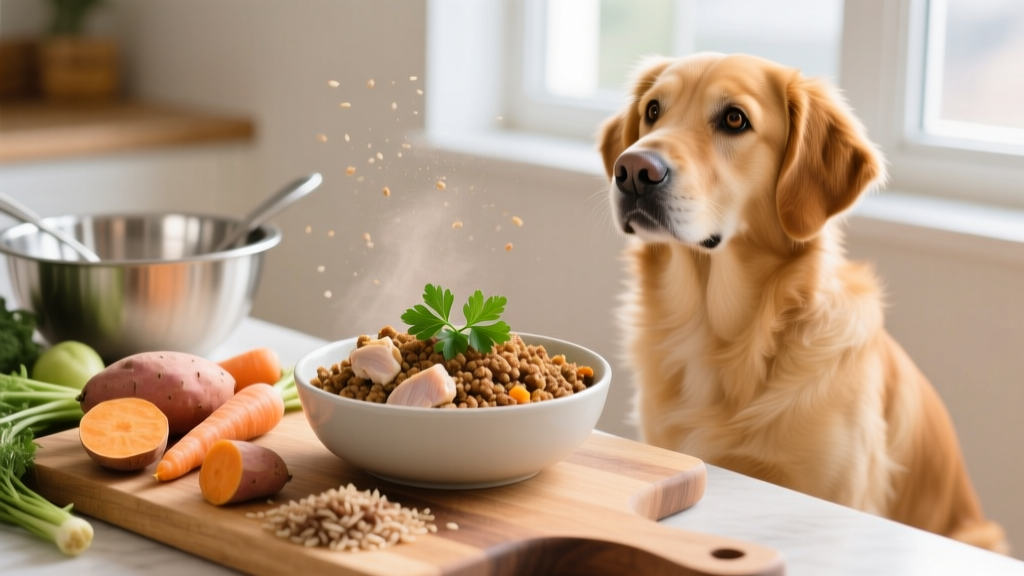
If you've ever stood in your kitchen watching your dog beg while you cook and wondered, "Can I just make their dinner too?" — you're not alone. The search for how to make dog food at home has grown steadily as more owners seek transparency in what their dogs eat. And yes, you absolutely can prepare your dog's meals at home. But doing it safely requires far more precision than simply tossing chicken and rice into a bowl.
A nutritionally incomplete homemade diet can lead to serious deficiencies — calcium-phosphorus imbalances causing bone disease, taurine deficiency leading to dilated cardiomyopathy, or zinc deficiency causing skin lesions and immune dysfunction. According to a study published in the Journal of the American Veterinary Medical Association, researchers evaluated 200 homemade dog food recipes found online and in books and found that 95% had at least one essential nutrient deficiency, with many falling critically short on calcium, vitamin E, zinc, and omega-3 fatty acids.
This guide will walk you through the science, the math, and the practical steps to prepare balanced homemade dog food — and when a high-quality commercial option might be the smarter choice.
Nutritional Requirements: The Numbers Your Dog Needs
Before you start cooking, you need to understand what your dog's body actually requires. The National Research Council (NRC) and the Association of American Feed Control Officials (AAFCO) publish nutrient profiles that define minimum and recommended levels for dogs at different life stages.
| Nutrient | Adult Maintenance (AAFCO Min) | Growth/Puppy (AAFCO Min) | Senior (Typical Target) |
|---|---|---|---|
| Protein | 18% | 22.5% | 20-25% |
| Fat | 5.5% | 8.5% | 8-12% |
| Calcium | 0.5% | 1.2% | 0.5-0.75% |
| Phosphorus | 0.4% | 1.0% | 0.4-0.6% (lower if CKD) |
| Calcium:Phosphorus Ratio | 1.2:1 to 2:1 | 1.2:1 to 1.5:1 | 1.2:1 to 1.5:1 |
| Omega-6 Fatty Acids | 1.3% | 1.3% | 1.3-1.8% |
| Omega-3 Fatty Acids (EPA+DHA) | Not established (recommend 0.1-0.3%) | 0.05% DHA min | 0.2-0.5% |
Daily Calorie Needs by Weight
Caloric needs vary enormously based on activity level, metabolism, age, and whether your dog is intact or neutered. The Resting Energy Requirement (RER) formula provides a baseline:
RER = 70 × (body weight in kg)0.75
Then multiply RER by the appropriate factor:
| Dog Profile | Multiplier | Example: 30 lb (13.6 kg) Dog |
|---|---|---|
| Neutered adult, typical activity | 1.6 | ~795 kcal/day |
| Intact adult, typical activity | 1.8 | ~894 kcal/day |
| Active/working dog | 2.0-3.0 | ~993-1,490 kcal/day |
| Weight loss (target weight) | 1.0 | ~497 kcal/day (at target) |
| Senior, low activity | 1.2-1.4 | ~596-696 kcal/day |
| Puppy (under 4 months) | 3.0 | Varies by expected adult size |
| Puppy (4-12 months) | 2.0 | Varies by expected adult size |
Note: These are starting points. Monitor your dog's body condition score (BCS) every 2 weeks and adjust calories up or down by 10-15% as needed.
How to Make Dog Food: A Balanced Recipe Framework
A nutritionally complete homemade dog meal isn't a single recipe — it's a formula built from specific proportions of macronutrient categories, supplemented with precise micronutrients. Here's the framework veterinary nutritionists use:
- Protein source (cooked): 40-50% of total weight — chicken thigh, turkey, lean beef, fish, eggs
- Carbohydrate source (cooked): 30-40% of total weight — white rice, sweet potato, oats, barley
- Vegetables (cooked/steamed): 10-15% of total weight — carrots, green beans, zucchini, spinach
- Fat source: Added to reach target fat % — chicken skin, salmon oil, coconut oil
- Calcium source: 800-1,200 mg calcium per 1,000 kcal (critical!)
- Vitamin-mineral supplement: A balanced canine supplement (see supplement section below)
Sample Recipe: Adult Maintenance Diet (Chicken & Rice Base)
This recipe yields approximately one day of food for a 30 lb (13.6 kg) neutered adult dog at moderate activity (~800 kcal). This recipe is illustrative — have it reviewed by a veterinary nutritionist before feeding long-term.
- 200 g (7 oz) boneless, skinless chicken thigh, cooked and chopped
- 150 g (about ¾ cup) long-grain white rice, cooked
- 50 g (about ½ cup) steamed carrots, diced
- 30 g (about ¼ cup) steamed green beans, chopped
- 1 large whole egg, cooked
- 1 tsp (5 mL) salmon oil
- ½ tsp (2.5 g) calcium carbonate powder (provides ~1,000 mg calcium)
- 1 dose balanced canine vitamin-mineral supplement (see below)
- ¼ tsp iodized salt (provides iodine and sodium)
Approximate analysis (as fed): Protein ~28%, Fat ~12%, Moisture ~62%, Calcium ~1.1%, Phosphorus ~0.8%
Ca:P ratio: ~1.4:1 ✓
Preparation: Cook chicken in water (no oil, no seasoning) until internal temperature reaches 165°F (74°C). Cook rice separately. Steam vegetables until tender. Combine all ingredients, add calcium carbonate and supplement after food has cooled below 110°F (43°C) to preserve heat-sensitive vitamins. Divide into two meals.
- Never substitute ingredients freely. Swapping chicken for beef changes the calcium:phosphorus ratio. Every protein source has a different mineral profile.
- Calcium is non-negotiable. Meat is extremely high in phosphorus and almost zero calcium. Without added calcium, your dog will develop secondary hyperparathyroidism — their body will leach calcium from their own bones.
- Do not feed this recipe to puppies. Growing dogs have stricter calcium and DHA requirements that this recipe does not meet.
- Rotate protein sources every 2-4 weeks to broaden the micronutrient profile and reduce the risk of food sensitivities developing.
Life Stage and Condition-Specific Adjustments
The recipe above is a starting framework for a healthy adult dog. But nutritional needs shift dramatically across life stages and health conditions.
Puppies (Growth Stage)
Puppies need more protein (minimum 22.5% DM), more fat (8.5% DM), more calcium (1.2% DM for large breeds, with strict upper limits), and specifically DHA for brain and retinal development. Homemade puppy diets are extremely difficult to balance correctly and are where mistakes carry the highest consequences — skeletal deformities from calcium excess or deficiency, developmental orthopedic disease from improper Ca:P ratios. Work with a DACVN-certified nutritionist before attempting homemade puppy food.
Senior Dogs
Older dogs typically benefit from moderately higher protein (20-25% DM) to combat sarcopenia (muscle loss), added omega-3 fatty acids (EPA/DHA at 300-500 mg combined per 10 kg body weight) for joint inflammation, and potentially reduced phosphorus if early kidney disease is present. Caloric needs often drop 15-25% as activity decreases.
Dogs with Kidney Disease (CKD)
Renal diets require restricted phosphorus (0.3-0.6% DM), moderate high-quality protein (14-18% DM — enough to maintain muscle without overloading kidneys), and supplemented omega-3s. This is one of the conditions where homemade diets, formulated by a veterinary nutritionist, can outperform commercial options because phosphorus can be precisely controlled. Never attempt a homemade renal diet without professional guidance.
Dogs with Food Allergies
Homemade diets shine for elimination trials because you control every ingredient. Use a novel protein (rabbit, venison, duck — something your dog has never eaten) paired with a novel carbohydrate (sweet potato, oats). Feed exclusively for 8-12 weeks. If symptoms resolve, reintroduce old ingredients one at a time to identify the allergen.
Supplement Guidance: What to Add and When
This is where most homemade diets fail. Even a well-constructed recipe using whole foods will fall short on specific micronutrients without targeted supplementation.
| Supplement | Purpose | Typical Dosage (per 30 lb dog/day) | Recommended Products |
|---|---|---|---|
| Calcium carbonate or calcium citrate | Balances high-phosphorus meat | 800-1,200 mg elemental calcium | Now Foods Calcium Carbonate powder |
| Balanced multivitamin/mineral | Covers zinc, vitamin E, copper, manganese, selenium, B-vitamins, vitamin A, vitamin D | Per product label (weight-based) | Balance IT Canine, JustFoodForDogs Nutrient Blend |
| Fish oil (EPA+DHA) | Anti-inflammatory, coat quality, cognitive support | 300-500 mg combined EPA+DHA | Nordic Naturals Omega-3 Pet, Grizzly Salmon Oil |
| Vitamin E | Antioxidant; often deficient in homemade diets | 50-100 IU (if not in multivitamin) | Included in most canine blends |
| Iodized salt | Provides iodine and sodium (often deficient) | ¼-½ tsp depending on recipe | Any iodized table salt |
The easiest approach: Use a pre-formulated supplement blend designed for homemade diets. Balance IT (developed by veterinary nutritionists at UC Davis) offers a free online recipe builder at balanceit.com that generates custom supplement dosages based on your exact ingredients. JustFoodForDogs Nutrient Blend is another well-regarded option that pairs with their published recipes.
When Commercial Food Is the Smarter Choice
Let's be honest: making balanced dog food at home is time-consuming, expensive, and carries real risk of nutritional gaps. For many owners, a high-quality commercial diet — whether kibble, wet food, or fresh-frozen — offers reliable nutrition with far less effort. Here's what to look for:
- AAFCO Statement: Look for "formulated to meet the nutritional levels established by the AAFCO Dog Food Nutrient Profiles" or "animal feeding tests using AAFCO procedures substantiate that [product] provides complete and balanced nutrition." The first (formulated) means lab-tested nutrient content. The second (feeding trials) means actually fed to dogs with monitored health outcomes — a higher bar.
- Named protein first: "Chicken" or "Chicken meal" as the first ingredient, not "meat by-products" or "poultry meal" (unnamed sources).
- Guaranteed analysis: Minimum protein and fat, maximum fiber and moisture clearly listed.
- Life stage appropriateness: Labeled for "growth," "adult maintenance," "all life stages," or specific conditions.
- WSAVA compliance: The manufacturer employs a full-time veterinary nutritionist, conducts feeding trials, and owns their manufacturing facilities. Brands meeting World Small Animal Veterinary Association guidelines include Purina, Royal Canin, Hill's, and Iams.
- Avoid: "Grain-free" boutique diets with exotic proteins (linked to dilated cardiomyopathy per FDA investigation), products with vague ingredient sourcing, and brands that have had multiple FDA recalls.
Top Recommended Commercial Options (2026)
Price: $45-55 for 35 lb bag (~$1.30-1.57/lb)
Chicken-first formula, AAFCO feeding-trial tested, WSAVA-compliant manufacturer. 26% protein, 16% fat. Strong track record with decades of feeding trial data.
Price: $55-65 for 30 lb bag (~$1.83-2.17/lb)
Formulated for dogs 23-55 lb. 23% protein, 16% fat. Breed-size-specific kibble design. WSAVA-compliant, extensive research backing.
Price: $50-60 for 30 lb bag (~$1.67-2.00/lb)
Chicken & barley, 23.5% protein, 15.6% fat. Veterinarian-recommended, feeding-trial validated. Good option for dogs with sensitive stomachs.
Price: $6-9 per 18 oz shelf-stable box (~$5.33-8.00/lb)
Gently cooked, human-grade ingredients. Formulated by veterinary nutritionists. AAFCO complete and balanced. Good middle-ground between homemade and kibble. Sold at Petco and online.
Price: $3-7/day depending on dog size (~$10-15/lb)
Human-grade, gently cooked, pre-portioned. AAFCO complete and balanced. Formulated with board-certified nutritionists. Convenient but expensive for large dogs.
Price: $65-80 for 22 lb bag (~$2.95-3.64/lb)
Freeze-dried raw with ground bone for calcium. AAFCO complete. Transparent sourcing. Good option for owners who want raw-adjacent nutrition with safety testing.
Ingredients to Avoid in Homemade Dog Food
When you're cooking for your dog, it's easy to accidentally include something harmful — especially if you're adapting a human recipe. These ingredients are toxic or dangerous for dogs and must be excluded entirely:
| Ingredient | Toxicity Level | What It Does |
|---|---|---|
| Onions, garlic, chives, leeks (allium family) | Toxic (dose-dependent) | Destroys red blood cells → hemolytic anemia. Garlic is ~5x more toxic than onions. Toxic at ~5 g/kg body weight for onions. |
| Grapes and raisins | Toxic (idiosyncratic) | Acute kidney failure. No safe dose established — even small amounts can be fatal in susceptible dogs. |
| Xylitol (artificial sweetener) | Toxic (dose-dependent) | Rapid insulin release → hypoglycemia within 30 minutes. Higher doses cause liver failure. Toxic at 0.1 g/kg. |
| Macadamia nuts | Toxic | Weakness, tremors, hyperthermia within 12 hours. Mechanism unknown. |
| Cooked bones | Physical hazard | Splinter into sharp fragments → GI perforation, obstruction, or choking. |
| Chocolate (especially dark/baking) | Toxic (dose-dependent) | Theobromine causes vomiting, seizures, cardiac arrhythmias. Dark chocolate contains 5-10x more theobromine than milk chocolate. |
| Avocado (persin) | Mild-moderate toxicity | GI upset; persin more dangerous to birds and large animals but best avoided for dogs. |
| Excessive salt | Dose-dependent | Sodium ion poisoning at >4 g/kg. Symptoms: vomiting, diarrhea, seizures, coma. |
Commonly Overlooked Problem Ingredients
Beyond the obviously toxic items, some ingredients cause problems in homemade diets that owners don't expect:
- Raw egg whites: Contain avidin, which binds biotin (a B-vitamin) and prevents absorption. Always cook eggs.
- Raw fish (especially salmon/trout from the Pacific Northwest): Can carry Neorickettsia helminthoeca, causing salmon poisoning disease — fatal if untreated. Always cook fish.
- High-fat trimmings and pan drippings: Can trigger acute pancreatitis, especially in predisposed breeds (Miniature Schnauzers, Cocker Spaniels).
- Corn on the cob (whole): The cob is a common intestinal obstruction hazard. Corn kernels are safe if removed.
- Bread dough (yeast): Expands in the stomach and produces ethanol. Can cause bloat and alcohol toxicity.
The 10-Day Food Transition Protocol
Whether you're switching from kibble to homemade, homemade to commercial, or between commercial brands, a gradual transition prevents GI upset (diarrhea, vomiting, gas). Sudden diet changes disrupt the gut microbiome, which needs time to adapt to new nutrient profiles.
| Days | Old Food | New Food | Watch For |
|---|---|---|---|
| Days 1-2 | 75% | 25% | Normal stool, appetite |
| Days 3-4 | 50% | 50% | Slightly softer stool is OK |
| Days 5-6 | 25% | 75% | Stool should be firming |
| Days 7-8 | 10% | 90% | Energy level, coat appearance |
| Days 9-10 | 0% | 100% | Full transition — monitor BCS |
If diarrhea develops at any stage: Hold at the current ratio for an additional 2-3 days before advancing. If diarrhea persists beyond 48 hours or contains blood, stop the transition and consult your veterinarian. Adding 1-2 tablespoons of plain canned pumpkin (not pie filling) per meal can help firm stools during transition.
For dogs with sensitive stomachs or IBD: Extend each phase to 3-4 days, making the full transition 14-20 days. Dogs with chronic GI conditions should transition under veterinary supervision.
Feeding Amounts and Monitoring Success
Calculating how much to feed isn't a one-time calculation — it's an ongoing adjustment based on your dog's response. Here's a starting framework for homemade food:
| Dog Weight | Low Activity/Senior | Moderate Activity | High Activity/Working |
|---|---|---|---|
| 10 lb (4.5 kg) | 200-240 g (~1 cup) | 280-320 g (~1.5 cups) | 350-420 g (~2 cups) |
| 25 lb (11.3 kg) | 380-440 g (~2 cups) | 520-600 g (~2.75 cups) | 650-780 g (~3.5 cups) |
| 50 lb (22.7 kg) | 600-700 g (~3.25 cups) | 820-950 g (~4.25 cups) | 1,000-1,200 g (~5.5 cups) |
| 75 lb (34 kg) | 800-920 g (~4 cups) | 1,080-1,250 g (~5.5 cups) | 1,350-1,600 g (~7 cups) |
| 100 lb (45.4 kg) | 980-1,120 g (~5 cups) | 1,320-1,500 g (~6.5 cups) | 1,650-1,950 g (~8.5 cups) |
Note: These amounts assume a recipe with approximately 60-65% moisture content (typical for cooked homemade food). Actual amounts vary based on recipe caloric density. Always adjust based on body condition monitoring.
How to Monitor Whether the Diet Is Working
Don't just set and forget. Track these indicators weekly for the first month, then monthly:
Use the 9-point Purina BCS scale. Ideal is 4-5/9. You should feel ribs with light pressure (like running fingers over the back of your hand) and see a visible waist from above. Weigh your dog every 2 weeks during the first month.
Ideal stool is firm, well-formed, dark brown, and easy to pick up. Score 2-3 on the 7-point fecal scoring scale (1 = hard pellets, 7 = watery diarrhea). Loose stool during transition is expected; persistent loose stool after 2 weeks signals a recipe problem.
A balanced diet produces a shiny, soft coat with minimal shedding beyond normal seasonal patterns. Dull, dry, flaky coat or excessive shedding after 4-6 weeks on a new diet often indicates fatty acid deficiency.
Your dog should maintain normal energy levels and muscle mass. Lethargy, weakness, or visible muscle wasting are red flags requiring immediate veterinary evaluation.
Schedule a veterinary wellness check 4-6 weeks after switching to a homemade diet. Ask your vet to run a complete blood count (CBC) and serum chemistry panel — this will catch early nutritional deficiencies (low albumin suggesting protein deficiency, altered calcium/phosphorus, elevated BUN suggesting kidney stress) before clinical signs appear. Expect to pay $120-250 for baseline bloodwork depending on your region.
Raw Diets: What You Need to Know Before Starting
Some owners researching how to make dog food encounter raw feeding (BARF — Biologically Appropriate Raw Food, or prey model diets). While some dogs thrive on raw diets, they carry significant risks that every owner should understand before choosing this path.
- Bacterial contamination: Raw meat can carry Salmonella, E. coli, Campylobacter, and Listeria. Studies show 20-48% of raw dog food samples test positive for Salmonella. This poses a zoonotic risk — meaning you and your family can be infected through handling food, cleaning bowls, or contact with your dog's saliva and feces.
- Nutritional imbalance: Raw diets without ground bone or calcium supplementation create severe calcium:phosphorus imbalances. Whole prey models attempt to address this with organ meat ratios (80% muscle meat, 10% bone, 5% liver, 5% other organs), but achieving consistent micronutrient adequacy is extremely difficult.
- Parasite risk: Raw fish, pork, and wild game can carry parasites (tapeworms, Toxoplasma, Trichinella). Freezing at -4°F (-20°C) for 7 days kills most parasites but not all bacteria.
- Not recommended for: Households with immunocompromised people, young children, elderly individuals, pregnant women, or therapy dogs visiting hospitals/nursing homes.
The AVMA, FDA, and the American Animal Hospital Association (AAHA) all advise against raw meat diets due to documented public health risks.
If you choose to feed raw despite these warnings: source human-grade meat from reputable suppliers, handle food with the same food safety protocols you'd use for human raw meat preparation (separate cutting boards, immediate surface sanitization, no cross-contamination), and have your recipe evaluated by a veterinary nutritionist.
Frequently Asked Questions
Can I feed my dog a homemade diet long-term?
Yes, but only if the diet is formulated or reviewed by a board-certified veterinary nutritionist and includes appropriate supplementation. Schedule quarterly veterinary checkups with bloodwork to catch deficiencies early. The UC Davis School of Veterinary Medicine found that even recipes designed by veterinarians (not nutrition specialists) often contained critical nutrient gaps.
How much does it cost to make dog food at home?
For a 30 lb dog, expect to spend $3-6/day on ingredients and supplements ($90-180/month). This is typically 2-4x more expensive than premium kibble ($40-65/month) but comparable to fresh-frozen commercial options like The Farmer's Dog ($90-210/month). Costs increase significantly for larger dogs.
Can I meal-prep homemade dog food in batches?
Yes. Cook in batches and refrigerate portions for up to 3-4 days, or freeze individual meal portions for up to 3 months. Thaw frozen portions in the refrigerator overnight — never at room temperature, which promotes bacterial growth. Add heat-sensitive supplements (vitamin E, fish oil, probiotics) to each meal at serving time, not during batch preparation.
My dog has food allergies — is homemade better?
Homemade diets offer the best ingredient control for elimination diet trials, which is the gold standard for diagnosing food allergies. However, long-term allergy management can also be achieved with commercial limited-ingredient diets (e.g., Royal Canin Hydrolyzed Protein, Hill's z/d, Purina Pro Plan HA) that use hydrolyzed proteins too small to trigger immune responses.
Do I need to add grains to homemade dog food?
Unless your dog has a confirmed grain allergy (which is rare — most food allergies involve animal proteins), grains provide valuable fiber, B-vitamins, and energy. The FDA's investigation into grain-free diets and dilated cardiomyopathy (DCM) found a concerning association between grain-free diets (especially those high in peas, lentils, and potatoes) and heart disease. Including rice, oats, or barley in homemade recipes is generally recommended unless a specific medical reason dictates otherwise.
How do I find a veterinary nutritionist?
Search the American College of Veterinary Nutrition (ACVN) directory at acvn.org for board-certified specialists (DACVN). Many offer remote consultations ($150-350 for initial diet formulation). You can also use the free recipe builder at balanceit.com, which was developed by DACVN nutritionists at UC Davis.
What's the biggest mistake people make when making dog food at home?
Skipping the calcium supplement. This single omission is the most common and most dangerous error. Meat-based homemade diets have a calcium:phosphorus ratio of approximately 1:15 to 1:30 — catastrophically inverted from the required 1.2:1 to 2:1. Within weeks to months, the dog's body pulls calcium from its own bones to compensate, leading to painful fractures, dental disease, and potentially life-threatening hypocalcemia.
Anouk Beaumont
All our authors care for dogs every day — read more of their work on the authors page.