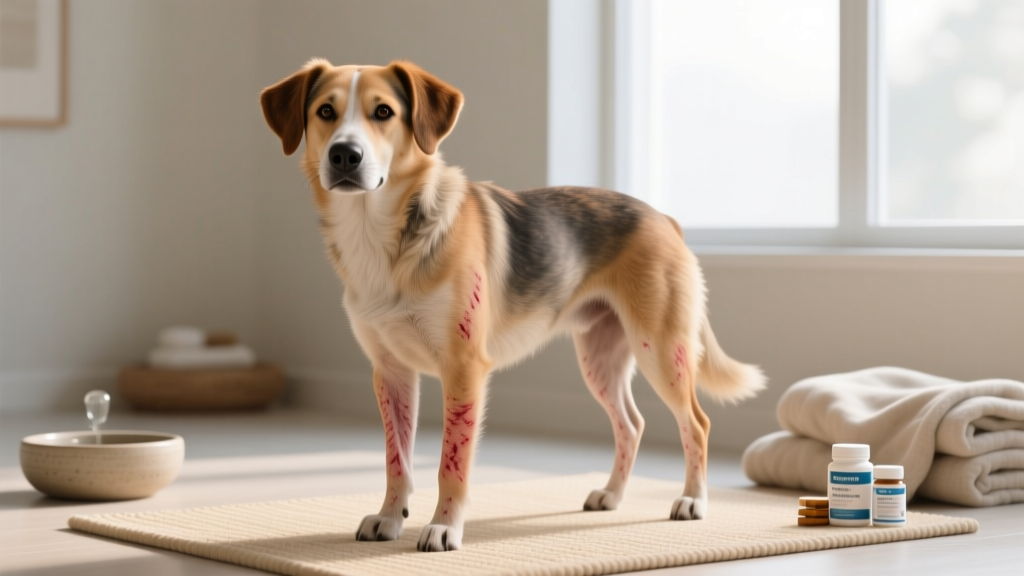
How to Get Rid of Mites on Dogs: Complete Treatment & Prevention Guide
Learn how to get rid of mites on dogs with vet-backed treatment protocols, product comparisons, and environmental control strategies for every mite type.

If your dog is scratching relentlessly, losing patches of hair, or developing crusty skin, mites may be the culprit. These microscopic arachnids are among the most common — and most frustrating — parasites veterinary dermatologists see. The good news? With the right identification, treatment protocol, and environmental management, mite infestations are highly treatable.
This guide walks you through exactly how to get rid of mites on dogs, covering the three major mite species that affect canines, evidence-based treatment options available in 2026, and the prevention products that actually work.
Identifying Dog Mites: What You're Dealing With
Not all mites are the same. Dogs are primarily affected by three mite species, each with distinct characteristics, symptoms, and treatment approaches. Correct identification is critical because a treatment that works for one species may be ineffective against another.
| Mite Species | Size | Appearance | Primary Location on Dog | Visibility to Naked Eye |
|---|---|---|---|---|
| Sarcoptes scabiei (Sarcoptic mange / scabies) | 0.3–0.5 mm | Round, grayish-white, eight legs (adult), turtle-like shell | Ears, elbows, hocks, belly, groin | Not visible — requires skin scraping & microscopy |
| Demodex canis (Demodectic mange) | 0.2–0.3 mm | Elongated, cigar-shaped, eight short legs | Hair follicles and sebaceous glands; face, forelegs, trunk | Not visible without magnification |
| Cheyletiella yasguri (Walking dandruff) | 0.5–0.8 mm | White, oval, large palpal claws | Back, neck, along the spine | Barely visible as moving white flakes |
According to the Merck Veterinary Manual, Sarcoptes scabiei burrows into the upper layers of skin to lay eggs, while Demodex canis lives commensally in hair follicles and only causes disease when the immune system is compromised. Cheyletiella mites live on the skin surface and are the easiest to spot visually — they look like flakes of dandruff that move.
How Dogs Get Mites: Transmission Routes
Understanding how your dog contracted mites helps you prevent reinfestation and protect other household members.
Sarcoptic Mange (Sarcoptes scabiei)
- Direct contact: The primary route. Physical contact with an infected dog, fox, or coyote transmits mites within minutes.
- Indirect contact: Mites can survive off-host for 48–72 hours in bedding, grooming tools, kennel runs, and furniture. Shared brushes and blankets are common vectors.
- Wildlife exposure: Foxes and coyotes are natural reservoirs. Dogs that roam wooded areas or encounter wildlife dens are at elevated risk.
Demodectic Mange (Demodex canis)
- Mother to puppy: Transmitted during nursing in the first 2–3 days of life. This is considered normal — most dogs carry low numbers of Demodex mites without issue.
- Immune suppression: Demodicosis flares when the immune system weakens due to youth (puppies under 18 months), stress, malnutrition, Cushing's disease, hypothyroidism, cancer, or immunosuppressive medications.
- Not contagious: Adult-to-adult transmission between healthy dogs is extremely rare. The American Kennel Club confirms that Demodex is not considered a contagious parasite.
Walking Dandruff (Cheyletiella)
- Direct contact: Highly contagious between dogs, cats, and rabbits in the same household.
- Fomites: Mites and eggs persist in bedding, carpets, and upholstery for up to 10 days off-host.
- Grooming facilities and shelters: Multi-animal environments are common transmission sites.
The Mite Life Cycle: Why Treatment Takes Weeks
Sarcoptes scabiei life cycle (14–21 days total):
- Egg: Female burrows into the stratum corneum and lays 2–3 eggs per day (40–50 total over her lifetime). Eggs hatch in 3–4 days.
- Larva: Six-legged larvae emerge and migrate to the skin surface, then burrow into shallow molting pouches. Stage lasts 3–4 days.
- Nymph: Eight-legged nymphs develop through two stages over 4–6 days.
- Adult: Adults mate on the skin surface. Males die shortly after mating. Females burrow and begin laying eggs within 4–5 days. Adult lifespan: 30–60 days.
Demodex canis life cycle (20–35 days total):
- Eggs laid deep in hair follicles → hatch into six-legged larvae (1–2 days)
- Develop into eight-legged nymphs within the follicle (5–7 days)
- Mature to adults that remain in follicles; entire cycle occurs within the follicle
- Adults survive approximately 20–35 days
Cheyletiella life cycle (21 days total):
- Eggs attached to hair shafts with silk-like threads → hatch in 3–8 days
- Larval and nymphal stages on skin surface (10–12 days)
- Adults live on the skin surface for approximately 10–14 days
This life cycle data explains why single-dose treatments rarely eliminate mites completely. Most veterinary protocols require treatment spanning 4–6 weeks to ensure all life stages are addressed, including eggs that hatch after initial treatment.
Symptoms by Severity: What to Watch For
| Severity | Sarcoptic Mange | Demodectic Mange | Cheyletiella |
|---|---|---|---|
| Mild / Early | Itching at ear margins, elbows; occasional head shaking; mild redness | 1–2 small bald patches on face or forelegs; minimal itching; slight scaling | Mild flaking along the back; occasional scratching; no hair loss |
| Moderate | Intense pruritus (scratching), spreading redness, crusting on ears and elbows, secondary bacterial odor | 3–5 bald patches spreading across face, legs, trunk; pustules; skin thickening; mild to moderate itch | Heavy dandruff-like scaling; visible moving flakes; hair thinning along spine; frequent scratching |
| Severe | Whole-body crusting, open sores from self-trauma, secondary pyoderma, lymph node enlargement, emaciation from stress | Generalized demodicosis: >5 body regions affected, deep skin infections, draining tracts, fever, lethargy, potentially life-threatening sepsis | Rarely reaches severe stage; possible secondary bacterial infection, widespread alopecia |
How Do I Know If My Dog Has Mites?
Definitive diagnosis requires veterinary testing. Your vet will typically perform:
- Deep skin scraping: A scalpel blade scrapes skin until capillary bleeding occurs; the sample is examined under a microscope. This is the gold standard for Demodex and Sarcoptes. Cost: $50–$120 depending on number of sites scraped.
- Superficial skin scraping or acetate tape prep: Used for Cheyletiella — tape pressed to the skin surface captures mites and eggs.
- Hair pluck (trichogram): Hairs are plucked and examined microscopically for Demodex mites in the follicle.
- Sarcoptes ELISA blood test: Detects antibodies to Sarcoptes. Useful when skin scrapings are negative but clinical suspicion remains high. Cost: $80–$150.
- Response to treatment trial: If Sarcoptes is suspected but not confirmed, vets may initiate a treatment trial — improvement within 2–4 weeks strongly suggests scabies.
Treatment Protocols: How to Get Rid of Mites on Dogs
Treatment varies significantly by mite species. Always consult your veterinarian before starting any antiparasitic medication — incorrect dosing can cause neurological toxicity, particularly in herding breeds with the MDR1 gene mutation (Collies, Australian Shepherds, Shelties).
Sarcoptic Mange Treatment
- Prescription isoxazoline (first-line): Oral medications including afoxolaner (NexGard), fluralaner (Bravecto), sarolaner (Simparica), or lotilaner (Credelio) are now considered the treatment of choice. These are FDA-approved oral parasiticides that kill Sarcoptes mites systemically. Typical protocol: one dose, repeated in 30 days. Cost: $20–$65 per dose depending on dog weight. Success rate: 95–100% with two doses.
- Topical selamectin (Revolution): Applied every 2 weeks for 3–4 treatments. Effective but slower than oral isoxazolines. Cost: $25–$45 per dose.
- Amitraz dips (Mitaban): Older protocol — 0.025% amitraz solution applied weekly for 4–6 weeks. Effective but labor-intensive, toxic if improperly diluted, and contraindicated in small breeds. Increasingly replaced by isoxazolines.
- Secondary infection management: Antibacterial shampoos (chlorhexidine-based) and oral antibiotics (cephalexin, amoxicillin-clavulanate) for 2–4 weeks if pyoderma is present.
- Anti-itch relief: Apoquel (oclacitinib) or Cytopoint (lokivetmab) injections to control pruritus during the first 1–2 weeks while the acaricide takes effect.
Demodectic Mange Treatment
- Localized demodicosis (1–2 small patches): Often self-resolving in puppies under 18 months. Monitor for 4–6 weeks. If spreading, begin treatment.
- Generalized demodicosis (prescription isoxazolines): Bravecto (fluralaner) given every 8–12 weeks, or NexGard (afoxolaner) monthly, until two consecutive negative skin scrapings are obtained. Treatment duration: 3–8 months on average. Cost: $150–$500+ for a full course.
- Ivermectin protocol: Daily oral ivermectin at 0.3–0.6 mg/kg — this is an extra-label use requiring careful dose calculation. MDR1 gene testing is essential before starting. Cost: $15–$40/month but requires daily administration and close monitoring.
- Address underlying immunosuppression: If adult-onset demodicosis occurs, your vet will screen for Cushing's disease, hypothyroidism, and cancer. Treatment of the underlying condition is essential for mite resolution.
Cheyletiella Treatment
- Isoxazolines: Single dose of any approved isoxazoline (NexGard, Bravecto, Simparica) typically resolves the infestation. A second dose at 30 days is recommended for certainty.
- Selamectin (Revolution): Two doses, 30 days apart.
- Lime sulfur dips: 2% lime sulfur solution applied weekly for 4–6 weeks. Safe for puppies under 12 weeks and cats in the household. Smells like rotten eggs but is effective and inexpensive ($12–$18 per bottle).
- Treat ALL household pets: Cheyletiella spreads between dogs, cats, and rabbits. Every animal in the home must be treated simultaneously.
Prevention Products Compared: What Actually Works in 2026
The isoxazoline class of oral parasiticides has transformed mite prevention. Most monthly flea/tick preventives now provide reliable mite coverage as a secondary benefit. Here's how the leading options compare:
| Product | Type | Active Ingredient | Dosing Frequency | Mite Coverage | Approx. Monthly Cost (50 lb dog) |
|---|---|---|---|---|---|
| NexGard | Oral chewable | Afoxolaner | Monthly | Sarcoptes, Demodex (extra-label) | $22–$28 |
| Bravecto | Oral chewable | Fluralaner | Every 12 weeks | Sarcoptes, Demodex | $18–$24 (amortized) |
| Simparica | Oral chewable | Sarolaner | Monthly | Sarcoptes, Demodex | $20–$26 |
| Credelio | Oral chewable | Lotilaner | Monthly | Sarcoptes, Demodex (extra-label) | $21–$27 |
| Revolution Plus | Topical | Selamectin + Sarolaner | Monthly | Sarcoptes, Cheyletiella, ear mites | $24–$32 |
| Seresto Collar | Collar | Imidacloprid + Flumethrin | Every 8 months | Sarcoptes (partial), no Demodex coverage | $8–$10 (amortized) |
Note: Prices reflect 2026 retail averages for a 45–55 lb dog. Actual costs vary by retailer, veterinary clinic markup, and geographic region. All prescription products require a valid veterinary-client-patient relationship (VCPR).
How Often Should I Treat My Dog for Mites?
Prevention: A monthly isoxazoline or 12-week Bravecto regimen provides continuous mite prevention as part of your standard flea/tick protocol. There is no separate "mite-only" preventive needed if your dog is already on one of these medications.
Active treatment: Treatment duration depends on species:
- Sarcoptic mange: 2 treatments, 30 days apart (minimum)
- Generalized demodicosis: 3–8 months of continuous treatment, with monthly skin scrapings to confirm clearance
- Cheyletiella: 1–2 treatments, 30 days apart, plus environmental treatment
Environmental Control: Breaking the Reinfestation Cycle
Treating your dog without treating the environment is like mopping the floor while the faucet is still running. Mites — particularly Sarcoptes and Cheyletiella — can persist in your home and reinfect your dog after treatment.
Indoor Environment
- Wash all bedding: Hot water (140°F / 60°C) wash and high-heat dryer cycle for all dog beds, blankets, crate pads, and human bedding the dog contacts. Do this on the day treatment begins and again 7 days later.
- Vacuum thoroughly: All carpets, upholstery, and floor crevices. Dispose of the vacuum bag or empty the canister outside immediately. Vacuum daily for 7 days post-treatment.
- Steam clean: Professional steam cleaning of carpets and upholstered furniture kills mites at all life stages. Cost: $150–$300 for a standard home.
- Discard or replace: Fabric toys, worn brushes, and grooming tools that cannot be washed at high temperature should be discarded and replaced. Cost of replacement: $20–$50.
Yard and Outdoor Areas
- Focus on high-use zones: Dog runs, kennel areas, shaded spots where your dog rests. Sarcoptes mites die within 48–72 hours off-host in sunlight and dry conditions, but persist longer in cool, damp shade.
- Remove organic debris: Rake and dispose of leaf litter, old bedding, and straw from dog housing areas.
- Wildlife deterrence: Secure trash, block access to crawl spaces, and remove brush piles to reduce fox and coyote activity near your property. These animals are Sarcoptes reservoirs.
- Chemical yard treatment: Generally not recommended for mites (unlike fleas and ticks). Environmental persistence of Sarcoptes is short enough that thorough cleaning and time are usually sufficient. If a kennel run has heavy contamination, a pyrethrin-based kennel spray can be used — follow label directions precisely and keep dogs off treated surfaces until dry.
Seasonal Risk and Regional Considerations
| Region | Peak Risk Months | Notes |
|---|---|---|
| Northeast US | March–November | Sarcoptes peaks in late winter/early spring when foxes are most active and dogs share indoor spaces. Demodex has no seasonal pattern. |
| Southeast US | Year-round | Warm, humid climate supports mite survival off-host for longer periods. Higher Cheyletiella prevalence in shelters and kennels. |
| Midwest US | April–October | Sarcoptes risk correlates with outdoor activity and wildlife contact. Kennel cough season (fall/winter) overlaps with increased indoor dog-to-dog contact. |
| Southwest US | Year-round (slightly lower in peak summer) | Dry heat reduces off-host mite survival, but coyote populations maintain Sarcoptes in the environment. |
| Pacific Northwest | October–April | Cool, damp conditions extend off-host mite survival. Dogs spending more time indoors during rainy season increases transmission risk. |
Unlike fleas and ticks, mites are less driven by seasonal temperature shifts and more influenced by animal behavior patterns — indoor crowding in winter, wildlife mating seasons, and shelter intake surges. Year-round prevention with an isoxazoline product is the simplest approach regardless of region.
Zoonotic Risk: Can Dog Mites Spread to Humans?
This is one of the most common questions dog owners ask, and the answer varies by species:
- Sarcoptes scabiei (canine strain): YES — with caveats. Canine Sarcoptes mites can transfer to humans through close contact and cause a self-limiting papular rash, typically on the arms, abdomen, or chest. However, canine mites cannot complete their life cycle on humans. The rash resolves within 2–3 weeks once the dog is treated. The CDC notes that human scabies is caused by a separate, human-adapted strain (Sarcoptes scabiei var. hominis), which requires different treatment.
- Demodex canis: NO. Demodex mites are species-specific and do not transfer to humans or other animal species.
- Cheyletiella yasguri: YES — mild zoonotic potential. Humans may develop a pruritic papular rash from contact with infested dogs. Like Sarcoptes, the mites cannot reproduce on humans and the condition is self-limiting.
If you develop a rash while your dog is being treated for mites: Treat the dog aggressively, wash bedding and clothing in hot water, and the human symptoms should resolve. If the rash persists beyond 3 weeks after your dog's treatment, consult a dermatologist to rule out human-specific scabies.
Frequently Asked Questions
Can I treat my dog's mites with over-the-counter products?
Over-the-counter (OTC) mite treatments are generally ineffective for Sarcoptes and Demodex. Products containing pyrethrins or permethrins at OTC concentrations do not achieve the systemic levels needed to kill burrowing mites. The isoxazoline class — which has revolutionized mite treatment — is prescription-only and requires a veterinary visit. For Cheyletiella, OTC lime sulfur dips can be effective but must be applied correctly and paired with environmental treatment. Attempting to manage a mite infestation without veterinary guidance often results in weeks of unnecessary suffering for your dog and higher total costs from failed treatments.
How much does veterinary treatment for mites cost?
Expect the following ranges for a complete treatment course:
- Diagnostic workup (exam, skin scraping, possible bloodwork): $150–$350
- Sarcoptic mange treatment (2 isoxazoline doses + anti-itch medication + antibacterial shampoo): $120–$300
- Generalized demodicosis treatment (3–8 months of medication + monthly rechecks): $400–$1,500+
- Cheyletiella treatment (2 doses + lime sulfur dips): $80–$180
Costs escalate significantly if secondary infections require extended antibiotic courses or if the dog requires sedation for medicated baths.
Can mites spread from my dog to my cat?
Cheyletiella readily spreads between dogs and cats. Sarcoptes can transfer to cats, though feline scabies is less common. Demodex is species-specific — Demodex canis does not infect cats (cats have their own species, Demodex cati and Demodex gatoi). If you have a multi-pet household and one animal is diagnosed with Sarcoptes or Cheyletiella, your veterinarian will likely recommend treating all pets simultaneously.
Will shaving my dog help get rid of mites?
For Demodex, clipping long-coated dogs can improve the efficacy of topical treatments (dips, sprays) by allowing the solution to reach the skin. However, shaving is not a treatment by itself — it is a supportive measure. For Sarcoptes, which burrows in the skin regardless of coat length, shaving provides no direct benefit. For Cheyletiella, clipping may reduce the surface area where mites and eggs attach, but again, it must be paired with acaricide treatment.
My dog's itching hasn't improved after treatment — is the medication not working?
Post-treatment pruritus is common and expected, particularly with Sarcoptes. The intense allergic response to dead and dying mites can cause itching to worsen for 5–10 days after the first dose before improving. This is called a "die-off reaction" and does not mean treatment has failed. Your vet may prescribe a short course of Apoquel or a Cytopoint injection to manage this phase. If itching persists beyond 3 weeks after treatment, contact your veterinarian for a follow-up skin scraping.
Are there any home remedies that work for dog mites?
Some sources recommend motor oil, bleach baths, or undiluted essential oils for mite treatment. These are dangerous and can cause chemical burns, systemic toxicity, or death. The ASPCA Animal Poison Control Center (888-426-4435) receives calls every year about dogs poisoned by well-intentioned home remedies. If cost is a barrier to veterinary care, ask your vet about payment plans, CareCredit, or local low-cost clinics — but do not substitute proven treatment with unproven and potentially harmful alternatives.
When to See the Vet Immediately
Contact your veterinarian or an emergency clinic if your dog shows any of the following:
- Open, oozing, or foul-smelling skin lesions (signs of secondary bacterial infection)
- Rapid hair loss spreading across the body within days
- Lethargy, fever, or loss of appetite alongside skin symptoms
- Swollen lymph nodes or visible skin thickening
- No improvement after 2–3 weeks of prescribed treatment
- You have a puppy under 6 months with any hair loss — early intervention prevents generalized demodicosis
This guide is for educational purposes and does not replace professional veterinary diagnosis or treatment. Always consult your veterinarian before starting any medication or treatment protocol for your dog.
Dr. Hannah Wickes
All our authors care for dogs every day — read more of their work on the authors page.