Dog Itchy Skin: Causes, Diagnosis, and Treatment Guide
Comprehensive guide to dog itchy skin — causes, symptoms by severity, vet diagnosis process, treatment costs, and home management strategies.
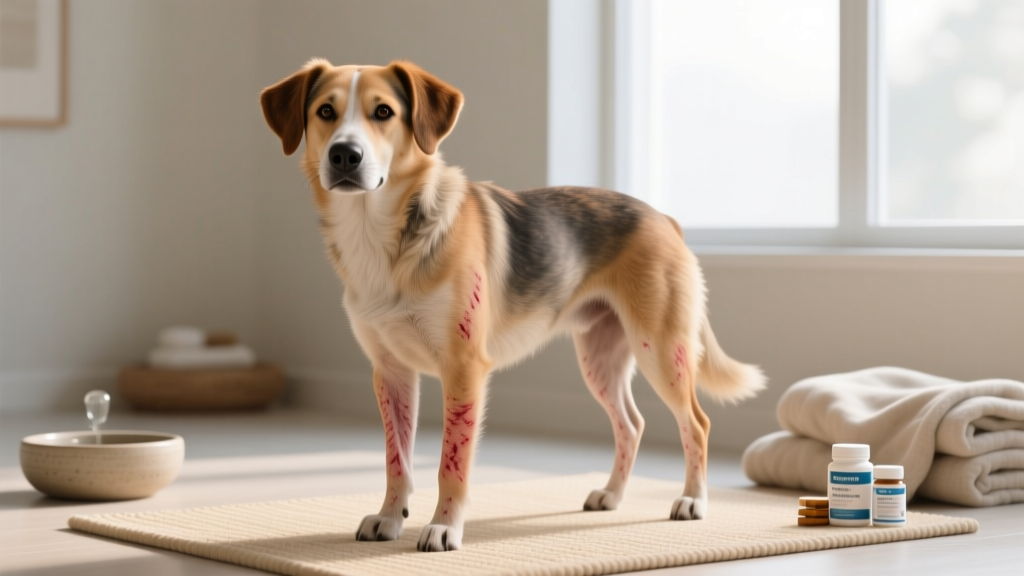
If your dog is constantly scratching, licking, or chewing at their skin, you're dealing with one of the most common reasons pet owners visit the veterinary clinic. Dog itchy skin — clinically known as pruritus — isn't a single disease but a symptom of an underlying condition. According to the Merck Veterinary Manual, pruritus accounts for approximately 10-15% of all canine veterinary visits, making it one of the most frequently presented dermatological complaints in small animal practice.
Pruritus occurs when inflammatory mediators — primarily histamine, cytokines, and proteases — stimulate itch receptors (pruriceptors) in the epidermis. The sensation triggers the scratch-itch cycle: scratching damages the skin barrier, which increases inflammation, which intensifies itching. Without intervention, this cycle can lead to secondary infections, hair loss, and significant quality-of-life decline for your dog.
The most common underlying causes include allergic dermatitis (environmental, food, or flea-related), parasitic infestations, bacterial or yeast infections, and endocrine disorders. The good news: with proper veterinary diagnosis and a targeted treatment plan, most cases of dog itchy skin are manageable, and many are fully resolvable.
What Causes Dog Itchy Skin? Understanding the Root Triggers
Before you can treat the itch, you need to identify what's driving it. Dog itchy skin falls into several major categories, and it's not uncommon for a dog to have overlapping causes — a dog with environmental allergies, for instance, is more susceptible to secondary yeast infections that compound the itching.
Allergic Causes
- Flea Allergy Dermatitis (FAD): The most common allergic skin disease in dogs. A single flea bite can trigger a severe reaction in sensitized dogs, causing intense itching along the back, tail base, and hindquarters for days after the bite.
- Canine Atopic Dermatitis (CAD): An inherited predisposition to develop allergic antibodies against environmental allergens — dust mites, pollen, mold spores, grasses. Typically begins between 6 months and 3 years of age. According to AKC veterinary resources, CAD affects an estimated 10-15% of the canine population.
- Food Allergy (Cutaneous Adverse Food Reaction): Accounts for roughly 5-10% of allergic skin disease cases. Most commonly triggered by proteins — beef, dairy, chicken, and wheat are the top offenders. True food allergies are less common than many owners believe.
- Contact Dermatitis: Reaction to substances the skin directly contacts — certain grasses, cleaning products, plastic bowls, topical medications. Less common but can cause localized intense itching.
Parasitic Causes
- Sarcoptic Mange (Scabies): Caused by Sarcoptes scabiei mites that burrow into the skin. Extremely itchy, highly contagious, and often affects ear margins, elbows, and abdomen.
- Demodectic Mange: Caused by Demodex mites. Localized demodicosis is common in puppies and often self-resolving; generalized demodicosis causes more severe skin disease and may or may not be pruritic depending on secondary infection.
- Cheyletiellosis ("Walking Dandruff"): Surface-dwelling mites that cause scaling and moderate itching, especially along the back.
- Lice and Fleas: Direct irritation and allergic reactions to saliva.
Infectious Causes
- Bacterial Pyoderma: Usually secondary to allergies or other underlying conditions. Staphylococcus pseudintermedius is the most common bacterial culprit, causing pustules, crusts, and itching.
- Malassezia (Yeast) Dermatitis: Overgrowth of naturally occurring yeast on the skin. Produces a characteristic musty odor, greasy skin, and intense itching, especially in ears, paws, and skin folds.
- Dermatophytosis (Ringworm): Fungal infection that may or may not be itchy; more commonly causes hair loss and circular lesions.
Other Causes
- Endocrine Disorders: Hypothyroidism and Cushing's disease (hyperadrenocorticism) can cause skin changes that lead to secondary infections and pruritus.
- Immune-Mediated Diseases: Pemphigus foliaceus and other autoimmune conditions.
- Behavioral (Psychogenic): Compulsive licking or chewing, often secondary to anxiety or boredom — but always rule out medical causes first.
- Neoplasia: Cutaneous lymphoma (epitheliotropic T-cell lymphoma) can present as chronic itchy, scaly skin that mimics other conditions.
Symptoms of Dog Itchy Skin: Early Warning Signs vs. Advanced Disease
Recognizing the severity of your dog's itching helps determine urgency and guides your conversation with the veterinarian. The following checklist organizes symptoms from early-stage to advanced.
| Severity | Symptoms | What It Means |
|---|---|---|
| Mild / Early |
• Occasional scratching (more than baseline, but not constant) • Licking at paws intermittently • Slight head shaking • Minor redness between toes or in ear canals • Small areas of thinning hair |
Early allergic response or mild parasitic exposure. Skin barrier still largely intact. Best time to intervene. |
| Moderate |
• Frequent scratching that interrupts sleep or play • Chewing at flanks, legs, or tail base • Noticeable hair loss (alopecia) in patches • Skin redness spreading to belly, armpits, groin • Recurrent ear infections or head shaking • Musty or yeasty odor from skin or ears • Small scabs or crusts on skin surface |
Active inflammation with likely secondary infection developing. Veterinary visit recommended within 3-5 days. |
| Severe / Advanced |
• Constant, relentless scratching — dog cannot be distracted • Open wounds, bleeding, or raw skin from self-trauma • Thickened, darkened (hyperpigmented) or leathery skin (lichenification) • Widespread hair loss covering large body areas • Pus-filled lesions or draining tracts • Visible pain when touched • Loss of appetite, lethargy, or behavioral changes • Foul odor from extensive skin infection |
Significant skin barrier breakdown with probable deep secondary infection. Immediate veterinary attention needed — same day or emergency visit. |
Breed Predisposition and Risk Factors for Canine Pruritus
Risk Factors Box: Who's Most Vulnerable?
Breed predisposition (atopic dermatitis): West Highland White Terriers, French Bulldogs, Boxers, Labrador Retrievers, Golden Retrievers, German Shepherds, English Bulldogs, Shar-Peis, Boston Terriers, Cairn Terriers, and Pugs have documented genetic predispositions to atopic dermatitis.
Age: Allergic skin disease typically first manifests between 6 months and 3 years. Senior dogs (8+ years) with new-onset itching should be evaluated for endocrine disease or cutaneous lymphoma.
Environment: Dogs in humid climates have higher rates of yeast and bacterial overgrowth. Indoor dogs with year-round exposure to dust mites may have persistent (non-seasonal) allergic flares.
Coat type: Double-coated breeds and dogs with skin folds (bulldogs, Shar-Peis, Cocker Spaniels) are predisposed to moisture trapping and secondary infections in folds.
Weight: Overweight dogs have deeper skin folds and reduced grooming ability, increasing infection risk in skin creases.
How Veterinarians Diagnose the Cause of Dog Itchy Skin
Because pruritus is a symptom with many possible causes, your veterinarian will follow a systematic diagnostic approach. This isn't a one-visit process — expect a workup that may span 2-4 weeks as different conditions are ruled in or out.
Diagnostic Process Flowchart
- Step 1 — History and Physical Exam ($50-$90): Your vet will ask about onset, seasonality, response to previous treatments, diet history, flea control status, and household environment. A thorough skin exam identifies lesion distribution patterns that point toward specific diagnoses (e.g., dorsal tail base = flea allergy; ventral abdomen/paws = atopic dermatitis).
- Step 2 — Rule Out Parasites ($25-$75): Skin scrapings (deep and superficial), flea combing, and tape preps to check for mites, lice, and flea dirt. Sarcoptic mange may require a trial treatment with an isoxazoline (e.g., Simparica, Bravecto) because skin scrapings have a sensitivity of only about 20-30% for this mite.
- Step 3 — Cytology ($35-$65 per site): Skin impressions, tape preps, and ear swabs examined under a microscope to identify bacterial overgrowth (cocci vs. rods — rods suggest more resistant organisms), yeast (Malassezia), or inflammatory cell patterns.
- Step 4 — Treat Secondary Infections First ($30-$150): Before allergy testing, your vet will typically treat any identified bacterial or yeast infections with 3-4 weeks of appropriate therapy. This reduces the "noise" so the true allergic baseline becomes visible.
- Step 5 — Flea Control Trial ($20-$60): Strict, veterinary-grade flea prevention for all household pets for a minimum of 8 weeks. If itching resolves, flea allergy dermatitis is confirmed.
- Step 6 — Food Elimination Trial ($80-$300+ over 8-12 weeks): If itching persists after parasite and infection control, a strict novel-protein or hydrolyzed-protein diet trial is performed for 8-12 weeks. The ONLY reliable method for diagnosing food allergy — blood and saliva food allergy tests are not validated and should not be used for diagnosis.
- Step 7 — Allergy Testing ($300-$800+): If food trial is negative and atopic dermatitis is suspected, intradermal skin testing (gold standard, performed by a veterinary dermatologist) or serum IgE testing identifies specific environmental allergens for immunotherapy formulation.
- Step 8 — Advanced Diagnostics if Indicated: Skin biopsy ($150-$350) for atypical cases, endocrine testing (thyroid panel $80-$150, ACTH stimulation test $150-$300) for suspected hormonal disease, or fungal culture for suspected ringworm ($50-$100).
Total diagnostic costs typically range from $200-$500 for straightforward cases to $800-$2,000+ for complex cases requiring referral to a board-certified veterinary dermatologist. Remember: a thorough workup upfront often saves money by avoiding months of ineffective trial-and-error treatments.
Treatment Options for Dog Itchy Skin: Medical and Supportive Approaches
Treatment is tailored to the underlying cause. Here's a comparison of the primary therapeutic options your veterinarian may recommend:
| Treatment | Used For | How It Works | Onset | Cost Range | Success Rate |
|---|---|---|---|---|---|
| Oclacitinib (Apoquel) | Atopic dermatitis, allergic pruritus | JAK-1 inhibitor — blocks itch signaling cytokines (IL-31) | 4-24 hours | $50-$120/month depending on dog size | ~80% of dogs show significant improvement |
| Lokivetmab (Cytopoint) | Atopic dermatitis | Monoclonal antibody injection that neutralizes IL-31 | 24-48 hours | $65-$150 per injection (every 4-8 weeks) | ~75-80% response rate |
| Glucocorticoids (Prednisone, Temaril-P) | Acute flare-ups, short-term relief | Broad anti-inflammatory and immunosuppressive | 1-2 hours | $5-$30/month | Very high short-term, but long-term use has significant side effects (PU/PD, weight gain, diabetes risk, immune suppression) |
| Immunotherapy (Allergy Shots or Sublingual Drops) | Atopic dermatitis with identified allergens | Gradually desensitizes immune system to specific allergens | 3-12 months for full effect | $300-$800 initial formulation + $100-$200/year maintenance | 60-70% of dogs show improvement; 20-30% achieve near-complete remission |
| Isoxazolines (Bravecto, Simparica Trio, NexGard) | Flea/tick prevention; sarcoptic and demodectic mange | Systemic parasiticide — kills fleas, ticks, and mites | Hours for fleas; 4-8 weeks for mite resolution | $20-$65 per dose (monthly or quarterly) | >95% efficacy for fleas; high efficacy for mite elimination |
| Antibiotics (Cephalexin, Convenia) | Secondary bacterial pyoderma | Eliminates bacterial overgrowth/infection | 5-7 days for visible improvement; 3-6 week courses | $20-$80 per course; Convenia injection $50-$150 | High when organism is susceptible; culture-guided therapy for resistant cases |
| Antifungals (Ketoconazole, Itraconazole) | Malassezia yeast dermatitis | Systemic antifungal; often combined with medicated shampoos | 7-14 days for improvement; 3-6 week courses | $30-$120 per course | High with adequate treatment duration; recurrence common if underlying allergy not managed |
| Medicated Shampoos (Chlorhexidine, Miconazole, Oatmeal-based) | Adjunctive therapy for infections and general pruritus | Topical antimicrobial, anti-inflammatory, and barrier-repair | Cumulative benefit over 2-4 weeks of twice-weekly bathing | $15-$40 per bottle | Excellent adjunct; limited as sole therapy for moderate-severe cases |
Emerging and Adjunctive Therapies
Several newer approaches are gaining evidence-based support:
- Fatty acid supplementation: Omega-3 (EPA and DHA) at doses of 30-60 mg/kg combined EPA+DHA daily has demonstrated improvement in skin barrier function and reduced pruritus scores in multiple studies. Fish oil products like Nordic Naturals Omega-3 Pet or veterinary-specific formulations (e.g., Welactin) provide standardized dosing.
- Topical ceramide-containing products: Products like Douxo S3 or Allerderm Spot-On help restore the defective skin barrier seen in atopic dogs.
- Probiotics: Certain strains (particularly Lactobacillus rhamnosus GG) show preliminary evidence of reducing atopic dermatitis severity, though more research is needed. Not a standalone treatment.
Prognosis: What to Expect Based on the Underlying Cause
| Underlying Cause | Curable? | Long-Term Outlook | Impact on Lifespan |
|---|---|---|---|
| Flea Allergy Dermatitis | Manageable (not curable — sensitivity persists) | Excellent with strict, year-round flea prevention on ALL household pets. Symptoms resolve within 2-8 weeks once fleas are eliminated. | None |
| Atopic Dermatitis | Not curable — chronic lifelong condition | Good to excellent with multimodal management. Most dogs achieve comfortable quality of life with combination therapy (medication + topical care + allergen avoidance where possible). | None directly, though chronic severe cases may have reduced quality of life |
| Food Allergy | Manageable — symptoms resolve with allergen avoidance | Excellent if the offending ingredient is identified and permanently eliminated from the diet. Some dogs develop new food sensitivities over time. | None |
| Sarcoptic Mange | Curable | Excellent. Full resolution typically within 4-6 weeks of appropriate treatment. All in-contact animals must be treated. | None |
| Generalized Demodicosis | Often curable in young dogs; adult-onset may indicate underlying immune compromise | Good for juvenile-onset (80-90% cure rate). Adult-onset requires investigation for underlying immunosuppression, endocrine disease, or neoplasia. | Depends on underlying cause in adult-onset cases |
| Cutaneous Lymphoma | Not curable | Guarded. Palliative treatment (lomustine, rabacfosadine) may provide 6-18 months of quality life. Often misdiagnosed initially as chronic dermatitis. | Reduced — median survival 6-18 months with treatment |
Home Care and Daily Management for Itchy Dogs
Regardless of the underlying diagnosis, daily management plays a critical role in keeping your dog comfortable. Here's a practical framework:
Daily Care Requirements
- Flea prevention — non-negotiable: Use a veterinary-recommended isoxazoline-class product (Bravecto, Simparica, NexGard, Credelio) year-round on every pet in the household. Over-the-counter flea products from grocery stores (pyrethrin-based collars, spot-ons) are significantly less effective and carry higher adverse-event rates. Treat the environment if infestation is confirmed: wash all bedding in hot water, vacuum daily, and consider a professional pest treatment with an insect growth regulator (IGR).
- Bathing schedule: Bathe your itchy dog 1-2 times per week with a veterinarian-recommended medicated shampoo. Leave the shampoo on for a full 10 minutes before rinsing — this contact time is critical for antimicrobial efficacy. Lukewarm water only; hot water worsens inflammation. Oatmeal-based or pramoxine-containing shampoos provide soothing relief for generalized itching.
- Ear cleaning: If your dog has recurrent ear involvement (very common with atopic dermatitis), clean ears 2-3 times weekly with a veterinary ear cleanser (e.g., Epi-Otic Advanced, TrizUltra). Never use cotton swabs deep in the ear canal.
- Paw wiping: After outdoor exposure, wipe your dog's paws with a damp cloth or hypoallergenic wipe (e.g., Earthbath grooming wipes) to remove pollen and environmental allergens before they're licked and ingested.
- Nail trimming: Keep nails short to minimize damage from scratching. Trim every 1-2 weeks.
Environmental Modifications
- Use a HEPA air purifier in the room where your dog spends the most time — reduces airborne allergen load (dust mites, pollen).
- Wash your dog's bedding weekly in hot water (minimum 130°F / 54°C) to kill dust mites.
- Consider replacing fabric dog beds with wipeable, elevated cot-style beds that harbor fewer allergens and are easier to sanitize.
- If your dog reacts to grasses, limit direct lawn contact or rinse legs/belly after outdoor time.
- Switch from plastic food bowls to stainless steel or ceramic — plastic bowls harbor bacteria and can trigger contact dermatitis.
Monitoring and Tracking
Keep a simple itch diary: note the date, severity (scale of 1-5), location of itching, any environmental changes, and response to medications. This data is invaluable at follow-up veterinary appointments and helps identify seasonal patterns or triggers. Many owners find the PetDesk or 11Pets apps useful for health tracking.
Treatment Cost Breakdown: What to Budget
Chronic skin conditions are among the most common — and sometimes most expensive — ongoing veterinary expenses. Here's a realistic breakdown based on 2025-2026 pricing data from general practice and specialty clinics across the US:
| Expense Category | Mild Case | Moderate Case | Complex / Referral Case |
|---|---|---|---|
| Initial exam + diagnostics | $150-$300 | $300-$600 | $600-$1,500+ |
| Medications (monthly ongoing) | $20-$60 | $60-$150 | $100-$250+ |
| Medicated shampoos and topicals | $15-$40/month | $20-$50/month | $30-$80/month |
| Allergy testing (if pursued) | N/A | $300-$800 | $500-$1,200 |
| Food elimination trial | N/A | $80-$200 (8-12 weeks of prescription diet) | $80-$200 |
| Dermatology specialist referral | N/A | $200-$400 consultation | $250-$500+ consultation |
| Estimated first-year total | $400-$1,200 | $1,500-$4,000 | $3,000-$8,000+ |
| Ongoing annual cost (after diagnosis) | $300-$800 | $800-$2,500 | $1,500-$4,000+ |
Pet insurance consideration: Most comprehensive pet insurance plans (Trupanion, Healthy Paws, Nationwide) cover chronic skin conditions including allergy workups, medications, and specialist referrals — but only if the condition develops after the policy's effective date and waiting period. Pre-existing condition exclusions mean that enrolling your dog before skin problems develop is the most financially protective strategy. Premiums for a mid-sized dog typically range from $40-$80/month with 70-90% reimbursement.
Prevention Strategies: Reducing Your Dog's Risk
While genetic predispositions to atopic dermatitis cannot be prevented, you can reduce the frequency and severity of itch flares with proactive management:
- Year-round flea prevention: This single intervention prevents the most common cause of dog itchy skin. Use a veterinary-prescribed product consistently — not just in summer. One missed month can restart the entire flea life cycle in your home.
- Regular bathing: Even healthy dogs benefit from bathing every 2-4 weeks with a gentle, soap-free canine shampoo. This removes allergens, reduces microbial load, and maintains skin barrier integrity.
- Balanced nutrition with adequate omega-3s: Feed an AAFCO-complete diet appropriate for your dog's life stage. Consider adding a fish oil supplement to support skin barrier health — discuss dosing with your veterinarian.
- Weight management: Overweight dogs have deeper skin folds, reduced self-grooming capacity, and increased inflammation systemically. Maintaining an ideal body condition score (BCS 4-5 out of 9) reduces dermatological risk.
- Regular veterinary wellness exams: Biannual check-ups allow your vet to catch early skin changes, ear inflammation, or endocrine shifts before they escalate into severe pruritus.
- Responsible breeding: If you're selecting a puppy from a breed predisposed to atopic dermatitis, ask the breeder about the skin health history of the sire and dam. Dogs with severe atopic disease should not be bred.
When to See the Vet: Red Flag Symptoms
⚠️ When to Call Your Veterinarian
Schedule an appointment within 48 hours if your dog shows:
- Scratching that persists for more than 3-4 days without improvement
- Any visible hair loss, redness, or skin lesions
- Recurrent ear infections (two or more episodes within 6 months)
- Itching that interferes with sleep, eating, or normal activity
- No improvement after trying over-the-counter remedies for 1 week
Seek same-day or emergency veterinary care if your dog shows:
- Open, bleeding wounds from self-trauma
- Large areas of raw, moist, or oozing skin (hot spots / acute moist dermatitis)
- Facial swelling, hives, or difficulty breathing (potential anaphylaxis — this is an emergency)
- Lethargy, fever, or refusal to eat alongside skin symptoms
- Rapidly spreading skin lesions
- Suspected exposure to a toxic substance — call ASPCA Animal Poison Control: (888) 426-4435 (24/7, consultation fee applies)
Never attempt to diagnose or treat moderate-to-severe pruritus at home without veterinary guidance. Incorrect treatment can worsen the condition, promote antibiotic resistance, or delay diagnosis of a serious underlying disease.
Frequently Asked Questions About Dog Itchy Skin
Can dog itchy skin be cured?
It depends entirely on the underlying cause. Parasitic conditions like sarcoptic mange and flea infestations are fully curable. Allergic conditions — atopic dermatitis, food allergy, and flea allergy dermatitis — are not curable but are highly manageable with appropriate long-term treatment plans. Many allergic dogs live comfortable, itch-minimal lives with consistent multimodal therapy. Cutaneous lymphoma and some autoimmune conditions carry a more guarded prognosis.
How much does it cost to treat dog itchy skin?
Costs vary widely based on complexity. A straightforward case of flea allergy dermatitis with a secondary superficial infection might cost $200-$500 total to diagnose and resolve. A moderate atopic dermatitis case requiring allergy testing, ongoing Apoquel or Cytopoint, and medicated shampoos typically runs $1,500-$4,000 in the first year, then $800-$2,500 annually for maintenance. Complex referral cases can exceed $5,000-$8,000 in the first year. Pet insurance can significantly offset these costs.
What is the life expectancy of a dog with chronic itchy skin?
For the vast majority of dogs with allergic or parasitic skin disease, life expectancy is normal — these conditions do not shorten lifespan. The primary impact is on quality of life, which is why consistent management matters. Exceptions include cutaneous lymphoma (median survival 6-18 months with treatment) and severe demodicosis in adult dogs where an underlying immunosuppressive condition may be present. Consult your veterinarian for a prognosis specific to your dog's diagnosis.
Which breeds are most prone to itchy skin?
Breeds with the strongest documented predisposition to allergic skin disease include West Highland White Terriers, French Bulldogs, Boxers, Labrador Retrievers, Golden Retrievers, German Shepherds, English Bulldogs, Shar-Peis, Boston Terriers, Cairn Terriers, Pugs, and Cocker Spaniels. However, any breed or mixed-breed dog can develop pruritus.
Can I give my dog Benadryl for itchy skin?
Diphenhydramine (Benadryl) is sometimes used in dogs at a dose of 1 mg per pound of body weight, given every 8-12 hours. However, consult your veterinarian before administering any human medication. Antihistamines have limited efficacy for canine atopic dermatitis — studies show they help only about 20-30% of dogs, and they are not effective for flea allergy or food allergy. Benadryl should not be used in dogs with glaucoma, cardiovascular disease, or certain other conditions. Your vet can recommend more effective, safer options.
Is coconut oil good for dog itchy skin?
Topical virgin coconut oil has shown some evidence of antibacterial activity and skin barrier improvement in limited veterinary studies, and it's generally safe for external use in small amounts. However, it is not a treatment for the underlying causes of pruritus and should not replace veterinary-prescribed therapies. Oral coconut oil is high in saturated fat and can contribute to pancreatitis or obesity. Discuss any home supplements with your veterinarian before adding them to your dog's care routine.
How long does it take for dog itchy skin to resolve?
Timelines depend on the cause and treatment. Flea allergy symptoms typically improve within 2-4 weeks of eliminating the flea burden. Secondary bacterial or yeast infections require 3-6 weeks of targeted antimicrobial therapy. Atopic dermatitis managed with Apoquel or Cytopoint may show improvement within 1-3 days, but long-term management is ongoing. Immunotherapy requires 3-12 months to assess full response. A food elimination trial requires a strict 8-12 weeks before results can be evaluated.
Dr. Hannah Wickes
All our authors care for dogs every day — read more of their work on the authors page.