Safe Recipes & When Itching Signals Disease
Learn how to make a safe homemade anti itch dog spray, plus identify when your dog's scratching signals a serious skin condition requiring veterinary care.

If your dog is constantly scratching, licking, or chewing at their skin, you're probably searching for fast relief — and a homemade anti itch dog spray can be a useful part of your toolkit. But before you mix up a DIY remedy, it's critical to understand that persistent itching (pruritus) is a symptom, not a diagnosis. In veterinary medicine, canine pruritus is one of the most common reasons dog owners visit the clinic, affecting an estimated 10-15% of the dog population at any given time according to the Merck Veterinary Manual. The underlying causes range from simple environmental dryness to serious conditions like allergic dermatitis, parasitic infestations, bacterial or yeast infections, and autoimmune skin disease.
A well-formulated homemade spray can soothe mild, temporary irritation. But if you're reaching for a spray every day and the scratching continues, your dog likely has a treatable medical condition that needs professional diagnosis. This guide covers safe DIY spray recipes, the skin diseases that cause chronic itching, what your vet will test for, and exactly when home care isn't enough.
What Causes Chronic Itching (Pruritus) in Dogs?
Canine pruritus is the medical term for persistent, uncomfortable itching that drives a dog to scratch, bite, lick, or rub affected areas. It's not a disease itself — it's a clinical sign pointing to an underlying problem. The itch-scratch cycle becomes self-perpetuating: scratching damages the skin barrier, which triggers inflammation, which causes more itching.
The most common underlying causes include:
- Atopic dermatitis (environmental allergies): Affects 10-15% of dogs. Triggered by pollen, dust mites, mold spores. Typically onset between 1-3 years of age.
- Flea allergy dermatitis (FAD): The single most common allergic skin disease in dogs. A single flea bite can trigger days of intense itching in sensitized dogs.
- Food allergies: Account for roughly 5-10% of allergic skin cases. Most commonly triggered by beef, dairy, chicken, or wheat proteins.
- Contact dermatitis: Reaction to shampoos, cleaning products, plants, or fabrics.
- Bacterial pyoderma: Secondary infection (usually Staphylococcus pseudintermedius) that develops in damaged skin.
- Malassezia (yeast) dermatitis: Overgrowth of naturally occurring yeast, often secondary to allergies.
- Sarcoptic mange (scabies): Caused by Sarcoptes scabiei mites. Intensely pruritic and zoonotic — transmissible to humans.
- Demodectic mange: Demodex mite overgrowth, more common in immunocompromised or young dogs.
Symptoms Checklist: How Severe Is Your Dog's Itching?
Not all scratching is equal. Use this checklist to gauge whether your dog's symptoms warrant a homemade anti itch spray or an immediate vet visit.
| Severity | Symptoms | Action |
|---|---|---|
| Mild (Early Warning) | Occasional scratching (3-5 times/hour), mild redness on belly or paws, slight odor, seasonal pattern, dog is otherwise energetic and eating normally | Try homemade spray; monitor for 5-7 days |
| Moderate | Frequent scratching/licking (10+ times/hour), visible hot spots, hair thinning in patches, skin darkening (hyperpigmentation), recurrent ear infections, disrupted sleep | Vet visit within 48-72 hours |
| Severe (Advanced) | Self-trauma with open wounds, widespread hair loss, thickened/leathery skin (lichenification), pus or discharge, foul odor, behavioral changes (aggression when touched, lethargy), weight loss | Vet visit immediately — within 24 hours |
Breed Predisposition and Risk Factors
Risk Factors Box: Who Gets Chronic Itching?
Breed predisposition: West Highland White Terriers, French Bulldogs, German Shepherds, Labrador Retrievers, Golden Retrievers, Boxers, Pugs, Shar-Peis, Cocker Spaniels, and English Bulldogs have significantly higher rates of atopic dermatitis and allergic skin disease. Brachycephalic breeds (flat-faced dogs) are especially prone to skin fold dermatitis.
Age: Atopic dermatitis typically begins between 6 months and 3 years of age. Food allergies can appear at any age. Senior dogs with new-onset itching should be evaluated for endocrine disorders (hypothyroidism, Cushing's disease).
Environment: Dogs in humid climates face higher yeast and flea pressure. Indoor dogs in dry, heated environments may develop dry-skin pruritus. Urban dogs may react to pollution-related contact irritants.
Weight: Overweight dogs have deeper skin folds, reduced grooming ability, and higher rates of secondary infection. Obesity is a modifiable risk factor for chronic skin disease.
Genetics: Canine atopic dermatitis has a heritable component. Dogs from lines with known allergy history are 2-4x more likely to develop allergies themselves.
Safe Homemade Anti Itch Dog Spray Recipes
If your dog's symptoms fall in the mild category and you've ruled out parasites (current flea/tick prevention is essential), these veterinarian-informed recipes can provide temporary soothing relief. All ingredients listed are non-toxic if licked in small amounts — but you should still prevent excessive ingestion by using an Elizabethan collar (cone) after application if needed.
Recipe 1: Apple Cider Vinegar Soothing Spray
- 1 part raw, unfiltered apple cider vinegar (ACV)
- 3 parts distilled or filtered water
- Optional: 2-3 drops of vitamin E oil
Preparation: Mix in a clean 8 oz spray bottle. Shake before each use. Spray on affected areas (avoiding eyes, nose, and open wounds). Let air-dry. Store in refrigerator for up to 2 weeks.
Why it works: Diluted ACV has mild antifungal properties and helps restore skin pH (canine skin pH is approximately 6.2-7.4, more neutral than human skin). The 1:3 dilution keeps acetic acid concentration safe. Never use undiluted ACV — it will burn compromised skin.
Do NOT use on: Open wounds, raw hot spots, or dogs with known vinegar sensitivity. If your dog yelps or shows increased scratching after application, discontinue immediately.
Recipe 2: Colloidal Oatmeal Calming Spray
- 2 tablespoons colloidal oatmeal (finely ground, not instant breakfast oats)
- 8 oz warm distilled water
- 1 teaspoon aloe vera gel (pure, no added alcohol or xylitol)
Preparation: Dissolve colloidal oatmeal in warm water, stirring until milky. Add aloe vera. Pour into spray bottle. Use within 5 days (refrigerate between uses). Spray generously on itchy areas 2-3 times daily.
Why it works: Colloidal oatmeal contains avenanthramides, which have documented anti-inflammatory properties. The FDA recognizes colloidal oatmeal as a skin protectant. This recipe is the safest option for dogs with sensitive or broken skin.
Recipe 3: Chamomile and Green Tea Anti-Inflammatory Spray
- 1 chamomile tea bag (caffeine-free)
- 1 green tea bag
- 8 oz boiling water
Preparation: Steep both tea bags in boiling water for 15 minutes. Remove bags and cool completely to room temperature (refrigerate to speed up). Pour into spray bottle. Use within 7 days, refrigerated. Apply 2-3 times daily.
Why it works: Chamomile contains bisabolol and chamazulene, both with demonstrated anti-inflammatory and mild antimicrobial activity. Green tea provides epigallocatechin gallate (EGCG), which reduces histamine release in skin cells.
How Your Veterinarian Diagnoses the Root Cause of Itching
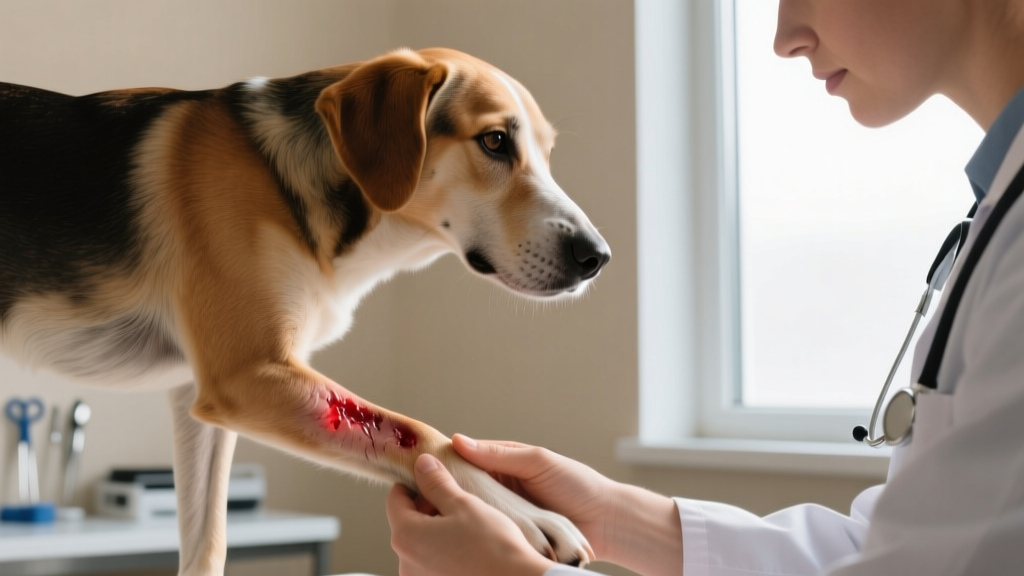
When a homemade anti itch dog spray doesn't resolve the problem within a week, your veterinarian will work through a structured diagnostic process. Here's what to expect at the appointment and what each test costs.
Diagnostic Process Flowchart
- Step 1 — Physical exam and history ($60-$120): Your vet will examine the pattern and distribution of lesions. Paws and face suggest atopic dermatitis. Tail base and hindquarters suggest flea allergy. Ears and folds suggest yeast. They'll ask about diet, environment, parasite prevention, and symptom timeline.
- Step 2 — Skin cytology ($45-$85): A tape prep or impression smear from affected skin, examined under a microscope. This identifies bacteria (cocci vs. rods), yeast (Malassezia), and inflammatory cells. Results are immediate — you'll know the same day.
- Step 3 — Skin scraping ($40-$70): A scalpel blade is used to gently scrape the superficial skin layers, looking for Sarcoptes or Demodex mites under the microscope. Deep scrapings target Demodex; superficial scrapings target Sarcoptes.
- Step 4 — Flea combing and trichogram ($20-$40): A fine-toothed flea comb checks for flea dirt (feces). Hair plucking (trichogram) examines hair shafts under magnification for Demodex mites or dermatophyte (ringworm) spores.
- Step 5 — Elimination diet trial ($80-$200 for prescription food): If food allergy is suspected, your vet will prescribe a hydrolyzed protein diet (e.g., Royal Canin Hydrolyzed Protein HP or Hill's z/d) for 8-12 weeks. No treats, flavored medications, or table food during the trial. This is the gold standard for diagnosing food allergies — blood and saliva food allergy tests are not reliable according to the Merck Veterinary Manual.
- Step 6 — Allergy testing ($300-$600): If atopic dermatitis is confirmed and immunotherapy is being considered, intradermal skin testing (gold standard) or serum IgE testing identifies specific environmental allergens. This is typically done by a veterinary dermatologist.
- Step 7 — Bloodwork ($100-$250): A complete blood count (CBC) and chemistry panel rule out endocrine causes (hypothyroidism, Cushing's disease) that can cause skin changes. Thyroid panel adds $60-$120.
- Step 8 — Skin biopsy ($200-$500): Reserved for atypical cases or when autoimmune disease (pemphigus, lupus) or cutaneous lymphoma is suspected. Multiple 6mm punch biopsies are taken under local anesthetic and sent to a veterinary pathologist.
Total diagnostic costs for a typical pruritus workup range from $200-$450 for straightforward cases (flea allergy, simple yeast infection) to $800-$1,500+ for complex cases requiring allergy testing, biopsy, or specialist referral.
Treatment Options for Chronic Canine Pruritus
Once your veterinarian identifies the underlying cause, treatment typically involves a combination of therapies. Here's how the main options compare:
| Treatment | Type | How It Works | Typical Cost (Monthly) | Onset of Relief | Long-Term Safety |
|---|---|---|---|---|---|
| Oclacitinib (Apoquel) | Prescription oral | JAK-1 inhibitor; blocks itch signal pathways | $40-$120 (weight-dependent) | 4-24 hours | Generally safe long-term; monitor for infections and neoplasia |
| Lokivetmab (Cytopoint) | Prescription injection | Monoclonal antibody neutralizing IL-31 (itch cytokine) | $65-$150 per injection (every 4-8 weeks) | 1-3 days | Excellent safety profile; no liver/kidney metabolism |
| Cyclosporine (Atopica) | Prescription oral | Calcineurin inhibitor; suppresses T-cell response | $80-$200 | 2-4 weeks | GI side effects common; monitor for infections |
| Prednisone/Prednisolone | Prescription oral | Corticosteroid; broad anti-inflammatory | $10-$40 | 12-24 hours | Poor for long-term use: Cushing's, diabetes, immune suppression |
| Allergen-specific immunotherapy (ASIT) | Prescription injection or sublingual | Desensitizes immune system to specific allergens | $30-$80 (after initial $300-$600 testing) | 3-12 months | Best long-term option; 60-70% response rate |
| Medicated shampoos (chlorhexidine, ketoconazole) | OTC or prescription topical | Antimicrobial; reduces bacterial/yeast overgrowth | $15-$35 | 1-2 weeks (with 2x/week bathing) | Very safe; requires owner compliance |
| Homemade soothing sprays (this article) | DIY topical | Mild anti-inflammatory, pH support, moisturizing | $2-$8 | 15-30 minutes (temporary) | Safe for mild cases only; does not treat underlying disease |
Consult your veterinarian before combining any prescription medication with over-the-counter or homemade topical treatments. Some combinations can interact or mask symptoms that your vet needs to monitor.
Prognosis: What to Expect Long-Term
| Condition | Curable? | Long-Term Outlook | Typical Management Duration |
|---|---|---|---|
| Flea allergy dermatitis | Yes (with consistent prevention) | Excellent — symptoms resolve when fleas are eliminated | Lifelong flea prevention required |
| Sarcoptic mange | Yes | Excellent — full recovery in 4-6 weeks with treatment | 4-6 weeks of acaricide treatment |
| Bacterial pyoderma (secondary) | Yes (if underlying cause addressed) | Good — 3-6 weeks of antibiotics typically resolves infection | 3-8 weeks; recurrence likely if allergies not managed |
| Malassezia dermatitis | Manageable | Good with ongoing topical management; recurrence common | Ongoing; flare-ups every few months typical |
| Atopic dermatitis | No (chronic condition) | Good with multimodal management; quality of life is excellent when controlled | Lifelong management required |
| Food allergy | Manageable (dietary avoidance) | Excellent if trigger identified and avoided | Lifelong restricted diet |
| Cutaneous lymphoma | No | Guarded — median survival 6-18 months with treatment | Palliative chemotherapy; variable response |
For the most common causes of itching — allergies and secondary infections — the prognosis is genuinely good. Most dogs achieve comfortable, itch-controlled lives with proper veterinary management. The key is getting an accurate diagnosis rather than managing symptoms indefinitely with topical sprays alone.
Home Care, Daily Management, and Prevention
Whether you're using a homemade anti itch dog spray as a bridge to your vet appointment or managing a diagnosed allergy long-term, these daily practices support skin health:
Daily Management Checklist
- Flea prevention: Year-round, vet-recommended flea/tick control. Products containing isoxazolines (Bravecto, NexGard, Simparica) are highly effective. This is the single most impactful prevention step.
- Bathing schedule: Every 1-2 weeks with a veterinary-formulated shampoo for allergic dogs (e.g., Douxo S3 Calm, Malaseb for yeast-prone dogs). Use lukewarm water (not hot — aim for 85-90°F / 29-32°C). Leave medicated shampoos on for 10 minutes before rinsing.
- Omega-3 fatty acids: Fish oil supplementation at 50-100 mg/kg combined EPA+DHA daily supports skin barrier function. Look for products with IFOS (International Fish Oil Standards) certification for purity. Nordic Naturals Omega-3 Pet and Grizzly Salmon Oil are well-regarded options.
- Environmental control: Wash bedding weekly in hot water (at least 130°F / 54°C) to kill dust mites. Use HEPA air filters in rooms where your dog spends the most time. Wipe paws with a damp cloth after outdoor walks to remove pollen.
- Diet quality: Feed an AAFCO-complete diet. If food allergy is suspected, avoid novel protein "treats" during elimination trials. Discuss a veterinary-recommended limited-ingredient diet with your vet.
- Stress reduction: Anxiety amplifies pruritus. Maintain consistent routines, provide adequate physical exercise (breed-appropriate), and use positive reinforcement training to build confidence.
When Homemade Spray Is Appropriate vs. When It's Not
- Appropriate: Mild seasonal dryness, occasional post-bath irritation, minor contact irritation from grass, bridging comfort while awaiting a vet appointment (within 1 week).
- Not appropriate: Open wounds, bleeding, pus, widespread hair loss, behavioral changes, itching that disrupts sleep, no improvement after 5-7 days of spray use, or any itching in puppies under 6 months.
When to See the Vet: Red Flag Symptoms
🚨 Call Your Veterinarian Immediately If:
- Your dog is scratching until bleeding or has open, oozing wounds
- You notice a sudden, severe onset of itching (within hours) — could indicate acute allergic reaction or sarcoptic mange
- The skin is hot to the touch, swollen, or has a foul, yeasty, or "corn chip" odor
- Your dog is lethargic, refusing food, vomiting, or has diarrhea alongside skin symptoms
- Itching is accompanied by facial swelling, hives, or difficulty breathing — this is an anaphylactic emergency
- You've used a homemade spray for 7 days with no improvement
- Multiple pets in the household are itching simultaneously (suggests contagious parasites)
- Family members are developing itchy rashes (zoonotic transmission — possible sarcoptic mange or ringworm)
- Your dog is a young puppy (under 6 months) with persistent itching
For suspected poisoning or toxic reactions to any DIY ingredient, contact the ASPCA Animal Poison Control Center at (888) 426-4435 (available 24/7, a consultation fee applies) or the Pet Poison Helpline at (855) 764-7661.
Cost Breakdown: What You'll Actually Spend
| Category | Low-End | Mid-Range | High-End / Complex Case |
|---|---|---|---|
| Initial vet exam + diagnostics | $120-$200 | $250-$450 | $600-$1,500+ |
| Monthly medication (ongoing) | $15-$40 (topicals, generics) | $50-$120 (Apoquel, Cytopoint) | $150-$300 (combination therapy) |
| Allergy testing (one-time) | $0 (not needed for simple cases) | $350-$500 | $600-$800 (dermatologist referral) |
| Annual management total | $200-$500 | $600-$1,500 | $2,000-$4,000+ |
| Homemade spray supplies (monthly) | $2-$5 | $5-$8 | $8-$12 |
Pet insurance can significantly offset these costs if enrolled before symptoms develop. Most accident-and-illness plans (Trupanion, Healthy Paws, Nationwide) cover diagnostic workups and ongoing allergy management, though pre-existing condition exclusions apply. Average monthly premiums for a medium-sized dog range from $35-$70 depending on deductible and reimbursement level.
Frequently Asked Questions
Can I use a homemade anti itch spray on my dog every day?
For mild cases, the colloidal oatmeal spray can be used 2-3 times daily for up to 7 days. The ACV spray should be limited to once daily for no more than 5-7 days due to its acidity. If your dog needs daily spray use beyond one week, the underlying cause needs veterinary diagnosis — you're managing a symptom, not treating a disease.
Is apple cider vinegar safe for dogs if they lick it?
In the diluted 1:3 ratio described above, small amounts licked off the skin are safe. However, ingestion of larger quantities of undiluted ACV can cause gastrointestinal upset, throat irritation, and electrolyte imbalance. If your dog is obsessively licking the sprayed area, use an Elizabethan collar to prevent ingestion and excessive moisture on the skin.
Can I add tea tree oil to my homemade dog spray?
No. Tea tree oil (melaleuca) is toxic to dogs. Even products labeled as "natural" or "pet-safe" containing tea tree oil have caused documented cases of toxicity including depression, weakness, incoordination, tremors, and liver damage. The ASPCA lists tea tree oil as toxic to dogs and cats. Never add it to any homemade preparation for your dog.
My dog itches but the vet found nothing wrong — what now?
If initial diagnostics (cytology, skin scraping, flea comb) are negative, your vet may recommend an elimination diet trial (8-12 weeks) to rule out food allergy, followed by environmental allergy testing if the diet trial fails. Some cases of early atopic dermatitis have minimal visible lesions between flare-ups. Ask your vet about a referral to a board-certified veterinary dermatologist (DACVD) for complex or refractory cases.
Does coconut oil work as an anti itch spray?
Coconut oil has mild moisturizing properties but lacks strong anti-inflammatory or antimicrobial evidence in canine skin. It can be applied topically in thin layers to dry patches, but it's greasy, attracts dirt, and doesn't spray well. For spray formulations, the oatmeal or chamomile recipes above are more practical and have stronger evidence for soothing irritated skin.
How long before I should see results from a homemade spray?
You should notice temporary relief within 15-30 minutes of application. However, if the underlying cause is not addressed (allergies, parasites, infection), the itching will return within hours. If there's no meaningful improvement after 5-7 days of consistent use, schedule a veterinary appointment. Persistent pruritus that doesn't respond to basic topical soothing is a strong signal that medical treatment is needed.
Dr. Hannah Wickes
All our authors care for dogs every day — read more of their work on the authors page.