Best Dog Food With High Fiber: Vet-Guided Picks for Digestion & Weight
Find the best dog food with high fiber for weight management, digestion, and anal gland health. Includes brand picks, feeding charts, and transition tips.

Why Fiber Matters in Your Dog's Diet
Fiber isn't just filler — it's a functional nutrient that regulates digestion, stabilizes blood sugar, supports healthy gut bacteria, and helps dogs feel full on fewer calories. For dogs managing obesity, diabetes, chronic diarrhea, constipation, or anal gland issues, a high-fiber diet can be transformative. But not all fiber is created equal, and the wrong type or amount can cause gas, bloating, or nutrient malabsorption.
In canine nutrition, fiber falls into two categories:
- Soluble fiber (e.g., beet pulp, psyllium, oats): Dissolves in water, forms a gel, slows digestion, feeds beneficial gut bacteria through fermentation. Ideal for diarrhea management and blood sugar stabilization.
- Insoluble fiber (e.g., cellulose, wheat bran, pea fiber): Adds bulk, accelerates transit time, promotes regularity. Best for constipation and weight management through satiety.
Most therapeutic high-fiber diets use a blend of both types. According to the Merck Veterinary Manual, fiber levels in commercial dog foods typically range from 1–5% crude fiber on a dry matter basis, while therapeutic diets may reach 7–15% or higher.
When Does Your Dog Need High-Fiber Food?
High-fiber diets aren't appropriate for every dog. Here are the specific conditions where increased fiber provides measurable benefit:
- Obesity & weight management: Fiber increases satiety without adding calories. Studies show dogs on high-fiber diets consume 10–20% fewer calories voluntarily.
- Diabetes mellitus: Soluble fiber slows glucose absorption, reducing post-meal blood sugar spikes.
- Chronic colitis & diarrhea: Fermentable fiber produces short-chain fatty acids (SCFAs) that heal the colon lining.
- Constipation & megacolon: Insoluble fiber adds bulk and stimulates peristalsis.
- Anal gland impaction: Bulkier stools naturally express anal glands during defecation.
- Coprophagia (stool eating): Firmer, bulkier stools are less appealing to consume.
- Underweight dogs or those with poor body condition
- High-performance working or sporting dogs needing calorie-dense fuel
- Puppies under 12 months (unless specifically prescribed for a medical condition)
- Dogs with exocrine pancreatic insufficiency (EPI) — fiber can interfere with enzyme therapy
- Dogs with certain mineral absorption concerns (excess fiber binds calcium, zinc, iron)
Nutritional Requirements for High-Fiber Dog Food
When selecting a high-fiber diet, you need to evaluate the complete nutritional profile — not just fiber content. Here's what to target based on the most common reason owners seek high-fiber food: weight management for adult dogs.
| Nutrient | Weight Management Target | Maintenance (Normal Weight) | Notes |
|---|---|---|---|
| Crude Protein | 25–35% | 22–30% | Higher protein preserves lean muscle during weight loss |
| Crude Fat | 8–12% | 12–18% | Lower fat reduces caloric density |
| Crude Fiber | 7–15% | 3–7% | Therapeutic range for satiety and GI regulation |
| Calories (kcal/cup) | 250–325 | 350–450 | Lower caloric density allows larger portions |
| Moisture | ≤12% (dry) | ≤12% (dry) | Wet foods have higher moisture, adjust calculations |
| Calcium | 0.6–1.3% | 0.5–1.8% | High fiber can bind minerals — ensure adequate levels |
| Omega-3 Fatty Acids | ≥0.3% | ≥0.3% | Anti-inflammatory support for GI health |
Daily calorie needs by weight (weight management): A general starting formula is RER × 1.0 for weight loss, where RER (Resting Energy Requirement) = 70 × (body weight in kg)^0.75. For practical reference:
| Dog Weight | RER (kcal/day) | Weight Loss Target (kcal/day) |
|---|---|---|
| 10 lb / 4.5 kg | 218 | 218 |
| 20 lb / 9 kg | 346 | 346 |
| 30 lb / 13.6 kg | 448 | 448 |
| 50 lb / 22.7 kg | 643 | 643 |
| 70 lb / 31.8 kg | 812 | 812 |
| 90 lb / 40.8 kg | 969 | 969 |
Adjustment factors: Multiply by 1.2–1.4 for intact dogs or moderately active dogs; multiply by 0.8 for senior dogs with low activity; multiply by 1.6–2.0 for working or highly active dogs. Always consult your veterinarian to set an individualized target, especially if your dog has comorbidities like hypothyroidism or Cushing's disease.
Top 7 High-Fiber Dog Foods for 2026
These selections are based on AAFCO nutritional adequacy, fiber source quality, caloric density, and clinical reputation. Prices reflect average retail as of early 2026 and may vary by retailer and region.
1. Hill's Prescription Diet w/d Multi-Benefit (Dry)
Fiber: 20.1% crude fiber (DM) | Calories: 232 kcal/cup | Price: $80–$95 per 27.5 lb bag
Best for: Dogs needing maximum fiber for weight management, diabetes, colitis, or anal gland issues. This is the highest-fiber commercial diet widely available.
Key ingredients: Whole grain corn, corn gluten meal, chicken by-product meal, powdered cellulose (insoluble fiber source), oat fiber.
AAFCO statement: Adult maintenance. Requires veterinary authorization.
2. Royal Canin Veterinary Diet Gastrointestinal Moderate Calorie (Dry)
Fiber: 7% crude fiber (DM) | Calories: 274 kcal/cup | Price: $75–$90 per 22 lb bag
Best for: Dogs with chronic GI issues (colitis, diarrhea) who also need moderate calorie restriction. Balanced soluble/insoluble fiber blend.
Key ingredients: Brewers rice, chicken by-product meal, corn gluten meal, pea fiber, beet pulp, psyllium seed husk.
AAFCO statement: Adult maintenance. Requires veterinary authorization.
3. Purina Pro Plan Veterinary Diets OM Overweight Management (Dry)
Fiber: 7.5% crude fiber (DM) | Calories: 276 kcal/cup | Price: $70–$85 per 27.5 lb bag
Best for: Overweight dogs where high protein and high fiber work together for lean mass preservation during weight loss.
Key ingredients: Chicken, corn gluten meal, whole grain wheat, soybean hulls, pea fiber, powdered cellulose.
AAFCO statement: Adult maintenance. Requires veterinary authorization.
4. Hill's Science Diet Adult Perfect Weight (Dry)
Fiber: 5.5% crude fiber (DM) | Calories: 264 kcal/cup | Price: $55–$70 per 27.5 lb bag
Best for: Dogs who are mildly overweight or need moderate fiber increase without a prescription. Good over-the-counter option.
Key ingredients: Chicken, whole grain wheat, cracked pearled barley, corn gluten meal, pea fiber, dried beet pulp.
AAFCO statement: Adult maintenance. No prescription required.
5. Blue Buffalo True Solutions Fit & Healthy Weight Control (Dry)
Fiber: 8% crude fiber (DM) | Calories: 293 kcal/cup | Price: $48–$60 per 30 lb bag
Best for: Owners seeking a non-prescription, grain-inclusive option with higher fiber and recognizable whole-food ingredients.
Key ingredients: Deboned chicken, brown rice, barley, oatmeal, pea fiber, powdered cellulose, flaxseed, dried chicory root (prebiotic inulin).
AAFCO statement: Adult maintenance. No prescription required.
6. Wellness CORE Healthy Weight (Dry)
Fiber: 7% crude fiber (DM) | Calories: 305 kcal/cup | Price: $55–$68 per 26 lb bag
Best for: Dogs who do well on higher-protein, grain-free formulas and need moderate fiber for weight control.
Key ingredients: Deboned turkey, chicken meal, turkey meal, peas, pea fiber, chickpeas, ground flaxseed.
AAFCO statement: Adult maintenance. No prescription required. Note: The FDA has investigated a potential link between grain-free diets and dilated cardiomyopathy (DCM). Discuss grain-free diets with your veterinarian before choosing this option.
7. Fromm Gold Weight Management (Dry)
Fiber: 6.5% crude fiber (DM) | Calories: 287 kcal/cup | Price: $60–$75 per 30 lb bag
Best for: Dogs with food sensitivities who need a moderate-fiber weight management diet from a family-owned manufacturer with strong quality control.
Key ingredients: Chicken, chicken meal, pearled barley, brown rice, oatmeal, pea fiber, dried tomato pomace, flaxseed.
AAFCO statement: Adult maintenance. No prescription required.
How to Read Dog Food Labels for Fiber Content
The guaranteed analysis on a dog food bag tells you the minimums and maximums, but it doesn't give the full picture. Here's how to evaluate a high-fiber food properly:
| What to Look For | Why It Matters | Red Flags |
|---|---|---|
| AAFCO nutritional adequacy statement | Confirms the food meets minimum nutrient requirements for a specific life stage | "For intermittent or supplemental feeding only" — this is NOT a complete diet |
| Named protein source as first ingredient | Ensures adequate protein quality alongside fiber | Generic "meat" or "animal" by-products without species identification |
| Specific fiber sources listed | Beet pulp, pea fiber, powdered cellulose, psyllium, oat fiber are well-researched | Excessive use of soybean hulls or peanut hulls (low-quality fiber fillers) |
| Calorie content statement (kcal/cup or kcal/kg) | Essential for calculating correct portions | Missing calorie information — required by AAFCO but not always prominent |
| Prebiotic/probiotic inclusion | FOS, inulin, chicory root, and dried fermentation products support gut microbiome | Probiotics listed without guaranteed CFU counts |
| Crude fiber vs. total dietary fiber | "Crude fiber" on labels underestimates actual fiber content by 20–50% | Marketing claims of "high fiber" without supporting numbers in the guaranteed analysis |
Important: The ASPCA recommends always checking for xylitol (birch sugar) in any food or treat ingredients, as it is highly toxic to dogs. If your dog ingests a product containing xylitol, contact ASPCA Animal Poison Control at (888) 426-4435 immediately (24/7, consultation fee applies).
Feeding Amounts & Transition Protocol
Switching to a high-fiber diet requires a gradual transition to prevent GI upset. Here's the protocol:
7-to-10-Day Transition Schedule
| Days | Old Food | New High-Fiber Food | What to Watch For |
|---|---|---|---|
| Days 1–2 | 75% | 25% | Normal appetite, no vomiting |
| Days 3–4 | 50% | 50% | Stool consistency may soften temporarily |
| Days 5–6 | 25% | 75% | Gas may increase — this is normal as gut bacteria adapt |
| Days 7–10 | 0% | 100% | Stools should firm up; energy levels stable |
Extend the transition to 14 days if your dog has a history of sensitive stomach, if you notice persistent diarrhea beyond day 5, or if your dog is a senior with existing GI conditions.
Feeding Amounts by Weight (High-Fiber Weight Management Diet)
These are starting points based on a diet averaging 275 kcal/cup. Adjust based on your dog's body condition score (BCS) every 2 weeks.
| Dog Weight | Cups/Day (Weight Loss) | Cups/Day (Maintenance after Goal) | Adjustment Notes |
|---|---|---|---|
| 5–10 lb / 2.3–4.5 kg | ½ – ¾ cup | ¾ – 1 cup | Small breeds have faster metabolisms — may need the higher end |
| 10–20 lb / 4.5–9 kg | ¾ – 1¼ cups | 1 – 1¾ cups | Monitor BCS weekly for toy and small breeds |
| 20–35 lb / 9–16 kg | 1¼ – 2 cups | 1¾ – 2½ cups | Reduce by 10% if BCS doesn't improve in 4 weeks |
| 35–55 lb / 16–25 kg | 2 – 2¾ cups | 2½ – 3½ cups | Split into 2 meals to maintain satiety |
| 55–75 lb / 25–34 kg | 2¾ – 3½ cups | 3½ – 4½ cups | Large breeds benefit from slow-feed bowls |
| 75–100 lb / 34–45 kg | 3½ – 4½ cups | 4½ – 5½ cups | Consider adding low-cal vegetables (green beans) for extra volume |
Homemade High-Fiber Diets: What You Need to Know
Some owners consider preparing homemade high-fiber meals. While this is possible, it carries significant risks that you must understand before proceeding.
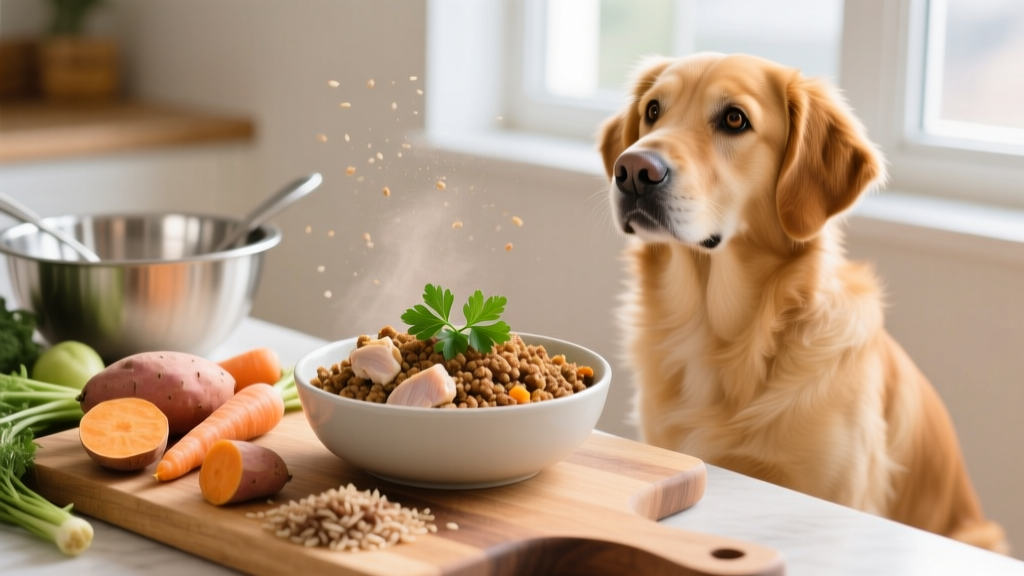
If your veterinary nutritionist approves a homemade high-fiber diet, a typical framework might include:
- Lean protein (40–50%): Boiled chicken breast, turkey, or lean ground beef (drained)
- Complex carbohydrates with fiber (25–35%): Cooked sweet potato, pumpkin, brown rice, or oats
- Vegetables for fiber (15–25%): Steamed green beans, carrots, broccoli, or peas
- Fat source (5–10%): Fish oil or flaxseed oil for omega-3s
- Balanced supplement: A veterinary-formulated supplement (e.g., Balance IT®) to cover calcium, phosphorus, zinc, vitamin E, B vitamins, and trace minerals that whole foods alone cannot provide in correct ratios
Raw diet caution: Raw feeding carries documented risks of Salmonella, E. coli, and Listeria contamination — risks to both your dog and your household. The AVMA discourages feeding raw animal-source proteins due to public health concerns. If you feed raw, practice strict food safety: separate cutting boards, sanitize surfaces with bleach solution, and never prepare raw pet food near human food preparation areas.
Ingredients to Avoid in High-Fiber Dog Foods
| Ingredient | Why to Avoid |
|---|---|
| Peanut hulls | Low digestibility, minimal nutritional value, used as cheap fiber filler; risk of aflatoxin contamination |
| Excessive soybean hulls | While some soybean hull is acceptable, as the primary fiber source it indicates cost-cutting and may cause gas |
| Artificial colors (Red 40, Yellow 5, Yellow 6) | No nutritional purpose; linked to behavioral sensitivities in some dogs |
| BHA, BHT, ethoxyquin | Synthetic preservatives with debated safety profiles; prefer mixed tocopherols (vitamin E) preservation |
| Propylene glycol | Used as a moistening agent in some semi-moist foods; banned in cat food by FDA and best avoided for dogs |
| Xylitol (birch sugar) | Extremely toxic to dogs — causes rapid hypoglycemia and liver failure. Always check treat and supplement labels |
| Grapes, raisins, currants | Known to cause acute kidney failure in dogs; avoid in any homemade recipes |
| Onion or garlic powder | Damages red blood cells (Heinz body anemia); sometimes present in low-quality kibbles as flavoring |
Supplements to Pair With High-Fiber Diets
High-fiber diets can bind certain minerals and reduce their absorption. Strategic supplementation may be beneficial:
| Supplement | Dosage | Purpose | When to Add |
|---|---|---|---|
| Psyllium husk powder | ½ tsp per 10 lb body weight, once daily | Additional soluble fiber for stool firming; mix with wet food or water | If stools remain soft after 2 weeks on high-fiber diet |
| Fish oil (EPA/DHA) | 20–55 mg EPA+DHA per kg body weight daily | Anti-inflammatory support for GI mucosa and skin/coat health | Immediately — fiber diets may reduce natural omega-3 absorption |
| Probiotic (multi-strain) | 1–10 billion CFU daily | Replenish beneficial gut bacteria; support fiber fermentation | During food transition and ongoing for GI-compromised dogs |
| Digestive enzyme blend | Per product label (varies by brand) | Compensate for reduced nutrient absorption caused by high fiber | If your dog shows weight loss beyond target or poor coat quality |
| Vitamin B-complex | Per veterinary recommendation | Fiber can reduce B-vitamin absorption in the colon | If your vet identifies deficiency on blood work |
Do not add calcium supplements without veterinary guidance — excess calcium can cause skeletal problems, especially in large-breed dogs. Your high-fiber commercial diet should already contain adequate calcium if it carries an AAFCO statement.
Monitoring Your Dog's Response to High-Fiber Food
Track these metrics over the first 4–8 weeks to determine if the diet is working:
Body Condition Score (BCS) Guide
Use the World Small Animal Veterinary Association (WSAVA) 9-point BCS chart to assess your dog every 2 weeks:
- BCS 1–3 (Underweight): Ribs easily visible, severe waist — high fiber is likely inappropriate
- BCS 4–5 (Ideal): Ribs palpable without excess fat, visible waist — this is your target
- BCS 6–7 (Overweight): Ribs difficult to feel, fat deposits along spine — appropriate for weight loss fiber diet
- BCS 8–9 (Obese): Ribs not palpable, no waist, pendulous abdomen — needs aggressive caloric restriction with veterinary supervision
Other Metrics to Track
- Stool quality: Use a 1–7 fecal scoring system. Ideal is a 2–3 (formed, moist, holds shape, easy to pick up). Score 1 (hard pellets) means too much insoluble fiber or dehydration. Score 5–7 (soft to liquid) means too much fermentable fiber or a food intolerance.
- Coat quality: Dull, flaky, or thinning coat after 6–8 weeks may indicate essential fatty acid deficiency from reduced fat absorption.
- Energy levels: Mild reduction is expected during weight loss. Lethargy, weakness, or reluctance to exercise is a red flag — consult your vet.
- Weight trajectory: Safe weight loss is 1–2% of body weight per week. Faster loss risks muscle catabolism.
- Flatulence: Some increase is normal in the first 2 weeks. Persistent excessive gas beyond 3 weeks may indicate the fiber source isn't well-tolerated — try a different protein or fiber blend.
Frequently Asked Questions
What is the best dog food with high fiber for weight loss?
For maximum fiber content and clinical evidence, Hill's Prescription Diet w/d is the gold standard at 20.1% crude fiber (DM). For over-the-counter options, Blue Buffalo True Solutions Fit & Healthy offers 8% crude fiber at a lower price point. The "best" food depends on your dog's specific condition — a diabetic dog needs different fiber ratios than a dog with colitis. Your veterinarian can match the fiber type and level to your dog's diagnosis.
How much high-fiber food should I feed my dog?
Start with the feeding guide on the bag, calculated for your dog's target weight (not current weight) during weight loss. For a 30 lb dog targeting 25 lb, feed the amount listed for 25 lb. Monitor body condition score every 2 weeks and adjust portions by 10% if weight loss stalls or is too rapid. Split daily portions into two meals to maintain satiety and blood sugar stability.
Can I feed my dog a homemade high-fiber diet?
Yes, but only with a recipe formulated by a board-certified veterinary nutritionist (DACVN). Homemade diets without professional formulation have a 95% chance of nutritional deficiency. Services like Balance IT® can help create balanced recipes, and telehealth consultations with veterinary nutritionists are increasingly available. Never substitute a homemade diet for a prescribed therapeutic diet without veterinary approval.
What ingredients should I avoid in high-fiber dog food?
Avoid peanut hulls (low-quality filler with aflatoxin risk), artificial colors and preservatives (BHA, BHT, ethoxyquin), xylitol (lethally toxic), and foods with grape/raisin/onion/garlic ingredients. Also be cautious of grain-free formulas heavy in peas, lentils, and potatoes as primary ingredients — the FDA has flagged a potential association with dilated cardiomyopathy. Prefer grain-inclusive formulas with named whole grains unless your dog has a diagnosed grain allergy (which is rare — true food allergies are usually to protein sources).
How do I switch my dog to a new high-fiber food?
Follow a 7–10 day gradual transition: 75/25 old-to-new for days 1–2, 50/50 for days 3–4, 25/75 for days 5–6, and 100% new food by day 7–10. Extend to 14 days for dogs with sensitive stomachs or existing GI conditions. Mix thoroughly rather than layering. If diarrhea persists beyond day 5 of transition, slow down or consult your veterinarian.
Does my dog need supplements on a high-fiber diet?
Most dogs on a complete-and-balanced AAFCO-approved high-fiber diet do not require supplements. However, fish oil (20–55 mg EPA+DHA per kg body weight) is beneficial for nearly all dogs and compensates for reduced fat absorption. A multi-strain probiotic (1–10 billion CFU) is helpful during the transition and for dogs with chronic GI issues. Avoid adding calcium, iron, or zinc supplements without blood work confirmation — excess mineral supplementation can cause harm.
Will high-fiber food help my dog's anal gland problems?
Often, yes. High-fiber diets produce bulkier stools that naturally compress the anal glands during defecation, promoting regular expression. Dogs with recurrent anal gland impaction or abscesses frequently improve on diets with 5–10% crude fiber. However, if your dog has had anal gland abscesses or fistulas, dietary changes alone may not resolve the issue — veterinary evaluation is needed to rule out infection or structural problems.
Aaron Whyte
All our authors care for dogs every day — read more of their work on the authors page.