Dog Paw Injury Guide: Types, Symptoms, Treatment & Recovery
Complete guide to dog paw injury identification, from cuts and burns to fractures. Learn symptoms, vet diagnosis, treatment costs, and recovery timelines.
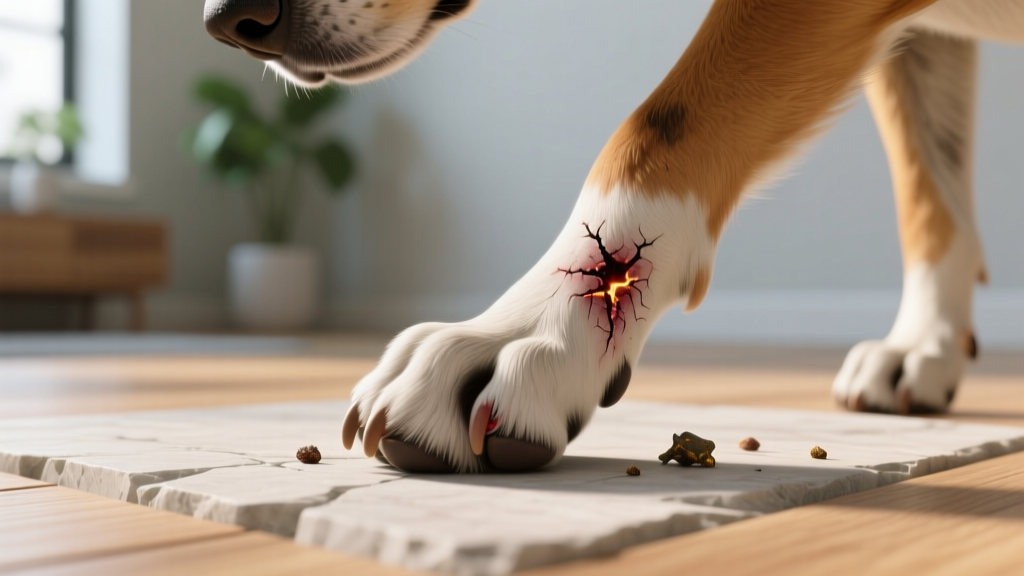
Your dog's paws are their primary contact with the world, and they take a beating. From hot pavement in summer to ice and salt in winter, the paw pads, nails, bones, and connective tissues endure constant stress. A dog paw injury can range from a minor pad scrape that heals in days to a deep laceration, fracture, or ligament tear requiring surgery and months of rehabilitation. Paw injuries are among the most common reasons for emergency vet visits, particularly in active breeds and working dogs.
Understanding what to look for, when to treat at home, and when to rush to the clinic can mean the difference between a quick recovery and a chronic, painful condition. This guide covers the full spectrum of paw injuries — cuts, abrasions, burns, punctures, fractures, nail injuries, and interdigital cysts — with real treatment costs, recovery timelines, and home care protocols.
What Is a Dog Paw Injury?
A dog paw injury refers to any trauma, wound, or condition affecting the structures of the paw: the digital and metacarpal/metatarsal pads, claws and nail beds, phalanges (toe bones), tendons, ligaments, and interdigital skin. The paw pad itself is composed of thick, keratinized epithelium over a layer of adipose and connective tissue that acts as a shock absorber. Despite this natural protection, pads can be lacerated by sharp objects, burned by extreme temperatures, cracked by dry conditions, or penetrated by foreign bodies like glass, thorns, or gravel.
Paw injuries are extremely common. A 2022 study published in the Journal of Small Animal Practice found that extremity wounds — including paw injuries — accounted for approximately 14% of all trauma presentations in small animal emergency clinics. Working dogs, hunting breeds, and dogs in urban environments with broken glass and hot surfaces face elevated risk. Seasonal spikes occur in summer (thermal burns, foxtail penetration) and winter (chemical burns from de-icing salts, ice ball formation between toes).
Types of Dog Paw Injuries
Before assessing symptoms, it helps to understand the categories of paw injuries your vet will consider:
| Injury Type | Description | Common Causes |
|---|---|---|
| Pad Laceration | Cut through the pad surface, varying depth | Glass, metal, sharp rocks, shells |
| Pad Abrasion | Surface-level scraping of pad tissue | Rough concrete, asphalt, excessive running on hard surfaces |
| Thermal Burn | Heat or cold damage to pad tissue | Hot pavement (above 125°F/52°C), ice, chemical de-icers |
| Chemical Burn | Caustic substance damage | Rock salt, bleach, pool chemicals, lawn treatments |
| Puncture Wound | Deep, narrow wound from penetrating object | Nails, thorns, foxtails, splinters, glass shards |
| Nail/Torn Claw | Broken, split, or avulsed toenail | Catching on carpet/fabric, overgrown nails, trauma |
| Fracture | Break in phalangeal or metacarpal bones | Crushing injury, falls, being stepped on, car accidents |
| Interdigital Cyst/Furuncle | Inflamed, often infected nodules between toes | Foreign bodies, allergies, bacterial folliculitis, Demodex mites |
| Pad Hyperkeratosis | Excessive thickening and cracking of pad surface | Genetic predisposition, autoimmune disease, dry climate, age |
Symptoms of a Dog Paw Injury: Severity Checklist
Dogs often hide pain, so you need to watch for behavioral changes as much as physical signs. Here's what to look for, organized from early warning to emergency:
| Severity | Symptoms | Action Level |
|---|---|---|
| Mild (Early Warning) | Occasional limping that resolves with rest; slight reluctance to walk on hard surfaces; mild licking of one paw; visible dryness or minor cracking of pad surface; small superficial scrape (less than ¼ inch, no bleeding) | Monitor at home for 24-48 hours; clean and protect |
| Moderate | Persistent limping (more than 24 hours); holding paw up while standing; visible cut or abrasion with minor bleeding; swelling between toes or around pad; excessive licking or chewing at paw; redness or warmth to the touch; foul odor from paw; broken or hanging nail | Schedule vet appointment within 24-48 hours |
| Severe (Emergency) | Deep laceration with visible tissue or fat; uncontrolled bleeding (soaking through bandage in minutes); inability to bear any weight on the limb; obvious deformity or abnormal angle of toe/paw; pus or discharge with spreading redness; embedded object still in paw; paw pad completely torn or hanging; dog vocalizing in pain, trembling, or refusing to move | Emergency vet visit immediately |
A note on licking: While some licking is a normal grooming response, persistent, obsessive licking of one paw often signals an underlying problem — a foreign body lodged between toes, an interdigital cyst, a hairline fracture, or even allergic pododermatitis. Don't dismiss it as "just a habit."
Risk Factors: Which Dogs Are Most Vulnerable?
Breed Predisposition
Certain breeds face higher paw injury risk due to anatomy, coat type, or activity level:
- Bulldogs, Shar-Peis, and Basset Hounds: Excessive skin folds between toes create moist environments prone to interdigital dermatitis and yeast infections
- Greyhounds and Whippets: Thin paw pads with minimal padding make them susceptible to abrasions on rough surfaces
- German Shepherds: Predisposed to pad hyperkeratosis and autoimmune-related pad conditions
- Hunting breeds (Pointers, Retrievers, Spaniels): High exposure to thorns, foxtails, and rough terrain during field work
- Large and giant breeds (Great Danes, Mastiffs): Greater weight places more stress on pads, increasing risk of cracking and abrasion
Environmental & Lifestyle Factors
- Urban dogs: Higher exposure to broken glass, hot asphalt, and chemical de-icers
- Working and sport dogs: Agility, flyball, and herding dogs sustain repetitive paw stress
- Overweight dogs: Excess body weight (BCS 7+/9) increases pressure on pads by 20-30%, accelerating wear
- Indoor-only dogs: Softer pads from lack of conditioning, making them more vulnerable when they do encounter rough terrain
- Seasonal exposure: Summer pavement can reach 140-160°F (60-71°C) — enough to cause full-thickness burns in 60 seconds
Age Considerations
- Puppies: Soft, undeveloped pads are easily damaged; also more likely to step on or mouth hazardous objects
- Senior dogs: Thinning pad tissue, reduced pain sensitivity from neuropathy, and slower healing rates
How Veterinarians Diagnose Paw Injuries
When you bring your dog in for a paw injury, the diagnostic process typically follows a structured path. Knowing what to expect helps you prepare mentally and financially.
- Physical Examination ($50-$90 office visit fee): The vet will visually inspect the paw, palpate each digit and pad, assess range of motion, check for foreign bodies, and evaluate weight-bearing ability. They'll check for crepitus (a crunching sensation) that suggests fracture and probe wound depth with a sterile instrument.
- Sedation (if needed, $75-$200): Many paw injuries are too painful to examine thoroughly while the dog is awake. Light sedation with dexmedetomidine or butorphanol allows proper wound exploration, foreign body removal, and accurate assessment. This is not optional — a thorough exam of a painful paw without sedation risks missing deep damage.
- Radiographs/X-Rays ($150-$350 for 2-3 views): Indicated when fracture, dislocation, or deep foreign body (metal, glass, some stones) is suspected. Two views minimum (lateral and dorsopalmar/plantar) are standard. The vet evaluates the phalanges (P1, P2, P3), metacarpal bones, and joint spaces.
- Wound Culture ($80-$180): If infection is present or suspected — particularly in puncture wounds or chronic interdigital lesions — the vet will swab the wound and send it for bacterial culture and sensitivity testing. Results take 48-72 hours and determine which antibiotic will actually work.
- Skin Scraping or Cytology ($40-$80): For interdigital cysts, chronic licking, or recurrent pad issues, the vet may perform a skin scraping (to check for Demodex mites) or impression cytology (to identify yeast vs. bacterial overgrowth). This is particularly important for Bulldogs and Shar-Peis.
- Blood Work ($80-$200): Not routine for simple paw injuries, but indicated if the dog is systemically ill (fever, lethargy), if surgery is planned, or if an autoimmune condition (pemphigus, lupus) is suspected as an underlying cause of pad lesions.
- Advanced Imaging — CT or MRI ($800-$2,500): Rarely needed for paw injuries, but may be recommended for complex fractures involving multiple digits, suspected osteomyelitis (bone infection), or when planning reconstructive surgery.
For a straightforward pad laceration, expect the total diagnostic cost to fall between $100-$250. For a complex injury requiring sedation, radiographs, and culture, you're looking at $350-$700 before any treatment begins.
Treatment Options for Dog Paw Injuries
Treatment varies dramatically depending on injury type and severity. Here's a comparison of the most common treatment pathways:
| Injury Type | Treatment | Cost Range | Recovery Time | Success Rate |
|---|---|---|---|---|
| Minor Abrasion | Clean with dilute chlorhexidine, apply petrolatum-based balm, protective bootie | $15-$40 (home care supplies) | 5-10 days | Excellent with proper protection |
| Superficial Laceration (<50% pad depth) | Wound lavage, tissue adhesive (Dermabond/Vetbond) or butterfly closure, bandage, oral antibiotics | $150-$400 | 10-14 days | 90%+ with compliance |
| Deep Laceration (full-thickness) | Sedation, surgical debridement, suture repair (3-0 or 4-0 monofilament), splint or cast, antibiotics, pain management | $500-$1,500 | 3-6 weeks | 80-90%; some pad scarring expected |
| Thermal/Chemical Burn | Cool water lavage, silver sulfadiazine cream, non-adherent dressing, systemic pain control, possible hydrotherapy | $200-$800 | 2-4 weeks (partial); 4-8 weeks (full-thickness) | Good for partial; guarded for full-thickness |
| Puncture Wound | Sedation, wound exploration, foreign body removal, flush with sterile saline, leave open to drain, antibiotics | $300-$900 | 2-4 weeks | 75-85%; higher risk of abscess if foreign body missed |
| Torn Nail | Removal of loose nail fragment, styptic powder or silver nitrate cautery, bandage, pain medication | $100-$300 | 7-14 days (nail regrowth: 4-8 weeks) | Excellent; nail typically regrows normally |
| Phalangeal Fracture | Splint/cast (conservative) OR surgical pinning/amputation of affected digit | $400-$800 (conservative); $1,000-$3,000 (surgical) | 6-8 weeks (conservative); 4-6 weeks post-surgery | 85-95% with proper immobilization |
| Interdigital Cyst/Furuncle | Identify underlying cause (allergy, mite, foreign body); topical + systemic antibiotics; anti-inflammatory; possible surgical excision for chronic cases | $200-$600 (medical); $500-$1,500 (surgical) | 2-6 weeks (medical); 3-4 weeks post-surgery | 60-80% medical; 85-90% surgical (recurrence possible if underlying cause not addressed) |
Pain Management
Your veterinarian will likely prescribe pain medication for anything beyond a minor abrasion. Common options include:
- Carprofen (Rimadyl): NSAID, 2 mg/kg twice daily or 4 mg/kg once daily — the most commonly prescribed post-injury pain medication
- Meloxicam (Metacam): NSAID, 0.1 mg/kg once daily after an initial loading dose — often used for longer-term management
- Gabapentin: 10-20 mg/kg every 8-12 hours — particularly useful for nerve-related pain from deep pad injuries
- Trazodone: 2-5 mg/kg every 8-12 hours — used as an adjunct for anxiety and to promote rest during recovery
Never give your dog human pain medications. Ibuprofen, naproxen, and acetaminophen are toxic to dogs at therapeutic human doses. Even aspirin, while occasionally used under veterinary guidance, carries significant GI and renal risks. Your vet will determine the appropriate medication and dosage for your dog's specific weight, health status, and injury.
Antibiotic Therapy
Not all paw injuries require antibiotics. Minor abrasions and clean, superficial cuts often heal well with proper wound care alone. Antibiotics are typically prescribed when:
- The wound is a puncture (high risk of trapped bacteria)
- There is visible purulent discharge or cellulitis
- The injury is more than 6-8 hours old and contaminated
- The dog is immunocompromised or has comorbidities like diabetes
Common first-line antibiotics include cephalexin (22-30 mg/kg twice daily) or amoxicillin-clavulanate (13.75 mg/kg twice daily). The Merck Veterinary Manual recommends culture-guided therapy for chronic or recurrent infections rather than empirical repeated courses.
Prognosis and Recovery by Injury Severity
| Severity | Expected Outcome | Full Recovery Timeline | Potential Complications |
|---|---|---|---|
| Minor (abrasion, small scrape) | Full recovery expected; pad tissue regenerates completely | 5-14 days | Secondary infection if not kept clean and protected |
| Moderate (superficial laceration, torn nail, mild burn) | Full recovery with proper treatment; minor scar tissue possible | 2-4 weeks | Wound dehiscence (reopening) if dog is too active; abnormal nail regrowth |
| Severe (deep laceration, fracture, full-thickness burn) | Good to fair; most dogs regain full function but pad may have permanent scar tissue altering texture | 6-12 weeks | Chronic pain, osteomyelitis (bone infection), contracture, need for digit amputation in worst cases |
| Complex (multiple digit fractures, degloving injury, severe infection) | Guarded; may require partial paw reconstruction or amputation of affected digits; most dogs adapt well to digit loss | 3-6 months | Chronic lameness, compensatory joint stress, need for orthopedic support long-term |
Life expectancy impact: The vast majority of paw injuries are not life-threatening. Even severe injuries requiring digit amputation carry an excellent long-term prognosis. Dogs adapt remarkably well to losing one or two toes. The primary life expectancy concern arises only with severe untreated infection that spreads systemically (sepsis) — which is why early veterinary care matters.
Home Care and Recovery Management
Once your vet has treated the injury and sent you home, your management directly determines the outcome. Here's a practical protocol:
The First 72 Hours
- Restrict activity strictly. Leash walks only for bathroom breaks — no running, jumping, or playing. For high-energy dogs, this is often the hardest part. Consider a short leash (4-foot) even indoors to prevent sudden movements.
- Keep the bandage dry. Cover with a waterproof bootie or plastic bag secured with medical tape during outdoor bathroom breaks. Change the covering immediately after coming inside. A wet bandage is a bacterial incubator.
- Prevent licking. Use an Elizabethan collar (cone) or an inflatable recovery collar. Licking introduces oral bacteria to the wound and can pull out sutures. If your dog won't tolerate a cone, a recovery suit that covers the affected limb is an alternative.
- Administer all medications on schedule. Set phone alarms. Missing antibiotic doses breeds resistant bacteria. Give NSAIDs with food to reduce GI upset.
- Monitor the bandage for strike-through. If blood or discharge soaks through the outer layer, the bandage needs to be changed. Don't add layers on top — that traps moisture. Call your vet for a re-bandage appointment.
Bandage Changes (If Directed by Your Vet)
Some vets will have you come in for bandage changes every 2-3 days (recommended for the first 1-2 weeks). If your vet approves home changes:
- Wash hands thoroughly and put on disposable gloves
- Gently remove the outer bandage layer — if it sticks, moisten with sterile saline
- Inspect the wound for: increased redness, swelling, discharge color change (clear/yellow is normal early; green/brown/foul-smelling is not), wound edge separation, or excessive granulation tissue
- Clean around the wound with sterile saline on gauze — wipe outward from the wound, never back toward it
- Apply any prescribed topical medication
- Place a non-adherent pad (Telfa) directly on the wound
- Wrap with rolled gauze, then self-adherent vet wrap (Vetrap) — snug but not tight; you should be able to slide a finger underneath
- Secure the top with medical tape, creating a "stirrup" piece that adheres to the fur above the bandage to prevent slipping
Activity Modification During Recovery
Most paw injuries require 2-6 weeks of restricted activity. For dogs that struggle with enforced rest:
- Replace physical exercise with mental enrichment: snuffle mats, frozen Kongs, lick mats, puzzle feeders, and short training sessions (sit, stay, target — nothing involving jumping)
- Use non-slip mats or yoga mats over hardwood/tile floors to prevent slipping on the injured paw
- Carry small dogs up and down stairs; use a sling or harness support for larger dogs
- Gradually reintroduce activity after your vet clears you — start with 5-minute leash walks and increase by 5 minutes every 2-3 days
Long-Term Paw Care
After recovery, ongoing paw maintenance prevents future injuries:
- Pad conditioning: Gradually increase exposure to varied surfaces to build pad toughness. Dogs that only walk on grass have softer pads than those that regularly walk on concrete and gravel.
- Nail maintenance: Keep nails trimmed so they don't touch the ground when standing. Overlong nails alter paw mechanics and increase injury risk. Trim every 2-4 weeks.
- Interdigital hair trimming: For breeds with hairy feet (Setters, Spaniels, some Poodles), trim hair between pads to prevent ice ball formation and reduce foreign body trapping.
- Pad moisturizing: Apply a dog-specific paw balm (containing shea butter, beeswax, or coconut oil) 2-3 times weekly in dry or cold climates. Avoid human lotions — they soften pads too much, making them more injury-prone.
Prevention Strategies
The most effective prevention measures, ranked by impact:
- Dog booties for high-risk environments: Products like Ruffwear Grip Trex or Muttluks provide physical protection against sharp objects, hot pavement, and ice. Not all dogs tolerate them immediately — introduce with positive reinforcement over several days.
- The 7-second pavement test: Press the back of your hand against pavement for 7 seconds. If it's too hot for your skin, it's too hot for your dog's pads. Walk on grass or postpone the walk to early morning/evening.
- Paw wax for winter: Products like Musher's Secret create a semi-permeable barrier against salt and ice. Apply before walks and wipe paws clean afterward with a damp cloth.
- Yard inspection: Regularly walk your yard looking for nails, glass, sharp sticks, and foxtails (a major cause of interdigital puncture wounds in the western US). Foxtail season peaks in late spring through early fall.
- Post-walk paw checks: Make it a habit to inspect all four paws after every walk — check between each toe, examine pad surfaces, and look for any redness, swelling, or embedded debris.
- Weight management: Maintaining your dog at an ideal body condition score (BCS 4-5 out of 9) reduces pad stress and injury risk. Each excess pound adds approximately 4 pounds of force to the paw pads during trotting.
Total Cost of Dog Paw Injury Treatment
Here's what you can realistically budget, from best-case to worst-case scenarios:
| Scenario | Initial Diagnosis | Treatment | Follow-Up & Medications | Total |
|---|---|---|---|---|
| Minor (home care) | $0-$90 (optional vet visit) | $15-$40 (supplies) | $0-$20 | $15-$150 |
| Moderate (vet-treated laceration or torn nail) | $150-$350 | $200-$600 | $75-$200 (rechecks + meds) | $425-$1,150 |
| Severe (deep wound, fracture, burn requiring surgery) | $350-$700 | $800-$3,000 | $200-$500 (multiple rechecks, bandage changes, imaging) | $1,350-$4,200 |
| Worst case (complex fracture, infection, digit amputation, rehabilitation) | $500-$1,200 | $2,000-$5,000 | $500-$1,500 (rehab, orthotics, long-term meds) | $3,000-$7,700+ |
Pet insurance consideration: Most comprehensive pet insurance policies cover paw injuries under accident/illness plans. If your dog is active or in a high-risk environment, the $30-$70/month premium can offset significant costs. Check whether your policy covers booties, rehabilitation therapy, and prescription medications — coverage varies by provider.
When to See the Vet: Emergency Red Flags
🚨 Go to the Emergency Vet NOW If:
- Bleeding does not stop after 5 minutes of direct pressure with clean gauze
- You can see deep tissue, fat, or bone through the wound
- The paw or toe is at an abnormal angle or appears deformed
- Your dog cannot bear any weight on the affected limb
- There is a visible embedded object you cannot easily remove (do NOT pull out deeply embedded objects — this can worsen bleeding and tissue damage)
- Your dog is showing systemic signs: fever (normal canine temperature is 101-102.5°F / 38.3-39.2°C), lethargy, vomiting, or collapse
- The paw is rapidly swelling, turning blue/purple, or feels cold to the touch (signs of compromised blood supply)
- The injury was caused by a chemical substance — call ASPCA Animal Poison Control: (888) 426-4435 (24/7, consultation fee applies) for guidance on specific substances
📞 Schedule a Vet Appointment Within 24-48 Hours If:
- Limping persists beyond 24 hours despite rest
- A wound shows no improvement after 3 days of home care
- You notice swelling, redness, or discharge developing around a previously minor injury
- Your dog is obsessively licking one paw for more than 48 hours
- A pad crack is deepening or bleeding despite moisturizing
- A nail is growing back abnormally after a previous tear
Frequently Asked Questions
Can I treat my dog's paw injury at home?
Minor abrasions and very small, superficial cuts (less than ¼ inch, not bleeding significantly) can be managed at home with proper cleaning, protection, and monitoring. Clean the wound with dilute chlorhexidine solution (not hydrogen peroxide, which damages healthy tissue), apply a thin layer of veterinary-approved wound balm or plain petroleum jelly, and cover with a dog bootie or bandage. However, if the wound is deep, bleeding, punctured, or shows any signs of infection within 48 hours, veterinary care is essential. Home treatment of serious injuries delays proper care and often results in higher costs due to complications.
How long does a dog paw pad take to heal?
Pad healing time depends on depth. Superficial abrasions typically re-epithelialize in 7-14 days. Partial-thickness lacerations heal in 2-3 weeks with proper wound care. Full-thickness injuries that penetrate through the entire pad layer take 4-8 weeks and may leave permanent scar tissue. Pad tissue is unique — it's thick, weight-bearing, and has relatively poor blood supply compared to other skin, which is why healing is slower than a typical skin wound. Keeping the wound protected from weight-bearing and contamination during this entire period is critical.
Should I let my dog lick its wounded paw?
No. While the idea that "dog saliva heals wounds" is a persistent myth, dog mouths harbor significant bacteria including Pasteurella, Capnocytophaga, and various streptococci. Licking introduces these bacteria into the wound, keeps the tissue macerated (soft and moist), and can mechanically pull apart healing tissue or sutures. Always use an Elizabethan collar, recovery suit, or properly fitted bootie to prevent access to the wound.
What breeds are most prone to paw injuries?
Working and hunting breeds (German Shorthaired Pointers, Labrador Retrievers, Springer Spaniels) face the highest risk due to field exposure. Brachycephalic breeds with skin folds (English Bulldogs, Shar-Peis) are prone to interdigital infections. Sighthounds (Greyhounds, Whippets) have thinner pads. Large breeds (Great Danes, Saint Bernards) place more mechanical stress on their pads. However, any dog can sustain a paw injury — urban dogs stepping on glass and apartment dogs with untrimmed nails are also common patients.
How do I know if my dog's paw is infected?
Signs of paw infection include: increasing redness that spreads beyond the wound margins, swelling that worsens rather than improves after the first 48 hours, yellow/green/brown discharge with a foul odor, warmth to the touch compared to the opposite paw, increased pain (dog reacts more when the area is touched), and systemic signs like fever or reduced appetite. If you observe any of these, contact your vet. Untreated paw infections can progress to cellulitis, abscess formation, or osteomyelitis (bone infection), which requires weeks of aggressive antibiotic therapy and sometimes surgery.
Can a dog walk on a torn paw pad?
A dog physically can walk on a torn pad, but they shouldn't. Weight-bearing on an unprotected torn pad delays healing, increases pain, introduces contaminants, and risks further tearing. If you must walk your dog (for bathroom breaks), protect the paw with a clean bandage and bootie, keep walks as short as possible, and walk on soft surfaces like grass. Your vet may recommend a splint or specialized protective boot for the duration of healing.
Is hydrogen peroxide safe for cleaning dog paw wounds?
No. While hydrogen peroxide was historically recommended for wound cleaning, veterinary wound care guidelines now advise against it. The AVMA and veterinary dermatologists note that hydrogen peroxide damages healthy granulation tissue and fibroblasts, actually delaying wound healing. Use sterile saline, dilute chlorhexidine (0.05% solution — dilute the standard 2% surgical scrub 1:40 with water), or dilute povidone-iodine (diluted to the color of weak tea) instead.
Paw injuries are a fact of life for active dogs, but most resolve fully with prompt, appropriate care. The single most impactful decision you can make is knowing when to call the vet versus when to monitor at home. When in doubt, a quick call to your veterinary clinic — many offer free phone triage — can save you from a much more expensive emergency visit later. Keep your dog's paws inspected, nails trimmed, and pads conditioned, and you'll significantly reduce the risk of the next injury.
Dr. Hannah Wickes
All our authors care for dogs every day — read more of their work on the authors page.