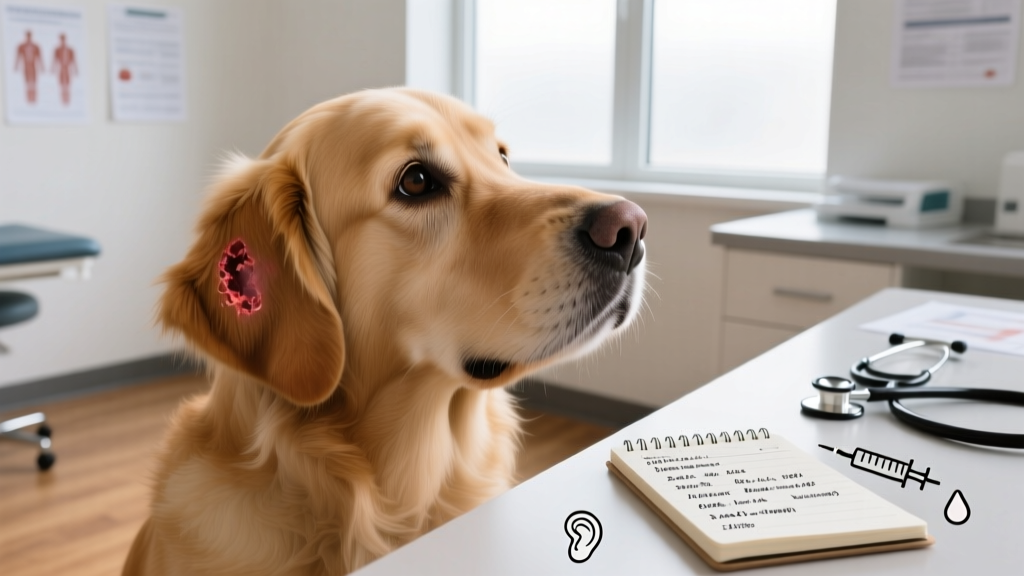
Tooth Abscess in Dogs: Symptoms, Treatment, and Cost Guide
Complete guide to tooth abscess in dogs: early symptoms, veterinary diagnosis, treatment options, cost breakdowns, and breed-specific risk factors.

If your dog suddenly refuses hard kibble, paws at their face, or develops a swollen lump under their eye, you may be looking at a tooth abscess. A tooth abscess in dogs is a painful bacterial infection that forms at the root of a damaged or decayed tooth, creating a pocket of pus surrounded by inflamed tissue. It is one of the most common dental emergencies seen in veterinary practice — the Merck Veterinary Manual estimates that over 80% of dogs over age three have some degree of periodontal disease, which is a primary gateway to abscess formation.
The most frequently affected tooth is the upper fourth premolar (the carnassial tooth), which bears the brunt of chewing force. When a tooth fractures — whether from gnawing on antlers, ice cubes, or hard nylon bones — bacteria invade the exposed pulp cavity, travel down the root canal, and establish an infection at the root tip. Left untreated, a tooth abscess can erode surrounding bone, spread infection to the orbit (eye socket), or in rare cases lead to systemic sepsis.
This guide walks you through every stage: what to look for, what your vet will do, what it costs, and how to prevent recurrence.
What Is a Tooth Abscess in Dogs?
A tooth abscess (also called a periapical abscess or root abscess) is a localized collection of pus caused by bacterial infection at or near the root apex of a tooth. The infection typically originates in one of three ways:
- Crown fracture with pulp exposure: A crack or break in the visible portion of the tooth exposes the pulp chamber — the living tissue containing nerves and blood vessels — to oral bacteria.
- Advanced periodontal disease: Bacteria from infected gums create deep periodontal pockets that eventually reach the root tip via the alveolar bone.
- Trauma without visible fracture: A blow to the mouth can kill the tooth's pulp (pulp necrosis) without an obvious crack, leading to a "silent" abscess weeks or months later.
The carnassial tooth (upper fourth premolar) accounts for the majority of abscesses because of its size, three-rooted anatomy, and role as the primary shearing tooth. However, any tooth can develop an abscess, including canines and incisors.
Recognizing the Symptoms: From Subtle to Severe
Tooth abscesses in dogs are notoriously difficult to spot early. Dogs are evolutionarily wired to mask dental pain — showing weakness in the wild would make them vulnerable. By the time obvious swelling appears, the infection may have been brewing for weeks. Use this checklist to monitor your dog at each stage.
| Stage | Symptoms | What's Happening |
|---|---|---|
| Early (Days 1–7) | Subtle chewing preference shifts, dropping kibble, mild bad breath, brief hesitation before eating | Bacteria colonizing pulp cavity; minimal inflammation |
| Moderate (Weeks 1–4) | Chewing exclusively on one side, pawing at mouth, visible tartar buildup on affected side, slight facial asymmetry, reduced appetite for hard food | Infection spreading to root apex; early bone involvement |
| Advanced (Weeks 4+) | Visible swelling below the eye or along the jaw, draining tract (pus or blood from gum or skin), extreme reluctance to eat, fever (normal: 101–102.5°F / 38.3–39.2°C), lethargy, eye discharge or squinting | Abscess has eroded through bone; fistula formation; possible orbital involvement |
| Emergency | Rapid facial swelling, inability to open mouth, high fever (>103.5°F / 39.7°C), collapse, refusal to drink water | Systemic infection or sepsis risk; requires immediate veterinary intervention |
A hallmark sign of a carnassial tooth abscess is a firm, warm swelling just below the eye — often mistaken for an insect bite or tumor. If this swelling ruptures, it creates a draining tract (fistula) that may discharge pus onto the skin below the eye or inside the mouth above the tooth. Paradoxically, some dogs seem more comfortable once the fistula opens because pressure is relieved, but the underlying infection persists.
Risk Factors: Which Dogs Are Most Vulnerable?
- Age: Dogs over 5 years old — cumulative dental wear and periodontal disease increase susceptibility
- Breed predisposition: Small and brachycephalic breeds (see breed list below)
- Chewing habits: Dogs that chew on antlers, hooves, ice, hard nylon bones, or rocks
- Dental history: Prior fractures, untreated periodontal disease, or retained deciduous (baby) teeth
- Diet: Exclusively soft/wet food diets that provide no mechanical cleaning action
- Systemic conditions: Diabetes mellitus, Cushing's disease, or immunosuppressive conditions that impair infection-fighting ability
- Trauma history: Dogs with a history of being hit by a car, falls, or bite wounds to the face
Breeds Prone to Tooth Abscesses
While any dog can develop a tooth abscess, certain breeds face elevated risk due to dental anatomy, chewing behavior, or genetic predisposition to periodontal disease:
- Small breeds with dental crowding: Chihuahuas, Yorkshire Terriers, Pomeranians, Maltese, Dachshunds — their teeth are packed tightly in small jaws, promoting plaque retention and periodontal pockets
- Brachycephalic breeds: Bulldogs, Pugs, Shih Tzus, Boston Terriers — their shortened skulls create abnormal tooth angulation, making some teeth more prone to fracture
- Active chewers and working breeds: Labrador Retrievers, German Shepherds, Belgian Malinois — high bite force and enthusiastic chewing on hard objects increase slab fracture risk
- Greyhounds and Whippets: Known for thin enamel and a genetic predisposition to dental disease
How Is a Tooth Abscess Diagnosed?
Diagnosing a tooth abscess requires more than a visual oral exam. Many abscessed teeth look perfectly normal above the gumline — the infection is hidden below, at the root tip. Here is the diagnostic process you can expect at the veterinary clinic:
- Conscious oral examination ($50–$120 exam fee): Your vet will visually inspect the mouth, noting any swelling, fractured teeth, draining tracts, or periodontal pockets. However, most dogs will not tolerate thorough probing while awake, especially if they are in pain.
- Pre-anesthetic blood work ($80–$200): A CBC (complete blood count) and chemistry panel assess organ function before anesthesia and check for elevated white blood cell counts indicating active infection. For dogs over 7, this is standard protocol.
- Anesthetized dental examination: Under general anesthesia, your vet or veterinary dentist will use a periodontal probe to measure pocket depths around every tooth (normal: 1–3 mm in dogs) and check for mobility.
- Dental radiographs ($150–$400 for full-mouth set): This is the gold standard and the single most important diagnostic tool. Intraoral X-rays reveal bone loss around the root apex, root fractures invisible to the naked eye, and the extent of periapical lucency (dark areas on X-ray indicating bone destruction). According to the American Veterinary Dental College, full-mouth dental radiographs should be performed on every dog undergoing a dental procedure.
- Advanced imaging (if needed, $300–$800): In complex cases — particularly when orbital involvement or jaw fracture is suspected — a CT scan provides three-dimensional detail of bone destruction and soft tissue involvement.
Total diagnostic costs typically range from $280 to $600 before treatment begins, depending on your region and whether advanced imaging is required.
Treatment Options: Extraction vs. Root Canal Therapy
Once a tooth abscess is confirmed, there are two definitive treatment paths. Antibiotics alone will not cure a tooth abscess — they may temporarily reduce swelling, but the infected pulp is a sealed environment where antibiotics cannot reach effective concentrations. The source of infection (the dead or dying pulp tissue) must be physically addressed.
| Factor | Surgical Extraction | Root Canal Therapy |
|---|---|---|
| What it involves | Complete removal of the tooth and all root fragments; gum flap closure with absorbable sutures | Removal of infected pulp, sterilization of root canals, filling with gutta-percha, and crown restoration |
| Success rate | 95–98% when all root fragments are removed (verified by post-extraction X-ray) | 90–95% for properly selected cases; higher failure if infection has caused extensive bone loss |
| Recovery time | 10–14 days for soft tissue healing; soft food required during recovery | 3–7 days; less post-operative discomfort than extraction |
| Cost range | $300–$800 per tooth (carnassial extractions are at the higher end due to three-rooted anatomy) | $1,500–$3,000+ per tooth; requires a veterinary dentist specialist |
| Best candidates | Most dogs; especially when cost is a concern, bone loss is extensive, or the tooth is non-strategic | Strategically important teeth (carnassial, canines) in working/sport dogs where bite function matters; owners prepared for specialist referral |
| Availability | Any general practice veterinarian with dental training | Board-certified veterinary dentists (AVDC diplomates) — limited availability in rural areas |
| Follow-up | Suture check at 10–14 days; annual dental X-rays recommended | Radiographic recheck at 6 months to confirm healing; annual monitoring |
Supportive Medical Management
Regardless of which definitive treatment is chosen, your vet will likely prescribe:
- Antibiotics: Amoxicillin-clavulanate (Clavamox) at 6.25 mg/lb (13.75 mg/kg) twice daily for 7–14 days is the most common first-line choice. Metronidazole or clindamycin may be used in penicillin-allergic dogs.
- Pain management: NSAIDs such as carprofen (Rimadyl) at 2 mg/lb once daily or meloxicam (Metacam) at 0.05 mg/lb once daily, typically for 5–7 days post-procedure. Never give human NSAIDs like ibuprofen — they are toxic to dogs.
- Chlorhexidine oral rinse: A 0.12% chlorhexidine solution applied to the surgical site twice daily for the first week helps control bacterial load during healing.
Important: Always consult your veterinarian before administering any medication. Dosages listed above are reference ranges — your vet will determine the exact dose based on your dog's weight, health status, and concurrent conditions.
Prognosis and Recovery Timeline
| Stage | Expected Outcome | Recovery Notes |
|---|---|---|
| Early (localized, no fistula) | Excellent — full recovery expected within 2 weeks of extraction or root canal | Minimal bone loss; dog returns to normal eating within 5–7 days |
| Moderate (fistula present, some bone loss) | Good — full recovery expected within 3–4 weeks | Bone takes 6–8 weeks to remodel; soft food for 2 weeks; possible minor facial asymmetry if swelling was significant |
| Advanced (orbital involvement, extensive bone destruction) | Guarded to good — recovery may take 4–8 weeks; possible need for additional procedures | May require referral to veterinary dentist or surgeon; risk of oronasal fistula (abnormal opening between mouth and nasal cavity) if upper jaw bone is severely compromised |
| Systemic (sepsis, fever, organ involvement) | Guarded — requires hospitalization, IV antibiotics, and intensive monitoring | Rare but serious; survival depends on rapid intervention; hospitalization costs of $2,000–$5,000+ |
For the vast majority of dogs treated at the early or moderate stage, life expectancy is unaffected. Dogs adapt remarkably well to tooth loss — even dogs with multiple extractions eat kibble without difficulty once healed. A dog with a successfully treated tooth abscess has a normal life expectancy.
Cost Breakdown: What to Budget For
Dental care is one of the most common reasons dogs visit the vet, and costs vary significantly by region, clinic type, and case complexity. Here is a realistic breakdown for 2026:
| Service | Low-End Estimate | Average Estimate | High-End Estimate |
|---|---|---|---|
| Initial exam & consultation | $50 | $85 | $150 |
| Pre-anesthetic blood work | $80 | $140 | $220 |
| General anesthesia & monitoring | $150 | $300 | $500 |
| Full-mouth dental radiographs | $150 | $275 | $450 |
| Surgical extraction (carnassial tooth) | $300 | $550 | $900 |
| Root canal therapy (specialist) | $1,500 | $2,200 | $3,500 |
| Post-op medications (antibiotics + pain relief) | $30 | $60 | $120 |
| Follow-up visit & recheck X-rays | $75 | $150 | $250 |
| Total (extraction route) | $835 | $1,560 | $2,590 |
| Total (root canal route) | $2,035 | $3,210 | $5,140 |
Pet dental insurance can offset a significant portion of these costs. Most comprehensive pet insurance plans (Trupanion, Healthy Paws, Nationwide) cover dental extractions and root canals when they result from illness rather than pre-existing conditions. Typical reimbursement is 70–90% after the annual deductible.
Home Care and Post-Treatment Management
After extraction or root canal therapy, your role in recovery is critical:
First 14 Days Post-Procedure
- Diet: Feed soft or moistened food. Soak kibble in warm water or low-sodium chicken broth for 10–15 minutes until softened. Canned food is acceptable short-term.
- No hard chews: Remove all bones, antlers, bully sticks, hard nylon toys, and ice cubes for at least 3 weeks post-extraction.
- Medication compliance: Complete the entire antibiotic course even if your dog seems fully recovered. Stopping early can lead to resistant bacterial strains.
- E-collar: If your dog paws at the surgical site, use an Elizabethan collar (cone) to prevent self-trauma.
- Monitor the site: Check daily for increased swelling, discharge, bleeding, or foul odor. Some mild redness is normal; pus is not.
Long-Term Dental Maintenance
- Daily tooth brushing: Use a dog-specific enzymatic toothpaste (poultry or beef flavored — never human toothpaste, which contains xylitol or fluoride toxic to dogs). A finger brush or soft-bristled child's toothbrush works well.
- VOHC-approved dental chews: Look for products carrying the Veterinary Oral Health Council seal of acceptance, which indicates the product has been independently tested for plaque and tartar reduction.
- Water additives: Products containing chlorhexidine or zinc gluconate can reduce bacterial load between brushings but do not replace brushing.
- Annual dental checkups: Schedule a professional dental cleaning with radiographs every 12 months, or every 6 months for high-risk breeds.
Prevention: Keeping Your Dog's Teeth Abscess-Free
While not all abscesses are preventable — trauma-related fractures can happen to any dog — you can dramatically reduce risk with these strategies:
- Eliminate high-risk chew items: Antlers, hooves, cooked bones, ice cubes, and hard nylon bones are the top culprits for slab fractures of the carnassial tooth. The American Kennel Club recommends rubber toys (like Kongs) and softer dental chews as safer alternatives.
- Follow the thumbnail test: If you cannot indent a chew toy with your thumbnail, it is too hard for your dog's teeth.
- Start brushing early: Puppies can be desensitized to tooth brushing from 8 weeks of age using positive reinforcement (treat rewards, praise). Daily brushing removes plaque before it mineralizes into calculus (tartar), which takes only 48–72 hours.
- Professional cleanings on schedule: Do not wait for visible tartar buildup. By the time you see yellow-brown deposits, periodontal pockets may already be forming below the gumline.
- Address retained baby teeth: In small breeds, deciduous teeth that fail to fall out create crowding and food traps. Have them extracted during spay/neuter surgery (typically around 6 months) if they have not shed naturally.
Do not wait for a scheduled appointment if your dog shows any of these red-flag symptoms:
- Rapid, progressive facial swelling — especially around the eye or jaw
- Inability or refusal to open the mouth (trismus)
- Fever above 103.5°F (39.7°C) — check with a rectal thermometer
- Lethargy combined with refusal to eat or drink for more than 24 hours
- Visible pus draining from the mouth, nose, or a skin opening on the face
- Eye bulging, squinting, or discharge on one side
- Signs of pain: whining, trembling, hiding, or aggression when the face is touched
These symptoms indicate an infection that may be spreading beyond the tooth. Same-day veterinary evaluation is essential. If your regular clinic is closed, visit an emergency veterinary hospital.
Frequently Asked Questions
Can a tooth abscess in dogs heal on its own?
No. A tooth abscess will not resolve without treatment. The infected pulp tissue is sealed inside the tooth, where the immune system and antibiotics cannot reach it effectively. Even if a draining fistula temporarily relieves pressure and your dog appears more comfortable, the infection persists and will continue to destroy surrounding bone until the tooth is extracted or treated with root canal therapy.
Can I give my dog human antibiotics for a tooth abscess?
Never give your dog antibiotics without a veterinary prescription. While some antibiotics used in dogs (like amoxicillin) are the same drugs used in humans, the dosages, formulations, and treatment durations differ significantly. Human medications may also contain inactive ingredients (flavorings, xylitol) that are toxic to dogs. Additionally, inappropriate antibiotic use contributes to antimicrobial resistance.
How quickly does a tooth abscess develop after a tooth fracture?
Timeline varies, but bacteria can colonize the exposed pulp within hours of a fracture. Clinical signs of abscessation typically appear within 2–8 weeks of the initial pulp exposure, though some cases take months to become symptomatic. This is why prompt veterinary evaluation of any fractured tooth — even if your dog seems unbothered — is critical.
Will my dog be able to eat normally after tooth extraction?
Yes. Dogs adapt remarkably well to tooth loss. Most dogs eat dry kibble normally within 2–3 weeks after extraction, even when multiple teeth are removed. Dogs do not chew food the way humans do — they tear and swallow. The remaining teeth and tongue compensate effectively.
Is a tooth abscess in dogs contagious to other pets or humans?
The abscess itself is not directly contagious. However, the bacteria involved (commonly Pasteurella, Streptococcus, and anaerobic species) can be transmitted through bite wounds or saliva contact with open wounds. Practice good hygiene when handling your dog's face during recovery — wash hands thoroughly after administering medications or cleaning the surgical site.
Does pet insurance cover tooth abscess treatment?
Most comprehensive pet insurance policies cover dental illness treatment, including extractions and root canals, provided the condition is not pre-existing. However, routine dental cleanings (prophylaxis) are typically excluded unless you have a wellness add-on. Check your policy's dental illness coverage limits — some plans cap dental benefits at $500–$1,000 annually, while others include dental under the overall annual maximum.
Aaron Whyte
All our authors care for dogs every day — read more of their work on the authors page.