Can Dogs Eat Onions Cooked? The Definitive Safety Guide for Dog Owners
Can dogs eat onions? No — cooked, raw, or powdered onions are toxic. Learn symptoms, toxic dose, and what to do.
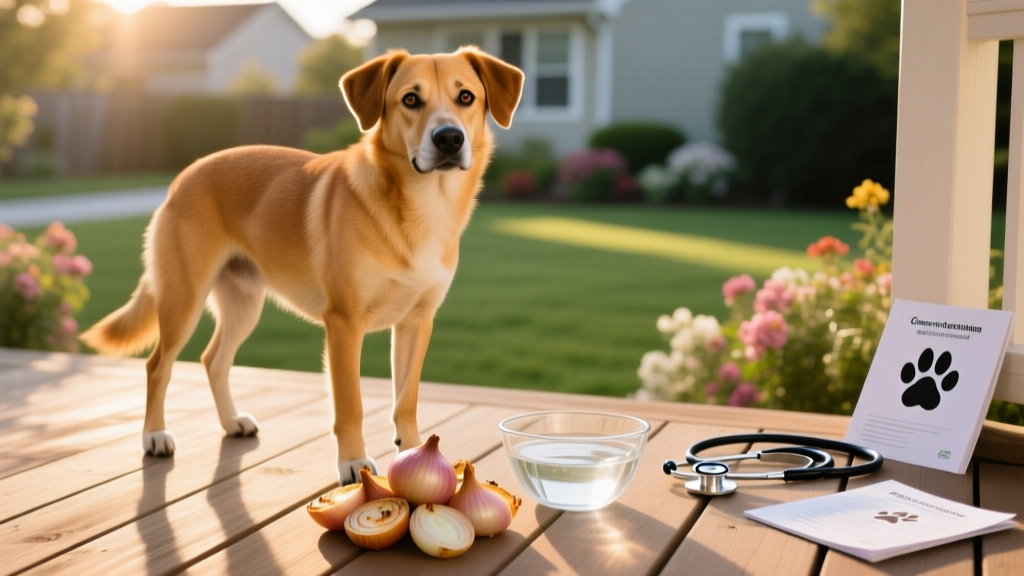
Onions in any form — cooked, raw, fried, powdered, dehydrated, or juiced — are toxic to dogs. Cooking does not destroy the organosulfur compounds responsible for oxidative damage to canine red blood cells. Even small amounts hidden in soups, stews, baby food, or table scraps can trigger hemolytic anemia. There is no safe serving size for onions in a dog's diet.
Why Cooked Onions Are Just as Dangerous as Raw Onions
The toxic agent in onions is N-propyl disulfide, an organosulfur compound belonging to the allium family. When a dog ingests onion, these compounds are absorbed through the gastrointestinal tract and oxidize hemoglobin molecules inside red blood cells. The oxidized hemoglobin forms structures called Heinz bodies — essentially clumps of damaged protein that attach to the cell membrane. The dog's spleen recognizes these damaged cells as abnormal and destroys them, leading to hemolytic anemia.
Heat does not neutralize N-propyl disulfide. Whether you sauté onions in butter, roast them at 400°F, boil them in soup, or dehydrate them into onion powder, the toxic compounds remain intact. In fact, onion powder and dehydrated onion flakes are more concentrated and therefore more dangerous per gram than fresh onion. A single teaspoon of onion powder can contain the equivalent toxic load of an entire medium onion.
According to the ASPCA Animal Poison Control Center, all parts of the onion plant are toxic — the flesh, the skin, the leaves, and onion juice. This applies to all varieties: yellow, white, red, sweet (Vidalia), shallots, scallions, and spring onions.
The Toxic Dose: How Much Onion Will Poison a Dog?
The generally accepted toxic threshold for onions in dogs is 15 to 30 grams of onion per kilogram of body weight — roughly 0.5% of the dog's body weight. However, clinical reports show that some dogs develop Heinz body anemia at doses as low as 5 g/kg, particularly with repeated exposure over several days.
| Dog Size | Weight Range | Approximate Toxic Amount (Fresh Onion) | Real-World Equivalent |
|---|---|---|---|
| Toy/Small | 5–15 lb (2.3–6.8 kg) | 35–200 g | ¼ to 1 medium onion |
| Medium | 25–50 lb (11–23 kg) | 170–680 g | 1 to 4 medium onions |
| Large | 60–90 lb (27–41 kg) | 400–1,200 g | 2.5 to 7 medium onions |
| Giant | 100–150 lb (45–68 kg) | 680–2,040 g | 4 to 12 medium onions |
Critical nuance: These numbers represent a single acute ingestion. However, cumulative toxicity is a real concern. Feeding a dog small amounts of cooked onion daily — even below the acute toxic threshold — can cause progressive red blood cell damage over days or weeks. Japanese breeds like Akitas and Shiba Inus appear to have a genetic predisposition to allium toxicity due to inherited differences in red blood cell enzyme activity, according to research published in the Merck Veterinary Manual.
Symptoms of Onion Toxicity in Dogs
Onion poisoning has a delayed onset. Symptoms typically appear 1 to 5 days after ingestion, not immediately. This delay occurs because it takes time for enough red blood cells to be damaged and destroyed for anemia to become clinically apparent. The most dangerous scenario is when an owner doesn't connect their dog's lethargy on Thursday to the table scraps containing cooked onion the dog ate on Monday.
| Early Signs (1–3 days): | Vomiting, diarrhea, abdominal pain, decreased appetite, drooling, mouth irritation |
| Anemia Signs (3–5 days): | Lethargy, weakness, pale or bluish gums, elevated heart rate, increased respiratory rate, exercise intolerance, collapse |
| Urine Changes: | Red, brown, or dark-colored urine (hemoglobinuria from destroyed red blood cells) |
| Severe Cases: | Jaundice (yellowing of gums/eyes), organ failure, death if untreated |
What Happens If My Dog Eats Cooked Onions?
If your dog has eaten a dish containing cooked onions, the appropriate response depends on three factors: how much was consumed, the dog's body weight, and how much time has passed.
- Estimate the onion quantity. A tablespoon of diced onion in a large pot of stew shared among four people may contain only a few grams of actual onion per serving. A dog that ate an entire caramelized onion appetizer is a different calculation entirely.
- Calculate against body weight. Use the 15 g/kg threshold as a conservative estimate. A 30 lb (13.6 kg) dog would need to ingest approximately 200 g of onion — roughly 1.3 medium onions — to reach the typical toxic dose.
- Call for professional guidance. If the estimated amount approaches or exceeds the toxic threshold, contact your veterinarian or the ASPCA Animal Poison Control Center at (888) 426-4435 immediately (a consultation fee of approximately $95 applies in 2026). They will advise whether to induce vomiting at home with 3% hydrogen peroxide (1 mL per pound, maximum 45 mL) or proceed directly to an emergency clinic.
- Your dog consumed an estimated toxic dose (≥15 g onion per kg body weight)
- Your dog is showing any signs of anemia: pale gums, weakness, rapid breathing, dark urine
- Your dog is a Japanese breed (Akita, Shiba Inu) or has a known G6PD enzyme deficiency
- Your dog has been eating small amounts of onion-containing food over multiple days
- Your dog is a puppy, senior, or has pre-existing anemia or kidney disease
- You're unsure how much onion was consumed — err on the side of caution
ASPCA Animal Poison Control: (888) 426-4435 (24/7, consultation fee applies)
Pet Poison Helpline: (855) 764-7661 (24/7)
How Veterinarians Diagnose and Treat Onion Poisoning
When you bring your dog to the clinic, the veterinarian will typically perform the following diagnostic workup:
| Step | Procedure | What It Reveals | Estimated Cost (2026) |
|---|---|---|---|
| Decontamination | Induced vomiting (apomorphine injection) and/or activated charcoal | Removes unabsorbed onion from GI tract; effective within 2 hours of ingestion | $50–$150 |
| Blood Work | Complete blood count (CBC) with blood smear | Detects Heinz bodies, measures packed cell volume (PCV), identifies anemia severity | $100–$250 |
| Urinalysis | Free-catch or cystocentesis sample | Detects hemoglobinuria (free hemoglobin in urine) | $50–$100 |
| IV Fluids | Hospitalization with intravenous crystalloid fluids | Maintains hydration, supports kidney function, flushes hemoglobin | $200–$600/day |
| Blood Transfusion | Administered if PCV drops below 15–20% | Replaces destroyed red blood cells in severe anemia | $500–$1,500 |
| Supplemental Oxygen | Oxygen cage or nasal cannula | Supports oxygen delivery when red blood cell count is critically low | $100–$300/day |
Prognosis varies with severity. Dogs that receive prompt treatment after mild ingestion typically recover fully within 5 to 7 days. Severe cases requiring blood transfusions carry a more guarded prognosis, and recovery may take 2 to 4 weeks. Fatalities are rare with early veterinary intervention but do occur in untreated cases or when the dog has underlying health conditions.
Hidden Onion Sources: Foods That Contain Cooked Onions
The greatest risk to dogs isn't usually a whole onion dropped on the kitchen floor — it's the cooked onion hiding in prepared foods that owners don't think to check. Always read ingredient labels and avoid sharing the following with your dog:
- Soups and broths — Nearly all commercial and homemade soups use onion as a base aromatic. Even "low-sodium" broths often contain onion powder.
- Gravies and sauces — Onion is a foundational ingredient in most gravy recipes, including Thanksgiving turkey gravy.
- Baby food — Some meat-based baby foods contain onion powder. Always check labels before using baby food to hide medication or entice a sick dog to eat.
- Pizza and pasta sauces — Garlic and onion are standard ingredients in marinara and pizza sauce.
- Seasoned meats — Pre-marinated chicken, burger patties, meatballs, and sausage often contain onion powder or minced onion.
- Casseroles and stuffing — Holiday dishes like green bean casserole, stuffing, and scalloped potatoes are loaded with onion.
- Chips and crackers — Onion-flavored chips, French onion dip, and many savory crackers contain onion powder.
- Dog treats from unreliable sources — Some imported or poorly regulated dog treats have been found to contain onion or garlic powder. Always purchase treats with FDA-compliant labeling.
Related Allium Foods That Are Also Toxic to Dogs
Onions belong to the Allium genus, and several close relatives carry similar toxicity risks. None of these should be fed to dogs in any form:
| Allium Food | Relative Toxicity vs. Onion | Common Hiding Spots |
|---|---|---|
| Garlic | Approximately 5× more toxic than onion per gram | Garlic bread, aioli, pesto, garlic butter, garlic supplements marketed to pet owners |
| Shallots | Similar toxicity to onions | Vinaigrettes, French cuisine, fine-dining sauces |
| Leeks | Moderate toxicity — lower concentration of N-propyl disulfide | Potato leek soup, quiches, stews |
| Chives | Lower toxicity but still unsafe | Garnishes, cream cheese spreads, baked potatoes |
| Scallions/Green Onions | Similar toxicity to bulb onions | Stir-fries, salads, Asian cuisine, garnishes |
Safe Vegetable Alternatives to Onions for Dogs
If you're looking for dog-safe vegetables to add variety, fiber, and micronutrients to your dog's meals, these options are excellent substitutes:
- Carrots (raw or steamed) — Rich in beta-carotene, low in calories, great for dental health. Serve 1–2 baby carrots per 10 lb body weight as a snack.
- Green beans (steamed, no seasoning) — High in fiber and vitamins K and C. A ¼ cup serving is appropriate for a medium dog.
- Sweet potato (cooked, skin removed) — Excellent source of vitamin A and fiber. Limit to 1 tablespoon per 10 lb body weight due to sugar content.
- Broccoli (steamed, small amounts) — Contains vitamins C and K. Keep servings under 10% of daily caloric intake to avoid isothiocyanate-related GI irritation.
- Zucchini (raw or steamed) — Very low calorie, high water content. Safe in generous portions: up to ½ cup for a medium dog.
Always introduce any new vegetable gradually — start with a teaspoon-sized portion and monitor for 24 to 48 hours for signs of digestive upset like gas, loose stool, or vomiting. Consult your veterinarian before making significant changes to your dog's diet, especially if your dog has food sensitivities or chronic health conditions.
Frequently Asked Questions
Can dogs eat onions cooked in butter or oil?
No. The cooking medium does not neutralize onion toxicity. Butter and oil may actually increase fat absorption, and the high fat content can independently trigger pancreatitis in dogs — a painful and potentially life-threatening inflammation of the pancreas. A dog that eats onions sautéed in butter faces a double risk: allium poisoning plus potential pancreatitis.
What if my dog ate a tiny piece of cooked onion that fell on the floor?
A single small piece (under 5 grams) is unlikely to cause clinical toxicity in a medium or large dog, but you should still monitor for symptoms over the next 3 to 5 days. For toy breeds under 10 lb, even a small piece may approach the toxic threshold. If you're uncertain about the amount consumed, call your veterinarian for a risk assessment based on your dog's specific weight.
Is onion powder more dangerous than fresh cooked onion?
Yes. Onion powder is a concentrated form of dehydrated onion. One teaspoon of onion powder is roughly equivalent to one medium onion in terms of flavor — and toxic compounds. Because it's easy to overlook as an ingredient in spice blends, bouillon cubes, and pre-packaged seasoning mixes, onion powder poses a significant hidden risk.
Can dogs eat food cooked with onion if the onion pieces are removed?
No. The toxic organosulfur compounds leach into cooking liquids, oils, and sauces during the cooking process. Even if you pick out visible onion pieces, the broth, gravy, or sauce will still contain dissolved N-propyl disulfide. If a dish was cooked with onion, the entire dish is unsafe for dogs.
Are there any dogs who are more susceptible to onion toxicity?
Yes. Japanese breeds (Akitas, Shiba Inus) have documented genetic predispositions due to higher susceptibility of their red blood cells to oxidative damage. Additionally, puppies, senior dogs, dogs with pre-existing anemia, and dogs with glucose-6-phosphate dehydrogenase (G6PD) deficiency are at elevated risk. Dogs taking medications that also cause oxidative stress (such as acetaminophen or certain chemotherapy drugs) may experience compounded toxicity.
How long does it take for a dog to recover from onion poisoning?
Mild cases with prompt veterinary treatment typically resolve in 5 to 7 days as the bone marrow produces new red blood cells. Moderate to severe cases requiring blood transfusions may need 2 to 4 weeks for full recovery. Your veterinarian will typically recheck the packed cell volume (PCV) at 3-day intervals during recovery to confirm the anemia is resolving.
The bottom line: There is no safe amount of cooked onion for dogs. If your dog has ingested onion in any form and you're unsure whether the amount is dangerous, contact your veterinarian or the ASPCA Animal Poison Control Center at (888) 426-4435 immediately. When in doubt, professional guidance is always the safer choice.
Jonas Cole
All our authors care for dogs every day — read more of their work on the authors page.