Cutting Dog's Black Toenails Safely: Avoiding the Quick...
Expert guide to cutting dog's black toenails safely. Learn to identify the quick in dark nails, avoid injuries, and treat nail trauma if accidents happen.
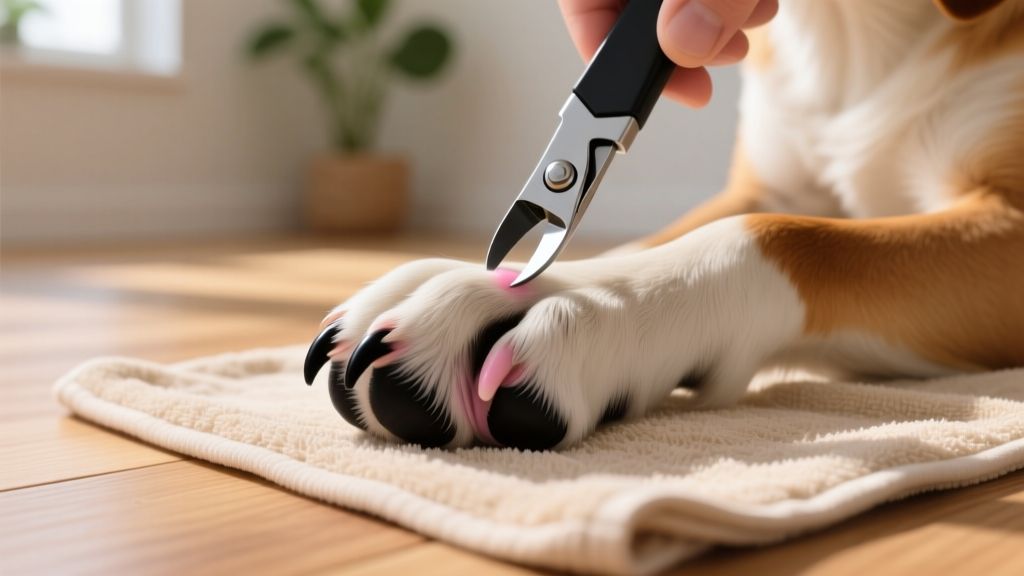
If you've ever stared at your dog's jet-black claws with dread, you're not alone. Cutting dog's black toenails is one of the most anxiety-inducing grooming tasks for pet owners — and for good reason. Unlike light-colored nails where the pink quick (the vascular, nerve-rich core) is visible, dark nails hide this sensitive structure completely, making every snip feel like a gamble.
While not a disease in the traditional sense, nail quick injuries and associated nail bed trauma are among the most common grooming-related health issues in dogs. According to veterinary grooming surveys, approximately 20-30% of dogs experience at least one significant nail-related injury in their lifetime, with dark-nailed dogs at higher risk due to the difficulty of visualizing the quick. These injuries range from minor bleeding and pain to serious nail bed infections, partial nail avulsions (tearing), and in severe neglected cases, osteomyelitis (bone infection) of the distal phalanx (toe bone).
This comprehensive guide covers everything you need to know about the anatomy, risks, prevention, and veterinary treatment of nail injuries related to cutting dog's black toenails — so you can approach every trim with confidence and know exactly what to do if things go wrong.
What Happens When You Cut the Quick in a Dog's Black Toenail?
The quick (technically called the dermal papilla or nail pulp) is the living tissue inside your dog's nail that contains blood vessels, nerves, and connective tissue. It extends from the nail bed at the base of the nail and grows as the nail grows. In light-colored nails, you can see it as a pinkish tube running through the center. In black nails, it's completely invisible from the outside.
When you cut into the quick during a nail trim, you're severing live vascular and nerve tissue. This causes:
- Immediate, sharp pain — dogs often yelp, flinch, or pull away violently
- Profuse bleeding — the quick is highly vascular and can bleed steadily for several minutes
- Exposed nail bed tissue — creating an entry point for bacteria
- Acute stress response — elevated cortisol, panting, trembling, and future nail trim aversion
The injury itself is usually minor if treated promptly. However, complications arise when bleeding isn't controlled, the wound becomes infected, or the dog repeatedly traumatizes the injured nail by licking or walking on rough surfaces. According to the Merck Veterinary Manual, nail bed infections (paronychia and onychomycosis) can develop within 24-72 hours of an untreated quick injury, particularly in dogs with compromised immune systems or those frequently exposed to wet, dirty environments.
Risk Factors for Nail Trim Injuries
| Risk Factor | Why It Increases Risk |
|---|---|
| Dark/black nail pigmentation | Quick is invisible; no visual guide for safe cutting depth |
| Overgrown nails | The quick extends longer with nail growth; more tissue to potentially damage |
| Elderly dogs (8+ years) | Thinner nail walls, brittle nails that splinter, slower healing, arthritis making positioning difficult |
| Brachycephalic breeds | Bulldogs, Pugs — compact paw structure, often thicker nails, stress intolerance during grooming |
| Large/giant breeds | Greater body weight puts more pressure on injured nail beds; Great Danes, Mastiffs, German Shepherds |
| Anxious or reactive dogs | Sudden movement during trimming increases accidental deep cuts |
| Diabetic or immunocompromised dogs | Slower wound healing, higher infection susceptibility |
| Dogs on anticoagulant medications | Prolonged bleeding from even minor quick injuries |
| Frequent water exposure | Swimming dogs, rainy climates — moisture softens nail tissue and promotes bacterial/fungal growth in wounds |
Symptoms of Nail Quick Injuries and Nail Bed Infections
Recognizing the severity of a nail injury helps you decide between home management and an immediate vet visit. Use this symptom checklist organized by severity:
| Severity Level | Symptoms | Timeline |
|---|---|---|
| Mild (Home Treatment Usually Sufficient) |
|
Immediate; resolves within hours |
| Moderate (Monitor Closely, Vet Visit if Worsening) |
|
Appears within 12-48 hours of injury |
| Severe (Veterinary Attention Required) |
|
Infection signs appear 24-72 hours post-injury; necrosis within 3-7 days if untreated |
How Veterinarians Diagnose Nail Bed Injuries and Infections
For a simple quick cut with controlled bleeding, most dogs won't need a veterinary visit. But when complications develop, here's the diagnostic process you can expect:
Veterinary Diagnostic Process for Nail Injuries
- Physical Examination ($50-$90)
The vet will visually inspect the nail, palpate the toe and surrounding structures, assess range of motion in the digit, and check for pain localization. They'll examine the nail bed for exposed tissue, foreign material, and signs of infection. Regional lymph nodes (popliteal for hind limbs, prescapular for forelimbs) are palpated for enlargement indicating spreading infection. - Nail Bed Cytology ($40-$75)
If discharge is present, the vet will take a sample via impression smear or swab and examine it under a microscope. This reveals whether bacteria (cocci vs. rods), yeast (Malassezia), or fungal elements are present, guiding initial antibiotic/antifungal selection. - Bacterial Culture and Sensitivity ($80-$150)
For recurrent or non-responsive infections, a culture identifies the specific bacterial species and which antibiotics will be effective. Results take 48-72 hours. This is critical because nail bed infections often involve Staphylococcus pseudintermedius, which increasingly shows methicillin resistance. - Digital Radiographs — X-rays ($120-$250)
If the vet suspects the injury extends to the bone (third phalanx / P3), they'll take radiographs of the affected digit. This reveals fractures of P3 (common when a nail is violently torn), osteomyelitis (bone infection, visible as bone lysis), or bone tumors that may have weakened the nail bed. Two views (lateral and dorsoventral) are standard. - Fungal Culture (Dermatophyte Test) ($60-$120)
If onychomycosis (fungal nail infection) is suspected — particularly in cases with crumbly, brittle nails and chronic low-grade inflammation — a fungal culture via DTM (dermatophyte test medium) may be ordered. Results take 2-4 weeks, so treatment often begins empirically. - Blood Work — CBC and Chemistry Panel ($80-$180)
Not routine for simple injuries, but recommended if systemic infection is suspected (fever, lethargy, lymphadenopathy) or if the dog is on medications that affect healing (steroids, chemotherapy). A complete blood count reveals elevated white blood cells indicating active infection.
Total diagnostic costs for a complicated nail injury typically range from $170 to $865, depending on which tests are needed. A straightforward case with physical exam and radiographs runs $170-$340, while a complex case requiring culture, sensitivity, blood work, and imaging can reach $500-$865.
Treatment Options for Nail Quick Injuries and Nail Bed Trauma
Treatment depends entirely on the injury severity. Here's a comparison of approaches:
| Treatment | Indication | Cost Range | Recovery Time | Success Rate |
|---|---|---|---|---|
| Home Hemostasis (styptic powder, cornstarch, silver nitrate stick) |
Minor quick cuts with controlled bleeding; no structural damage | $5-$15 (supplies) | 1-3 days for tenderness; nail regrows in 4-8 weeks | 95%+ with proper technique |
| Veterinary Cauterization (silver nitrate or electrocautery under sedation) |
Persistent bleeding not controlled by topical agents; deep quick exposure | $80-$200 (including sedation) | 3-5 days; protective bandage for 48 hours | 98%+ effective hemostasis |
| Systemic Antibiotics (e.g., cephalexin 22 mg/kg BID, amoxicillin-clavulanate 13.75 mg/kg BID) |
Signs of bacterial infection: swelling, pus, warmth, fever | $20-$60 (2-week course for a 50-lb dog) | 7-14 days; improvement visible within 48-72 hours | 85-90% for susceptible organisms; lower for resistant strains |
| Partial or Complete Nail Removal (Onychectomy of Single Digit) | Nail avulsion, severe crush injury, necrotic nail, chronic recurrent infection of single nail | $300-$800 (including anesthesia, surgery, post-op care) | 2-4 weeks; bandage changes every 2-3 days; E-collar required | 90-95% full recovery; nail may regrow if germinal matrix not fully removed |
| Digital Amputation (P3 Amputation) | Osteomyelitis of the third phalanx, neoplasia (e.g., subungual melanoma or squamous cell carcinoma) discovered during workup | $800-$2,500 (including advanced imaging, surgery, histopathology) | 4-6 weeks; suture removal at 10-14 days; restricted activity | Excellent for infection/trauma (95%+); variable for neoplasia depending on tumor type and staging |
| Pain Management (NSAIDs: carprofen 2 mg/kg BID, gabapentin 5-10 mg/kg TID) |
All moderate-to-severe injuries; post-surgical pain control | $15-$50 (7-14 day supply) | Administered alongside primary treatment | Highly effective for comfort; does not treat underlying cause |
Important: Never administer human pain medications (ibuprofen, acetaminophen, aspirin) to your dog without explicit veterinary direction. These can cause fatal gastrointestinal ulceration, kidney failure, or liver toxicity in dogs. Always consult your veterinarian before giving any medication.
Step-by-Step: How to Safely Cut a Dog's Black Toenails
Prevention is always better than treatment. Here's a methodical approach to cutting dog's black toenails that minimizes quick injury risk, based on techniques recommended by professional groomers and veterinary technicians:
Tools You'll Need
- Sharp scissor-style or guillotine nail clippers — sized for your dog (e.g., Miller Forge Professional for large breeds, Safari for small-medium). Dull blades crush rather than cut, causing splintering. Replace blades or clippers every 6-12 months with regular use. ($12-$35)
- Styptic powder — Kwik Stop or equivalent. Keep open and within arm's reach BEFORE you start. ($5-$9)
- High-lumen flashlight or nail LED illuminator — Products like the Zen Clipper Precise or a simple 200+ lumen penlight held behind the nail can sometimes reveal the quick as a darker shadow within black nails. ($8-$30)
- High-value treats — Soft, pea-sized rewards (freeze-dried liver, cheese bits) for counter-conditioning during the process
- Nail file or Dremel rotary tool — For smoothing edges after clipping. A Dremel Pet Nail Grooming Tool ($25-$40) allows gradual shortening with less risk of cutting too deep
The "Thin Slice" Method for Black Nails
- Position the paw gently but securely. Hold the toe between your thumb and forefinger, applying light pressure to extend the nail. Never squeeze hard — this is painful and creates resistance.
- Examine the nail cross-section. Look at the nail from the tip (the end you'll be cutting). Before you reach the quick, the center of the nail appears as a uniform grayish-white or chalky oval. As you get closer to the quick, you'll see a dark or pinkish dot appear in the center of that oval — that's the quick approaching. Stop cutting immediately when you see this dot.
- Cut in 1-2mm increments. Make thin, angled cuts (45° from the bottom of the nail) rather than one large snip. After each cut, examine the freshly exposed cross-section for the quick-dot.
- Look for the "chalky to moist" transition. The nail tissue changes from dry, chalky keratin to a slightly moister, sometimes darker appearance just before the quick. This textural change is your final warning.
- When in doubt, stop. It's far better to leave nails slightly long and trim again in 1-2 weeks (the quick recedes gradually with regular trimming) than to cause a painful injury that creates lasting trim aversion.
- Reward after every single nail. Treat + praise after each successful clip builds positive associations. If your dog shows stress, stop and resume another day — forcing through fear makes future trims exponentially harder.
Pro Tip: If your dog's nails are severely overgrown, don't try to get them to ideal length in one session. Trim just the tips, then re-trim every 7-10 days. The quick gradually recedes as the nail is shortened, and within 4-8 weeks of consistent trimming, you'll be able to achieve a much shorter nail safely. This is the single most effective strategy for dogs whose black nails have grown out significantly.
Home Care After a Nail Quick Injury
If you do nick the quick while cutting your dog's black toenails, here's how to manage it at home for mild injuries:
Immediate Steps (First 10 Minutes)
- Stay calm. Your dog reads your energy. Panicking escalates their stress.
- Apply styptic powder directly to the bleeding tip. Pinch a generous amount between your fingers and press it firmly against the nail end for 5-10 seconds. Kwik Stop contains ferric subsulfate (astringent) and benzocaine (topical anesthetic), which stops bleeding and reduces pain simultaneously.
- If styptic powder isn't available: Press the nail tip into a bar of unscented soap (plugs the bleeding vessel), or apply cornstarch or flour packed firmly against the tip with sustained pressure for 2-3 minutes.
- Keep your dog still and quiet for 10-15 minutes. Walking or running immediately re-opens the clot. Confine to a small area or carry small dogs.
First 48 Hours
- Monitor the nail every few hours for re-bleeding
- Prevent licking — use an Elizabethan collar (cone) if your dog focuses on the injured nail. Licking introduces oral bacteria (Pasteurella, Capnocytophaga) to the wound
- Keep walks short and on soft surfaces (grass, carpet) for 24-48 hours
- Avoid baths, swimming, or muddy environments for 48 hours to prevent wound contamination
- Check for early infection signs: increasing redness, swelling, heat, or discharge
Ongoing Monitoring (Days 3-14)
The nail will begin regrowing within 1-2 weeks. During this time, the exposed quick tissue keratinizes (toughens) and becomes less sensitive. Watch for any signs of abnormal regrowth — nails growing at odd angles or splitting may indicate damage to the nail matrix that requires veterinary evaluation.
🚨 When to See the Vet Immediately
Contact your veterinarian or an emergency clinic if you observe any of the following after a nail trim injury:
- Bleeding that won't stop after 20-30 minutes of continuous pressure and styptic powder application
- Nail partially or fully torn away from the nail bed — do NOT attempt to remove it yourself; this requires veterinary extraction under sedation
- Swelling spreading beyond the injured toe into the paw or up the leg
- Pus, foul odor, or dark discharge from the nail bed
- Fever — rectal temperature above 103.5°F (39.7°C)
- Complete refusal to bear weight on the affected limb lasting more than 48 hours
- Red streaks visible on the skin extending from the toe upward (lymphangitis — a spreading infection emergency)
- Your dog is on blood-thinning medication (e.g., clopidogrel, warfarin) or has a known clotting disorder (e.g., hemophilia, von Willebrand disease)
For suspected poisoning or toxic exposure related to grooming products, contact ASPCA Animal Poison Control: (888) 426-4435 (24/7, consultation fee applies).
Prognosis and Recovery Timelines
| Injury Severity | Expected Recovery | Full Nail Regrowth | Long-Term Complications |
|---|---|---|---|
| Minor quick cut (bleeding controlled at home) |
Tenderness resolves in 1-3 days; dog returns to normal activity same day or next day | 4-8 weeks for complete regrowth | None expected; possible trim aversion requiring counter-conditioning |
| Moderate injury (required vet cauterization or developed mild infection) |
5-10 days with treatment; limping resolves within a week of starting antibiotics | 6-10 weeks; nail may grow back slightly deformed initially | Rare; possible chronic sensitivity if nail matrix was damaged |
| Severe — nail avulsion (surgical removal required) |
2-4 weeks; bandage changes and restricted activity | If germinal matrix preserved: 8-12 weeks. If removed: no regrowth (permanent) | Abnormal regrowth angle possible; may require periodic veterinary filing |
| Severe — osteomyelitis (bone infection of P3) |
4-8 weeks with aggressive antibiotics; may require digital amputation | N/A if digit amputated | Excellent prognosis after amputation — dogs adapt fully to 3-toe weight bearing on that foot within 2-4 weeks |
Cost Breakdown: Nail Injury Treatment in 2026
Understanding potential costs helps you decide when home treatment is appropriate and when a vet visit is warranted. Here are current typical price ranges (varying by region and clinic type):
| Service | General Practice Vet | Emergency/Specialty Clinic |
|---|---|---|
| Office exam fee | $50-$90 | $120-$200 |
| Nail cauterization (with sedation) | $80-$200 | $150-$350 |
| Digital radiographs (2 views) | $120-$250 | $200-$400 |
| Bacterial culture & sensitivity | $80-$150 | $100-$180 |
| Antibiotics (2-week course) | $20-$60 | $25-$75 |
| NSAID pain medication (7-day course) | $15-$45 | $20-$60 |
| Single nail surgical removal | $300-$800 | $500-$1,200 |
| Digital amputation (P3) | $800-$2,500 | $1,500-$3,500 |
| Total — minor injury (best case) | $70-$150 | $145-$275 |
| Total — complicated infection (worst case) | $650-$1,600 | $1,095-$2,465 |
Pet insurance typically covers nail injuries and infections if they occur as an accident or illness (not as a grooming complication excluded by your policy). Accident-only plans may cover traumatic nail avulsions but not infections from routine trimming. Check your policy's grooming exclusion clause.
Prevention: Keeping Black Nails Healthy and Trim-Friendly
The American Kennel Club recommends trimming your dog's nails every 3-4 weeks, though many dogs benefit from biweekly trims — especially those with black nails where the quick needs to be gradually trained back.
Prevention Strategies That Work
- Establish a biweekly trim schedule. Frequent small trims keep the quick short and receded. Dogs trimmed every 2 weeks typically have significantly shorter quicks than those trimmed monthly.
- Use a Dremel for maintenance between clips. Filing 1-2mm off black nails every 5-7 days with a rotary tool is virtually risk-free because you're removing tiny amounts and can stop the moment the dog reacts to sensitivity.
- Walk on abrasive surfaces regularly. Concrete sidewalks and asphalt naturally file nails. Dogs walked daily on pavement often need less frequent trimming — though the dewclaws (which don't touch the ground) always need manual attention.
- Desensitize nail handling from puppyhood. Handle your dog's paws daily, touching each toe and nail, paired with treats. Dogs comfortable with paw handling are calmer during trims, reducing sudden movements that cause accidents. Use positive reinforcement exclusively — never punish a dog for pulling away during nail trims.
- Use a grooming hammock or sling for anxious dogs. Products like the Groomer's Helper or a wall-mounted grooming sling ($30-$80) stabilize wiggly dogs safely without restraint stress, dramatically improving trim accuracy.
- Keep styptic powder in your grooming kit at all times. Even expert groomers occasionally nick the quick. Having Kwik Stop within reach means you can control bleeding in seconds rather than panicking and escalating the situation.
- Consider professional grooming if anxiety is severe. Certified professional groomers handle black nails daily and have techniques (including muzzle training and low-stress handling) that reduce injury risk. Many also offer nail-only appointments for $10-$25.
Frequently Asked Questions
Can I use a human nail clipper on my dog's black nails?
No. Human nail clippers are designed for flat, thin fingernails and cannot generate enough leverage to cleanly cut a dog's thick, curved nail. They crush rather than slice, causing splintering, pain, and increased risk of splitting into the quick. Always use dog-specific clippers rated for your dog's size. For very small dogs (under 10 lb), cat nail clippers can work; for medium to large dogs, use heavy-duty scissor-style clippers like the Miller Forge or Resco Deluxe.
How short should I cut my dog's black toenails?
The ideal length is when the nail just barely touches the ground when your dog is standing on a flat surface — you should hear no clicking on hard floors. For black nails, this typically means leaving 2-3mm of nail beyond where you see the quick-dot appear in the cross-section. If you can't visualize the quick at all, err on the side of leaving the nail longer and trim more frequently.
My dog screams every time I try to cut their nails — what should I do?
Stop forcing it. Screaming indicates extreme fear or pain (possibly from a past quick injury). Switch to a desensitization protocol: spend 2-4 weeks simply touching the paws and showing the clippers while giving high-value treats, without cutting anything. Then progress to touching the clippers to nails without cutting, then cutting just one nail per session. If progress stalls, consult a certified professional dog trainer (CPDT) or veterinary behaviorist. Sedation-assisted nail trims (oral trazodone or gabapentin prescribed by your vet) are a valid, humane option for dogs with severe nail trim phobia.
What's the difference between styptic powder and a styptic pencil?
Both contain astringents that constrict blood vessels to stop bleeding. Styptic powder (like Kwik Stop) is more effective for dog nails because you can press a generous amount directly onto the bleeding nail tip. Styptic pencils (aluminum sulfate sticks) work by rubbing the moistened tip on the wound — harder to apply to a squirming dog and less material transferred. Powder is the preferred choice for pet nail trims.
Do dewclaws need trimming too?
Yes — dewclaws are actually the most dangerous nails to neglect. Because they don't contact the ground, they never wear down naturally and can curl into a full circle, eventually growing into the paw pad. This causes pain, infection, and requires surgical removal. Check and trim dewclaws every 2-3 weeks, and be especially careful with black dewclaws — they're often thicker and harder to visualize.
Which dog breeds are most prone to nail-related injuries?
Breeds with predominantly dark nails and those prone to grooming anxiety are at highest risk. This includes German Shepherds, Rottweilers, Doberman Pinschers, Labrador Retrievers (black and chocolate), Greyhounds, Belgian Malinois, and most mixed-breed dogs with dark coat pigmentation. Brachycephalic breeds like Bulldogs and Pugs are also higher risk due to stress intolerance during grooming sessions and their compact, thick-nailed paw structure.
How much does a professional dog nail trim cost?
Nail-only grooming appointments typically cost $10-$25 at a grooming salon, $15-$35 at a veterinary clinic (often combined with a technician exam), and $20-$45 for mobile grooming services that come to your home. Many vets offer "tech appointments" for nail trims at a lower cost than a full exam visit. If your dog requires sedation for nail trims, add $40-$120 for oral sedatives or $80-$250 for injectable sedation.
Cutting dog's black toenails doesn't have to be a dreaded ordeal. With the right tools, the thin-slice technique, and a patient, positive-reinforcement approach, most dogs can learn to tolerate — and even accept — regular nail trims. And if you do nick the quick, you now know exactly how to manage it, when to treat at home, and when to call your veterinarian. Regular, confident trimming keeps your dog comfortable, protects their joints from the altered gait that overgrown nails cause, and prevents the far more serious (and expensive) complications of neglected nail care.
Anouk Beaumont
All our authors care for dogs every day — read more of their work on the authors page.


