Why Do Dogs Smell Each Other's Butts? The Science Behind the Sniff
Why do dogs smell each other's butts? Discover the science of anal gland chemistry, Jacobson's organ, and what your dog learns from every sniff.

The Short Answer
Dogs smell each other's butts because the anal glands (anal sacs) produce a unique chemical signature — essentially a biological business card. These glands secrete compounds including trimethylamine, volatile fatty acids, and sulfur-containing molecules that convey information about identity, sex, reproductive status, diet, health, and even emotional state. A specialized structure called the Jacobson's organ (vomeronasal organ) allows dogs to process these chemical signals far beyond what their regular sense of smell can detect. It's the canine equivalent of scanning someone's social media profile in three seconds.
The Chemistry of Canine Communication: What Anal Glands Actually Produce
Every dog has two anal sacs — small pouches located at roughly the 4 o'clock and 8 o'clock positions around the anus. These sacs are lined with sebaceous and apocrine glands that produce a potent secretion. According to research published in the Merck Veterinary Manual, anal sac secretions contain a complex mixture of:
- Trimethylamine — the compound responsible for the characteristic fishy odor
- Volatile fatty acids — including acetic acid, propionic acid, and butyric acid, which vary between individual dogs
- Sulfur-containing compounds — such as dimethyl disulfide and dimethyl trisulfide
- Short-chain alcohols and esters — contributing to the individual scent profile
A landmark study by Dr. George Preti at the Monell Chemical Senses Center analyzed anal sac secretions and found that the ratio of these compounds is unique to each dog — much like a human fingerprint. The specific blend communicates:
| Information Conveyed | Chemical Basis | Example |
|---|---|---|
| Individual identity | Unique ratio of volatile fatty acids | Dog A has higher propionic acid than Dog B |
| Sex and reproductive status | Hormonal metabolites in secretions | Intact females in estrus produce distinct profiles |
| Diet and health | Dietary metabolites excreted via glands | High-fish diet increases trimethylamine output |
| Stress and emotional state | Stress-hormone-triggered secretion changes | Anxious dogs may express glands involuntarily |
| Social hierarchy cues | Confidence-linked expression patterns | Dominant dogs present for sniffing more readily |
Jacobson's Organ: How Dogs Process Scent at a Superhuman Level
The Vomeronasal Organ Explained
Located in the roof of the mouth, behind the upper incisors, the Jacobson's organ (vomeronasal organ or VNO) is a separate olfactory chamber dedicated to processing pheromones and heavy-molecule chemical signals. When a dog encounters an interesting scent — particularly anal gland secretions — they often exhibit the Flehmen response: slightly opening the mouth, curling the upper lip, and holding still. This behavior opens ducts connecting the oral cavity to the VNO, channeling scent molecules directly to this specialized organ.
The Jacobson's organ has its own dedicated neural pathway that bypasses the main olfactory bulb and connects directly to the accessory olfactory bulb, which then routes signals to the amygdala and hypothalamus — brain regions governing emotion, social behavior, and hormonal responses. This means that when your dog sniffs another dog's rear end, the chemical information isn't just "smelled" in the way you smell coffee. It triggers neuroendocrine responses that can literally alter your dog's hormone levels and behavioral state.
Consider the numbers that make this system so powerful, as documented by researchers at the American Kennel Club's canine science division:
- 300 million olfactory receptors in a dog's nose (humans have approximately 6 million)
- 40 times greater olfactory epithelium surface area compared to humans
- Dedicated VNO receptors specifically tuned to pheromone molecules that the main olfactory system cannot detect
- Ability to detect some compounds at concentrations as low as parts per trillion — equivalent to detecting a single drop of liquid in 20 Olympic-sized swimming pools
The Evolutionary Origins: Why Wolves Developed Butt-Sniffing
From Pack Survival to Greeting Ritual
In ancestral wolf packs, rapid individual identification was critical for survival. Wolves live in complex social hierarchies where knowing exactly who you're interacting with — their rank, health status, reproductive condition, and recent diet — can mean the difference between a peaceful encounter and a dangerous confrontation. The anal region became an evolutionary signaling hub because:
- It's always accessible — unlike facial markings that require visual contact in good light
- It works in darkness — essential for crepuscular and nocturnal species
- It provides dense information — multiple data points in a single sniff
- It forces proximity assessment — allowing both parties to gauge the other's confidence and intentions
Wolves greeting after separation perform a mutual anogenital investigation — approaching each other's hindquarters in a circling pattern. This behavior is conserved across virtually all canid species: coyotes, foxes, jackals, and domestic dogs. The behavior persisted through domestication because it serves a communication function that no other signaling mechanism has replaced.
In wolf ethology, the presenting dog is demonstrating trust — turning their vulnerable hindquarters toward a potential threat signals confidence in the relationship. The sniffing dog, in turn, is gathering intelligence. This mutual information exchange reduces conflict by replacing uncertainty with chemical data. Modern domestic dogs retain this exact protocol, which is why two well-socialized dogs meeting at a park will typically circle and sniff rather than engage in a direct, head-on approach (which is considered confrontational in canine body language).
What Your Dog Learns From Every Sniff: Decoding the Behavior
When your dog investigates another dog's rear end, they are conducting a rapid multi-variable analysis. Here is what the sniffing sequence typically reveals and what it means for your dog's subsequent behavior:
| What Your Dog Detects | How It Influences Behavior | What You Might Observe |
|---|---|---|
| Sex of the other dog | Males may show increased interest in intact females; females may assess male suitability | Prolonged sniffing, tail position changes, increased alertness |
| Reproductive status | Intact males can detect estrus from anal/vaginal secretions up to several days before visible signs | Heightened interest, whining, persistent following |
| Health status | Sick dogs produce altered metabolic profiles; healthy dogs may avoid or show caution | Brief sniff followed by disinterest, or avoidance behavior |
| Diet composition | Novel diet components create unfamiliar scent profiles that attract longer investigation | Extended sniffing duration compared to familiar-dog greetings |
| Stress/anxiety level | Stressed dogs produce cortisol-influenced secretions; other dogs may respond with caution or appeasement | Careful approach, lowered body posture, lip licking |
| Familiarity/recognition | Previously encountered dogs are identified within 1-2 seconds | Quick sniff followed by relaxed play initiation or casual disinterest |
The typical sniffing duration ranges from 2 to 6 seconds for familiar dogs and 6 to 15 seconds for unfamiliar ones. If your dog spends significantly longer than 15 seconds fixated on one area, they may be detecting something unusual — a dietary change, a health condition, or a female in or near estrus.
Common Myths About Butt-Sniffing, Debunked
| Myth | Scientific Fact |
|---|---|
| "Dogs sniff butts because they're attracted to bad smells" | Dogs are attracted to information-rich smells, not unpleasant ones. Anal gland secretions are complex chemical data, not waste products. Dogs are equally fascinated by the scent glands on another dog's face, ears, and paws. |
| "It's a dominance behavior" | Anogenital investigation is mutual and cooperative in well-socialized dogs. Both dogs typically sniff each other. It's an information exchange, not a power play. Dominance-based explanations for this behavior are not supported by modern canine ethology. |
| "My dog is embarrassed when I pull them away" | Dogs don't experience embarrassment about scent investigation — that's a human emotional projection. However, interrupting the sniffing sequence does deny them critical information, which can increase anxiety and reactivity at future meetings. |
| "Only male dogs do it" | Both sexes engage in anogenital investigation equally. Females use the information to assess potential mates, evaluate other females' reproductive status, and identify unfamiliar dogs in their territory. |
| "Neutered/spayed dogs don't need to sniff" | Altered dogs still produce and detect anal gland secretions. The information value extends well beyond reproductive status — identity, health, diet, and emotional state are all still relevant to neutered dogs. |
Breed Variations and When Sniffing Signals a Problem
While butt-sniffing is universal across all dog breeds, there are notable variations in intensity and style:
- Scent hounds (Beagles, Bloodhounds, Basset Hounds) tend to investigate longer and more thoroughly — their olfactory systems are even more developed than average, with Bloodhounds possessing up to 300 million scent receptors compared to a typical dog's already-impressive count
- Brachycephalic breeds (Pugs, Bulldogs, Shih Tzus) may have slightly reduced olfactory efficiency due to shortened nasal passages, but still engage in the behavior normally
- Herding breeds (Border Collies, Australian Shepherds) often combine sniffing with visual assessment and may initiate play more quickly after a brief sniff
- Guardian breeds (German Shepherds, Rottweilers) may approach more cautiously and sniff with greater vigilance, reflecting their breed-typical wariness of unfamiliar individuals
When Anal Sniffing Behavior Becomes a Concern
While the behavior itself is always normal, certain patterns warrant veterinary attention:
Red Flags That Require a Vet Visit
- Excessive licking of their own anal area — may indicate impacted or infected anal sacs (affects an estimated 12% of dogs at some point)
- Scooting — dragging the rear along the ground signals anal sac impaction, parasites, or perianal irritation
- Fishy odor noticeable to humans — anal sac secretions should only be detectable at close range; if you can smell them across a room, the sacs may be infected or abscessed
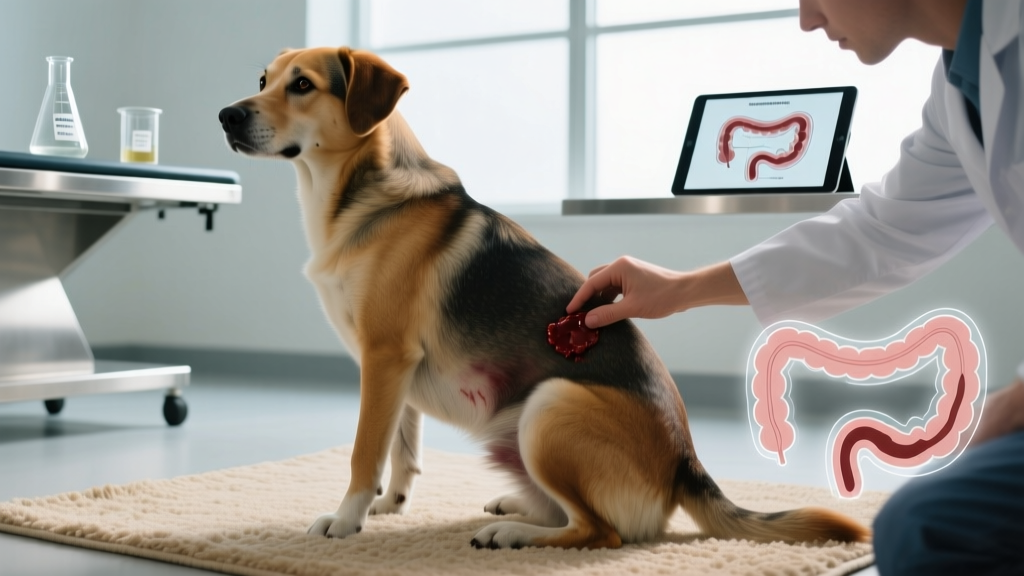
- Swelling or redness near the anus (at the 4 or 8 o'clock positions) — suggests anal sac abscess, which requires veterinary drainage and antibiotics
- Sudden disinterest in sniffing other dogs — may indicate upper respiratory infection, nasal disease, or cognitive decline in senior dogs
- Blood in anal sac discharge — requires immediate veterinary evaluation to rule out anal sac adenocarcinoma or severe infection
Anal sac expression costs typically range from $15–$30 at a routine vet visit, while abscess treatment (drainage, flushing, antibiotics) runs $100–$300. Surgical removal of chronically infected anal sacs (sacculectomy) costs $500–$1,500 per sac. Consult your veterinarian if you notice any of the above signs.
Practical Takeaways for Dog Owners
What This Science Means for Your Daily Walks
- Allow the sniff. When two dogs meet and circle to investigate each other's hindquarters, give them 5–10 seconds to complete the exchange. Interrupting this process is like hanging up the phone mid-introduction — it leaves both dogs without the information they need to feel comfortable.
- Don't punish the behavior. Using positive reinforcement training, you can teach a "let's go" cue to redirect your dog when needed, but never scold or physically pull a dog away from a normal greeting sniff. This creates negative associations with meeting other dogs and can contribute to leash reactivity.
- Monitor duration. A typical greeting sniff lasts 2–6 seconds for familiar dogs. If your dog is fixated for 15+ seconds, gently redirect with a cheerful cue. Prolonged fixation may indicate a female in heat nearby or a dog with an unusual health profile.
- Watch for the circle. Healthy dog greetings involve mutual circling — both dogs moving in an arc to access each other's hindquarters. A dog that approaches head-on, stiffly, and refuses to allow sniffing may be signaling tension. Give both dogs space.
- Check anal gland health at home. Once a month, gently palpate the area at the 4 and 8 o'clock positions around your dog's anus. You should not feel firm, grape-sized lumps. If you do, schedule a vet visit for expression before impaction leads to infection.
- Diet affects scent. Switching your dog's food will change their anal gland secretion profile within 5–7 days. If you notice other dogs sniffing your dog longer than usual after a diet change, this is the reason — not a cause for concern.
How Is Canine Scent Communication Different From Humans?
The gap between human and canine olfactory processing isn't just a matter of degree — it represents a fundamentally different way of perceiving the world. Humans are a visual species: we identify each other primarily through facial recognition, and our brain dedicates approximately 30% of the cerebral cortex to visual processing. Dogs are an olfactory species: their olfactory bulb is proportionally 40 times larger than ours relative to brain size, and their olfactory cortex processes scent information with the same richness and nuance that we apply to visual scenes.
When you meet someone new, you see their face, clothing, body language, and expressions. When your dog meets a new dog, they "see" that dog's chemical profile — age, sex, diet, health, emotional state, and identity — all encoded in volatile organic compounds that are completely invisible and odorless to you. The dog isn't smelling a "bad smell." They're reading a detailed chemical biography that you simply cannot access.
This is also why dogs can detect human diseases (certain cancers, diabetic blood sugar drops, oncoming seizures) at detection rates that rival or exceed medical instruments. Their olfactory system evolved to extract maximum information from chemical signatures, and that ability extends across species boundaries.
Related Behaviors: The Broader Scent Communication System
Butt-sniffing is one component of a larger canine chemical communication network. Related behaviors your dog uses daily include:
- Urine marking — dogs deposit pheromone-rich urine on vertical surfaces to leave a time-stamped message for other dogs; the height of the mark signals the dog's size
- Ground scratching after elimination — the interdigital glands between the toes deposit additional scent, and the visual scratch mark serves as a combined visual-chemical signal
- Rubbernecking on walks — when your dog sniffs a fire hydrant for 30 seconds, they're reading a "scent bulletin board" left by previous dogs
- Licking the air — tongue-flicking helps draw scent molecules into the Jacobson's organ through the incisive papilla ducts behind the front teeth
- Rolling in strong scents — an ancestral behavior thought to mask the dog's own scent for hunting or to carry interesting chemical information back to the group
Frequently Asked Questions
Why do dogs smell each other's butts instead of faces?
The anal region contains the highest concentration of individual-specific chemical information in a single, accessible location. While dogs do sniff faces (particularly the mouth and ears, which also carry scent data), the anal glands produce the most information-dense secretions. A direct face-to-face approach is also considered confrontational in canine body language, so circling to the hindquarters is simultaneously a polite greeting and the most efficient data-gathering strategy.
Can dogs recognize other dogs by scent alone, even after years apart?
Yes. Research indicates that dogs possess long-term olfactory memory. Studies on canine scent recognition have demonstrated that dogs can identify familiar individuals — both human and canine — after separation periods of several years. The anal gland chemical signature is stable enough over time (with gradual shifts due to aging and diet changes) to serve as a reliable long-term identifier.
How do dogs process pheromones differently than regular smells?
Regular smells are processed through the main olfactory epithelium in the nasal cavity, routed to the olfactory bulb, and then to the brain's conscious processing areas. Pheromones are processed through the Jacobson's organ, which connects to the accessory olfactory bulb and then directly to the amygdala and hypothalamus — bypassing conscious processing and triggering automatic emotional and hormonal responses. This is why pheromone detection can change a dog's behavior without them appearing to "think" about it.
What does it mean when my dog won't let other dogs sniff them?
A dog that tucks their tail tightly, sits down, or moves away to prevent sniffing is typically signaling discomfort, fear, or a lack of socialization. This isn't rudeness — it's a defensive behavior. Some dogs with negative past experiences, inadequate early socialization (particularly during the 3–14 week critical period), or underlying pain in the hindquarter region will guard against anogenital investigation. Work with a certified force-free behavior consultant to build your dog's confidence gradually through counter-conditioning and desensitization.
Is butt-sniffing normal for puppies?
Absolutely. Puppies begin investigating other dogs' scent signatures as early as 3–4 weeks old, initially with their mother and littermates. This behavior is a critical part of social development. Puppies that are prevented from engaging in normal scent investigation during the socialization window may develop greeting difficulties later in life. Allow puppies to sniff and be sniffed during supervised, positive interactions with healthy, vaccinated dogs.
Should I be concerned if my dog's anal glands express during sniffing?
Involuntary anal gland expression during exciting or stressful encounters is relatively common and usually not a medical concern. The anal sacs can contract reflexively when a dog is highly aroused. However, if this happens frequently, produces a consistently strong fishy odor, or is accompanied by scooting or licking, consult your veterinarian to rule out impaction or infection. Some small breeds (Chihuahuas, Toy Poodles, Miniature Dachshunds) are predisposed to chronic anal sac issues and may need regular veterinary expression every 4–8 weeks.
Anouk Beaumont
All our authors care for dogs every day — read more of their work on the authors page.