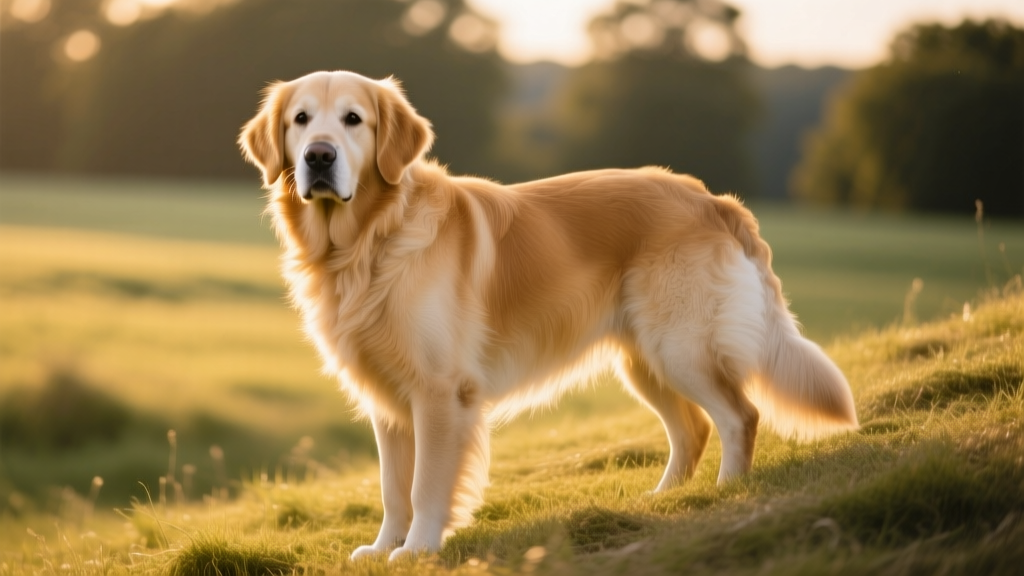
Why Is My Dog Panting at Night? The Science Behind Nocturnal Panting
Why is my dog panting at night? Discover the science, evolutionary roots, physiological triggers, and when nighttime panting signals a health problem.

The Quick Answer: Why Is My Dog Panting at Night?
Most nighttime panting in dogs is thermoregulatory — your dog is shedding excess body heat through evaporative cooling from the tongue and respiratory tract. Dogs don't sweat like humans; they rely on rapid, shallow breathing (up to 300–400 breaths per minute during heavy panting) to release heat. If your bedroom runs warm (above 72°F / 22°C), your dog's thick coat traps heat, or they exercised within 2–3 hours of bedtime, panting is entirely normal. However, persistent nighttime panting accompanied by restlessness, coughing, pale gums, or labored breathing can signal pain, anxiety, cardiac issues, or respiratory disease — and warrants a veterinary visit.
You're lying in bed, the house is quiet, and then you hear it: that rhythmic huff-huff-huff coming from the dog bed across the room. Your dog is panting — again — at 2 a.m. No exercise, no excitement, no obvious trigger. Is this normal? Should you be worried?
The short answer is: probably yes, it's normal. But the full answer involves canine physiology, evolutionary biology, and a few red flags every dog owner should know. Let's break down the science of why dogs pant at night, what's happening inside their bodies, and when you should pick up the phone to call your vet.
The Physiology of Panting: How Dogs Cool Down Without Sweat Glands
Panting as Evaporative Cooling
Dogs possess merocrine (eccrine) sweat glands only on their paw pads — a tiny surface area insufficient for meaningful heat dissipation. Instead, dogs rely on panting: rapid, shallow breaths at a frequency of approximately 300–400 breaths per minute (compared to the normal resting respiratory rate of 15–30 breaths per minute). This rapid airflow across the moist surfaces of the tongue, nasal passages, and upper respiratory tract causes water to evaporate, pulling heat away from blood vessels close to the surface and cooling the blood before it circulates back to the body's core.
Research published in the Journal of Experimental Biology has shown that panting in dogs operates at the resonant frequency of the respiratory system — meaning the chest and lungs oscillate at their natural mechanical frequency, minimizing the metabolic energy cost of this high-frequency breathing. This is why a dog can pant for extended periods without tiring, unlike a human who hyperventilates.
The Thermoneutral Zone: Why Nighttime Triggers Panting
Every dog has a thermoneutral zone (TNZ) — the ambient temperature range in which the body doesn't need to expend extra energy to maintain its core temperature of approximately 101.0–102.5°F (38.3–39.2°C). For most dogs, the TNZ falls between roughly 68–75°F (20–24°C) for short-coated breeds, but can be as narrow as 59–68°F (15–20°C) for thick-coated northern breeds like Siberian Huskies or Alaskan Malamutes.
Here's why nighttime matters: many homeowners set thermostats to 72–76°F (22–24°C) for sleeping comfort. For a double-coated dog sleeping on a bed or in a crate with limited airflow, the microclimate around their body can easily exceed their TNZ, triggering thermoregulatory panting. Add a memory foam bed (which retains heat) or a small, poorly ventilated room, and you've created a panting trigger.
| Characteristic | Normal Thermoregulatory Panting | Concerning Panting (See Vet) |
|---|---|---|
| Timing | First 30–60 min after settling down | Persistent all night, multiple hours |
| Breathing rate | Gradually slows as dog cools | Stays rapid or accelerates |
| Gum color | Pink, moist | Pale, blue-tinged, or brick red |
| Body posture | Relaxed, sprawled, belly exposed | Tense, hunched, unable to settle |
| Other signs | None | Coughing, gagging, trembling, restlessness |
| Response to cooling | Stops when moved to cooler surface | Continues despite cooling measures |
Evolutionary Context: Panting in Wolves and Ancestral Canids
From Wolf Den to Living Room
Panting is an ancient thermoregulatory adaptation shared across the family Canidae. Gray wolves (Canis lupus), the primary ancestor of domestic dogs, evolved across diverse climates — from Arctic tundra to Middle Eastern deserts. Their panting mechanism had to function across extreme temperature ranges.
Wolves in hot climates (e.g., Arabian wolves, Canis lupus arabs) exhibit more efficient panting with larger surface-area tongues relative to body size. When early dogs were domesticated approximately 15,000–40,000 years ago, they inherited this cooling system. However, artificial selection for traits like brachycephalic (short) skulls, thick double coats, and giant body sizes has, in many breeds, compromised the very panting mechanism they depend on. A French Bulldog's shortened airway physically restricts the volume of air moved during each pant, making them far less efficient at cooling than a wolf or a mesocephalic breed like a Labrador Retriever.
This evolutionary mismatch explains why some dogs pant at night more than others — it's not behavioral laziness, it's a physiological limitation bred into them over centuries of human-directed selection.
Breed Variations: Which Dogs Pant More at Night (and Why)
Not all dogs are created equal when it comes to nighttime panting. Breed conformation, coat type, and body mass dramatically influence panting frequency and intensity.
| Breed Category | Examples | Nighttime Panting Tendency | Primary Reason |
|---|---|---|---|
| Brachycephalic | French Bulldog, Pug, English Bulldog, Shih Tzu | Very High | Brachycephalic Obstructive Airway Syndrome (BOAS); narrowed nostrils, elongated soft palate restrict airflow |
| Giant breeds | Great Dane, Saint Bernard, Newfoundland | High | Large body mass generates more metabolic heat; thick coats trap it |
| Thick double-coated | Siberian Husky, Alaskan Malamute, Samoyed | High | Dense undercoat insulates against heat release; TNZ is lower |
| Mesocephalic, short-coated | Labrador Retriever, Boxer, Vizsla | Moderate | Efficient airway anatomy but still rely on panting; moderate heat tolerance |
| Small, thin-coated | Chihuahua, Italian Greyhound, Whippet | Low to Moderate | Small body mass dissipates heat faster; but may pant from anxiety |
According to the American Kennel Club, brachycephalic breeds are at significantly elevated risk for respiratory distress, and nighttime panting in these dogs should always be monitored closely. If your Frenchie or Pug is panting heavily every night even in a cool room (below 70°F / 21°C), discuss BOAS evaluation with your veterinarian — surgical correction of stenotic nares (narrowed nostrils) can cost $500–$2,500 but dramatically improves quality of life.
When Nighttime Panting Signals a Medical Problem
Red Flags: Panting That Requires Veterinary Attention
While most nighttime panting is benign thermoregulation, certain patterns indicate underlying disease. Consult your veterinarian if you observe any of the following:
- Panting + restlessness: Your dog can't settle, paces, lies down and gets up repeatedly. This can indicate pain (arthritis, abdominal discomfort, injury).
- Panting + coughing or gagging: Especially a dry, honking cough. May signal tracheal collapse (common in small breeds), congestive heart failure, or kennel cough.
- Panting + pale or blue gums: This is a medical emergency indicating poor oxygenation. Call your emergency vet immediately.
- Panting + increased thirst and urination: Classic signs of Cushing's disease (hyperadrenocorticism) or diabetes mellitus. Cushing's affects an estimated 1–2 per 1,000 dogs annually, with panting as a hallmark symptom due to muscle weakness and fat redistribution.
- Sudden onset of nighttime panting in a previously quiet dog: Any abrupt behavioral change in a dog over 7 years old warrants a senior wellness exam, including bloodwork ($150–$350) and chest radiographs ($200–$500).
- Panting with trembling or hiding: May indicate anxiety, fear, or pain rather than heat. Dogs with noise phobia (thunderstorms, fireworks) often pant as a stress response.
The Merck Veterinary Manual notes that brachycephalic airway syndrome can progress from mild panting to life-threatening respiratory obstruction, especially during sleep when muscle tone relaxes and the already-narrowed airway collapses further. This is why many brachycephalic dogs sleep in unusual positions (sitting up, propped against pillows) — they're instinctively trying to keep their airway open.
Common Misconceptions About Dog Panting
| Myth | Scientific Fact |
|---|---|
| "My dog is panting because they're dreaming." | Dogs do experience REM sleep and may twitch or vocalize during dreams, but panting during sleep is almost always thermoregulatory or respiratory — not dream-related. Active dream movements involve limb twitching, not sustained rapid breathing. |
| "If my dog is panting, they must be hot." | While heat is the most common trigger, dogs also pant due to pain, anxiety, nausea, medication side effects (e.g., opioids, corticosteroids like prednisone), and metabolic conditions like Cushing's disease. Context matters. |
| "Dogs pant the same way humans sweat." | Human sweating involves evaporative cooling across the entire skin surface via eccrine glands (2–4 million per person). Dogs concentrate evaporative cooling on a tiny surface area — the tongue and upper airway — making it less efficient per unit of body mass. This is why dogs overheat faster than humans in the same conditions. |
| "Putting ice in my dog's water will stop the panting." | While cold water helps, panting is triggered by core body temperature, not just oral temperature. Cooling the sleeping environment (ambient temperature, cooling mats, airflow) is more effective than cold water alone. |
| "My dog pants at night because they're anxious about being alone." | Separation anxiety panting typically occurs when the owner leaves or is absent, not when you're sleeping in the same room. If your dog pants while you're present at night, the cause is more likely physical than psychological. |
How Is Dog Panting Different from Human Temperature Regulation?
Humans and dogs diverged evolutionarily roughly 95 million years ago, and our cooling systems reflect that divergence completely. Understanding the difference helps explain why your dog pants at night while you simply feel warm.
- Humans: 2–4 million eccrine sweat glands distributed across the skin surface. Sweating begins within seconds of heat exposure and can dissipate up to 600–700 watts of heat during heavy exercise. We also vasodilate (widen blood vessels near the skin) to release heat.
- Dogs: Eccrine glands limited to paw pads (roughly 1–2% of body surface). Primary cooling is via panting (evaporative cooling from respiratory tract) and vasodilation of facial and ear blood vessels. Maximum heat dissipation through panting is estimated at 200–300 watts — significantly less than human sweating capacity.
This physiological gap is why dogs are more vulnerable to heat stress, especially at night when the house may be warm and the dog is lying on an insulating surface (bed, blanket, crate pad). Your dog isn't being dramatic — they're working with a cooling system that's roughly one-third as efficient as yours.
Practical Solutions: Reducing Nighttime Panting
Evidence-Based Cooling Strategies
- Lower the bedroom temperature to 65–68°F (18–20°C). This falls within the thermoneutral zone for most breeds. A programmable thermostat (e.g., Ecobee SmartThermostat, ~$170–$250) can automate nighttime cooling.
- Switch to a cooling bed or elevated cot. Elevated mesh cots (e.g., Coolaroo Elevated Pet Bed, ~$35–$55) allow airflow beneath the dog. Gel-based cooling mats (e.g., Arf Pets Self-Cooling Mat, ~$25–$50) absorb body heat for 2–3 hours. Avoid memory foam beds for dogs that pant at night — they trap heat.
- Use a fan for convective cooling. A box fan or oscillating fan directed at the dog's sleeping area increases air movement across the coat, accelerating heat loss. Even a low-speed fan can reduce the perceived temperature by 4–6°F.
- Exercise timing matters. Finish vigorous exercise at least 2–3 hours before bedtime. A dog's core temperature can remain elevated for 60–90 minutes after intense activity, and settling into a warm bed too soon triggers compensatory panting.
- Provide fresh, cool water at bedtime. A stainless steel bowl (retains cold better than plastic) with a few ice cubes helps lower oral and gastric temperature. For large dogs (50+ lb / 23+ kg), offer 8–16 oz of cool water before bed.
- Consider a cooling vest for thick-coated breeds during the day. Products like the Ruffwear Swamp Cooler Vest (~$65–$85) use evaporative cooling to lower body temperature during daytime activity, reducing residual heat load at night.
Frequently Asked Questions
Is it normal for my dog to pant every night?
Occasional nighttime panting, especially in warm weather or after active days, is normal. However, if your dog pants every single night regardless of room temperature, it warrants a veterinary checkup to rule out chronic conditions like Cushing's disease, cardiac issues, or chronic pain. A basic exam with bloodwork typically costs $100–$350 depending on your area.
Why does my dog pant at night but not during the day?
During the day, your dog is moving around, drinking water, and may have access to cooler surfaces (tile floors, shaded areas). At night, they're stationary on an insulating bed in a closed room with limited airflow. Heat accumulates in their immediate microenvironment, triggering panting even if the thermostat reads a comfortable temperature.
Can anxiety cause my dog to pant at night?
Yes. Anxiety-related panting is typically accompanied by other signs: pacing, whining, trembling, lip licking, or seeking close physical contact. Common nighttime anxiety triggers include noise phobia (thunderstorms, neighbors), recent environmental changes (new home, new pet), or separation distress if the dog sleeps in a separate room. Counter-conditioning and desensitization training with a certified force-free trainer ($75–$150 per session) can help, and your vet may recommend short-term anti-anxiety medication like trazodone (typically $10–$30 for a 30-day supply) for severe cases.
What does it mean when my dog pants and can't get comfortable at night?
Panting combined with inability to settle — lying down, standing up, moving to a new spot, repeating — is a classic pain indicator. Common causes in adult and senior dogs include osteoarthritis (affecting an estimated 20% of adult dogs and 80% of dogs over 8), intervertebral disc disease (IVDD), or abdominal discomfort. If this pattern persists for more than 2–3 nights, schedule a veterinary exam. Joint supplements containing glucosamine and chondroitin (e.g., Dasuquin Advanced, ~$35–$60 for a 60-day supply) can help, but only after your vet confirms the diagnosis.
How is panting different from labored breathing?
Panting is rapid, shallow, open-mouth breathing with a regular rhythm — it's efficient and controlled. Labored breathing (dyspnea) involves visible effort: exaggerated chest movement, abdominal heaving, extended neck, flared nostrils, or audible wheezing/stridor. Labored breathing is always an emergency. If your dog shows these signs, contact your nearest emergency veterinary clinic immediately or call the ASPCA Animal Poison Control at (888) 426-4435 if poisoning is suspected (24/7, consultation fee applies).
Should I wake my dog if they're panting in their sleep?
Generally, no. If the panting is mild and your dog appears relaxed (soft body, loose limbs, normal gum color), let them sleep. Waking a dog abruptly can cause a startle response. However, if the panting sounds strained, is accompanied by coughing or choking sounds, or if your dog's gums appear pale or blue when you gently check, wake them calmly and assess. Persistent strained breathing during sleep warrants a same-day vet visit.
Sources & Further Reading
- American Kennel Club — Why Do Dogs Pant?
- Merck Veterinary Manual — Brachycephalic Airway Syndrome in Dogs
- ASPCA — Animal Poison Control Center
Dr. Hannah Wickes
All our authors care for dogs every day — read more of their work on the authors page.