Teddy Bear Dog Science: Why We Breed for Baby-Like Faces
The science behind teddy bear dog popularity: how baby schema triggers human caregiving instincts, breed genetics, health trade-offs, and owner guidance.
What Is a Teddy Bear Dog, Scientifically Speaking?
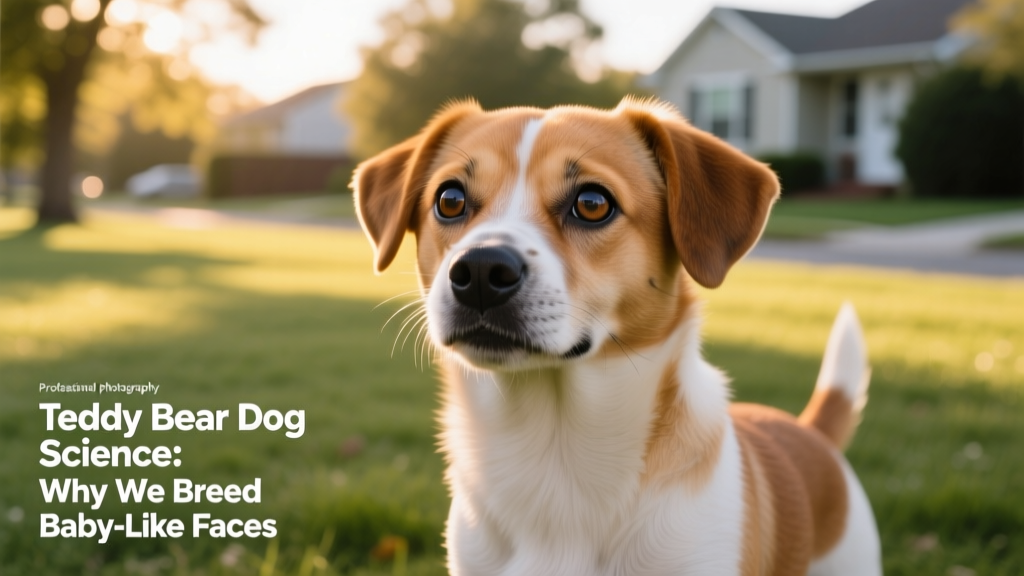
A teddy bear dog is not a recognized breed but a designer crossbreed category — most commonly a Shih Tzu × Bichon Frise (Zuchon/Shichon) or similar small-breed mix — selectively bred for neotenic (juvenile-retaining) facial features: round skull, large forward-facing eyes, short muzzle, and soft fluffy coat. These traits exploit a hardwired human neurological response called baby schema (Kindchenschema), first described by ethologist Konrad Lorenz in 1943. The result? Dogs that look perpetually puppy-like, triggering the same caregiving dopamine pathways humans use for infants. This article explains the evolutionary biology, genetics, health trade-offs, and practical realities of owning one in 2026.
The Neuroscience of Why Teddy Bear Dogs Are Irresistible
Baby Schema and the Human Brain
When you look at a teddy bear dog and feel an involuntary urge to cuddle it, that's not sentimentality — it's neurobiology. Baby schema refers to a cluster of physical features (large head relative to body, high forehead, big round eyes positioned low on the face, rounded cheeks, small nose/mouth) that reliably activate the human mesocorticolimbic reward system.
A landmark 2009 study by Glocker et al., published in Ethology, demonstrated that even line-drawn infant faces with exaggerated baby-schema proportions activated the nucleus accumbens — the brain's pleasure and motivation center — significantly more than less-schema-conforming faces. Functional MRI studies (Esposito et al., 2014, Frontiers in Psychology) confirmed that viewing baby-schema stimuli triggers oxytocin release and increases attentional focus within 140 milliseconds.
The teddy bear dog phenotype essentially hijacks this ancient caregiving circuit. Breeders — whether consciously or through market feedback loops — have selected for exactly these proportions:
- Eye-to-head ratio: Eyes appear 20–30% larger relative to skull size than in dolichocephalic (long-nosed) breeds like Greyhounds
- Cranial rounding: Brachycephalic skull shape creates the "round face" effect
- Muzzle shortening: Reduces the nose-to-eye distance, pushing eyes to a more infant-like mid-face position
- Coat texture: Soft, plush, low-shed coats mimic the tactile qualities of stuffed toys and infant hair
Evolutionary Context: From Wolf Pups to Designer Dogs
Why Neoteny Matters in Canid Evolution
The domestication of dogs (Canis lupus familiaris) from gray wolves is the textbook example of neoteny — the retention of juvenile traits into adulthood. Over roughly 20,000–40,000 years, dogs retained wolf-pup behaviors (playfulness, vocalization, social dependence) and physical traits (shorter muzzles, wider skulls, floppier ears, piebald coats) that wolves outgrow.
Research by Merck Veterinary Manual and the work of evolutionary biologist Brian Hare (Duke University Canine Cognition Center) suggest that dogs displaying more neotenic features received greater human investment — more food, shelter, and protection — creating a selection pressure that favored juvenile appearance. Wolves that looked and acted more like pups were tolerated closer to human settlements.
Teddy bear dogs represent an acceleration of this process: in just 20–30 years of intentional designer breeding, the neotenic traits that took millennia to emerge in the broader dog population have been concentrated into a specific aesthetic package. This is artificial selection operating at maximum intensity.
The Genetics Behind the Look: What Makes a Teddy Bear Dog
The teddy bear phenotype typically comes from crossing two small, brachycephalic-to-mesocephalic breeds. The most common pairings in 2026 include:
| Cross | Common Name | Weight Range | Key Phenotype Genes | Generation Stability |
|---|---|---|---|---|
| Shih Tzu × Bichon Frise | Zuchon / Shichon | 10–16 lb / 4.5–7.3 kg | BMP3 (brachycephaly), FGF5 (long coat) | F1: variable; F2+: more consistent |
| Cavalier King Charles × Bichon | Cavachon | 10–18 lb / 4.5–8.2 kg | BMP3, SMOC2 (brachycephaly variant) | Moderate; Cavalier genes vary |
| Poodle (Toy/Mini) × Shih Tzu | Shih-Poo | 8–16 lb / 3.6–7.3 kg | BMP3, KRT71 (curly/wavy coat) | F1 unpredictable coat type |
| Pomeranian × Bichon | Pomachon | 7–14 lb / 3.2–6.4 kg | BMP3, MC1R (coat color dilution) | Low — Pomeranian size varies widely |
The BMP3 gene (Bone Morphogenetic Protein 3) is the primary driver of brachycephalic skull shape. A variant identified by researchers at the NIH Dog Genome Project (Parker et al., 2017, PLOS Genetics) showed that a single missense mutation in BMP3 accounts for much of the muzzle-shortening across brachycephalic breeds. When two carrier breeds are crossed, F1 puppies often inherit moderate brachycephaly — producing the "just right" teddy bear face without the extreme flattening seen in Pugs or Bulldogs.
The FGF5 gene controls coat length, while KRT71 determines curl pattern. The teddy bear coat — dense, soft, slightly wavy — typically results from inheriting one long-hair allele from each parent plus a partial curl allele from a Poodle-influenced line.
Health Trade-Offs: The Science of Breeding for Cuteness
The same neotenic features that make teddy bear dogs visually appealing carry measurable health consequences. Understanding these is critical for prospective owners.
Teddy Bear Dog Health: Myths vs. Science
| Claim | Verdict | What the Science Says |
|---|---|---|
| "Designer dogs are always healthier than purebreds due to hybrid vigor" | Partially false | Hybrid vigor (heterozygote advantage) reduces risk of recessive disorders when parent breeds have non-overlapping disease alleles. But if both parent breeds share a risk (e.g., brachycephalic airway syndrome, patellar luxation), crossbreeds inherit equal or compounded risk. A 2019 study in Canine Genetics and Epidemiology found mixed-breed dogs had only a modest (1–2%) reduction in overall inherited disorder prevalence vs. purebreds. |
| "Teddy bear dogs don't have breathing problems because they're not as flat-faced" | Misleading | Moderate brachycephaly still narrows nares, elongates the soft palate, and compresses turbinates. AVMA guidelines note that even mild brachycephalic conformation increases anesthetic risk by 30–50% and predisposes dogs to heat intolerance and exercise-induced dyspnea. |
| "Their coats are hypoallergenic" | False | No dog is truly hypoallergenic. Low-shed coats reduce airborne dander but don't eliminate Can f 1 or Can f 2 allergens (proteins in saliva and sebaceous glands). Allergy sufferers should spend 60+ minutes with a specific dog before committing. |
| "They stay puppy-sized forever" | Partially true | Adult weight is 10–18 lb (4.5–8.2 kg) — small but not tiny. Some F1 crosses from larger Bichon or Miniature Poodle lines reach 20 lb (9 kg). Always ask breeders for parental weights. |
Specific Health Conditions to Screen For
Responsible breeders of teddy bear dog crosses should provide OFA (Orthopedic Foundation for Animals) or PennHIP clearances for both parent breeds' known conditions:
- Patellar luxation — prevalence 5–8% in Shih Tzus and Bichons; causes intermittent hind-leg skipping
- Brachycephalic Obstructive Airway Syndrome (BOAS) — affects an estimated 50% of moderate brachycephalic dogs to some degree; signs include snoring, exercise intolerance, gagging, and cyanosis in severe cases
- Keratoconjunctivitis sicca (dry eye) — shallow orbits and prominent eyes reduce tear film distribution; requires lifelong cyclosporine drops ($25–$40/month)
- Mitral valve disease (MVD) — especially in Cavalier-influenced lines; onset typically 5–8 years; echocardiogram screening recommended annually from age 4
- Dental crowding — shortened jaws compress 42 teeth into reduced space; expect professional dental cleanings under anesthesia every 8–12 months ($400–$800 per session)
Always consult your veterinarian about breed-appropriate screening schedules and any respiratory symptoms.
Practical Implications: Living With a Teddy Bear Dog in 2026
Daily Care Requirements
- Grooming: Professional grooming every 4–6 weeks ($60–$90/session); daily brushing with a slicker brush to prevent matting at the skin-coat junction. Budget $600–$1,080/year.
- Exercise: 30–45 minutes daily, split into 2–3 short walks. Avoid midday heat (above 80°F / 27°C) due to brachycephalic heat sensitivity. Use a harness, never a neck collar, to avoid tracheal compression.
- Feeding: 1/2 to 3/4 cup high-quality kibble daily (look for AAFCO statement, named protein first ingredient, minimum 22% crude protein for adult maintenance). Split into 2 meals to reduce bloat risk. Annual food cost: $250–$400.
- Dental care: Daily tooth brushing with enzymatic dog toothpaste (VOHC-accepted products like C.E.T. or TropiClean). Expect 6–8 dental procedures over the dog's 12–15 year lifespan.
- Eye care: Daily wipe of tear-stain area with saline-moistened gauze. Watch for squinting, redness, or mucoid discharge — these warrant same-day vet evaluation.
Training Considerations
Teddy bear dogs tend to score moderate-to-high on sociability but low-to-moderate on working intelligence (the ability to learn and obey commands on first repetition). This reflects their companion-breed ancestry — Shih Tzus and Bichons were bred for lap-sitting, not herding or retrieving. Expect 25–40 repetitions for new command acquisition vs. 5–15 for a Border Collie.
Use positive reinforcement exclusively: small food rewards (freeze-dried liver pieces, ~1 calorie each), clicker marking, and short 5-minute sessions. Force-free methods produce better long-term compliance and avoid the fear-based shutdown common in sensitive small breeds.
When the "Cute" Signals a Problem
Some teddy bear dog features cross from "aesthetically neotenic" into "clinically concerning." Watch for these red flags that require veterinary evaluation:
Emergency Signs in Brachycephalic Dogs
- Open-mouth breathing at rest (not just after exercise) — indicates compromised airway
- Cyanosis (blue/purple gums or tongue) — oxygen deprivation; seek emergency care immediately
- Syncope (fainting episodes) — may signal cardiac involvement or severe BOAS
- Reverse sneezing lasting >60 seconds or occurring >3 times daily — warrants airway evaluation
- Corneal ulcer signs (pawing at eye, holding eye shut, visible blue/white spot on cornea) — brachycephalic eyes are vulnerable; untreated ulcers can perforate within 24–48 hours
- Heat distress: excessive panting, drooling, stumbling, collapse at ambient temperatures above 80°F (27°C) — apply cool (not cold) water to groin and armpits, transport to vet immediately
For suspected toxic ingestion, contact ASPCA Animal Poison Control: (888) 426-4435 (24/7, consultation fee applies).
Cost of Ownership: What to Budget in 2026
| Category | First-Year Cost | Annual Ongoing Cost |
|---|---|---|
| Purchase (responsible breeder, health-tested parents) | $1,800–$3,500 | — |
| Adoption (breed-specific rescue) | $300–$600 | — |
| Vaccinations + initial vet workup | $350–$600 | $200–$400 (annual wellness) |
| Spay/neuter | $400–$800 | — |
| Grooming | $600–$1,080 | $600–$1,080 |
| Food + treats | $250–$400 | $250–$400 |
| Dental care | $400–$800 (first cleaning) | $400–$800 |
| Pet insurance (accident + illness) | $360–$600 | $360–$600 |
| Total (first year, breeder puppy) | $4,160–$7,780 | $1,810–$3,280 |
Frequently Asked Questions
Why do dogs with teddy bear faces seem more "baby-like" in behavior too?
Neoteny isn't just physical — it extends to behavior. Companion breeds selected for juvenile appearance were simultaneously selected for juvenile behavioral traits: dependency, playfulness, reduced fear-aggression, and prolonged social bonding. Research by canine cognition scientists at the AKC Canine Health Foundation confirms that brachycephalic companion breeds score higher on attachment behaviors and lower on independent problem-solving than working breeds. You're seeing a package deal of co-selected traits, not a coincidence.
Can dogs with short muzzles breathe normally?
Most moderate brachycephalics breathe adequately at rest but have reduced respiratory reserve during exercise, heat, or stress. Their narrowed nares and elongated soft palates create turbulent airflow, increasing the work of breathing by an estimated 40–60% compared to mesocephalic dogs of equal body weight. A veterinary assessment including a BOAS functional grading (Grade 0–III) can quantify your dog's airway function. Grade II–III dogs may benefit from corrective surgery (nares widening, soft palate resection), typically $1,500–$3,500.
How do dogs with flat faces process smells compared to longer-nosed breeds?
Brachycephalic dogs have the same olfactory receptor count (~300 million in most breeds) but reduced turbinate surface area — the bony structures inside the nasal cavity that direct airflow over olfactory epithelium. This means scent molecules have less contact time with receptors. Studies show brachycephalic breeds underperform dolichocephalic breeds (like Bloodhounds, with ~300 billion olfactory neurons and maximized turbinate surface) in scent-detection tasks by 20–40%. Your teddy bear dog can still smell dinner from across the house — they just aren't built for tracking work.
What does it mean when my teddy bear dog snores loudly?
Snoring in brachycephalic dogs is caused by soft-palate vibration during sleep when pharyngeal muscles relax. While common (estimated 60–70% of moderate brachycephalics snore), it is not normal in the clinical sense — it indicates airway resistance. If snoring is accompanied by sleep apnea episodes (pauses >10 seconds), daytime lethargy, or exercise intolerance, request a veterinary airway evaluation. Weight management is the single most impactful intervention: even a 5–10% body weight reduction significantly decreases snoring severity.
Is the teddy bear dog look a recent trend or an established type?
The specific "teddy bear" marketing label emerged around 2010–2015, but the underlying phenotype has existed for centuries in breeds like the Shih Tzu (bred in Chinese imperial courts since the 17th century) and the Bichon Frise (Mediterranean origin, documented since the 1300s). What's new is the intentional crossbreeding to maximize baby-schema traits while reducing breed-specific disease load. The ASPCA notes that designer dog registrations have increased approximately 60% since 2015, driven largely by social media aesthetics and urban apartment-living suitability.
How is this different from how humans perceive cuteness in babies?
It's the same mechanism — that's the point. Baby schema is a cross-species trigger. Humans respond to neotenic features in puppies, kittens, and even cartoon characters identically to how they respond to human infants. The difference is that human infants outgrow baby schema proportions by age 4–5, while teddy bear dogs retain them for their entire 12–15 year lifespan. This permanent activation of the caregiving response is precisely what makes these dogs commercially successful and emotionally compelling — and what raises ethical questions about breeding for extreme neoteny.
Sources Referenced
- Glocker, M.L. et al. (2009). "Baby schema in infant faces induces cuteness perception and motivation for caretaking in adults." Ethology, 115(3), 257–263.
- Parker, H.G. et al. (2017). "Genomic responses to artificial selection for brachycephaly in domestic dogs." PLOS Genetics, 13(8).
- Merck Veterinary Manual — Brachycephalic Airway Syndrome overview. merckvetmanual.com
- AVMA — Brachycephalic breeds and anesthetic risk. avma.org
Aaron Whyte
All our authors care for dogs every day — read more of their work on the authors page.