The Science of Trimming Dogs Nails: Anatomy, Fear...
The canine science behind trimming dogs nails — nail anatomy, fear physiology, evolutionary context, and evidence-based force-free techniques for stress-free trims.
Quick Answer: Why Is Trimming Dogs Nails So Difficult?
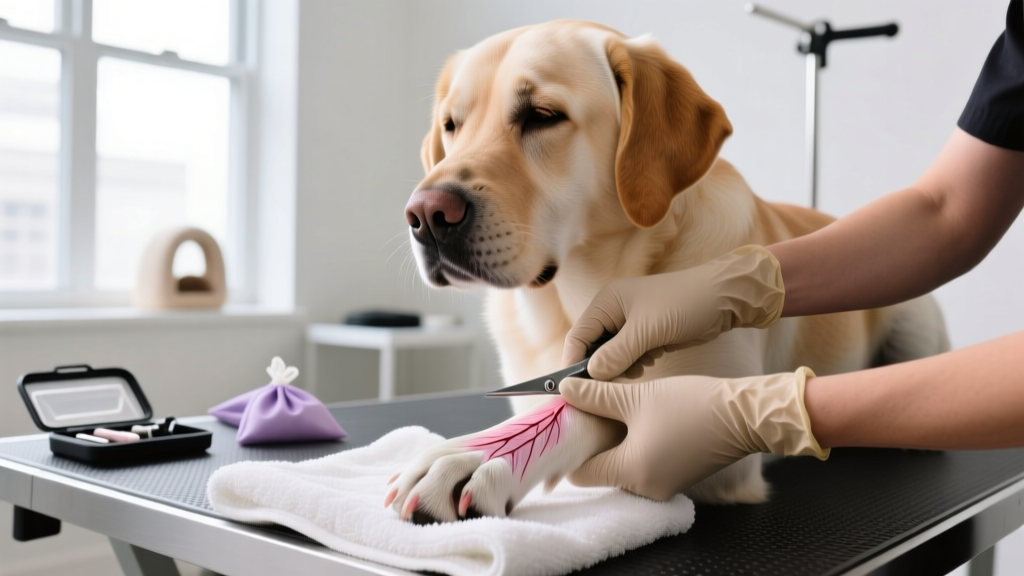
Trimming dogs nails triggers a hardwired fear response rooted in canine neuroanatomy. Dogs possess a dense network of nociceptors (pain receptors) in the nail quick — the vascular tissue running through each claw — and their paw pads contain thousands of mechanoreceptors evolved for environmental sensing. When restraint is applied during nail trimming, the dog's amygdala activates a fight-or-flight cascade via the hypothalamic-pituitary-adrenal (HPA) axis, flooding the body with cortisol and adrenaline. This is not stubbornness — it is a physiological survival response. Successful trimming requires counter-conditioning (pairing the procedure with positive stimuli) and proper anatomical knowledge to avoid the quick.
The Anatomy of a Dog's Nail: What You're Actually Cutting
Understanding the structure you're working with is the foundation of safe, stress-free nail trimming. A dog's nail (more accurately called a claw) is far more complex than most owners realize.
Claw Anatomy Breakdown
- Ungual process (P3 bone): The third phalanx, or distal phalanx, extends into the base of the claw. This bone is directly connected to the dog's skeletal system.
- The quick (dermal papilla): A vascular and nerve-rich core containing the germinal matrix that produces the keratinized nail sheath. The quick supplies blood and nutrients to the growing claw.
- Keratinized sheath: The hard outer shell — this is the only part you should cut. It's composed of beta-keratin, harder than the alpha-keratin in human hair.
- Dewclaws: Vestigial digits on the medial aspect of the paw (front legs in most breeds, rear legs in some). These never contact the ground and require more frequent trimming.
The critical measurement every owner needs: in light-colored nails, the quick is visible as the pink interior. In dark-colored nails, you cannot see it. Research published in the Journal of Veterinary Anatomy indicates the quick typically extends to within 2-3 mm of the nail tip in regularly trimmed dogs, but can extend much further in overgrown nails — sometimes occupying 70-80% of the total nail length.
| Nail Condition | Safe Trim Distance from Tip | Recommended Frequency | Tool Type |
|---|---|---|---|
| Regularly maintained (trimmed every 2-3 weeks) | 2-3 mm from visible quick | Every 2-3 weeks | Scissor or guillotine clipper |
| Moderately overgrown (4-6 weeks since last trim) | 1-2 mm — trim in stages | Weekly small trims to recede quick | Dremel/grinder preferred |
| Severely overgrown (curling, touching pad) | Veterinary assistance recommended | Vet visit, then weekly maintenance | Professional tools under sedation if needed |
Evolutionary Context: Why Dogs Resist Paw Handling
From Wolf Paws to Domestic Dogs
Wild canids — wolves, coyotes, foxes — maintain their nails naturally through abrasive terrain contact. A gray wolf (Canis lupus) may travel 30-50 miles per day across rock, frozen ground, and coarse soil. This constant wear keeps claws short and the quick receded. Crucially, wild canids are never restrained by another animal touching their paws — when a predator grabs a wolf's foot, it means a life-threatening attack.
Domestic dogs (Canis lupus familiaris) retain this neurobiological programming despite 15,000-40,000 years of domestication. The paw withdrawal reflex is mediated by spinal cord circuits that bypass the brain entirely — a dog can pull its paw away before consciously processing the touch. This nociceptive withdrawal reflex operates in approximately 20-40 milliseconds in canines.
Additionally, canine paw pads serve as a primary sensory interface with the environment. The pads contain Pacinian corpuscles (vibration detectors), Meissner's corpuscles (light touch sensors), and free nerve endings that provide proprioceptive feedback. When you handle a dog's paw for nail trimming, you're stimulating one of their most neurologically dense body regions.
Studies on canine sensory processing published through the National Institutes of Health demonstrate that the somatosensory cortex dedicates disproportionate neural real estate to paw processing relative to other body regions — similar to how the human brain devotes significant cortex to hand and finger sensation.
The Fear Physiology: What Happens in Your Dog's Brain During a Nail Trim
When a dog who has had negative nail trimming experiences sees the clippers, a predictable neurochemical cascade unfolds:
- Visual/auditory recognition: The thalamus routes sensory input (sight of clippers, sound of the Dremel) to the amygdala.
- Amygdala activation: This almond-shaped structure in the temporal lobe evaluates the stimulus against stored fear memories. If prior trims caused pain (quick cutting), the amygdala flags the stimulus as threatening.
- HPA axis activation: The amygdala signals the hypothalamus, which triggers the pituitary gland to release ACTH (adrenocorticotropic hormone), stimulating the adrenal glands to produce cortisol and epinephrine.
- Behavioral output: Elevated cortisol and epinephrine produce the observable behaviors — pulling away, panting, trembling, whale eye (showing the whites of the eyes), lip licking, yawning, and in severe cases, snapping or biting.
This is not defiance. This is a sympathetic nervous system response identical in mechanism to what a human experiences during a panic attack. Cortisol levels in dogs undergoing stressful grooming procedures can rise by 200-400% above baseline, according to research referenced in the Merck Veterinary Manual.
Recognizing Fear Escalation — The Canine Ladder of Aggression
Dogs communicate discomfort through a predictable sequence of signals. If early signals are ignored, the dog escalates:
- Level 1 (mild stress): Yawning, lip licking, looking away, slight body tension
- Level 2 (moderate stress): Whale eye, trembling, paw withdrawal, whining
- Level 3 (high stress): Stiffening, growling, attempting to flee
- Level 4 (defensive aggression): Air snapping, inhibited bite
- Level 5 (injury risk): Uninhibited bite
Stop the procedure at Level 1 or 2. Pushing past Level 2 teaches the dog that subtle communication doesn't work, accelerating future escalation to Levels 4-5.
Force-Free Techniques: Counter-Conditioning and Desensitization Protocols
The evidence-based approach to cooperative nail care uses systematic desensitization paired with classical counter-conditioning. This is not "getting your dog used to it" — it is a structured neurological reprogramming protocol.
The 8-Stage Desensitization Protocol
Each stage should be practiced in sessions of 3-5 minutes, 2-3 times daily. Advance to the next stage only when the dog shows zero stress signals at the current stage for at least 3 consecutive sessions.
| Stage | Procedure | Success Criteria | Typical Timeline |
|---|---|---|---|
| 1 | Clippers on floor, 5 feet away. Treat for calm attention to handler. | Dog looks at clippers, then back at handler, relaxed body | 3-7 days |
| 2 | Clippers in hand, not moving. High-value treat (boiled chicken, cheese) delivered continuously. | Dog shows anticipation/positive response to clippers appearing | 3-7 days |
| 3 | Touch clippers to dog's shoulder (away from paws). Treat. | No flinching or stress signals | 3-5 days |
| 4 | Touch clippers to lower leg, then ankle. Treat after each touch. | Relaxed acceptance of clippers near paw area | 5-10 days |
| 5 | Hold paw gently for 2 seconds. Treat. Gradually increase hold to 5, then 10 seconds. | Dog offers paw or allows hold without tension | 7-14 days |
| 6 | Touch clippers to individual nails without cutting. Treat each nail. | No withdrawal reflex on any nail | 5-10 days |
| 7 | Make one small cut on one nail. Immediate high-value treat jackpot (5-6 treats). | Dog remains calm, accepts treat readily | 1-3 days |
| 8 | Trim 2-4 nails per session. Treat after each. Stop before dog shows fatigue. | Full trim completed over 1-2 sessions with cooperative dog | Ongoing maintenance |
Total protocol timeline: 4-12 weeks depending on the dog's prior negative experiences. Dogs with no prior trauma may complete this in 3-4 weeks. Dogs who have been force-restrained or had their quick cut may require 8-12+ weeks. Consult a certified professional dog trainer (CPDT-KA or IAABC-certified) or a veterinary behaviorist if your dog shows Level 3+ aggression during the protocol.
Tool Selection: Clippers vs. Grinders
Based on current product testing and veterinary recommendations:
| Tool Type | Best For | Price Range (2026) | Pros | Cons |
|---|---|---|---|---|
| Scissor-style clippers (e.g., Miller Forge, Safari) | Medium to large dogs, thick nails | $12-$25 | Clean cuts, good leverage, quiet | Can crush if blades are dull, risk of over-cutting |
| Guillotine clippers (e.g., Resco Original) | Small to medium dogs, thinner nails | $8-$18 | Precise, lightweight | Can splinter thick nails, blade replacement needed |
| Rotary grinder/Dremel (e.g., Dremel 7300-PT, Casfuy Dog Nail Grinder) | Anxious dogs, dark nails, precise work | $20-$45 | Gradual removal, no quick surprise, smooth edges | Noise/vibration requires desensitization, hair can catch |
| Scratch board (sandpaper on board) | Dogs who won't tolerate handling, front nails | $15-$35 or DIY ($5) | Dog controls the process, zero restraint needed | Only works on front nails, slower, uneven wear possible |
Breed Variations: Nail Structure and Trimming Difficulty
Not all dog nails are created equal. Breed-specific anatomy significantly affects trimming difficulty, frequency needs, and risk factors.
| Breed Category | Nail Characteristics | Trimming Challenge Level | Specific Concerns |
|---|---|---|---|
| Sighthounds (Greyhounds, Whippets) | Long, hare-shaped feet with elongated nails | Moderate | Thin skin, sensitive — may react strongly to pain; quick often visible |
| Northern breeds (Huskies, Malamutes) | Thick, hard nails; often black/dark | High | Dark nails hide quick; high pain tolerance can mask quick injury until bleeding |
| Giant breeds (Great Danes, Mastiffs) | Very thick, dense nails requiring heavy-duty tools | High | Nail mass requires significant cutting force; dewclaws common and problematic |
| Toy breeds (Chihuahuas, Pomeranians) | Small, thin nails; prone to overgrowth | Moderate | Small quick is easy to miss; luxating patellas make restraint risky |
| Working/herding breeds (GSDs, Border Collies) | Variable; typically dark nails | Variable — often high due to temperament | High sensitivity to handling; strong fight-or-flight responses; rear dewclaws in some lines |
Breeds with rear dewclaws — including the Great Pyrenees, Briard, Beauceron, Icelandic Sheepdog, and some Saint Bernard lines — require particular attention. Rear dewclaws are often only loosely attached (connected by skin rather than bone in many breeds) and can curl into the leg if not trimmed, causing painful embedded nail injuries. According to the American Kennel Club, double rear dewclaws are actually a breed standard requirement for Great Pyrenees and Beaucerons.
Common Misconceptions About Dog Nail Trimming
| Myth | Scientific Fact |
|---|---|
| "Walking on pavement files their nails down enough." | Most dogs' nails grow faster than pavement wears them. Dewclaws never contact the ground. Dogs with correct structure have nails that barely touch hard surfaces. The AVMA recommends regular nail assessment regardless of exercise surface. |
| "If you cut the quick, you'll permanently damage the nail." | The quick bleeds and is painful, but it heals within 24-48 hours. The nail continues to grow normally. Apply styptic powder (e.g., Kwik Stop) or cornstarch with pressure for 30-60 seconds to control bleeding. |
| "Dogs that fight nail trims are being dominant." | Resistance is a fear response mediated by the amygdala and HPA axis. Dominance theory has been thoroughly debunked in canine behavioral science. Forcing compliance through restraint or intimidation (alpha rolls, muzzle gripping) increases cortisol, damages the human-dog bond, and escalates aggression risk. |
| "You should trim nails every 6-8 weeks." | Frequency varies enormously. Active dogs on abrasive surfaces may need trims every 4-6 weeks. Sedentary indoor dogs may need them every 2-3 weeks. The correct test: when the dog stands on a flat surface, nails should not touch the ground. If you hear clicking on hard floors, they're too long. |
| "Dark-nailed dogs are impossible to trim safely." | Use the "chalk circle" method: make a small cut, then examine the cross-section. When you see a dark, uniform center (the quick approaching), stop. Alternatively, use a grinder for gradual removal. With practice, dark nails are manageable. |
When Overgrown Nails Signal Medical or Behavioral Problems
Chronic nail overgrowth or sudden changes in nail condition can indicate underlying issues requiring veterinary attention:
Red Flags — Consult Your Veterinarian
- Nails curling into pads: This causes open wounds and secondary bacterial infections. Requires veterinary treatment, possibly sedation for removal.
- Brittle, splitting, or crumbling nails: May indicate hypothyroidism, autoimmune disease (symmetrical lupoid onychodystrophy), or nutritional deficiency. Bloodwork including a full thyroid panel (T4, free T4, TSH, T3 autoantibodies) may be recommended. Estimated cost: $150-$350 for comprehensive thyroid testing.
- Swollen, red, or discharging nail beds: Suggests bacterial or fungal infection (paronychia). Cytology and culture may be needed. Treatment typically involves systemic antibiotics (e.g., cephalexin, 22-30 mg/kg twice daily for 4-6 weeks) or antifungal therapy.
- Sudden reluctance to walk or lameness: Could indicate a fractured nail, nail bed tumor (subungual melanoma or squamous cell carcinoma), or systemic illness. Diagnostic imaging (radiographs) costs approximately $200-$500 depending on your region.
- Rapid nail growth changes: A sudden increase in growth rate or change in nail color/texture warrants investigation for endocrine disorders or neoplasia.
How Dog Nails Differ From Human Nails: A Comparative Physiology
Understanding the differences helps explain why human nail care intuition doesn't translate to dogs:
| Feature | Human Nails | Dog Claws |
|---|---|---|
| Structure | Flat plate of alpha-keratin over a nail bed | Conical sheath of beta-keratin surrounding a bony core (P3) |
| Blood supply | Nail bed only — cutting the plate is painless | Quick runs through center — cutting too deep causes bleeding and significant pain |
| Function | Fingertip protection, fine manipulation | Traction, digging, gripping prey, proprioceptive feedback |
| Growth rate | ~3 mm/month (fingernails) | Variable — approximately 1-4 mm/week depending on breed, age, and activity |
| Wear mechanism | Manual trimming required | Natural wear in wild canids; domestic dogs usually need human assistance |
Practical Takeaways for Dog Owners
Your Action Plan
- Assess nail length weekly. The "click test" on hard floors is your simplest indicator. If nails touch the ground when the dog is standing on a flat, level surface, they need trimming.
- Invest in the right tools. For most owners, a quality scissor clipper ($15-$25) paired with styptic powder ($5-$8) covers basic needs. For anxious dogs, add a low-speed grinder ($25-$40).
- Never restrain by force. If you're pinning your dog down, you're flooding their nervous system with stress hormones and making future trims harder. Use the desensitization protocol above.
- Trim small amounts frequently. Cutting 1 mm every 1-2 weeks encourages the quick to recede, making future trims safer and easier. This is the most important practical insight for owners of overgrown nails.
- Know your styptic technique. If you cut the quick: apply styptic powder with firm pressure for 30-60 seconds. If bleeding continues beyond 5 minutes, contact your veterinarian. Avoid cornstarch on deep quick cuts — it doesn't clot as effectively as commercial styptic products containing ferric subsulfate or aluminum chloride.
- Consider cooperative care. Teach your dog a "chin rest" or "place" behavior that gives them an active role. Dogs who participate voluntarily show significantly lower cortisol responses than dogs who are physically restrained.
- Budget for professional help if needed. Groomer nail trims typically cost $10-$20 per visit. Veterinary nail trims (for dogs requiring sedation) range from $50-$200 depending on sedation protocol and your region. If your dog cannot be safely trimmed at home after a full desensitization protocol, professional help is a responsible choice — not a failure.
Frequently Asked Questions
Why do dogs pull away when you touch their paws?
The paw withdrawal reflex is a spinal cord-mediated response — signals from mechanoreceptors in the paw travel to the spinal cord and trigger motor neuron contraction before the brain even processes the sensation. Combined with learned fear from prior negative experiences (restraint, quick cutting), this reflex becomes amplified. Counter-conditioning works by rewiring the amygdala's threat assessment through repeated positive associations.
Can dogs feel their nails being cut?
Yes — the keratinized sheath has fewer nerve endings, but the quick is densely innervated with nociceptors. Cutting the sheath alone produces minimal sensation (similar to trimming your own fingernail tip). Cutting into the quick produces acute pain because you're severing vascular and nerve tissue. The pain threshold varies by individual — some dogs yelp at the slightest quick nick, while others with high pain tolerance (common in northern and working breeds) may not react until significant bleeding occurs.
How do dogs naturally maintain their nails in the wild?
Wild canids maintain nails through constant abrasive contact with terrain — traveling 30-50+ miles daily over rock, soil, and ice. Digging behavior also files nails. Domestic dogs who walk primarily on grass, carpet, or smooth indoor surfaces lack this natural wear mechanism, making human-assisted trimming necessary for nearly all pet dogs.
What does it mean when my dog's nails are clicking on the floor?
Nail clicking on hard surfaces indicates the nails are too long. Properly trimmed nails should not contact the ground when the dog stands on a flat surface. Overlong nails alter the dog's weight distribution, pushing the toes sideways and the pasterns backward, which can contribute to joint stress, altered gait, and over time, early-onset arthritis in the phalangeal and carpal joints.
Is it normal for my dog to hate nail trims?
It is extremely common — estimated 60-80% of dogs show some degree of stress during nail trimming based on veterinary behavior surveys. However, "common" does not mean "inevitable." With proper desensitization protocols, the vast majority of dogs can learn to tolerate or even cooperate with nail care. Dogs with generalized anxiety disorders or severe fear conditioning may benefit from veterinary-prescribed anxiolytic medication (e.g., trazodone, gabapentin) used in conjunction with behavioral modification.
How is trimming dog nails different from trimming human nails?
The fundamental difference is the quick — a vascular, nerve-rich core running through the center of the dog's claw. Human nails are flat keratin plates over a separate nail bed; you can cut the entire free edge painlessly. Dog claws are conical structures with living tissue inside, requiring you to leave a safety margin. Additionally, the dog's paw withdrawal reflex and fear conditioning add behavioral complexity that human nail care does not involve.
References
Disclaimer: This article provides educational information based on current veterinary and behavioral science. It does not replace professional veterinary care. If your dog shows signs of nail disease, injury, or severe behavioral distress during grooming, consult your veterinarian or a certified veterinary behaviorist (DACVB).
Aaron Whyte
All our authors care for dogs every day — read more of their work on the authors page.


